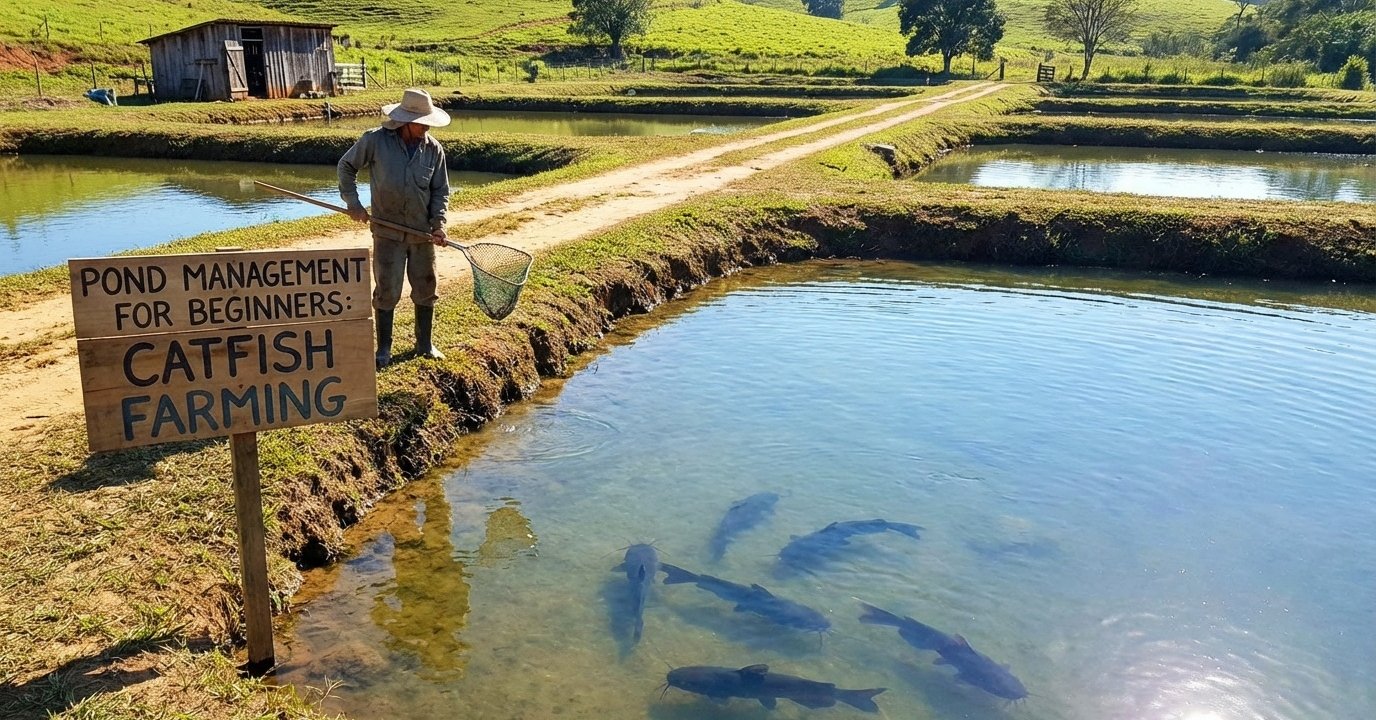
Starting a fish farm is an exciting venture, but a pond is more than just a hole filled with water—it is a living ecosystem. Successful pond management is the art of balancing biological, chemical, and physical factors to ensure your fish grow fast and stay healthy.
For beginners, the goal is to create a stable environment where your fingerlings can reach market size with minimal loss. This guide breaks down the essentials of managing your first pond.
1. Selecting the Right Pond Site and Type
Before you even buy your first fish, you must consider the infrastructure.
-
Soil Quality: For earthen ponds, clay-heavy soil is best because it retains water. Sandy soil leads to seepage.
-
Water Source: You need a reliable, year-round supply of clean water (borehole, spring, or filtered stream). Avoid water from areas with heavy pesticide use.
-
Pond Design: Ensure your pond has a sloping bottom to allow for complete drainage during harvest.
2. Preparing the Pond for Stocking
You cannot simply fill a pond and add fish. It requires a process called conditioning.
Drying and Liming
If you are using an earthen pond, let it dry in the sun for 7–10 days until the bottom cracks. Apply Agricultural Lime ($CaCO_3$) to kill harmful bacteria and parasites while stabilizing the soil pH.
Fertilization
Adding organic manure or inorganic fertilizers (like NPK) promotes the growth of phytoplankton and zooplankton. These microscopic organisms serve as a free, high-protein natural food source for young fish.
3. Understanding Carrying Capacity and Stocking Density
A common mistake for beginners is overstocking.
Stocking density refers to the number of fish per square meter. If you put too many fish in a small space, the carrying capacity (the maximum weight the pond can support) will be exceeded. This leads to:
-
Rapid oxygen depletion.
-
Stunted growth.
-
Aggressive behavior/cannibalism (especially in catfish).
Pro Tip: Start with a lower density (e.g., 5–10 fish per square meter for catfish) until you become experienced with water management.
4. The Golden Rules of Feeding
Feed is your biggest expense, so you must manage it efficiently to maintain a good Feed Conversion Ratio (FCR).
-
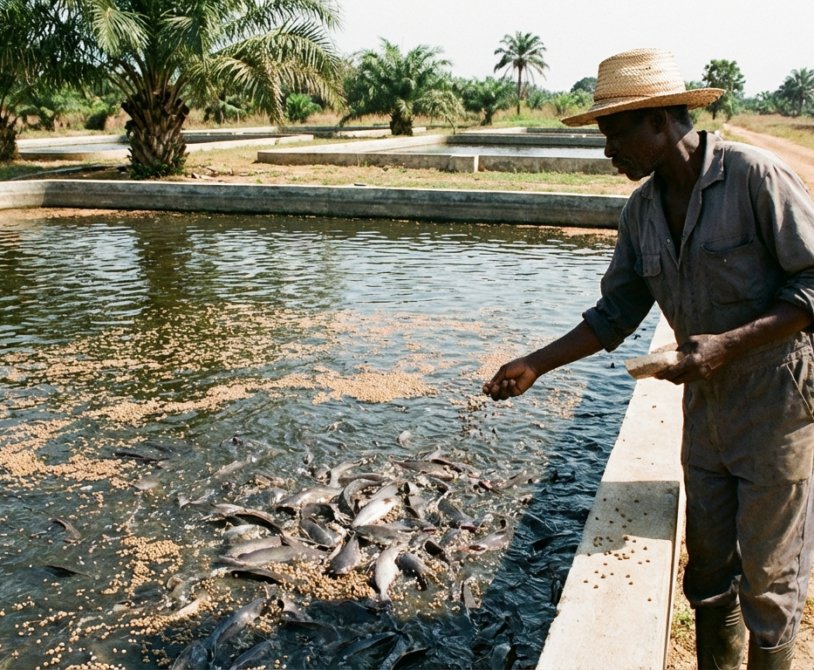
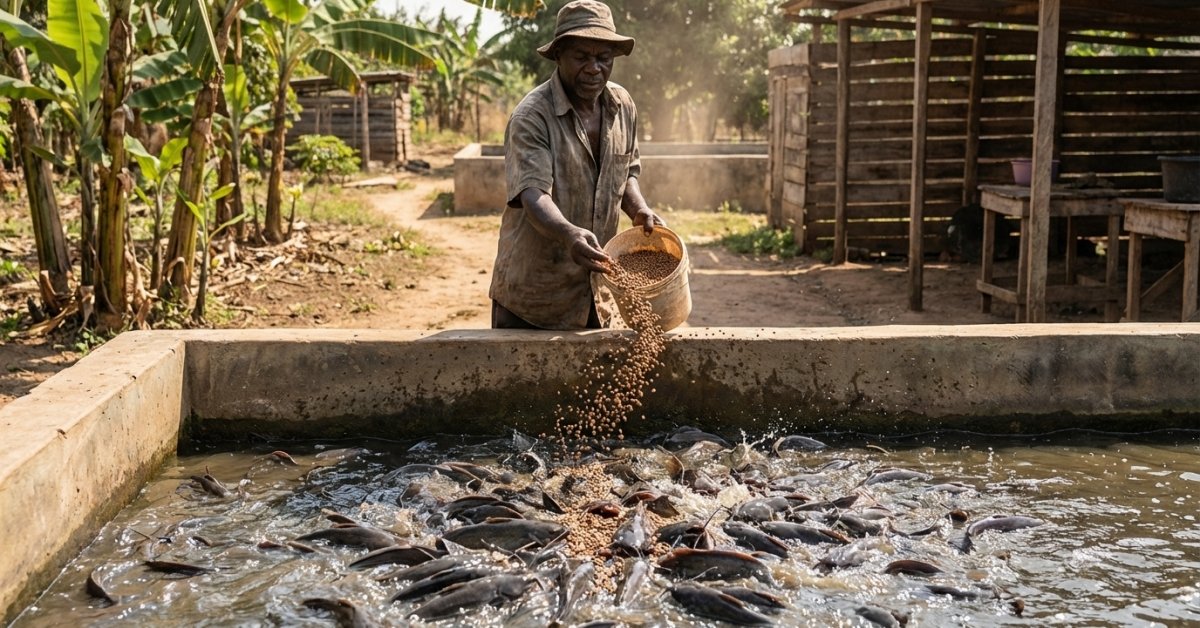
Quality over Quantity: Use high-quality floating pellets that match the mouth size of your fish.
-
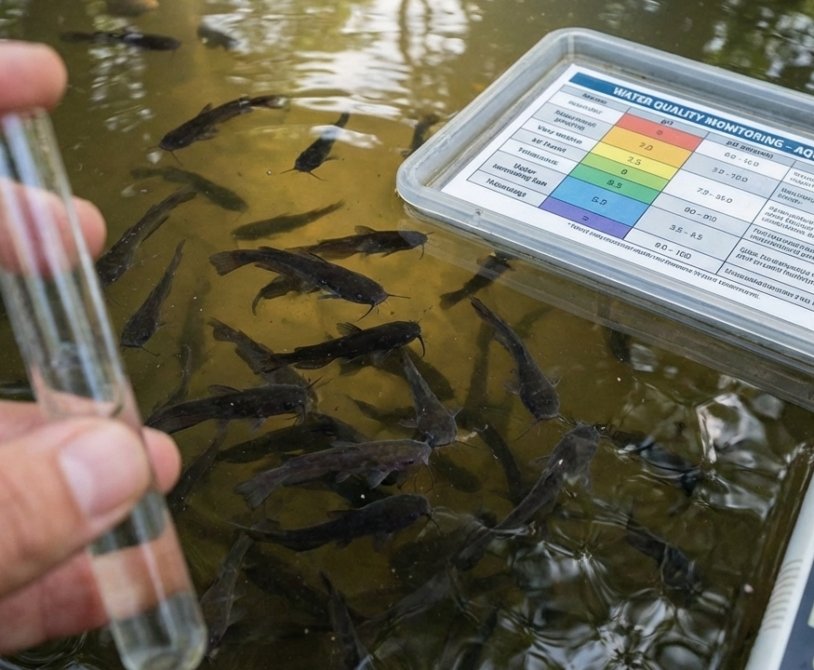
The 5-Minute Rule: Only give as much feed as the fish can consume in 5 minutes. Uneaten feed sinks to the bottom, rots, and creates toxic ammonia.
-
Response Monitoring: If fish stop eating, it is usually a sign of low dissolved oxygen or disease. Stop feeding immediately and check the water quality.
5. Daily Maintenance and Biosecurity
Consistency is what separates successful farmers from those who fail.
The Daily Walk-Through
Every morning, walk around your pond. Look for:
-
Fish Behavior: Are they swimming actively or gasping at the surface?
-
Water Color: A healthy pond is usually light green. If it’s clear, there’s no plankton; if it’s dark “pea-soup” green, there’s too much algae.
-
Leaks: Check dykes and embankments for erosion or holes.
Biosecurity Measures
Prevent diseases from entering your farm. Limit visitors, use footbaths at pond entrances, and never introduce “wild” fish from rivers into your controlled pond.
6. Managing Common Pond Problems
Even with the best care, challenges will arise.
| Problem | Likely Cause | Solution |
| Algal Bloom | Excess nutrients/Overfeeding | Partial water exchange |
| Muddy Water | Soil erosion or bottom-feeders | Add gypsum or plant grass on banks |
| Predators | Birds, frogs, or snakes | Install pond netting or fencing |
| Slow Growth | Poor genetics or low oxygen | Sort fish by size (grading) and aerate |
Pond management for beginners isn’t about complex chemistry; it’s about observation and discipline. By preparing your pond correctly, stocking at the right density, and keeping a close eye on water quality, you build a foundation for a profitable harvest.
FAQ: Pond Management Basics
-
How deep should a fish pond be?
Ideally, between 1.2 and 1.5 meters (4 and 5 feet). Too shallow and it gets too hot; too deep and it becomes hard to manage oxygen at the bottom.
-
Can I mix different types of fish?
Yes (Polyculture), but you must ensure they are compatible. For example, Tilapia and Catfish are often raised together to control the Tilapia population.
-
When is the best time to harvest?
Harvesting is usually done after 4 to 6 months, depending on the species and the desired market size.