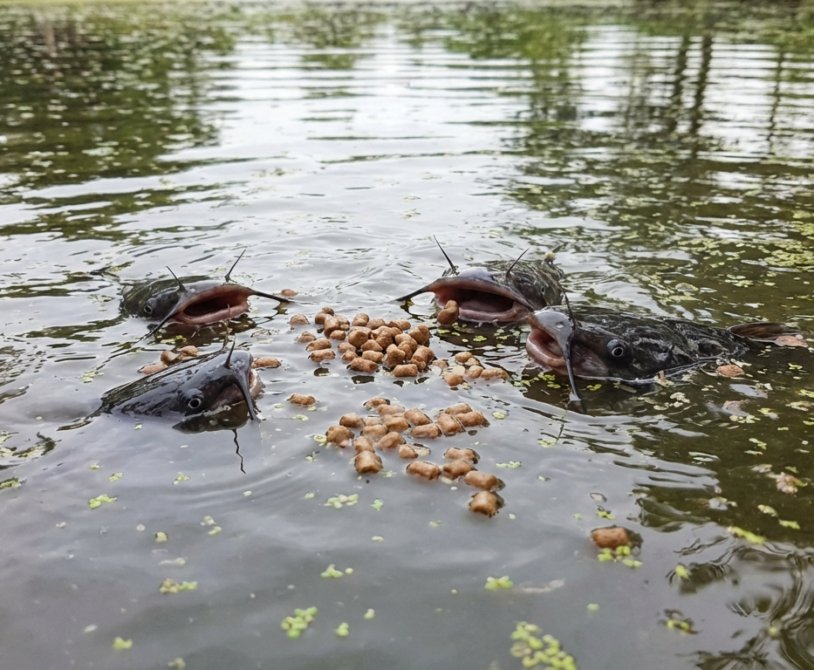
Smoked catfish is more than a delicacy in Cameroon—it’s a story of innovation, preservation, and pride in local agriculture. At Otto’s Farms in Buea, farmers are transforming fresh African catfish (Clarias gariepinus) into a shelf-stable, export-ready product using a carefully engineered smoke-drying process.
In a market often dominated by imported frozen fish, local producers are proving that quality processing, patience, and smart engineering can create a premium product that competes globally.
How do you smoke catfish properly?
The process involves sorting mature fish, cleaning and salting them for preservation, then slowly smoking them over several days to remove moisture and enhance flavor. This traditional technique ensures a long shelf life without refrigeration—making it ideal for transport and export.

The Unique Flavor of Smoked African Catfish
African catfish is valued for its high protein content, firm texture, and rich oils. When smoke-dried, it develops deep organoleptic properties:
-
A bold, savory aroma
-
Firm, chewy texture
-
Intensified umami taste
These characteristics make smoked catfish a staple ingredient in traditional dishes across Cameroon—from hearty soups to vegetable stews.
Section 1: The Harvest & Preparation (Quality Control)
Sorting for Premium Quality. Not every fish qualifies for smoking. Only mature fish weighing 500 grams or more are selected. Larger fish provide better fat content for flavor, a stronger structure for drying, and higher market value. This sorting stage is a key step in aquaculture post-harvest processing.
The “Slime Factor” – Why Cleaning Matters Fresh catfish naturally have a slippery coating. Removing this layer is critical because it improves hygiene, reduces microbial growth, and allows salt to penetrate effectively. Proper cleaning ensures a longer shelf life and reduces post-harvest loss.
Salt: The Natural Insurance Policy Salting plays two essential roles: it acts as a preservative by reducing moisture content and enhances flavor development during smoking. This step is a cornerstone of traditional African food preservation techniques.
Section 2: The Engineering Marvel – The Smoking Oven
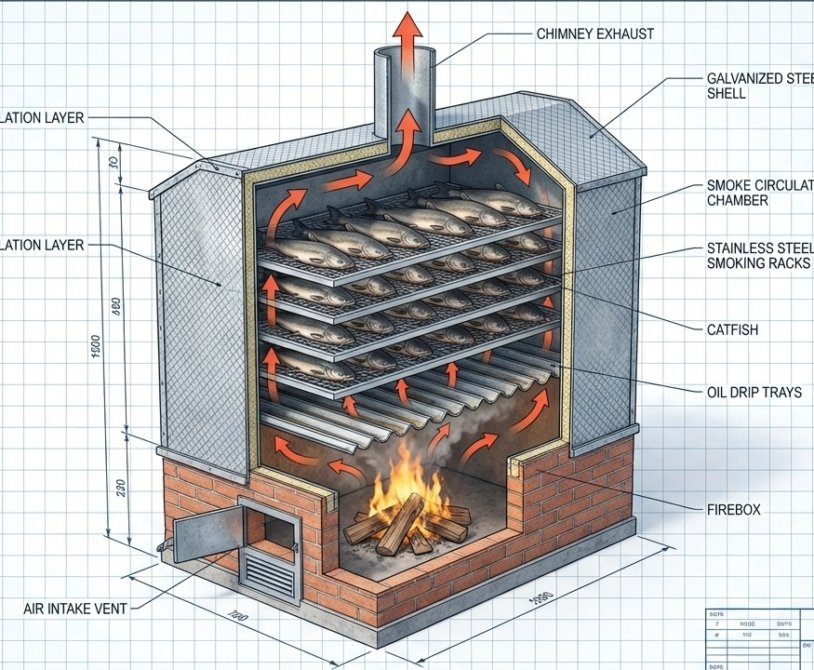
One of the most impressive features at Otto’s Farms is their custom high-capacity smoking kiln.
Key Capacity Insight: The oven can process over 400 kg of fish per batch—enabling large-scale value addition.
“Our oven can take over 400 kg of catfish at once—that’s a lot of fish! More fish per batch means less firewood and more profit.”
This efficiency improves sustainability by reducing firewood consumption, increasing production volume, and strengthening the smallholder aquaculture value chain.
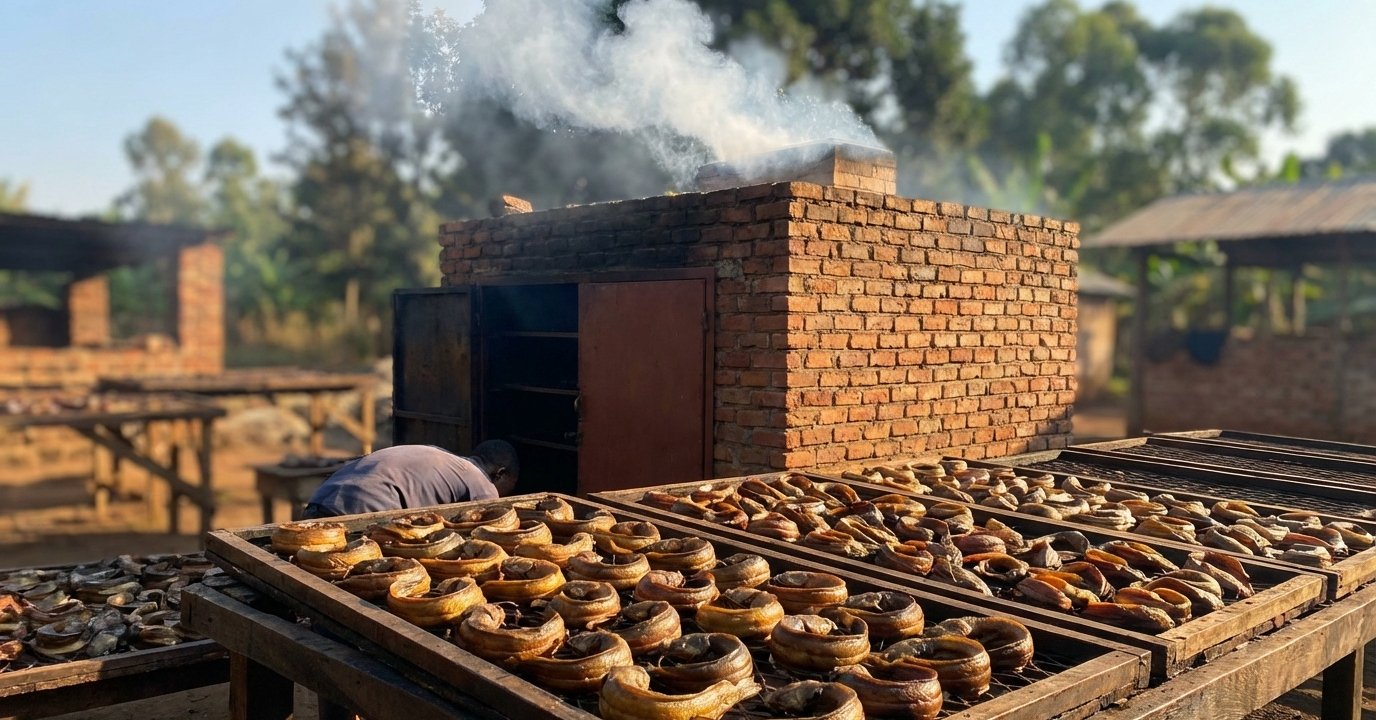
The Curling Technique. Before smoking, fish are bent into a curled shape. This technique ensures even heat distribution, speeds up dehydration, and gives the fish a premium market appearance. Buyers often associate curled fish with higher quality processing standards.
Section 3: The 5-Day Transformation
Smoking catfish is not a quick process—it requires extreme patience.
-
Day 1: High Heat Phase – Fish are cooked rapidly, the golden color begins forming, and initial moisture removal starts.
-
Days 2–5: Slow Smoking Phase – During this stage, the moisture content drops significantly, the fish becomes shelf-stable, and the smoke flavor intensifies.
This slow dehydration is crucial for international shipping because it prevents mold and spoilage.
Section 4: Bringing Cameroon to the World
Smoked catfish holds deep cultural importance in Cameroonian cuisine. It is widely used in vegetable stews, Egusi and Eru dishes, and Pepper soups. By producing high-quality smoked fish locally, farms are:
-
Reducing reliance on imports.
-
Supporting local aquaculture.
-
Creating export opportunities.
This represents true fish value addition—transforming a fresh commodity into a premium processed product.
Why Smoke-Drying Matters for Sustainability
The smoke-drying process contributes to reduced post-harvest losses and longer storage without refrigeration. Modern kiln designs also help minimize harmful compounds such as polycyclic aromatic hydrocarbons (PAHs), significantly improving food safety for the consumer.
Conclusion: Great Flavor Takes Time
From careful sorting to a patient 5-day smoking process, premium smoked catfish is the result of skill, engineering, and dedication. It represents the best of Cameroonian aquaculture—combining tradition with modern efficiency.
Have you tried traditional smoked catfish in a stew? Share your favorite recipe in the comments!
Interested in bulk orders or export partnerships? Check the contact details in the video description to connect with the farm directly.
Frequently Asked Questions (FAQ)
Q: Why does the smoking process take 5 days? A: The first day is for cooking and setting the color with high heat. Days 2 through 5 involve slow dehydration at lower temperatures. This ensures the moisture content is low enough to prevent mold, making the fish shelf-stable for months without refrigeration.
Q: What is the scientific name for the fish used? A: The farm primarily processes Clarias gariepinus, commonly known as the African Catfish, known for its resilience and high protein content.
Q: Why are the fish curled before smoking? A: Curling the fish isn’t just for aesthetics; it allows for better air circulation and even heat distribution within the kiln. It also creates a compact shape that is easier to package and less prone to breaking during transport.
Q: How does this help the local economy in Cameroon? A: By adding value to fresh fish through smoking, Otto’s Farms reduces post-harvest loss, creates jobs in processing, and provides a locally-produced alternative to expensive imported frozen fish.