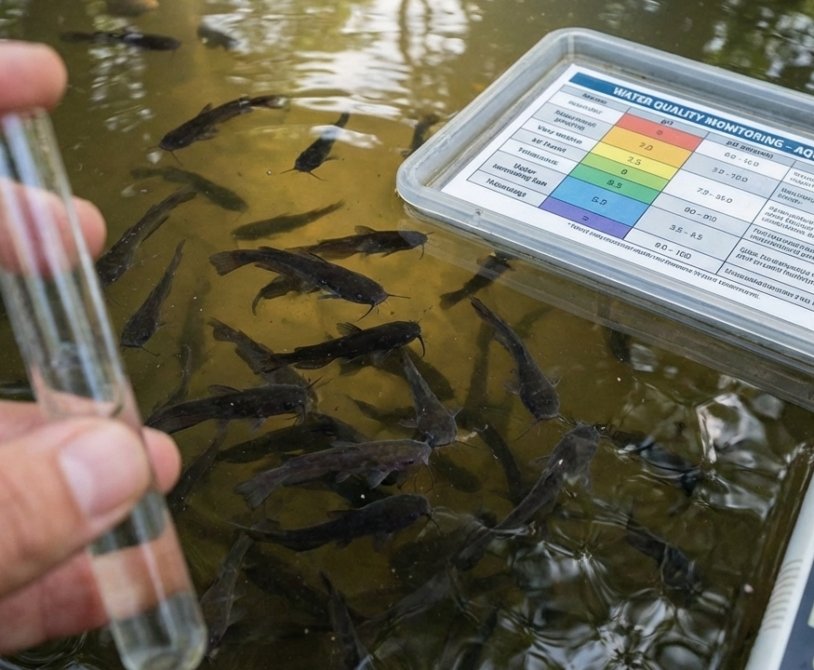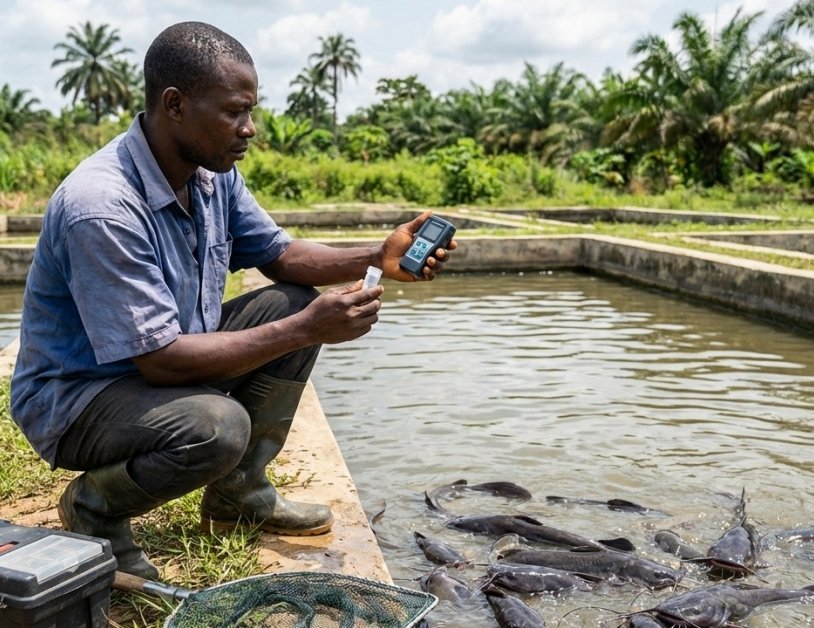
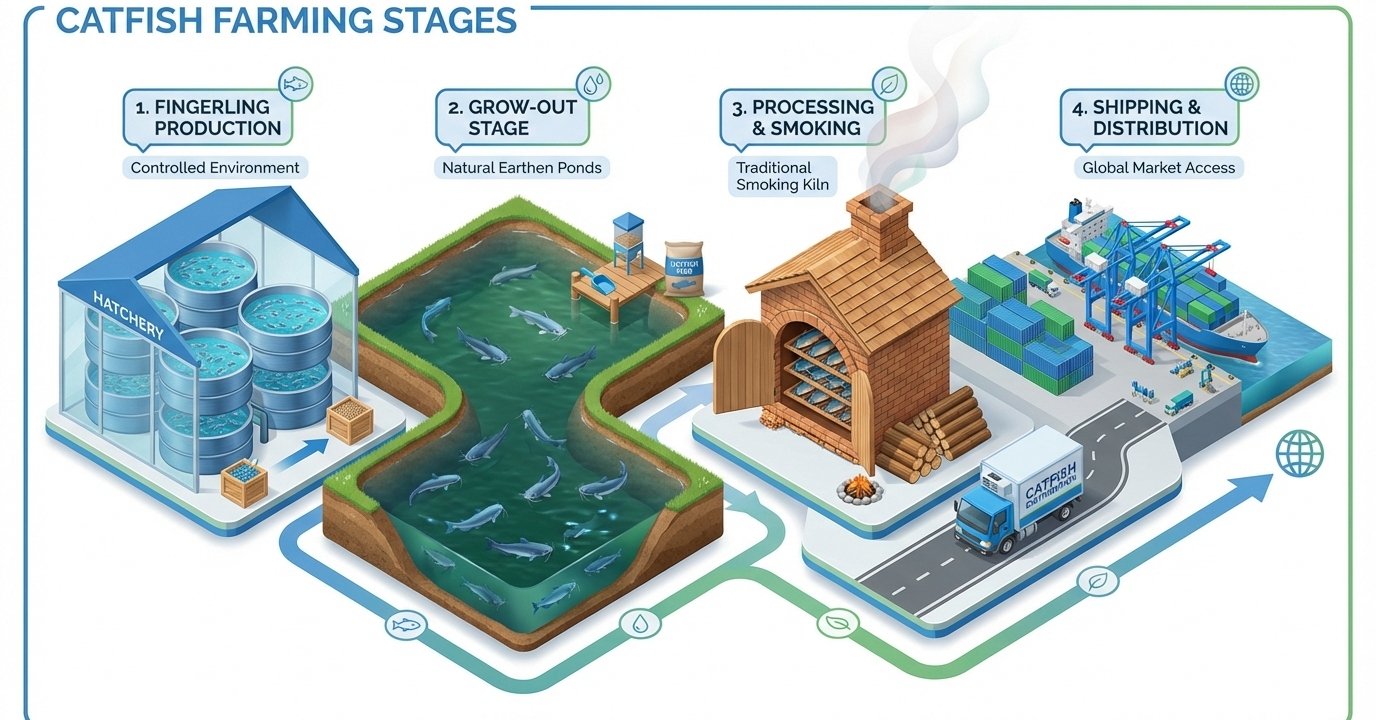
In 2026, the aquaculture landscape in Cameroon and across Africa is undergoing a massive transformation. With the national demand for fish in Cameroon exceeding local supply by over 500,000 tons annually, the African Catfish (Clarias gariepinus) has emerged as the “new oil” of the agricultural sector.
African catfish agribusiness is one of the fastest-growing opportunities today. Because it grows quickly, tolerates high stocking densities, and has a robust market for processed products, it offers a complete value chain—from pond production to international trade. This guide provides a strategic roadmap for “agropreneurs” navigating this high-stakes ecosystem.
Phase 1: The Foundation – Hatchery and Farm Planning
Every successful catfish business begins with proper farm design and “seed” quality. In Cameroon, the Livestock and Fish Farming Value Chain Development Project (PD-CVEP) has introduced improved strains that have revolutionized early-stage farming.
Choosing the Right System
-
Earthen Ponds: Most common and cost-effective for large-scale production, though they require careful predator monitoring.
-
Concrete/Plastic Tanks: Ideal for urban “backyard” farming; easier to manage water quality.
-
RAS (Recirculating Aquaculture Systems): High-tech systems that reuse water, predicted to see a 32% adoption rate by the end of 2026.
Sourcing Fingerlings
Catfish farming begins with high-quality “seed.” Improved strains introduced through aquaculture development programs now achieve survival rates of 80–85%, compared to older strains averaging 60%.
The Catfish Lifecycle Stages
Hatchlings (Days 1–14)
Extremely delicate and require high-protein starter feeds.
Fingerlings (Weeks 6–8)
Standard stocking size, typically weighing 4–6.5 grams.
Juveniles (Weeks 8–12)
More stable and ready for grow-out systems.
Quality fingerlings should show:
-
Active swimming behavior
-
Uniform size
-
No deformities
-
Disease-free appearance
Strong hatchery management determines the profitability of the entire operation.
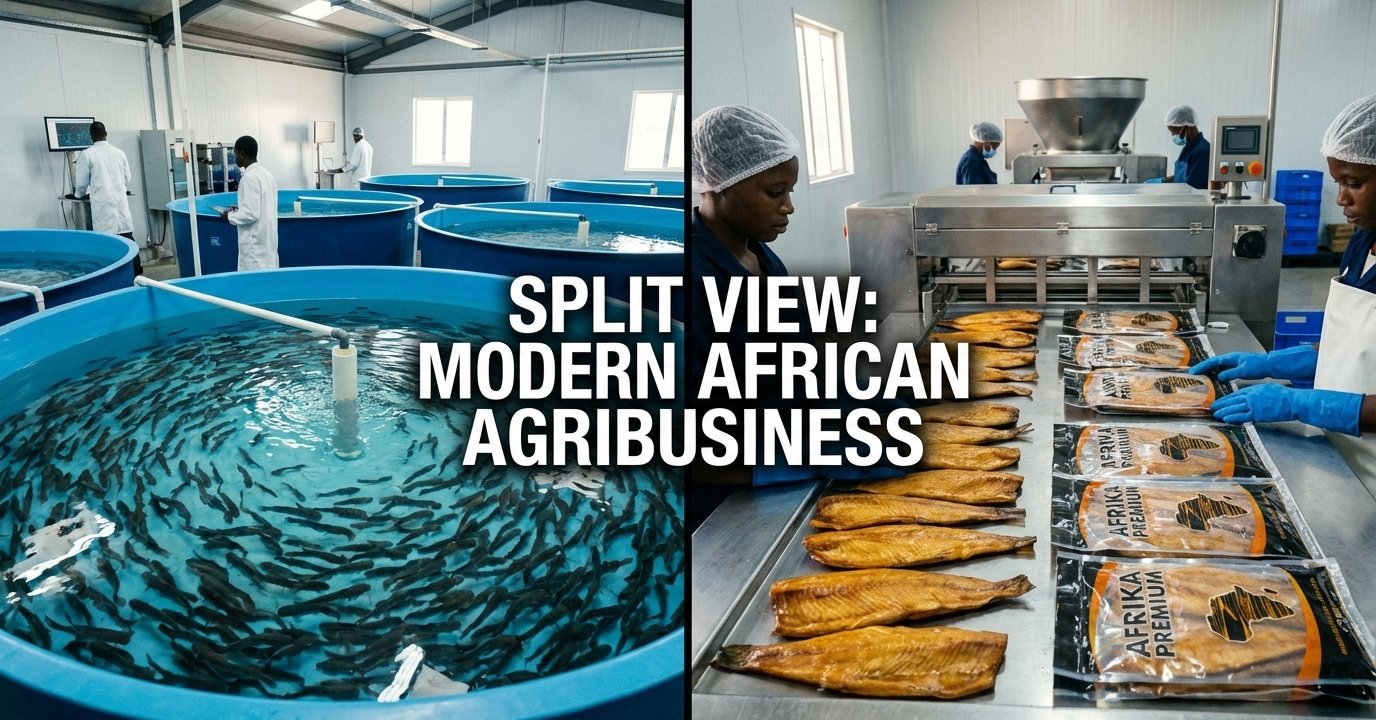
Phase 2: The Grow-Out Strategy & Growth Management
Efficiency is measured by the Feed Conversion Ratio (FCR). To be profitable in 2026, farmers must aim for a harvest weight of 1kg within 5 to 6 months.
| Feature | Improved Strain (2026) | Traditional Strain |
| Harvest Time | 5–6 Months | 8–9 Months |
| Target Weight | 500g – 1.5kg | 300g – 500g |
| Survival Rate | 85% | 60% |
Feeding Best Practices
Feeding accounts for over 60% of total expenses.
-
Starter Feed: High protein for fry (Days 1–14).
-
Grower Feed: Balanced nutrients for weight gain.
-
Finisher Feed: Maximizes size and flesh quality before harvest.
Tip: Feed 2–3 times daily and monitor behavior to avoid overfeeding, which pollutes the water.
Phase 3: Value Addition – The Smoking Revolution
Processing is where the real profit lies. At farms like Otto’s Farms, fresh catfish is transformed through professional smoke-drying into shelf-stable products.
-
The 400kg Kiln: Large-scale smokers use custom-built kilns to process massive batches, reducing firewood costs and increasing “value-added” margins.
-
The 5-Day Dry: A rigorous drying process ensures the fish is crispy and moisture-free. This removes the need for refrigeration and is a non-negotiable requirement for international shipping.
-
The Curling Technique: Bending fish into a curled shape ensures even heat distribution and creates a “premium” look preferred by buyers.
Phase 4: Navigating the Export Market
Exporting from Cameroon to the EU or North America requires strict adherence to international safety standards.
Compliance & Standards
-
Codex Alimentarius: You must meet standards regarding PAH (Polycyclic Aromatic Hydrocarbons) levels. Modern techniques, like the FTT (FAO-Thiaroye technique), ensure fish are safe for international consumption.
-
Quality Metrics: Limit contaminants like lead or mercury to typically 0.5 ppm.
Required Documentation (2026 Update)
-
EUR.1 Certificate of Origin: For duty-free export to the EU.
-
CATCH Certificate: Compulsory for all fishery imports into the EU as of January 10, 2026.
-
Health Certificates: Issued by competent veterinary authorities.
Economic Outlook: The “Protein is the New Oil” Era
The African Development Bank has invested €84 million to boost Cameroon’s fish production. For the individual farmer, this means better access to certified broodstock. Those who position themselves strategically within this cluster—controlling both the hatch and the harvest—stand to see a high Return on Equity (ROE).
Key Success Factors:
-
Quality Seeds: Start with the best fingerlings.
-
Efficient Processing: Use high-capacity kilns to reduce waste.
-
Strong Market Connections: Link with the African diaspora and international hospitality industries.
Conclusion: Start Small, Think Global
The journey from a tiny fingerling in Buea to a packaged delicacy in a European grocery store is complex but highly lucrative. By integrating modern technology with traditional smoking expertise, Cameroonian catfish can truly conquer the global market.
Watch the Process in Action:
This video offers a fascinating look at the large-scale custom ovens and traditional techniques used at Otto’s Farms to create export-quality smoked fish.:
Frequently Asked Questions (FAQ)
Q: Is catfish farming profitable in Cameroon in 2026?
A: Yes. With the current fish deficit and the 2026 government incentives for aquaculture, farmers focusing on value-added products (like smoked fish) are seeing a return on equity (ROE) of 30–45% per cycle.
Q: What is the best feed for Clarias gariepinus?
A: In the early stages (fingerlings), high-protein extruded floating pellets (42–45% protein) are essential. As they reach the grow-out stage, protein can be adjusted to 35–38% to optimize cost and growth.
Q: Can I export smoked catfish to the USA or Europe?
A: Yes, provided you meet the 2026 CATCH certificate requirements and ensure your smoking process keeps Polycyclic Aromatic Hydrocarbons (PAHs) within the safe limits ($<2.0\mu g/kg$ for Benzo[a]pyrene).
Q: How much space do I need to start?
A: You can start a “backyard” intensive system using plastic tanks in as little as 20 square meters. However, commercial profitability typically begins with systems handling at least 2,000–5,000 fish.