Scaling an aquaculture business from local markets to the global stage is the ultimate goal for many agropreneurs. However, the transition from a “farm product” to an “international commodity” requires more than just good flavor—it requires a mastery of economics, logistics, and strict regulatory compliance.
In 2026, the demand for authentic, high-quality African smoked fish in Europe, the UK, and North America is at an all-time high. But to tap into this market, your product must meet the gold standard of international trade.
1. The Science of Shelf Stability: Moisture Content
The most common reason for export rejection is mold growth during transit. To prevent this, moisture control is the single most important factor.
-
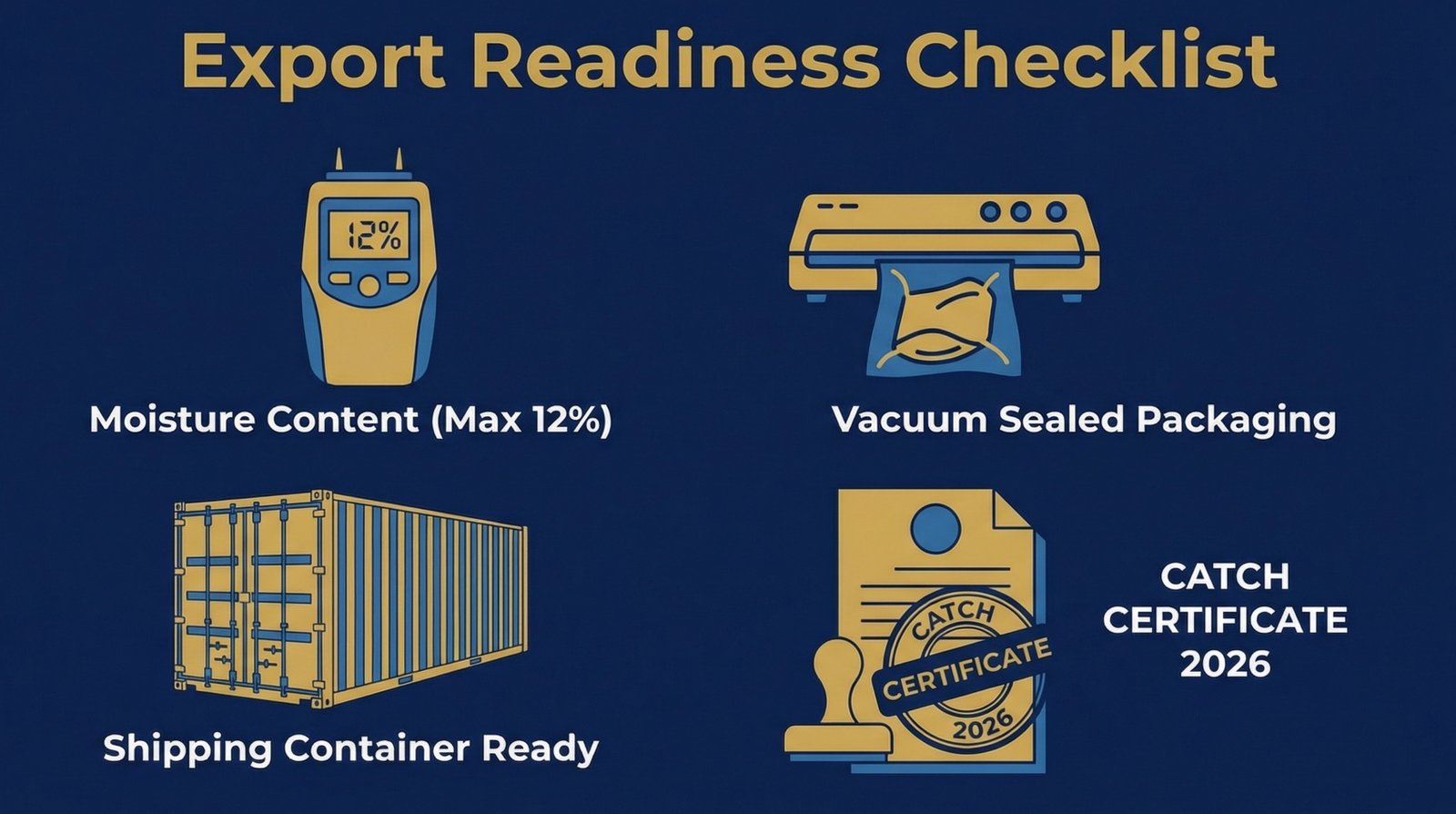
The Gold Standard: For international export, smoked fish must have a moisture content of less than 12–15%.
-
The 5-Day Rule: Export-ready fish must undergo a [Rigorous 5-Day Transformation]. This extended smoking period ensures that the deep tissue is fully dehydrated, making the fish shelf-stable for months without refrigeration.
-
Testing: Professional exporters use digital moisture meters to verify that each batch meets the threshold before entering the packaging phase.
2. Advanced Packaging: Vacuum Sealing vs. Traditional Methods
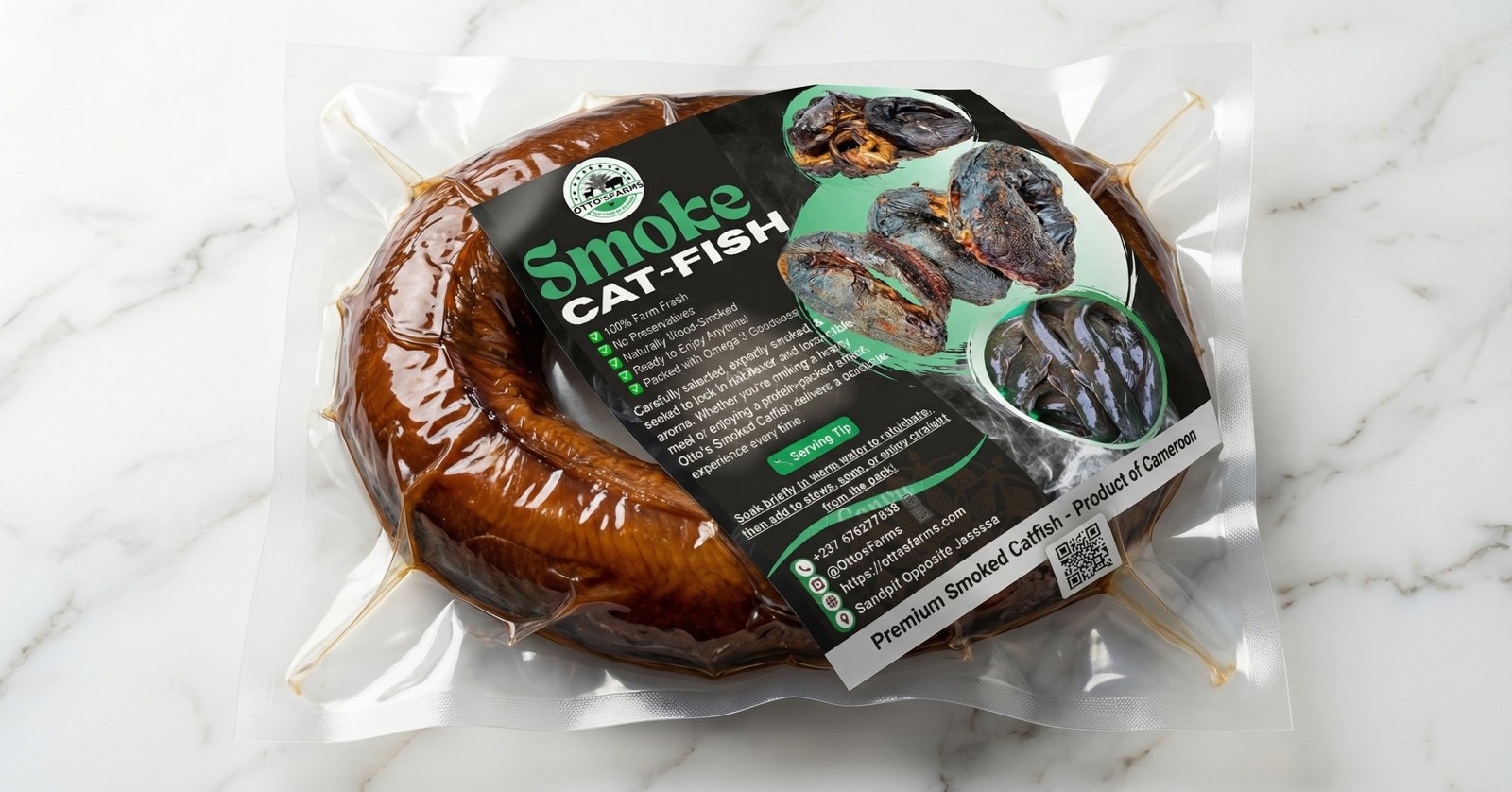
Traditional paper or loose plastic wrapping is insufficient for the global supply chain. To preserve the organoleptic properties (aroma and taste) and prevent oxidation, Vacuum Packaging is the industry standard.
-
Oxygen Deprivation: Vacuum sealing removes air, preventing aerobic bacteria from growing and stopping the fish oils from becoming rancid.
-
Durability: High-micron vacuum pouches protect the fish from “pinholing” caused by the sharp fins of the Clarias during handling.
-
Aesthetics: A clear, vacuum-sealed pack allows the buyer to see the premium “curled” shape and rich mahogany color of the fish, instantly signaling quality.
3. Labeling and Traceability: The Export Passport
In 2026, transparency is mandatory. An export label is not just a sticker; it is a legal document. To pass through customs in the EU or the USA, your label must include:
-
Scientific Name: Clearly state Clarias gariepinus.
-
Country of Origin: e.g., “Product of Cameroon.”
-
Net Weight and Batch Number: Essential for food safety recalls and inventory management.
-
Nutritional Facts: Detailed breakdown of protein, fats, and minerals.
-
Certification Marks: Such as the CATCH Certificate (required for EU entry) or Organic certifications, where applicable.
4. Meeting International Food Safety Standards
International buyers are highly sensitive to chemical contaminants. Your production facility must be compliant with:
-
HACCP (Hazard Analysis Critical Control Point): A systematic approach to food safety that identifies biological, chemical, and physical hazards.
-
PAH Limits: As discussed in our [Engineering Post], your Benzo[a]pyrene levels must stay below 2.0 µg/kg.
-
Heavy Metal Screening: Regular laboratory tests are required to ensure the fish are free from mercury, cadmium, and lead.
5. The Economics of Export
Exporting allows you to earn in “Hard Currency” (USD, EUR, GBP), which provides a significant hedge against local currency fluctuations.
-
Value Multiplier: While fresh catfish may sell for a few dollars per kilo locally, vacuum-packed, export-ready smoked fish can command 3 to 4 times that price in international specialty stores.
-
Logistics Costs: It is more economical to ship by sea for large volumes, but air freight is often used for premium “express” batches to maintain maximum freshness.
Conclusion: From Buea to the World
Exporting is the “final exam” of the catfish value chain. When you combine the biological excellence of Clarias gariepinus with the engineering power of “The Beast” kiln and professional packaging, you create a product that can stand on any shelf in the world.
Frequently Asked Questions (FAQ)
Q: What is the maximum moisture content allowed for exported dried fish? A: To ensure shelf stability during long-distance shipping without refrigeration, the moisture content should be between 12% and 15%. Anything higher significantly increases the risk of mold during transit.
Q: Why is vacuum packaging preferred over standard plastic bags? A: Vacuum packaging removes oxygen, which slows down the oxidation of fats (preventing rancidity) and inhibits the growth of aerobic bacteria. It also provides a professional appearance and a puncture-resistant barrier for sharp fish fins.
Q: What is a CATCH Certificate, and why do I need it? A: As of early 2026, the CATCH certificate is a mandatory document for fishery products entering the EU. It is part of the IUU (Illegal, Unreported, and Unregulated) fishing regulations designed to ensure that all traded fish are legally harvested and processed.
Q: Can I use any wood for smoking fish intended for export? A: No. Hardwoods are preferred as they produce less soot. You must avoid treated woods or softwoods with high resin content, as these can elevate PAH levels above the legal international limit of 2.0 µg/kg.