Published: April 12, 2026 | By: Otto’s Farms Editorial | Read time: 6 min
The Iran-U.S. ceasefire may have quieted the guns, but the fallout for the world’s food supply is only beginning. Here’s what every consumer needs to know.
When a military conflict breaks out thousands of miles away, it can be easy to assume the impact stays there. But the Iran-U.S. war — and its effective closure of the Strait of Hormuz for over a month — is proving that global food systems are far more fragile, and far more connected, than most consumers realize.
A ceasefire has been announced between the United States and Iran. Yet the agricultural world is not breathing easier. Shipping companies remain hesitant. Traders are holding back. And the critical question — who controls the Strait of Hormuz and on what terms — is still being negotiated. Until those answers are clear, the energy and fertilizer markets that underpin global food production stay under severe pressure.
“Sharp increases in oil, gas, and fertilizer prices, together with transport bottlenecks, will inevitably lead to rising food prices and food insecurity.”
— Kristalina Georgieva, IMF Chief
Energy is embedded in everything you eat
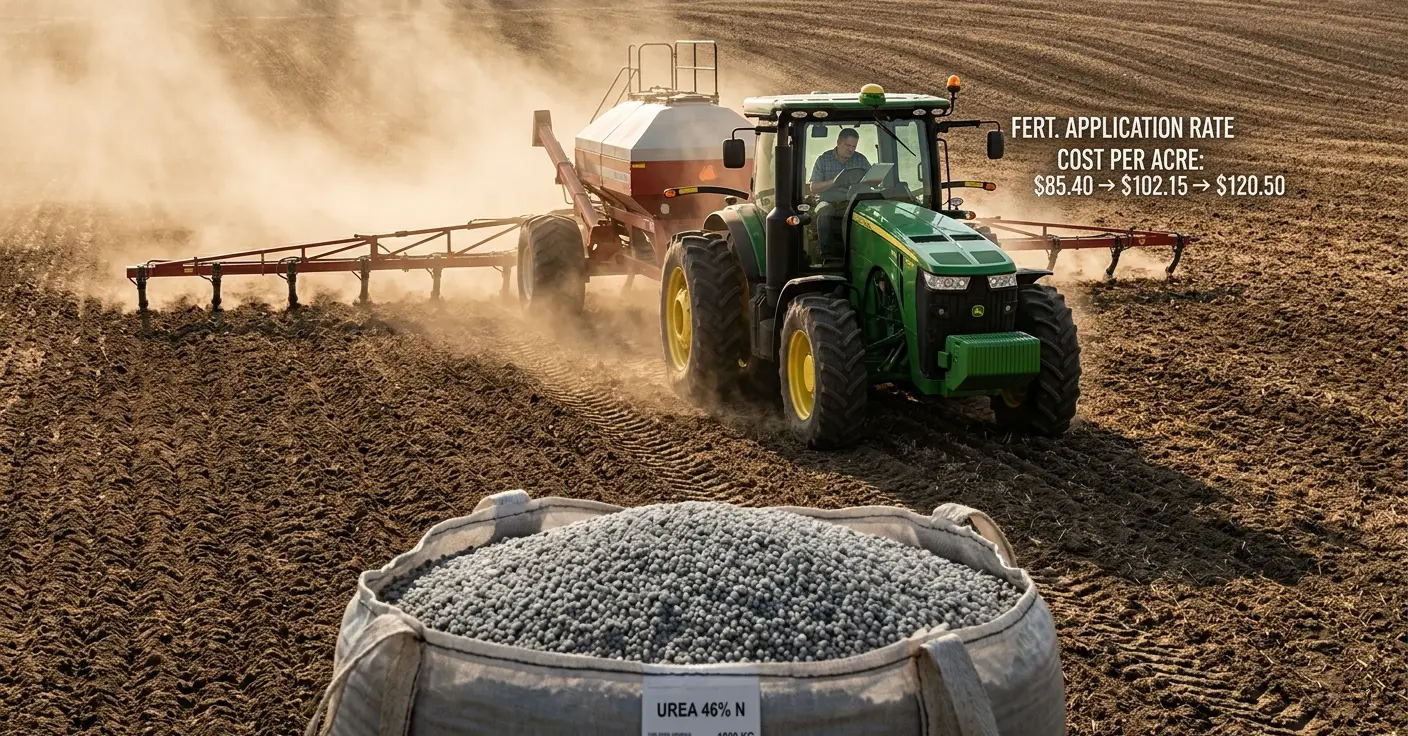
Food production is, at its core, an energy-intensive process. Fuel powers the tractors that till the fields. Diesel moves the trucks that ship grain from farms to processors. And perhaps most critically, natural gas is the primary feedstock for urea fertilizer — one of the most widely used nitrogen fertilizers in the world. When energy prices spike, fertilizer prices follow almost immediately.
As Joseph Glauber, a former chief economist at the U.S. Department of Agriculture (USDA) and now a senior research fellow at the International Food Policy Research Institute (IFPRI), has noted, there is significant energy embodied in food at almost every stage of processing and transportation. The disruption to Hormuz-linked energy flows touches every one of those stages simultaneously.
Kevin Book, managing director of ClearView Energy Partners, put it plainly: rising diesel prices carry inflationary consequences that reach everything moving on a truck or a train, which is to say, virtually everything sold in a store.
“Shipping companies and shippers are waiting for more clarity from the U.S. and from Iran about what exactly they agreed to.”
— Caitlin Welsh, Director, Global Food and Water Security Program, Center for Strategic and International Studies (CSIS)
From the Persian Gulf to the produce aisle
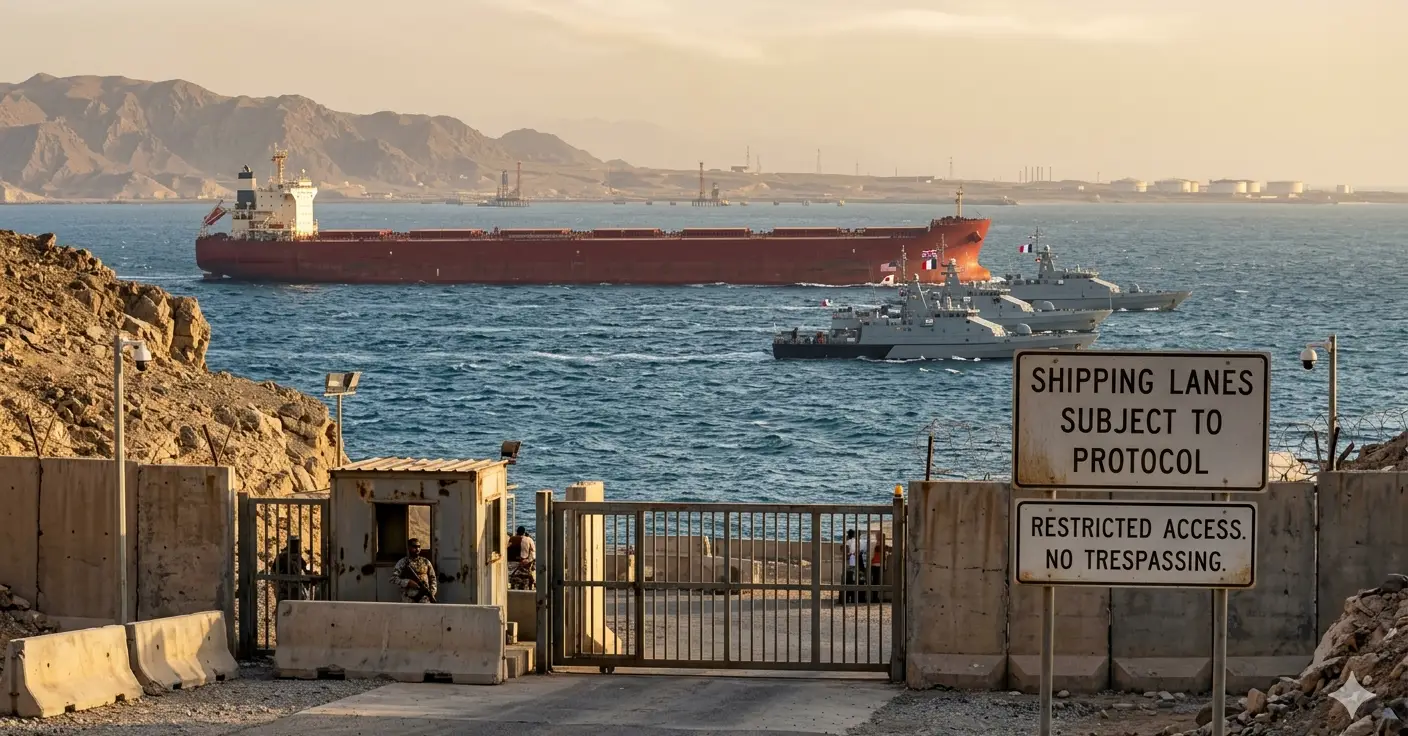
The Strait of Hormuz is the world’s most critical energy chokepoint. Roughly 20% of global oil flows through it, along with large volumes of liquefied natural gas. Restricting that flow does not just raise fuel prices — it directly constrains the production and export of urea fertilizer, much of which originates from Gulf-region countries that rely on cheap natural gas to manufacture it.
Analysts estimate that restoring Middle Eastern energy production to pre-war levels could take months. Farmers purchasing fertilizer for upcoming planting cycles are already facing sharply elevated costs, even as many crop prices remain depressed. That squeeze — higher inputs, flat or falling revenues — is exactly the kind of pressure that reduces planting, lowers yields, and ultimately translates to tighter supplies and higher prices on store shelves.
Agricultural economist Christopher Barrett of Cornell University has warned that the most vulnerable regions are those heavily dependent on imported fertilizers and fuel. But the ripple effects of constrained fertilizer supply are not limited to any one region. They move through global commodity markets and ultimately reach consumers worldwide.
High-stakes talks and an uncertain strait
High-stakes negotiations between the U.S. and Iran are ongoing, aimed at reaching a more durable agreement on Strait of Hormuz access and the resumption of normal energy and trade flows. The outcome of those talks will have direct consequences not just for geopolitics, but for the price of bread, cooking oil, and produce at every grocery store in the world.
For consumers, the message from agricultural economists and food security experts is consistent: the cost pressures now building in global supply chains are real, they are structural, and they will not resolve overnight. Being informed about the underlying causes — energy markets, fertilizer supply chains, shipping bottlenecks — is the first step to understanding what is happening to food prices, and why.
Key takeaways
- The Strait of Hormuz remains restricted, disrupting global energy and fertilizer flows even after a ceasefire was announced.
- Urea fertilizer prices are rising sharply because natural gas — its primary input — is tied to Gulf energy markets.
- Farmers face a double squeeze: higher input costs and depressed crop prices.
- Analysts warn it could take months to restore normal Middle East energy production levels.
- Global food security bodies, including the IMF, are warning of rising food prices and potential hunger crises.
Otto’s Farms covers global agriculture, food systems, and the forces shaping what we grow and eat. Bookmark our blog for weekly updates.