Keeping optimal water quality is the most critical factor for successful aquaculture. Whether you manage a recirculating aquaculture system (RAS), earthen ponds, or tanks for catfish and tilapia, the chemical composition of your aquatic environment dictates your profit.
Poor water conditions lead to physiological stress, suppressed immune systems, and mass mortality. Many farmers suffer losses not due to poor nutrition, but because they fail to monitor the biochemical oxygen demand (BOD) and toxic nitrogenous wastes in their ponds.
Why Pond Water Quality Monitoring Matters in Aquaculture
Fish are highly sensitive to their aqueous environment. Because they excrete waste and breathe in the same medium, any shift in chemistry has immediate biological consequences.
Regular testing allows farmers to manage the Nitrogen Cycle, ensure sufficient Gas Exchange, and prevent Acidosis or Ammonia Toxicity. This proactive routine is the difference between a high-yield harvest and a total loss.
Key Water Parameters Every Fish Farmer Must Monitor
To maintain a healthy ecosystem, you must focus on these specific chemical and physical indicators:
1. Water Temperature and Fish Metabolism
Temperature regulates the metabolic rate of ectothermic (cold-blooded) fish. For instance, African Catfish (Clarias gariepinus) thrive between 26°C and 30°C. High temperatures reduce the solubility of oxygen, making the water more dangerous for the stock.
2. Dissolved Oxygen (DO) Levels
Dissolved Oxygen is the most volatile parameter. Fish require it for cellular respiration. When DO levels drop below 3-4 mg/L, fish will exhibit “piping” (gasping at the surface).
3. pH Levels: Acidity vs. Alkalinity
The pH scale measures the concentration of hydrogen ions. A stable range of 6.5 to 8.5 is ideal. Sudden swings in pH, often caused by heavy rainfall or algal blooms, can damage fish gills and skin.
4. Total Ammonia Nitrogen (TAN)
Ammonia is a byproduct of protein metabolism excreted via fish gills. In its unionized form ($NH_3$), it is highly toxic. High levels cause gill hyperplasia and prevent the blood from carrying oxygen.
5. Turbidity and Secchi Disk Transparency
Water clarity, or turbidity, indicates the level of suspended solids and phytoplankton. While some algae are good for oxygen, “pea-soup” green water can lead to oxygen crashes at night.
Simple Methods to Test Pond Water Quality
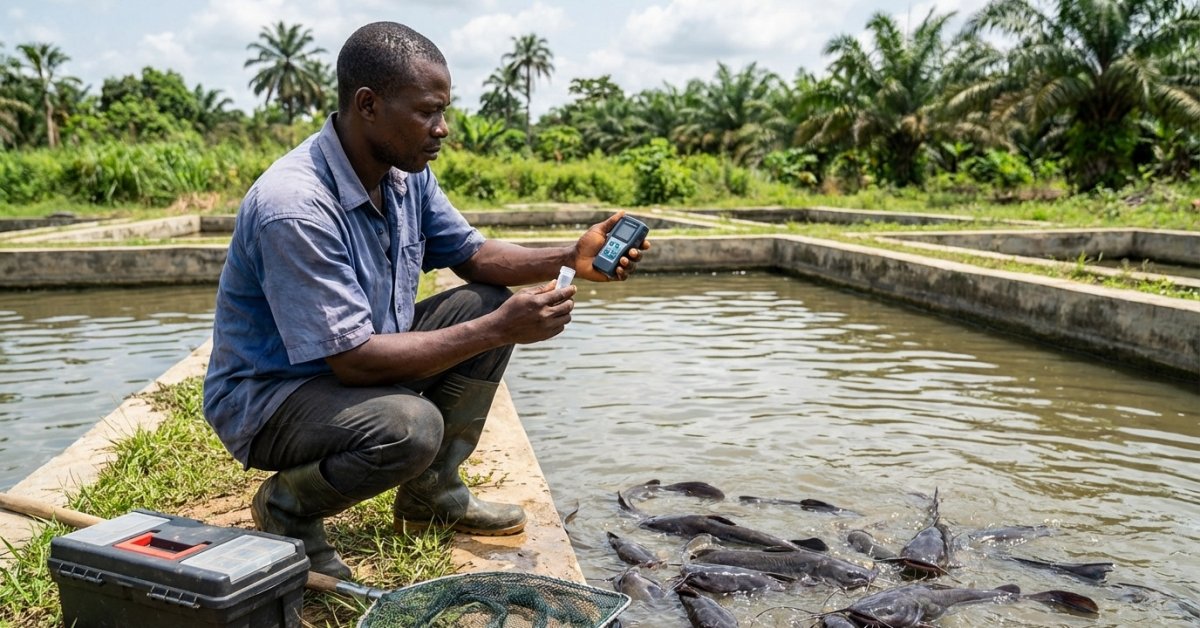
You don’t need a laboratory to get professional results. Here are the tools used by successful commercial farmers:
-
Digital Thermometers: For precise, daily temperature tracking.
-
DO Meters or Colorimetric Kits: Used to measure oxygen saturation.
-
Photometers and Reagent Tablets: These provide highly accurate readings for Ammonia, Nitrites, and Nitrates.
-
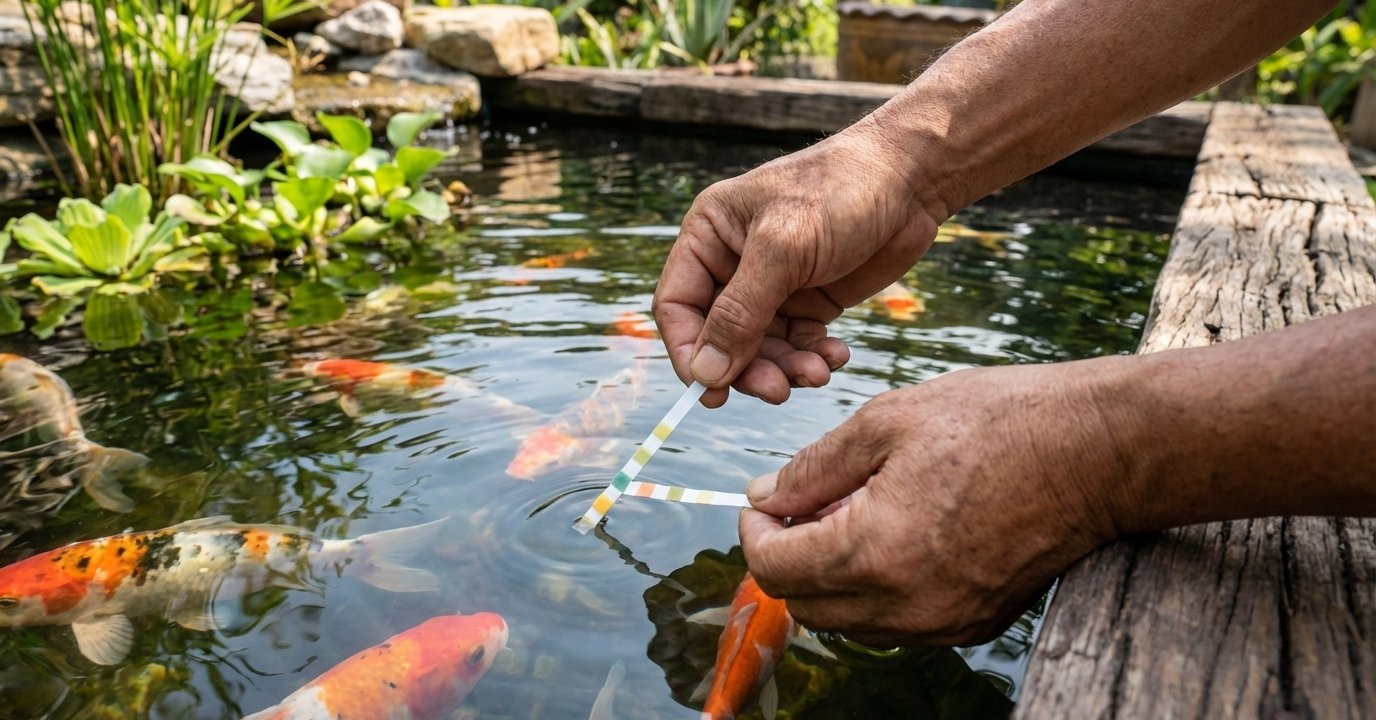
pH Strips or Digital Probes: Portable tools for instant acidity checks.
-
Secchi Disk: A simple black-and-white disk used to measure light penetration and plankton density.
How Often Should You Test Pond Water?
Consistency is key to detecting trends before they become lethal.
| Parameter | Frequency | Best Time to Test |
| Dissolved Oxygen | Daily | Dawn (when levels are lowest) |
| Temperature | Daily | Afternoon (peak heat) |
| pH Level | Weekly | Mid-day |
| Ammonia (TAN) | Bi-weekly | Any time |
| Nitrite/Nitrate | Monthly | Any time |
Common Signs of Poor Water Quality
Your fish will often tell you there is a problem before a test kit does. Look for these clinical signs:
-
Surface Piping: Fish gasping for air (Low Oxygen).
-
Anorexia: Fish refusing to eat (High Ammonia or pH stress).
-
Erratic Swimming: Flashing or rubbing against pond sides (Parasites or chemical irritation).
-
Foul Odors: A “rotten egg” smell indicates Hydrogen Sulfide buildup in the pond bottom.
How to Improve and Restore Pond Water Quality
If your tests show dangerous levels, take these corrective actions immediately:
-
Water Exchange: Drain and replace 20-30% of the water to dilute toxins.
-
Mechanical Aeration: Use paddlewheels or aspirators to increase oxygen transfer.
-
Liming: Add Agricultural Lime ($CaCO_3$) to stabilize pH and increase alkalinity.
-
Feed Management: Stop feeding for 24 hours if ammonia is high to reduce organic loading.
Water quality management is the backbone of profitable fish farming. By integrating regular testing into your farm’s Standard Operating Procedures (SOPs), you minimize risk and maximize growth rates. A healthy pond isn’t just water—it’s a life-support system.
FAQ Section: Pond Water Science
-
What is the ideal pH level for fish ponds?
Most freshwater species thrive in a pH range of 6.5 to 8.5.
-
How can I increase oxygen quickly?
The fastest method is using mechanical aerators or high-pressure water sprays to break the surface tension.
-
Why is my fish pond water turning brown?
This is usually due to high tannins from organic matter or suspended soil particles (silt) after heavy rain.