

In our globalized economy, a “local” conflict is rarely truly local. For Africa, the geographical distance from the Middle East does not offer an economic buffer. Instead, the two regions are bound together by a complex web of oil pipelines, shipping lanes, and fertilizer trade.
As of early 2026, escalating tensions involving major regional powers like Iran and Israel have once again sent shockwaves through global markets. For the African continent—already navigating the recovery from previous global supply shocks—these developments are not just headlines; they are direct threats to the cost of a dinner plate.
Understanding these connections is essential for African farmers, agropreneurs, and consumers who must adapt to a volatile new reality.
Why the Middle East Is the Heartbeat of the Global Food System
The Middle East is much more than a political focal point; it is a critical infrastructure hub for the entire planet’s food supply.
The Power of Oil Exports
Agriculture is an energy-intensive industry. The Middle East remains a dominant force in global oil and gas production. When conflict threatens the stability of these nations, oil prices spike. Because petroleum is required to fuel the tractors that plow the fields and the trucks that carry the harvest, any increase in crude oil prices acts as an immediate “tax” on every calorie produced worldwide.
The Strait of Hormuz: A Global Chokepoint
Perhaps the most sensitive maritime corridor on earth is the Strait of Hormuz. In March 2026, disruptions in this narrow waterway—which handles roughly 20% of the world’s petroleum and a significant portion of its liquefied natural gas (LNG)—have triggered a de facto shipping crisis. When this route is threatened, ships must be rerouted around the Cape of Good Hope, adding weeks to travel times and millions in fuel costs, all of which are eventually paid for by the end consumer.
How Rising Oil Prices Directly Inflate African Food Costs
For many African nations, the “transmission” of a Middle East conflict into local food prices happens through three primary channels.
1. Higher Transportation Costs
In Africa, infrastructure challenges often mean that food must travel long distances over land. When global oil prices rise, the cost of diesel in Nairobi, Lagos, or Johannesburg climbs. This makes moving a bag of maize from a rural farm to an urban center significantly more expensive.
2. Expensive Farm Operations
Modern farming relies on machines. From irrigation pumps that keep crops alive during dry spells to tractors used for large-scale planting, fuel is a non-negotiable input. When fuel costs rise, the “break-even” point for a farmer moves higher, forcing them to increase their wholesale prices just to stay in business.
3. Increased Distribution Logistics
Beyond the farm and the truck, food processing and cold-chain storage (refrigeration) also require energy. Higher utility costs for warehouses and processing plants add yet another layer of inflation before the food even reaches the grocery shelf.
The Silent Crisis: Fertilizer and Input Shortages
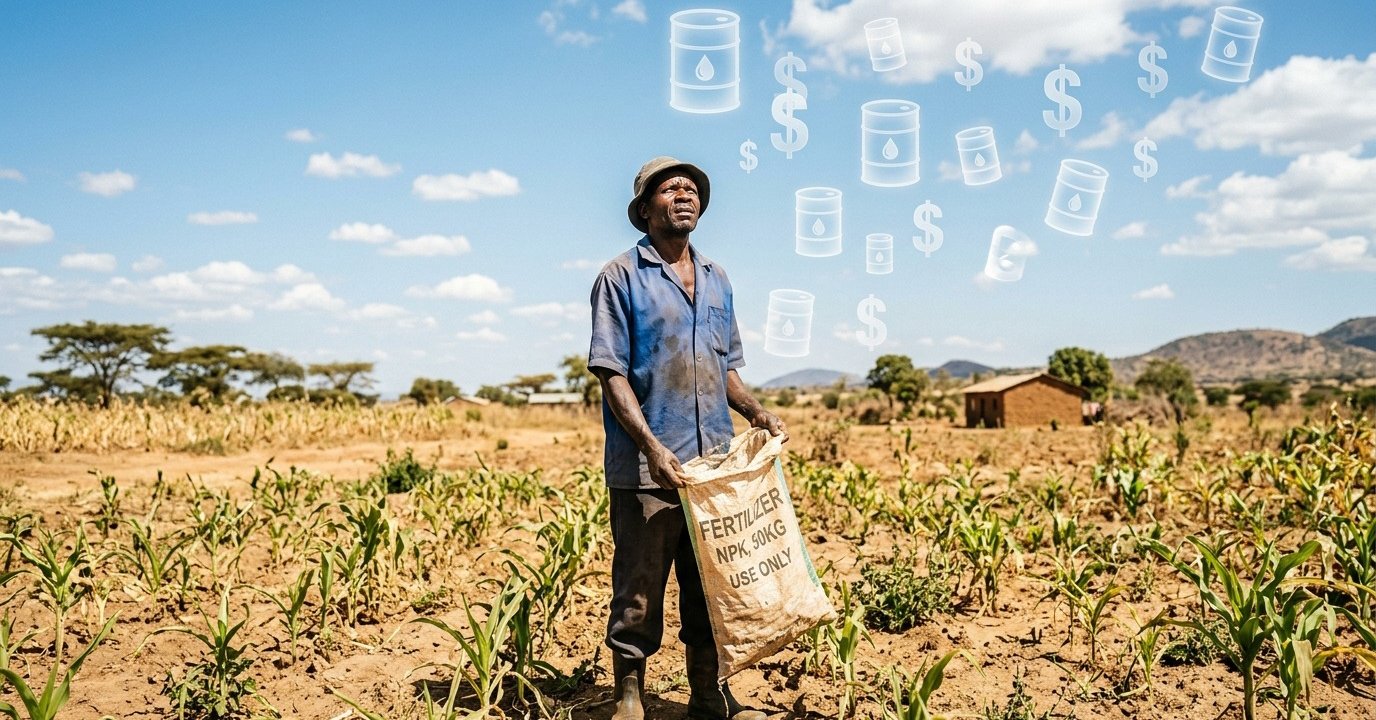
While oil makes the headlines, the disruption of fertilizer may be the more significant long-term threat to African food security.
Dependence on Middle Eastern Nitrogen
The Middle East is a global powerhouse in the production of urea and ammonia—the building blocks of nitrogen fertilizer. Countries like Qatar and Saudi Arabia utilize their vast natural gas reserves to manufacture these inputs. In 2026, military strikes on industrial facilities and the closure of shipping lanes have removed millions of tonnes of urea from the global market.
The Impact on the African Planting Season
Many African farmers rely 100% on imported fertilizers. With prices for imported urea reportedly jumping by over 20% in a single week following recent escalations, farmers are faced with a grim choice: buy less fertilizer and accept a smaller harvest, or pay the high price and risk financial ruin. Both options lead to the same result: less food and higher prices for the public.
Currency Pressure and Economic Strain
Global conflicts often trigger a “flight to safety” in financial markets, where investors buy U.S. dollars and sell “riskier” currencies.
-
Weakening Local Currencies: As African currencies lose value against the dollar, the cost of importing food and fuel rises automatically—even if the price of the commodity hasn’t changed.
-
Higher National Import Bills: African governments are forced to spend more of their foreign reserves to secure essential energy and food supplies, leaving less money for infrastructure, healthcare, or agricultural subsidies.
Impact on African Farmers: A Squeeze on Both Ends
For the local farmer, the Middle East conflict creates a “cost-price squeeze.”
-
Reduced Profit Margins: While the price of food in the market goes up, the farmer’s costs for feed, fertilizer, and transport often rise even faster. This can lead to a situation where a farmer is selling more expensive food but making less profit than before.
-
Opportunities for Domestic Growth: On the flip side, high import prices create a “protectionist” effect. When imported chicken or grain becomes too expensive, it creates an opening for local producers to fill the gap. This is a critical moment for African agriculture to move toward self-sufficiency.
Lessons from the Past: From Ukraine to the Red Sea
The current crisis mirrors the 2022 Russian invasion of Ukraine, which highlighted Africa’s dangerous over-reliance on a few global suppliers for wheat and sunflower oil. The lesson is clear: over-dependence on global supply chains is a national security risk.
When energy markets become unstable, as they have in early 2026, the only long-term solution is to shorten the distance between the farm and the fork.
How Africa Can Strengthen Food Security
Building a “conflict-proof” food system in Africa requires structural changes:
-
Invest in Local Input Production: Africa has the natural resources to produce its own fertilizers. Investing in domestic urea and phosphate plants can decouple African yields from Middle Eastern geopolitics.
-
Support Small and Medium Farms: These farms are the backbone of local food systems and are often more resilient to global shocks than massive, import-dependent industrial operations.
-
Expand Local Processing: By processing food locally (e.g., turning local cassava into flour), countries can reduce their reliance on imported wheat and processed goods.
The Role of Local Farms in Food Stability
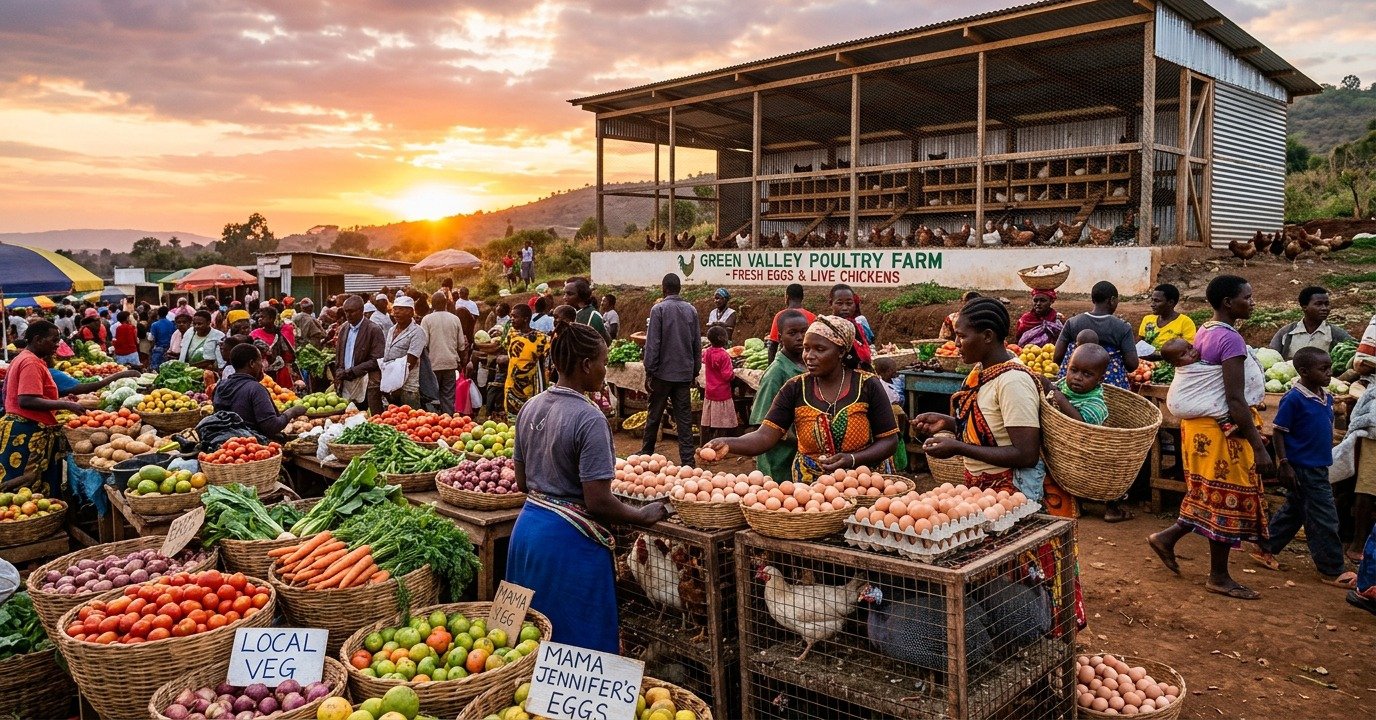
This is where farms like Otto’s Farms play a vital role. By focusing on local production of poultry, eggs, and livestock, we are building a decentralized food network that doesn’t rely on a ship passing through the Strait of Hormuz.
Local farms provide:
-
Price Stability: By sourcing inputs locally whenever possible, we can avoid some of the extreme volatility of the global market.
-
Freshness and Reliability: Local food doesn’t have a “shelf-life” consumed by 20-day shipping detours around the Cape of Good Hope.
-
Community Resilience: Supporting a local farmer means keeping money within the local economy, which strengthens the community’s ability to withstand global economic storms.
The conflict in the Middle East is a stark reminder of how interconnected our world has become. While we cannot control the geopolitical tensions in far-off regions, we can control how we respond. The path to a food-secure Africa lies in reducing our dependence on global “chokepoints” and reinvesting in our own soil.
By supporting local farmers and adopting sustainable, domestic agricultural practices, we can ensure that African dinner tables remain full—no matter what happens across the seas.
FAQ: Middle East Conflict & African Food Prices
Why do Middle East conflicts affect food prices in Africa? The Middle East is a major supplier of the world’s oil and fertilizer. Conflict there raises fuel and transport costs and disrupts the supply of agricultural inputs, making it more expensive to grow and move food in Africa.
How does the oil price affect agriculture? Oil is used for everything in farming: running tractors, powering irrigation, and transporting goods. When oil prices rise, every stage of the food supply chain becomes more expensive.
Can local farming reduce food price shocks? Yes. Local farms are less dependent on international shipping and global trade routes. By producing food closer to the consumer, we can bypass many of the costs and risks associated with global conflicts.