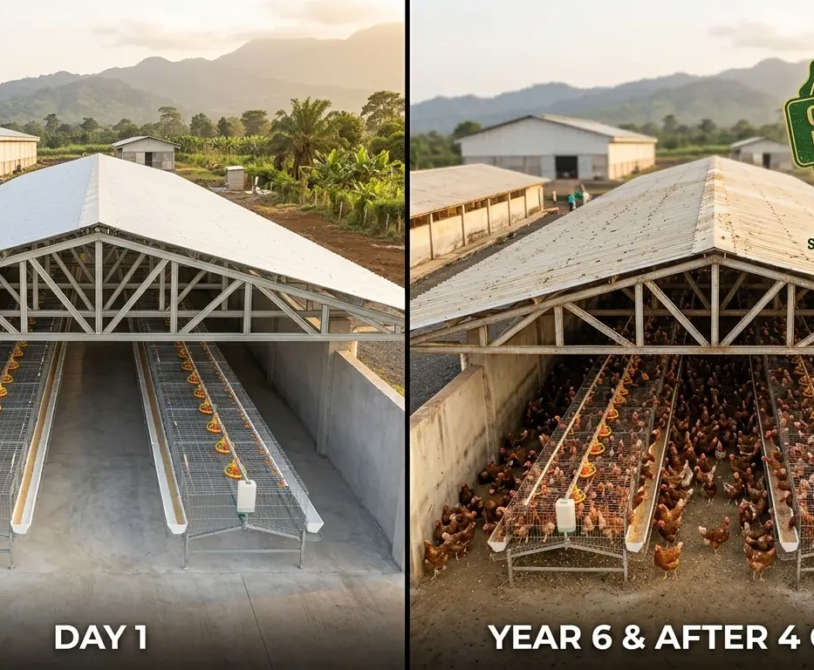
The spent hen is the last financial transaction in a layer production cycle. After 72 weeks of egg production, 504 days of feed cost, and a complete vaccination and health management program, the commercial layer hen has one final economic value: her body weight, sold either live or slaughtered, to a buyer who will process her for meat.
Most layer farmers treat depopulation as an administrative event — something that happens when the eggs stop coming at a commercially viable rate, and the house needs to be cleaned out for the next flock. Few treat it as a revenue optimization opportunity. Fewer still know that depopulation timing, pre-slaughter management, and market channel selection can increase spent hen revenue by 40–80% above what an unmanaged depopulation produces.
This article covers the complete economics of spent hen culling and sales: when to depopulate for maximum cycle profitability, how to maximize live weight and carcass value before sale, which market channels pay most for spent hens, how to negotiate spent hen price, and what role individual bird culling during the laying cycle plays in both production performance and revenue optimization.
The Economic Logic of Depopulation Timing
When Does a Hen Become “Spent”?
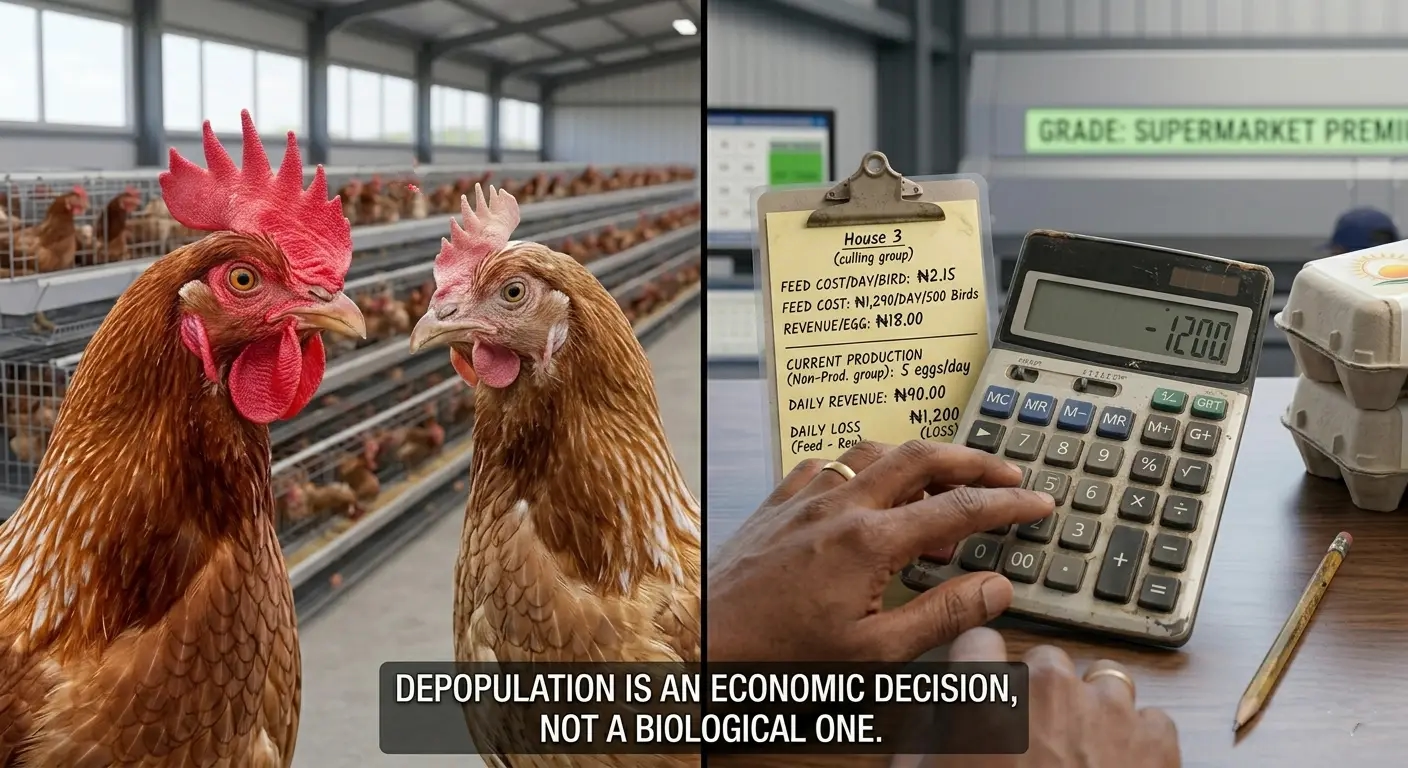
A laying hen is not spent when she stops laying. She is spent when the cost of keeping her exceeds the marginal revenue she generates — the economic threshold, not the biological one.
The depopulation calculation:
At any point in the late-lay period, the farmer must compare:
Daily Revenue per Hen:
- Laying rate at current age × egg price = Revenue per hen per day
- Example: At week 68, 1,000 hens at 70% laying rate at XAF 140 (USD 0.23) per egg = XAF 98,000 (USD 163)/day ÷ 1,000 hens = XAF 98 (USD 0.16) per hen per day
Daily Cost per Hen:
- Feed: 120g/day at XAF 350/kg (USD 0.58/kg) = XAF 42 (USD 0.07) per hen per day
- Health, labor, utilities proportional allocation: approximately XAF 18 (USD 0.03) per hen per day
- Total daily cost: XAF 60 (USD 0.10) per hen per day
Daily Margin per Hen:
- XAF 98 − XAF 60 = XAF 38 (USD 0.06) per hen per day — still positive
At week 72, declining further:
- 1,000 hens at 65% laying rate at XAF 140 per egg = XAF 91 (USD 0.15) per hen per day
- Daily cost: XAF 62 (USD 0.10) per hen per day
- Daily margin: XAF 29 (USD 0.05) per hen per day — still positive but declining
At the break-even laying rate:
- Revenue per hen = Cost per hen
- XAF 60/day ÷ XAF 140/egg = 42.9% laying rate minimum (at XAF 350/kg feed and XAF 140/egg)
- Below 42.9% laying rate, every additional day of production costs more than it earns
This calculation must be run monthly from week 60 onward, updating both laying rate and egg price as they change. It determines the economic depopulation threshold — the laying rate below which depopulation is more profitable than continued production.
The Opportunity Cost of Delayed Depopulation
Late depopulation — keeping a flock beyond its economic threshold — costs the farm in two ways:
Direct cost: Every day a hen is kept below the break-even laying rate, the farm spends more than it earns. At XAF 30 (USD 0.05) below break-even per hen at 1,000 birds, 30 days of late depopulation costs XAF 900,000 (USD 1,500) net.
Opportunity cost: Every day the house is occupied by an economically exhausted flock is a day the house is not available for the next rearing cycle. A 4-week delayed depopulation delays the next cycle’s first egg by 4 weeks, which, if the next cycle were to peak during a high-demand seasonal period (November-December), costs XAF 200,000–500,000 (USD 333–833) in lost premium pricing opportunities.
The combined direct and opportunity cost of a 4-week late depopulation in a 1,000-bird house can easily reach XAF 1,000,000–1,500,000 (USD 1,667–2,500) — more than the value of the spent hens themselves.
The Opportunity Cost of Early Depopulation
Early depopulation — culling before the economic threshold — is equally costly in the opposite direction. A flock depopulated at week 65, when the economic break-even threshold is not reached until week 74, has left 9 weeks of positive-margin production on the table.
A flock generating XAF 38 (USD 0.06) daily margin per hen:
- 9 weeks × 7 days × 1,000 hens × XAF 38 = XAF 2,394,000 (USD 3,990) in foregone profit
Early depopulation decisions are typically driven by impatience, incorrect break-even calculation, or the desire to avoid the management complexity of a declining flock. None of these is a sound economic reason.
The Correct Depopulation Decision Framework
Depopulate when all three of the following conditions are met:
- Current laying rate is at or below the break-even threshold (calculated from actual feed cost, actual egg price, and actual daily operating cost)
- The declining trajectory shows laying rate will not recover above break-even — distinguishing a temporary dip from a permanent decline requires 2–3 weeks of data confirming the trend.
- The next cycle’s placement timing is defined, and the cleanout + rest period before that placement is 4–6 weeks.
If any of these three conditions is not met, the depopulation decision should be deferred until it is.
In-Cycle Culling: The Revenue and Performance Opportunity During Lay
Individual bird culling during the laying period is both a production management tool and a revenue event. Non-productive hens in a laying flock consume feed without producing eggs — they worsen FCR, occupy space, and compete for feeder and drinker access. Removing them improves production metrics and recovers their live weight value as spent hen revenue mid-cycle.
Identifying Cull Birds During Lay
Non-productive or low-productive hens are identifiable during the laying period through a combination of physical and production indicators:
Physical indicators of non-laying status:
- Pale, dry, shrunken comb: A non-laying hen’s comb reflects the low estrogen of reproductive inactivity — pale and underdeveloped compared to the vivid red comb of a productive hen
- Dry, round vent: A laying hen has a moist, enlarged, oval vent. A non-laying hen has a dry, small, round vent.
- Pelvic bone width: In a laying hen, two or more fingers fit between the pelvic bones. In a non-layer, the gap is one finger or less
- Full body condition: Non-layers are often in better body condition than productive hens — they divert feed to body reserves rather than egg production. An unusually fat, heavy hen in a laying flock is a candidate for culling assessment
Production indicators:
- Any hen that produces zero eggs for 3 consecutive days in a well-lit, well-fed, disease-free flock is a non-productive candidate for culling evaluation (in cage systems where individual cage production can be confirmed)
The Economics of In-Cycle Culling
A non-productive hen in a laying house at week 35 consumes approximately 120g of feed per day at XAF 350/kg (USD 0.58/kg) — XAF 42 (USD 0.07) per day — and produces no revenue. Over 30 days, a single non-productive hen costs XAF 1,260 (USD 2.10) in feed alone.
If that hen is sold as a live cull at XAF 1,500–2,500 (USD 2.50–4.17) per bird, the farm recovers her immediate cull value (XAF 1,500–2,500) plus avoids 30 days of feed cost (XAF 1,260) — a total financial benefit of XAF 2,760–3,760 (USD 4.60–6.27) compared to keeping her unproductive for another month.
Monthly cull identification and removal at a 1,000-bird farm:
- Identifying and removing 2% of the flock as non-productive birds monthly = 20 birds/month
- Revenue: 20 birds × XAF 2,000 (USD 3.33) average live price = XAF 40,000 (USD 67)/month
- Feed cost avoided: 20 birds × XAF 42/day × 30 days = XAF 25,200 (USD 42)/month
- Combined benefit: XAF 65,200 (USD 109)/month from active culling management
Over a 40-week laying period in which monthly culling is practiced (weeks 20–60), the cumulative benefit is approximately XAF 650,000 (USD 1,083) — equivalent to the vaccine cost for an entire cycle.
Spent Hen Sales During the Ramadan and Festival Periods
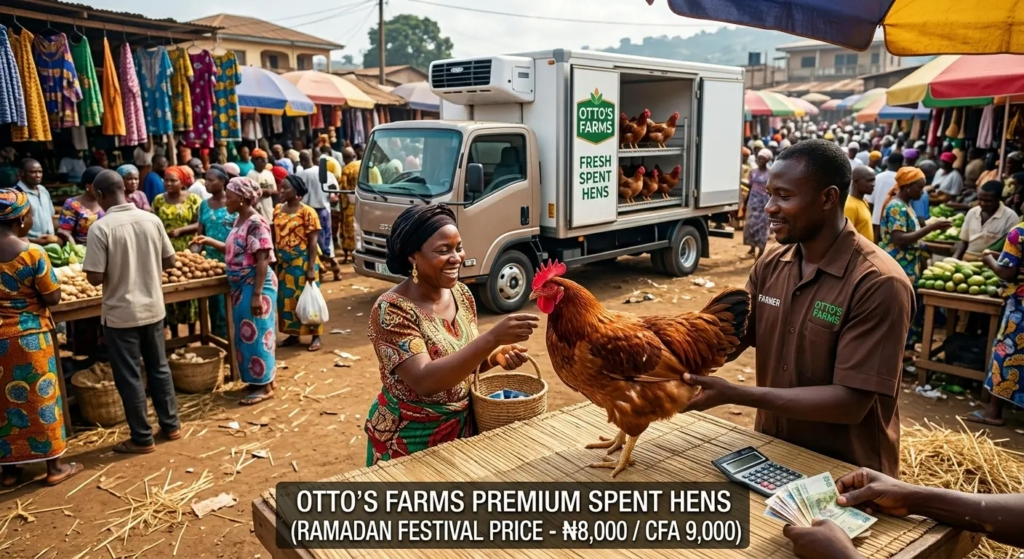
In-cycle culled birds sold during festival periods — Ramadan, Christmas, Easter — command 15–35% above normal cull prices because demand for live poultry for home slaughter peaks during these periods. A bird sold as a live cull in December at XAF 2,800 (USD 4.67) earns significantly more than the same bird sold in March at XAF 1,800 (USD 3.00). Strategic timing of cull batches toward festival demand peaks increases their unit value by XAF 500–1,000 (USD 0.83–1.67) per bird without any additional management investment.
Pre-Depopulation Management: Maximizing Spent Hen Value
The decision to depopulate is made when the economic threshold is reached. The execution of depopulation can be managed over 2–4 weeks in a way that maximizes the weight and condition of hens at sale.
Feed Management Before Depopulation
The spent hen’s market value is primarily determined by her live weight. A hen that enters the final 4 weeks of the laying cycle in declining body condition — typical of very late-lay birds whose feed allocation has been reduced to control late-lay FCR — may be 10–15% underweight relative to her potential at full feed.
Pre-depopulation feeding protocol:
- From 4 weeks before the planned depopulation date, provide feed ad libitum (free access, no restriction)
- Increase energy density of the ration slightly (add 1.5–2% fat) to accelerate live weight gain
- Do not increase protein significantly — protein above the maintenance requirement is expensive and not efficiently converted to body weight at this stage
- Target: 50–75g body weight gain over the 4-week pre-depopulation period (from approximately 1,800g to 1,850–1,875g average live weight)
Revenue impact of pre-depopulation feed management:
At 1,850g vs. 1,800g average live weight at a paid price of XAF 1,200 (USD 2.00) per kg:
- 1,000 hens × 0.050 kg weight gain × XAF 1,200/kg = XAF 60,000 (USD 100) additional revenue
The feed cost of 4 weeks of ad libitum feeding above maintenance for 1,000 hens:
- Additional feed consumption: approximately 10g/bird/day × 28 days × 1,000 hens = 280 kg additional feed
- Cost: 280 kg × XAF 350/kg = XAF 98,000 (USD 163)
At first glance, the feed cost (XAF 98,000) exceeds the weight gain revenue (XAF 60,000). However, the analysis is incomplete without including the egg revenue generated during those 4 weeks by hens who are still producing at a 65–70% laying rate. The additional feed supports both the weight gain and the continued egg production — the combined benefit exceeds the cost.
Water Management Before Depopulation
Dehydration before transport reduces live weight at sale and stresses birds unnecessarily. Maintain full water access until the moment of loading — do not withdraw water more than 4–6 hours before transport to the buyer.
Timing the Sale: Morning vs. Afternoon
Hens sold in the morning, before their first feed and water intake of the day, weigh less than hens sold in the afternoon, after a full day’s consumption. For live weight-based pricing, timing the sale for mid-afternoon — when crop and intestinal fill are at their maximum — can add 50–80g per bird of measurable weight at sale.
At 1,000 birds and XAF 1,200/kg (USD 2.00/kg), this 50–80g difference is worth: 1,000 × 0.065g average × XAF 1.20/g = XAF 78,000 (USD 130) additional revenue from sale timing alone.
Market Channels for Spent Hens: Price and Volume Comparison
Channel 1: Live Sale to Wholesale Poultry Traders
The most common spent hen disposal channel in West and Central Africa. Wholesale poultry traders buy entire flocks live, arrange their own transport, and resell to live bird markets, butchers, and street food vendors.
Typical prices in Cameroon and Nigeria (2026):
- Average live weight spent hen: 1.7–1.9 kg
- Wholesale trader price: XAF 900–1,300/kg live weight (USD 1.50–2.17/kg) in Cameroon; NGN 2,200–3,500/kg (USD 1.30–2.06/kg) in Nigeria
- Per bird: XAF 1,530–2,470 (USD 2.55–4.12) in Cameroon at average weight
- Advantages: Fast transaction, buyer collects from the farm, no transport cost to the producer
- Disadvantages: Lowest price per bird; buyer negotiates entire flock at wholesale discount
Negotiating with wholesale traders:
- Never accept the first offer — initial bids are typically 15–25% below the buyer’s maximum price
- Get quotes from at least three different buyers before accepting
- Provide the buyer with average live weight documentation (sample-weigh 20–30 birds and extrapolate) to support your price position
- Time the sale to coincide with a festival period, where possible (see above)
Channel 2: Direct Sale to Butchers and Processors
Butchers who slaughter and sell chicken at market stalls will often buy spent hens directly from the farm if approached with a reliable volume offer. They pay higher per-unit prices than wholesale traders because they are capturing the middleman’s margin.
Typical butcher prices (Cameroon, 2026):
- Slaughtered and clean (dressed weight): XAF 1,800–2,800/kg (USD 3.00–4.67/kg)
- Live delivery to butcher’s premises: XAF 1,100–1,600/kg (USD 1.83–2.67/kg) — farmer transports
- Per bird lives at the farm: XAF 1,870–3,040 (USD 3.12–5.07) if the farmer arranges transport to the butcher
Logistical requirement: The farmer must arrange transport — typically a hired truck or motorcycle trailer — to deliver birds to the butcher’s location. Transport cost: XAF 50,000–150,000 (USD 83–250) for 1,000 birds, depending on distance. Net benefit vs. wholesale collection: typically XAF 200,000–500,000 (USD 333–833) additional revenue for 1,000 birds after transport cost, depending on distance and butcher price.
Channel 3: Restaurant and Catering Direct Sales
Restaurants that use older stewing hens (poules locale) in traditional dishes — pepper soup, ndolé, egusi soup, groundnut soup — are consistent buyers of spent commercial layers, which are interchangeable in cooking applications with traditional village hens. Institutional kitchens (hotels, hospital catering, school feeding programs) similarly source spent hens for stewed preparation, where texture from older birds is preferred.
Direct restaurant/catering prices:
- Live or slaughtered delivery: XAF 1,500–2,200/kg (USD 2.50–3.67/kg) live equivalent
- Per bird: XAF 2,550–4,180 (USD 4.25–6.97) per bird at 1.7 kg average
- Advantage: Highest per-unit price; direct relationship without intermediary
- Disadvantage: Requires pre-arranged buyer relationship, smaller individual purchase volumes, possibly requiring phased delivery over several weeks rather than a single depopulation event
For farms with established restaurant relationships — developed during the laying period for egg supply — the spent hen sale is an extension of an existing commercial relationship at premium pricing.
Channel 4: Live Bird Market Sales (Self-Arranged)
Transporting hens to an open-air live bird market and selling directly to consumers commands retail-level prices rather than wholesale prices. A spent commercial layer sold at retail in an open-air market at XAF 2,000–3,000 (USD 3.33–5.00) per bird returns the highest per-bird revenue.
Reality check: Selling 1,000 hens individually through a live bird market requires multiple market days, transport costs for multiple trips, and the farmer’s personal time at the market stall. For small farm depopulations (100–200 birds), this channel is viable. At 1,000 birds, the labor cost of the approach typically erases the price premium.
Hybrid approach: Sell 80% of the flock to a wholesale trader for immediate revenue and sell the remaining 20% (the best-conditioned, heaviest birds) through the live market over 2–3 weeks for maximum per-bird value. This captures both volume efficiency and premium pricing without sacrificing the full flock for wholesale discount.
Market Channel Price Comparison (Per 1,000-Bird Flock, 1.8 kg Average)
| Channel | Price/kg | Price/Bird | Total Revenue (XAF) | Total Revenue (USD) | Net After Transport (XAF) |
|---|---|---|---|---|---|
| Wholesale trader (farm gate) | 1,100 | 1,980 | 1,980,000 | 3,300 | 1,980,000 |
| Butcher (farmer transports) | 1,350 | 2,430 | 2,430,000 | 4,050 | 2,280,000 |
| Restaurant/catering (direct) | 1,700 | 3,060 | 3,060,000 | 5,100 | 2,860,000 |
| Live market (self-sell) | 2,200 | 3,960 | 3,960,000 | 6,600 | 3,510,000 |
| Hybrid (80% wholesale + 20% market) | Blended | 2,272 | 2,272,000 | 3,787 | 2,122,000 |
The revenue difference between wholesale trader (XAF 1,980,000 / USD 3,300) and restaurant direct sale (XAF 2,860,000 / USD 4,767 after transport) for the same 1,000 birds is XAF 880,000 (USD 1,467) — nearly a month’s additional net profit from channel selection alone.
Regulatory and Biosecurity Considerations at Depopulation
Disease Status Disclosure
Before any spent hen sale, the farm manager must assess and disclose to the buyer any ongoing or recent disease events in the flock. Selling birds from an active disease event:
- Spreads pathogens to new environments (particularly dangerous for Newcastle disease virus)
- May constitute a legal liability if a subsequent disease is traced to the sale
- Will destroy the farm’s commercial reputation with professional buyers who discover the transaction
If the flock has experienced a recent (within 4 weeks) Newcastle disease event, consult a veterinarian before proceeding with any live bird sale. The sale may need to be delayed until the flock is clinically clear and serologically confirmed recovered, or alternative disposal (slaughter and local sale, incineration of affected birds) may be required.
Litter and Manure Disposal Economics
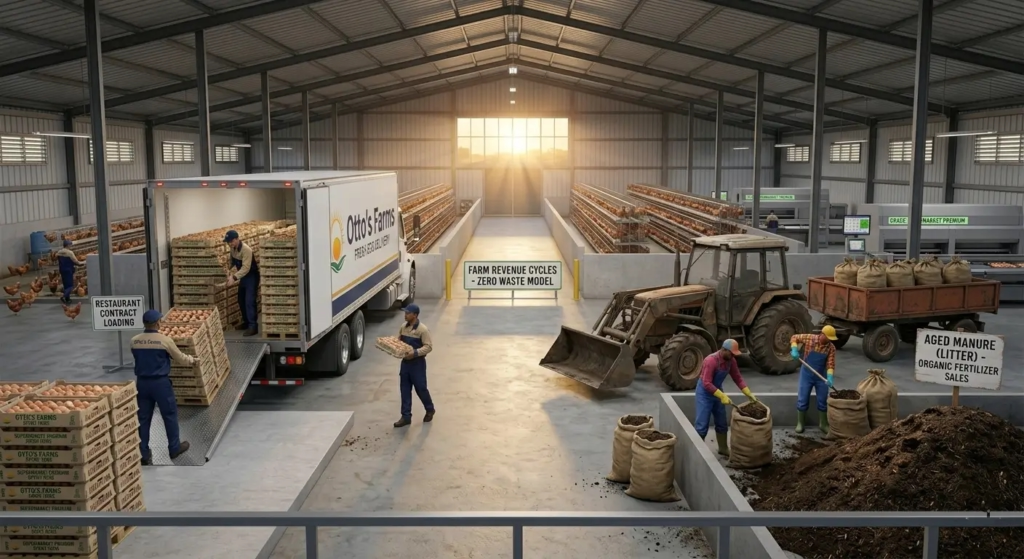
Post-depopulation litter has fertilizer value — nitrogen, phosphorus, and potassium in concentrated form. Poultry manure from a 1,000-bird flock over a 72-week cycle: approximately 15–25 tonnes of material (including litter substrate).
Manure sale value:
- Market price for aged poultry manure in Cameroon and Nigeria: XAF 10,000–25,000 (USD 17–42) per tonne
- 15–25 tonnes × XAF 15,000 average = XAF 225,000–375,000 (USD 375–625) additional revenue
This revenue is frequently overlooked in depopulation. Local vegetable farmers, maize growers, and horticultural operations within 10 km of most peri-urban layer farms are willing buyers. Establish the relationship before the cleanout begins — not during it, when the pressure to clear the house creates negotiating disadvantage.
The Complete Depopulation Revenue Model
Combining all depopulation revenue sources:
1,000-bird farm at depopulation (base case — wholesale channel):
| Revenue Source | Amount (XAF) | Amount (USD) |
|---|---|---|
| Spent hen sales (wholesale, 900 birds at 1.8 kg, XAF 1,100/kg) | 1,782,000 | 2,970 |
| Litter/manure sales | 300,000 | 500 |
| Final week egg sales (week 72, 650 eggs at XAF 140) | 91,000 | 152 |
| Total depopulation revenue | 2,173,000 | 3,622 |
1,000-bird farm at depopulation (optimized — direct channel):
| Revenue Source | Amount (XAF) | Amount (USD) |
|---|---|---|
| Spent hen sales (restaurant + butcher channel, 900 birds at 1.8 kg, XAF 1,700/kg) | 2,754,000 | 4,590 |
| Litter/manure sales | 350,000 | 583 |
| Final week egg sales | 91,000 | 152 |
| Less transport costs | −150,000 | −250 |
| Total depopulation revenue (optimized) | 3,045,000 | 5,075 |
The difference between a managed depopulation (XAF 3,045,000 / USD 5,075) and an unmanaged one (XAF 2,173,000 / USD 3,622) is XAF 872,000 (USD 1,453) — achieved through channel selection, timing, and manure sales rather than any additional production input.
Summary
Spent hen revenue is not a fixed amount that arrives when the flock is depopulated. It is a variable that is determined by three management decisions: when to depopulate (breaking the economic threshold correctly — neither too early nor too late), how to prepare the birds (pre-depopulation feeding and sale timing for maximum weight), and which channel to sell through (direct relationships with butchers and restaurants vs. wholesale traders who capture the margin the farm could own).
In-cycle culling adds a parallel revenue stream and production management benefit — non-productive birds removed monthly return immediate cash while improving FCR and flock uniformity for the remaining productive population.
The total incremental value of managed vs. unmanaged depopulation and in-cycle culling across a 72-week production cycle at 1,000-bird scale: approximately XAF 1,200,000–1,800,000 (USD 2,000–3,000). This is real money created from the same birds, in the same facility, without a single additional management cost — purely from the financial intelligence applied to the transaction.
The final egg was laid weeks ago. The farm is not finished earning from it.
Download the analysis in PDF here is the link: Spent_Hen_Economics_Ottos_Farms.pdf