The gilt is not a market pig that you decided to keep. She is the foundation of your breeding herd — the animal whose reproductive performance will determine litter sizes, weaning weights, and PSY for the next 5–7 parities. A gilt selected carelessly, retained because she was available rather than because she was suitable, enters the breeding herd carrying structural and anatomical deficiencies that will become operational problems: a sow that cannot nurse a large litter because her teat number is inadequate, a sow culled at parity 2 because her legs could not support her body weight through two pregnancies, a sow that cycles irregularly because her reproductive tract development was compromised.
The cost of a culled sow is not just the value of the animal at culling. It is the capital cost of the replacement gilt, the lost litters she would have produced, the disruption to the batch farrowing schedule, and the management time spent on a sow that should never have been selected in the first place.
Good gilt selection is not complicated. It requires a defined checklist, the discipline to apply it to every candidate, and the willingness to reject animals that fail any criterion — even when the available pool is small, and the pressure to retain borderline animals is high. An undersized retained gilt pool is always preferable to a gilt pool populated with animals whose productive futures are already compromised at selection.
This article provides that checklist: 10 specific physical traits, how to assess each one, what the correct standard looks like, and what a failing candidate looks like. Applied at 150–180 days of age, these 10 criteria identify the gilts worth breeding and the ones worth selling to the market.
When to Select: The Assessment Window
Gilt selection should occur between 150 and 200 days of age — when the candidate has accumulated enough growth to allow accurate assessment of all 10 traits, but before she is old enough to have missed her first estrus cycles without being bred.
Selection sequence:
- Primary visual selection (150–170 days): Walk the candidate pen and visually assess all candidates for obvious disqualifying traits (teat number, gross leg abnormalities, inadequate size). Remove obvious failures from the candidate pool without detailed physical examination.
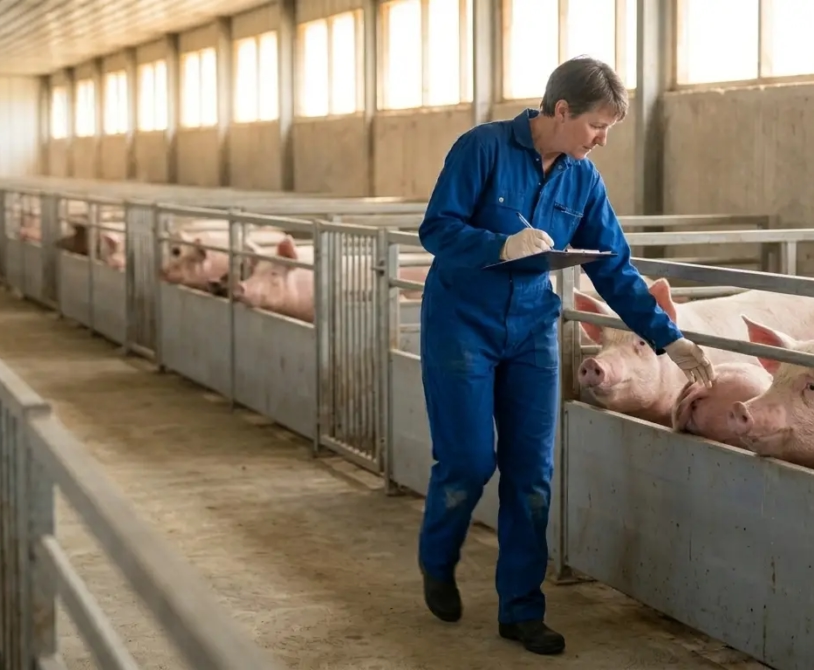
- Detailed physical examination (170–200 days): Individually assess each candidate for all 10 traits. Record findings on a selection form. Retain only animals that meet all 10 criteria.
- Estrus observation period (180–210 days): Confirm that retained gilts show visible estrus signs within the expected window. Gilts that do not show estrus by 210 days despite boar exposure should be re-evaluated.
The selection ratio: Expect to retain 60–75% of candidates after applying all 10 criteria rigorously. If the retention rate is above 80%, either the criteria are being applied too loosely, or the candidate pool has exceptional quality. If the retention rate is below 50%, either the criteria are being applied incorrectly, or the source population has systematic quality problems that should prompt a conversation with the gilt supplier.
Trait 1: Teat Number and Quality
Why is it the First Criterion
Teat number is the single most important physical trait in gilt selection — because it cannot be improved after selection, it directly determines the maximum litter size the sow can successfully nurse, and it is the easiest disqualifying criterion to assess visually.
The Correct Standard
Minimum teat count: 14 teats, evenly spaced, functional configuration
Modern commercial pig genetics manuals (PIC, Topigs Norsvin, Genus) specify a minimum of 14 functional teats as the selection standard for breeding gilts. This minimum is not arbitrary — it matches the industry expectation that commercial sow litters will average 12+ pigs born alive, requiring that the sow has adequate teats for the entire litter to nurse simultaneously without competition.
A sow with 12 teats nursing a litter of 13 must either:
- Allow the slowest, smallest piglets to miss nursing bouts — creating the “runts” that have the highest mortality risk, or
- Nurse in rotations that disadvantage some piglets — reducing weaning weight uniformity and increasing pre-weaning mortality
Both outcomes are expressions of inadequate teat number, and both begin at the gilt selection decision.
How to Assess
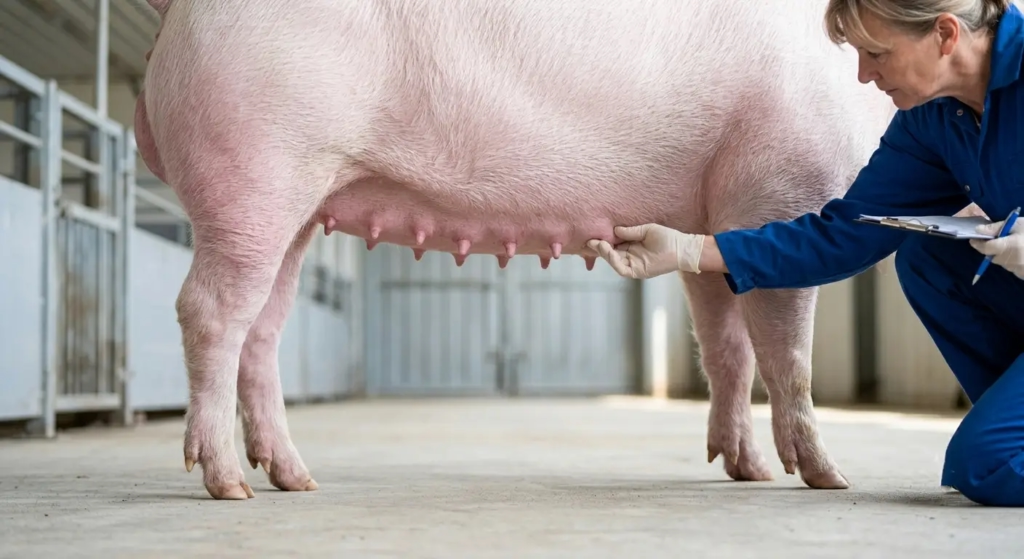
Position the gilt standing or restrained on her side. Count each teat individually from the front pair (at the chest) to the last pair (in the flank/inguinal region). Count only:
- Structurally normal teats: A raised nipple with a distinct, palpable teat canal, capable of milk secretion
- Evenly spaced: Each pair of teats should be clearly separated from adjacent pairs by at least 2–3 cm
- On both sides of the mammary line: The teat count should be approximately equal on each side (7 per side for a 14-teat minimum)
Disqualifying conditions:
- Inverted nipples (crater nipples): The nipple tip is depressed below the surface of the mammary gland rather than raised above it. Piglets cannot grasp an inverted nipple — it provides no functional nursing capacity regardless of the mammary tissue behind it. Inverted nipples are inherited — a gilt with inverted nipples has a higher than average probability of producing daughters with the same defect. Disqualify any candidate with any inverted nipple.
- Blind nipples: Structurally normal in appearance but with no palpable teat canal — essentially a false teat that will not produce milk. Difficult to distinguish from functional teats before parturition, but can sometimes be identified by the absence of the characteristic firmness of a functional teat under palpation.
- Supernumerary nipples: Extra nipples closely positioned adjacent to a functional nipple — they occupy space on the mammary line but typically do not develop functional glandular tissue. They are not counted toward the 14-teat minimum.
- Fewer than 14 functional, evenly spaced teats: Hard disqualification regardless of all other traits. No other physical trait compensates for inadequate teat number.
Trait 2: Leg Structure and Foot Conformation
Why It Matters
Leg and foot problems are the second most common cause of sow premature culling globally, behind reproductive failure but ahead of all disease-related causes. A gilt whose leg structure is compromised at selection will not improve as she gains weight through pregnancy and lactation. She will worsen — and she will be culled 2–3 parities earlier than a structurally sound contemporary, wasting the investment in her nutrition, vaccination, and housing from selection to first farrowing.
How to Assess
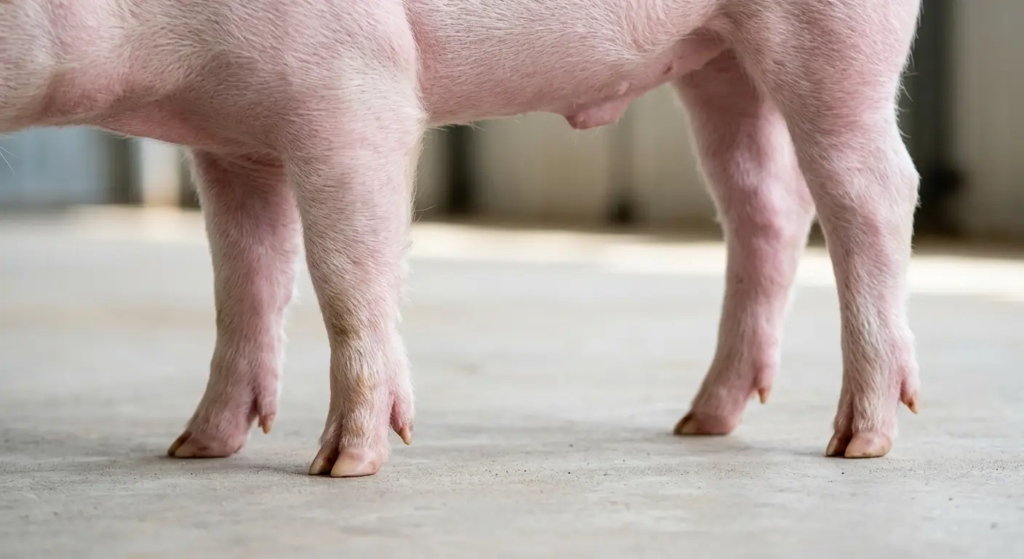
Observe the candidate walking freely in a pen, then standing still on a solid, level concrete surface. Assess all four limbs systematically.
Front legs (assessed from the front):
- Correct: Vertical cannon bones, straight pasterns, hooves pointing forward with equal weight distribution between the two toes
- Disqualify for: “Toed-in” (pigeon-toed) or “toed-out” stance; visible lateral deviation of the cannon bone (“bowing out”); knuckling of the pastern joint (pastern collapses forward rather than maintaining the correct angle)
Rear legs (assessed from behind and from the side):
- Correct from behind: Vertical cannon bones, narrow hock-to-hock distance relative to hip width, straight pasterns, hooves pointing forward
- Correct from the side: Moderate angle at the stifle (knee) and hock — not excessively straight (post-legged) or excessively angled (sickle-hocked)
- Disqualify for (rear): “Post-legged” (hock joint nearly straight when viewed from the side) — this conformation transfers impact forces directly to the hip joint during movement, causing arthritis; “sickle-hocked” (excessive bend at the hock when viewed from the side) — causes instability and tendon stress; cow hocks (hocks angling toward each other when viewed from behind) — associated with hip dysplasia in pigs and causes irregular gait that worsens under breeding sow body weight
Pasterns and hooves:
- Correct: Pastern at approximately 45–55° angle to the ground; both toes of equal size and shape; hoof wall intact with no cracks
- Disqualify for: Broken-down pasterns (pastern lies nearly flat on the ground — the sow’s weight is carried on the dewclaws and lower pastern rather than the sole); excessively upright pasterns (transfers shock to the ankle and leg structures rather than absorbing it through the pastern angle); unequal toe size (larger outer dewclaw vs. inner — indicates abnormal weight distribution)
The walking assessment: Watch the gilt walk 5–10 meters in a straight line. She should move with a rhythmic, even stride, each leg swinging forward with equal reach and equal force contact. Any lameness — visible hesitation, shortened stride, leg-lifting, or reluctant weight-bearing — is a disqualifying finding regardless of what static conformation assessment shows.
Trait 3: Body Size and Frame Relative to Age
The Standard
At 180 days of age, a commercial gilt (ISA Brown, Lohmann Brown, Large White, or Landrace genetics) should weigh approximately:
- Large White: 100–130 kg
- Landrace: 95–125 kg
- Duroc (if used as a gilt): 105–135 kg
A gilt significantly below these ranges at 180 days is either genetically limited in growth rate (unlikely to achieve adequate mature body size) or has been nutritionally restricted during development. Either explanation predicts reproductive limitation: inadequate body size at first breeding is associated with small first-parity litters, higher dystocia rates, and failure to cycle regularly after weaning.
The body condition assessment: At selection, the gilt should be in Body Condition Score (BCS) 3.0–3.5 on the standard 1–5 scale:
- BCS 3.0: Can feel the spine and ribs with moderate pressure; slight fat cover visible over the loin
- BCS 3.5: Spine can be felt but requires firm pressure; good fat cover visible over loin and hindquarters
Disqualify if: BCS below 2.5 (too thin — insufficient fat reserves for first pregnancy and lactation) or above 4.0 (too fat — associated with farrowing difficulties, reduced milk production, and metabolic problems in early lactation)
Trait 4: Vulva Development
Why It Predicts Reproductive Readiness
Vulva size and development is the most reliable external indicators of reproductive tract maturity in gilts. A well-developed vulva at 180 days indicates adequate estrogen-driven reproductive development — the same hormonal environment that drives follicular development, uterine development, and the capacity for regular cycling.
The Correct Standard
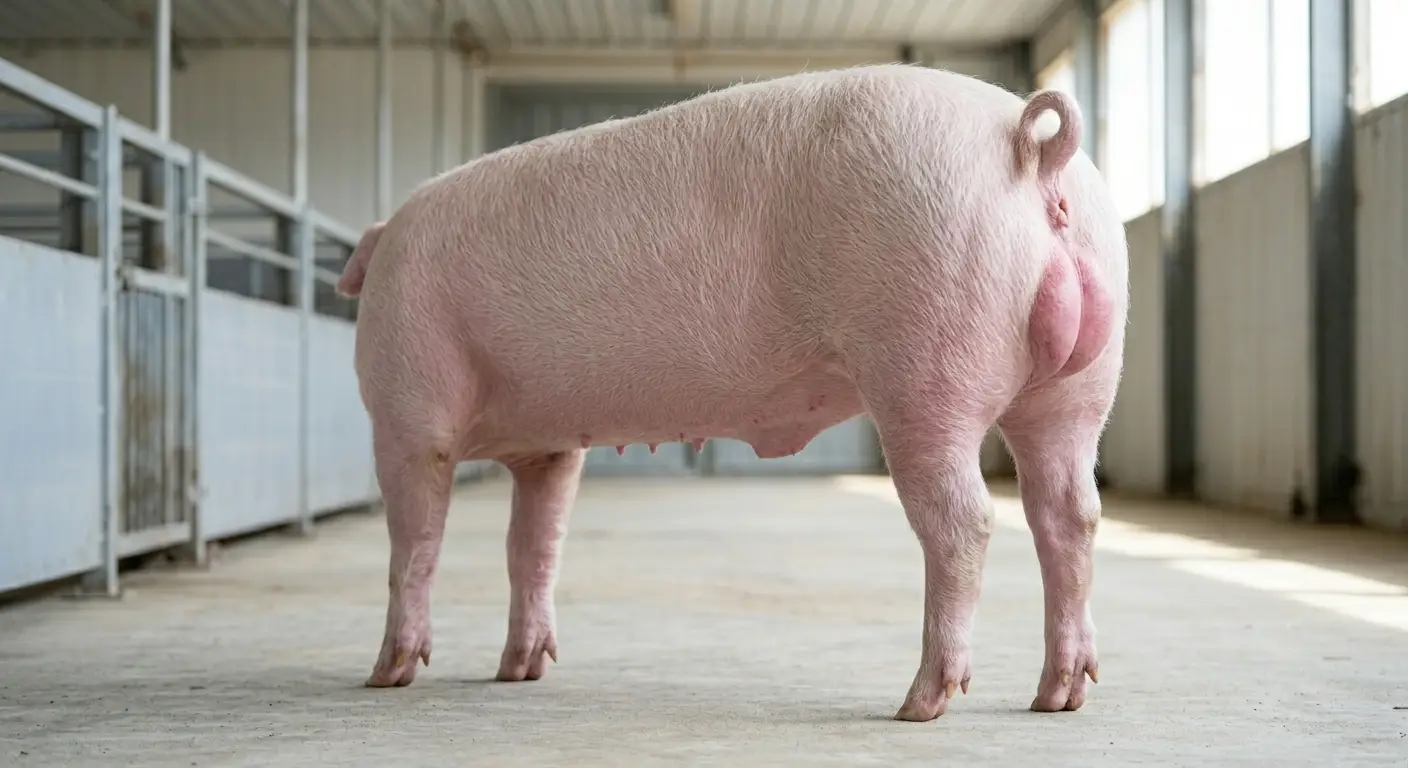
The vulva should be large, well-defined, and positioned vertically below the tail head — visible without manipulation when the gilt is standing normally.
Correct appearance: The vulva lips are prominent, slightly moist, and the vulvar opening is clearly defined. When viewed from behind, the vulva appears as a distinct vertical slit below the anus, with lips that have clearly separated from the juvenile’s fused appearance.
Disqualify if:
- Infantile vulva: Small, underdeveloped, lips still partly fused — indicates delayed puberty onset that may reflect endocrine dysfunction or inadequate developmental nutrition
- Tipped vulva: The vulva points forward (anteriorly) rather than downward — associated with anatomical abnormalities of the reproductive tract that increase urinary tract infection risk (ascending infections from urine flowing across the vulvar lips) and farrowing difficulty
- Hooked vulva: The ventral (lower) commissure of the vulva is sharply angled, associated with perineal abnormalities that predispose to prolapse after farrowing
Trait 5: Underline Symmetry and Mammary Development
Beyond Teat Count
After confirming teat number (Trait 1), assess the symmetry and mammary development of the udder as a second-order indicator of future lactation capacity.
Correct mammary development at 180 days:
- Mammary tissue visible as a slight elevation along the underside at each teat position
- Both mammary lines (left and right) are symmetrical and comparable in development along their full length
- Teat pairs are bilateral (paired across the center line), not offset asymmetrically
Disqualify if:
- Lopsided mammary development: One mammary chain is significantly less developed than the other — indicates asymmetric glandular tissue development that predicts lower milk output from the less-developed side, effectively reducing functional nursing capacity below the counted teat number
- Hernias along the mammary line: Any soft, reducible swelling along the underline — umbilical or inguinal hernias are common in pigs and disqualify a candidate as a breeding female (hernia repair surgery is rarely economically justified in sows, and hernia susceptibility has a heritable component)
Trait 6: Body Length and Depth
The Structural Capacity Indicator
Body length and depth predict litter capacity — a longer, deeper-bodied sow has greater uterine horn length and abdominal volume to accommodate a large litter. Short, compact gilts are more likely to show farrowing difficulties (dystocia) from limited abdominal space as litter numbers increase in successive parities.
How to assess: Visually compare candidates in a group. The correct phenotype is:
- Long from shoulder to tailhead (Landrace genetics typically show this most clearly)
- Deep through the flank and rib (depth measured visually from topline to underline at the midpoint of the body)
- Wide across the hips — the pelvic width that will determine ease of farrowing
Disqualify if: Candidate is noticeably shorter or shallower than her contemporaries at the same age and weight. A compact, short-bodied gilt that is adequate in weight may simply be proportionally fatter rather than structurally developed, and fat gilts have more difficulty farrowing than lean, well-developed ones of the same age.
Trait 7: Temperament and Response to Handling
Why Temperament Is a Selection Criterion
A sow that cannot be managed safely during farrowing — when assistance with dystocia, piglet processing, or teat access for weak piglets requires the stockperson to work in the crate alongside an agitated sow — is a welfare and safety problem for both the farmer and the piglets.
Temperament has a documented heritable component: reactive, aggressive gilts are more likely to produce reactive, aggressive daughters. Selecting against extreme reactivity reduces the average temperament challenge in the breeding herd over successive generations.
How to assess: During the detailed physical examination, observe the gilt’s response to:
- Approach by a single person in the pen
- Gentle handling (touching the flank, lifting a leg)
- Moderate restraint (holding position for examination)
Correct temperament: The gilt may move away initially (normal flight response) but settles with calm handling and allows examination without sustained aggression. Some vocalization (squealing) during unfamiliar restraint is normal and not disqualifying.
Disqualify if:
- Extreme aggression: Biting, charging, or sustained aggressive response to calm handling — this is abnormal, even accounting for the stress of handling
- Extreme fearfulness: Uncontrollable panic responses, self-injury from escape attempts — indicates a temperament that will become a management problem in the farrowing crate
Trait 8: Skin and Coat Condition
The Health Indicator
Skin and coat condition is a visible summary of the gilt’s current health status and nutritional adequacy. A gilt with poor skin or coat condition at selection is either currently unwell, recently recovered from illness, or chronically nutritionally deficient — none of which predicts good reproductive performance.
Correct skin and coat at 180 days:
- Coat: sleek, lying flat, uniform coverage across the body
- Skin: smooth and even in color (pink for light breeds, darker pigmentation in colored breeds); no lesions, scabs, or rough patches that cannot be explained by recent skin abrasion
Assess specifically for:
- Mange (sarcoptic mange, Sarcoptes scabiei): Hypersensitivity reaction produces areas of skin thickening and crusting, typically at the ear margins, periorbital area, and ventral neck. Visible mange disqualifies the candidate — the condition is manageable with acaricide treatment, but a gilt showing clinical mange has likely had it for several weeks, indicating inadequate health management in the source population.
- Erysipelas diamond skin lesions: Raised, diamond-shaped reddish patches, particularly on the ears and flanks, indicate active erysipelas infection requiring treatment and a 3-week delay before reintroduction to selection assessment.
- Ringworm: Circular, scaly patches with clear centers — a fungal infection that resolves with treatment but indicates the candidate has been under immune stress.
- Coat roughness without skin lesion: May indicate chronic internal parasitism (heavy worm burden) — treat with broad-spectrum anthelmintic before final selection confirmation.
Trait 9: Structural Soundness of the Back and Topline
The Load-Bearing Assessment
The sow’s spine supports increasing abdominal weight through successive pregnancies. Structural abnormalities of the topline visible at gilt selection predict musculoskeletal problems that worsen under the stress of pregnancy and farrowing.
Correct topline:
- Level or very slightly arched from shoulder to tailhead — a slight natural arch (roach back) is acceptable if mild
- No visible lateral deviation (scoliosis — side-to-side curve of the spine)
- No visible vertical depressions or humps at individual vertebral levels
Assess from directly behind and from the side:
From the side: The topline should be smooth and continuous — no sharp dips or peaks at any point along the spine.
From behind: The spine should appear straight — any visible lateral deviation from the tail head perspective indicates scoliosis that will worsen under pregnancy weight.
Disqualify if:
- Pronounced roach back (severe dorsal arching that restricts spinal flexibility — associated with joint problems and difficulty rising in later parities)
- Any visible scoliosis (lateral spine deviation)
- Swayback (pronounced ventral dip in the lumbar region) — this conformation places abnormal stress on the lumbar vertebrae and is associated with hind limb weakness
Trait 10: Reproductive Tract History and Discharge Assessment
The Final External Indicator
At the detailed examination stage, perform a brief assessment of the external reproductive tract for any abnormal discharge that indicates pre-existing reproductive tract pathology.
What to look for: Observe the area beneath the tail and around the vulva for any discharge. Assess the character of any discharge found:
Normal: A small amount of clear mucus discharge at or around estrus is normal and indicates the gilt is cycling. Estrus-associated mucus is thin, clear to slightly opaque, and present transiently.
Disqualify if:
- Purulent (pus-containing) discharge: Yellow, green, or grey discharge with any opacity indicates uterine or vaginal infection (endometritis, vaginitis). This infection will recur after mating and causes early embryonic death and conception failure.
- Blood-tinged non-estrus discharge: Hemorrhagic discharge unrelated to estrus indicates reproductive tract pathology — ovarian cyst rupture, uterine hemorrhage, or trauma. Disqualify and assess for the underlying cause before any breeding decision.
- Persistent clear discharge in non-estrus phase: May indicate cystic follicular development or abnormal cervical discharge — both associated with reduced conception rates.
The rectal-vaginal check (advanced): In operations with a veterinarian available, a rectal examination of the reproductive tract can assess uterine size, ovarian development, and detect uterine abnormalities not visible externally. This is not required for routine gilt selection but adds diagnostic value when the external assessment raises uncertainty.
The Scoring System: Converting the Checklist to a Selection Decision
Apply a pass/fail standard to each of the 10 traits. There is no partial credit:
| Trait | Pass Standard | Fail Condition |
|---|---|---|
| 1. Teat number | ≥14 functional, evenly spaced teats; no inverted nipples | <14 teats OR any inverted nipple |
| 2. Leg structure | Sound gait; correct conformation on all 4 limbs | Any lameness; post-legged; sickle-hocked; severe toed-in/out |
| 3. Body size | Weight appropriate for age; BCS 3.0–3.5 | Underweight for age; BCS <2.5 or >4.0 |
| 4. Vulva development | Well-developed, vertical, prominent | Infantile; tipped; hooked |
| 5. Underline symmetry | Bilateral, symmetrical, no hernia | Asymmetric mammary development; hernia present |
| 6. Body length and depth | Long, deep-bodied relative to contemporaries | Noticeably short or compact |
| 7. Temperament | Allows handling; settles with a calm approach | Extreme aggression or extreme fear response |
| 8. Skin and coat | Smooth coat; no skin lesions | Active mange; erysipelas, diamond skin, severe ringworm |
| 9. Topline structure | Smooth, level to slight arch; no lateral deviation | Severe roach back; any scoliosis; swayback |
| 10. Reproductive discharge | Clear estrus mucus is acceptable; no pathological discharge | Purulent discharge; blood-tinged non-estrus discharge |
Selection decision:
- Pass all 10: Retain as a primary breeding candidate
- Fail 1 trait (Traits 3, 6, 7, 8, or 9): Consider re-evaluation in 30 days if the failure is potentially transient (underweight, skin condition, temperament in unusual handling situation). Do not retain immediately.
- Fail Traits 1, 2, 4, 5, or 10: Hard disqualification. These traits do not improve. Remove from the candidate pool immediately.
- Fail 2 or more traits: Hard disqualification regardless of which traits failed.
After Selection: What Retained Gilts Need Before First Breeding
Selection is not the end of gilt development — it is a checkpoint. The period from selection (180 days) to first breeding (220–240 days) must be accomplished:
Vaccination: Any sow-specific vaccines not already administered must be given with adequate time before first breeding for immunity to develop. Parvovirus, erysipelas, and leptospira vaccines (if used in the herd program) should be administered at least 4 weeks before the first breeding.
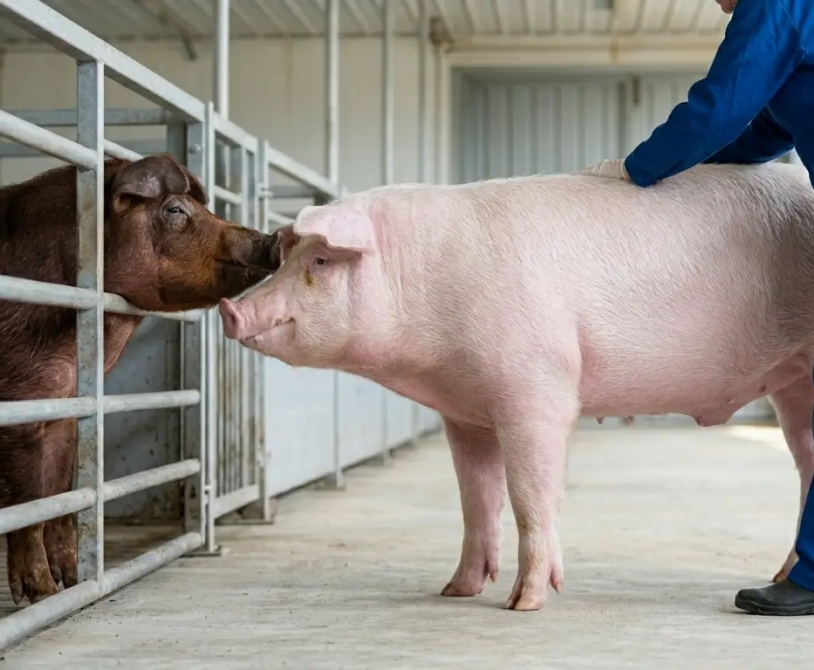
Boar exposure for estrus stimulation: Daily 15–20-minute exposure to a mature boar (nose-to-nose contact through a fence) beginning at 165–170 days stimulates the onset of puberty (first estrus) via pheromone-mediated neuroendocrine signaling. Gilts exposed to boar contact reach first estrus 10–14 days earlier than isolated gilts — a meaningful farrowing schedule management advantage.
Skipping first estrus: In most commercial programs, gilts are not bred at their first observed estrus. The second or third estrus produces larger, more uniform litters because the ovary’s ovulation rate increases slightly over the first 2–3 cycles. Breed at second or third estrus for maximum first-parity litter size.
Body weight at first breeding: Target 130–145 kg live weight at first service. Gilts bred below 120 kg produce smaller first litters and have lower survival to third parity than gilts bred at target weight.
Summary
The gilt selection decision is among the most leveraged management decisions in a commercial breeding herd — because its consequences multiply across every parity of the animal’s productive life. A gilt selected without applying a rigorous physical checklist brings her deficiencies into the breeding herd permanently, where they generate operational problems (inadequate teat number, lameness, farrowing difficulty) and production losses (small litters, early culling, irregular cycling) that each replacement gilt in the following cycle inherits the cost of correcting.
The 10 traits in this checklist — teat number, leg structure, body size, vulva development, underline symmetry, body length, temperament, skin condition, topline soundness, and reproductive discharge — can be assessed in 5–8 minutes per candidate by a trained stockperson. The total assessment time for a 30-candidate gilt selection event is 2.5–4 hours. The value of the decision made in those hours extends across 5–7 years of that animal’s productive life.
Assess every candidate. Apply every criterion. Reject without hesitation. The gilt pool worth keeping is the one assembled through discipline, not through compromise.