The breed decision is where pig farm profitability begins. Before the first feed bag is purchased, before the first pen is built, the genetic architecture of the animals that will occupy that pen determines the maximum growth rate they can achieve, the feed efficiency they are capable of, the litter sizes the sows will produce, the carcass composition the slaughterhouse will pay for, and the eating quality the consumer will pay a premium for.
Choose wrong, and none of the management investment that follows — precise nutrition, disciplined biosecurity, correct housing design — can fully compensate. Choose correctly, and the genetic potential of the animals becomes the production ceiling that good management works to approach.
This guide builds the complete commercial breed comparison framework for pig producers in West and Central Africa: the performance benchmarks of each major breed, the crossbreeding systems that combine their strengths, the specific market conditions that justify each genetic choice, and the sourcing reality of which breeds and crosses are actually available in the regional market.
Part 1: The Breeding System Framework
Before comparing individual breeds, understand the system within which commercial pig genetics operates — because most commercial pigs are not pure breeds. They are designed crosses.
Why Commercial Pigs Are Crossbreds
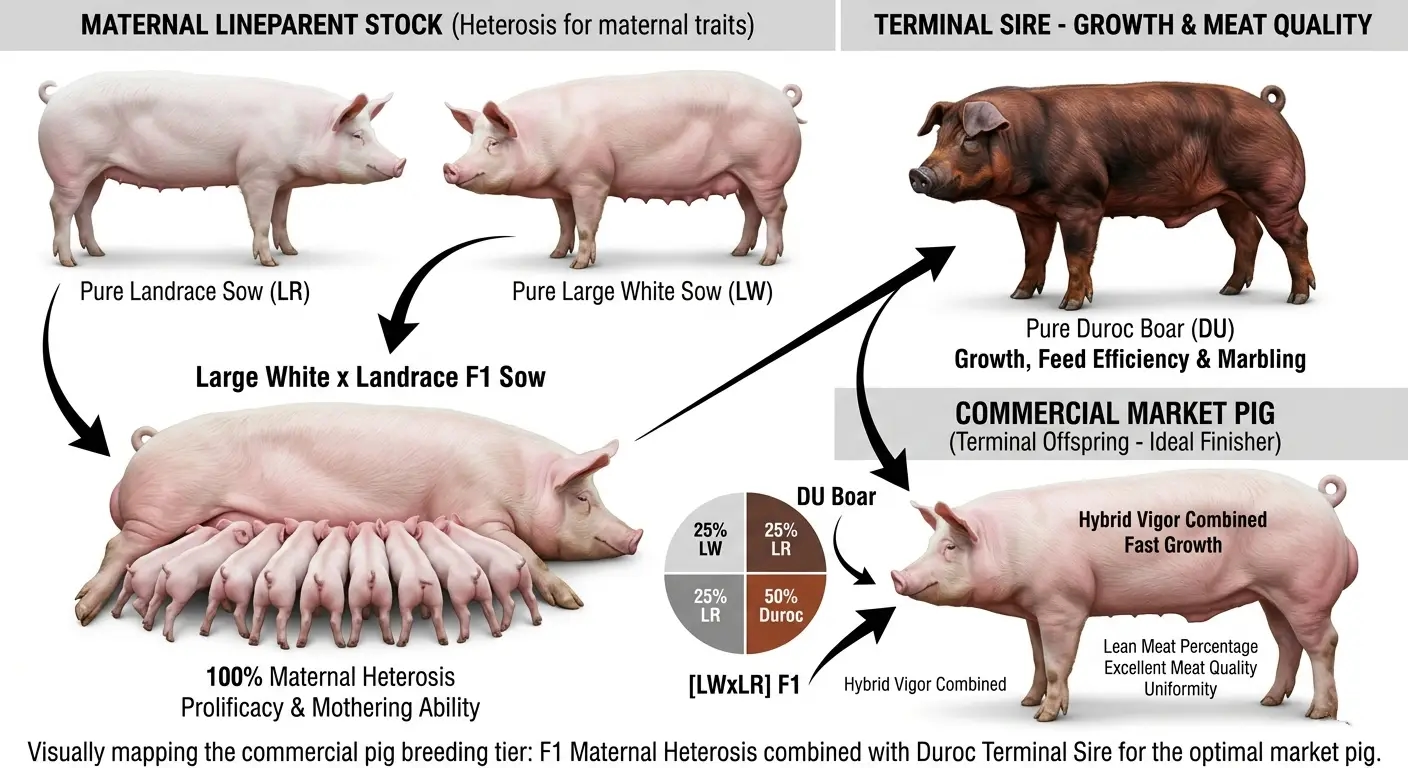
Commercial pig production is built on a three-tier genetic system:
Tier 1 — Nucleus herds: Owned by global genetics companies (PIC, Topigs Norsvin, Genus, Hendrix). These herds contain the purebred and synthetic line populations from which all commercial genetics descend. Selection pressure — identifying the most productive animals and using their offspring as the next generation’s parents — happens here, generating 20–30 kg of genetic progress in growth rate per generation.
Tier 2 — Multiplier herds: Licensed farms that purchase nucleus breeding stock and produce F1 hybrid gilts and boar semen for sale to commercial producers. The multiplier is where the genetics company’s selection output becomes the commercial farmer’s input.
Tier 3 — Commercial production herds: The farms that purchase F1 hybrid gilts from multipliers, cross them with terminal sire boars, and produce the market pigs sold to slaughter. This is where most pig farmers in West Africa operate.
The genetic design of a commercial market pig:
The standard commercial three-way cross:
- Maternal line sow: Large White × Landrace F1 hybrid — captures both breeds’ reproductive performance through heterosis; produces superior litter size and milking ability vs. either pure breed
- Terminal sire: Duroc, Pietrain, Hampshire, or composite line boar — contributes growth rate, FCR, and carcass characteristics to the market pigs
- Market pig: 50% maternal genetics (25% LW + 25% Landrace) + 50% terminal sire genetics
The market pig inherits its growth potential from the terminal sire, its survival and early growth from the dam’s milk production, and its disease resilience from the heterosis generated by crossing two genetic lines.
Part 2: The Dam Line Breeds — Where Reproductive Performance Is Built
Large White (Yorkshire)
Origin: Yorkshire, England. One of the two foundational maternal line breeds in global commercial pig production.
Why it dominates dam lines: Large White combines high litter size with excellent milking ability and a docile temperament that makes farrowing management practical. Modern commercial Large White genetics from elite nucleus herds produce 13–16 piglets born alive per litter — a figure that, multiplied by 2.3–2.4 farrowings per sow per year, drives PSY (pigs per sow per year) above 26 in top-performing operations.
Core performance benchmarks:
| Metric | Large White (Commercial) |
|---|---|
| Litter size (born alive) | 13–16 (nucleus); 11–13 (commercial multiplier) |
| Litter size (weaned) | 10–12 |
| Farrowing rate | 85–90% |
| Days from weaning to first service | 4–7 days |
| Milking ability | Excellent |
| Growth rate (pure breed) | 850–950 g/day |
| FCR (pure breed, grower-finisher) | 2.4–2.7 |
| Lean meat % | 58–64% |
| Carcass length | Long |
| Temperament | Docile |
Limitation as a terminal sire: The Large White’s selection for reproductive efficiency has come at the cost of meat quality — specifically, intramuscular fat (IMF) content. Pure Large White pork averages 1.0–1.8% IMF at the longissimus dorsi — below the 2.5% threshold associated with consumer-preferred eating quality. For premium fresh pork markets, Large White is not the correct terminal sire.
Availability in West Africa: Large White is the most widely available commercial pig breed in West Africa through regional hatcheries, government breeding stations, and private multiplier farms in Nigeria, Cameroon, Ghana, and Côte d’Ivoire. It is the breed most likely to be found at accessible prices in most markets.
Landrace
Origin: Denmark. The other half of the standard maternal line hybrid.
Why it pairs with Large White: Landrace contributes two specific attributes that Large White alone does not fully provide:
Body length: Landrace carries additional thoracic vertebrae compared to most breeds, producing a characteristically long carcass. More length means more loin — the highest-value primal cut — per carcass. A Large White × Landrace cross market pig produces 2–3 more loin chops per carcass than a comparable pure Large White.
Leg structure and milking: Landrace sows tend to have better leg structure than some commercial Large White lines and produce high milk volumes that support weaner growth in large litters.
Core performance benchmarks:
| Metric | Landrace (Commercial) |
|---|---|
| Litter size (born alive) | 12–15 (nucleus); 11–13 (commercial) |
| Litter size (weaned) | 10–12 |
| Carcass length | Very long |
| Loin eye area | 38–44 cm² |
| Growth rate | 820–920 g/day |
| FCR | 2.5–2.8 |
| Lean meat % | 57–63% |
| Temperament | Docile to moderate |
The LW × Landrace F1 hybrid sow: The cross of these two breeds captures heterosis — the performance improvement from crossing genetic lines — in reproductive traits where heterosis is strongest: litter size, piglet survival, farrowing interval, and sow longevity. An F1 hybrid sow from a correctly managed cross typically weans 0.8–1.2 more pigs per litter than the average of the two parent breeds — a significant reproductive advantage in a commercial setting.
Availability in West Africa: Less consistently available than Large White in most West African markets. Some IRAD (Cameroon) and NAPRI (Nigeria) breeding stations maintain Landrace populations, but the commercial multiplier infrastructure for consistent F1 hybrid gilt supply is less developed than in Europe and North America.
Pietrain
Origin: Belgium. A highly muscled terminal sire breed known for exceptional lean yield.
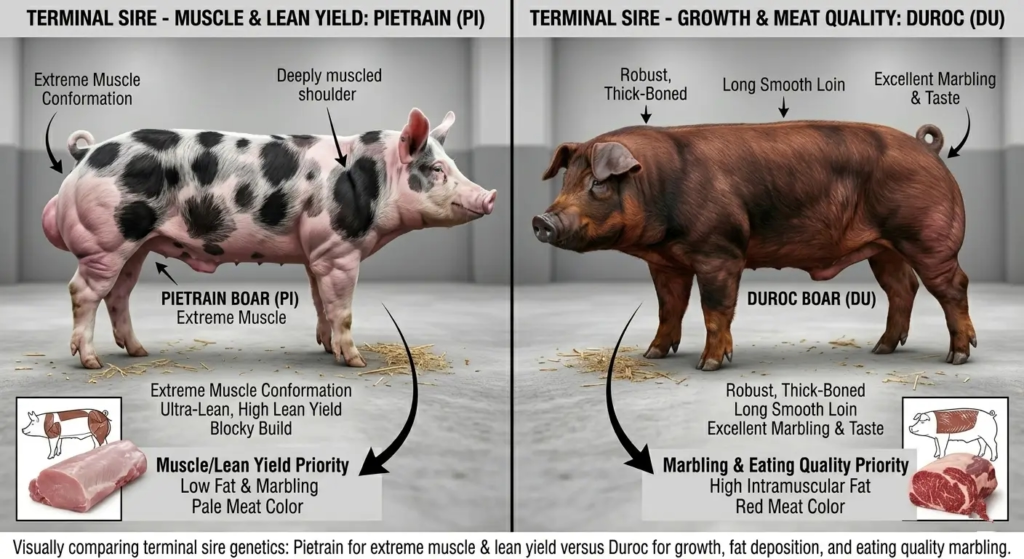
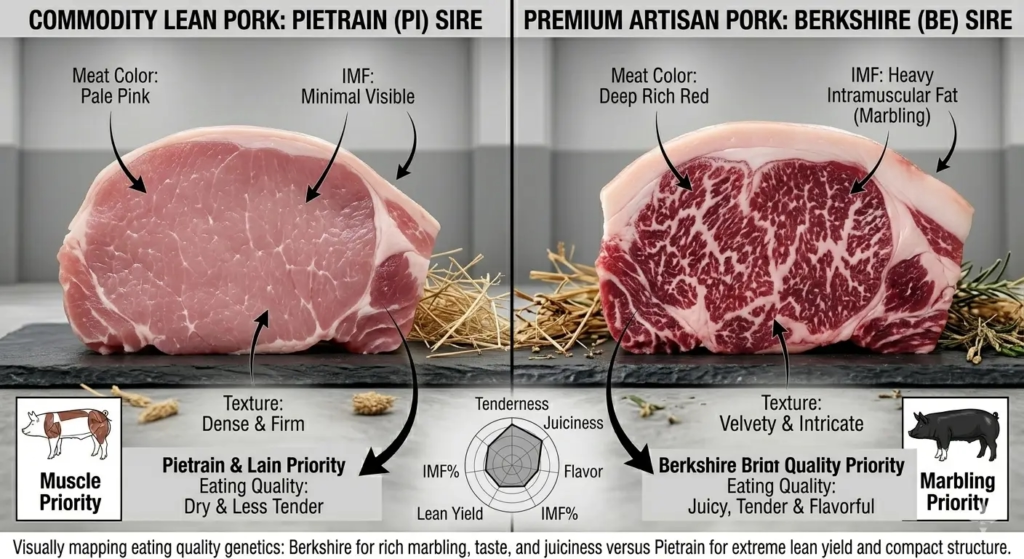
What makes it distinctive: The Pietrain has one of the highest documented lean percentages of any commercial pig breed — 65–70% in elite selection lines — driven by extreme muscling, particularly in the ham and loin. The breed’s distinctive spotted black-and-white coloring is easily recognizable and consistent across genetic lines.
The stress gene problem: Traditional Pietrain carried the halothane gene (Hal) at high frequency — a recessive mutation that produces extreme muscling but simultaneously causes Porcine Stress Syndrome (PSS): sudden death from cardiac failure under handling stress, and Pale Soft Exudative (PSE) meat quality from rapid post-mortem pH decline.
Modern Pietrain: Reputable genetics companies have eliminated the halothane gene from their commercial Pietrain lines through marker-assisted selection. A Pietrain from a verified halothane-negative source is a viable terminal sire for lean pork production. A Pietrain from an unverified source in a market where halothane status is not routinely tested carries mortality and meat quality risk.
Core performance benchmarks (halothane-negative lines):
| Metric | Pietrain (Hal-negative commercial) |
|---|---|
| Daily gain | 750–850 g/day |
| FCR | 2.5–2.8 |
| Lean meat % | 63–70% |
| IMF % | 0.8–1.5% |
| Ham muscle development | Exceptional |
| Stress susceptibility | None (Hal-negative) |
The IMF trade-off: Pietrain’s exceptional lean yield comes at the direct cost of IMF — the same selection pressure that drives muscle mass higher simultaneously reduces intramuscular fat to levels that produce measurably lower eating quality in consumer panels. Pietrain-sired market pigs are the leanest and the least flavorful of all commercial terminal sire options.
Market positioning: Pietrain is the correct terminal sire when:
- The market grades and pays a premium for lean yield above 62%
- The buyer is a processing company that manufactures ham or cooked pork products, where lean yield directly determines manufacturing efficiency
- The consumer market prioritizes lean appearance over eating quality (visible in some urban West African retail markets)
Availability in West Africa: Limited. Pietrain semen is available through some agricultural import channels in Nigeria and Cameroon, but consistent access to verified halothane-negative Pietrain genetics requires importing directly from European genetics companies.
Part 3: The Terminal Sire Breeds — Where Growth Rate and Meat Quality Are Decided
Duroc
Origin: Eastern United States, 19th century. Rhode Island Red and Jersey Red ancestry.
The commercial standard for eating quality: Duroc is the most widely used terminal sire globally for operations that want to move above commodity pork positioning. Its intramuscular fat content — consistently 2.5–5.5% IMF depending on the specific selection line — places it comfortably above the 2.0–2.5% threshold that consumer panels identify as the boundary between “acceptable” and “good” eating quality.
The two Duroc selection philosophies:
Commodity growth Duroc: Selected for maximum daily gain, lean yield, and FCR in intensive confinement systems. IMF 2.5–3.5%. Growth rate 900–1,000 g/day. FCR 2.3–2.6. Lean meat % 56–62%. This is the standard commercial Duroc used in three-way crosses for mainstream fresh pork and processing markets.
Eating quality Duroc: Selected with explicit IMF targets alongside growth and efficiency. IMF 3.5–5.5%. Growth rate 820–900 g/day (slightly slower). FCR 2.5–2.8. Lean meat % 52–58%. This is the Duroc used in premium pork programs targeting restaurant supply, hotel purchasing, and retail premium positioning.
Core performance benchmarks:
| Metric | Commercial Duroc | Eating Quality Duroc |
|---|---|---|
| Daily gain | 900–1,000 g/day | 820–900 g/day |
| FCR (grower-finisher) | 2.3–2.6 | 2.5–2.8 |
| Lean meat % | 56–62% | 52–58% |
| IMF % | 2.5–3.5% | 3.5–5.5% |
| Days to 100 kg | 155–165 | 165–185 |
| Temperament | Moderate | Moderate |
| Heat tolerance | Moderate | Moderate |
The Duroc crossbreeding impact on market pig quality:
In a standard (LW × Landrace) dam × Duroc sire cross, the 50% Duroc genetics in the market pig improve IMF from approximately 1.3% (pure LW/Landrace) to approximately 1.8–2.5% — approaching the eating quality threshold. This improvement is sufficient to position the farm’s pork as “quality” in most West African premium markets, where the benchmark is the commodity pork it is replacing.
Availability in West Africa: Duroc semen is increasingly available through veterinary supply networks in Nigeria and Cameroon, primarily through Masterrind, ABS, and Hendrix Genetics import channels. Live Duroc boars are available from some private multiplier farms.
Hampshire
Origin: Kentucky, United States. Recognized by a distinctive black body with a white belt encircling the shoulders and forelegs.
Hampshire’s specific contribution: Hampshire is valued primarily for two attributes in commercial crossbreeding:
Meat quality above Landrace/LW but below Duroc: Hampshire pork has IMF of 2.0–3.0% — better than pure Large White but typically lower than commercial Duroc. Where Hampshire particularly distinguishes itself is in pH stability: Hampshire-sired market pigs consistently show higher ultimate pH (pHu > 5.7) compared to Pietrain-influenced genetics, producing darker, firmer meat with better water-holding capacity. This pH advantage reduces drip loss in retail packaging and produces better-looking fresh pork at the point of sale.
Lean yield with eating quality: Hampshire provides a midpoint between the lean-but-flavorless Pietrain and the fat-but-flavorful Berkshire — reasonable lean yield (58–63%) combined with acceptable IMF and good pH stability.
Core performance benchmarks:
| Metric | Hampshire |
|---|---|
| Daily gain | 820–900 g/day |
| FCR | 2.4–2.7 |
| Lean meat % | 58–63% |
| IMF % | 2.0–3.0% |
| pH (45 min post-mortem) | 6.3–6.8 (good) |
| Drip loss | 2–4% (low) |
Availability in West Africa: Hampshire is less available than Duroc in West African commercial pig markets. Some government breeding stations in Nigeria maintain Hampshire populations. Import of Hampshire semen is possible through the same channels as Duroc.
Berkshire
Origin: Berkshire County, England. One of the oldest documented improved pig breeds.
The premium artisan breed: Berkshire’s commercial role is fundamentally different from all other breeds in this comparison. It is not a high-throughput commercial breed — it is a premium product breed whose slower growth, higher fat deposition, and lower lean yield are not deficiencies but are the direct expression of the genetics that produce its exceptional eating quality.
Why Berkshire commands a premium:
IMF of 4.0–7.0% in the longissimus dorsi — significantly above all commercial breeds. Sensory panel scores for flavor intensity (7.5–8.5/10) and juiciness (7.5–8.5/10) are the highest of any commercial breed tested. In Japan, Berkshire-origin “Kurobuta” pork sells at retail for 2–4× commodity pork prices. In UK premium retail, Berkshire-branded pork commands 60–100% premiums.
The production trade-offs in concrete numbers:
| Metric | Berkshire | Large White (reference) |
|---|---|---|
| Days to 100 kg | 180–210 days | 155–175 days |
| Daily gain | 700–820 g/day | 850–950 g/day |
| FCR | 2.8–3.3 | 2.4–2.7 |
| Lean meat % | 48–54% | 58–64% |
| IMF % | 4.0–7.0% | 1.0–1.8% |
| Backfat (P2) | 20–30 mm | 10–14 mm |
The financial comparison:
At 100 pigs per year, the production disadvantage of Berkshire vs. standard commercial:
- 25–35 more days to slaughter weight per pig = 25–35% slower pen turnover
- 15–20% worse FCR = higher feed cost per kg of gain
- 10–12% lower lean yield = lower carcass payment in lean-graded systems
These disadvantages are offset — and in premium market conditions, more than offset — by the pork price premium. Berkshire pork sold to hotel and restaurant buyers at XAF 6,000/kg (USD 10.00/kg) vs. commodity pork at XAF 2,000/kg (USD 3.33/kg) generates 3× the revenue per kilogram sold.
The critical condition: The premium price must exist and be accessible before Berkshire is the correct choice. A Berkshire operation selling into a wholesale market at commodity price is financially inferior to a standard commercial operation in every production metric. Breed first, market first — then build the Berkshire program around a confirmed premium buyer relationship.
Availability in West Africa: Very limited. Some IRAD and university research farm populations exist in Cameroon. Small private herds in Nigeria’s Lagos, Abuja, and Jos markets. Import from UK or South African Berkshire breeders is the primary sourcing route for farms building a Berkshire program.
Local and Improved African Breeds
The West African village pig (local ecotype):
The unimproved local pig of West Africa is a small-framed, extensively reared animal that has adapted to subsistence management conditions over centuries. Its characteristics:
- Adult weight: 40–80 kg (significantly smaller than commercial breeds)
- Growth rate: 200–400 g/day on subsistence feeding
- Litter size: 4–8 piglets born alive
- Disease resistance: higher than commercial breeds for locally endemic conditions
- Feed requirements: tolerant of low-quality, high-fiber diets
The local breed is not a commercial production breed. Its production efficiency makes it economically uncompetitive in any market where feed is the primary cost input and growth rate is the primary revenue driver.
Improved local crosses:
IRAD (Cameroon) and NAPRI (Nigeria) have developed crossbreeding programs that cross local ecotypes with Large White or Landrace to produce F1 animals with:
- Improved growth rate (500–700 g/day on commercial feeding)
- Better litter size (8–10 born alive)
- Retained disease resilience from the local parent
- Reduced sensitivity to management imprecision
These improved local crosses represent an intermediate option for farms operating in lower-management-intensity environments where the full management precision required for elite commercial genetics cannot be maintained — rural farms, smallholder systems, or operations transitioning from subsistence to commercial production.
Part 4: Breed Performance Comparison Summary
Growth and Efficiency Matrix
| Breed | Daily Gain | FCR | Days to 100 kg | Lean % | IMF % |
|---|---|---|---|---|---|
| Large White | 850–950 g | 2.4–2.7 | 155–175 | 58–64% | 1.0–1.8% |
| Landrace | 820–920 g | 2.5–2.8 | 160–180 | 57–63% | 1.0–2.0% |
| Pietrain (Hal-neg) | 750–850 g | 2.5–2.8 | 170–185 | 63–70% | 0.8–1.5% |
| Duroc (commercial) | 900–1,000 g | 2.3–2.6 | 155–165 | 56–62% | 2.5–3.5% |
| Duroc (eating quality) | 820–900 g | 2.5–2.8 | 165–185 | 52–58% | 3.5–5.5% |
| Hampshire | 820–900 g | 2.4–2.7 | 160–175 | 58–63% | 2.0–3.0% |
| Berkshire | 700–820 g | 2.8–3.3 | 180–210 | 48–54% | 4.0–7.0% |
| Local ecotype | 200–400 g | 5.0–8.0 | 300–400+ | 40–50% | 3.0–5.0% |
| LW × Landrace F1 | 880–960 g | 2.3–2.6 | 155–170 | 58–63% | 1.2–2.0% |
| (LW×LR) × Duroc | 900–980 g | 2.3–2.6 | 155–170 | 56–62% | 1.8–2.5% |
Reproductive Performance Matrix
| Breed/Cross | Litter Size (Born Alive) | Pigs Weaned | PSY Potential | Milking Ability |
|---|---|---|---|---|
| Large White | 13–16 (nucleus) / 11–13 (commercial) | 10–12 | 22–26 | Excellent |
| Landrace | 12–15 / 11–13 | 10–12 | 21–25 | Very good |
| LW × Landrace F1 | 13–15 | 11–13 | 24–28 | Excellent |
| Duroc | 9–12 | 8–10 | 18–22 | Good |
| Berkshire | 8–10 | 7–9 | 16–20 | Good |
| Local ecotype | 4–8 | 3–6 | 8–14 | Moderate |
The F1 hybrid sow advantage in PSY terms: An LW × Landrace F1 sow achieving 25 PSY from a herd of 20 sows produces 500 market pigs per year. A pure Large White sow at 22 PSY produces 440 market pigs per year. At XAF 90,000 (USD 150) margin per market pig, this 60-pig difference from PSY alone is worth XAF 5,400,000 (USD 9,000) per year in additional gross margin — from the same sow herd, the same feed, and the same facilities.
Part 5: Selecting Genetics for the West African Market
Market Position Determines Breed Choice
Commodity pork supply (abattoir, wholesale butcher, open market):
Target market: price-competitive buyers who value volume over quality differentiation.
Optimal genetics: LW × Landrace F1 dam × commercial Duroc sire. The three-way cross market pig produces 1.8–2.5% IMF — acceptable quality without the production inefficiency of eating quality breeds. Growth rate and FCR are optimized. Lean yield is adequate for commodity market requirements.
Breed selection priority: LW × Landrace dam (sourced from a verified multiplier with documented F1 hybrid production). Commercial Duroc terminal sire (semen or live boar from a verifiable source).
Premium fresh pork (hotel, restaurant, supermarket):
Target market: institutional and retail buyers paying XAF 3,000–5,000/kg (USD 5.00–8.33/kg) for fresh pork cuts with documented provenance and consistent quality.
Optimal genetics: LW × Landrace F1 dam × eating quality Duroc sire (50% eating quality Duroc in market pig). Alternatively: Berkshire terminal sire with 25% Berkshire genetics in market pig if Berkshire supply is available and the price premium (above XAF 4,000/kg / USD 6.67/kg) is achievable.
Breed selection priority: Eating quality Duroc selection line from a genetics company that documents IMF selection criteria. Confirm the specific selection line’s IMF targets before purchasing semen.
Artisan and direct-to-consumer pork:
Target market: Consumers in urban centers (Douala, Yaoundé, Lagos, Abuja) paying 2–3× commodity price for branded, traceable, provenance-verified pork. Restaurant chefs are building menus around specific pork breed identity.
Optimal genetics: Pure Berkshire or Berkshire × high-eating-quality cross. The Berkshire brand is internationally recognized and commands consumer trust in premium food service contexts.
Breed selection priority: Confirm buyer commitment at a premium price before sourcing Berkshire genetics. Source from verified Berkshire breeding populations (IRAD-Cameroon, private breeders with documented ancestry, or import from the UK or South African Berkshire associations).
The Sourcing Reality in West Africa
What is actually available:
Large White: Widely available across West Africa from multiple sources. Quality varies — government station stock often represents older, lower-selection-pressure genetics than commercial multiplier stock.
Landrace: Available but less consistent. Better sourcing through IRAD (Cameroon), NAPRI (Nigeria), and private farms building formal dam line programs.
Duroc: Semen increasingly available. Live boars from private farms. Eating quality Duroc selection lines require import from PIC, Topigs Norsvin, or Genus West African distributors — ask specifically for the eating quality selection index, not generic “Duroc” genetics.
Berkshire: Very limited. IRAD maintains a small population in Cameroon. Private breeders in Lagos and Abuja. Import from the UK or South Africa for serious commercial Berkshire programs.
Pietrain: Halothane-negative certified Pietrain from a verified source only. Available through ABS Global and Masterrind import channels. Do not purchase Pietrain from unverified local sources without halothane status confirmation.
Questions to ask any breed supplier:
- What is the genetic company or selection program origin of this stock?
- What is the current EBV (Estimated Breeding Value) or selection index for growth rate, FCR, litter size, and lean % for this population?
- Is health status documentation (PRRS-negative, Mycoplasma-negative, Salmonella status) available for the source herd?
- Can you provide three reference farms currently using genetics from this source with contact details for direct reference verification?
- For Duroc specifically: what is the documented IMF selection target for this line?
A supplier who cannot or will not answer questions 1, 3, and 4 specifically has not earned the purchase commitment.
Part 6: The PSY-Driven Economic Case for Genetic Investment
The financial argument for investing in quality genetics is most clearly expressed through PSY — because PSY integrates every aspect of sow reproductive performance into a single economic output.
Annual margin comparison at 20 sows (XAF 90,000 / USD 150 per market pig margin):
| Genetic System | PSY | Annual Pigs Produced | Annual Gross Margin (XAF) | Annual Gross Margin (USD) |
|---|---|---|---|---|
| Local ecotype | 10 | 200 | 18,000,000 | 30,000 |
| Unselected LW (government station) | 18 | 360 | 32,400,000 | 54,000 |
| LW × Landrace F1 (commercial multiplier) | 24 | 480 | 43,200,000 | 72,000 |
| Elite LW × Landrace F1 (genetics company sourced) | 27 | 540 | 48,600,000 | 81,000 |
| Elite × eating quality Duroc (premium market) | 25 | 500 at XAF 150,000/pig | 75,000,000 | 125,000 |
The difference between local ecotype genetics and correctly sourced LW × Landrace commercial genetics at 20 sows is XAF 25,200,000 (USD 42,000) per year in gross margin — from the same feed investment, the same labor, and the same facilities. The genetics are the difference.
Summary
Commercial pig breed selection is not a preference decision — it is an economic decision that should be made by answering three questions in sequence:
1. What does my target market pay for? A lean-yield-graded abattoir pays for the Pietrain’s 68% lean. A hotel purchasing manager pays for Duroc’s flavor. A direct-to-consumer premium buyer pays for Berkshire’s reputation. The market defines the breed.
2. What management precision can I consistently deliver? Elite commercial genetics from global companies require feed quality verification, precise health management, and housing that maintains thermoneutral conditions. Improved local crosses and government station, Large White are more forgiving of management imprecision. Match the genetic demand to the management capacity.
3. Which genetics are actually available from a verifiable source? The theoretically optimal breed from an unverifiable source is a higher risk than the second-best breed from a verified, referenced multiplier with documented health status. In West Africa, where genetic infrastructure is developing, the quality of the source matters more than the name of the breed.
The farm that answers all three questions correctly and sources accordingly will produce more pigs per sow per year, grow them faster on less feed, and sell them at better prices than any farm that selects genetics on price, availability, or appearance alone.
Genetics is not a cost. They are the biological engine that every other farm investment is designed to run.