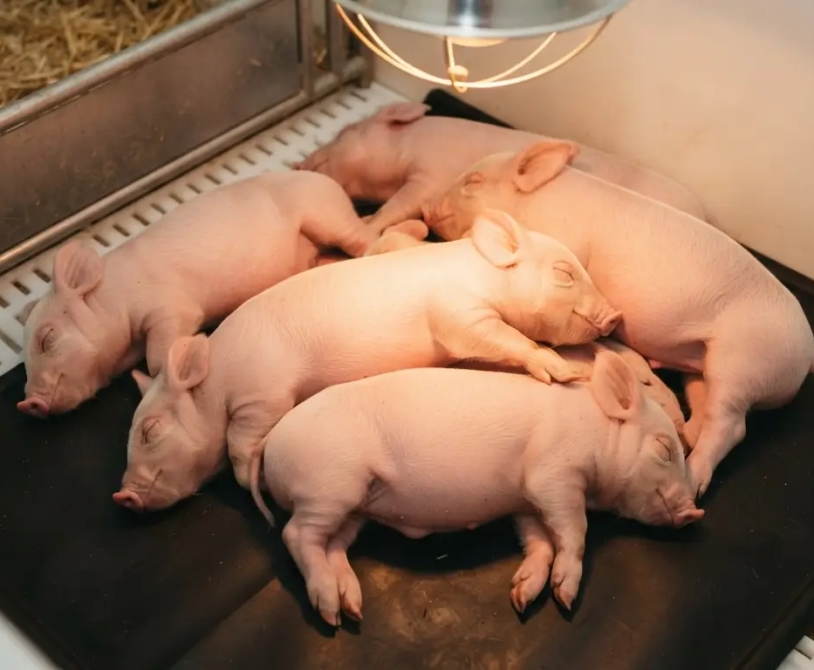
The number that matters most in commercial pig production is not litter size at birth — it is the number of piglets that survive to weaning. A sow that farrows 14 piglets and weans 9 has produced a fundamentally different financial outcome than a sow that farrows 12 and weans 11, even though the second sow’s birth litter size is smaller. The gap between born and weaned — pre-weaning mortality — is where a substantial proportion of a commercial pig operation’s genetic and reproductive investment is either captured or lost, and the majority of that gap is determined by what happens in the farrowing house during the 72 hours immediately surrounding birth.
Pre-weaning mortality in commercially managed herds typically ranges from 8% to 20% of piglets born alive — a wide range that reflects the wide range in farrowing management quality across the industry. The difference between the low end and the high end of this range, applied across a commercial sow herd’s annual farrowing schedule, represents hundreds of additional weaned piglets per year from the same number of sows, the same genetics, and the same feed investment — purely from the quality of farrowing management.
This handbook builds the complete farrowing management system: the pre-farrowing preparation that sets the conditions for successful delivery, the attended farrowing technique that resolves complications before they become losses, the critical first-hours protocol that determines whether each piglet establishes the feeding and thermal patterns essential to survival, and the systematic framework for identifying and addressing the specific causes of pre-weaning mortality — crushing, starvation, chilling, disease, and congenital factors — each of which has a distinct prevention strategy.
Pre-Farrowing Preparation — The Week Before
Moving the Sow to the Farrowing House
Timing: Sows should be moved from the gestation housing to the farrowing crate 5–7 days before the expected farrowing date. This timing allows:
- Adequate adjustment to the new environment before the stress of farrowing itself
- Establishment of normal feeding and drinking behavior in the farrowing crate before the reduced appetite that typically accompanies the final days of gestation and the immediate post-farrowing period
- Time for any necessary final health interventions (pre-farrowing vaccination boosters, deworming as detailed in vaccination and parasite control guidance elsewhere in this series) to take effect before farrowing
Movement technique: Move sows calmly, avoiding stress, rushing, or rough handling — late-gestation sows are physically less mobile and more easily stressed, and excessive stress during movement has been associated with increased risk of early farrowing onset.
Farrowing House Preparation
Cleaning and disinfection: As detailed in all-in/all-out management guidance in this series, the farrowing crate and room should have completed the full cleaning, disinfection, and rest cycle before the incoming sow arrives — verifying the space is genuinely clean, not merely “looks acceptable.”
Temperature pre-conditioning: Begin warming the creep area to the target 32–34°C at least 24 hours before the expected farrowing date — allowing the heat source (lamp or heated pad, as detailed in piggery design guidance) to reach stable target temperature before it is needed for arriving piglets, rather than attempting to bring the creep up to temperature reactively after farrowing has already begun.
Equipment check:
- Heat lamp or heating pad functioning correctly, positioned at the correct height
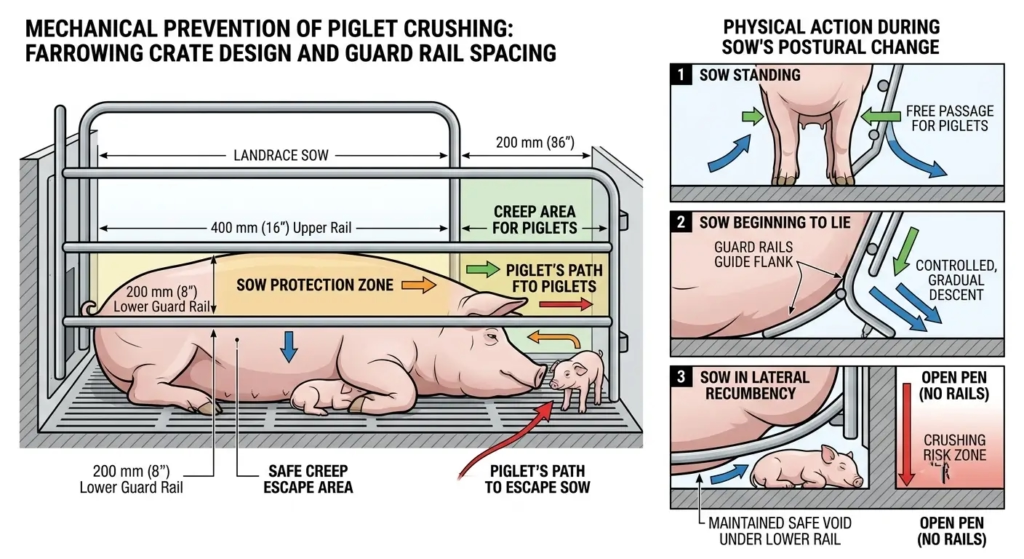
- Farrowing crate guard rails correctly positioned (200 mm and 400 mm height, as detailed in piggery design guidance)
- Water supply functioning at the correct flow rate for a lactating sow (minimum 1,500 mL/min, target 2,000 mL/min, per water management guidance)
- Feeder clean and functional
Sow Body Condition Assessment
Assess body condition score (BCS) on arrival at the farrowing house. Target BCS at farrowing is 3.0–3.5 on the standard 1–5 scale:
- Underweight sows (BCS below 2.5): Increased risk of farrowing complications from inadequate energy reserves, and reduced capacity to support lactation demands — flag for closer monitoring and consider supplemental feeding adjustment within the constraints of late-gestation nutrition guidelines
- Overweight sows (BCS above 4.0): Increased risk of farrowing difficulty from excess fat deposition in the birth canal area, and historically associated with reduced farrowing ease and longer farrowing duration — flag for closer monitoring
Udder and Mammary Preparation
Examine the udder for any signs of mastitis (heat, swelling, discoloration, hardness in specific mammary glands) before farrowing — addressing any pre-existing mammary gland problems before the demands of lactation begin is more effective than attempting treatment after farrowing has commenced and piglets are already dependent on that gland for nursing.
Count functional teats and compare against the expected litter size — if the sow’s functional teat count is below the anticipated litter size, plan for cross-fostering (moving excess piglets to another sow with available teats and adequate milk supply) before farrowing begins, rather than discovering the mismatch during the chaos of an active farrowing.
Recognizing the Onset of Farrowing
The Pre-Farrowing Signs
24–48 hours before farrowing:
- Mammary gland development continues, with the udder becoming increasingly full and firm
- Vulva swelling and reddening (similar in appearance to estrus signs but occurring in the context of late gestation rather than the reproductive cycle)
- Restlessness, increased standing and lying transitions
- Nesting behavior — particularly notable in sows with any access to bedding material, where rooting, pawing, and arranging behavior intensifies; even in farrowing crates without loose bedding, sows show characteristic restlessness and repetitive movement patterns consistent with nesting drive
6–24 hours before farrowing:
- Further restlessness and discomfort signs
- Reduced feed intake — a significant drop in voluntary feed consumption is a reliable late indicator
- Tail-raising and frequent posture changes
The most reliable physiological sign — milk letdown: Gentle hand-stripping of the teats produces visible milk within 12–24 hours of farrowing onset for most sows — progressing from clear, watery pre-colostrum fluid to the thicker, yellowish colostrum as farrowing approaches more closely (typically within 2–6 hours when colostrum is freely expressible). This is one of the most practically useful indicators for predicting farrowing timing within a workable window for staffing and attendance planning.
Active Labor Signs
- Visible abdominal contractions
- Tail movement (lifting, swishing) coordinated with contractions
- Restlessness intensifying immediately before the first piglet is delivered
- The first piglet typically arrives within 30–60 minutes of the onset of visible straining
Attended Farrowing — Why Presence Matters
The Case for Attended Farrowing
Unattended farrowing — where sows are left to farrow without direct human supervision, checked only periodically — is associated with measurably higher pre-weaning mortality than attended farrowing, where a trained person is present for the duration of the farrowing event, actively monitoring and intervening as needed.
The reasons attended farrowing improves outcomes are specific and addressable:
Immediate identification of stillborn risk: A piglet that is born but not breathing has a narrow window (typically under 1 minute) during which stimulation and clearing of airways can successfully resuscitate it. An unattended birth means this window passes without intervention.
Prompt management of farrowing complications: Dystocia (difficult birth), prolonged intervals between piglets, or a piglet lodged in the birth canal all require timely recognition and, where appropriate, manual assistance — delays in recognition that occur with unattended farrowing directly translate to increased stillbirth risk and increased risk of sow exhaustion that compromises the remainder of the litter’s delivery.
Immediate post-birth piglet processing: Drying, navel treatment, and ensuring each piglet reaches a heat source promptly after birth are time-sensitive interventions that unattended farrowing delays.
Early crushing prevention: A sow settling after delivering a piglet, before that piglet has had time to move clear of her body, is a significant crushing risk window — an attendant can physically protect a vulnerable newborn piglet during this period in a way that is impossible without presence.
Practical Attendance Scheduling
Given the unpredictability of exact farrowing timing, practical attendance protocols typically involve:
- Close monitoring beginning when the pre-farrowing signs described in Part 2 (particularly milk letdown progression) indicate farrowing is likely within the next several hours
- Continuous attendance once active labor signs (visible straining, tail movement) begin
- For farms with limited staffing capacity to maintain continuous attendance for every farrowing, prioritizing attendance for first-litter gilts (who show higher complication rates than experienced sows) and any sow with a known history of farrowing difficulty
Part 4: The Birth Process — What to Expect and When to Intervene
Normal Farrowing Progression
Interval between piglets: Typically 15–20 minutes under normal conditions, though this varies considerably between individual sows and across the course of a single farrowing (often somewhat faster in the middle of the litter delivery, slower at the beginning and end).
Total farrowing duration: Typically 2–4 hours for the complete litter, though normal variation extends this range considerably — farrowing lasting up to 6 hours without other concerning signs is not necessarily abnormal, particularly in larger litters or older, higher-parity sows.
Presentation: Both anterior (head-first) and posterior (tail-first/breech) presentations occur normally in pigs, unlike some other livestock species where breech presentation is considered abnormal — pig piglets are commonly born in either orientation without this alone indicating a problem.
When to Intervene — The Specific Triggers
Interval exceeding 45 minutes between piglets without visible progress: This is the standard threshold warranting manual investigation. At this interval, the probability of an obstruction (a piglet lodged in the birth canal, malposition preventing normal passage) becomes significant enough to warrant direct examination rather than continued waiting.
Visible distress signs: Excessive straining without piglet delivery, visible exhaustion, repeated unsuccessful contractions, or any sign of the sow’s distress level escalating beyond what is typical for normal labor.
Visible but stuck piglet: A piglet visible at the vulva but not progressing despite the sow’s straining efforts requires immediate manual assistance.
Manual Assistance Technique
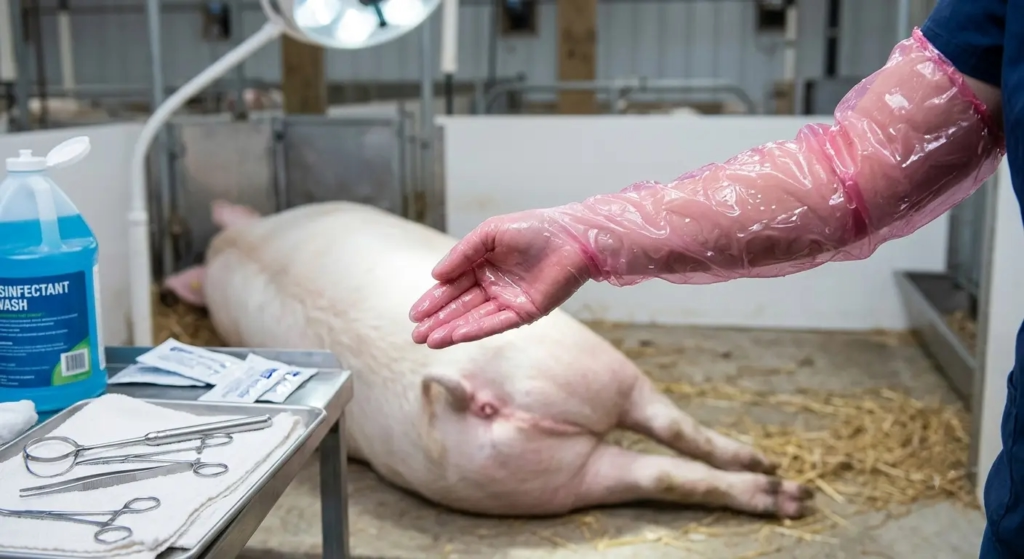
Preparation:
- Clean the vulva area with a mild antiseptic solution
- Apply generous obstetric lubricant to a clean, gloved hand and arm (shoulder-length obstetric gloves, as detailed in the first-aid kit guide)
- Trim fingernails short before any manual examination to reduce the risk of internal tissue damage
Technique:
- Insert the hand gently, following the contour of the birth canal, using a cupped hand shape to minimize tissue trauma
- Identify the obstruction — most commonly a piglet in an abnormal position (limbs forward in a posterior presentation creating a wider obstruction than the normal tucked position, or a head turned to the side in anterior presentation)
- Gently reposition the piglet to a deliverable orientation where possible, then assist its passage by gently pulling in coordination with the sow’s contractions — never pulling forcefully against resistance or independent of the sow’s own contraction effort, which risks tissue damage
- If a piglet cannot be repositioned or extracted with gentle, coordinated effort within a reasonable attempt period, veterinary assistance should be sought — prolonged or forceful manual intervention by an inexperienced handler risks uterine or vaginal tissue damage that creates a more serious complication than the original obstruction
When oxytocin is appropriate: As detailed in the first-aid kit guide, oxytocin should only be administered after confirming the birth canal is clear of any obstruction — its use to stimulate contraction against an undetected obstruction risks uterine rupture. Where manual examination has confirmed no obstruction but contractions have weakened or stalled (uterine inertia, sometimes associated with sow exhaustion or hypocalcemia), oxytocin administration following the dosing guidance in the first-aid kit reference supports continuation of the farrowing process.
The Critical First Hours — Piglet Processing Protocol
Immediate Post-Birth Care (First Few Minutes)
Clear airways: Wipe away any membrane or fluid from the piglet’s nose and mouth immediately after birth — most piglets clear their own airways naturally through the birth process and initial movements, but any piglet showing labored breathing or fluid obstruction should have the airway manually cleared.
Stimulate breathing if needed: A piglet not breathing or breathing weakly should be vigorously rubbed with a clean, dry towel — this stimulation often initiates or strengthens breathing. Holding the piglet briefly with head lower than body can help drain fluid from airways. In more severe cases, gently swinging the piglet (supporting the head and body, with a brief controlled swinging motion) can help dislodge fluid through centrifugal force — a technique that should be performed carefully and is most appropriately taught through direct demonstration rather than attempted for the first time without guidance.
Dry the piglet: Vigorous towel drying serves the dual purpose of stimulating circulation/breathing and reducing the evaporative heat loss that a wet newborn piglet experiences — a critical thermal protection step given the neonatal piglet’s limited capacity for independent thermoregulation.
Navel/umbilical cord care: If the umbilical cord has not naturally separated, it can be cut to an appropriate length (leaving 3–5 cm) using clean scissors or a cord clamp, and the navel area treated with an antiseptic (iodine solution, as detailed in the first-aid kit guide) to reduce the risk of navel infection — a significant entry point for systemic bacterial infection in neonates.
Getting the Piglet to Heat and to the Udder
Immediate creep access: Move the dried piglet to the warmed creep area promptly — minimizing the time spent on the colder farrowing crate floor before reaching the heat source.
The colostrum priority: Ensure every piglet nurses within the first 1–2 hours of birth. As detailed in nutritional deficiency guidance in this series, colostrum provides both nutritional support and the maternally derived antibodies that constitute the piglet’s primary immune protection during the first weeks of life. A piglet that does not nurse adequately in this early window has both reduced energy reserves (increasing chilling and starvation risk) and reduced passive immunity (increasing disease susceptibility).
Assisting weak piglets to nurse: Smaller or weaker piglets in a litter, particularly the smallest members of large litters, may need direct assistance reaching and latching onto a teat — gently guiding the piglet to an accessible teat and supporting initial latching can be the difference between successful early nursing and a piglet that fails to establish feeding before becoming too weak to do so independently.
Split-Suckling for Large Litters
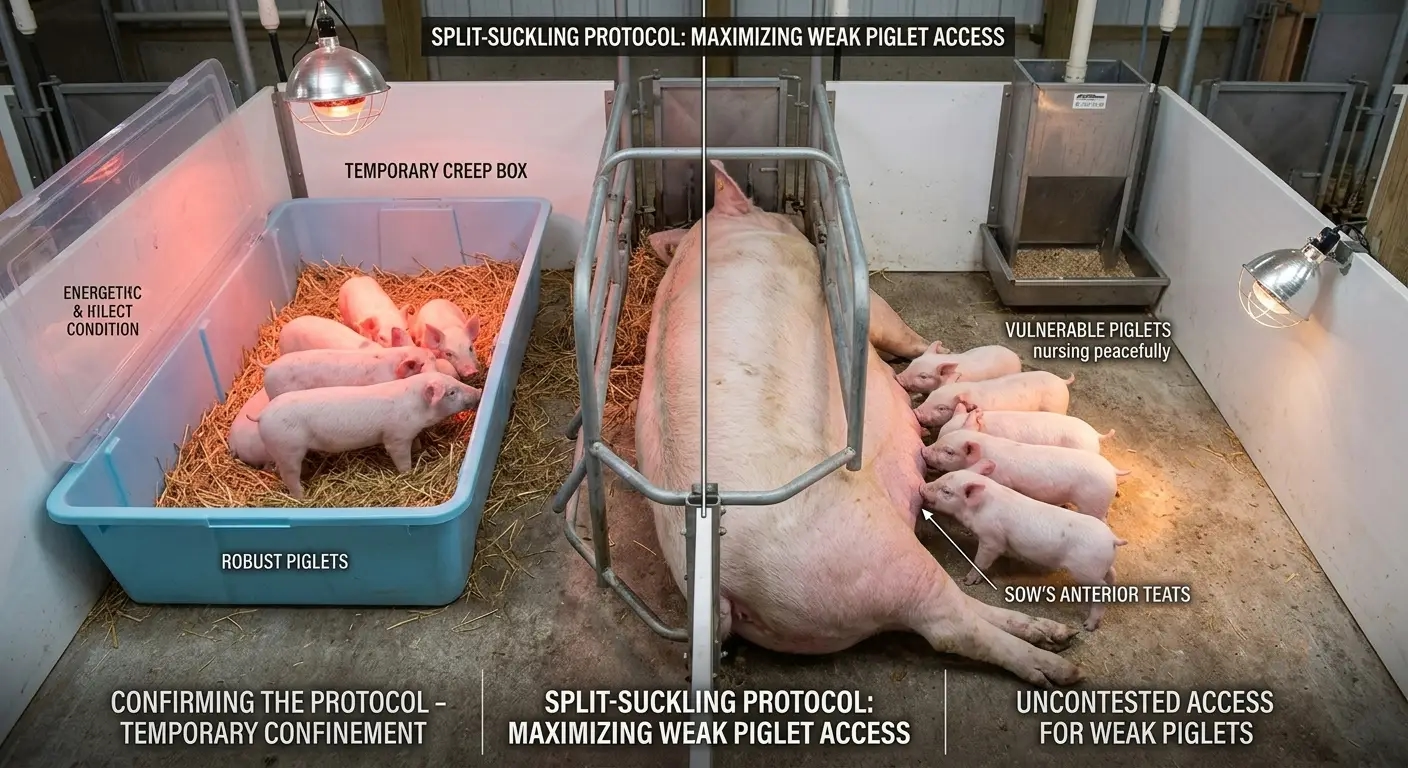
In litters larger than the sow’s functional teat count, or in any large litter where competition for the highest-producing front teats disadvantages smaller piglets, split-suckling management — temporarily separating the larger, stronger piglets (confining them to the creep area away from the udder) for a period while the smaller, weaker piglets have uninterrupted access to nurse — ensures the most vulnerable litter members establish adequate colostrum intake before being required to compete with stronger littermates.
Part 6: The Five Major Causes of Pre-Weaning Mortality — Diagnosis and Prevention
Cause 1: Crushing (Overlying)
Why it happens: The single largest cause of pre-weaning mortality in most commercial systems. Neonatal piglets, particularly in the first 3–5 days of life when their mobility and awareness are most limited, are at risk of being crushed when the sow lies down, shifts position, or rolls — particularly when a piglet is positioned against the sow’s body in the space between her body and the crate’s guard rail, rather than in the open creep area.
Prevention:
- Correctly positioned guard rails: As detailed in piggery design guidance, guard rails at 200 mm and 400 mm height create a protective space along the crate sides where a piglet can avoid being directly crushed when the sow lies against the rail
- Adequate creep area and effective heat source: A well-functioning, attractively warm creep area draws piglets away from the sow’s body when they are not actively nursing — the single most effective behavioral crushing prevention strategy, since piglets that are comfortable and warm in the creep spend less time in the higher-risk zone immediately against the sow’s body
- Close monitoring in the first 72 hours: The highest-risk period for crushing — attentive observation during this window, with intervention (gently moving a piglet that has settled in a risky position) when practical, reduces crushing incidence
- Sow temperament and farrowing crate function: A farrowing crate that correctly restricts the sow’s lateral movement (the core function of the crate design) is itself the primary crushing prevention infrastructure — crushing rates are measurably higher in loose-housed or poorly designed farrowing systems compared to correctly functioning farrowing crates
Cause 2: Starvation/Low Viability
Why it happens: Some piglets, particularly the smallest members of large litters or those born with lower birth weight from intrauterine growth restriction, lack the vigor to compete effectively for teat access and adequate milk intake, leading to progressive weakness and eventual death from inadequate nutrition — frequently compounded by the chilling that results from inadequate energy intake (a piglet without adequate milk intake cannot generate sufficient metabolic heat to maintain body temperature).
Prevention:
- Birth weight monitoring: Identifying low-birth-weight piglets (typically below 1.0 kg, compared to the 1.3–1.5 kg average) at birth allows targeted early intervention — assisted nursing, split-suckling prioritization, or supplemental colostrum feeding via syringe where natural nursing access is inadequate
- Cross-fostering: Moving smaller, weaker piglets to a sow with a smaller litter and excess milk capacity (or moving larger, stronger piglets away from a sow whose litter exceeds her functional teat count) balances nutritional access across the farrowing group — detailed further in Part 7
- Supplemental colostrum: Where a specific piglet cannot establish adequate natural nursing in the first hours, hand-feeding colostrum (either milked directly from the sow or, where available, a commercial colostrum supplement product) via small syringe or bottle can bridge the gap until the piglet gains sufficient strength for independent nursing
Cause 3: Chilling (Hypothermia)
Why it happens: Neonatal piglets have limited brown fat reserves (the primary non-shivering thermogenesis mechanism in many mammalian neonates) and limited glycogen reserves for generating metabolic heat, combined with a large surface-area-to-body-mass ratio that accelerates heat loss. Without adequate environmental heat support (the creep area heating system) and adequate energy intake (colostrum/milk), piglets rapidly become hypothermic — and hypothermia itself further suppresses the piglet’s ability to nurse effectively, creating a downward spiral that, without intervention, progresses to death.
Prevention:
- Correctly functioning creep heating: As emphasized throughout piggery design and farrowing preparation guidance, verified, stable 32–34°C creep temperature in the first days of life is the primary infrastructure-level prevention
- Prompt drying at birth: As detailed in Part 5, immediate towel drying reduces the evaporative heat loss that is the most significant heat loss mechanism for a piglet in the minutes immediately after birth
- Avoiding drafts: Ventilation design that provides adequate air exchange without creating direct drafts across the creep area (a specific design consideration detailed in piggery design guidance) prevents the localized cooling that undermines an otherwise adequate creep heating system
- Recognizing and rescuing chilled piglets: A piglet showing signs of hypothermia — cold to the touch, weak, reluctant to move, pale — can often be rescued with prompt warming (direct contact with a heat source, or in severe cases, gentle warming with warm water immersion of the body excluding the head, followed by thorough drying) and assisted nursing once body temperature has been restored sufficiently for normal suckling reflex
Cause 4: Disease (Infectious Causes)
Why it happens: As detailed extensively in vaccination and biosecurity guidance elsewhere in this series, neonatal piglets are immunologically naive and dependent on colostral passive immunity for protection during the highest-vulnerability period of their lives. Bacterial infections (particularly E. coli scour, navel infections from inadequate umbilical care, and Streptococcus suis), and viral pathogens (Rotavirus, TGE, PED where present) can cause significant mortality in affected litters.
Prevention:
- Sow vaccination program: As detailed in vaccination guidance, appropriately timed sow vaccination boosts colostral antibody transfer for the specific pathogens included in the vaccination program
- Colostrum management: Ensuring adequate, timely colostrum intake (Part 5) is the most direct individual-piglet prevention measure available
- Farrowing house hygiene: Correct AIAO cleaning and disinfection (as detailed in biosecurity framework guidance) reduces the environmental pathogen load the newborn piglet population is exposed to
- Navel care: Prompt antiseptic treatment of the umbilical area (Part 5) reduces the entry pathway for bacterial infection
- Prompt clinical recognition and treatment: Daily observation that identifies sick piglets early, combined with prompt appropriate treatment (per the first-aid kit guidance), limits the progression of individual cases and the potential for spread to littermates
Cause 5: Congenital and Genetic Factors
Why it happens: Some pre-weaning mortality reflects congenital abnormalities (developmental defects present from birth) or genetic factors affecting viability that are not addressable through management intervention at the individual piglet level — splay leg (a condition affecting newborn piglets’ ability to control limb position, with multiple contributing causes including genetic predisposition, certain mycotoxin exposures, and floor surface factors), congenital tremor, and various structural abnormalities.
Prevention (at the population level, since individual cases often cannot be prevented once present):
- Breeding program quality: As detailed in gilt selection and breeding guidance elsewhere in this series, selecting breeding stock for structural soundness and avoiding known heritable defect carriers reduces the population-level incidence of congenital problems over successive generations
- Sow nutrition during gestation: Adequate nutrition, particularly avoiding mycotoxin exposure (as detailed in mycotoxin guidance) during gestation, reduces the incidence of certain developmental abnormalities associated with specific toxin exposures
- Appropriate floor surfaces: Non-slip flooring in the farrowing crate (as detailed in flooring guidance elsewhere in this series) reduces splay leg incidence associated with inadequate traction during the piglet’s first attempts at standing and walking
Cross-Fostering — Optimizing Litter Distribution
Why Cross-Fostering Improves Overall Survival
Cross-fostering — moving piglets between sows that farrow within a similar timeframe (ideally within 24–48 hours of each other) — allows litter sizes and individual piglet vigor to be balanced against each sow’s functional teat count and milk production capacity, improving overall survival across the farrowing group compared to leaving the natural birth-litter distribution unchanged.
The Standard Cross-Fostering Protocol
Timing: Cross-fostering should generally occur within the first 24–48 hours of life — early enough that piglets have not yet established strong teat-order preferences (the tendency for individual piglets to consistently use the same teat, developed through the first days of nursing) that complicate successful integration into a new litter.
The matching principle: Move piglets to balance litter size against each sow’s functional teat count and milk capacity:
- A sow with 16 functional teats but only 11 piglets has capacity to receive additional piglets from a sow with a larger litter than her teat count supports
- Move smaller, weaker piglets to sows with smaller litters and correspondingly less competition, where they have a better opportunity to access adequate milk supply without competing against larger, stronger littermates
- Avoid moving the very smallest, weakest piglets to a sow whose own litter already includes vigorous piglets that would out-compete them — in some cases, grouping similarly-sized smaller piglets together onto a sow with excellent milking ability provides better outcomes than mixing size-mismatched litters
Avoid excessive movement: Each piglet should ideally be moved no more than once — repeated movement between multiple sows increases stress, increases disease transmission risk (each movement is a potential pathogen transfer opportunity between litters), and disrupts the teat-order establishment that supports stable, efficient nursing behavior.
Colostrum Priority Before Fostering
Critical principle: Every piglet should receive adequate colostrum from its birth dam before being moved to a foster sow. Colostrum composition and antibody concentration are highest in the first hours after farrowing and decline rapidly thereafter — moving a piglet to a foster sow before it has nursed adequately from its own dam, and expecting it to receive equivalent colostral benefit from the foster sow (who may already be several hours or days into her own lactation, with correspondingly reduced colostrum antibody concentration), compromises the piglet’s passive immunity in a way that direct fostering after adequate own-dam colostrum intake avoids.
Sow-Side Management Through the Farrowing and Early Lactation Period
Post-Farrowing Sow Care
Confirm complete delivery: After the apparent completion of farrowing (no piglets delivered for 30+ minutes, sow settling and appearing comfortable), confirm complete delivery through gentle abdominal palpation where trained personnel are available, or through continued observation for any signs of continued labor that would indicate retained piglets.
Placenta passage: The placenta (afterbirth) is typically passed within a few hours of the completion of farrowing — retained placenta beyond 12 hours warrants veterinary assessment, as retained placental tissue is a significant risk factor for post-farrowing uterine infection (metritis).
Post-farrowing feed and water access: Ensure immediate access to fresh water (critical given the substantial fluid loss and the onset of lactation’s high water demand, as detailed in water management guidance) and a modest feed offering in the hours immediately following farrowing, with feed intake gradually increased over the following days to reach full lactation feeding levels — sows typically show reduced appetite in the immediate post-farrowing period, and forcing high feed intake too rapidly can contribute to digestive upset.
Monitoring for Mastitis-Metritis-Agalactia (MMA) Complex
The MMA complex — a combination of mammary gland inflammation (mastitis), uterine infection (metritis), and reduced milk production (agalactia) — represents one of the most significant post-farrowing complications affecting both sow welfare and, critically, piglet survival, since adequate milk production is essential to litter survival.
Signs to monitor in the first 24–72 hours post-farrowing:
- Sow fever (above 39.5°C)
- Reduced or absent feed intake beyond the normal post-farrowing reduction
- Visible mammary gland abnormality — heat, swelling, hardness, discoloration in specific glands
- Vaginal discharge that is purulent or foul-smelling (beyond the normal post-farrowing discharge, which is typically clear to slightly blood-tinged and resolves within days)
- Piglets showing signs of inadequate nursing (restlessness, vocalization, failure to gain weight) despite apparently normal mammary gland count and the sow’s presence
Response: MMA complex requires prompt veterinary-guided treatment (typically including anti-inflammatory medication and antibiotics as appropriate, per the first-aid kit guidance) — delayed recognition and treatment directly compromises the entire litter’s nutrition during the critical early lactation period, making prompt identification and response a litter-survival issue, not merely a sow health issue.
Summary
Farrowing management is the highest-leverage intervention point in the entire commercial pig production cycle — the 72-hour window during and immediately following birth where the largest proportion of preventable piglet loss occurs, and where correct management technique converts a significant fraction of that loss into weaned, market-bound pigs.
The complete system in this handbook — pre-farrowing preparation that establishes correct environmental and sow-condition baseline; attended farrowing that allows prompt intervention for both delivery complications and immediate post-birth piglet care; the critical first-hours protocol that establishes thermal protection and colostrum intake for every piglet; the systematic understanding of crushing, starvation, chilling, disease, and congenital mortality causes that allows targeted prevention for each; and cross-fostering management that optimizes litter distribution against each sow’s actual capacity — together address the specific, documented causes of pre-weaning mortality with specific, actionable prevention strategies.
A farm that implements this complete system, moving pre-weaning mortality from the 15–20% range common in less-attentive management toward the 8–10% range achievable with disciplined farrowing management, recovers a substantial number of additional weaned piglets per sow per year — pigs that required no additional genetic investment, no additional feed cost beyond what was already committed to the pregnancy, and no additional housing capacity beyond what already exists. The piglets were always there. Farrowing management determines how many of them survive to become the pigs that generate the farm’s revenue.