In the high-density layer business, every egg represents a unit of profit, and every bird represents a capital asset. However, a poultry house is also a high-value target for “external threats”—predators seeking a meal and pests seeking a habitat. As a software engineer, I view pest and predator proofing as the Physical Security Layer of your farm’s architecture.
If your “firewall” (the house structure) has holes, you lose data (eggs) and risk system corruption (disease). Engineering these threats out of the system is far more effective than trying to manage them once they’ve already breached your perimeter.
The Rodent Challenge: Engineering Against “Hardware” Damage
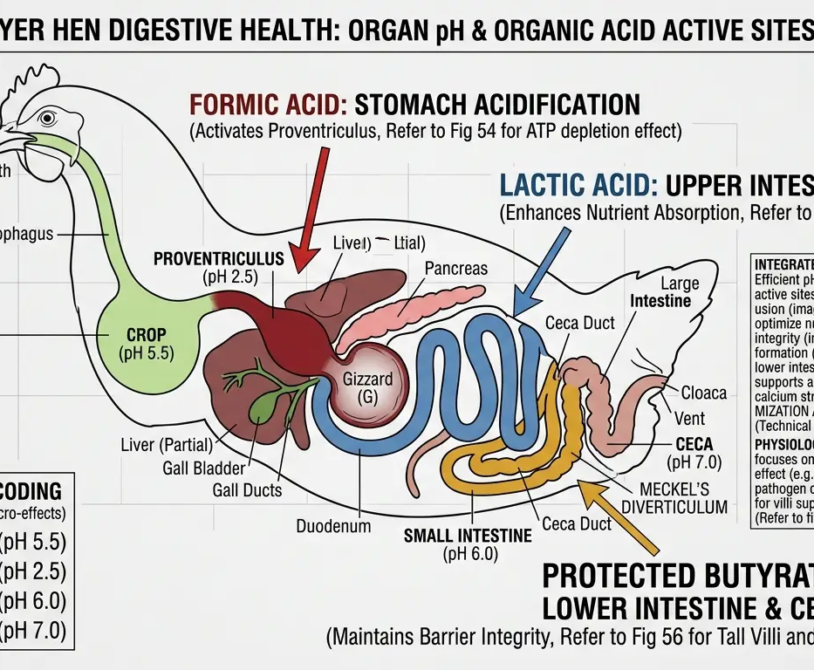
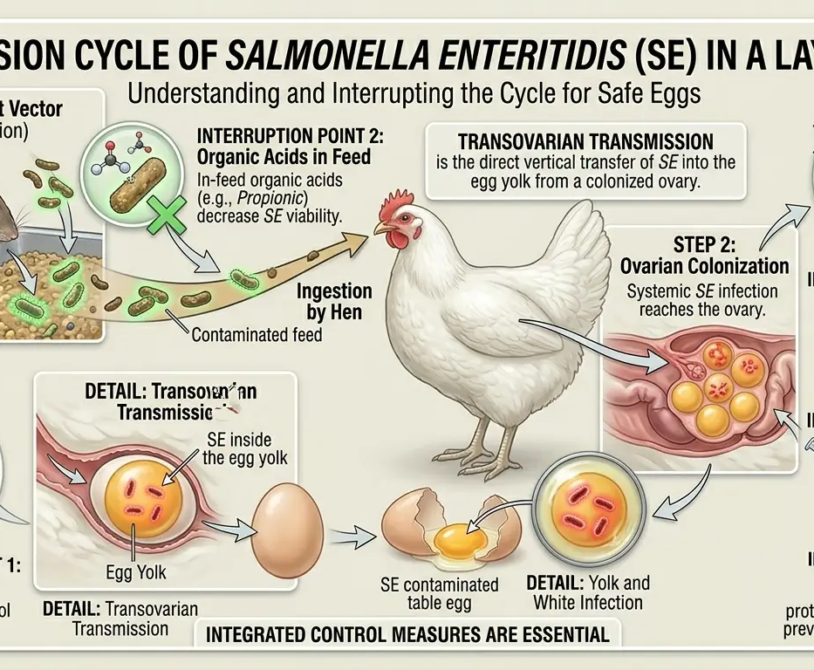
Rats and mice are more than just a nuisance; they are biological vectors for Salmonellosis and Pasteurella. They also consume significant amounts of expensive feed and damage electrical wiring.
Foundation and Floor Barriers
The most effective way to stop rodents is to “hardcode” their exclusion into the foundation.
-
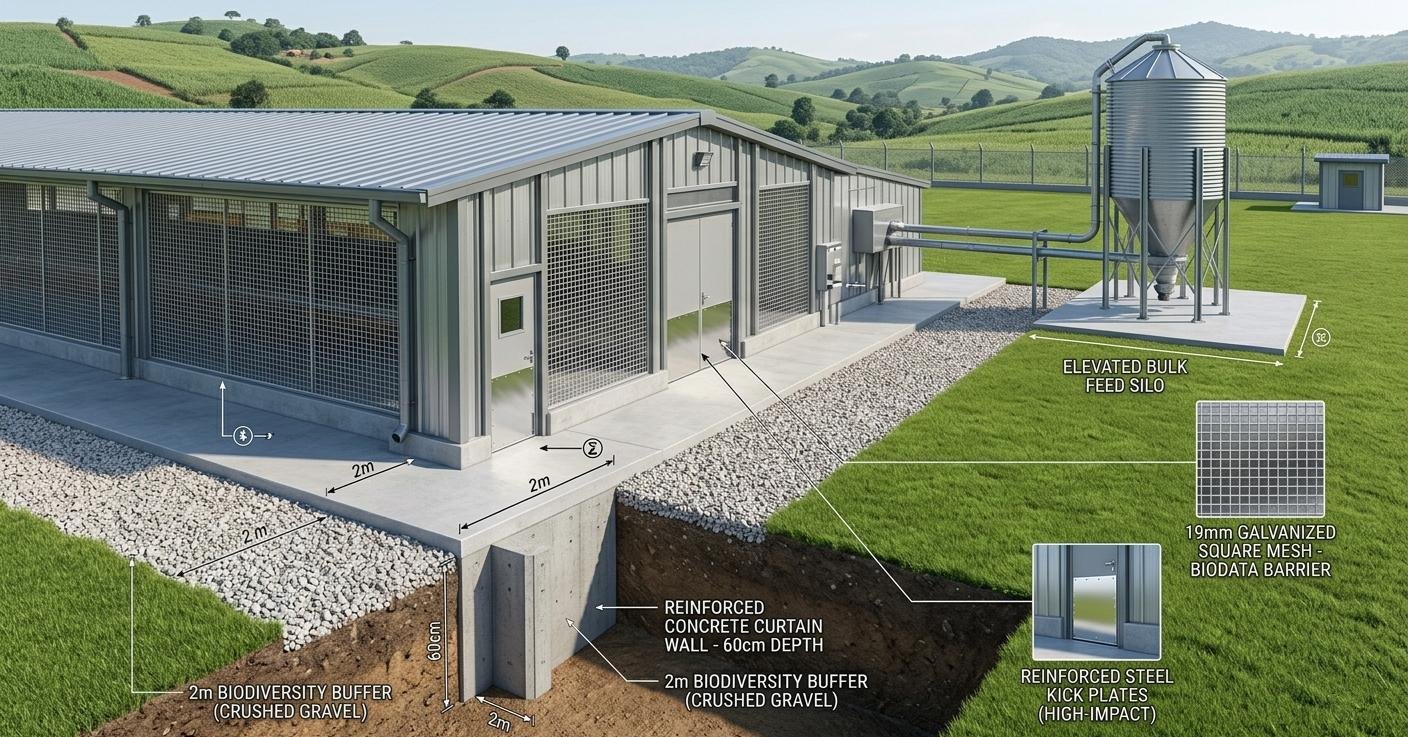
The Concrete Curtain Wall: Extend your concrete foundation at least 60 cm (2 feet) underground. This prevents rats from tunneling under the walls and into the deep litter.
-
The “L-Shaped” Mesh: If you aren’t using a deep concrete foundation, bury a 1/2-inch galvanized wire mesh in an “L” shape facing outward from the wall. When a rodent tries to dig down, it hits the horizontal mesh and gives up.
Feed Storage and Spillage Logic
Rodents stay where there is “free data” (unsecured feed).
-
Elevated Silos: Store all feed in metal bins or elevated silos.
-
The 1-Meter Rule: Keep all vegetation, junk, and equipment at least 1 meter away from the poultry house. This removes the “cloaking” (cover) rodents need to approach the building safely.
Defending Against Aerial Threats: Wild Birds and Bats
Wild birds are the primary carriers of Avian Influenza and Newcastle Disease. In the tropical climate of Cameroon, they are attracted to the spilled feed and water inside your house.
The Mesh Specification
Standard “chicken wire” is often too large, allowing small sparrows or weavers to slip through.
-
The “Anti-Virus” Mesh: Use a 3/4-inch (1.9 cm) or smaller galvanized square mesh for all open-sided walls. This is small enough to block wild birds while still allowing for maximum “bandwidth” (airflow).
-
Netting the Eaves: Ensure the gap between the top of the wall and the roof is completely sealed with mesh. Many farmers leave this open for ventilation, creating an “unprotected port” for birds and bats.
Snake and Small Predator Exclusion
In the Southwest Region, snakes (attracted by eggs or rodents) and small carnivores like civets or mongooses are persistent threats.
Structural Sealing
-
Door Clearances: Ensure all doors have a tight seal at the bottom. A gap of just 1 cm is enough for a young cobra or a viper to enter. Use a metal “kick plate” at the bottom of wooden doors to prevent predators from gnawing through.
-
Aperture Management: Any hole where a pipe or wire enters the building should be sealed with steel wool and mortar.
The Perimeter “No-Man’s-Land”
Maintain a 2-meter perimeter of crushed stone or gravel around the house. Snakes dislike moving across sharp, unstable surfaces as it damages their scales and leaves them exposed to birds of prey.
The “E-E-A-T” of Pest Management (Expertise and Trust)
As a CEO, you must treat pest control as a scheduled maintenance task, not a reactive one.
-
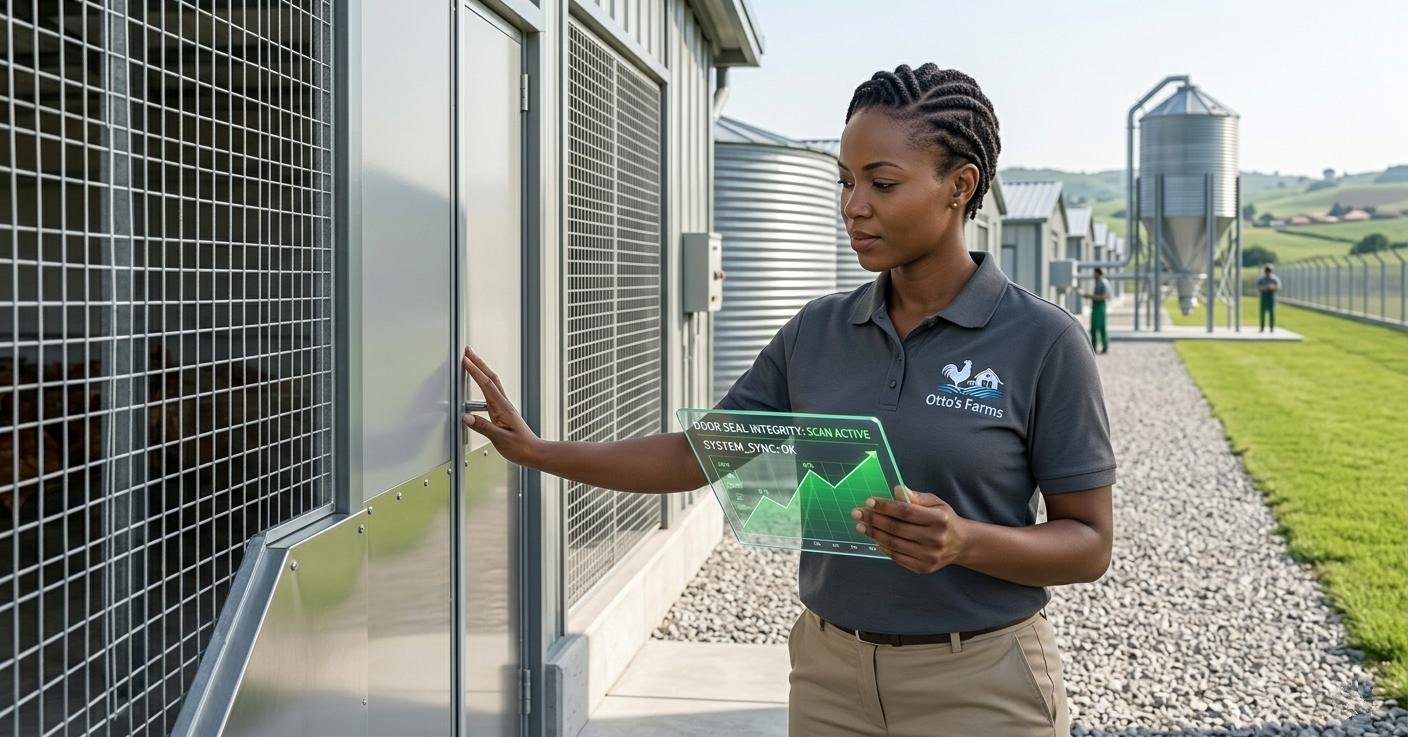
Hardware Inspection: Once a month, perform a “System Scan.” Walk the perimeter of the house looking for new burrows, loose mesh, or gaps in the roofing.
-
Data Logging: Keep a log of any sightings. A sudden increase in “egg loss” without a drop in bird health is often a sign of a “security breach” by a predator.
Security is a Sunk Cost that Saves Millions
Pest and predator proofing is a one-time infrastructure investment that pays for itself by preventing catastrophic disease outbreaks and inventory theft. By engineering these threats out of your poultry house from Day 1, you protect your “biological assets” and ensure that your production cycles remain uninterrupted.
At Otto’s Farms, we don’t just build houses; we build fortresses. When the external environment is secured, your birds can focus on their only job: consistent, high-quality egg production.