In West African poultry production, the housing decision made before the first bird arrives determines more of the flock’s lifetime performance than almost any decision made afterward. Cage systems are gaining ground, but the Deep Litter System (DLS) remains the backbone of most successful layer operations in Cameroon and across the region — not because it is the simplest option, but because, done correctly, it is a managed biological system that can match cage-level production at a fraction of the capital cost. Done poorly, it is also the fastest way to lose a flock to ammonia damage, coccidiosis, or a caking litter crust that no amount of remedial cleaning fully fixes.
Think of the house as the hardware and the bird’s physiology as the software it has to run: a layer house has to function reliably for 60+ weeks of lay, not the six-week cycle of a broiler shed, and every design shortcut taken at construction becomes a recurring management cost for the life of the flock.
Floor Construction and Biosecurity
A concrete floor is not a luxury upgrade — it is the single infrastructure decision with the highest long-term payoff in a deep litter system. Dirt floors are common in rural setups because they’re cheaper to build, but they cannot be effectively disinfected between flocks: pathogens and parasite eggs persist in the soil regardless of how thoroughly the litter above it is cleared out, meaning every new flock inherits some portion of the disease pressure left by the last one. Concrete also blocks rising damp (a direct driver of litter caking, addressed below) and closes off the burrowing routes rodents and snakes use to enter the house. The added construction cost is recovered over the life of even a single flock cycle through reduced disease incidence and litter replacement frequency.
Space Requirements — Worked Example
Target a stocking density of 5–7 birds per square meter of usable floor space. This is not an arbitrary welfare guideline — overcrowding is the single most common root cause of deep litter system failure, because it compounds every other risk in this guide: it accelerates litter caking, raises ammonia concentration faster than ventilation can clear it, increases feeder and waterer competition (producing the size variation that signals a poorly managed flock), and multiplies floor-egg incidence as birds compete for nest access.
Sizing a 500-bird starter flock:
House floor area required = 500 birds ÷ 6 birds/m² (mid-range density) = approximately 83 m²
A farm planning to scale to 1,000 birds should either build to that footprint from the start or design a modular house that can be extended, rather than doubling stocking density in the original structure — retrofitting density upward after construction is the error that turns a well-run flock into a chronic disease and floor-egg problem.
Ventilation and Natural Climate Control
In the humid conditions typical of Cameroon’s South West Region, ammonia buildup is not a slow background problem — it can reach damaging concentrations within days of a ventilation failure, particularly during the rainy season when litter moisture is already elevated. Ammonia becomes detectable to the human nose at roughly 20–25 parts per million, and damage to the tracheal lining — the mechanism that opens the door to secondary infections like E. coli — begins at levels not far above that detection threshold. This is why the “nose test” described later in this guide is a genuinely useful diagnostic, not just a rule of thumb: if you can smell ammonia, exposure is already in the range that compromises the birds’ respiratory defenses.
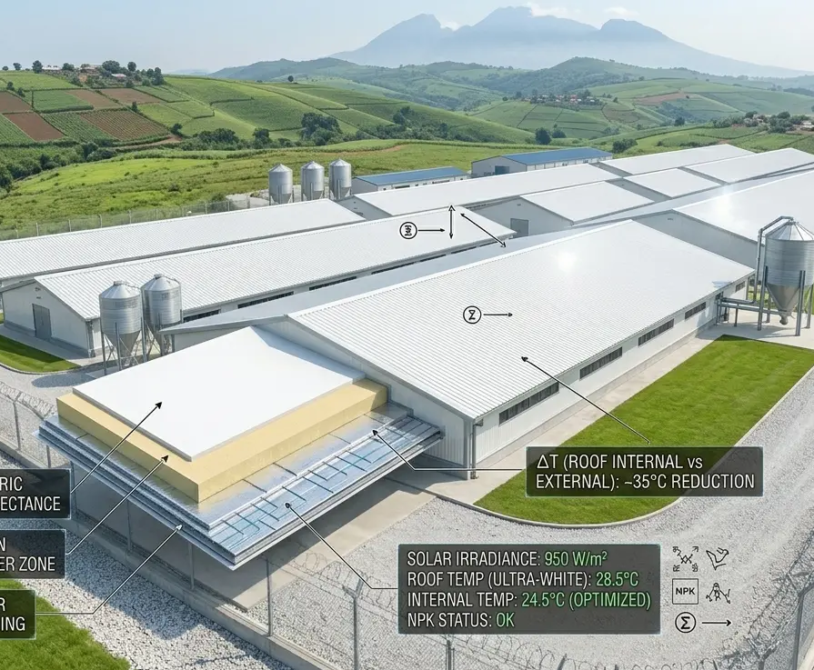
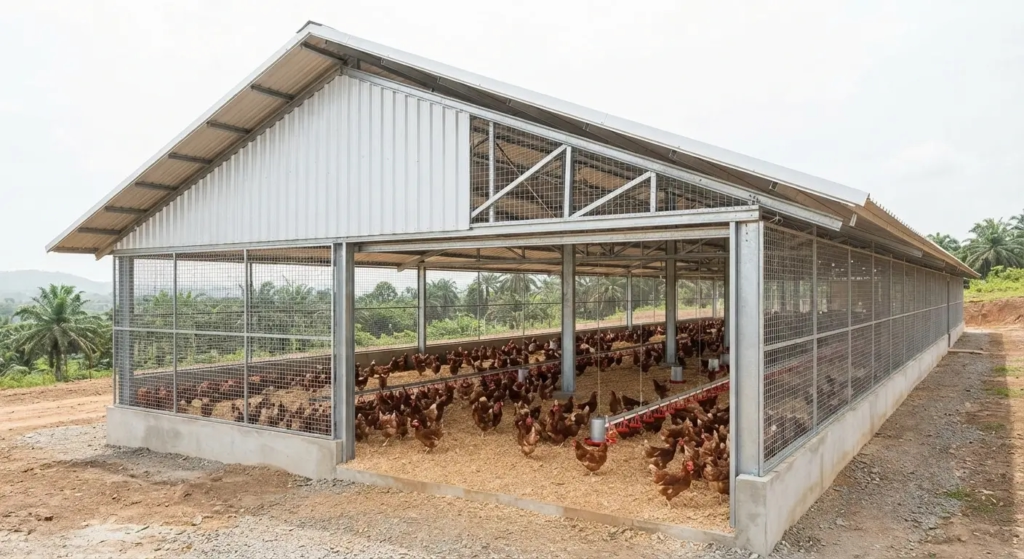
Orient the house on an east-west axis to keep direct sun off the birds through the hottest parts of the day, and build with high ceilings and open-mesh sides to enable the stack effect — warm, ammonia-laden air rising and exiting through the roofline while drawing cooler, fresh air in through the sides. A correctly designed stack-ventilated house maintains stable internal air quality without electric fans, which matters directly to the farm’s operating cost given the unreliability and expense of grid power in many rural siting locations.
Litter Management: The Biological Floor
Litter is not passive bedding — it is an active biological filter that, when managed correctly, absorbs moisture and breaks down nitrogen from droppings through aerobic decomposition. When mismanaged, the same material becomes a bacterial reservoir and the direct cause of foot pad lesions, respiratory irritation, and the ammonia problems described above.
Material selection:
| Material | Strength | Caution |
|---|---|---|
| Wood shavings | Strong insulation, good absorption | Source from untreated wood only — chemically treated shavings introduce toxin risk |
| Rice husks | Excellent drainage, widely available in Cameroon | Slightly lower insulation value than wood shavings |
| Sawdust | Cheap, widely available | Avoid — particle size is fine enough to cause respiratory irritation and crop impaction if ingested |
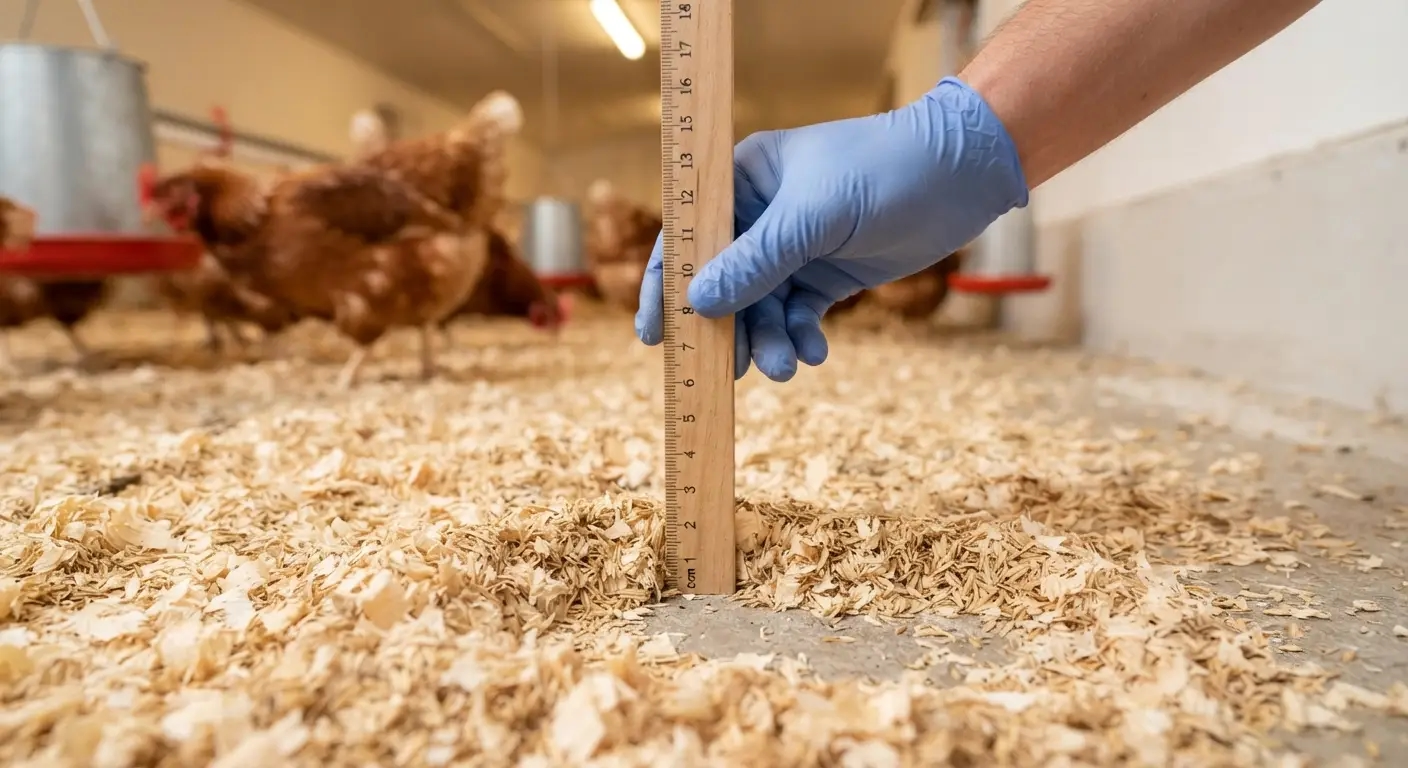
Depth and turnover. Maintain litter at 10–15 cm (4–6 inches) — enough volume to absorb nitrogen output without becoming waterlogged. Rake and turn the litter a minimum of twice weekly, more frequently in high-moisture periods or high-traffic zones around feeders and waterers, where caking forms fastest. Caking — the hard, wet crust that forms when litter moisture and ammonia byproduct exceed what the material can absorb — is not a cosmetic problem; it is the point at which the litter stops functioning as a biological filter and starts functioning as a pathogen incubator. Any area showing early caking should be turned or, if advanced, removed and replaced rather than raked over, since caked material does not return to healthy function through surface disturbance alone.
Advantages and Trade-Offs in the West African Context
| Advantage | Why It Matters |
|---|---|
| Low initial capital | No imported battery cage equipment required, making a 500–1,000 bird starter flock accessible without significant upfront foreign-exchange exposure |
| Improved welfare and behavior expression | Scratching, dust bathing, and perching reduce stress-related production losses compared to fully confined systems |
| Higher-value manure output | The litter-dropping mixture is pre-composted organic fertilizer, not raw high-nitrogen manure — see the circular economy section below |
| Challenge | Mitigation |
|---|---|
| Higher disease exposure (coccidiosis, worm burden) | Structured deworming and coccidiosis prevention protocol, addressed below — this is a manageable, not eliminable, risk |
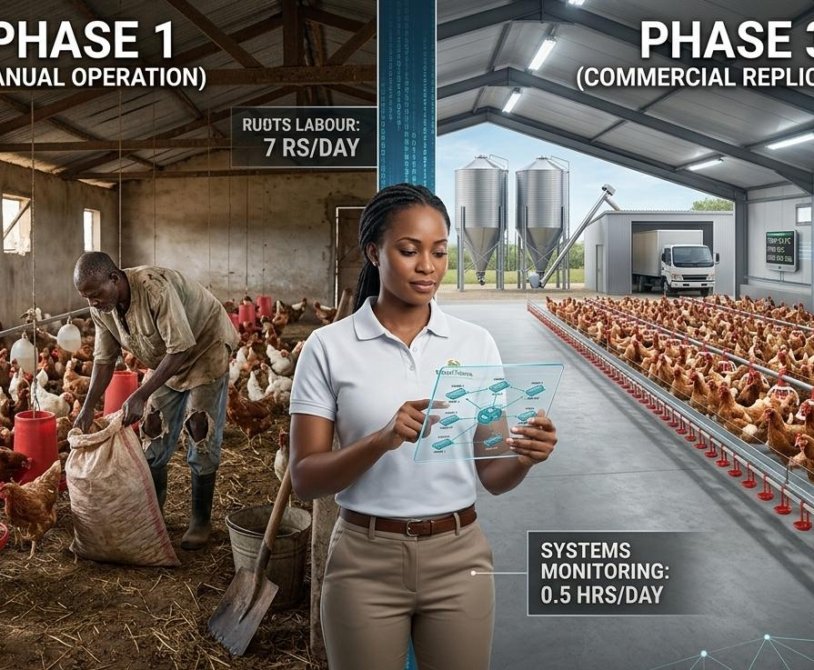
| Higher labor requirement | Litter turnover and floor-level egg collection require more daily man-hours than a cage system — factor this into staffing plans from the outset, not as an afterthought once labor strain becomes visible |
| Floor-egg and shell-cleanliness risk | Solvable primarily through nest box design and pullet training, covered next — this is the single most correctable disadvantage on this list |
Solving the Dirty Egg Problem Through Layout, Not Just Cleaning
Floor eggs are usually a design failure, not a bird behavior failure, and treating the symptom (cleaning more eggs) instead of the cause (poor nest box placement or inadequate pullet training) leaves the underlying labor cost and shell-quality problem in place indefinitely.
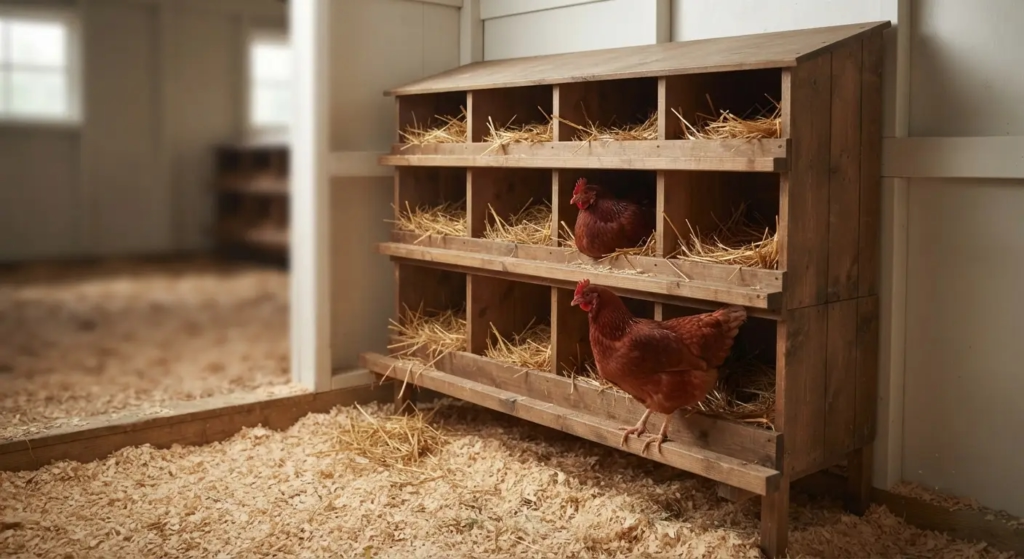
Nest box placement. Position nest boxes in the darkest, quietest section of the house, away from feeder and waterer traffic — hens seek out low-disturbance, enclosed spaces to lay, and a nest box competing with a dim, quiet floor corner for that preference will lose. Target one nest hole per five hens; under-provisioning nest access directly drives birds toward alternative floor locations.
Pullet training. Begin placing pullets into nest boxes by hand as they approach point of lay, and eliminate dark, secluded floor corners that could serve as an alternative nesting site before hens develop a floor-laying habit. A habit formed in the first weeks of lay is far harder to break than it is to prevent — training investment in this window pays back across the full production cycle.
Health and Biosecurity Protocol
Because floor-reared birds remain in continuous contact with their own waste, any pathogen introduced into the house has a faster and more direct route to the flock than in a cage system, which makes biosecurity discipline — not just veterinary treatment — the primary defense.
Mandatory baseline protocol:
- Footbaths with an effective disinfectant concentration at every house entrance, maintained and refreshed on a set schedule rather than left to visibly degrade before replacement
- A structured deworming schedule rather than reactive treatment only when symptoms appear
- A defined coccidiosis prevention program, coordinated with your feed or water medication supplier, since resistance patterns vary regionally and a program should be matched to current local disease pressure rather than a generic default
- Restricted, controlled entry to the house — visitors and equipment moving between houses are a common vector for introducing pathogens into an otherwise well-managed litter system
The ammonia “nose test” described in the ventilation section above should be treated as a daily biosecurity check, not an occasional observation — by the time ammonia is detectable, the birds have already been exposed to tracheal-damaging concentrations, and the appropriate response is an immediate ventilation and litter moisture review, not a wait-and-see approach.
Waste to Wealth: The Circular Economy of Spent Litter
Spent deep litter is a materially different product from raw poultry droppings, and treating it as waste rather than an asset leaves value on the table. Raw droppings are “hot” — high enough in nitrogen concentration to scorch crop roots if applied directly — while deep litter has already undergone partial aerobic decomposition during the flock cycle, producing a more stable, lower-burn-risk organic material that can be applied to crops like oil palm and plantain with substantially less risk of nutrient burn.
For any farm integrated with crop production, this creates a genuine closed-loop economic benefit: reduced dependence on purchased chemical fertilizer for the associated cropland, and, where litter volume exceeds the farm’s own agronomic use, a secondary revenue stream selling composted litter to neighboring crop producers. This should be planned as a deliberate output of the poultry enterprise, not an incidental byproduct — which means budgeting litter removal and storage space at the design stage, rather than treating end-of-cycle litter disposal as an unplanned logistics problem.
Choosing the System That Fits Your Investment Capacity
The Deep Litter System proves that effective farm infrastructure isn’t about the most expensive available technology — it’s about disciplined management of a natural biological process: moisture balance, airflow, and nitrogen cycling. For a farm with access to reliable labor and quality bedding material, DLS offers a lower-capital, higher-welfare path to producing high-quality eggs for the Cameroonian market, at a labor and disease-management cost that a well-designed house and a disciplined litter protocol can keep firmly under control.
The decision between deep litter and battery cage systems should be made against your specific site conditions and available capital — not against a general preference for one system over the other — since the space, ventilation, and labor requirements outlined above shift the comparison meaningfully depending on your local land cost, labor availability, and access to quality bedding material.