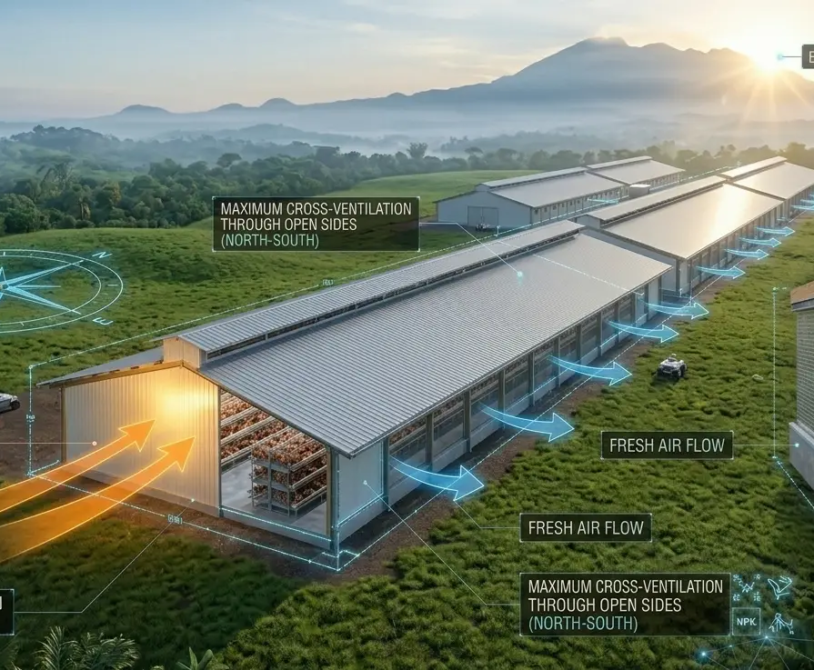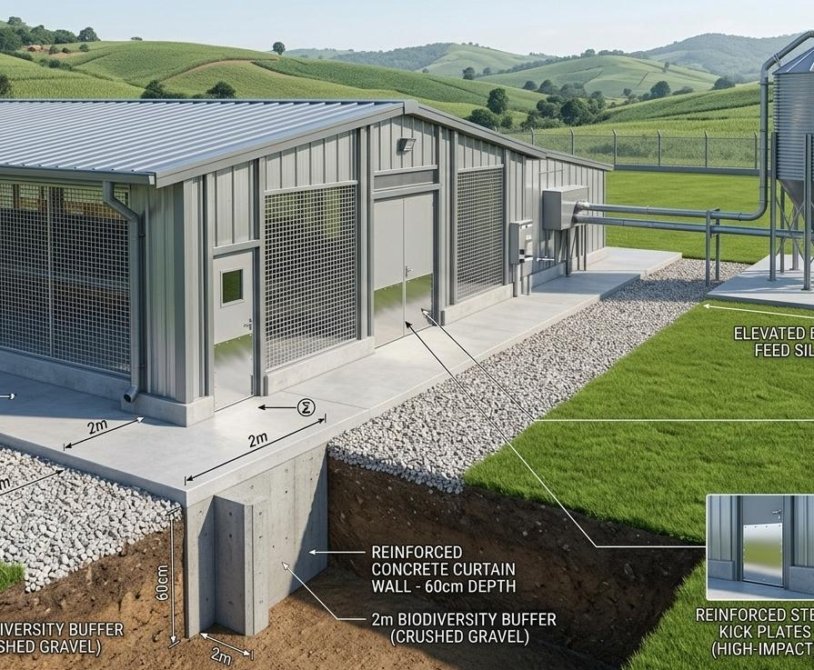
When scaling a layer operation from a smallholder setup to a commercial enterprise, housing infrastructure becomes the single largest determinant of your return on investment. The choice of system affects stocking density, feed conversion, labor cost, egg cleanliness, disease pressure, and the markets you can access — often for the entire productive life of the building.
The two dominant intensive housing models are battery cages and aviary systems. Both maximize vertical space. Both target high-volume egg production. They represent fundamentally different production philosophies, and the wrong choice for your context is difficult and expensive to reverse.
This article breaks down how each system works, where each one outperforms the other, and what factors should drive the decision for farms operating in West and Central Africa.
Battery Cage Systems: Maximum Output, Minimum Variation
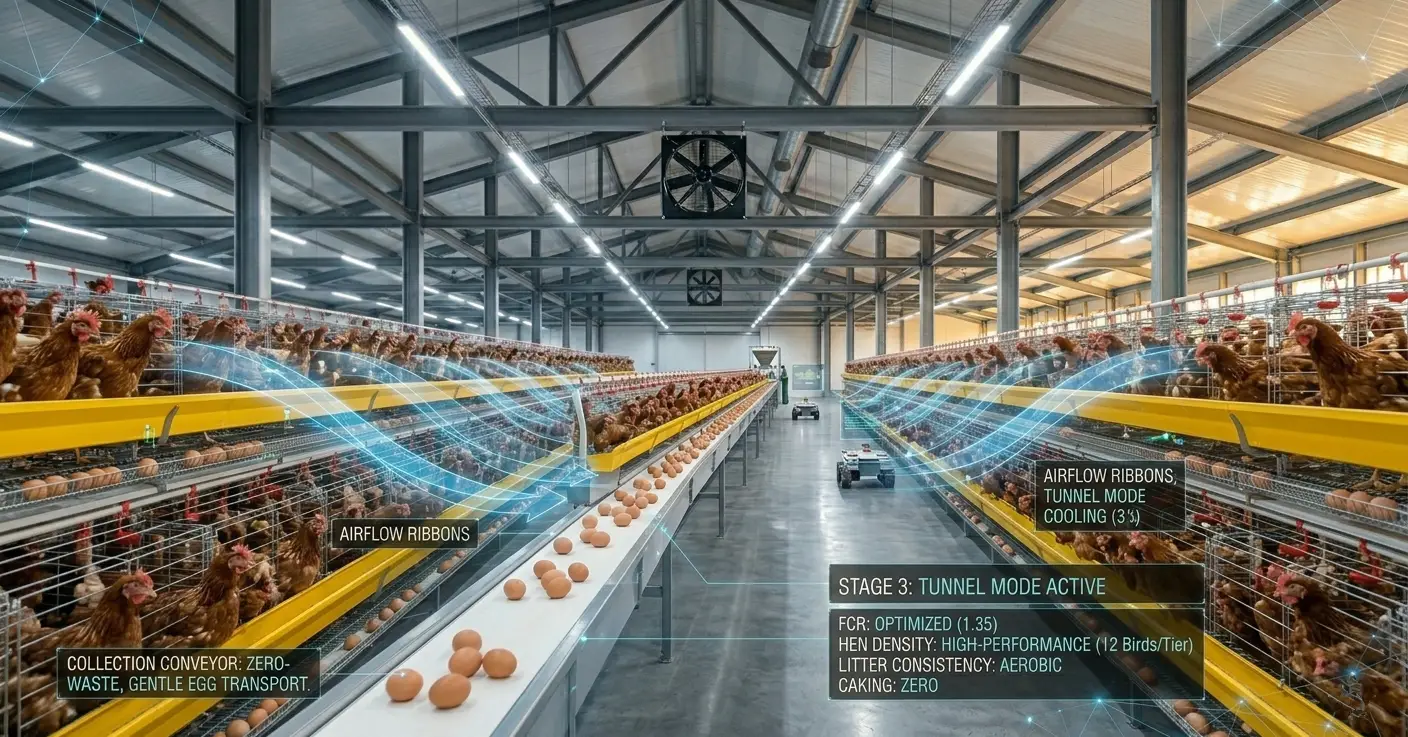
The battery cage system is the global standard for commercial egg production at scale. Hens are housed in tiered wire cage rows, with slanted floors that allow eggs to roll forward onto a collection belt or trough immediately after laying. Feed, water, and waste management are integrated into the cage structure.
Where Battery Cages Perform
Stocking density. Battery cages achieve the highest bird-per-square-meter ratios of any housing system. Depending on cage configuration and tier count, commercial cage installations can house 25–40 birds per square meter of floor footprint. That density is the primary economic argument for the system.
Egg cleanliness. Because hens never contact their own waste or lay eggs (which roll away immediately), clean egg rates in battery cage systems approach 100%. This reduces washing, grading labor, and post-harvest losses significantly.
Feed conversion ratio (FCR). Restricted movement means birds direct a higher proportion of feed energy into egg production rather than physical activity. FCR in cage systems typically runs 1.9–2.1 kg feed per dozen eggs in well-managed flocks — among the best achievable in commercial production.
Disease management. Separation of birds from droppings eliminates the primary transmission route for coccidiosis and internal parasites. Flock health management is more predictable, and treatment costs are lower.
Labor. Feeding, watering, egg collection, and manure removal are highly automatable in cage systems. Labor-per-bird ratios are the lowest of any intensive housing model.
The Trade-offs
Bird welfare is the primary limitation. Restricted movement leads to reduced bone density, muscle atrophy, and behavioral stress in hens that cannot express instincts — perching, dust-bathing, and wing-spreading. Mortality from osteoporosis-related fractures at the end of lay is higher in cage systems than in alternatives.
The market trade-off is also real and growing. Export markets, urban premium retailers, and hotel supply chains in West Africa are increasingly asking about production systems. Cage-free labeling is not yet a local market requirement in most of the region, but the direction of the premium segment is clear.
Aviary Systems: Higher Complexity, Broader Market Access
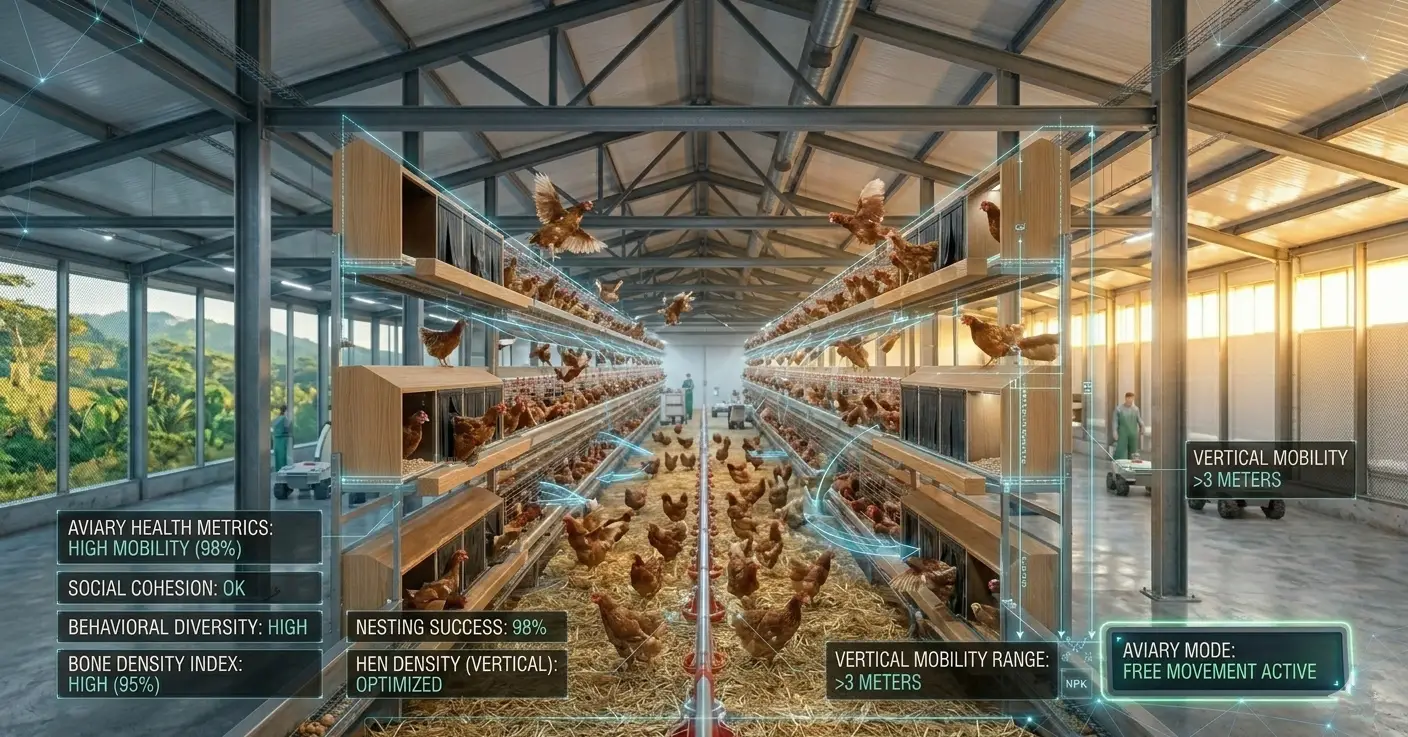
An aviary is a multi-tier, cage-free environment. Like cages, it uses the full vertical height of the poultry house. Unlike cages, hens can move freely between tiers — accessing feed and water at multiple levels, using nest boxes for laying, perching at height for resting, and accessing litter areas at floor level for dust-bathing and scratching.
Where Aviary Systems Perform
Bird welfare and productive longevity. Freedom of movement produces physically stronger hens. Better bone density from regular weight-bearing activity reduces skeletal fractures at depopulation and can extend productive life. In operations where flock longevity is economically important, this is a measurable advantage.
Market positioning. Eggs from aviary systems qualify as cage-free under international labeling standards. In Cameroon and across West Africa, this currently commands a price premium in urban supermarkets, hotel supply contracts, and export-oriented channels. As consumer awareness grows, this premium is likely to widen rather than narrow.
Vertical density without cage infrastructure. A well-designed aviary uses 3–4 tiers to achieve stocking densities higher than flat floor systems while maintaining cage-free status. This makes aviaries viable in markets where cage eggs face regulatory or buyer restrictions.
The Challenges
Aviary management is substantially more demanding than cage management. The risks are real and specific:
Piling. When birds crowd into a single area — triggered by fright, sudden light changes, or unfamiliar sounds — they can suffocate birds at the bottom of the pile within minutes. Preventing piling requires consistent flock supervision, controlled lighting transitions, and a house design that avoids corners and dead-end zones where birds trap each other.
Floor eggs. If hens do not establish nest box habits early in the laying cycle, floor laying becomes entrenched and difficult to correct. Aviary systems require active nest box training for pullets, correctly positioned nest boxes relative to resting tiers, and early intervention when floor egg rates rise above 1–2%.
Feed and water access across tiers. In a cage system, every bird is within reach of a nipple drinker and a feed trough. In an aviary, producers must verify that birds on every tier level are eating and drinking adequately. Subordinate birds excluded from lower tiers by dominant flock members can suffer feed restriction without visible symptoms until production data reveals the problem.
Initial capital cost. Aviary infrastructure — the multi-tier structures, nest boxes, litter management systems, and automated components — costs more to install than a comparable cage system. The higher upfront investment must be recovered through premium pricing or extended flock productivity.
Technical Comparison
| Metric | Battery Cage | Aviary (Multi-Tier) |
|---|---|---|
| Bird density | Extremely high | High (vertical) |
| Initial capital cost | High | Very high |
| Labor requirement | Low (automatable) | Medium–High (management intensive) |
| Egg cleanliness | Excellent | Good (requires nest training) |
| Feed conversion ratio | 1.9–2.1 kg/dozen | 2.1–2.4 kg/dozen |
| Bird welfare | Low | High |
| Disease risk | Low (separated from waste) | Medium (litter contact) |
| Market access | Standard commodity | Cage-free premium eligible |
| Management complexity | Low | High |
Which System Fits Your Operation?
The decision is not about which system is objectively better. It is about which system matches your market, your management capacity, and your capital position.
Choose battery cages if your primary market is price-sensitive — local markets, wholesale buyers, or processors where cage-free status carries no premium. If your management team is small or early in commercial poultry experience, the predictability and lower complexity of cage systems reduce operational risk significantly. For farms prioritizing maximum eggs per square meter at the lowest cost per egg, cage systems remain the most efficient tool available.
Choose an aviary system if you are targeting hotel supply contracts, urban retail, or any buyer who specifies cage-free eggs. If you have — or are building — a management team with the skill to monitor multi-tier bird behavior, respond early to piling risk, and train pullets onto nest boxes, the aviary positions you for the premium segment of a market that is moving in that direction. It is also the right choice if you anticipate animal welfare regulations tightening in your target export markets.
A note on irreversibility. Cage infrastructure and aviary infrastructure are not interchangeable. Converting a cage house to an aviary system, or vice versa, requires substantial reconstruction. Make this decision based on your 10-year market vision, not your first-year budget. The capital you save by choosing the cheaper system today is irrelevant if the market you want to serve in year five requires the system you didn’t build.
The Role of Data in Either System
Housing infrastructure determines your production ceiling. Nutrition and health management determine whether you reach it.
Regardless of which system you operate, precise feed formulation matched to your breed, production phase, and ambient temperature — combined with a disciplined vaccination and biosecurity schedule — determines how much of your housing system’s theoretical capacity converts into actual egg output.
The most common cause of underperformance in both cage and aviary operations is not infrastructure failure. There is a gap between the production inputs the system requires and what the farm is actually delivering.
Otto’sFarms Verdict
Battery cages and aviary systems both produce eggs at a commercial scale. They do it through different mechanisms, at different cost points, with different management demands, and for different markets.
Cages offer lower cost, lower complexity, and higher density — at the expense of bird welfare and premium market access. Aviaries offer welfare certification, longer productive life, and access to cage-free pricing — at the cost of higher capital and significantly higher management skill requirements.
The right system is the one that aligns with where you are selling eggs today and where you intend to sell them in a decade.