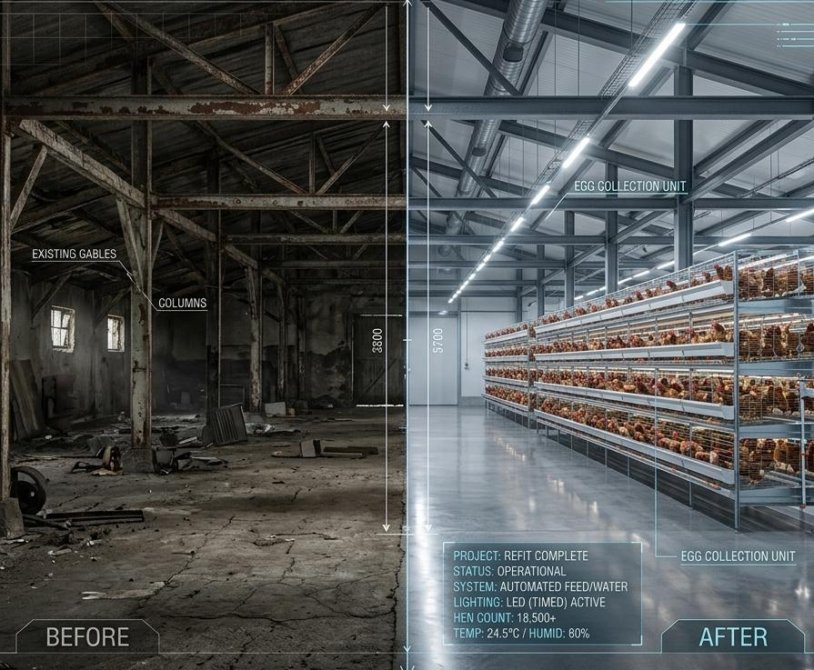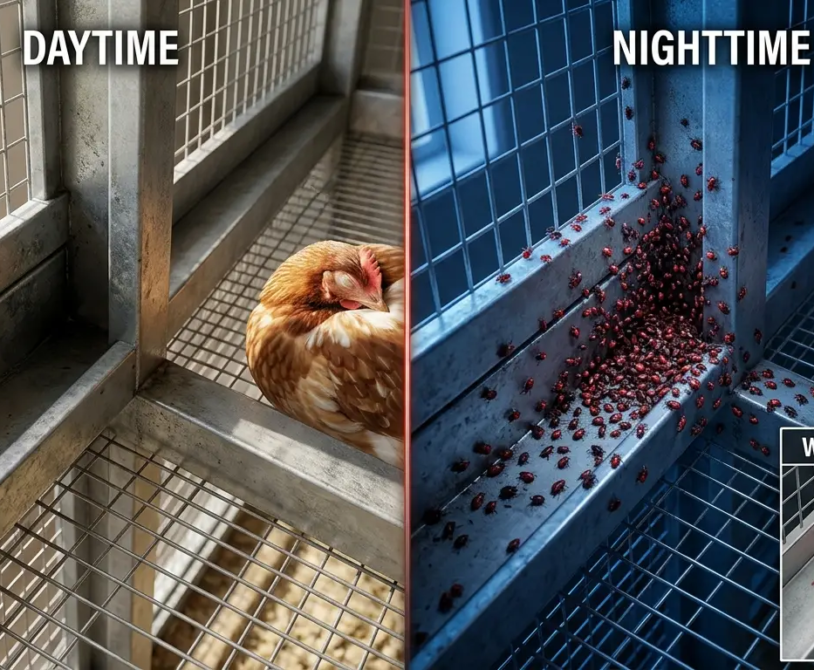
Heat stress is one of the leading causes of reduced egg production and increased mortality in layer chicken operations. When internal house temperatures exceed 27°C (80°F), hens begin to show measurable declines in feed intake, shell quality, and laying rate. Beyond 35°C (95°F), the risk of death rises sharply.
The good news: the right infrastructure investments can neutralize most of that risk before it reaches the birds.
This article covers three proven structural solutions — reflective roofing, thermal insulation, and fogging systems — and explains how each one works, when to use it, and how to combine them for maximum effect.
Why Heat Stress in Layer Chickens Is an Infrastructure Problem
Many producers treat heat stress as a ventilation problem and stop there. Ventilation matters, but it cannot compensate for a roof that radiates heat into the house or walls with no thermal resistance.
A poorly built house forces birds to thermoregulate constantly. That energy comes directly out of egg production. A well-built house keeps the internal environment stable so birds can redirect that energy into laying.
Infrastructure works 24 hours a day without running costs. That makes it the most cost-effective layer of defense in any heat management strategy.
1. Reflective Roofing: Stop Heat Before It Enters
The roof is the largest surface exposed to solar radiation. On a clear day, an uncoated metal roof can reach 70–80°C (158–176°F). That heat radiates downward into the house continuously, even after the sun sets.
How Reflective Roofing Works
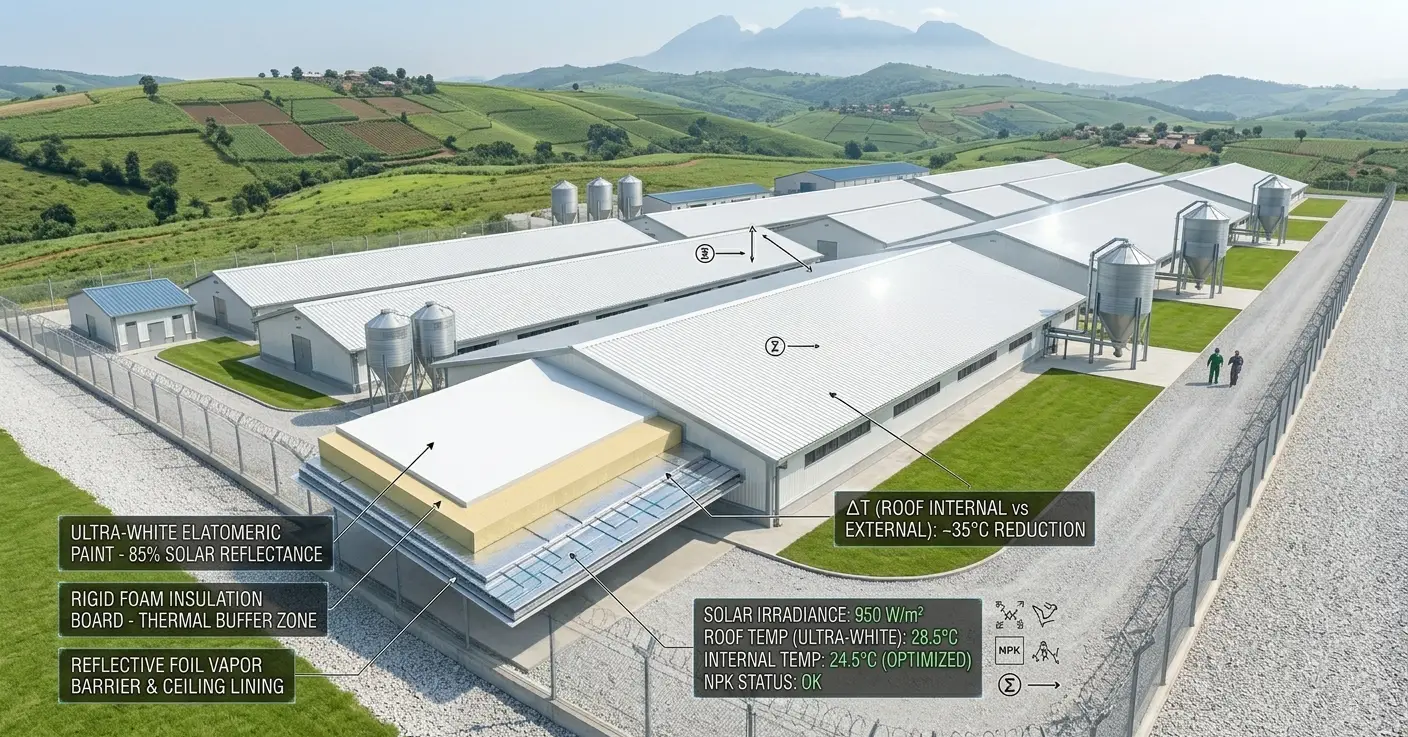
Reflective or “cool” roofing materials use high solar reflectance (SR) and high thermal emittance (TE) to reject solar energy rather than absorb it. Standard galvanized iron absorbs roughly 70% of solar radiation. A reflective-coated surface can reject 65–85% of the same radiation.
The result is a roof surface that stays 20–30°C cooler than an uncoated one, which directly lowers radiant heat load inside the house.
Material Options
- Reflective paint coatings: Applied over existing metal roofing. Most affordable retrofit option. Look for elastomeric coatings with SR ≥ 0.65.
- Pre-painted Galvalume or Colorbond steel: Manufactured with reflective pigments. Best for new builds.
- Aluminum foil laminates: Bonded under roofing sheets to add a reflective inner layer.
Key Considerations
- Reflective coatings degrade over time. Reapply every 5–7 years, depending on the climate.
- Light-colored roofs reflect more than dark ones. White or light gray surfaces outperform beige or green.
- Reflective roofing alone is not enough in high-humidity climates. Pair it with insulation.
2. Insulation: Hold the Temperature Stable
Reflective roofing reduces heat entry. Insulation slows down the rate at which that heat transfers into the occupied space. Together, they create a thermal buffer that keeps internal temperatures several degrees below outside peaks.
How Insulation Works in Poultry Houses
Insulation is rated by its R-value — the resistance to heat flow per unit area. The higher the R-value, the slower heat moves through the material. In hot climates, ceiling insulation is the most important application. Roof insulation alone can reduce peak internal temperatures by 4–8°C in well-designed structures.
Recommended Materials for Layer Houses
| Material | R-Value per inch | Pros | Cons |
|---|---|---|---|
| Fiberglass batts | R-3.1–3.7 | Low cost, widely available | Absorbs moisture if not sealed |
| Rigid foam board (EPS/XPS) | R-3.8–5.0 | Moisture-resistant, durable | Higher upfront cost |
| Spray polyurethane foam | R-6.0–7.0 | Seals gaps, high performance | Requires professional application |
| Reflective foil (radiant barrier) | Variable | Reflects radiant heat | Loses effectiveness if dusty |
Placement Priorities
- Ceiling/attic space — most critical surface; traps a dead-air buffer between the roof and birds
- Side walls — especially the east and west-facing walls that receive morning and afternoon sun
- End walls — often overlooked; important in houses oriented east-west
Moisture Management
Insulation in poultry houses must handle high ammonia and moisture loads. Vapor barriers installed on the warm side of insulation prevent condensation from degrading the material. Sealed foam products generally outperform open-cell options in these conditions.
3. Fogging Systems: Active Cooling When It Counts
Reflective roofing and insulation are passive systems. They reduce heat load but cannot add cold. On peak summer days — especially in tropical or semi-arid regions — passive systems alone may not hold temperatures within the safe range for laying hens. That is where fogging systems come in.
How Fogging Systems Work
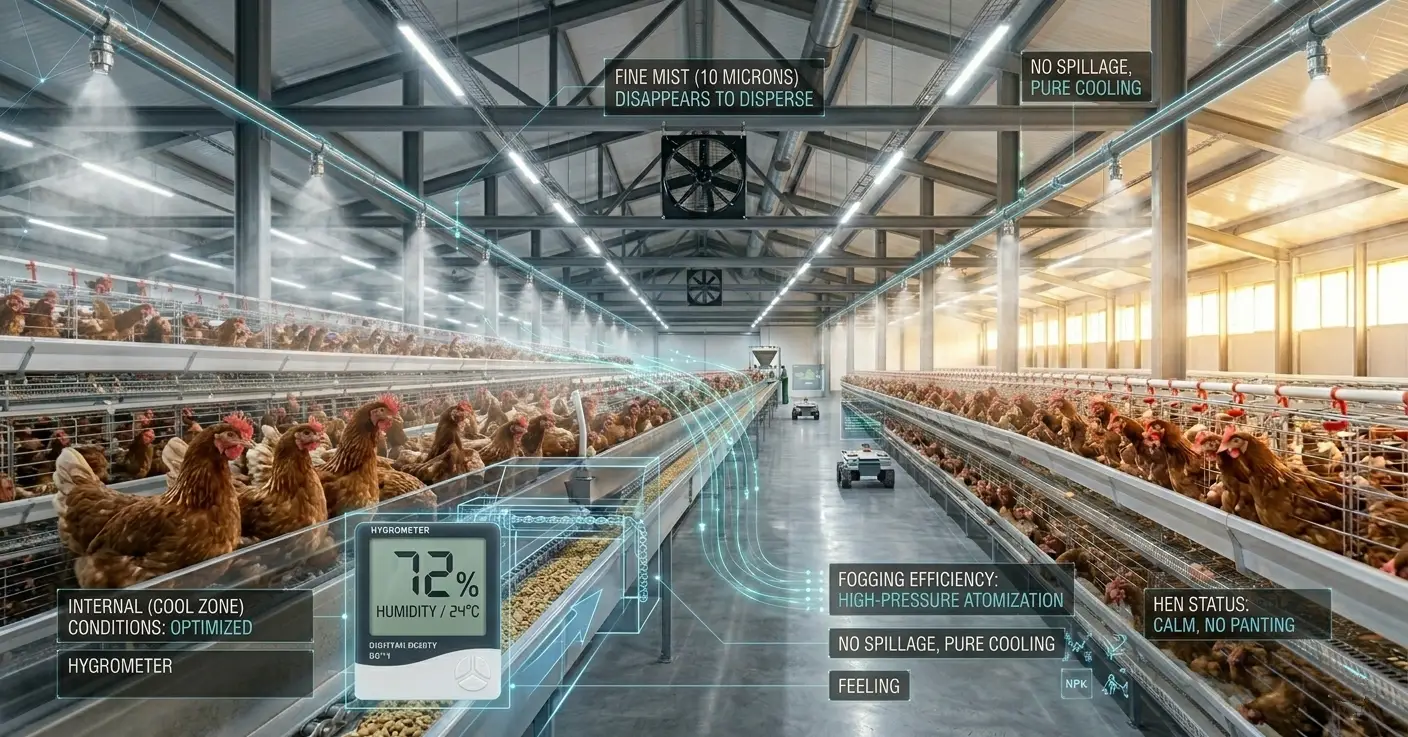
High-pressure fogging systems force water through nozzles at 400–1,000 PSI, creating droplets of 10–50 microns in diameter. At that size, water evaporates almost instantly in dry air, absorbing latent heat from the surrounding environment and dropping air temperature by 5–12°C depending on ambient humidity.
This process — evaporative cooling — is most effective when relative humidity is below 70%. Above 80% humidity, the air is already close to saturation and cannot absorb much more moisture. In those conditions, fogging can raise humidity without meaningfully cooling the air, which worsens heat stress rather than relieving it.
System Components
- High-pressure pump: 400–1,000 PSI output; stainless steel preferred for longevity
- Distribution lines: Typically, 3/8″ stainless or nylon tubing runs along the length of the house
- Fog nozzles: Spaced every 1–1.5 meters; anti-drip tips prevent wetting of litter
- Controller/timer: Cycles fogging based on temperature and humidity sensors
Placement in Layer Houses
Nozzles should be positioned at or above bird level but below fan exhaust lines to maximize evaporation time before air exits. In tunnel-ventilated houses, fogging works best in the first two-thirds of the house where incoming air is hottest.
Avoid direct fogging over feeders, waterers, or nest boxes. Wet litter rapidly increases ammonia production and respiratory challenge for birds.
Low-Pressure vs. High-Pressure Systems
| Feature | Low-Pressure (≤ 60 PSI) | High-Pressure (400–1,000 PSI) |
|---|---|---|
| Droplet size | 100–200 microns | 10–50 microns |
| Evaporation speed | Slow — may wet litter | Near-instant |
| Cooling effectiveness | Moderate | High |
| System cost | Low | Moderate–High |
| Maintenance | Simple | Regular filter and nozzle cleaning |
For commercial layer houses, high-pressure systems are the standard. Low-pressure systems are acceptable only in very dry climates with excellent ventilation.
Combining All Three: The Layered Approach
Each system addresses a different part of the heat problem. The highest performance comes from using all three together in a coordinated design.
How the layers interact:
- Reflective roofing reduces the total solar heat entering the structure by 60–80%.
- Insulation slows residual heat transfer, so the internal environment rises slowly even if outside temperatures spike.
- Fogging provides active correction during peak afternoon hours when passive systems reach their limit.
A house with only fogging will cool the air momentarily, but a hot roof and uninsulated walls will reheat it continuously. A house with only insulation and reflective roofing may still overheat on extreme days without active cooling backup.
Together, the three systems keep internal temperatures within the 18–24°C comfort range for layers far more consistently than any single solution.
Monitoring: Infrastructure Is Only as Good as the Data Behind It
Install thermometers and hygrometers at bird level — not at the ceiling or near doors where readings are unrepresentative. For a 100-meter house, place sensors at three points along the length and at each end.
Data loggers that record temperature and humidity every 15 minutes allow producers to identify hot spots, evaluate system performance, and adjust fogging cycle timing. Some operations integrate sensor data with automated fogging controllers for fully passive management during peak hours.
Return on Investment
Heat stress costs layer producers through reduced egg output, poor shell quality, increased feed-to-egg conversion ratios, and higher mortality. Studies from subtropical production environments show that average egg production drops 1–2% for every degree Celsius above the comfort threshold sustained for more than four hours.
A $15,000–$25,000 infrastructure upgrade on a 10,000-bird house — covering reflective coating, ceiling insulation, and a high-pressure fogging system — typically recovers its cost within two to three production cycles in high-heat regions through improved laying rate and reduced mortality alone.
Summary
Managing heat stress in layer chickens is primarily an infrastructure challenge, not a management one. Reflective roofing cuts solar heat gain at the source. Insulation holds the thermal environment stable. Fogging provides targeted active cooling when passive systems reach their ceiling.
Producers who invest in all three create a house that works for the birds — not against them — and protect both flock performance and bottom-line returns through the hottest months of the year.