In a high-density layer farm, waste is the most significant “log file” your system generates. If left unmanaged, poultry manure becomes a source of ammonia toxicity, a breeding ground for flies, and a major biosecurity risk. As a software engineer, I view manure management as “garbage collection”—an essential background process that prevents the primary application (egg production) from crashing.
By engineering your poultry house with specific waste removal structures, you can reduce labor costs, eliminate foul odors, and turn a “waste product” into a high-value organic fertilizer.
The Chemistry of Ammonia Reduction
Ammonia ($NH_3$) is produced when uric acid in poultry droppings breaks down in the presence of moisture and heat. In the humid climate of the Southwest Region, this process is accelerated.
-
The Danger: High ammonia levels (above 25 ppm) damage the protective cilia in a hen’s trachea, leading to chronic respiratory diseases (CRD) and a drop in egg production.
-
The Solution: Engineering a dry environment. Moisture is the “runtime environment” for ammonia; remove the moisture, and you stop the reaction.
Structural Designs for Deep Litter Systems
In a floor-based system, the “Manure Pit” is integrated into the litter itself. The goal is to keep the waste aerobic (oxygenated) to prevent anaerobic rot.
Sloped Concrete Floors
The foundation should have a subtle 1% to 2% slope toward a central or exterior drainage channel. This ensures that any accidental water spills from drinkers move away from the manure and can be easily swept out during the “terminal clip-out” (the full cleaning between flocks).
Elevated Slatted Sections
A modern “hybrid” design involves placing feeders and waterers over an elevated slatted area (made of plastic or treated wood).
-
The Logic: Birds spend a significant amount of time eating and drinking, meaning 50-60% of droppings fall through the slats into a shallow pit below.
-
The Benefit: This keeps the main scratching area of the deep litter much drier and reduces the frequency of full-house cleaning.
Engineering for Battery Cage Waste Removal
In cage systems, waste is concentrated directly under the birds. This requires a dedicated “Manure Pit” or “Belt” architecture.
The Deep Pit (High-Rise) System
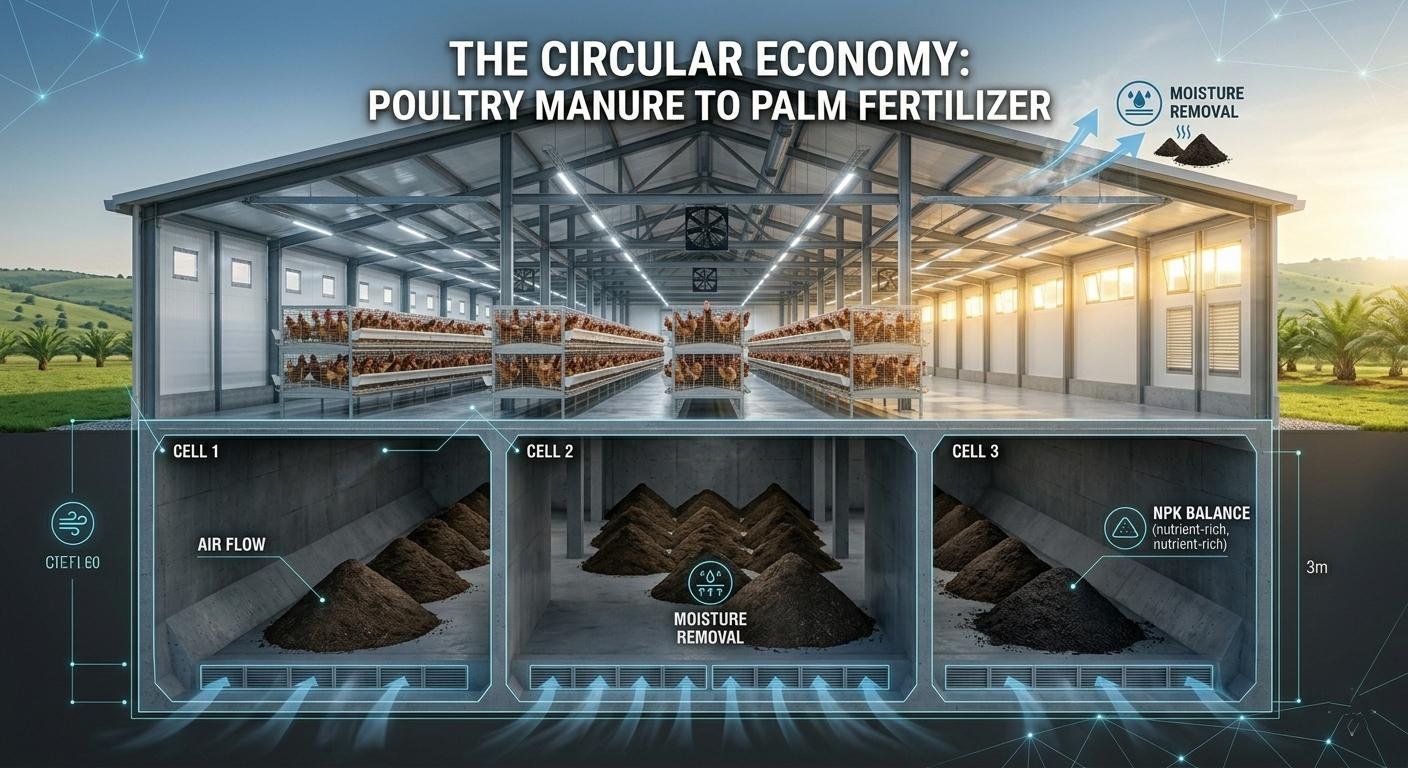
In this design, the cages are suspended over a 2-to-3-meter deep pit.
-
The Engineering: Wide ventilation openings at the base of the pit allow air to flow over the manure piles, drying them out into “cones.”
-
The Advantage: Manure only needs to be removed once every 12 to 24 months. By the time it is collected, it is dry, odorless, and ready for use as fertilizer.
Scraper and Belt Systems
For multi-tier cages in smaller buildings, mechanical scrapers or motorized belts move the waste to one end of the house.
-
The Workflow: The belt “exports” the wet manure daily into a waiting trolley or a covered concrete bunker outside the house.
-
The Tech Factor: While this requires more “moving parts” (maintenance), it provides the cleanest internal air quality for the birds.
Manure Pit Construction and Sealing
If you utilize an under-house pit, its construction is as vital as the house itself.
-
Waterproofing: The pit walls and floor must be plastered and sealed to prevent nitrogen-rich leachate from seeping into the groundwater.
-
Fly Control Engineering: Designing the pit with steep, smooth “deflection walls” prevents manure from sticking to the sides, ensuring it falls into a central pile that can be easily treated with lime or biological fly-larvae controls.
Turning Waste into Wealth: The Circular Economy
As a CEO, I don’t see manure as a problem; I see it as a byproduct with a market value.
-
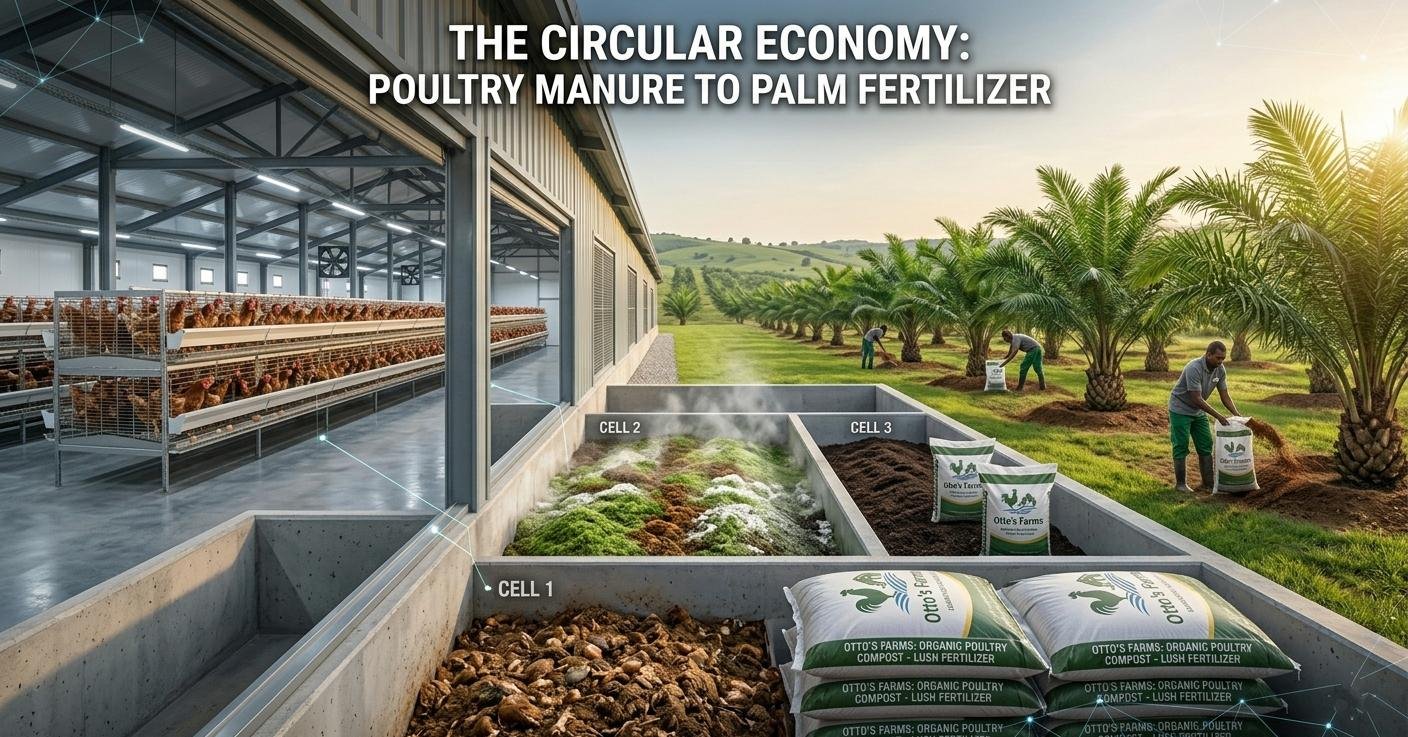
Composting Bunkers: Design your waste area with three concrete “cells.” While Cell 1 is being filled, Cell 2 is composting, and Cell 3 is being bagged and sold.
-
Integration: For Otto’s Farms, this manure is the “fuel” for our palm oil plantations. The nitrogen-phosphorus-potassium (NPK) balance in poultry waste is significantly higher than in other livestock, making it a premium product for Cameroonian soil.
Efficiency through Cleanliness
A farm that smells like ammonia is a farm that is losing money. Engineering your waste removal systems for speed and dryness reduces your veterinary bills and keeps your staff motivated. By treating “Garbage Collection” as a core architectural feature of your poultry house, you ensure a healthier flock and a more sustainable, profitable agribusiness.