Feed accounts for 60–70% of the total cost of producing a market pig. No other single input — not housing, not labor, not health management — carries comparable weight in the farm’s cost structure. A breeding program that improves feed conversion ratio (FCR) by even a small margin generation after generation is not making a marginal improvement. It is compounding a reduction against the largest cost line on the farm’s budget, year after year, herd after herd.
FCR is also one of the most genetically responsive traits available to a pig breeding program. Its heritability — the proportion of the variation in FCR among individual pigs that is attributable to genetic differences rather than environmental differences — is moderate to high (typically 30–45%), which means that selecting breeding stock based on documented FCR performance produces real, measurable, transmissible improvement in the next generation. This is fundamentally different from traits like litter size, where heterosis from crossbreeding does most of the work and within-breed selection contributes comparatively little. FCR responds directly and substantially to selection.
But selecting for low FCR requires more than simply picking the fastest-growing or leanest-looking pigs in a batch. It requires accurate measurement, an understanding of which traits correlate genuinely with FCR and which only appear to, a structured selection and recording system that tracks performance across generations, and the discipline to make selection decisions based on data rather than visual impression.
This article builds that complete framework: how to measure FCR correctly at farm scale, what genetic and physiological factors actually drive FCR, how to design a selection program that improves it generation over generation, and how to track the genetic progress that confirms the program is working.
Part 1: Understanding What FCR Actually Measures
The Basic Definition
Feed conversion ratio = Total feed consumed (kg) ÷ Total live weight gain (kg)
An FCR of 2.6 means the pig consumed 2.6 kg of feed for every 1 kg of live weight it gained. Lower FCR means more efficient — less feed required per unit of growth.
Why FCR Varies Between Individual Pigs
FCR is the outcome of multiple underlying biological processes, several of which have distinct genetic architectures:
Maintenance energy requirement: Every pig expends a baseline amount of energy simply maintaining body temperature, organ function, and basic metabolism — energy that does not contribute to growth. Pigs with lower maintenance energy requirements (smaller frame size relative to lean growth potential, more efficient metabolic processes) convert a higher proportion of consumed feed into growth rather than maintenance.
Digestive and absorptive efficiency: The proportion of consumed feed that is actually digested and absorbed, rather than passing through undigested, varies between individual pigs based on gut morphology, gut microbiome composition, and digestive enzyme production — all of which have documented genetic components.
Partitioning between lean and fat deposition: Lean tissue (muscle) requires less energy to deposit per kilogram of gain than fat tissue — approximately 2.5 kcal/g for protein deposition versus 9.5 kcal/g for fat deposition. A pig genetically inclined toward higher lean deposition relative to fat deposition will show a better FCR for the same total weight gain, because more of that gain is the metabolically cheaper tissue type.
Activity level: Pigs that move more, fight more, or show more agitated behavior expend more energy on activity rather than growth. While this has an environmental component (stocking density, social stability), temperament and activity level also have a heritable component.
Disease resilience: A pig that is fighting subclinical infection diverts energy to immune function rather than growth, worsening FCR even without overt clinical signs. Genetic resilience to common pathogens contributes to consistently better FCR by reducing this hidden energy diversion.
Why FCR Improvement Compounds Across the Farm
Because feed is 60–70% of production cost, an FCR improvement translates almost directly into cost reduction. At a 1,000-pig annual finisher operation:
- FCR improvement from 2.7 to 2.5 (a 7.4% improvement): 1,000 pigs × 75 kg gain × (2.7 − 2.5) = 15,000 kg feed saved
- At XAF 300/kg feed: XAF 4,500,000 (USD 7,500) saved per year — from genetics alone, with no change in management
This saving repeats every year the improved genetics remain in the herd, and compounds further if the breeding program continues improving FCR in subsequent generations.
Part 2: Measuring FCR Accurately — The Foundation of Selection
Why Measurement Accuracy Determines Selection Accuracy
A breeding program that selects based on inaccurately measured FCR is selecting on noise rather than genetic merit — and may inadvertently select against the traits it intends to improve. Accurate FCR measurement requires controlling for the variables that create measurement error independent of genuine biological differences.
Individual vs. Group FCR Measurement
Group (pen-level) FCR: Total feed delivered to a pen divided by total weight gain of all pigs in the pen. This is the measurement most commercial farms can practically implement without specialized equipment — it requires only accurate feed delivery records and accurate group weighing at the start and end of the measurement period.
Limitation: Group FCR cannot distinguish which individual pigs within the pen are efficient and which are inefficient. An average of 2.6 FCR could represent a uniform group all performing at 2.6, or a mixed group where some pigs perform at 2.3 and others at 3.0 — information that is essential for individual selection decisions but invisible at the group level.
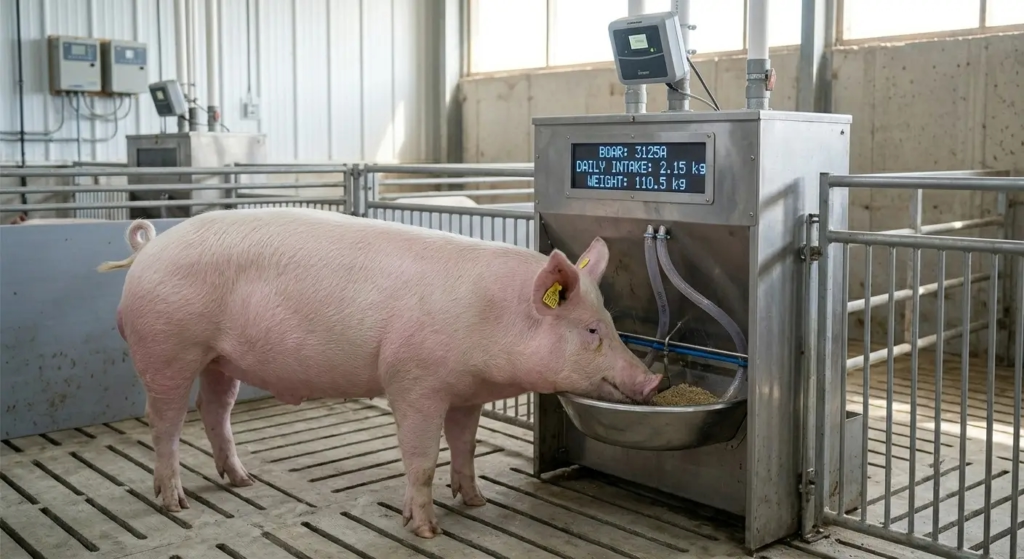
Individual FCR measurement: Requires individual feed intake recording — either through electronic feeding stations that record each pig’s feed consumption individually (common in nucleus breeding herds and progeny testing stations, but capital-intensive) or through individual pen housing with measured feed delivery (practical for limited numbers of selection candidates but not for whole-herd measurement).
The practical compromise for commercial West African operations: Most farms outside elite nucleus breeding programs cannot justify the capital cost of electronic individual feed intake recording. The practical approach is:
- Measure group FCR at the pen level routinely, as the primary efficiency metric for the whole herd
- For specific selection candidates (potential replacement boars, or gilts being considered for retention in larger operations producing their own replacements), use individual or small-group (2–4 pigs) pens with measured feed delivery during a defined test period (typically 25–90 kg live weight) to obtain individual-level FCR data with reasonable accuracy
Controlling for Measurement Error
Accurate feed weighing, not estimation: Feed delivered to each pen or test group must be weighed, not estimated by bag count or visual assessment. A feed bag that is “approximately 50 kg” might vary by several kilograms depending on moisture content and filling consistency — errors that accumulate across a measurement period and distort FCR calculations.
Accounting for feed wastage: Feed that spills from the feeder onto the floor and is not consumed must be excluded from the “feed consumed” figure, or FCR calculations will be artificially inflated (appearing worse than actual biological efficiency). This requires either feeder designs that minimize spillage (important regardless of FCR measurement) or periodic spillage assessment to apply a correction factor.
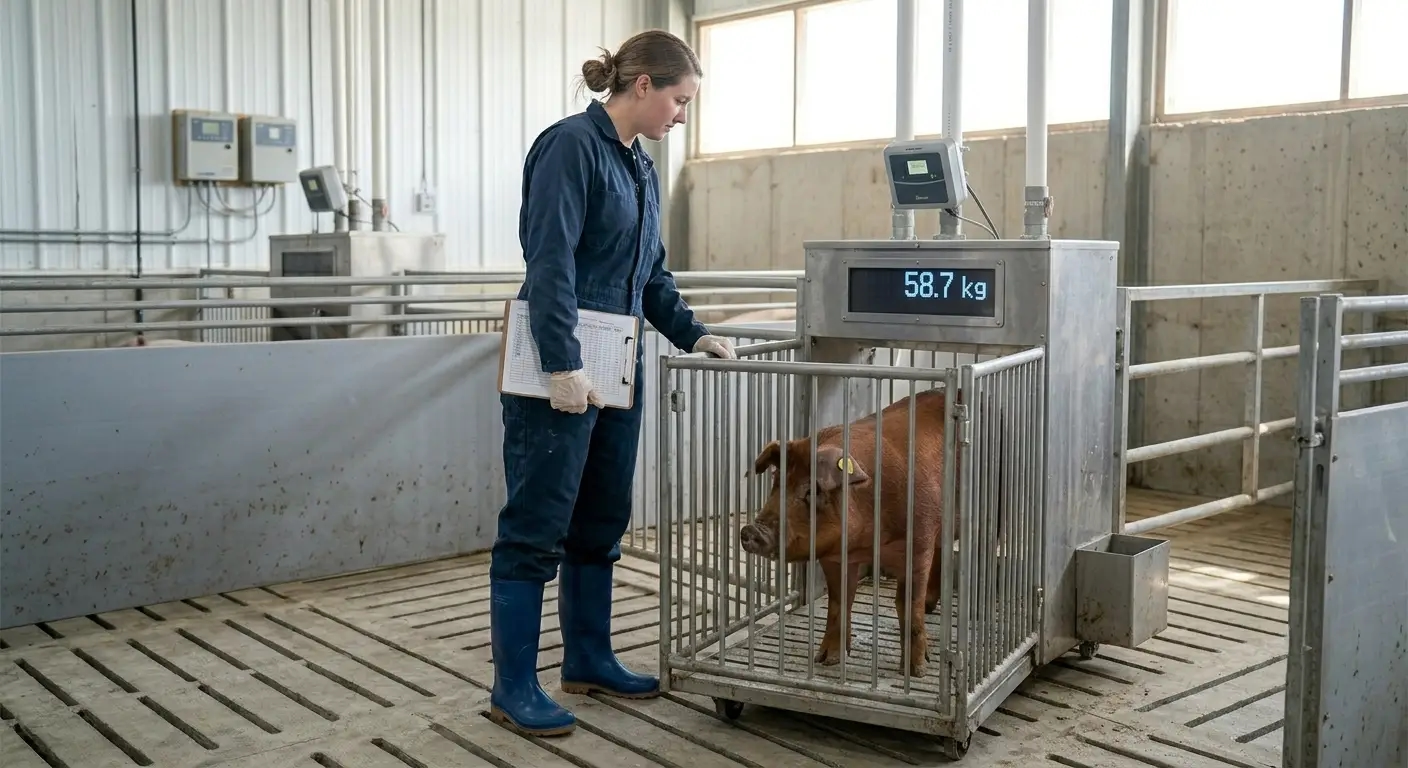
Consistent weighing protocol: Pigs should be weighed at a consistent time of day (ideally morning, before feeding, when gut fill is most consistent) using a calibrated scale. Weighing some pigs immediately after a large meal and others before feeding introduces gut fill variation that can represent several kilograms of measurement error, substantial relative to typical daily gain.
Defined test period boundaries: FCR measurement should cover a clearly defined weight range (commonly 25–60 kg for grower-phase testing, or 25–100/110 kg for full grower-finisher testing) rather than a fixed time period, since pigs starting the test at different weights will have systematically different FCR even at identical genetic merit, simply because FCR worsens as pigs mature (a biological reality unrelated to genetic differences between individuals).
Adjusting for Non-Genetic Factors
Raw FCR measurements include both genetic and environmental sources of variation. Before using FCR data for selection decisions, adjust for known non-genetic factors:
Sex: Boars (intact males) typically show 3–5% better FCR than gilts at the same weight range, who in turn show somewhat better FCR than barrows (castrated males), due to the anabolic effects of testosterone on lean tissue deposition. Compare FCR only within sex categories, or apply standard correction factors if comparing across sexes.
Health status during the test period: Any pig that experienced a disease event, treatment, or significant stress during the FCR measurement period should have that period flagged or excluded — the resulting FCR reflects the disease impact, not underlying genetic merit.
Pen and group effects: Pigs tested in groups with higher competition (smaller space allowance, larger group size, less uniform group composition) will show worse FCR, partly due to the stress and competition effects discussed in space allowance management, independent of genetic merit. Standardize test conditions as much as possible across all candidates being compared.
Part 3: Selection Criteria Beyond Raw FCR
Why Selecting on FCR Alone Is Insufficient
A pure focus on minimizing FCR, without attention to correlated traits, can produce unintended consequences. Specifically:
The lean yield trade-off risk: Selecting purely for low FCR without monitoring carcass composition can inadvertently select for pigs that achieve low FCR partly through excessive fat deposition reduction beyond the optimal range — producing carcasses too lean for some market specifications, or selecting against the moderate fat deposition that contributes to meat quality (as discussed in breed comparison articles in this series).
The robustness trade-off risk: In some breeding programs, intense selection for feed efficiency under ideal test conditions has produced lines that perform exceptionally under those specific controlled conditions but show disproportionate performance collapse under field conditions with disease challenge or nutritional variability — essentially selecting for efficiency at the cost of resilience.
The reproductive trade-off risk: Particularly relevant for selecting replacement gilts — selecting purely on a gilt’s own growth and FCR performance without considering reproductive trait indicators (as covered in the gilt selection checklist) can produce efficient growers that are poor breeders.
The Selection Index Approach
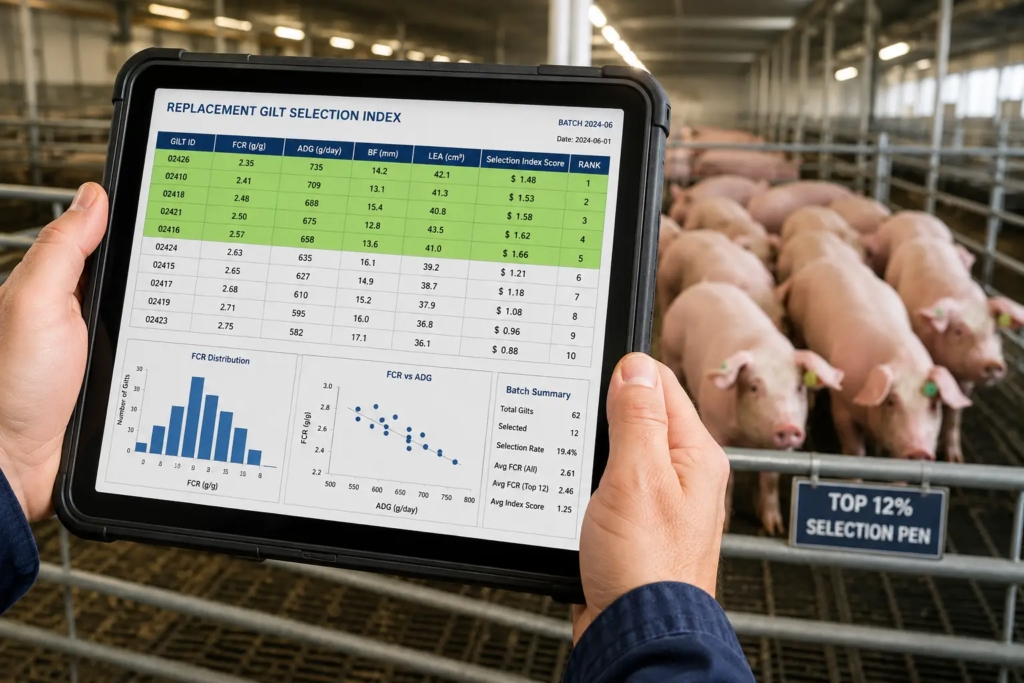
Rather than selecting on FCR in isolation, commercial and progressive smallholder breeding programs use a selection index — a weighted combination of multiple traits that reflects their relative economic importance, allowing selection decisions that improve overall farm profitability rather than optimizing a single trait at the expense of others.
A practical selection index for a West African commercial pig operation might weight:
| Trait | Relative Weight | Rationale |
|---|---|---|
| FCR | 30–35% | Largest cost driver |
| Average daily gain | 20–25% | Determines pen turnover and capacity utilization |
| Backfat/lean yield | 15–20% | Carcass value, but not maximized at the expense of meat quality |
| Litter size (for breeding stock selection) | 15–20% | Reproductive output, especially relevant for gilt selection |
| Structural soundness | 10% | Longevity and welfare, particularly for breeding stock |
The specific weights should reflect each farm’s actual market — an operation selling primarily to commodity lean-yield-graded buyers should weight backfat/lean yield more heavily; an operation building premium eating-quality market positioning should weight that trait differently (potentially even selecting toward moderate, rather than minimum, backfat).
Part 4: Practical Selection Program Design
Step 1: Establish Baseline Performance Data
Before any selection program can demonstrate genetic progress, establish accurate baseline measurements of current herd FCR performance. This requires a minimum of one full production cycle of accurate group-level FCR recording across all grower-finisher pens, ideally segmented by sire line or breed group if the herd contains genetic diversity that allows comparison.
Step 2: Identify Selection Candidates
For boar selection (the highest leverage point in the breeding program): Because a single boar contributes genetics to dozens or hundreds of offspring (through natural service or, more significantly, through AI distribution), boar selection has a disproportionate impact on herd-wide genetic progress compared to individual sow selection. Prioritize FCR testing resources on boar candidates.
Identify the top-performing 10–20% of growing pigs from the herd (or from a structured progeny test if testing replacement boar candidates from multiple sire lines) based on individual or small-group FCR measurement in the 25–60 kg test window.
For gilt selection: Combine FCR/growth performance data (where individually measurable) with the full physical and reproductive trait checklist (teat number, leg structure, vulva development, and the other criteria detailed in gilt selection guidance) — since gilt selection must balance growth efficiency against reproductive suitability in a way that boar selection, focused purely on growth and carcass traits, does not.
Step 3: Verify Genetic Merit, Not Just Phenotypic Performance
A pig’s own measured FCR (its phenotype) reflects both its genetic merit and the environmental conditions it experienced during measurement. Two pigs with identical measured FCR may have different genetic merit if one was tested under more favorable conditions (better health status, less competition, more consistent nutrition) than the other.
Where resources allow, use family information to improve selection accuracy:
- Sibling performance: If a candidate’s full or half siblings also show strong FCR performance, this increases confidence that the candidate’s good performance reflects genuine genetic merit rather than a favorable individual testing environment
- Parental performance: Selecting replacement boars from sires with documented strong FCR performance (either from the farm’s own records or from genetics company progeny testing data, where purchasing from external sources) provides additional confidence beyond the individual candidate’s own test result
For farms purchasing genetics externally: Request Estimated Breeding Values (EBVs) for FCR from genetics company suppliers rather than relying solely on the visual appearance or even the individual test performance of the specific animal being purchased. EBVs are calculated using statistical models that combine the individual’s own performance with that of relatives, providing a more accurate estimate of true genetic merit — particularly valuable because the same EBV methodology that improved the supplier’s nucleus herd performance over decades is the foundation of the genetic merit being purchased.
Step 4: Implement Selection and Maintain Records
Selection intensity: The proportion of candidates retained as breeding stock directly affects the rate of genetic progress — retaining only the top 5–10% of candidates produces faster genetic improvement than retaining the top 30–40%, but requires a larger candidate pool to generate adequate replacement numbers. Balance selection intensity against the practical constraint of needing sufficient replacement animals to maintain herd size.
Record-keeping requirements for tracking genetic progress:
| Record | Purpose |
|---|---|
| Individual or group FCR by sire/dam line | Establishes baseline and tracks change over generations |
| Selection candidate test results | Documents the basis for each breeding decision |
| Pedigree records (sire and dam identity for all breeding stock) | Enables family-based selection accuracy improvement and prevents inbreeding |
| Generation interval tracking | Allows calculation of annual genetic progress rate |
Step 5: Measure Genetic Progress Over Generations
The genetic progress calculation:
Annual genetic gain = (Selection differential × Heritability) ÷ Generation interval
Where:
- Selection differential = the average FCR of selected breeding stock minus the average FCR of the full candidate population they were selected from (a larger differential, from more intense selection, produces faster progress)
- Heritability = the proportion of FCR variation attributable to genetics (approximately 0.30–0.45 for FCR)
- Generation interval = the average age of parents when their offspring are born (shorter generation intervals, from a younger average breeding age, accelerate annual genetic progress)
A practical example:
If selected boars average an FCR 0.3 better than the full candidate population (selection differential of 0.3), heritability is 0.35, and the generation interval is 1.5 years (relatively young average breeding age):
Annual genetic gain = (0.3 × 0.35) ÷ 1.5 = 0.07 FCR improvement per year
This may seem modest, but compounded over 5 years of consistent selection: 0.07 × 5 = 0.35 FCR improvement — moving a herd from, for example, 2.75 average FCR to 2.40 average FCR purely through within-herd genetic selection, independent of any external genetics purchases.
At 1,000 pigs annually, 75 kg gain, XAF 300/kg feed, this 0.35 FCR improvement represents: 1,000 × 75 kg × 0.35 × XAF 300 = XAF 7,875,000 (USD 13,125) in annual feed cost saving — achieved through disciplined internal selection over 5 years, without external genetics purchase cost beyond normal replacement stock acquisition.
Part 5: Combining Internal Selection With External Genetics Sourcing
The Two-Track Strategy
Most commercial pig operations in West Africa cannot rely solely on internal selection to achieve world-class FCR performance — the genetic base available locally, combined with practical limits on herd size and testing infrastructure, constrain how much genetic progress internal selection alone can achieve within a reasonable timeframe.
The complementary strategy combines:
Internal selection for incremental, continuous improvement using the farm’s own breeding stock — capturing the FCR improvement available from selecting the better-performing animals already in the herd, at minimal additional cost.
Periodic external genetics infusion — purchasing replacement boars or semen from verified high-genetic-merit external sources (commercial multipliers with documented EBV data, or genetics company import channels for the highest-merit lines) to introduce genetic merit beyond what the existing herd’s internal variation can provide, and to refresh genetic diversity that prevents the inbreeding depression that can occur in small closed herds over multiple generations of internal selection.
The practical recommendation: Implement internal FCR-focused selection as the continuous baseline practice, while planning external genetics refresh — particularly for terminal sire genetics — every 2–3 generations (approximately every 3–5 years) from the highest-merit source accessible to the operation.
Part 6: Common Selection Program Mistakes
Mistake 1 — Selecting on visual appearance rather than measured data: A pig that “looks lean and grows fast” based on visual assessment alone may not actually have superior FCR — visual leanness can reflect lower overall feed intake (smaller appetite) rather than superior conversion efficiency, and the two have very different implications for breeding value. Always base selection on measured data, not visual impression.
Mistake 2 — Ignoring sex and test condition standardization: Comparing a boar’s FCR to a gilt’s FCR without adjustment, or comparing pigs tested in different pens with different competition levels, introduces systematic bias that can lead to selecting genuinely inferior animals that happened to be measured under more favorable conditions.
Mistake 3 — Single-trait selection without index weighting: Pursuing minimum FCR without regard to carcass quality, reproductive performance, or structural soundness produces a herd that may excel on the single measured trait while degrading on others that matter equally to farm profitability.
Mistake 4 — Insufficient candidate pool for meaningful selection intensity: Selecting replacement boars from only 3–4 candidates provides minimal opportunity for genuine selection pressure — the selection differential achievable from a small pool is inherently limited. Where possible, generate or source a larger candidate pool to allow more intense, more effective selection.
Mistake 5 — No baseline measurement before beginning a selection program: Without an established baseline, it becomes impossible to demonstrate or quantify the genetic progress the selection program is actually achieving — undermining the ability to evaluate whether the investment in testing infrastructure and selection discipline is generating a positive return.
Summary
Feed conversion ratio is among the most economically important and genetically responsive traits available for selection in commercial pig breeding. Because feed represents 60–70% of production cost, even modest, steadily compounding genetic improvement in FCR translates directly into substantial cost savings — XAF 4,500,000–7,875,000 (USD 7,500–13,125) annually at a 1,000-pig operation from realistic improvement scenarios, achieved largely through disciplined measurement and selection rather than capital investment.
Achieving this improvement requires accurate FCR measurement (controlling for sex, health status, and test condition variation), selection criteria that account for correlated traits rather than optimizing FCR in isolation, a structured selection program prioritizing the highest-leverage decision points (particularly boar selection, given the disproportionate genetic contribution a single sire makes across the herd), and the record-keeping discipline that allows genetic progress to be measured and confirmed over successive generations.
The genetics that built the modern commercial hybrid pig — FCR improving from historical averages above 4.0 to the current commercial standard of 2.4–2.7 — were built exactly this way: not through a single breakthrough, but through decades of accurate measurement and disciplined selection, generation after generation, each incremental gain compounding into the next.
A West African commercial pig operation implementing the same discipline at its own scale, even without access to the testing infrastructure of a global genetics company nucleus herd, can capture meaningful genetic progress using the practical measurement and selection framework in this article. The feed savings compound every year the improved genetics remain in the herd — and every year after that, as the next generation builds on the foundation the current selection decisions establish.