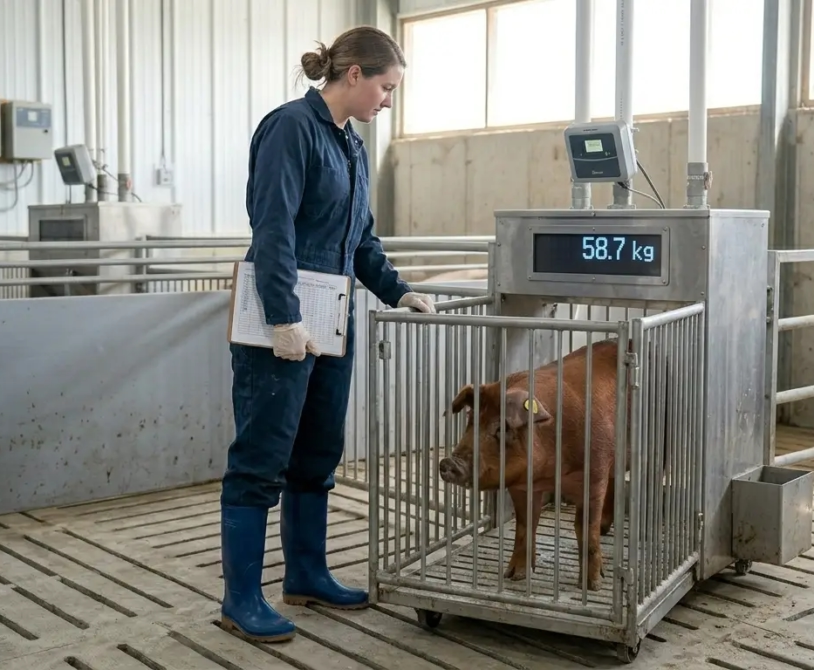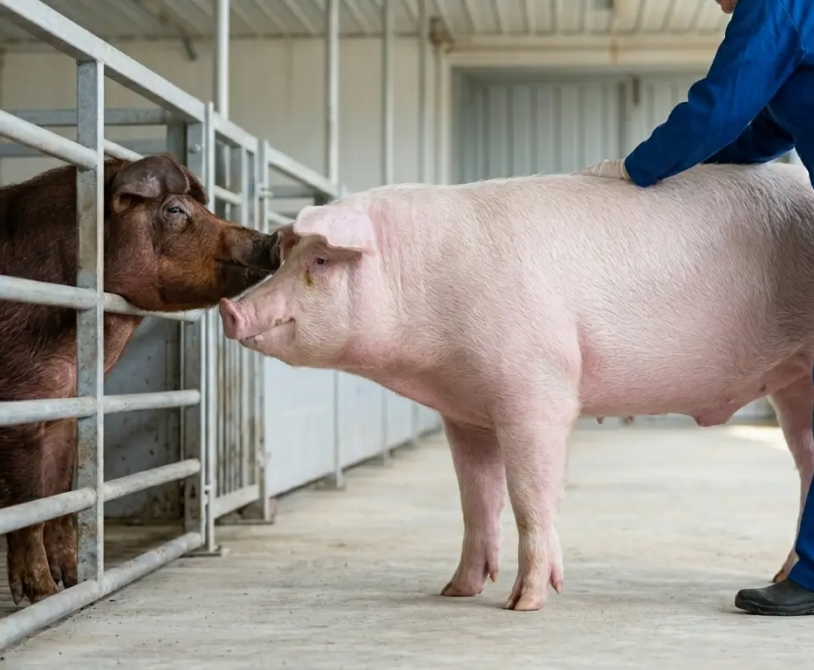
The question “heritage breed or commercial hybrid?” is frequently asked as if it has a single correct answer — as if one option is simply better than the other and the task is to identify which. It does not have a single correct answer, because the two genetic categories are not optimized for the same outcome. A commercial hybrid is a precision instrument engineered over decades to convert feed into lean pork as efficiently as biologically possible under controlled, intensive management conditions. A heritage breed is a slower-growing, fatter, more flavorful, more resilient animal whose genetic profile reflects selection pressures that predate — and in most traits, run counter to — the efficiency-focused selection that built commercial hybrid genetics.
Choosing between them is not a question of which is objectively superior. It is a question of which animal’s genetic profile matches the farming model, the market access, and the management capacity that a specific operation actually has — or intends to build.
This guide compares heritage breeds and commercial hybrids across every dimension that matters for that decision: production performance, management requirements, meat quality, market positioning, and the capital and operational realities of running each system in West and Central Africa.
Defining the Categories
What “Commercial Hybrid” Means
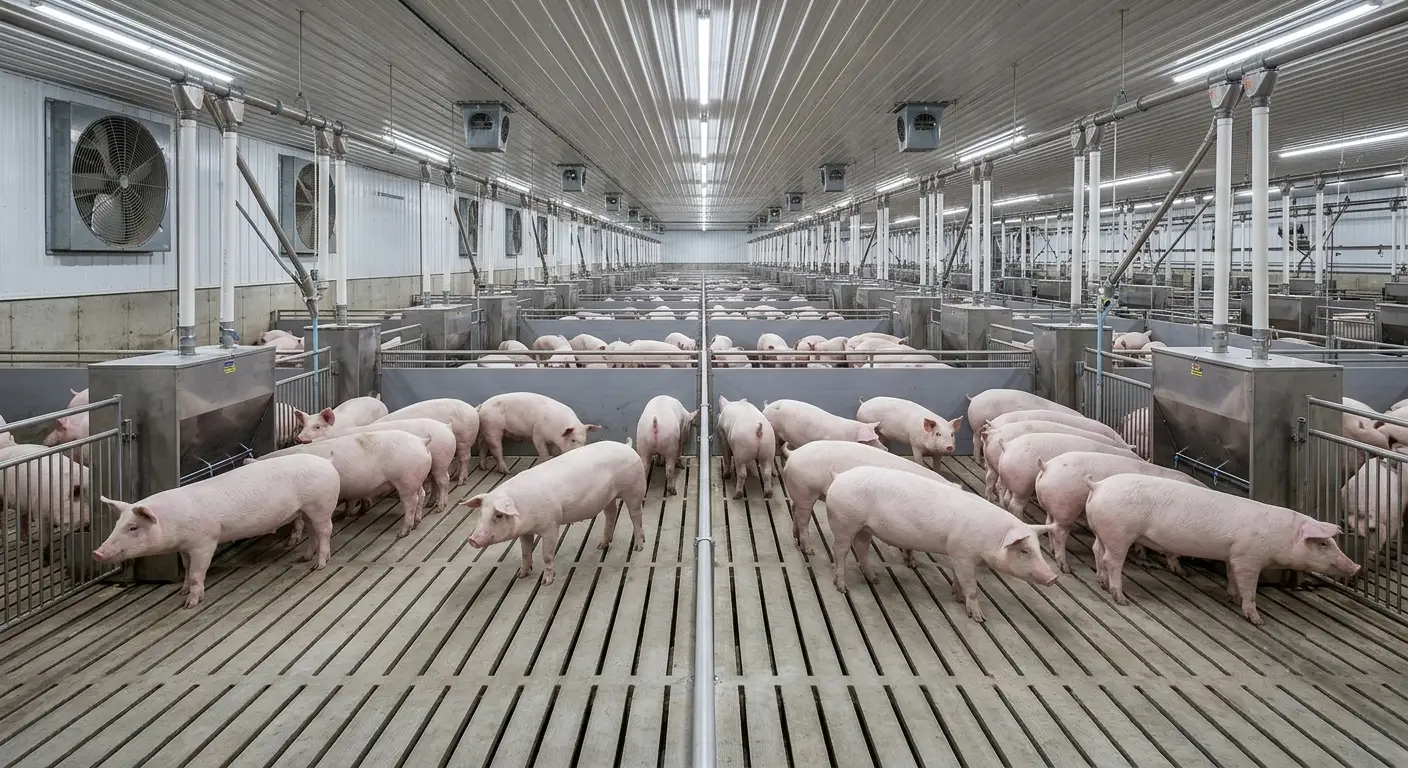
Commercial hybrid genetics are the products of structured, intensive selection programs run by global genetics companies (PIC, Topigs Norsvin, Genus, Hendrix) over multiple decades, applying quantitative selection pressure to specific traits: growth rate, feed conversion ratio, litter size, and lean carcass yield. The dominant commercial hybrid is the three-way cross — Large White × Landrace F1 dam crossed with a Duroc, Pietrain, or composite terminal sire — engineered specifically for performance in confined, controlled-environment commercial production.
The defining characteristic: Commercial hybrids are designed for a specific production environment — climate-controlled or well-ventilated confinement housing, precision-formulated rations delivered on a phase-feeding schedule, and intensive health management including vaccination programs and biosecurity protocols. Their genetic potential is only expressed when the environment is provided. Remove the precision management, and commercial hybrid performance degrades faster than heritage breed performance degrades under the same conditions, because the hybrid’s genetics have been selected assuming the management support will be present.
What “Heritage Breed” Means
Heritage breeds are pig populations that have been maintained as distinct, recognized breeds for multiple generations without the intensive industrial selection pressure applied to commercial hybrid lines. They include internationally recognized breeds developed before the mid-20th century industrialization of pig genetics (Berkshire, Tamworth, Gloucestershire Old Spot, Mangalitsa, Duroc’s original unselected form) and regionally adapted local populations (West African village ecotypes, improved local crosses).
The defining characteristic: Heritage breeds carry genetic diversity and adaptive traits — disease resilience, foraging ability, tolerance of nutritional variability, climate adaptation — that were selected against or simply not prioritized in commercial hybrid breeding programs because those programs assumed a controlled environment where such resilience traits provide little additional value relative to their cost in growth efficiency.
Part 1: Production Performance Comparison
Growth Rate and Feed Efficiency
| Metric | Commercial Hybrid (3-way cross) | Heritage Breed (Berkshire/Tamworth type) | Local West African Ecotype |
|---|---|---|---|
| Days to 100 kg | 155–175 days | 180–230 days | 300–400+ days |
| Average daily gain | 850–980 g/day | 600–750 g/day | 200–400 g/day |
| FCR (grower-finisher) | 2.4–2.7 | 2.8–3.5 | 5.0–8.0 |
| Lean meat % | 56–64% | 45–54% | 40–50% |
| Litter size born alive | 11–16 | 8–11 | 4–8 |
| PSY potential | 20–28 | 14–20 | 8–14 |
The performance gap is not marginal. A commercial hybrid reaches market weight in roughly half the time of a local ecotype, converts feed at less than half the cost per kilogram of gain, and produces nearly double the litter size. These are not small differences that good management can fully close — they reflect decades of accumulated genetic selection that cannot be replicated through husbandry alone.
Why the Gap Exists
Commercial hybrid genetics have been selected under intensive testing programs where tens of thousands of individual animals are evaluated annually for growth rate, feed intake, and carcass composition, with the top-performing 1–5% selected as parents for the next generation. This selection intensity, sustained over 40–60 years and multiple breeding company programs, has produced genetic progress that heritage and local breeds — selected primarily for survival, adaptability, and historically for general utility rather than singular production efficiency — simply have not accumulated.
Part 2: Meat Quality Comparison
The Inverse Relationship Between Growth Efficiency and Eating Quality
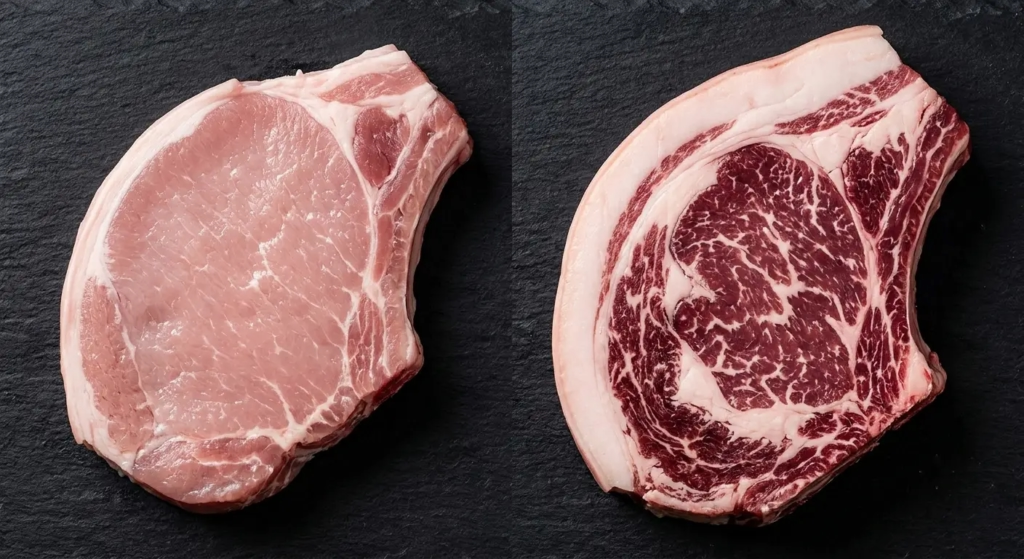
The genetic selection that produces commercial hybrid efficiency has a well-documented trade-off cost: reduced intramuscular fat (IMF) and, in many lines, reduced eating quality compared to slower-growing, fatter-depositing genetics.
| Metric | Commercial Hybrid | Heritage Breed (Berkshire-type) | Heritage Breed (Mangalitsa-type) |
|---|---|---|---|
| IMF % | 1.0–2.5% | 4.0–7.0% | 8.0–15%+ |
| Backfat depth | 10–16 mm | 20–30 mm | 35–60 mm |
| Flavor intensity (sensory panel) | 4.0–6.0/10 | 7.5–8.5/10 | 8.0–9.0/10 |
| Meat color | Pale pink | Dark red-pink | Deep red |
| Water-holding capacity | Moderate | Excellent | Excellent |
Why this trade-off exists biologically: The metabolic pathways that drive rapid lean tissue accretion (high growth hormone and IGF-1 signaling, efficient nitrogen retention) compete for the same nutritional resources as the pathways that drive intramuscular lipogenesis. Selecting intensely for growth rate and lean yield, as commercial hybrid breeding has done, systematically reduces the resources available for IMF deposition. Heritage breeds, not subject to this selection pressure, retain the genetic capacity for higher IMF deposition — which is precisely why their meat is more flavorful.
This is not a coincidence or a side effect that better commercial hybrid management could fix. It is the direct biological consequence of what each genetic category was selected for.
Part 3: Management Demands — What Each System Requires
Commercial Hybrid Management Requirements
Commercial hybrids require precision management to express their genetic potential:
- Phase-fed nutrition: Multiple ration formulations matched precisely to each production stage, with specific amino acid, energy, and mineral specifications
- Controlled environment housing: Thermoneutral zone management through ventilation, heating, or cooling systems appropriate to each production stage
- Structured health programs: Vaccination schedules for PRRS, Mycoplasma, Erysipelas, Parvovirus and other pathogens; biosecurity protocols including isolation of incoming animals and visitor restriction
- Consistent breeding management: Heat detection, timed insemination or natural service, batch farrowing systems
- Record-keeping discipline: Performance tracking (FCR, ADG, PSY) against breed targets to identify and correct underperformance promptly
The consequence of inadequate management: A commercial hybrid in a poorly managed system — inconsistent feed quality, inadequate biosecurity, irregular health protocols — underperforms its genetic potential significantly, sometimes falling below the performance of a well-managed heritage breed system. The hybrid’s genetic ceiling is high, but its genetic floor (performance under poor management) can be quite low, because the genetics assume management support that is not being provided.
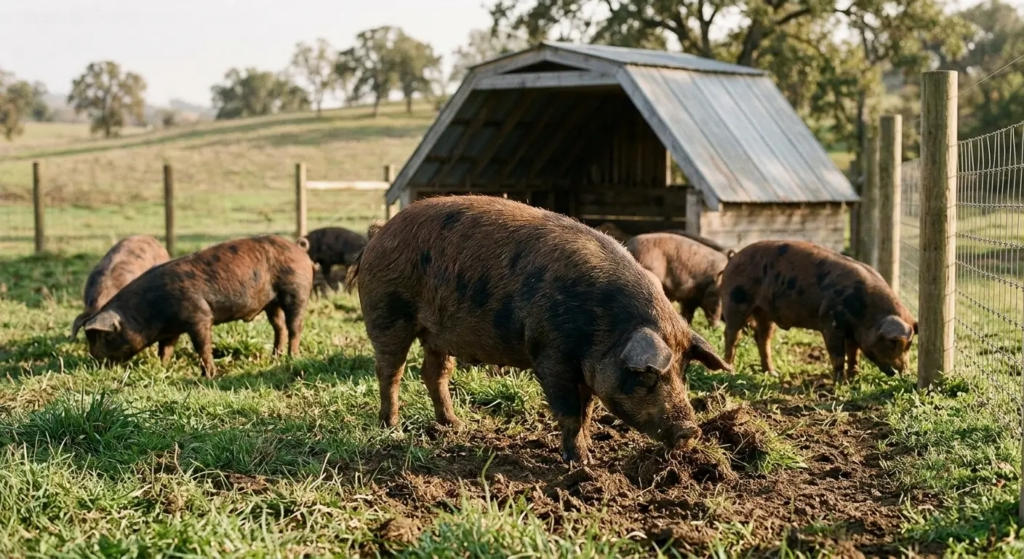
Heritage Breed Management Requirements
Heritage breeds require different, generally less intensive management:
- Tolerance of nutritional variability: Many heritage breeds perform adequately on lower-specification rations, agricultural byproducts, and forage supplementation — though this tolerance does not mean optimal nutrition is unimportant, only that the performance penalty for imperfect nutrition is smaller
- Greater disease resilience: Lower susceptibility to some commercial pathogens, partly from genetic resilience and partly from typically lower stocking density in heritage breed systems
- Extensive or semi-extensive housing compatibility: Heritage breeds, particularly those with foraging ancestry, perform well in outdoor or semi-outdoor systems that would create significant management challenges for commercial hybrids (predation risk, parasite exposure, thermal exposure)
- Lower biosecurity infrastructure demand: While biosecurity remains important for any pig operation, the consequences of biosecurity gaps are typically less severe in heritage breed systems due to their generally greater disease resilience
The consequence of inadequate management: Heritage breeds under poor management show production decline, but the decline is typically more gradual, and the breed’s baseline resilience provides more margin for management error before catastrophic production loss (disease outbreak, severe growth check) occurs.
Part 4: Capital and Infrastructure Requirements
Commercial Hybrid System Capital Needs
| Infrastructure Element | Requirement Level |
|---|---|
| Housing | High — controlled environment, ventilation systems, possibly heating/cooling |
| Feed system | High — phase-feeding capability, precision feed formulation or purchase |
| Water system | High — nipple drinkers at correct specification, consistent supply pressure |
| Health infrastructure | High — vaccination cold chain, isolation facility, veterinary relationship |
| Genetics sourcing | Ongoing — replacement gilts/semen from verified multipliers |
Estimated capital cost for a 20-sow commercial hybrid operation: XAF 80,000,000–100,000,000 (USD 133,333–166,667) for complete infrastructure (housing, water, feed storage, waste management) as detailed in piggery design specifications.
Heritage Breed System Capital Needs
| Infrastructure Element | Requirement Level |
|---|---|
| Housing | Moderate — troughs are more viable given lower disease sensitivity |
| Feed system | Moderate — less precision required, can incorporate byproducts and forage |
| Water system | Moderate — still important, but lower-intensity protocols often adequate |
| Health infrastructure | Moderate — still important, but lower-intensity protocols are often adequate |
| Genetics sourcing | Lower frequency — heritage breeds can be bred within a closed herd for longer periods without the genetic merit decay that affects unselected commercial lines |
Estimated capital cost for a 20-sow heritage breed operation: XAF 35,000,000–55,000,000 (USD 58,333–91,667) — approximately 40–55% lower than the comparable commercial hybrid operation, primarily from simpler housing and reduced environmental control infrastructure.
Part 5: Market Positioning — Where Each Genetic Category Generates Revenue
Commercial Hybrid Market Position
Target markets: Wholesale abattoirs, commodity butchers, supermarket standard pork lines, food processing companies (ham, bacon, sausage manufacturers), institutional bulk buyers (schools, hospitals, military).
Pricing basis: Volume and consistency. These buyers pay for predictable carcass specifications, consistent supply volumes, and competitive per-kilogram pricing. They are generally not paying a premium for breed identity or exceptional eating quality — their margin model depends on cost-competitive raw material.
Typical price range (West Africa, 2026): XAF 1,800–2,400/kg live weight (USD 3.00–4.00/kg)
Heritage Breed Market Position
Target markets: Hotels and restaurants building premium menu positioning, specialty butchers, direct-to-consumer sales (farm gate, farmers markets, subscription/box schemes), artisan charcuterie producers, export markets for specific recognized breeds (Berkshire/Kurobuta positioning).
Pricing basis: Eating quality, provenance, and brand story. These buyers — and increasingly the consumers they serve — pay specifically for the flavor, texture, and narrative differentiation that heritage breeds provide. The willingness to pay 50–150% above commodity price depends entirely on successfully communicating and delivering that differentiation.
Typical price range (West Africa, 2026): XAF 3,500–6,500/kg (USD 5.83–10.83/kg) for verified heritage breed pork sold through premium channels — but only where that premium market access has been actively developed.
The critical caveat: Heritage breed genetics alone do not create the premium price. The premium exists only where a market relationship — a hotel purchasing manager, a restaurant chef, a specialty retailer — has been established and is willing to pay for the documented quality difference. A heritage breed pig sold into the same wholesale commodity channel as a commercial hybrid will likely sell for the same or even a lower price (since buyers focused purely on lean yield may discount the heritage breed’s lower lean percentage), despite costing significantly more to produce.
Part 6: The Financial Comparison — Full Production Cycle Economics
Commercial Hybrid Economics (100 Market Pigs Annually, 20 Sows)
| Item | Value (XAF) | Value (USD) |
|---|---|---|
| Feed cost (FCR 2.6, 75 kg gain, XAF 300/kg) | 5,850,000 (per 30 pigs) | 9,750 |
| Days to market: 165 | — | — |
| Carcass weight: 78 kg | — | — |
| Sale price (commodity, XAF 2,000/kg) | 156,000 per pig | 260 per pig |
| Total annual revenue (500 pigs from 20 sows at PSY 25) | 78,000,000 | 130,000 |
| Total annual feed cost | 29,250,000 | 48,750 |
| Gross margin | ~35,000,000 | ~58,333 |
Heritage Breed Economics (Premium Market Access, 20 Sows)
| Item | Value (XAF) | Value (USD) |
|---|---|---|
| Feed cost (FCR 3.1, 75 kg gain, XAF 300/kg) | — | — |
| Days to market: 195 | — | — |
| Carcass weight: 70 kg | — | — |
| Sale price (premium, XAF 4,500/kg) | 315,000 per pig | 525 per pig |
| Total annual revenue (340 pigs from 20 sows at PSY 17) | 107,100,000 | 178,500 |
| Total annual feed cost (340 × 75 kg × 3.1 × XAF 300) | 23,715,000 | 39,525 |
| Gross margin | ~70,000,000 | ~116,667 |
The heritage breed system generates a higher gross margin per sow — but only when the XAF 4,500/kg premium price is actually achievable. This is the determining variable. At commodity pricing (XAF 2,000/kg), the heritage breed economics collapse:
| At Premium Price (XAF 4,500/kg) | At Commodity Price (XAF 2,000/kg) | |
|---|---|---|
| Heritage breed annual revenue | XAF 107,100,000 | XAF 47,600,000 |
| Heritage breed annual feed cost | XAF 23,715,000 | XAF 23,715,000 |
| Gross margin | XAF 83,385,000 | XAF 23,885,000 |
At commodity pricing, the heritage breed system generates less than half the gross margin of the commercial hybrid system — fewer pigs produced (lower PSY), slower growth, worse FCR, all without the premium price that justifies those production disadvantages.
This is the single most important conclusion in this comparison: heritage breeds are a market-access strategy, not a genetics strategy. Their financial viability depends entirely on securing premium market access before — or simultaneously with — building the breeding program. A heritage breed operation without confirmed premium buyers is a financially inferior choice to a commercial hybrid operation in nearly every realistic scenario.
Part 7: Which Farming Model Fits Which Genetics?
Choose Commercial Hybrids When:
- Your target market is wholesale, commodity, or institutional buyers paying on volume and lean yield
- You have or can build the infrastructure for controlled, intensive housing and precision nutrition
- Your management capacity supports the disciplined health, biosecurity, and breeding protocols that commercial genetics require
- You prioritize production scale and consistent throughput over per-unit margin
- You are building a farm with limited initial capital and need to begin generating revenue at commodity prices while market relationships develop
Choose Heritage Breeds When:
- You have already secured — or have a credible, near-term path to securing — premium buyer relationships (specific named hotels, restaurants, or retail accounts willing to commit to premium pricing)
- Your farming model intentionally emphasizes lower stocking density, extensive or semi-extensive systems, and lower-intensity management
- You are developing a brand or farm identity built around provenance, animal welfare positioning, or a traditional farming narrative that resonates with your target consumer
- Your land and climate conditions favor extensive systems (access to forage, lower disease pressure environments, available land for outdoor access)
- You are willing to accept significantly lower pig output (PSY) and slower growth in exchange for the per-unit margin that premium pricing provides — and you have verified that margin is achievable, not assumed
The Hybrid Strategy: Running Both Systems
Many of the most financially successful pig operations in markets where premium pork demand is developing — including emerging urban markets in West Africa — run a dual genetics strategy:
- A commercial hybrid core herd producing the volume that generates consistent cash flow through commodity and standard retail channels
- A smaller heritage breed program (Berkshire or similar) specifically developed alongside active premium market relationship building, scaled up only as confirmed premium buyer volume justifies expansion
This approach avoids the financial risk of heritage breed production without confirmed premium market access, while building the market relationships and operational experience needed to scale the higher-margin heritage breed segment over time as demand develops.
Part 8: Sourcing Reality in West Africa
Commercial Hybrid Sourcing
Widely available through government breeding stations, private multipliers, and — for premium genetics lines — import channels from global genetics companies. The infrastructure for sourcing commercial hybrid genetics, while imperfect, is more developed than heritage breed sourcing infrastructure in most West African markets.
Heritage Breed Sourcing
Significantly more limited. Berkshire populations exist at IRAD (Cameroon) and some private farms in Nigeria, but verified, health-documented breeding stock at a commercial scale requires either developing relationships with these limited existing sources or importing from the UK, South Africa, or other established Berkshire breeding programs — a process requiring import permits, quarantine protocols, and significant logistics planning.
Local ecotype and improved local cross sourcing is comparatively straightforward — these animals exist throughout the region in village and smallholder systems — but the production performance limitations (as documented in Part 1) make pure local ecotype genetics commercially unviable for most intensive production models. Improved local crosses (local × Large White or local × Landrace) developed by research institutions represent a middle path worth investigating for operations specifically targeting management environments where full commercial hybrid intensity is not achievable.
Summary
Heritage breeds and commercial hybrids are not different tiers of the same product — they are different products serving different markets, requiring different management systems, and demanding different capital investments.
Commercial hybrids deliver the production efficiency — fast growth, low FCR, high litter size — that commodity and institutional markets pay for, at the cost of requiring precision management infrastructure and producing meat with measurably lower intrinsic eating quality.
Heritage breeds deliver the eating quality and provenance story that premium markets pay substantially more for, at the cost of significantly lower production efficiency, which makes them financially unviable without confirmed premium market access.
The decision is not “which is better” — it is “which market am I building this farm to serve, and have I confirmed that market exists before committing the capital and breeding program to serve it.” A commercial hybrid operation is the lower-risk, more broadly applicable choice for most new commercial pig farms in West and Central Africa. A heritage breed operation is the higher-margin, higher-risk choice that should follow — not precede — the confirmation of premium market demand.
Match the genetics to the market. The market, not the breed, determines the right answer.