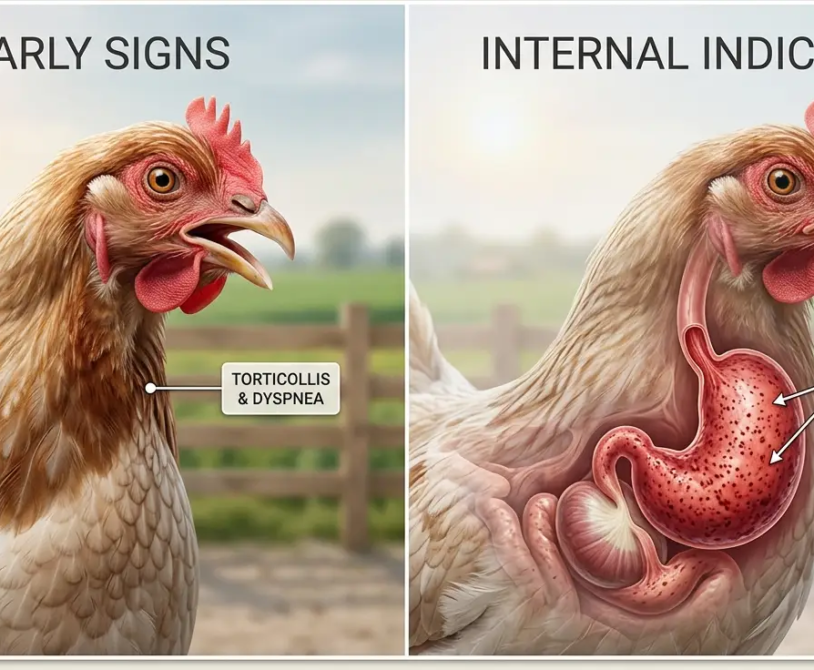
The layer hen’s gastrointestinal tract is not simply a nutrient extraction system. It is the largest immune organ in her body — the site where 70% of the immune system’s effector cells are located, where pathogenic bacteria must be excluded before they reach the bloodstream, and where the integrity of the epithelial barrier determines whether the nutrients in the ration are absorbed into the bird or lost to bacterial competition and gut inflammation.
When gut health fails in a commercial layer flock, it fails simultaneously across multiple dimensions: nutrient absorption declines, so feed conversion worsens; the mucosal barrier becomes permeable, so pathogenic bacteria enter the systemic circulation; the local immune system mounts a chronic inflammatory response, so metabolic resources are diverted from egg production to immune activation; and the competitive exclusion of pathogenic bacteria by the beneficial microbiome breaks down, allowing E. coli, Salmonella, Clostridium perfringens, and Campylobacter to colonize and expand.
Organic acids are the most evidence-backed non-antibiotic intervention for managing all of these outcomes simultaneously. They are not a replacement for correct biosecurity, vaccination, and nutrition. They are the tool that keeps the gut environment hostile to pathogenic bacteria, supportive of the beneficial microbiome, and structurally intact under the continuous challenge that commercial layer production imposes.
This article covers the science behind organic acid action in poultry gut health, the specific acids with the strongest evidence base, the correct inclusion rates and delivery methods, the combination strategies that outperform single-acid supplementation, and the practical formulation decisions that determine whether an organic acid program delivers its potential or fails to meet the marketing claims on the product label.
How Organic Acids Work: The Four Mechanisms
Organic acids do not work through a single mechanism. Their value in gut health management comes from four simultaneous biological actions, each targeting a different aspect of the pathogen-host interaction in the gastrointestinal tract.
Mechanism 1: Lowering Luminal pH
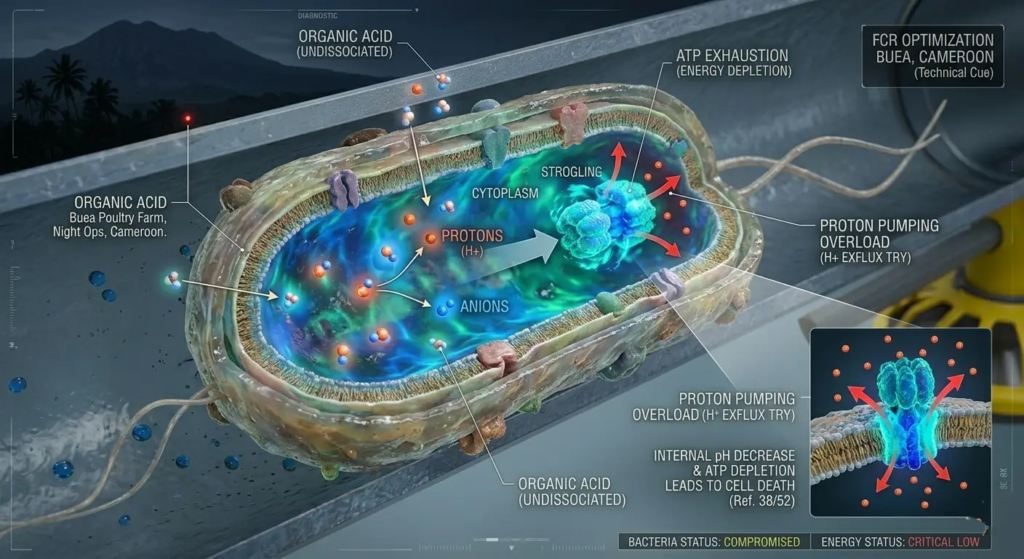
The undissociated (protonated) form of an organic acid is lipophilic — it can pass through the lipid bilayer of bacterial cell membranes by passive diffusion. Once inside the bacterium’s cytoplasm — which maintains a near-neutral pH of approximately 7.0 — the acid dissociates in the less acidic intracellular environment, releasing a proton (H⁺) and an anion. The bacterium must now expend ATP to pump out the excess protons and maintain its internal pH homeostasis. This proton pump energy expenditure is eventually lethal — the bacterium either depletes its ATP reserves or acidifies to the point of enzyme denaturation.
This mechanism is dependent on the undissociated fraction of the acid remaining above a minimum threshold in the gut lumen. The undissociated fraction is determined by the relationship between the acid’s pKa (acid dissociation constant) and the pH of the gut segment being targeted. An acid with a pKa of 4.8 (acetic acid) is approximately 50% undissociated at pH 4.8, and only 1% undissociated at pH 6.8. In the higher-pH segments of the gastrointestinal tract — the ileum, cecum, and colon — lower-pKa acids have reduced bactericidal efficacy because they are almost fully dissociated at those pH levels.
This is the core reason that different organic acids have different sites of action along the GI tract, and why single-acid programs cannot achieve the broad-spectrum coverage of multi-acid combinations.
Mechanism 2: Direct Membrane Disruption (Hydrophobic Chain Activity)
Medium-chain fatty acids (MCFAs) — particularly caprylic acid (C8), capric acid (C10), and lauric acid (C12) — have a different primary mechanism from short-chain organic acids. Their longer hydrophobic carbon chains insert into bacterial cell membranes and disrupt phospholipid bilayer integrity directly, causing cell lysis rather than the metabolic acidification mechanism of short-chain acids.
MCFA membrane disruption is:
- Effective across a broader pH range than short-chain acid proton pump depletion — because membrane insertion is not pKa-dependent
- Particularly effective against gram-positive bacteria (Clostridium perfringens, Staphylococcus aureus), whose thinner peptidoglycan layer provides less protection than that of the outer membrane of gram-negative bacteria
- Effective against enveloped viruses — relevant in houses where viral gut pathogen pressure is concurrent with bacterial challenges
Mechanism 3: Modulation of the Gut Microbiome
Organic acids, by lowering luminal pH and creating a more acidic environment, selectively favor acid-tolerant beneficial bacteria — primarily Lactobacillus species — over pathogenic bacteria that are acid-sensitive: Salmonella, E. coli, Clostridium perfringens, and Campylobacter.
This selective pressure is the mechanism behind the concept of competitive exclusion — not just killing pathogens directly, but creating an environment where the commensal microbiome outcompetes them for colonization sites and nutrients. The practical result: flocks on continuous organic acid supplementation show lower cecal Salmonella counts, lower Clostridium perfringens intestinal colony counts, and higher Lactobacillus cecal populations compared to non-supplemented control flocks in multiple controlled trials.
Mechanism 4: Mucosal Trophic Effect (Villus Height Support)
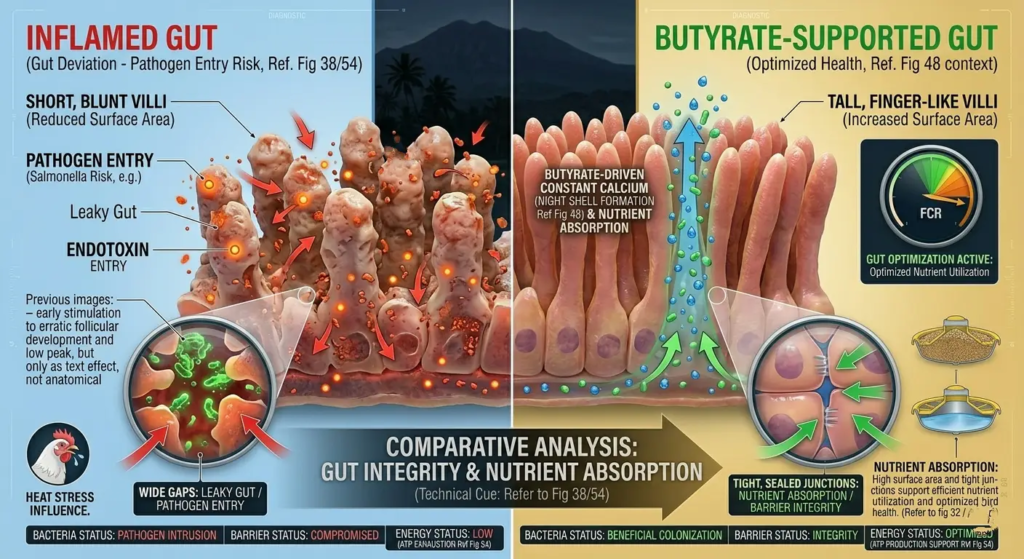
Butyric acid — either as free butyrate or as protected butyrate (sodium butyrate microencapsulated to survive stomach acid and reach the intestinal epithelium) — has a fourth mechanism that the other organic acids lack: it is the preferred energy substrate of intestinal epithelial cells (colonocytes and enterocytes). When butyrate reaches the intestinal mucosa, it:
- Stimulates enterocyte proliferation, increasing villus height and crypt depth — the structural basis of nutrient absorptive capacity.
- Reduces intestinal permeability by upregulating tight junction proteins (occludin, claudin-1) that seal the paracellular gaps between epithelial cells
- Modulates intestinal inflammation by inhibiting NF-κB signaling — reducing chronic inflammatory cytokine production that diverts metabolic resources from production
- Supports goblet cell differentiation and mucus production — the protective mucus layer over the intestinal epithelium
In terms of measurable production outcomes, protected sodium butyrate supplementation has the most consistent evidence base of any single organic acid for improving feed conversion ratio (through better nutrient absorption from taller villi) and egg production rate (through reduced immunological resource diversion from chronic gut inflammation).
The Acids with the Strongest Evidence Base
Formic Acid (pKa 3.75)
Formic acid has the lowest pKa of the commonly used short-chain organic acids — meaning it maintains the highest undissociated fraction at the widest range of gut pH. It is the most bactericidal short-chain acid against gram-negative bacteria, including Salmonella and E. coli, in the low-pH stomach environment.
Strengths:
- Most potent single acid for Salmonella reduction in feed and drinking water
- Effective at low inclusion rates: 0.5–1.0% in feed or 0.3–0.5 mL/liter in water
- Well-documented evidence for Salmonella reduction in feed ingredients and finished feed when used as a feed preservative
Limitations:
- Highly corrosive at standard concentrations — requires specialized storage, handling equipment, and personal protective equipment (chemical-resistant gloves, goggles, and acid-resistant containers)
- Volatile — significant evaporative loss if added to warm feed or water
- Not suitable for direct administration without buffering or dilution — causes oral and crop burns at undiluted concentrations.
Practical form: Commercially available as ammonium formate (formic acid buffered with ammonia), calcium formate, or as a component of commercial blended acid products. Buffered forms are safer to handle and more stable in feed without significant loss of efficacy.
Propionic Acid (pKa 4.87)
Propionic acid is the standard mold-inhibiting acid used in feed preservation and the primary acid responsible for preventing mycotoxin-producing mold growth in stored feed. It is also effective against Salmonella and E. coli in the upper GI tract.
Strengths:
- Most effective single acid for mold inhibition in stored feed — included at 0.1–0.3% of feed, prevents Aspergillus, Fusarium, and Penicillium growth during storage in humid tropical conditions.
- Good Salmonella bactericidal activity in the crop and proventriculus
- Available as calcium propionate (solid form) or ammonium propionate (buffered liquid) — more stable and easier to handle than free propionic acid
Practical use: Include in all layer rations stored more than 7 days in tropical conditions as a mold inhibitor alongside the other gut health acids. Do not rely on it alone for gut health protection — its low dissociation in the mid and lower GI tract reduces its efficacy beyond the stomach.
Lactic Acid (pKa 3.86)
Lactic acid is the acid produced by Lactobacillus bacteria as a metabolic byproduct — meaning it is both a direct bacteriostatic agent and the natural environmental acid of a healthy, lactobacillus-dominated gut. Supplementing lactic acid in drinking water or feed creates an environment that simultaneously kills pathogens and favors the growth of the lactic acid-producing beneficial bacteria that produce it endogenously.
Strengths:
- Excellent palatability — does not suppress water intake at recommended concentrations (unlike formic acid, which can reduce voluntary intake if not properly buffered)
- Effective across the crop, proventriculus, and upper intestine
- Synergistic with probiotic supplementation — creates the acidic environment that Lactobacillus strains thrive in
Inclusion rate: 0.5–2.0% of ration, or 0.5–1.0 mL/liter in drinking water. Available as a food-grade 80–90% solution — dilute before adding to water systems to prevent equipment corrosion.
Citric Acid (pKa 3.13 / 4.76 / 6.40)
Citric acid is a tricarboxylic acid — meaning it has three pKa values and can donate three protons at different pH levels. This multi-step dissociation makes it effective across a wider range of gut pH than single-pKa acids, and its third pKa of 6.40 means it retains some undissociated fraction even in the higher-pH ileum — a range where most other short-chain acids are fully dissociated and inactive.
Practical roles:
- Chelates mineral antagonists (iron, copper, manganese) that would otherwise bind to and reduce the bioavailability of dietary calcium, phosphorus, and zinc — improving mineral absorption efficiency alongside its antimicrobial activity
- Reduces drinking water pH when used as a water acidifier — synergistic with chlorination for drinker line biofilm suppression
- Available as crystalline citric acid (anhydrous) — easy to dissolve in water and handle safely without special protective equipment.
Inclusion rate: 0.5–1.0% in feed; 0.5–1.5 g/liter in drinking water.
Butyric Acid / Protected Sodium Butyrate (pKa 4.82)
Unprotected butyric acid has two practical limitations that have largely removed it from commercial poultry nutrition: it is highly volatile (evaporating rapidly from feed and water at ambient temperature), and it has an extremely unpleasant odor (the same compound responsible for the smell of rancid butter) that reduces feed palatability at effective doses.
Microencapsulated sodium butyrate — butyrate coated in a fat or polymer shell that resists dissolution in the stomach and releases the butyrate in the intestinal environment — overcomes both limitations. The encapsulation protects against evaporation and controls release at the intestinal level, where the mucosal trophic effect occurs.
Target concentration of active butyrate reaching the intestine: 300–600 mg butyrate per kg of ration. This requires encapsulated sodium butyrate inclusion rates of 0.75–1.5 kg per tonne of finished feed (depending on the product’s encapsulation efficiency and butyrate content — verify with the supplier’s technical data sheet).
Production outcomes from protected sodium butyrate supplementation:
- Improved FCR by 3–5 points (0.03–0.05 improvement) through villus height increase and improved nutrient absorption
- Reduced early-lay mortality from E. coli salpingoperitonitis — butyrate-strengthened tight junction integrity reduces bacterial translocation from the gut.
- Improved laying rate persistence in flocks under chronic gut health challenge
- Reduced wet litter occurrence — better gut integrity means less undigested material and water loss through loose droppings.
Cost-benefit: Protected sodium butyrate is the most expensive single acid in a standard commercial program. The cost is justified when the flock history includes E. coli colibacillosis, poor FCR relative to breed standard, or wet litter problems. In flocks without these indicators, it is optional, but it adds measurable value to any program.
Medium-Chain Fatty Acids (Caprylic C8, Capric C10, Lauric C12)
MCFAs are derived from coconut oil, palm kernel oil, or controlled fractionation of mixed fatty acid sources. Their membrane-disruption mechanism makes them effective against pathogens that are relatively resistant to short-chain acid pH reduction — particularly Clostridium perfringens (the cause of necrotic enteritis) and enveloped viral pathogens.
Lauric acid (C12) specifically has the strongest evidence for Salmonella reduction in the intestinal environment — it disrupts the lipopolysaccharide outer membrane of gram-negative bacteria at the same time as exerting direct membrane disruption, producing a dual-mechanism action that outperforms shorter-chain acids against gram-negative pathogens in the lower GI tract.
Inclusion rate: 1–3 kg of MCFA blend per tonne of finished feed. MCFAs are typically formulated as a lipid blend or encapsulated to reduce evaporation and improve distribution in the feed matrix.
Single-Acid vs. Multi-Acid Programs: Why Combinations Outperform
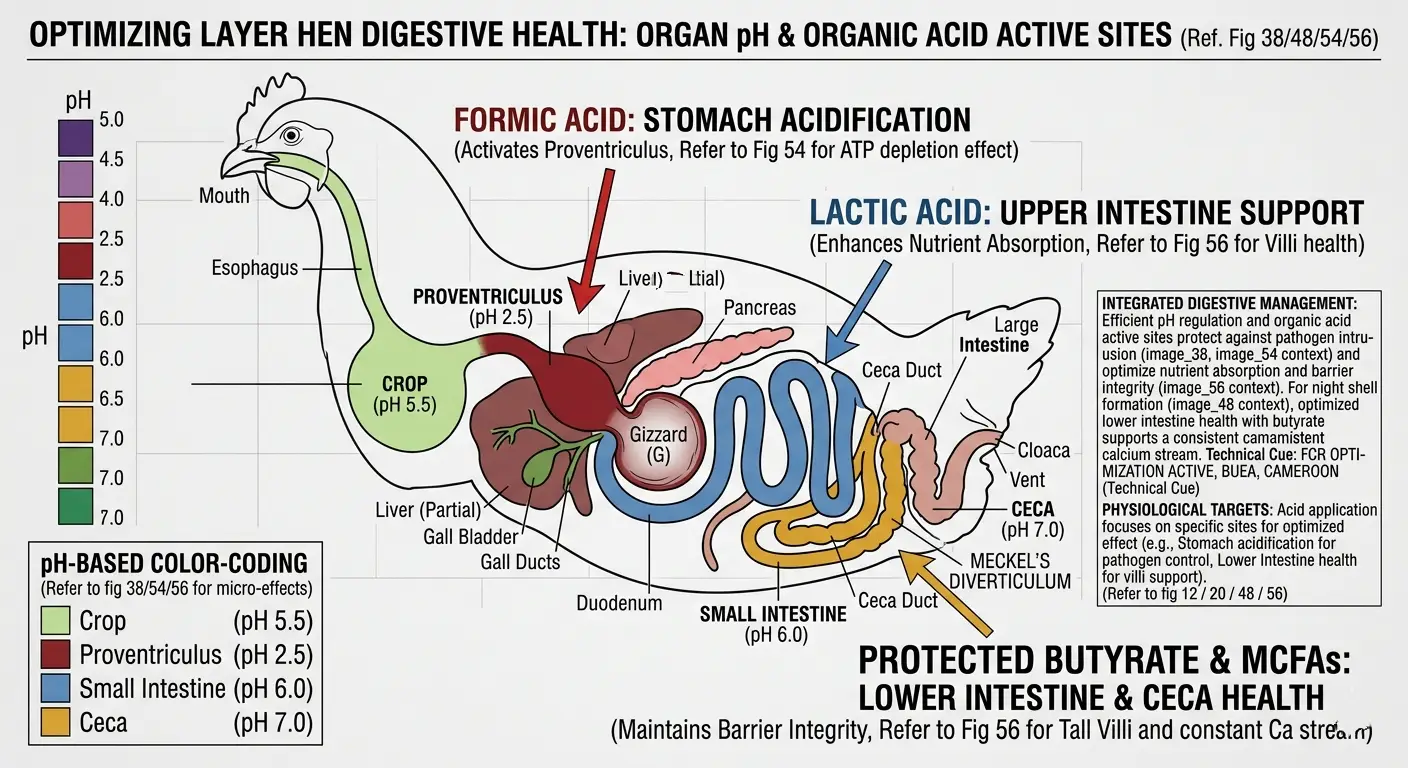
The gastrointestinal tract of a laying hen is not a single uniform pH environment. The crop operates at pH 5.0–6.5. The proventriculus reaches pH 2.0–3.5 under full secretory activity. The small intestine ranges from pH 5.5 to 6.5. The ceca and colon operate at pH 6.5–7.5.
A single acid with a pKa of 3.75 (formic acid) is most effective in the highly acidic stomach environment and has rapidly declining efficacy as pH rises toward the intestine. An acid with a pKa of 4.87 (propionic acid) performs better in the mid-GI range. Butyrate and MCFAs — particularly in protected or encapsulated forms — deliver activity in the intestinal and cecal environments where shorter-chain acids are largely dissociated and inactive.
The practical implication: A multi-acid combination covering the full pKa range from 3.1 to 6.4, with an MCFA component for membrane disruption and a protected butyrate component for epithelial trophic support, provides coverage across the entire GI tract. No single acid achieves this.
Recommended multi-acid combination for commercial layer gut health programs:
| Acid | Primary Site of Action | Target Rate in Finished Feed | Primary Benefit |
|---|---|---|---|
| Formic acid (buffered) | Crop, proventriculus | 0.5–1.0 g/kg | Salmonella, E. coli reduction in upper GI |
| Propionic acid (buffered) | Crop, feed preservation | 0.5–1.0 g/kg | Mold inhibition; upper GI antimicrobial |
| Lactic acid | Crop, proventriculus, upper intestine | 3–5 g/kg | Broad bacteriostatic; Lactobacillus support |
| Citric acid | Upper to mid intestine; drinking water | 5–10 g/kg | Mineral chelation; mid-GI antimicrobial |
| Protected sodium butyrate | Small intestine, cecum | 0.75–1.5 g/kg | Villus integrity; tight junction support |
| Medium-chain fatty acids | Intestine, cecum (broad pH range) | 1–3 g/kg | Clostridium; gram-negative membrane disruption |
Commercial multi-acid blended products — available from several regional and international feed additive suppliers, including Anitox, ADDCON, and local distributors in Nigeria and Cameroon — provide these combinations in single-addition premixed formats, simplifying the formulation process and ensuring homogeneous distribution in the feed matrix.
When evaluating a commercial product, require:
- Documented concentrations of each acid component (g/kg or %)
- Active concentration after encapsulation for buffered/protected forms
- Efficacy data from trials in commercial poultry conditions — not just in vitro minimum inhibitory concentration (MIC) data
Delivery Method: Feed vs. Water — When to Use Each
Organic acids can be delivered through the ration or through the drinking water. Each route has a specific application and specific limitations.
Feed Delivery
When to use: For continuous gut health programs — mold inhibition of stored feed, ongoing microbiome modulation, intestinal epithelial support through protected butyrate, broad-spectrum bacterial suppression through the full GI tract.
Advantages:
- Consistent daily delivery of the full acid profile at every feeding event
- Protected and encapsulated forms retain activity through feed processing temperatures (pelleting at 80–90°C — verify encapsulation heat stability with supplier)
- More reliable dosing than water acidification, where actual water intake varies with temperature
Disadvantages:
- Does not address waterline biofilm — a separate contamination source requiring waterline-specific treatment
- Cannot be rapidly adjusted in response to an acute gut health challenge
- Higher logistical complexity than water addition — requires premixing or accurate in-plant addition
Water Delivery
When to use: For acute gut health interventions during disease challenge, for Salmonella reduction in contaminated water sources, for supporting flock recovery after a gut health event, and for vaccination event preparation (acidifying water before live vaccine administration to reduce chlorine interference with vaccine viability).
Advantages:
- Rapid delivery — the entire flock receives the intervention within hours of addition
- Effective for reducing the pH of contaminated water supplies
- Flexible dosing — can be increased or decreased based on current flock health status
Disadvantages:
- Only acids with adequate water solubility and acceptable palatability at effective concentrations can be used — formic acid at high concentration reduces water intake; very low palatability acids are self-limiting
- Does not address the lower GI tract (cecum, colon), where protected butyrate and MCFAs exert their primary activity — water-delivered acids are predominantly active in the crop and upper GI.
- Does not prevent mold in stored feed
The optimal program uses both routes simultaneously: Feed-delivered multi-acid blend for continuous broad-spectrum GI coverage, water-delivered lactic and citric acids for ongoing pH management of the water supply.
Organic Acids and Antibiotic Reduction: The Regulatory and Market Context
Antibiotic resistance is a global food safety concern that is reshaping the commercial poultry industry worldwide. In Europe, antibiotic growth promoters have been banned since 2006. In the United States, medically important antibiotics for growth promotion were phased out in 2017. In West Africa, regulatory pressure is building — and premium market buyers are moving ahead of regulation, requiring antibiotic-free production certification as a supplier qualification.
Organic acid programs are not simply an animal health tool. They are the foundation of an antibiotic reduction strategy that allows commercial layer farmers to:
- Reduce prophylactic antibiotic use without increasing disease losses — by maintaining gut health through non-antibiotic means
- Qualify for antibiotic-free or reduced antibiotic premium market certifications
- Reduce antibiotic treatment costs when gut health challenges are prevented rather than treated
The evidence for this is operational rather than just theoretical: farms that implement comprehensive organic acid programs — multi-acid feed inclusion, water acidification, protected butyrate for epithelial integrity, probiotic competitive exclusion alongside the acid program — consistently report lower antibiotic treatment frequency and cost compared to farms managing gut health reactively through antibiotic intervention.
The cost of a comprehensive organic acid program in a commercial layer ration is approximately XAF 8,000–15,000 per tonne of feed, depending on product selection and dosage. The cost of a single antibiotic treatment course for a 10,000-bird flock with colibacillosis — including antibiotic cost, egg withdrawal period revenue loss, veterinary fee, and labor — typically exceeds XAF 500,000–800,000 for a 5-day treatment course.
The economics strongly favor prevention.
Practical Implementation: Setting Up an Organic Acid Program
Step 1 — Assess the Current Gut Health Status
Before selecting an acid program, characterize the current gut health challenge:
- Salmonella history on the farm: Prioritize formic acid and lactic acid for Salmonella suppression
- E. coli colibacillosis recurring: Prioritize protected butyrate for tight junction integrity alongside broad-spectrum acid coverage
- Necrotic enteritis (Clostridium perfringens) history: Prioritize MCFAs (lauric acid) with protected butyrate
- Mold in stored feed (mycotoxin risk): Prioritize propionic acid as a feed preservative
- Poor FCR relative to breed standard without a clear infectious cause: Protected butyrate as primary intervention
Step 2 — Select the Delivery Format
For operations with access to a local feed mill that can pre-blend additives, include organic acids in the feed premix specification. Provide the supplier with target inclusion rates and require a certificate of analysis confirming acid content in the finished ration.
For operations purchasing complete commercial feed, negotiate with the feed supplier to include a multi-acid blend in their manufacturing process or add a commercial water acidifier independently.
For operations mixing feed on-farm: add buffered acid products (commercial formate/propionate/lactic acid blends) at the mixer stage. Never add neat (undiluted) acids to feed or water — always use buffered or formulated commercial products that include carriers, buffers, and stabilizers.
Step 3 — Start on the First Day of Brooding
Organic acid programs deliver the most durable benefits when started at day one — not as a rescue intervention after gut health has deteriorated. A laying hen whose gut microbiome was shaped by acid supplementation from day one has a more stable, pathogen-resistant microbial community entering the laying house than one introduced to acid supplementation at week 18.
The competitive exclusion established in the brooding phase — Lactobacillus populations seeded and supported by the acidic environment from the first day — provides a foundation of microbiome stability that protects against the microbiome disruption events (disease challenges, antibiotic courses, feed changes) that occur throughout the rearing and laying periods.
Step 4 — Monitor Key Indicators Monthly
- Flock uniformity and FCR: Protected butyrate efficacy is reflected in FCR improvement. If FCR is not improving within 6–8 weeks of program implementation, verify encapsulation stability of the product (request third-party analysis) and check that the product is surviving the feed manufacturing process.
- Litter moisture: Reduced wet litter within 2–3 weeks of program implementation is an early indicator that gut integrity improvement is occurring.
- Water bacterial count at far-end nipple: Should be below 100 CFU/mL with an active water acidification program. Test quarterly.
- Mortality pattern: A reduction in E. coli peritonitis mortality in early lay (weeks 18–24) is one of the most measurable early-cycle outcomes of an effective organic acid program.
Summary
Organic acids work. They are not the marketing-inflated supplements that much of the non-antibiotic poultry additive market has produced over the past decade. They are mechanistically understood, evidence-backed tools with well-characterized sites of action, defined inclusion rates, and measurable production outcomes when correctly selected, correctly dosed, and correctly delivered.
The key decisions that determine whether an organic acid program delivers on its potential are: choosing a multi-acid combination that covers the full pH range of the GI tract rather than a single acid that covers one segment; using protected or encapsulated forms for butyrate and MCFAs to ensure activity reaches the intestinal and cecal environments; delivering through both feed and water simultaneously; and starting the program at day one rather than as a rescue intervention.
An organic acid program that is not preventing gut health problems is either incorrectly formulated, incorrectly dosed, or being overwhelmed by a predisposing challenge — poor water quality, viral immunosuppression, excessive ammonia, or overcrowding — that must be addressed before the acid program can perform. Organic acids create a hostile environment for gut pathogens. Management creates the conditions in which they can maintain that hostility.
Both are required. Neither works without the other.