In the poultry industry, the “Feed-to-Food” conversion is the engine of the business. However, with feed costs consistently representing 65-75% of total operational expenditure, any fluctuation in global soybean or corn markets can destabilize an entire enterprise. Sustainable feed sourcing is no longer just a green initiative—it is a financial hedge against global supply chain instability.
1. The Carbon Economics of the Feed Tray
The environmental impact of a broiler chicken is largely decided before the bird even hatches. Approximately 60% of the greenhouse gas (GHG) footprint of poultry meat is tied directly to the production and transport of feed.
The Land-Use Factor
Traditional diets rely heavily on Soybean Meal (SBM). While SBM is the “gold standard” for lysine and methionine, its production often drives deforestation in sensitive biomes. By shifting to alternative proteins, the industry has already seen a 72% decrease in farmland intensity per kilo of meat produced compared to the 1960s. For Otto’s Farms, the goal is to further compress this footprint by utilizing local, regenerative inputs.
2. Beyond Soybean Meal: The Architecture of Alternative Proteins
To replace SBM without compromising the European Performance Efficiency Factor (EPEF), we must look at the chemical composition of alternative meals.
A. Plant-Based Industrial By-products
-
Cottonseed & Canola Meal: While these contain anti-nutritional factors (like gossypol in cottonseed), modern enzyme technology allows us to include these at higher percentages (up to 15-20%) without hurting the Feed Conversion Ratio (FCR).
-
Corn Gluten Meal (CGM): A high-protein byproduct of starch production. CGM is excellent for pigmentation in skin and yolks, often reducing the need for synthetic additives.
B. The Insect Revolution: Black Soldier Fly Larvae (BSFL)
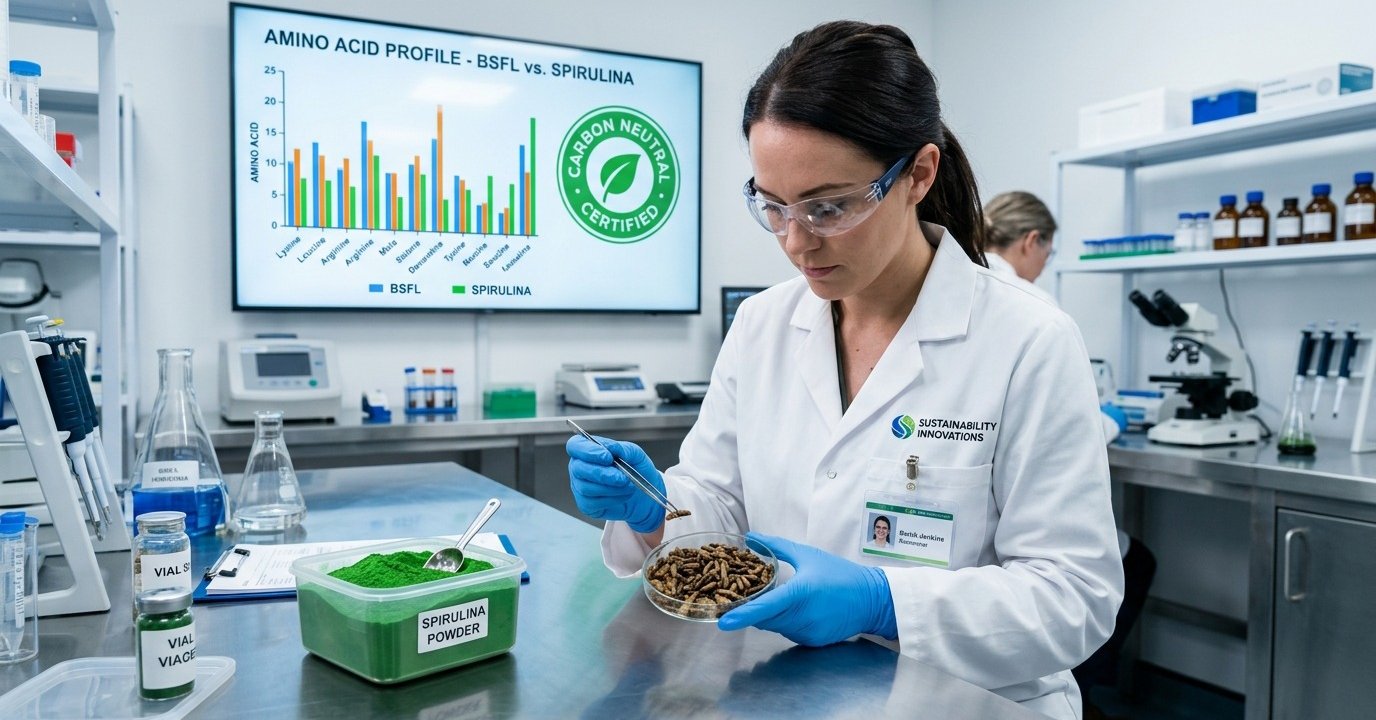
In 2026, BSFL has transitioned from a laboratory curiosity to a commercial reality.
-
The Circular Logic: Larvae can be grown on organic waste (hatchery waste, fruit pulp), converting “zero-value” trash into “high-value” protein.
-
Nutritional Density: BSFL protein is highly digestible and contains antimicrobial peptides that may reduce the need for antibiotic growth promoters.
3. Algae: The “Blue” Frontier of Poultry Nutrition
Algae (Spirulina and Chlorella) offer a protein density of 50–70%, surpassing even the highest quality SBM.
-
Environmental ROI: Algae can be grown on marginal land using brackish water, meaning they do not compete with human food crops for fertile soil.
-
Health Markers: Research indicates that algae-derived diets boost the antioxidant capacity of the bird, leading to “cleaner” meat with higher Omega-3 fatty acid profiles—a major selling point for premium consumer markets.
4. Food Waste Upcycling: A Circular Bioeconomy
Nearly 20% of global food emissions stem from waste. In the Southwest Region of Cameroon and similar tropical hubs, the “Circular Bioeconomy” model allows farmers to upcycle agri-food byproducts into feed.
-
Fruit Pulp & Bakery Waste: These provide high-energy carbohydrates. When processed correctly to ensure biosecurity, they can replace up to 10% of the corn in a broiler finisher diet.
-
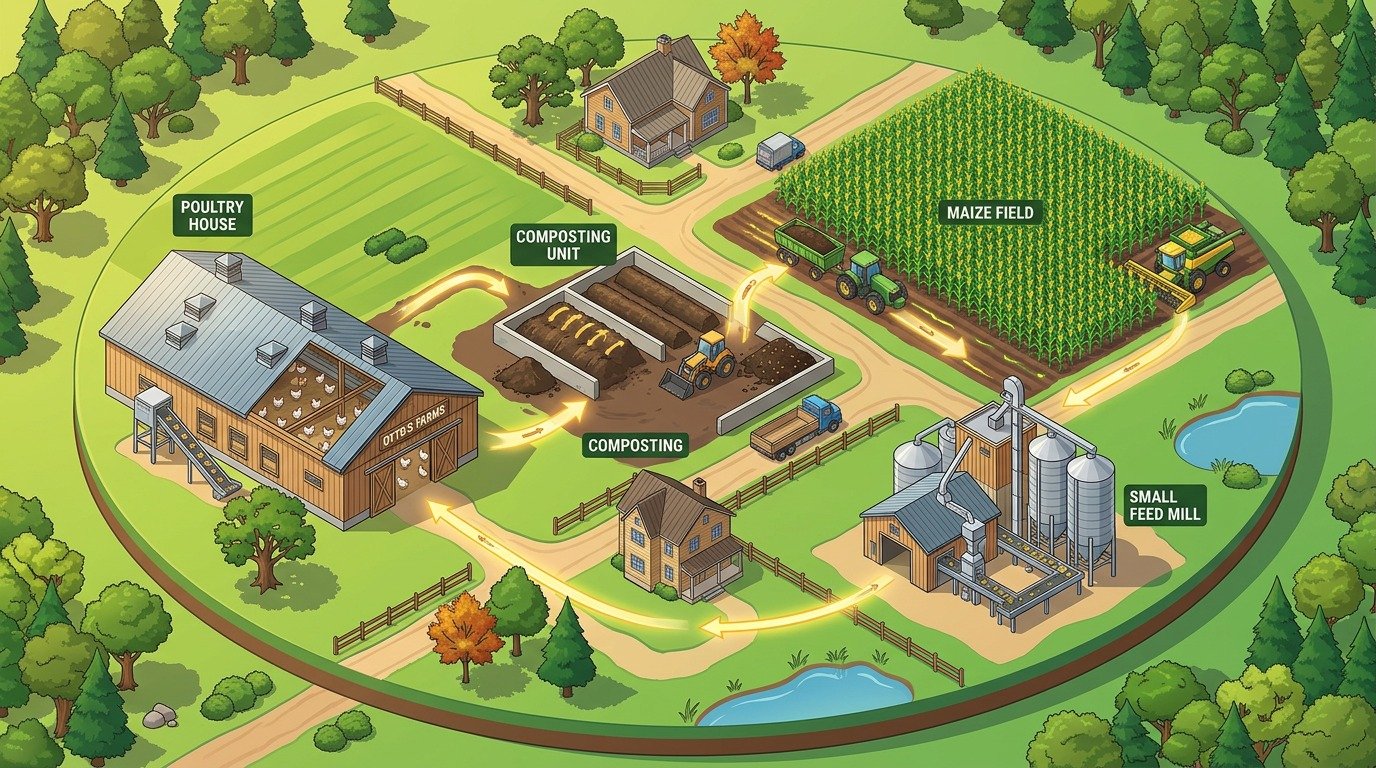
Nutrient Cycling: By using broiler litter to fertilize the very corn/maize used for feed, a “closed-loop” system is created, reducing the reliance on imported chemical fertilizers.
5. Precision Livestock Farming (PLF): The Data-Driven Diet
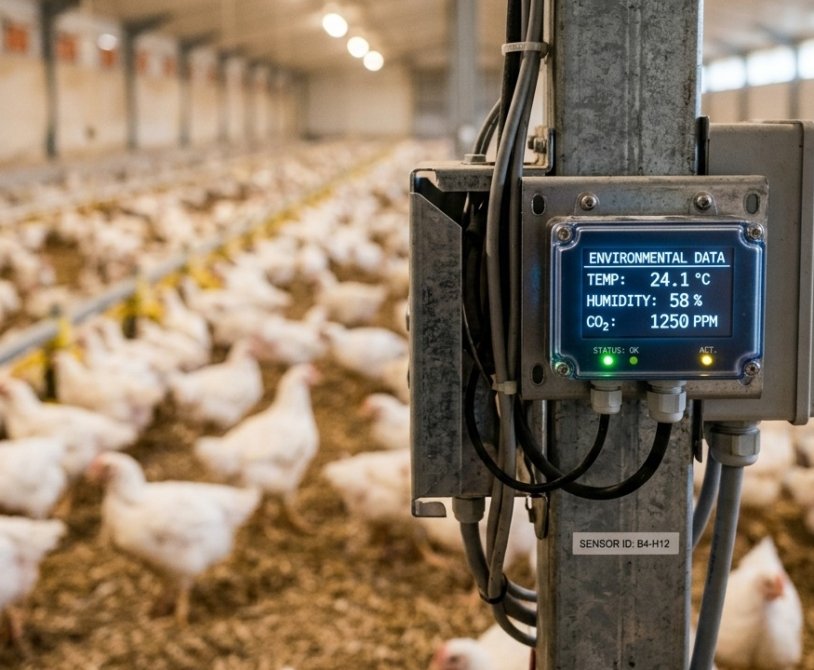
As a software engineer, you recognize that “average” is the enemy of efficiency. PLF uses real-time data to move from Phase Feeding to Individualized Nutrition.
The Tech Stack of Modern Nutrition:
-
Optical Sensors: Cameras monitor bird movement and feathering to estimate protein requirements.
-
Automated Blending: Feeders that can mix different ratios of protein and energy on the fly, adjusting as the flock ages or as the ambient temperature changes.
-
Result: A 7-10% increase in growth performance by ensuring that not a single gram of nitrogen is wasted.
6. Economic Feasibility: The “Premium” Market Opportunity
Sustainability is only viable if it is profitable. In 2026, consumers are increasingly willing to pay a 15–20% premium for “Ethically Raised” or “Carbon-Neutral” chicken.
| Feed Source | Cost Impact | Market Positioning |
| Traditional SBM | High/Volatile | Standard Commodity |
| Insect-Based | Moderate (Scaling) | Premium/Eco-Friendly |
| Algae-Integrated | Moderate/High | Functional/Health-Food |
| Upcycled Waste | Low | Sustainable/Circular |
7. Compliance, Certification, and the Global Standard
To export or sell to high-end retailers, certification is mandatory. Programs like the Global Animal Partnership (GAP) and USDA Organic require rigorous documentation of feed origins.
-
Blockchain Traceability: Many 2026 producers are using blockchain to “tag” feed batches, ensuring that no grain in the supply chain originated from protected rainforest areas.
8. Summary: Strategies for a Sustainable Future
-
Diversification: Never rely on a single protein source. Mix plant, insect, and by-product meals to hedge against price spikes.
-
Enzyme Utilization: Invest in phytase and protease enzymes to unlock the nutrients in cheaper, high-fiber alternative feeds.
-
Local Sourcing: Reducing the “food miles” of your feed is the fastest way to slash your carbon footprint.
Conclusion: The Future of Feed
The poultry industry’s ability to provide affordable protein to 10 billion people depends on our ability to innovate at the trough. By integrating Alternative Proteins, Circular Bioeconomy principles, and Precision Technology, operations like Otto’s Farms can lead the transition toward a truly sustainable global food system.
FAQ: Sustainable Poultry Feed
Q: Will alternative proteins change the taste of the chicken? A: Generally, no. Studies on BSFL and Algae show that at inclusion levels up to 15%, the sensory profile (taste, texture, smell) remains identical to SBM-fed birds. In fact, algae can often improve the golden color of the skin, which is preferred in many markets.
Q: Is it safe to feed food waste to broilers? A: Safety is the priority. “Food waste” in a professional setting refers to heat-treated, dehydrated, and sterilized by-products (like spent grains or fruit pomace). Raw kitchen scraps are never recommended for commercial operations due to biosecurity risks.