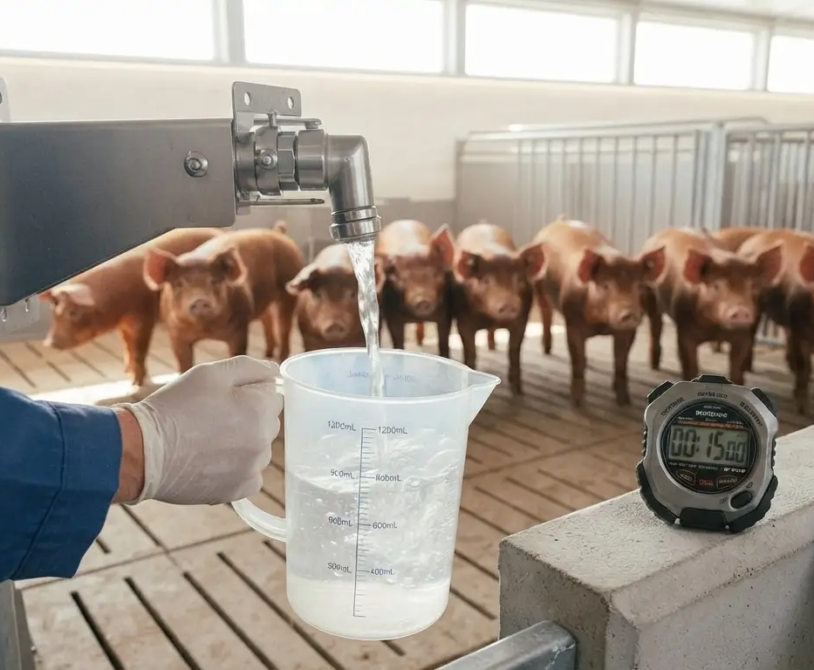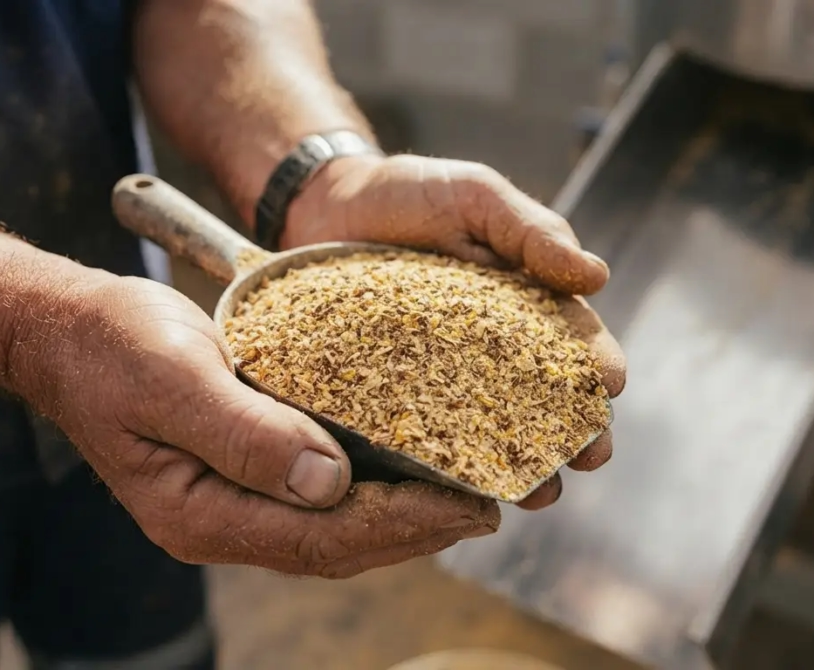
A newborn piglet weighs approximately 1.3–1.5 kg and survives entirely on the sow’s milk. At market weight, the same animal weighs 100–110 kg and has been eating solid feed for five months. Between those two points, its digestive system matures from one capable of processing only milk to one capable of efficiently digesting complex plant-based diets, its protein requirement per kilogram of body weight falls by more than half, and its capacity to deposit lean muscle rather than body fat shifts fundamentally as it approaches its mature size.
No single feed formulation can serve this entire trajectory. The four foundational diet stages — creep feed, starter, grower, and finisher — exist because the pig at each stage is, nutritionally speaking, a substantially different animal with substantially different requirements. Understanding why each stage exists, what specifically changes between them, and how to formulate and manage the transitions between them is the foundation on which every more advanced nutrition strategy in commercial pig production is built.
This guide works through each of the four stages in sequence: the biological rationale, the formulation specification, the management practices that determine whether the formulation’s potential is actually realized, and the transition management that connects each stage to the next without the digestive disruption that poorly managed transitions create.
Stage 1: Creep Feed — Bridging Milk to Solid Feed
What Creep Feed Is and Why It Exists
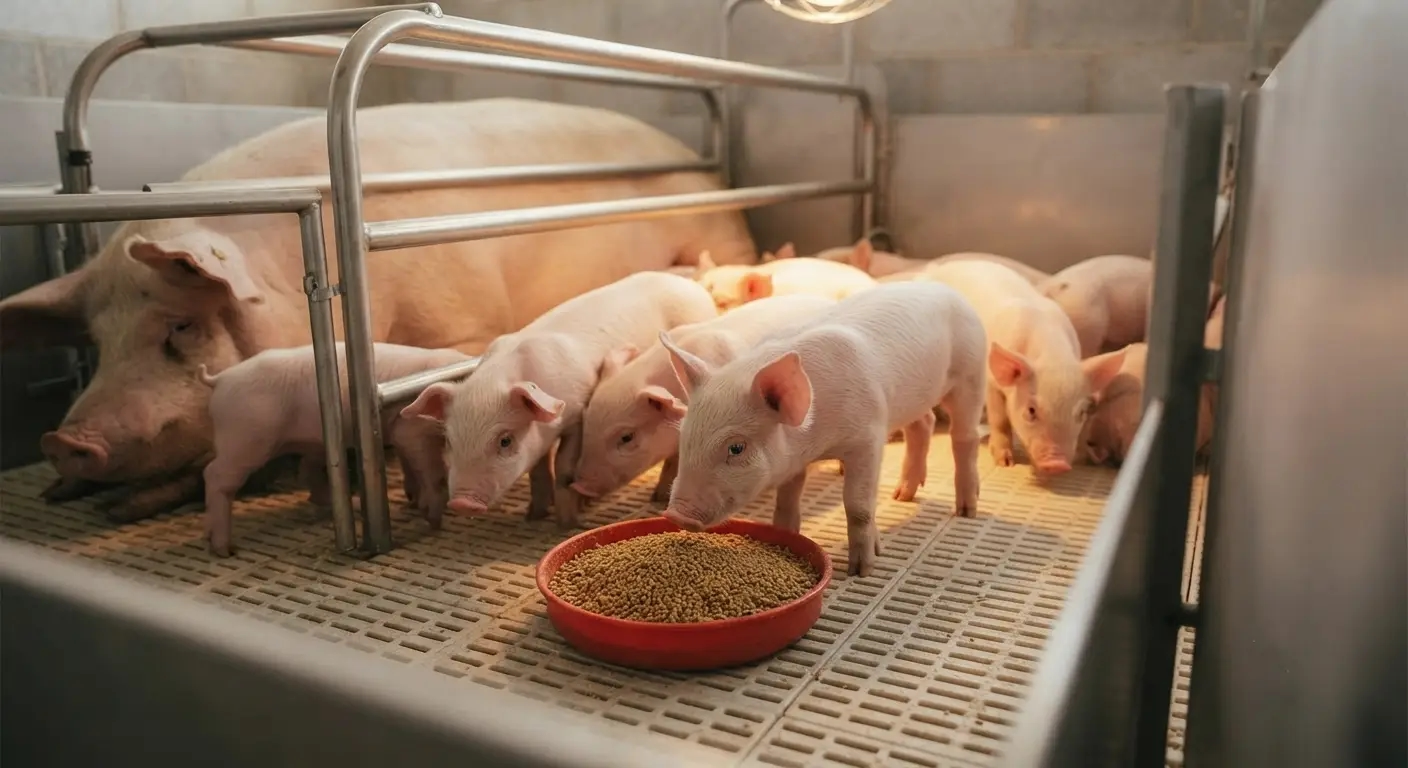
Creep feed is a small-particle, highly palatable, highly digestible feed introduced to piglets while they are still nursing — typically beginning at 7–10 days of age and continuing through weaning (21–28 days, depending on the farm’s weaning age policy). It is offered in the creep area of the farrowing crate, accessible to piglets but not to the sow.
The biological purpose is not primarily nutritional in the early days — it is developmental. A piglet at 10 days of age obtains the vast majority of its nutritional needs from the sow’s milk; creep feed at this stage contributes only a small fraction of total nutrient intake. Its real function is to:
- Stimulate digestive enzyme development: Exposure to solid feed triggers the piglet’s pancreas and small intestine to begin producing the enzymes (amylase, for starch digestion; various proteases, for protein digestion beyond the lactase-dominant enzyme profile suited to milk) that will be required for efficient solid feed digestion after weaning
- Establish feeding behavior: Piglets that have learned to locate, recognize, and consume solid feed before weaning transition to post-weaning solid-feed dependency with measurably less disruption than piglets experiencing solid feed for the first time simultaneously with the stress of weaning itself.
- Begin gut microbiome diversification: The gut microbial community shifts substantially in response to solid feed exposure, beginning the transition toward the more complex microbiome required for efficient digestion of plant-based starter and grower diets.
Creep Feed Specification
| Nutrient | Specification |
|---|---|
| Crude protein | 22–24% |
| Lysine | 1.50–1.60% |
| ME | 3,450–3,550 kcal/kg |
| Crude fiber | Below 2.5% |
| Particle size | Very fine, crumble or micro-pellet form |
| Key ingredients | Dairy products (whey, skim milk powder), highly digestible protein sources (fish meal, plasma protein), minimal complex carbohydrate |
Why creep feed ingredient selection differs fundamentally from later stages: A piglet’s digestive system at 10–20 days of age, even with creep feed stimulation, has limited capacity to digest plant starches and complex plant proteins efficiently — its enzyme profile is still adapted primarily toward milk digestion. Creep feed formulations, therefore, rely heavily on dairy-derived ingredients (which closely mimic the nutrient profile and digestibility characteristics of sow’s milk) and highly processed, highly digestible protein sources, accepting a significantly higher cost per kilogram than later-stage feeds in exchange for digestibility that the young piglet’s gut can actually utilize.
Practical Creep Feeding Management
Introduction timing: Begin offering small amounts (a tablespoon-sized portion, refreshed daily) at 7–10 days of age. Earlier introduction (before 5–7 days) typically shows minimal benefit, since the piglet’s digestive system is even less developed, and feed intake at this age is negligible regardless of availability.
Feeding frequency and freshness: Offer small, fresh portions multiple times daily rather than leaving a large quantity available continuously — creep feed left in a warm, humid farrowing environment degrades quickly, and piglets show a strong preference for fresh feed, with intake declining measurably when feed has been sitting for more than a few hours.
Creep feeder design: A shallow, easily accessible trough or specialized creep feeder positioned in the heated creep area (not in the sow’s zone) encourages piglets to associate the warm, safe creep area with feed access, reinforcing both the thermal and nutritional benefits of consistent use.
Realistic expectations for creep feed intake: Total creep feed consumption per piglet before weaning is typically modest — often 150–400 grams total across the entire pre-weaning period, heavily weighted toward the final week before weaning as the piglet’s interest and capacity increase. This low total intake is normal and does not indicate creep feeding failure — the developmental and behavioral benefits accrue even from modest total consumption, because the goal is enzyme stimulation and behavioral learning, not significant caloric contribution.
Stage 2: Starter Feed — The Post-Weaning Foundation
Why the Starter Phase Is the Highest-Risk Period in the Pig’s Life
Weaning — typically occurring at 21–28 days of age in commercial systems — combines three simultaneous stressors: complete cessation of the easily digestible, immunologically supportive sow’s milk; removal from the sow and mixing with unfamiliar pen-mates; and the abrupt requirement to obtain 100% of nutrition from solid feed, regardless of how much creep feed exposure occurred beforehand.
This combination produces the well-documented “post-weaning growth check” — a period of reduced feed intake, sometimes weight loss, and elevated disease susceptibility that, if poorly managed, can set back growth performance for weeks beyond the immediate post-weaning period.
Starter feed formulation exists specifically to minimize this growth check by providing a transitional diet that bridges the gap between milk-based and full plant-based nutrition, using ingredients and formulation strategies similar in principle to creep feed but adapted as the piglet’s digestive capacity continues maturing through the starter period.
Starter Feed Phases
Most commercial starter programs use 2–3 sequential sub-phases to track the piglet’s rapidly maturing digestive capacity through the starter period:
Phase 1 starter (immediately post-weaning, approximately 7–11 kg, first 1–2 weeks post-weaning):
| Nutrient | Specification |
|---|---|
| Crude protein | 20–22% |
| Lysine | 1.40–1.50% |
| ME | 3,400–3,500 kcal/kg |
| Key ingredients | Continued dairy product inclusion (declining from creep feed levels but still significant), highly digestible protein sources, minimal raw soybean meal (anti-nutritional factors in poorly processed soybean meal are poorly tolerated by the immature gut) |
Phase 2 starter (approximately 11–18 kg, weeks 2–4 post-weaning):
| Nutrient | Specification |
|---|---|
| Crude protein | 19–21% |
| Lysine | 1.30–1.40% |
| ME | 3,350–3,450 kcal/kg |
| Key ingredients | Reduced dairy inclusion, increasing reliance on well-processed soybean meal and other plant proteins, continued attention to digestibility. |
Phase 3 starter/transition (approximately 18–25 kg, weeks 4–6 post-weaning):
| Nutrient | Specification |
|---|---|
| Crude protein | 18–20% |
| Lysine | 1.20–1.30% |
| ME | 3,300–3,400 kcal/kg |
| Key ingredients | Largely conventional maize-soybean meal base, minimal specialty ingredients, bridging toward grower phase formulation |
Critical Anti-Nutritional Factor Management in Starter Diets
Soybean meal anti-nutritional factors: Raw or poorly processed soybean meal contains trypsin inhibitors and other compounds that interfere with protein digestion — tolerable for the mature pig’s digestive system but problematic for the immature post-weaning piglet, where they can exacerbate digestive upset and contribute to post-weaning diarrhea. Correctly heat-processed soybean meal (with trypsin inhibitor activity reduced to acceptable levels through proper toasting during processing) is essential for starter diet formulation — verify processing quality with suppliers rather than assuming all soybean meal is equivalently processed.
Mycotoxin sensitivity: Young pigs in the starter phase are particularly sensitive to mycotoxin contamination (from molds in stored grain, particularly aflatoxin, zearalenone, and deoxynivalenol/vomitoxin) — the same contamination level that might produce only subtle FCR depression in a finisher pig can cause measurable growth suppression, immune compromise, and in severe cases, clinical illness in starter-phase pigs. Starter diet ingredients warrant particular attention to storage quality and mycotoxin testing, where economically accessible.
Practical Starter Feeding Management
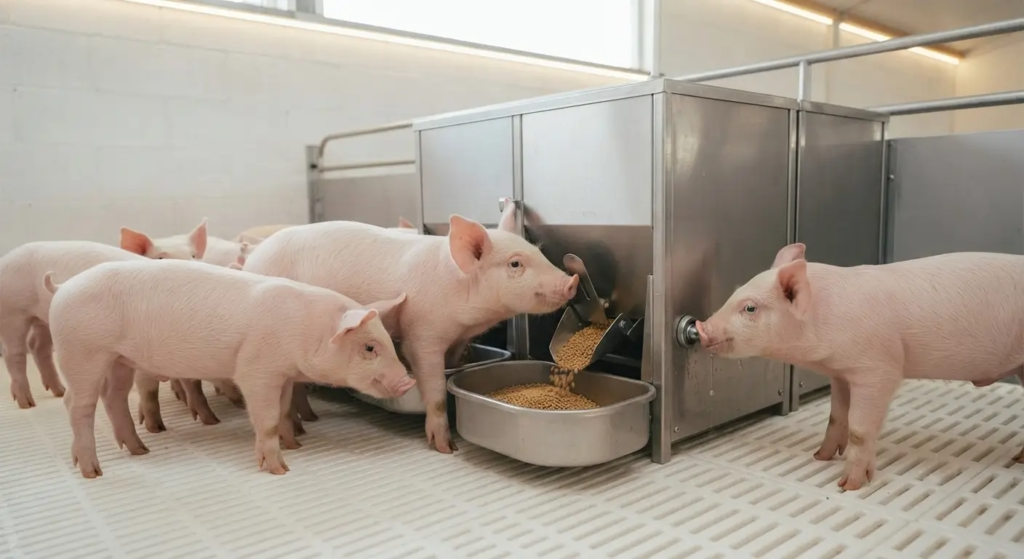
Feeder accessibility: Starter pigs require feeders positioned and designed for easy access by small animals still learning feeding behavior in an unfamiliar environment — low feeder lip height, multiple feeding spaces to reduce competition, and feeder design that minimizes the learning curve for pigs that may have had limited independent feeding experience before weaning.
The wet-dry feeder advantage: Combination feeders that provide both dry feed and water at the same feeding station have been shown to improve post-weaning feed intake compared to separate dry feeders and drinkers — the combined sensory cues (feed and water together) appear to assist piglets in establishing feeding behavior more quickly during this critical transition period.
Frequent small deliveries: Similar to creep feed management, starter feed benefits from frequent fresh delivery in small quantities rather than large quantities left to sit — palatability and freshness meaningfully influence intake in this still-developing feeding behavior period.
Monitoring the 8-hour and 24-hour benchmarks: As detailed in brooding management guidance, checking crop fill (for context comparable to weanling feed engagement) and overall pen activity in the first 8–24 hours post-weaning provides an early warning system for transition problems — pens showing poor feed engagement at this point warrant immediate investigation (temperature, water access, feeder accessibility) rather than waiting for the problem to become visually obvious through poor growth over subsequent days.
Stage 3: Grower Feed — Building the Frame
The Biological Transition at the Grower Stage
By approximately 25 kg live weight, the pig’s digestive system has matured sufficiently to efficiently utilize conventional plant-based diets without the specialty ingredient requirements of the starter phase. The grower phase (typically 25–60 kg) is characterized by the pig’s highest absolute rate of lean tissue deposition — this is the period of most rapid frame and muscle development, setting the structural foundation that the finisher phase will add weight to.
Grower Feed Sub-Phases
Most commercial programs use 2 sub-phases within the grower period to track the changing requirement curve:
Grower 1 (approximately 25–40 kg):
| Nutrient | Specification |
|---|---|
| Crude protein | 17–18% |
| Lysine | 1.05–1.15% |
| ME | 3,250–3,350 kcal/kg |
| Calcium | 0.70–0.80% |
| Available phosphorus | 0.35–0.40% |
Grower 2 (approximately 40–60 kg):
| Nutrient | Specification |
|---|---|
| Crude protein | 16–17% |
| Lysine | 0.90–1.00% |
| ME | 3,200–3,300 kcal/kg |
| Calcium | 0.65–0.75% |
| Available phosphorus | 0.32–0.38% |
Why Lysine Precision Matters Most at This Stage
The grower phase represents the period of highest absolute lean tissue deposition rate in the pig’s life — meaning the amino acid requirement to support that lean deposition (with lysine as the primary reference amino acid, following the ideal protein concept detailed in feed formulation guidance elsewhere in this series) is at its highest relative importance for determining whether the pig achieves its genetic growth potential.
Underfeeding lysine during the grower phase produces measurable, and to some degree irreversible, consequences — the pig’s growth rate during this period is constrained by the limiting amino acid, and the lean tissue deposition “lost” during a period of inadequate amino acid supply is not fully recovered even if later-stage nutrition is corrected, because the grower phase represents a developmentally important window for frame and muscle establishment that the finisher phase builds upon rather than replaces.
Overfeeding lysine (formulating well above requirement) wastes feed cost without providing additional growth benefit beyond the genetic ceiling — the precision matters in both directions, which is exactly why phase-specific formulation (rather than a single broad “grower-finisher” feed) captures meaningful value, as detailed in feed formulation strategy guidance.
Grower Stage Management Considerations
Group stability: As discussed in FCR management guidance, the grower phase often coincides with pig movement from weanling to grower housing, involving mixing of unfamiliar groups. Minimizing unnecessary additional mixing during this period (beyond the single transition mixing event) reduces the social stress and competition that depresses feed intake and worsens FCR during a developmentally important growth window.
Space allowance: The grower phase space requirement (0.55–0.70 m² per pig, as detailed in space allowance guidance) must be maintained — this is the stage where competition-driven feed intake suppression has particularly significant consequences given the high lean deposition rate occurring during this window.
Health monitoring: Internal parasite burden (particularly Ascaris suum) frequently becomes clinically or subclinically relevant during the grower phase as cumulative environmental exposure increases — deworming protocol timing should account for this, as detailed in FCR management guidance.
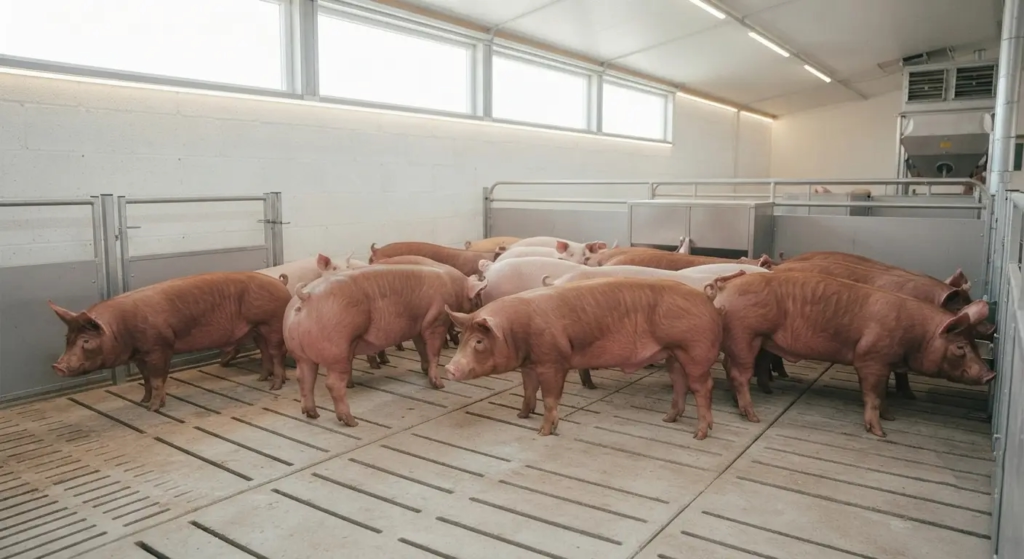
Stage 4: Finisher Feed — Optimizing the Final Approach to Market Weight
The Biological Shift at the Finisher Stage
As pigs progress through the finisher phase (typically 60–110 kg), the proportion of energy intake directed toward lean tissue deposition relative to fat deposition gradually shifts — not because the pig “decides” to deposit more fat, but because the absolute rate of lean tissue deposition the pig’s genetics can support begins to plateau as the animal approaches its mature frame size, while energy intake (driven by appetite, which generally continues increasing with body size) continues to rise. The proportion of energy intake beyond what supports the (now relatively lower rate of) lean deposition is increasingly directed toward fat deposition.
This has direct formulation implications: Continuing to formulate finisher diets at grower-phase amino acid density would oversupply amino acids relative to the declining lean deposition rate, wasting protein ingredient cost without corresponding growth benefit, while potentially also encouraging excess overall feed intake that increases backfat beyond optimal carcass specifications.
Finisher Feed Sub-Phases
Finisher 1 (approximately 60–85 kg):
| Nutrient | Specification |
|---|---|
| Crude protein | 14–15% |
| Lysine | 0.75–0.85% |
| ME | 3,150–3,250 kcal/kg |
| Calcium | 0.55–0.65% |
| Available phosphorus | 0.28–0.32% |
Finisher 2 (approximately 85–110 kg):
| Nutrient | Specification |
|---|---|
| Crude protein | 13–14% |
| Lysine | 0.65–0.75% |
| ME | 3,100–3,200 kcal/kg |
| Calcium | 0.50–0.60% |
| Available phosphorus | 0.25–0.30% |
The Finisher Phase Carcass Quality Consideration
Unlike the earlier life stages, where formulation decisions are driven almost entirely by growth efficiency considerations, finisher phase formulation must also account for carcass composition targets — backfat depth, lean yield percentage, and (for operations targeting eating quality positioning, as covered in breed-focused articles in this series) intramuscular fat development.
Energy restriction in the late finisher phase: Some commercial programs implement modest energy restriction in the final 2–4 weeks before slaughter (reducing ME by 5–10% below the standard finisher specification, or implementing restricted rather than ad-libitum feeding) specifically to manage backfat depth and prevent overconditioning in pigs approaching slaughter weight, particularly relevant for breeds or crosses with higher fat deposition tendency (as discussed in Berkshire and other breed-specific content in this series) where late-finisher energy intake management becomes a meaningful lever for hitting carcass specification targets.
The eating quality finishing protocol: Conversely, operations specifically targeting premium eating quality positioning (Duroc or Berkshire programs aiming for elevated intramuscular fat) sometimes implement the opposite strategy in the final finishing weeks — maintaining or slightly increasing energy density to encourage the de novo lipogenesis that contributes to intramuscular fat deposition, accepting the backfat depth trade-off in exchange for the eating quality premium their market channel rewards.
Finisher Stage Management Considerations
Feeder capacity and competition: Finisher pigs have the highest absolute daily feed intake of any production stage, and competition for feeder access during this period — particularly in pens at or above maximum recommended group size — can meaningfully affect both growth uniformity and FCR. Verify adequate feeder space (minimum 25–30 cm per pig at trough-style feeders, or adequate space-to-pig ratios for wet-dry or tube feeders) specifically for this highest-intake stage.
Thermal management priority: As detailed in FCR management guidance, finisher pigs generate the highest metabolic heat load per pen of any production stage, making thermal environment management (ventilation, stocking density, supplemental cooling during peak heat) particularly consequential for maintaining adequate feed intake through this stage.
Withdrawal period compliance: Any medication, including in-feed antimicrobials or anthelmintics, used during the finisher phase must respect the labeled withdrawal period before slaughter — verify withdrawal timing against the planned marketing date for every treatment administered during this stage.
Part 5: Transition Management — Connecting the Four Stages
Why Transition Quality Matters As Much As Formulation Quality
A perfectly formulated starter diet delivers reduced benefit if the transition from creep feed to starter (at weaning) is managed abruptly, just as a perfectly formulated finisher diet delivers reduced benefit if the transition from grower to finisher creates unnecessary digestive disruption. The connections between stages are where formulation quality is most easily undermined by management execution.
The Gradual Blending Approach
Where feasible — particularly for the higher-stress weaning transition from creep/milk to starter feed — gradually blending decreasing proportions of the previous stage’s feed with increasing proportions of the new stage’s feed over 3–5 days reduces the digestive disruption that abrupt complete changeover can cause.
Practical implementation: For a farm with adequate feed storage and handling capacity, mix 75% previous-phase feed with 25% new-phase feed for the first 1–2 days of transition, shift to a 50/50 blend for the next 1–2 days, then to 25% previous-phase/75% new-phase for the final transition days before moving to 100% new-phase feed.
Where gradual blending is impractical: Smaller operations without the storage and handling capacity to manage simultaneous blending of two feed batches can still capture meaningful benefit from simply ensuring the transition occurs at the correct weight threshold (based on actual measured pig weight, not calendar assumption, as detailed in FCR management guidance) rather than introducing additional disruption from a poorly timed transition on top of the inherent formulation change.
Transition Timing Based on Weight, Not Calendar Days
As emphasized throughout this series’ nutrition and FCR guidance, phase transitions should be triggered by actual measured pig weight crossing the threshold for the next stage, not by a fixed calendar schedule. A batch growing faster than standard assumptions will be held on an inadequate lower-specification diet too long if transitions wait for calendar timing; a slower-growing batch will be oversupplied with higher-cost nutrition if transitioned too early on a calendar basis.
Part 6: The Complete Phase Feeding Summary Table
| Stage | Weight Range | Approx. Duration | Crude Protein | Lysine | ME (kcal/kg) | Primary Formulation Focus |
|---|---|---|---|---|---|---|
| Creep feed | Birth–weaning (0–7 kg) | Day 7–28 | 22–24% | 1.50–1.60% | 3,450–3,550 | Digestibility, palatability, enzyme stimulation |
| Starter Phase 1 | 7–11 kg | 1–2 weeks post-weaning | 20–22% | 1.40–1.50% | 3,400–3,500 | Digestibility, minimizing growth check |
| Starter Phase 2 | 11–18 kg | Weeks 2–4 post-weaning | 19–21% | 1.30–1.40% | 3,350–3,450 | Transition toward conventional ingredients |
| Starter Phase 3 | 18–25 kg | Weeks 4–6 post-weaning | 18–20% | 1.20–1.30% | 3,300–3,400 | Bridge to grower formulation |
| Grower 1 | 25–40 kg | 3–4 weeks | 17–18% | 1.05–1.15% | 3,250–3,350 | Maximum lean deposition support |
| Grower 2 | 40–60 kg | 4–5 weeks | 16–17% | 0.90–1.00% | 3,200–3,300 | Sustained lean deposition |
| Finisher 1 | 60–85 kg | 4–5 weeks | 14–15% | 0.75–0.85% | 3,150–3,250 | Efficient gain, carcass quality awareness |
| Finisher 2 | 85–110 kg | 4–5 weeks | 13–14% | 0.65–0.75% | 3,100–3,200 | Final carcass specification targeting |
Summary
The four foundational diet stages — creep feed, starter, grower, and finisher — exist because no single formulation can serve a pig whose digestive capacity, growth priorities, and nutrient requirements change as dramatically as they do between birth and market weight. Creep feed builds the digestive and behavioral foundation for solid feed transition. Starter feed bridges the highest-risk period in the pig’s life with a digestibility-focused, often dairy-supplemented formulation that minimizes the post-weaning growth check. Grower feed supports the period of maximum lean tissue deposition with a precision amino acid supply that, if inadequate, produces consequences the finisher phase cannot fully reverse. Finisher feed optimizes the final approach to market weight, balancing continued efficient gain against the carcass composition specifications that the farm’s target market rewards.
Getting each stage’s formulation correct matters — but getting the transitions between stages correct, triggered by actual measured weight rather than calendar assumption and managed with attention to digestive continuity where feasible, often determines whether the formulation’s potential is actually realized in the pig’s measured performance.
A pig that moves through all four stages with correctly specified nutrition and well-managed transitions arrives at market weight close to its genetic potential — in growth rate, in feed efficiency, and in the carcass quality that determines its final market value. A pig that encounters a mismatched formulation or poorly managed transitions at any stage carries that deficit forward, in ways that later-stage nutrition cannot always fully correct.
Four stages. Four formulations. One continuous biological trajectory that corrects phase feeding management is designed to support at every point along the way.