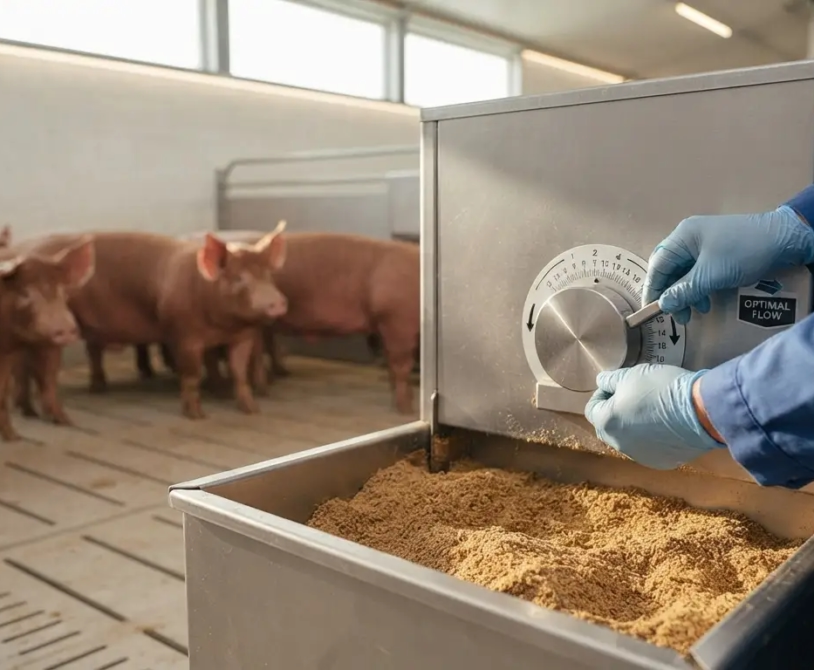
The single largest lever available to reduce pig production costs is not genetics, not housing, not labor — it is the feed formulation sitting in the feed bin. Feed accounts for 60–70% of the total cost of producing a market pig, which means that a 5% improvement in feed cost efficiency delivers more bottom-line impact than almost any other single management intervention available to a commercial pig operation.
But “lowering feed cost” is frequently misunderstood as simply buying cheaper ingredients or feeding less. Both approaches, applied carelessly, destroy more value than they save — underformulated rations produce slower growth, worse FCR, and compromised health that cost far more than the feed price reduction recovers. Precision nutrition is a different discipline: it means formulating rations that deliver exactly the nutrients the pig requires at each specific production stage — no more, no less — using the most cost-effective ingredient combination available, and adjusting that formulation as ingredient prices, pig genetics, and production targets change.
This is not a theoretical exercise. The gap between a precisely formulated ration and a generically formulated one, applied across a 1,000-pig annual operation, routinely represents XAF 5,000,000–15,000,000 (USD 8,333–25,000) in annual cost difference — money that is either captured through formulation discipline or lost through formulation carelessness, with no difference in the pigs themselves.
This guide covers the technical foundation of precision swine nutrition: phase feeding strategy, amino acid optimization (specifically the ideal protein concept), energy system selection, ingredient evaluation and substitution economics, and the practical formulation discipline that converts nutritional science into measurable cost reduction.
Part 1: The Foundation — Why Generic Feeding Wastes Money
The Overformulation Problem
Many commercial pig operations, particularly smaller operations without access to a qualified nutritionist, default to a small number of broad rations — a “grower feed” and a “finisher feed,” sometimes simply one ration fed across the entire growth period — formulated to a specification that covers the highest-demand point in that broad category with margin for safety.
The cost of this approach: A pig at 25 kg has dramatically different amino acid and energy requirements than a pig at 55 kg, even though both might be fed the same “grower” ration. If that ration is formulated to meet the 25 kg pig’s higher requirement (relative to body weight, younger pigs have higher protein and amino acid requirements per kilogram of feed), the 55 kg pig fed the same ration receives nutrients well in excess of its actual requirement — nutrients that are either excreted (wasted cost, with the added cost of nitrogen and phosphorus excretion that the farm’s waste management system must then process) or, in the case of excess energy, deposited as unwanted backfat that reduces carcass value.
The Underformulation Problem
The opposite error — feeding a ration formulated for the lower-demand end of a broad weight range to pigs at the higher-demand end (such as feeding a “finisher”-level ration too early to growers) — produces measurable performance loss: reduced growth rate, worsened FCR from inadequate amino acid supply limiting lean tissue deposition, and in young pigs, potential immune function compromise from inadequate nutrient supply during a developmentally critical period.
The Precision Alternative
Precision nutrition replaces broad categories with a structured phase-feeding program — multiple distinct rations, each formulated specifically for a narrower weight or age range, transitioned at the points where the pig’s nutrient requirement curve changes meaningfully enough to justify a formulation change. This is not a formulation for its own sake — each additional phase has a real cost (formulation complexity, ingredient inventory management, feed mixing and storage logistics) that must be weighed against the nutrient-matching benefit it provides.
Part 2: Phase Feeding — The Structural Foundation of Precision Nutrition
The Standard Commercial Phase Structure
| Phase | Weight Range | Typical Duration | Crude Protein | Lysine | ME (kcal/kg) |
|---|---|---|---|---|---|
| Pre-starter (Phase 1) | 7–11 kg | 1–2 weeks | 20–22% | 1.40–1.50% | 3,400–3,500 |
| Starter (Phase 2) | 11–25 kg | 4–6 weeks | 19–21% | 1.25–1.35% | 3,350–3,450 |
| Grower 1 (Phase 3) | 25–40 kg | 3–4 weeks | 17–18% | 1.05–1.15% | 3,250–3,350 |
| Grower 2 (Phase 4) | 40–60 kg | 4–5 weeks | 16–17% | 0.90–1.00% | 3,200–3,300 |
| Finisher 1 (Phase 5) | 60–85 kg | 4–5 weeks | 14–15% | 0.75–0.85% | 3,150–3,250 |
| Finisher 2 (Phase 6) | 85–110 kg | 4–5 weeks | 13–14% | 0.65–0.75% | 3,100–3,200 |
The Economics of Phase Number
More phases = better nutrient matching = lower feed cost per kg of gain, but higher formulation and logistics complexity.
A study comparing 2-phase vs. 4-phase vs. 6-phase grower-finisher feeding programs typically shows:
| Phase Structure | Feed Cost per kg Gain (Relative) | Formulation/Logistics Complexity |
|---|---|---|
| 2-phase (single grower, single finisher) | 100% (baseline) | Low |
| 4-phase | 94–97% | Moderate |
| 6-phase | 90–93% | High |
The diminishing returns pattern: Moving from 2-phase to 4-phase feeding typically captures most of the available cost reduction (3–6%). Moving from 4-phase to 6-phase captures additional but smaller improvement (an additional 2–4%), at meaningfully higher logistics complexity (more ration formulations to manage, more feed bins or storage segregation required, more frequent ration changeover requiring careful transition management to avoid digestive disruption).
The practical recommendation for most West African commercial operations: A 4-phase grower-finisher program (in addition to the starter phases) captures the majority of available phase-feeding cost benefit without requiring the feed mill capacity, storage infrastructure, or management sophistication that 6+ phase programs demand. Operations with in-house feed milling capability and consistent ingredient supply can justify moving to higher phase numbers as their formulation and logistics capacity mature.
Phase Transition Timing
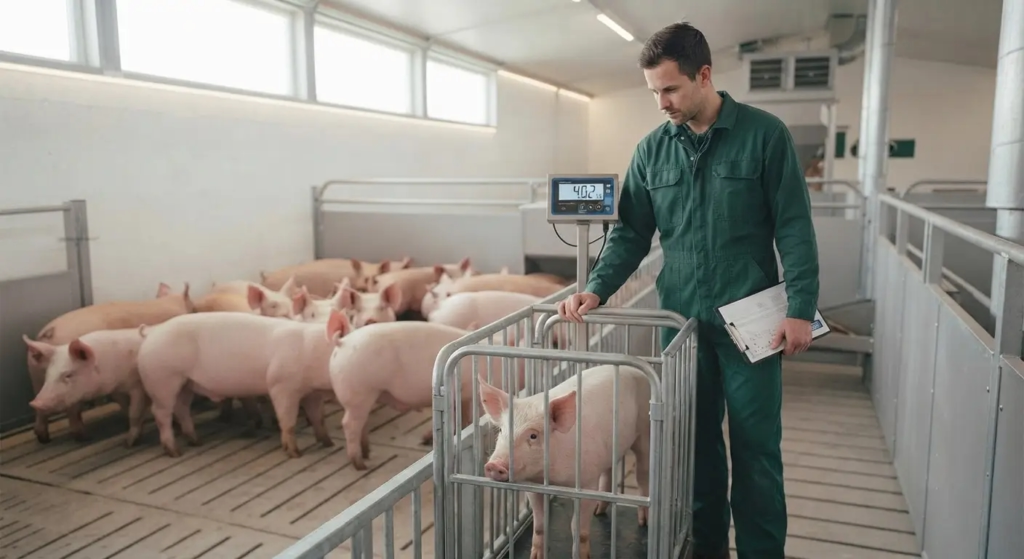
Phase changes should be triggered by actual measured body weight, not calendar time — a batch growing faster than the standard schedule assumes will be underfed (relative to its actual higher requirement) if phase transitions wait for the calendar-based schedule, while a slower-growing batch will be overfed if transitioned on a calendar schedule. Weigh representative samples (minimum 20–30 pigs per pen) weekly, and trigger phase transitions based on the pen’s actual average weight crossing the threshold for the next phase, not based on age in weeks.
Part 3: The Ideal Protein Concept — Amino Acid Precision
Why Crude Protein Percentage Is an Outdated Specification
Traditional feed formulation specified rations by crude protein percentage — a measurement of total nitrogen content in the feed, multiplied by a standard conversion factor (6.25). This approach has a fundamental limitation: crude protein measures total nitrogen, not the specific amino acid profile that the pig actually requires for protein synthesis.
A ration can meet a crude protein target while being deficient in one or more specific essential amino acids, and a pig’s lean tissue growth rate is limited by whichever essential amino acid is in shortest supply relative to requirement (the “limiting amino acid” principle, sometimes called Liebig’s Law of the Minimum applied to amino acid nutrition). Excess of all other amino acids beyond what is needed to match the limiting one is wasted — deaminated and excreted as nitrogen, contributing to feed cost without contributing to growth.
The Ideal Protein Ratio
The ideal protein concept formulates rations based on the ratio of essential amino acids relative to lysine (the typically first-limiting amino acid in maize-soybean meal-based pig diets), rather than targeting crude protein percentage directly. This allows formulation to precisely match the pig’s actual amino acid requirement profile using the minimum total protein necessary — reducing both feed cost (protein ingredients, particularly soybean meal, are typically the most expensive component of pig rations) and nitrogen excretion.
The standard ideal protein ratio (relative to lysine = 100):
| Amino Acid | Ratio to Lysine (Growing Pig) |
|---|---|
| Lysine | 100 |
| Methionine + Cystine | 55–60 |
| Threonine | 60–65 |
| Tryptophan | 18–20 |
| Isoleucine | 50–55 |
| Valine | 65–70 |
| Arginine | 35–40 (growing pig; higher requirement in young pigs) |
The Cost Saving Mechanism: Synthetic Amino Acid Supplementation
Formulating to the ideal protein ratio using synthetic amino acids (L-lysine, DL-methionine, L-threonine, L-tryptophan — all commercially available, including increasingly through West African feed ingredient distributors) rather than relying solely on intact protein sources (soybean meal, fish meal) to supply the full amino acid profile allows a significant reduction in total crude protein while maintaining or improving actual amino acid adequacy.
A practical example — reducing crude protein through synthetic amino acid supplementation:
| Formulation Approach | Crude Protein | Soybean Meal Inclusion | Synthetic Lysine | Cost per kg (Relative) |
|---|---|---|---|---|
| Traditional (protein-driven) | 18% | 22% | 0% | 100% |
| Reduced-protein (ideal protein, synthetic AA) | 15.5% | 15% | 0.35% + Met/Thr/Trp | 91–94% |
Why this works economically: Soybean meal supplies a complete amino acid profile but at a cost per unit of protein that is significantly higher than the cost of supplying the same limiting amino acids through synthetic supplementation. Reducing soybean meal inclusion (replacing it partially with lower-protein, lower-cost energy ingredients like maize) while adding synthetic lysine, methionine, threonine, and tryptophan to maintain the correct ideal protein ratio reduces total ration cost while maintaining — sometimes even improving — actual amino acid adequacy for the limiting amino acids that drive lean growth.
The additional benefit: Reduced crude protein formulations produce measurably lower nitrogen excretion (typically 20–30% reduction in urinary nitrogen output per percentage point of crude protein reduction, when amino acid balance is correctly maintained through synthetic supplementation) — directly reducing ammonia generation in the pig house (with the ventilation, health, and neighbor-relations benefits covered in housing-focused articles in this series) and reducing the nitrogen load on whatever waste management system processes the farm’s manure.
Practical Implementation for West African Operations
Sourcing synthetic amino acids: L-lysine HCl, DL-methionine, L-threonine, and L-tryptophan are available through international feed ingredient suppliers with distribution into West African markets, typically through agricultural input importers in Lagos, Abuja, Douala, and Accra. Pricing and availability should be verified directly, as it varies with global commodity markets and import logistics.
The minimum viable synthetic amino acid program: Even operations without full nutritionist support can capture meaningful benefit by adding synthetic L-lysine alone to standard maize-soybean meal rations, allowing modest soybean meal reduction while maintaining the lysine specification — a simpler first step than full ideal-protein reformulation across all amino acids, with most of the cost benefit captured from the lysine adjustment alone in typical West African ingredient cost structures.
Part 4: Energy System Selection — Why ME Alone Is Insufficient
The Limitation of Metabolizable Energy (ME) Specification
Metabolizable energy (ME) — the standard energy specification used in most West African commercial feed formulation — measures the gross energy of feed minus the energy lost in feces, urine, and gaseous products of digestion. It does not account for the additional energy lost as heat during the digestion and metabolism process itself (the “heat increment” of feeding), which varies depending on the specific ingredients and nutrients being metabolized.
Net energy (NE) — the energy actually available to the pig for maintenance and growth after accounting for the heat increment — provides a more accurate prediction of actual pig performance, particularly when comparing rations with different fiber and fat content, since fiber-rich ingredients have a notably higher heat increment (more energy “lost” as metabolic heat during digestion) than fat or starch sources.
Practical Implication for Ingredient Selection
Formulating purely on ME can lead to selecting ingredient combinations that appear cost-equivalent on an ME basis but produce measurably different actual growth performance because of differing heat increment losses — particularly relevant when evaluating high-fiber alternative ingredients (various agricultural byproducts, certain oilseed meals) against conventional maize-soybean meal formulations.
The practical recommendation: Where NE-based formulation software or NE values for local ingredients are not readily available (a common constraint in West African commercial feed formulation), apply a conservative discount when evaluating high-fiber alternative ingredients on an ME-equivalent cost basis — recognizing that their actual delivered energy to the pig will typically be somewhat lower than their ME value alone would suggest, particularly for younger pigs with lower fiber digestion capacity.
Part 5: Ingredient Substitution Economics — The Practical Cost-Reduction Tool
Least-Cost Formulation Principles
Least-cost formulation — using linear programming or formulation software to identify the lowest-cost ingredient combination that meets all specified nutrient requirements — is the standard professional approach to feed cost optimization. Even without access to sophisticated formulation software, the underlying principle can be applied manually: regularly evaluate whether alternative ingredients can replace a portion of the standard formulation at a lower cost per unit of delivered nutrient value, without compromising the overall nutrient specification.
Common West African Alternative Ingredients and Their Formulation Considerations
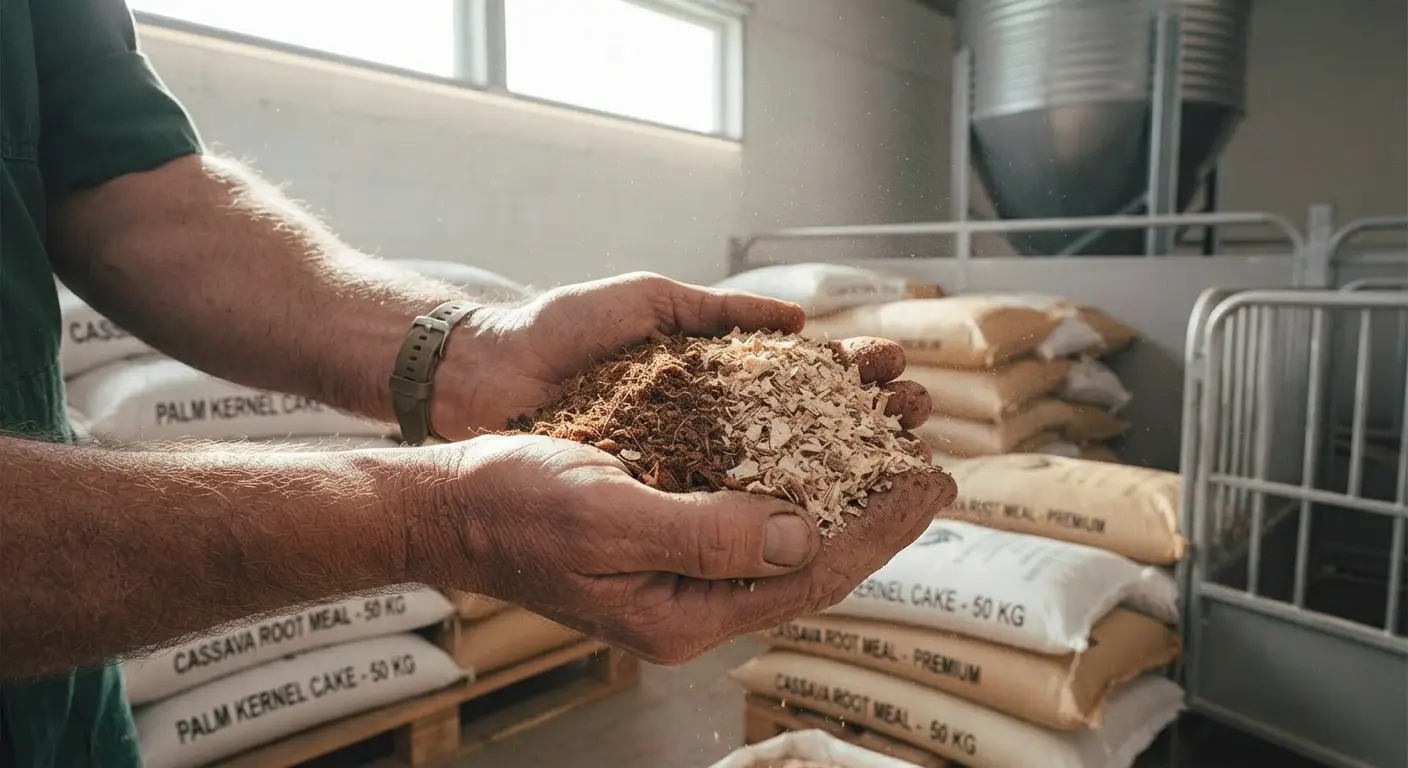
Cassava and cassava byproducts (cassava peel meal, cassava root meal):
- Energy source comparable to maize on an ME basis when properly processed (dried, ground)
- Critical processing requirement: Fresh cassava contains cyanogenic glycosides that release hydrogen cyanide — proper sun-drying or other processing to reduce cyanide content to safe levels (below 10 ppm HCN equivalent) is essential before inclusion in pig rations
- Lower protein content than maize, requiring formulation adjustment (typically increased soybean meal or synthetic amino acid inclusion to compensate)
- Cost advantage is typically most significant in regions with strong cassava production and processing infrastructure
Palm kernel cake/meal:
- Byproduct of palm oil extraction, widely available in palm oil-producing regions of West and Central Africa
- Moderate protein content (16–18%) but with an amino acid profile poorly matched to pig requirements (low in lysine specifically) — requires synthetic lysine supplementation when included at meaningful inclusion rates
- High fiber content limits inclusion rate, particularly for younger pigs with lower fiber digestion capacity — typically limited to 10–15% inclusion in grower-finisher rations, lower or excluded in starter rations
- Significant cost advantage where locally available, given proximity to palm oil processing facilities
Brewers’ dried grains (a byproduct of local and commercial brewing operations):
- Good protein content (20–28% depending on source and processing) with a reasonable amino acid profile
- Moderate to high fiber content, limiting inclusion rate similarly to palm kernel cake
- Availability and consistency depend heavily on proximity to brewing operations and the brewery’s byproduct handling practices — moisture content and storage condition significantly affect usability and must be verified before each purchase
Rice bran (full-fat or defatted):
- Good energy source (particularly full-fat rice bran, given its oil content) with moderate protein
- Critical storage limitation: Full-fat rice bran has a relatively short shelf life due to lipid oxidation (rancidity) — must be used within weeks of milling or stored with appropriate antioxidant treatment, making consistent quality sourcing a meaningful logistics consideration
- Phytate content can reduce mineral availability — phytase enzyme supplementation, where economically accessible, improves the nutritional value captured from rice bran inclusion
Fish meal (where regionally available, particularly in coastal areas):
- Excellent amino acid profile, particularly valuable in starter rations for young pigs where amino acid quality (not just quantity) matters most
- Significant cost premium compared to plant protein sources — typically reserved for starter phase inclusion where its quality justifies the cost, rather than throughout the full grower-finisher period
The Substitution Decision Framework
Before substituting any alternative ingredient into an established formulation, verify:
- Nutrient composition data — ideally from direct laboratory analysis of the specific batch being considered, since byproduct ingredient composition can vary significantly between sources and even between batches from the same source
- Anti-nutritional factor assessment — cyanogenic glycosides (cassava), mycotoxin risk (any ingredient with storage/moisture history concerns), and other factors specific to the ingredient category
- Maximum inclusion rate — based on fiber content, anti-nutritional factor levels, and palatability considerations for the specific production stage being formulated
- True cost per unit of delivered nutrient — not simply cost per kilogram of the raw ingredient, but cost per unit of the specific nutrients (energy, protein, specific amino acids) the ingredient actually delivers, accounting for any reduced digestibility relative to conventional ingredients
Part 6: Feed Form and Processing — The Often-Overlooked Cost Lever
Particle Size
Grinding grain ingredients (particularly maize) to the correct particle size measurably affects feed conversion efficiency. Excessively coarse grinding reduces digestibility (larger particles have less surface area exposed to digestive enzymes, allowing more undigested material to pass through). Excessively fine grinding increases the risk of gastric ulceration (particularly relevant in finisher pigs) and can create handling and dust problems.
Target particle size: 500–700 microns for most grower-finisher rations, achieved through correctly maintained and appropriately screened hammer mills. Operations milling their own feed should periodically verify particle size (through sieve analysis, or by sending samples to a feed testing laboratory where available) rather than assuming mill settings remain correctly calibrated over time.
Pelleting
Pelleted feed (versus mash/meal form) typically improves feed conversion ratio by 3–8% through several mechanisms: reduced feed wastage (less dust and fine particle loss from feeders), improved digestibility (the heat and pressure of pelleting partially gelatinizes starch, improving its digestibility), and reduced selective feeding (pigs cannot sort out preferred ingredients from a pelleted ration the way they can from a mash, ensuring more consistent nutrient intake matching the formulated specification).
The economic trade-off: Pelleting requires capital investment (pellet mill equipment) and additional processing cost (energy for the pelleting process, steam conditioning equipment) that must be weighed against the FCR improvement it delivers. For larger operations (typically above 500–1,000 pigs annual throughput) with consistent feed volume to justify the capital investment, pelleting frequently pays for itself through the FCR improvement within 1–2 years. Smaller operations may find the capital cost difficult to justify relative to their feed volume, making mash feeding with attention to particle size optimization the more practical approach.

Part 7: Building the Formulation Discipline — A Practical Implementation Framework
Step 1: Establish an Accurate Current Cost Baseline
Before optimizing formulation, establish precisely what the current feeding program costs — total feed cost per pig produced, broken down by phase, with accurate ingredient cost data (not assumed or outdated pricing).
Step 2: Verify Current Formulation Against Actual Requirements
Compare the current ration specifications against the standard phase requirement targets in Part 2, identifying any phases where the current formulation is significantly over- or under-specified relative to actual pig requirements at that weight range.
Step 3: Evaluate Phase Structure
Assess whether the current number of feeding phases captures reasonable nutrient-matching precision, or whether additional phase segmentation (or, in cases of excessive complexity relative to operation scale, phase consolidation) would improve the cost-precision balance for the specific operation’s scale and logistics capacity.
Step 4: Audit Amino Acid Balance
Where crude protein-based formulation is currently used, evaluate the potential cost saving from transitioning toward ideal protein ratio formulation with synthetic amino acid supplementation — even a partial transition (synthetic lysine addition alone, allowing modest protein ingredient reduction) frequently captures meaningful cost benefit relative to the formulation change complexity required.
Step 5: Evaluate Local Ingredient Substitution Opportunities
Survey locally available alternative ingredients (cassava products, palm kernel cake, brewers’ grains, rice bran, and others specific to the operation’s region) for current pricing and availability, and assess potential cost-effective substitution opportunities using the substitution decision framework in Part 5.
Step 6: Implement Changes Incrementally With Performance Monitoring
Introduce formulation changes incrementally rather than simultaneously, monitoring FCR, growth rate, and health indicators after each change to confirm the formulation adjustment is delivering the intended cost reduction without compromising production performance. A formulation change that reduces feed cost per kilogram but worsens FCR sufficiently to increase total feed cost per kilogram of gain has not actually achieved the intended cost reduction — only direct measurement of cost per kilogram of gain (not simply cost per kilogram of feed) confirms whether a formulation change is genuinely beneficial.
Summary
Precision swine nutrition is the discipline of matching feed formulation exactly to the pig’s actual nutrient requirement at each production stage — using phase feeding to track the changing requirement curve across the production cycle, ideal protein ratio formulation with synthetic amino acid supplementation to minimize wasted protein cost while maintaining amino acid adequacy, and careful evaluation of local alternative ingredients to capture genuine cost advantages without compromising nutrient delivery.
The financial stakes justify the formulation discipline this requires: at a 1,000-pig annual operation, the difference between a generically formulated feeding program and a precisely formulated one routinely represents XAF 5,000,000–15,000,000 (USD 8,333–25,000) in annual cost — captured not by buying cheaper ingredients indiscriminately, but by buying exactly the right ingredients in exactly the right combination for what the pig actually requires at each stage of its growth.
This is not a one-time formulation exercise. Ingredient prices fluctuate, locally available alternative ingredients change with seasonal agricultural and processing cycles, and genetic improvement in the pig population gradually shifts requirement curves over time. The operations that consistently capture the available cost-reduction value are those that treat feed formulation as an ongoing discipline — measured, monitored, and periodically reassessed — rather than a specification set once and left unchanged for years.
The feed bin is where most of the farm’s money is spent. Precision in what goes into it is where most of the farm’s avoidable costs are found.