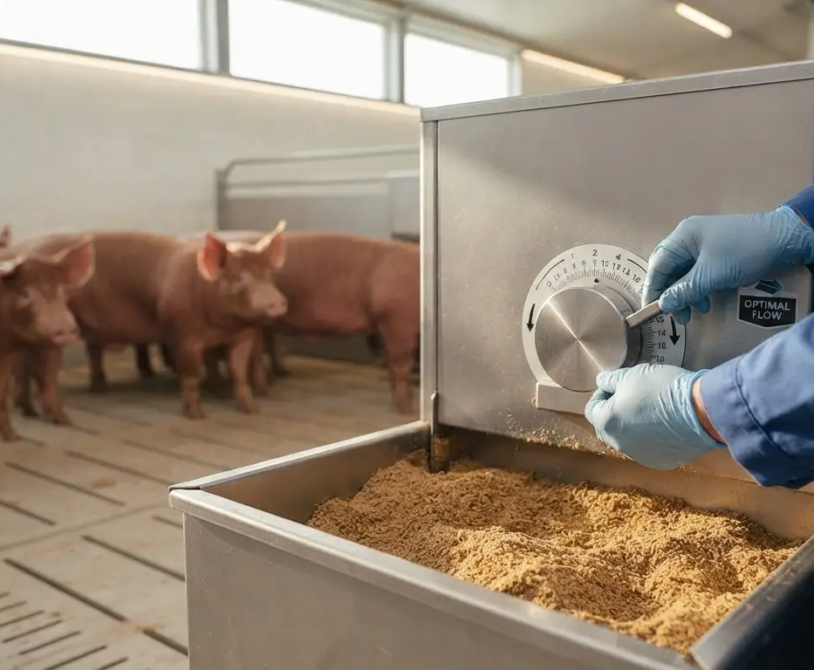
Maize and soybean meal are the global standard for pig ration formulation for good reason — their nutrient composition is well-characterized, well-balanced, and highly digestible, and the global feed industry’s formulation knowledge base is built around them. But they are also commodities subject to international price volatility, import dependency in many West and Central African markets, and competition from human food and other livestock sectors that can drive prices sharply upward during periods of regional or global supply disruption.
West and Central Africa simultaneously produces and generates substantial volumes of alternative feedstuffs — cassava and its processing byproducts, brewery and distillery byproducts, oilseed cakes from palm and other regional crops, and a range of other crop residues and agro-industrial byproducts — that, correctly processed and included in formulations at appropriate rates, can substitute partially for conventional maize and soybean meal while reducing total feed cost, sometimes substantially.
The opportunity is real, but so are the risks of using these ingredients incorrectly: anti-nutritional factors that can cause toxicity or reduced performance if not properly managed, fiber content that limits inclusion rate and digestibility, amino acid profiles that are poorly matched to pig requirements unless supplemented correctly, and quality and supply consistency challenges that differ meaningfully from the standardized commodity markets for maize and soybean meal.
This guide works through the major alternative ingredient categories available in West and Central African pig production, the specific technical considerations for using each safely and effectively, and the formulation framework for incorporating them without compromising production performance.
Part 1: Why Alternative Ingredients Matter for West African Pig Production
The Import Dependency Problem
Significant portions of the soybean meal used in West African commercial pig and poultry production are imported — from South America, the United States, or regional production in markets like Nigeria and Zambia that do not always meet full regional demand. Import dependency exposes the regional feed cost structure to global commodity price volatility, currency exchange rate fluctuation, and the logistics disruptions (port congestion, shipping delays, import documentation issues) that periodically affect West and Central African import supply chains.
Maize, while more frequently produced regionally, also faces periodic supply tightness — particularly during the lean season before harvest, or in years affected by drought or other production shortfalls — that drives domestic maize pricing upward and creates direct competition between livestock feed use and human food security needs.
The Regional Production Reality
Against this import dependency, West and Central Africa produces substantial volumes of crops and agro-industrial byproducts that are frequently underutilized in livestock feed formulation, despite representing genuine nutritional and cost opportunity:
- Cassava is among the region’s most widely produced staple crops, with substantial processing byproduct streams (peels, particularly) that are frequently discarded or underutilized rather than processed for livestock feed use
- Palm oil production, concentrated in Nigeria, Cameroon, Côte d’Ivoire, Ghana, and other producing countries, generates palm kernel cake as a substantial byproduct stream
- Brewing operations, both large commercial breweries and smaller local operations, generate brewers’ spent grain in significant volume, much of which is currently disposed of as waste rather than captured as a feed resource
- Rice production, concentrated in specific regional zones, generates rice bran and rice husks as milling byproducts
The opportunity is not simply theoretical cost reduction — it is also a genuine circular economy and waste-utilization opportunity, converting what would otherwise be agricultural or agro-industrial waste streams into productive livestock feed inputs.
Part 2: Cassava and Cassava Byproducts
Cassava Root Meal
Nutritional profile: Cassava root, dried and ground into meal, is primarily an energy source — high in starch (typically 75–85% on a dry matter basis), low in protein (2–3% crude protein), low in fat, and notably low in several key minerals and vitamins compared to maize.
The critical safety requirement — cyanogenic glycoside management:
Fresh cassava root and peel contain cyanogenic glycosides (primarily linamarin) that release hydrogen cyanide (HCN) when the plant tissue is damaged — through cutting, grinding, or chewing — and enzymatic activity converts the glycoside to free cyanide. Cyanide is acutely toxic, and chronic sub-lethal exposure is associated with reduced growth performance and other health effects in livestock.
Cassava varieties differ substantially in cyanogenic glycoside content:
- “Sweet” cassava varieties: typically below 50 mg HCN equivalent per kg fresh weight
- “Bitter” cassava varieties: can exceed 400 mg HCN equivalent per kg fresh weight — substantially higher toxicity risk
Processing to reduce cyanide content:
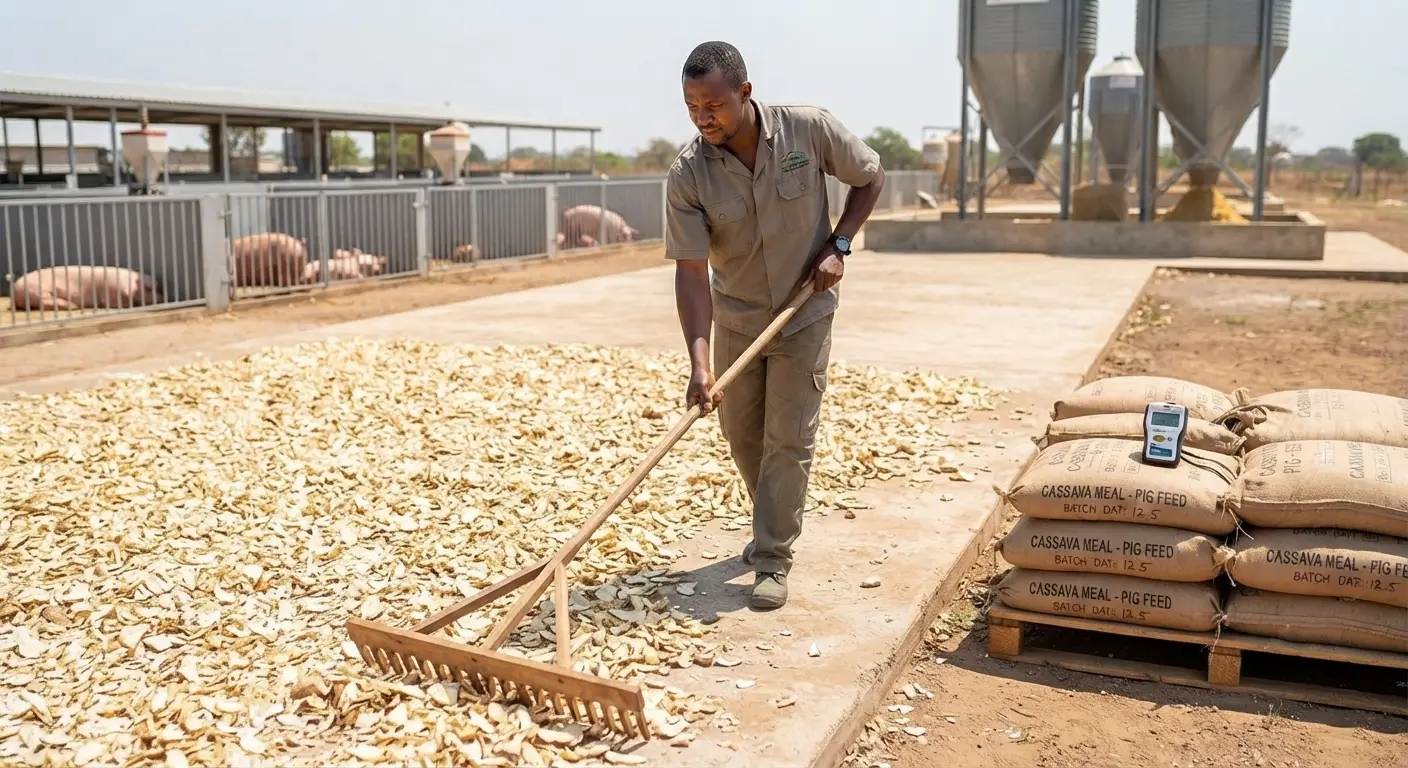
Proper processing — sun-drying (the most common and accessible method in West African production contexts), combined with adequate processing time and, ideally, an initial soaking, fermentation, or grating step before drying — substantially reduces cyanogenic glycoside content through both volatilization of released HCN gas and enzymatic breakdown during the processing period.
Target safety threshold: Processed cassava root meal intended for livestock feed should contain below 10 mg HCN equivalent per kg (some regional and international standards specify even lower thresholds, particularly for young or more sensitive animal categories). Where laboratory testing is accessible, verify processed cassava batches against this threshold, particularly when sourcing from new suppliers or when bitter variety cassava is suspected to be present in the processed material.
Practical processing protocol for farm or small-processor level cassava preparation:
- Peel and grate or chip fresh cassava root (peeling removes a portion of the highest-cyanide-content tissue, concentrated near the outer layers)
- Sun-dry the grated or chipped material spread in a thin layer for adequate air and sun exposure, typically requiring 2–4 days depending on weather conditions, turning periodically to ensure even drying
- Verify the dried material has reached below 14% moisture content before storage (both for cyanide reduction adequacy and for mold prevention during storage)
- Grind to appropriate particle size for inclusion in mixed rations
Cassava Peel Meal
Nutritional profile: Cassava peel, the outer layer removed during root processing for human food or starch production, has historically been treated as a low-value waste product but represents a genuine feed resource when properly processed — though with generally higher cyanogenic glycoside content than the root flesh (since the highest concentration of cyanogenic compounds in the cassava plant is typically in the outer peel layers), requiring particular attention to processing adequacy.
Processing requirements: Identical principles to root meal processing apply, with the higher baseline cyanide content of peel material warranting extra caution — longer drying periods, verification testing where accessible, and conservative inclusion rates particularly in starter and young pig formulations where sensitivity to anti-nutritional factors is highest.
Inclusion Rates and Formulation Adjustment
Recommended maximum inclusion rates (as a proportion of total ration, replacing a portion of the maize component):
| Production Stage | Cassava Root Meal Maximum Inclusion | Cassava Peel Meal Maximum Inclusion |
|---|---|---|
| Starter (7–25 kg) | 5–10% (with caution; lower preferred) | Not recommended |
| Grower (25–60 kg) | 20–30% | 10–15% |
| Finisher (60–110 kg) | 25–35% | 15–20% |
| Gestating/lactating sows | 15–25% | 10–15% |
Formulation adjustment required when substituting cassava for maize: Because cassava is essentially a pure starch energy source with minimal protein and a poor amino acid profile compared to maize (which, while also relatively low in protein, contributes meaningfully more to the ration’s total amino acid supply than cassava does), substituting cassava for a portion of the maize component requires compensating protein and amino acid adjustment — typically through modest increases in soybean meal or other protein source inclusion, and/or increased synthetic amino acid supplementation, to maintain the target ideal protein ratio specified in formulation guidance elsewhere in this series.
Part 3: Brewery and Distillery Byproducts
Brewers’ Spent Grain (Wet and Dried)
What it is: The solid residue remaining after the brewing process extracts fermentable sugars from malted grain (typically barley, though sorghum and maize are also used as brewing adjuncts in various regional brewing operations) — a substantial byproduct stream generated by both large commercial breweries and smaller-scale local brewing operations.
Nutritional profile: Brewers’ spent grain is notably higher in protein than the original grain (since the fermentable starch and sugar fraction has been extracted, concentrating the remaining protein, fiber, and fat proportionally) — typically 20–28% crude protein on a dry matter basis, with moderate to high fiber content (15–20% crude fiber) and a reasonable, though not ideal-protein-matched, amino acid profile.
The wet vs. dried distinction — a critical practical consideration:
Wet brewers’ grain (as it comes directly from the brewing process, typically 75–80% moisture) is often available at very low cost or even free from local breweries seeking to dispose of the material, but has a very short shelf life — typically only 2–4 days before spoilage becomes a significant concern, even under reasonably cool storage conditions, and considerably shorter in hot West African ambient conditions without refrigeration. This severely limits its practical use to farms in close proximity to a brewing source with the logistics capability for frequent, small-quantity collection and rapid use.
Dried brewers’ grain (processed through drying to reduce moisture to storable levels, typically below 12%) has a substantially longer shelf life and can be transported and stored similarly to other dry feed ingredients, but the drying process itself adds cost (energy for drying, processing infrastructure) that reduces — though does not eliminate — its cost advantage compared to conventional ingredients.
Inclusion rates:
| Production Stage | Wet Brewers’ Grain (as % of total diet DM) | Dried Brewers’ Grain |
|---|---|---|
| Starter | Not recommended (fiber and quality consistency concerns) | 5% maximum |
| Grower | Up to 15–20% (fresh, high-quality source) | 10–15% |
| Finisher | Up to 20–25% | 12–18% |
| Gestating sows | Up to 15–20% (fiber can support satiety in restricted-feeding gestation programs) | 10–15% |
Quality verification for wet brewers’ grain: Given the rapid spoilage risk, every batch should be assessed at the point of use for any signs of off-odor, visible mold, or excessive souring (beyond the normal mild fermented smell expected from fresh brewers’ grain) — material showing these signs should be rejected rather than fed, regardless of the cost savings forgone, given the health risk that spoiled feed material poses.
Distillers’ Dried Grains (Where Available)
Similar in nutritional profile concept to brewers’ grain but derived from distillation processes (where available regionally, typically associated with spirits production rather than beer brewing) — typically higher in protein and fat content than brewers’ grain due to the different processing methodology, with similar formulation considerations regarding fiber content and inclusion rate limits.
Part 4: Oilseed Cakes and Meals
Palm Kernel Cake/Meal
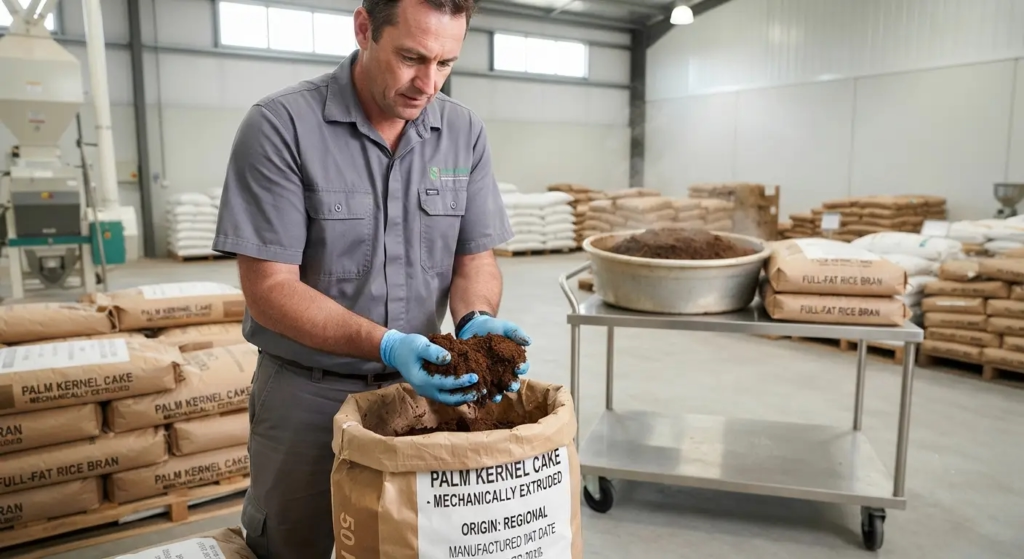
As detailed in nutrition strategy guidance elsewhere in this series, palm kernel cake — the byproduct remaining after oil extraction from palm kernels — is one of the most significant regionally available alternative protein and energy sources in West and Central African pig production, particularly in palm oil-producing regions of Nigeria, Cameroon, Côte d’Ivoire, and Ghana.
Nutritional profile: Moderate protein (16–18% crude protein), with an amino acid profile notably deficient in lysine relative to pig requirements, moderate residual oil content (depending on the efficiency of the extraction process — mechanically expelled palm kernel cake typically retains more residual oil than solvent-extracted material), and relatively high fiber content that limits inclusion rate, particularly for younger pigs.
Inclusion rates:
| Production Stage | Maximum Inclusion |
|---|---|
| Starter | 3–5% (limited use due to fiber and lysine deficiency concerns for this high-requirement stage) |
| Grower | 10–15% |
| Finisher | 12–18% |
| Gestating/lactating sows | 10–15% |
Required formulation adjustment: Palm kernel cake’s low lysine content relative to its overall protein content means inclusion at meaningful rates requires compensating synthetic lysine supplementation (and, to a lesser extent, other amino acid adjustment) to maintain the formulation’s ideal protein ratio targets — without this adjustment, palm kernel cake inclusion can actually worsen the formulation’s effective amino acid balance despite contributing to the crude protein percentage target.
Groundnut (Peanut) Cake/Meal
Nutritional profile: Higher protein content than palm kernel cake (typically 40–50% crude protein for well-processed material), with a generally favorable amino acid profile, though — like soybean meal — requiring adequate processing to manage anti-nutritional factors.
Critical aflatoxin risk: Groundnut crops and their processing byproducts are particularly susceptible to Aspergillus flavus and Aspergillus parasiticus mold contamination, which produce aflatoxin — a potent mycotoxin with serious health consequences including liver damage, immune suppression, and (particularly relevant given regional aflatoxin contamination patterns in groundnut supply chains) carcinogenic risk with chronic exposure. Groundnut cake intended for livestock feed use requires careful sourcing verification and, where economically accessible, aflatoxin testing, given the documented contamination risk in regional groundnut supply chains, particularly material from poor storage conditions or compromised harvest and post-harvest handling.
Inclusion rates: Where sourced from verified, tested, low-aflatoxin-risk supply, groundnut cake can be included at rates similar to soybean meal (15–25% in grower-finisher rations) as either a partial or, in some formulations, more substantial substitute. Given the aflatoxin risk profile, conservative inclusion and verified sourcing are particularly warranted for starter-phase rations, where young pig sensitivity to mycotoxin exposure is highest.
Cottonseed Cake/Meal
Nutritional profile: Reasonable protein content (35–45% crude protein depending on processing method and residual oil content), but containing gossypol, a naturally occurring toxic compound in cottonseed that can cause cardiac and reproductive toxicity, particularly in young, growing, or breeding animals, at sufficient exposure levels.
Inclusion rate limitations due to gossypol: Conservative inclusion rates (typically 5–8% maximum in grower-finisher rations, with limited to no use in starter, breeding, or gestating/lactating sow rations given the particular sensitivity of these categories to gossypol’s reproductive and developmental toxicity) are warranted unless using specifically processed “low-gossypol” cottonseed products where available, or implementing iron supplementation strategies (iron forms complexes with free gossypol that reduce its bioavailability and toxicity) that some regional formulation approaches employ to allow somewhat higher inclusion rates with appropriate caution.
Part 5: Rice Milling Byproducts
Rice Bran (Full-Fat)
As detailed in nutrition strategy guidance, full-fat rice bran — the outer layer removed during rice milling, retaining its natural oil content — is a good energy source with moderate protein content, but carries a significant practical limitation: rapid rancidity development due to lipase enzyme activity that begins degrading the bran’s oil content shortly after milling, particularly in warm West African storage conditions.
Practical management: Source rice bran as fresh as possible relative to its milling date, use within 2–3 weeks of milling where antioxidant stabilization treatment has not been applied, and consider stabilized (heat-treated to deactivate the lipase enzyme) rice bran products where available, which substantially extend usable shelf life at modest additional processing cost.
Inclusion rates: 5–15% in grower-finisher rations, with attention to the phytate content (which can reduce mineral bioavailability) that rice bran also carries, partially mitigated through phytase enzyme supplementation where economically accessible.
Rice Husks
Unlike rice bran, rice husks (the outer hull removed during initial rice processing, before the bran layer) have very limited direct nutritional value for pigs — extremely high fiber, very low digestibility, and minimal protein or energy contribution. Rice husks are not recommended as a feed ingredient for pig rations beyond trace inclusion, and are far more valuably used as bedding material (as detailed in deep litter housing guidance elsewhere in this series) than as a feed component.
Part 6: Other Regional Crop Byproducts and Considerations
Sweet Potato and Yam Byproducts
Where regionally available in significant volume (particularly processing residues from starch or food product manufacturing), sweet potato and yam byproducts share broadly similar formulation characteristics to cassava — primarily energy contribution with low protein content, requiring compensating protein and amino acid supplementation, though generally without the cyanogenic glycoside safety concern that cassava carries (verify the specific regional variety and any processing history, as some yam varieties do carry other anti-nutritional considerations specific to that crop).
Banana and Plantain Byproducts
Banana and plantain peels and processing residues, where available in volume from commercial fruit processing operations, provide a modest energy contribution with relatively low protein content, similar in formulation role to cassava — generally a minor component of overall formulation rather than a primary ingredient, given typically limited and inconsistent regional supply volume relative to demand from a commercial feed formulation perspective.
Fish Processing Byproducts (Where Coastal/Riverine Access Permits)
In coastal and major riverine fishing regions, fish processing byproducts (offal, low-value fish species, processing residues) can be processed into a fish meal substitute or supplement, providing valuable high-quality protein and amino acid contribution, particularly useful in starter-phase formulations as discussed in phase-feeding guidance. Quality and consistency verification is essential — improperly processed or stored fish byproduct material can carry significant bacterial contamination risk and rapid spoilage, requiring the same rigor applied to any animal-derived feed ingredient regarding processing, drying, and storage condition verification.
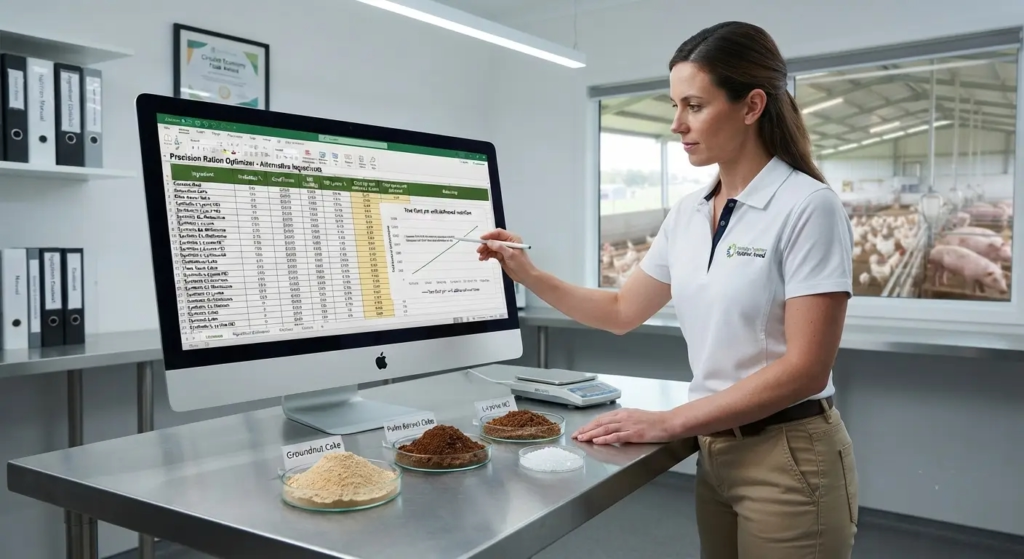
Part 7: The Formulation Framework for Alternative Ingredient Inclusion
Step 1: Establish Verified Nutrient Composition
Before incorporating any alternative ingredient into a formulation at meaningful inclusion rates, establish its actual nutrient composition — ideally through laboratory analysis of representative samples from the specific supply source being used, since alternative ingredient composition varies considerably more between sources, processing methods, and even batches than the relatively standardized commodity ingredients (maize, soybean meal) that published composition tables more reliably represent.
Where laboratory analysis is not economically accessible, use published regional composition data as a starting reference, but apply conservative assumptions (assuming somewhat lower nutrient density and digestibility than the published average) particularly for ingredients with significant variability potential, until production performance data confirms the formulation is delivering adequate nutrition.
Step 2: Assess Anti-Nutritional Factor Risk
For each candidate alternative ingredient, explicitly assess the relevant anti-nutritional factor risk (cyanogenic glycosides for cassava, gossypol for cottonseed, aflatoxin risk for groundnut products, trypsin inhibitors for inadequately processed soybean and other legume products) and verify the processing or testing measures needed to manage that risk before inclusion.
Step 3: Set Conservative Initial Inclusion Rates
Begin alternative ingredient inclusion at the lower end of the recommended range (rather than the maximum), particularly when first incorporating a new ingredient source or supplier, allowing performance monitoring to confirm the ingredient is being correctly utilized before increasing inclusion rate toward the upper range of what formulation calculations suggest is nutritionally appropriate.
Step 4: Adjust Compensating Nutrients
As detailed throughout this guide, most alternative ingredients require compensating adjustment elsewhere in the formulation — additional synthetic amino acids to correct amino acid profile gaps, adjusted mineral supplementation to account for differing native mineral content, and energy density adjustment (sometimes requiring supplemental fat/oil inclusion) where the alternative ingredient’s energy contribution differs from the conventional ingredient it is replacing.
Step 5: Monitor Production Performance
As emphasized throughout the nutrition and FCR-focused guidance in this series, the ultimate verification of whether alternative ingredient inclusion is delivering its intended cost benefit without compromising production performance is direct measurement — FCR, growth rate, and health indicators tracked before and after the formulation change, providing the feedback that confirms the alternative ingredient strategy is genuinely capturing cost savings rather than merely appearing to through lower per-kilogram ingredient cost while actual production efficiency deteriorates.
Part 8: The Cost-Benefit Reality Check
Calculating True Cost Per Unit of Delivered Nutrition
The headline cost-per-kilogram of an alternative ingredient can be misleading if not adjusted for its actual nutrient delivery relative to the conventional ingredient it is replacing. A cost-effective evaluation requires calculating cost per unit of the specific limiting nutrient (typically energy or lysine, depending on what the formulation is most constrained by) that the ingredient actually delivers — accounting for digestibility, the need for compensating supplementation, and any processing cost required to make the ingredient usable (drying, detoxification processing for cassava, and similar).
A practical example — comparing maize and processed cassava root meal as energy sources:
| Factor | Maize | Processed Cassava Root Meal |
|---|---|---|
| Purchase/production cost per kg | XAF 220 | XAF 130 |
| Crude protein contribution | 8.5% | 2.5% |
| ME content | 3,300 kcal/kg | 3,250 kcal/kg |
| Compensating protein/AA supplementation cost (when substituted for maize) | — | Approximately +XAF 15–25/kg of cassava included, to offset lower protein contribution |
| Effective cost per kg, accounting for compensation | 220 | 145–155 |
Even after accounting for the compensating supplementation cost, cassava root meal in this example retains a meaningful cost advantage over maize — but the advantage (approximately 30% rather than the apparent 41% suggested by raw ingredient cost alone) is smaller than the headline price comparison suggests, illustrating why the full formulation adjustment cost must be included in any genuine cost-benefit evaluation of alternative ingredient substitution.
Summary
West and Central Africa’s agricultural and agro-industrial sectors generate substantial alternative feed ingredient resources — cassava and its processing byproducts, brewery and distillery byproducts, palm kernel cake and other regional oilseed cakes, rice milling byproducts, and various other crop residues — that represent genuine opportunity for pig production cost reduction when correctly evaluated, processed, and formulated.
Capturing that opportunity requires specific technical discipline for each ingredient category: cyanogenic glycoside management for cassava products, rapid-spoilage management for wet brewers’ grain, aflatoxin risk verification for groundnut products, gossypol-aware inclusion limits for cottonseed products, and rancidity management for full-fat rice bran — alongside the universal formulation requirement of compensating amino acid, mineral, and energy adjustment to maintain overall nutritional adequacy when these ingredients replace a portion of conventional maize and soybean meal.
The true cost-benefit case for any specific alternative ingredient depends on local pricing, availability, and quality consistency — factors that vary considerably by region and even by season within a single region — making the formulation framework in this guide (verified composition data, anti-nutritional factor risk assessment, conservative initial inclusion with compensating adjustment, and performance monitoring) more valuable as a permanent operating discipline than any single fixed formulation recommendation could be.
The waste streams of one regional industry are the feed cost reduction opportunity of another. Capturing that opportunity safely and effectively is a formulation discipline, not a shortcut.