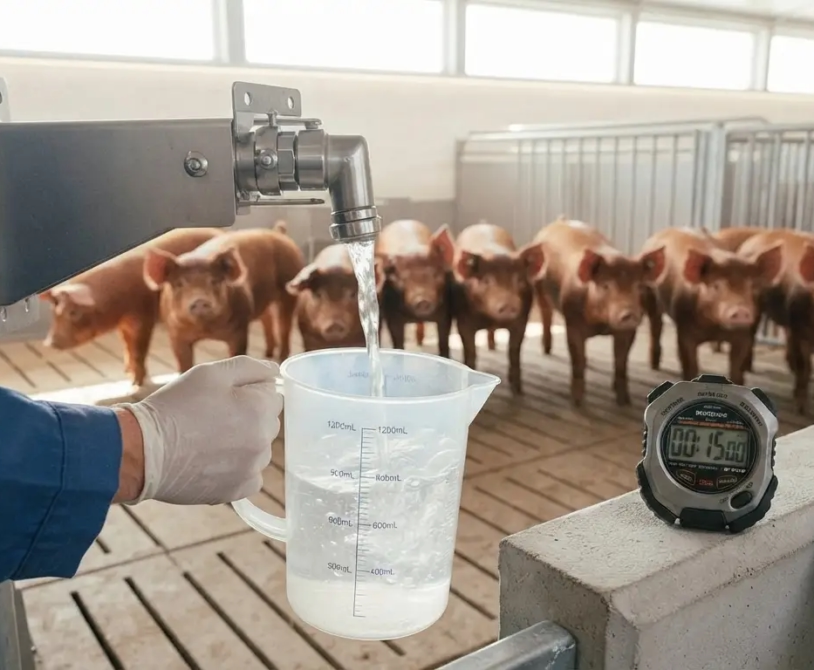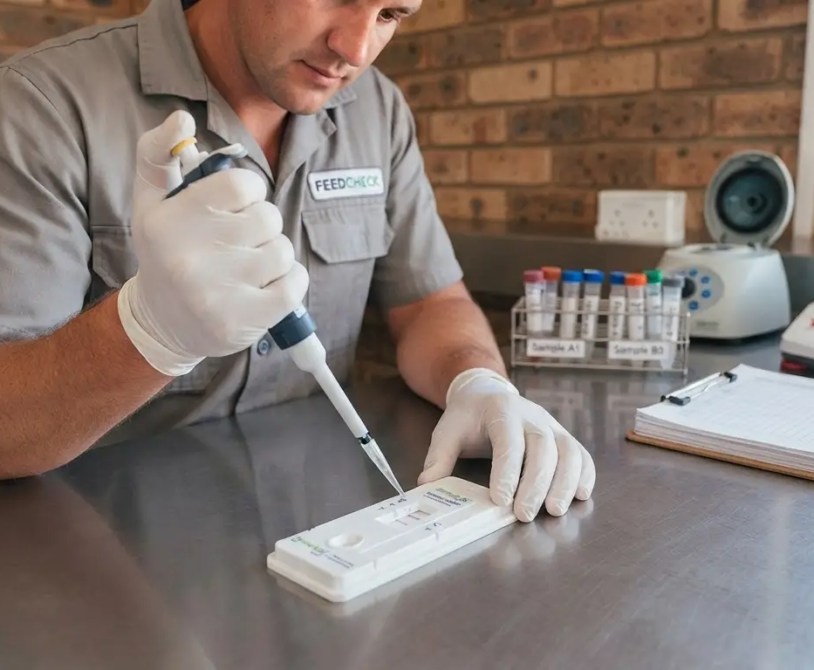
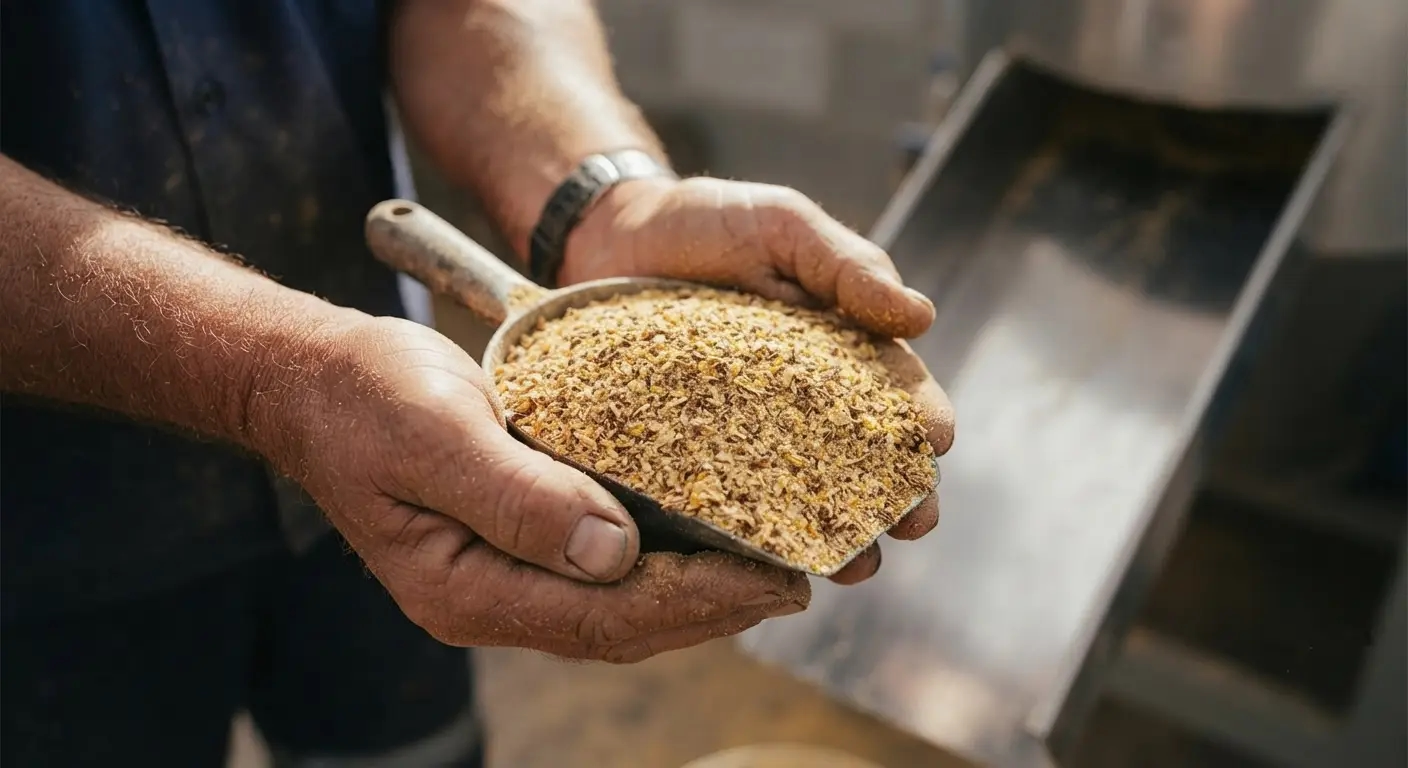
Purchased commercial pig feed carries a price premium that reflects more than just ingredient cost — it includes the feed manufacturer’s processing cost, transport and distribution margin, and the manufacturer’s own profit. For a commercial pig operation consuming meaningful feed volume, that premium represents real money: on-farm feed mixing, executed correctly, routinely reduces total feed cost by 15–30% compared to purchasing equivalent finished commercial feed, simply by capturing the manufacturing and distribution margin for the farm itself.
The critical qualifier is “executed correctly.” On-farm mixing without nutritional precision — guessing at ratios, skipping micronutrient supplementation, ignoring particle size and mixing uniformity — produces feed that costs less per kilogram but delivers worse production performance, frequently erasing the apparent cost saving (and sometimes producing a net loss) once the resulting FCR deterioration and growth performance shortfall are accounted for.
This guide provides the complete framework for mixing commercial-grade pig feed on-farm: the equipment required, how to source and evaluate ingredients, the formulation math that ensures nutritional adequacy (not just approximate adequacy), mixing protocols that achieve uniform distribution, and the quality control practices that catch problems before they become production losses.
Part 1: Is On-Farm Mixing Right for Your Operation?
The Scale Threshold
On-farm mixing requires capital investment (mixing equipment, storage infrastructure) and ongoing management attention (formulation maintenance, ingredient sourcing and quality control, mixing labor) that must be justified by sufficient feed volume to spread that fixed cost across.
General scale guidance:
| Operation Size | On-Farm Mixing Viability |
|---|---|
| Below 20 sows or equivalent finisher capacity | Generally not economical — fixed costs of equipment and management attention exceed the margin captured from purchased feed at this volume |
| 20–50 sows or equivalent | Marginal — viable with simple equipment and disciplined management; cost benefit modest but real |
| 50–150 sows or equivalent | Strong case for on-farm mixing with moderate equipment investment |
| 150+ sows or equivalent | Strong case for on-farm mixing, potentially justifying more sophisticated equipment (pelleting, multiple ingredient bins for precision formulation) |
The Prerequisite Capabilities
Before committing to on-farm mixing, honestly assess whether the operation has, or can develop:
Formulation knowledge: Either in-house capability to formulate rations correctly (understanding the nutrient specifications detailed in phase-feeding guidance elsewhere in this series) or access to a qualified nutritionist or formulation service who can provide and periodically update formulations as ingredient availability and pricing change.
Reliable ingredient sourcing: Consistent access to the base ingredients (maize or other energy sources, protein sources, mineral and vitamin premixes) at quality and pricing that supports the cost-saving case — sourcing that is unreliable or highly variable in quality undermines both the cost case and the nutritional consistency the formulation depends on.
Quality control discipline: The willingness to weigh ingredients accurately, follow formulations precisely, and monitor production performance to verify the mixed feed is actually delivering adequate nutrition — on-farm mixing without this discipline is where the cost-saving case most commonly fails.
Part 2: Equipment Requirements
Minimum Viable Equipment (Small-Scale Operations)
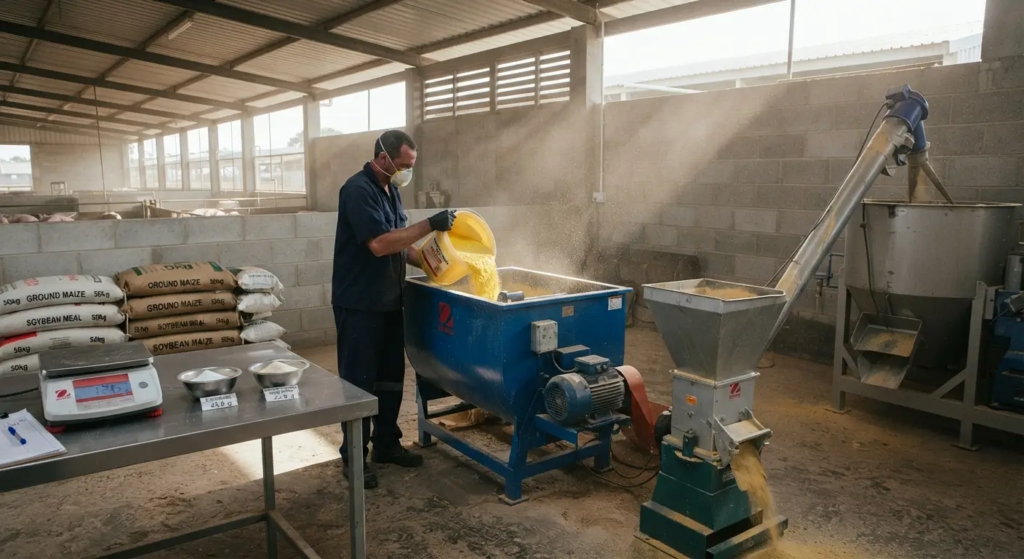
Grinding/milling equipment: A hammer mill is the standard equipment for reducing whole grain (maize, sorghum, or other energy ingredients) to the correct particle size for inclusion in pig rations. For small-scale operations, a hammer mill sized for 200–500 kg/hour throughput is typically adequate.
- Cost: XAF 800,000–2,500,000 (USD 1,333–4,167) depending on capacity and power source (electric vs. diesel-powered units)
- Screen selection: Use the appropriate screen size to achieve a target particle size of 500–700 microns for grower-finisher rations (finer screens for starter rations, where a smaller particle size improves digestibility for the immature digestive system, while remaining mindful of the gastric ulceration risk that excessively fine grinding creates)
Mixing equipment: A horizontal or vertical batch mixer ensures uniform distribution of all ingredients — particularly critical for the micro-ingredients (vitamin/mineral premix, synthetic amino acids) that are included at very low inclusion rates but have significant nutritional impact if unevenly distributed.
- Cost: XAF 1,500,000–4,000,000 (USD 2,500–6,667) for a batch mixer sized appropriately for small-to-medium commercial operations (typically 200–500 kg batch capacity)
- Why mixing equipment quality matters disproportionately: A ration that is correctly formulated on paper but poorly mixed can deliver wildly inconsistent nutrition between individual feed servings — some portions oversupplied with premix ingredients, others undersupplied — producing performance inconsistency that undermines the entire formulation effort regardless of how accurate the underlying recipe is
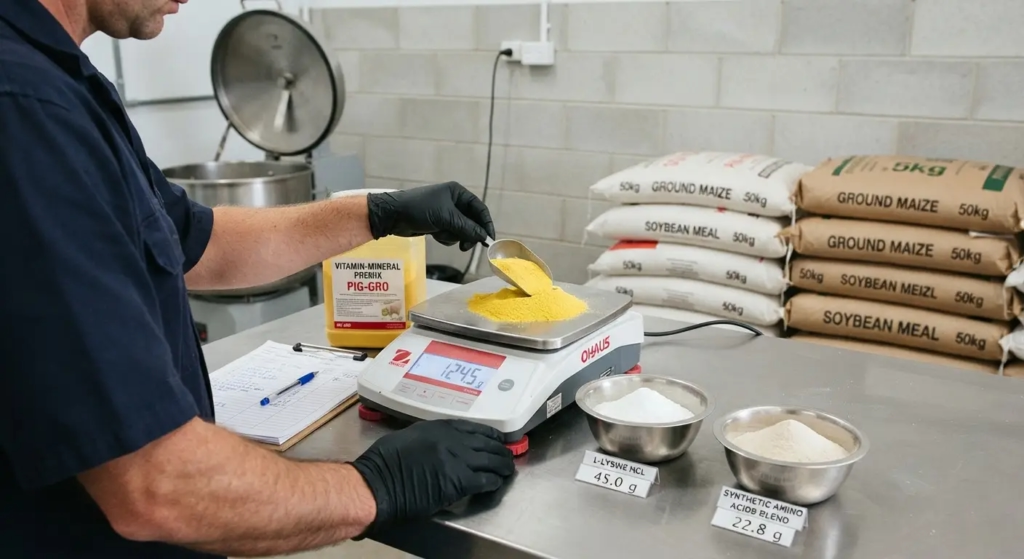
Weighing equipment: Accurate scales for weighing both bulk ingredients (typically a platform scale, 0–500 kg range) and micro-ingredients (a precision scale capable of accurate measurement down to gram-level quantities for premix and synthetic amino acid additions, which are included at rates as low as 0.1–0.5% of total formulation).
- Bulk scale cost: XAF 300,000–800,000 (USD 500–1,333)
- Precision scale cost: XAF 80,000–200,000 (USD 133–333)
Storage infrastructure: Separate, clearly labeled storage for each raw ingredient, maintained dry and pest-free, plus storage for the mixed finished feed. As detailed in nutrition strategy guidance elsewhere in this series, moisture control (below 14% moisture content) and pest exclusion are essential for maintaining both ingredient and finished feed quality.
Higher-Capacity Equipment (Larger Operations)
Multiple ingredient bins with automated batching: For operations producing multiple distinct phase rations regularly, automated or semi-automated batching systems (where major ingredients are dispensed by weight from dedicated bins, reducing manual weighing labor and error) become increasingly cost-justified as volume increases.
Pelleting equipment: As discussed in nutrition strategy guidance, pelleting improves FCR by 3–8% through reduced wastage and improved digestibility, but requires significant additional capital investment (pellet mill, conditioning equipment, often a generator or reliable power supply given the energy demands of pelleting). Cost: XAF 8,000,000–25,000,000 (USD 13,333–41,667) depending on capacity — typically justified only at larger operation scale (150+ sows or equivalent finisher throughput) where the volume exists to amortize this capital cost against the FCR improvement it delivers.
Part 3: Sourcing and Evaluating Ingredients
Energy Sources
Maize (corn): The standard energy ingredient in most West African pig ration formulations, typically comprising 50–65% of grower-finisher rations by weight.
Quality evaluation criteria:
- Moisture content below 14% (test with a moisture meter, or assess by feel and storage history — maize that feels notably soft or shows any mustiness is likely above safe moisture threshold)
- Visual inspection for mold (any visible mold growth, particularly the characteristic discoloration of aflatoxin-producing Aspergillus contamination, is grounds for rejection)
- Absence of insect infestation (weevil damage, visible insect activity)
- Test weight (a measure of grain density that correlates with nutritional quality) — a lower test weight than expected for the variety can indicate immature harvest or storage degradation
Cassava products (root meal, peel meal): A viable, often lower-cost alternative or partial substitute for maize in regions with strong cassava production, as detailed in nutrition strategy guidance — critically requiring verified processing to reduce cyanogenic glycoside content to safe levels before inclusion in any ration.
Sorghum: Where locally available at favorable pricing relative to maize, sorghum can substitute partially or substantially for maize as an energy source, with formulation adjustment for sorghum’s somewhat lower digestible energy content and, in some varieties, tannin content that can affect digestibility and palatability — verify variety-specific characteristics with the supplier or through testing where available.
Protein Sources
Soybean meal: The standard protein ingredient, typically 44–48% crude protein, comprising 15–25% of grower-finisher rations depending on formulation approach and synthetic amino acid use.
Critical quality verification: As detailed in phase-feeding guidance, soybean meal must be correctly heat-processed to reduce trypsin inhibitor and other anti-nutritional factor levels to acceptable ranges — under-processed soybean meal (insufficient heat treatment) and over-processed soybean meal (excessive heat treatment, which damages protein quality through Maillard reaction binding of lysine) are both quality problems. Where laboratory testing is accessible, urease activity testing provides a practical indirect indicator of processing adequacy (a standard quality control test in the commercial feed industry).
Palm kernel cake/meal: As detailed in nutrition strategy guidance, a cost-effective regional alternative protein source in palm oil-producing areas, requiring synthetic lysine supplementation to compensate for its naturally low lysine content, and limited inclusion rate (typically 10–15% maximum in grower-finisher rations) due to fiber content.
Fish meal: Where regionally available, particularly valuable in starter-phase formulations for its high-quality amino acid profile, despite higher cost per kilogram — reserve for the phases where its quality justifies the premium rather than including throughout the full production cycle.
Brewers’ dried grains: A viable regional protein and energy source where consistently available from local brewing operations, with the storage and quality consistency considerations detailed in nutrition strategy guidance.
Mineral and Vitamin Supplementation
Vitamin-mineral premix: A pre-formulated commercial product containing the full spectrum of vitamins (A, D₃, E, K, B-complex) and trace minerals (zinc, copper, manganese, selenium, iodine) required to supplement what the base ingredients (maize, soybean meal, and other macro-ingredients) provide, which is typically insufficient on its own to meet the pig’s full micronutrient requirement.
This is not an optional or reducible component of DIY formulation. Premix typically represents a small proportion of total ration weight (0.25–0.5%) but contributes nutrients that are essential for normal physiological function, immune competence, reproductive performance, and bone development — deficiencies in vitamin E and selenium specifically (covered in boar management guidance regarding semen quality) and in calcium/phosphorus/vitamin D₃ balance (covered in layer and general livestock skeletal health contexts) produce measurable, sometimes severe, production and welfare consequences that are not visible in simple growth rate or FCR tracking until the deficiency becomes advanced.
Sourcing: Commercial premix products formulated specifically for swine (distinct from poultry or ruminant premix formulations, which have different nutrient ratios appropriate to those species) are available through agricultural input suppliers and feed ingredient distributors across West and Central Africa. Verify the premix is swine-specific and request the technical specification sheet confirming inclusion levels of each component.
Limestone and dicalcium phosphate: Standard mineral supplements providing calcium and phosphorus beyond what base ingredients supply, with inclusion rates calculated specifically to meet the calcium and available phosphorus targets for each phase (as detailed in phase-feeding specifications).
Salt (sodium chloride): Typically included at 0.3–0.5% of the ration to meet sodium and chloride requirements not adequately supplied by other ingredients.
Synthetic Amino Acids
As detailed extensively in nutrition strategy guidance, L-lysine HCl, DL-methionine, L-threonine, and L-tryptophan allow formulation toward the ideal protein ratio while reducing reliance on more expensive intact protein sources (particularly soybean meal). These are typically included at inclusion rates of 0.05–0.40%, depending on the specific amino acid and the formulation’s base ingredient composition.
Critical accuracy requirement: Because synthetic amino acids are included at very low inclusion rates but have a significant nutritional impact, accurate weighing (using the precision scale specified in equipment requirements) is essential — a measurement error that would be negligible for a macro-ingredient like maize (a few percent error in a 50% inclusion ingredient) becomes a major formulation error at these low inclusion rates.
Part 4: The Formulation Math
Working From a Target Specification
Begin with the target nutrient specification for the production stage being formulated (using the phase-feeding specifications detailed elsewhere in this series as the starting reference point, adjusted as needed for the specific operation’s genetics, climate, and production targets).
Example target specification — Grower 1 phase (25–40 kg):
- Crude protein: 17.5%
- Lysine: 1.10%
- ME: 3,300 kcal/kg
- Calcium: 0.75%
- Available phosphorus: 0.37%
The Pearson Square Method (Simplified Two-Ingredient Balancing)
For a simplified approach to balancing two ingredients to hit a target protein level (a starting point before incorporating the full multi-ingredient and micronutrient complexity), the Pearson Square method provides a manual calculation tool:
Example: Balancing maize (8.5% CP) and soybean meal (46% CP) to achieve 17.5% CP target
Maize (8.5% CP)        46 - 17.5 = 28.5 parts
                \      /
                 17.5
                /      \
Soybean meal (46% CP)   17.5 - 8.5 = 9.0 parts
Total parts: 28.5 + 9.0 = 37.5 Maize proportion: 28.5 ÷ 37.5 = 76% Soybean meal proportion: 9.0 ÷ 37.5 = 24%
This provides a starting point — 76% maize, 24% soybean meal achieves the target 17.5% crude protein on a two-ingredient basis. However, this simplified method does not account for amino acid balance, energy content, or mineral requirements — it is a useful starting point for protein balancing specifically, not a complete formulation.
Complete Formulation Requires Multi-Nutrient Balancing
A complete, commercial-grade formulation must simultaneously satisfy multiple nutrient constraints — crude protein (or more precisely, the ideal protein amino acid ratios), energy, calcium, phosphorus, and the various micronutrients — which the simplified Pearson Square approach cannot manage simultaneously.
Practical approaches for complete formulation:
Spreadsheet-based formulation: A structured spreadsheet listing all candidate ingredients with their nutrient composition (crude protein, lysine, methionine, threonine, tryptophan, ME, calcium, available phosphorus, crude fiber) in rows, with formula-driven calculation of the weighted average nutrient content of a candidate formulation as ingredient proportions are adjusted, allows iterative manual adjustment toward the target specification. This requires accurate ingredient composition data (from supplier specification sheets, published feed ingredient composition tables, or laboratory analysis where accessible) and a methodical iterative approach.
Free or low-cost formulation software: Several formulation software options, including some free or low-cost tools designed for smaller-scale operations, use linear programming to automatically identify the least-cost ingredient combination meeting all specified nutrient constraints — a significant improvement in both accuracy and efficiency over manual spreadsheet iteration, where accessible.
Nutritionist consultation: For operations without in-house formulation capability, periodic consultation with a qualified animal nutritionist — even if not a full-time arrangement — to develop and periodically update formulations as ingredient pricing and availability change, frequently delivers cost-effectiveness that exceeds its consulting fee through formulation precision that in-house trial-and-error approaches struggle to match.
A Practical Worked Example: Grower 1 Ration
Target: 17.5% CP, 1.10% lysine, 3,300 kcal/kg ME, 0.75% Ca, 0.37% available P
Candidate formulation (percentages by weight):
| Ingredient | Inclusion % | Contributes |
|---|---|---|
| Maize | 60.0% | Primary energy |
| Soybean meal (46% CP) | 28.0% | Primary protein |
| Palm kernel cake | 6.0% | Supplementary energy/protein, cost reduction |
| Limestone | 1.2% | Calcium |
| Dicalcium phosphate | 1.5% | Phosphorus |
| Salt | 0.4% | Sodium/chloride |
| Vitamin-mineral premix | 0.4% | Micronutrients |
| L-lysine HCl | 0.25% | Amino acid balance |
| DL-methionine | 0.08% | Amino acid balance |
| L-threonine | 0.10% | Amino acid balance |
| Vegetable oil (optional) | 2.0% | Energy density adjustment |
| Total | 100% |
This formulation should be verified against the target specification using the actual nutrient composition values of the specific ingredient batches being used — published average composition tables provide a starting reference, but batch-to-batch variation, particularly in protein content of soybean meal and palm kernel cake, means verification (ideally through laboratory analysis of representative samples, where accessible) is the responsible practice before finalizing a formulation for production use.
Part 5: Mixing Protocol
Why Mixing Sequence and Method Matters
Uniform distribution of every ingredient throughout the batch — particularly the low-inclusion micro-ingredients (premix, synthetic amino acids) — is essential for ensuring every pig receives a consistent, correctly formulated diet rather than some pigs receiving feed from an over-concentrated premix pocket while others receive feed from an under-supplemented portion of the batch.
Recommended Mixing Sequence
Step 1 — Pre-mix the micro-ingredients: Combine the smallest-inclusion ingredients (premix, synthetic amino acids, salt) with a small quantity of a carrier ingredient (typically a portion of the maize meal being used in the batch) first, creating a “pre-mix” that is itself thoroughly blended before being added to the main batch. This step is critical — adding raw premix or synthetic amino acid powder directly into a large batch mixer without this pre-blending step frequently results in inadequate dispersion, since the very small quantity of micro-ingredient relative to the total batch volume struggles to distribute evenly without this intermediate step.
Step 2 — Load the mixer with macro-ingredients: Add the bulk ingredients (ground maize, soybean meal, palm kernel cake, or other macro-ingredients) to the mixer in the sequence recommended by the mixer manufacturer (typically, the largest-volume ingredients first, to establish the base material the smaller-quantity ingredients will be distributed through).
Step 3 — Add the calcium and phosphorus sources: Limestone and dicalcium phosphate, at their moderate inclusion rates, are typically added after the macro-ingredients but before the final micro-ingredient pre-mix addition.
Step 4 — Add the pre-mixed micro-ingredient blend: Incorporate the pre-mix prepared in Step 1.
Step 5 — Mix for the manufacturer-recommended duration: Mixing time varies by equipment design but is typically in the range of 5–10 minutes for batch mixers — sufficient to achieve uniform distribution without (in the case of excessive mixing time) causing particle segregation or excessive heat generation from mechanical friction.
Step 6 — Add liquid ingredients last (if used): Vegetable oil or other liquid energy supplements, where included, are typically added toward the end of the mixing sequence to avoid clumping that can occur if liquid is introduced too early in the process.
Verifying Mixing Uniformity
For operations producing feed at meaningful scale, periodic verification of mixing uniformity — taking samples from multiple points within a mixed batch (top, middle, bottom of the storage container or feed bags filled from the batch) and comparing their composition (visually for obvious segregation, or through laboratory analysis where accessible for a more rigorous check) — provides assurance that the mixing protocol is actually achieving the uniform distribution the formulation depends on.
A simple field test: visually inspect samples from different points in the mixed batch for obvious color or texture differences that might indicate inadequate mixing (for example, visible streaks or pockets of a distinctly colored ingredient) — while not as rigorous as laboratory verification, this basic visual check can catch gross mixing failures.
Part 6: Quality Control and Storage
Batch Record-Keeping
Maintain records for every feed batch mixed: date, formulation used, ingredient sources and batch/lot numbers (particularly important for traceability if a quality problem emerges later), and quantity produced. This record-keeping serves both quality control (allowing investigation if a production problem is later traced to a specific feed batch) and ongoing formulation refinement (allowing comparison of production performance against the specific formulations used over time).
Storage of Mixed Feed
Mixed feed should be stored under the same moisture and pest-exclusion principles detailed for raw ingredient storage — below 14% moisture, in a dry, well-ventilated, rodent- and insect-excluded storage area, with first-in-first-out usage to minimize storage duration.
Mixed feed shelf life consideration: Once mixed, feed containing vitamin premix and synthetic amino acids begins gradually losing potency through normal degradation processes (vitamin oxidation, in particular) — most commercial formulations assume usage within 4–8 weeks of mixing for full nutrient potency, making continuous or frequent smaller-batch mixing preferable to producing very large batches intended for extended storage.
Performance Monitoring as Ongoing Quality Verification
The ultimate quality control check for on-farm mixed feed is production performance itself — tracking FCR, growth rate, and health indicators (as detailed in FCR management guidance elsewhere in this series) provides the feedback loop that confirms whether the mixed feed is actually delivering the intended nutrition. A formulation that appears correct on paper but produces measurably worse FCR or growth performance than the previously purchased commercial feed warrants investigation into formulation accuracy, ingredient quality, mixing uniformity, or measurement methodology before continuing production at the current specification.
Part 7: The Financial Case — Worked Example
Cost Comparison: Purchased Commercial Feed vs. On-Farm Mixed Feed
Purchased commercial grower feed: XAF 320–360/kg (USD 0.53–0.60/kg), reflecting ingredient cost plus the manufacturer’s processing and distribution margin.
On-farm mixed equivalent (using the worked formulation example above), ingredient cost basis:
| Ingredient | Inclusion % | Cost/kg (XAF) | Contribution to Total Cost (XAF/kg ration) |
|---|---|---|---|
| Maize | 60.0% | 220 | 132.00 |
| Soybean meal | 28.0% | 450 | 126.00 |
| Palm kernel cake | 6.0% | 150 | 9.00 |
| Limestone | 1.2% | 80 | 0.96 |
| Dicalcium phosphate | 1.5% | 550 | 8.25 |
| Salt | 0.4% | 200 | 0.80 |
| Premix | 0.4% | 2,500 | 10.00 |
| Synthetic amino acids (combined) | 0.43% | 4,500 | 19.35 |
| Vegetable oil | 2.0% | 800 | 16.00 |
| Total raw ingredient cost | ~322 XAF/kg |
Add milling/mixing operational cost (electricity or fuel for milling and mixing equipment, equipment depreciation, labor): approximately XAF 15–25/kg
Total on-farm mixed feed cost: approximately XAF 337–347/kg
In this specific worked example, the cost saving versus purchased commercial feed (XAF 320–360/kg) is modest or potentially negative — illustrating an important reality: the cost-saving case for on-farm mixing depends heavily on the specific ingredient pricing available to the operation, particularly the relative pricing of soybean meal (often the most expensive major ingredient) against locally available alternatives (palm kernel cake, cassava products, brewers’ grains) that can be substituted to capture meaningful cost advantage.
A revised formulation incorporating more aggressive local ingredient substitution (increasing palm kernel cake inclusion, incorporating cassava products to partially replace maize, increasing synthetic amino acid use to compensate for the resulting amino acid profile gaps) frequently achieves the 15–30% cost reduction figure cited at the opening of this guide — but achieving that saving requires the formulation sophistication to correctly balance these substitutions while maintaining nutritional adequacy, reinforcing why formulation knowledge (whether in-house or through nutritionist consultation) is the prerequisite capability that determines whether on-farm mixing delivers genuine value or merely the appearance of cost saving that erodes through compromised production performance.
Summary
On-farm pig feed mixing offers genuine, substantial cost-saving potential — but only when executed with the same nutritional precision that commercial feed manufacturers apply: accurate formulation against phase-specific nutrient targets, correctly sourced and quality-verified ingredients, precise weighing (particularly for low-inclusion micro-ingredients), thorough mixing for uniform distribution, and ongoing performance monitoring that verifies the mixed feed is actually delivering the production performance the formulation was designed to achieve.
The equipment investment — hammer mill, batch mixer, accurate scales, appropriate storage — represents real capital cost that must be justified by sufficient feed volume, generally favoring operations of 50+ sows or equivalent finisher throughput. Below this scale, the fixed costs of equipment and the management attention required for formulation discipline frequently exceed the margin captured from avoiding purchased commercial feed.
For operations with the scale and the formulation discipline to execute it correctly, on-farm mixing — particularly when combined with strategic use of locally available alternative ingredients (cassava, palm kernel cake, brewers’ grains) that capture genuine regional cost advantages — represents one of the most significant cost-reduction opportunities available in commercial pig production, directly addressing the 60–70% of total production cost that feed represents.
Mix it correctly, or don’t mix it at all. The cost saving exists only when the nutritional precision that justifies it is actually maintained.