Of all the nutrients a pig consumes, water is the most abundant, the cheapest per unit, and — when restricted — the most rapidly consequential. A pig can tolerate days to weeks of modest deficiency in most vitamins or trace minerals before measurable production loss occurs. A pig with restricted water access shows measurably reduced feed intake within hours and measurable growth depression within 24 hours. No other single nutrient produces consequences this fast, at this scale, this consistently.
The relationship is physiological and bidirectional. Feed intake drives water intake — a pig consuming more dry feed produces more digesta that requires water for passage and processing, and more metabolic heat from the energy released in digestion that requires water for thermoregulation through respiratory water loss. Water availability limits feed intake — a pig that cannot obtain adequate water reduces voluntary feed intake as a physiological regulation response, limiting the dry matter load that its body cannot process without sufficient water. In the practical sense, water and feed are not independent inputs to the pig’s production system. They are a coupled system, and the weaker link in that coupling determines the production output of both.
This article covers the physiology behind the water-feed intake coupling, the flow rate specifications that determine whether water infrastructure actually delivers adequate water to each pig in each pen, the monitoring discipline that catches water system failures before they degrade production performance, and the financial calculation that makes the case for treating water system management with the same attention commercial operations typically reserve for feed formulation.
Part 1: The Physiology of Water-Feed Intake Coupling
Why Water Limits Feed Intake
Voluntary feed intake in pigs is regulated by multiple physiological signals — energy status (liver glycogen depletion triggers hunger; elevated blood glucose suppresses it), gut fill (gastric stretch receptors signal satiation), amino acid sensing (portal vein amino acid concentration signals protein adequacy), and thermal state (heat stress suppresses appetite through hypothalamic thermoregulation pathways). Water intake and availability interact with several of these simultaneously:
Osmotic regulation: Digestion of dry feed produces osmotically active products in the gastrointestinal lumen — amino acids, simple sugars, electrolytes — that draw water from the body’s extracellular fluid compartment to maintain isotonicity in the gut. When dietary water (from drinking) is insufficient to provide this osmotic dilution, the pig draws it from blood and tissues. The resulting intravascular dehydration signals the hypothalamus to suppress appetite — the pig eats less because eating more dry feed would worsen the dehydration it is already experiencing.
Digesta viscosity and passage rate: Feed mixed with insufficient water forms digesta of higher viscosity that moves more slowly through the gastrointestinal tract. Slower passage reduces gut throughput, maintaining gut fill longer and extending the satiation signal — the pig “feels full” longer not from nutritional adequacy but from the slower-moving digesta in its gut, reducing the frequency and size of subsequent meals.
Metabolic heat production: Each gram of feed consumed generates heat from the metabolic processes of digestion, absorption, and nutrient metabolism — collectively called the “heat increment of feeding.” This heat must be dissipated through respiratory water evaporation (since pigs cannot sweat significantly). A pig with restricted water access cannot effectively dissipate the heat generated by eating — leading to a thermal state that triggers the appetite suppression associated with heat stress, even at ambient temperatures where a well-watered pig would not experience heat stress at all. This mechanism partially explains why heat stress reduces feed intake even before the pig’s core body temperature rises above the thermoneutral threshold.
The Quantified Relationship
Research across multiple studies has consistently documented the magnitude of the water-feed intake relationship:
The standard ratio: Pigs consume approximately 2.0–2.5 liters of water per kilogram of dry feed intake under thermoneutral conditions. At higher ambient temperatures (heat stress), this ratio rises to 3.0–4.0 liters per kilogram as the pig increases water intake for thermoregulation while simultaneously reducing feed intake.
The restriction response: Feed intake declines proportionally with restricted water access:
| Water Access Level | Feed Intake Response |
|---|---|
| Ad libitum (unrestricted) | 100% of voluntary maximum |
| 75% of ad libitum water | 80–85% of voluntary feed intake |
| 50% of ad libitum water | 55–65% of voluntary feed intake |
| 25% of ad libitum water | 25–35% of voluntary feed intake |
The recovery pattern: Pigs that experience water restriction above 12 hours do not immediately return to full voluntary feed intake when water access is restored. The recovery trajectory — returning to normal feed intake 3–5 days after water restriction ends — reflects both physiological recovery of the gut environment and behavioral adjustment in feeding patterns. This means that even brief, intermittent water restriction (a drinker malfunctioning for half a day twice per week, for example) produces a chronic feed intake depression that persists beyond the actual restriction periods.
The Sow’s Particular Sensitivity
Lactating sows have the highest water requirement of any pig production stage — 25–35 liters per day for a sow nursing a litter of 10–12 piglets at peak lactation. This water supports:
- Milk production (approximately 4–5 liters of milk per day requires proportional water intake far exceeding the water content of the milk itself, due to other metabolic water demands simultaneously occurring)
- Body water maintenance through the high metabolic activity of lactation
- Thermal regulation in an animal whose lactation-driven metabolic rate is substantially elevated
The cascade effect of sow water restriction: A lactating sow restricted in water intake reduces milk production — the mammary gland’s synthesis capacity is directly limited by available substrate (water and nutrients). Reduced milk production reduces piglet growth rate and increases the probability of piglet starvation and pre-weaning mortality. The financial consequence of sow water restriction therefore cascades beyond the sow’s own reduced feed intake to the weaned piglet count that determines the herd’s PSY — the primary reproductive efficiency metric.
Part 2: Flow Rate — The Mechanical Determinant of Actual Water Delivery
Why Flow Rate Is As Important as Drinker Availability
A pen of 10 finisher pigs with 2 functioning nipple drinkers that each deliver 300 mL per minute does not have adequate water access. The physical drinkers are present, no blockage exists, and inspection would report “drinkers functional” — but the water delivery rate is insufficient for the pigs’ actual consumption requirement, creating a form of water restriction that produces exactly the feed intake depression described above, invisibly, day after day.
A finisher pig at 80 kg drinks approximately 6–10 liters per day, concentrated in 6–10 drinking bouts of 1–2 minutes each. To complete a drinking bout of 1.5 liters in 2 minutes, the drinker must deliver at minimum 750 mL per minute. A nipple drinker delivering 300 mL per minute provides only 600 mL in those 2 minutes — forcing the pig to either spend more time at the drinker (increasing competition with pen-mates for access) or leave the drinker incompletely satisfied (returning for more bouts or, if competition for drinker access is high, simply drinking less than voluntary intake).
Flow Rate Specifications by Production Stage
The specifications below are minimum targets — the flow rate below which measurable water intake restriction and its feed intake consequences begin to occur:
| Stage | Body Weight | Minimum Flow Rate | Optimal Flow Rate |
|---|---|---|---|
| Piglet creep drinker | 0–7 kg | 200 mL/min | 250–300 mL/min |
| Weanling | 7–12 kg | 300 mL/min | 350–450 mL/min |
| Weanling | 12–25 kg | 500 mL/min | 600–700 mL/min |
| Grower | 25–45 kg | 700 mL/min | 800–950 mL/min |
| Grower-finisher | 45–70 kg | 900 mL/min | 1,000–1,200 mL/min |
| Finisher | 70–110 kg | 1,000 mL/min | 1,200–1,500 mL/min |
| Gestating sow | 130–250 kg | 1,000 mL/min | 1,200–1,500 mL/min |
| Lactating sow | 150–280 kg | 1,500 mL/min | 2,000 mL/min |
The critical implication of this table: Many commercial pig operations in West Africa operate with nipple drinkers set at or below the minimum threshold for the pig’s current weight because the drinker was installed when pigs were lighter, and flow rate was never adjusted as pigs grew heavier. A drinker correctly calibrated for a 25 kg grower (500 mL/min minimum) is significantly below specification for the same pig at 70 kg (900 mL/min minimum) — yet the drinker appears functional, is not blocked, and would pass a casual inspection.
Factors Affecting Delivered Flow Rate
Supply pressure: Nipple drinker flow rate is a function of water pressure at the drinker itself. Most commercial nipple drinkers are designed to operate within a specific pressure range (typically 0.1–0.5 bar); below the lower threshold, flow rate falls below specification; above the upper threshold, flow rate may be excessive but also increases risk of the valve mechanism being held open by water pressure rather than pig activation, creating the continuous-drip waste problem described in water system guidance elsewhere in this series.
In West African farm water systems, the most common cause of below-specification flow rate is insufficient pressure — arising from:
- Undersized supply pipe diameter for the flow demand of the drinker circuit (as detailed in water system design guidance elsewhere in this series)
- Header tank positioned too low above the pen level (insufficient gravitational head pressure)
- Partial blockage in supply lines from sediment, scale, or biofilm accumulation reducing effective pipe cross-section
- Too many drinkers on a single supply circuit creating a demand that the supply infrastructure cannot sustain simultaneously
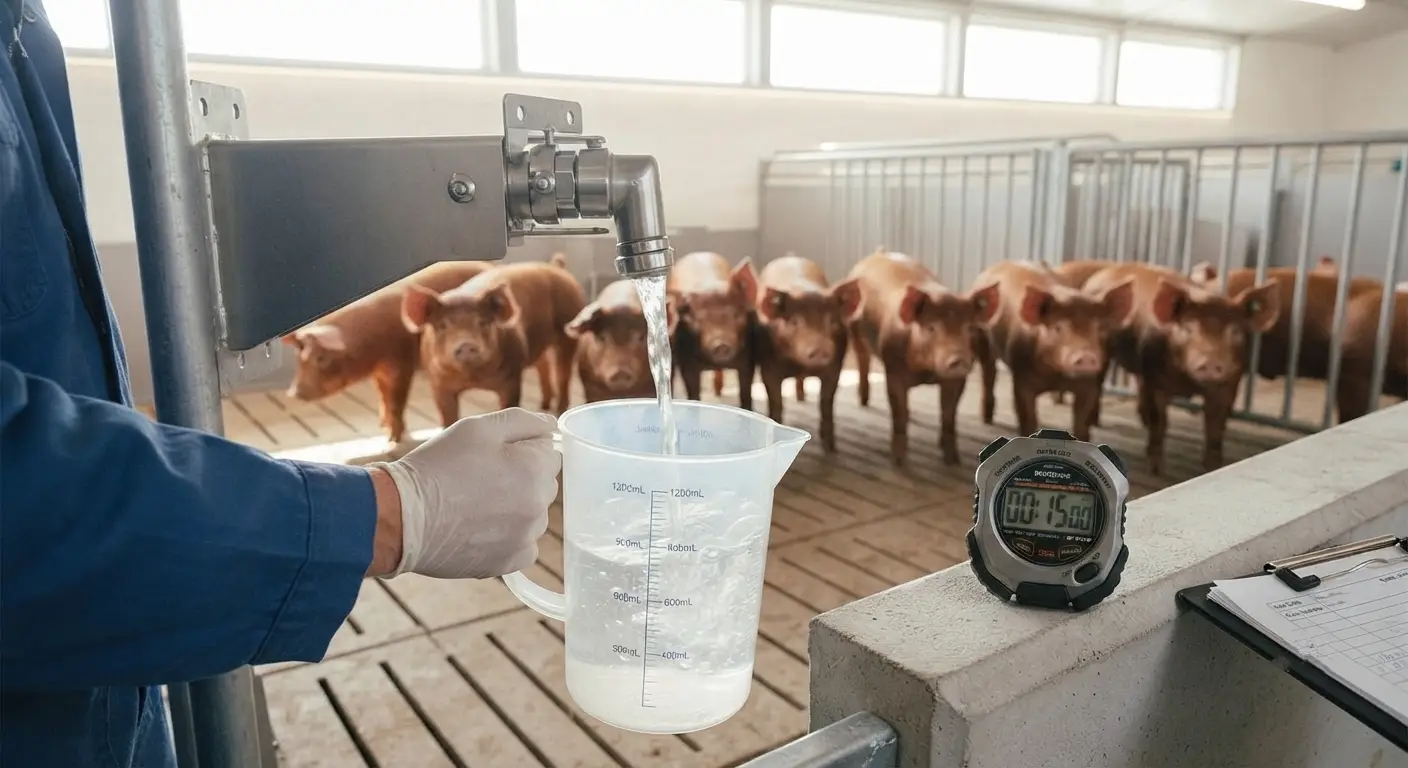
Measuring flow rate: A simple but essential monitoring practice — hold a graduated container (a marked plastic bottle or measuring cup) under the drinker nipple and time how long it takes to fill a known volume. A 1-liter bottle filled in 60 seconds indicates exactly 1,000 mL/min. This test takes approximately 30 seconds per drinker and immediately quantifies whether the drinker is meeting its specification for the pig’s current weight class.
Part 3: Drinker-to-Pig Ratio — Access Frequency and Competition
Why Flow Rate and Ratio Work Together
A drinker delivering the correct flow rate but shared among too many pigs creates water access restriction through competition — pigs lower in the social hierarchy are displaced from drinkers by dominant individuals during the peak drinking periods immediately after feeding, obtaining fewer and shorter drinking bouts even though the drinker itself is functioning correctly.
Minimum Drinker Ratios
| Stage | Minimum Nipple Drinkers per Pen | Maximum Pigs per Nipple Drinker |
|---|---|---|
| Weanling | 2 per pen (regardless of group size up to 12) | 10 |
| Grower | 2 per pen (regardless of group size up to 15) | 10–12 |
| Finisher | 2 per pen (regardless of group size) | 10–12 |
| Gestating sow (group housing) | 1 per 10 sows minimum | 10 |
| Lactating sow (farrowing crate) | 1 per crate + 1 creep drinker for piglets | — |
| Boar | 1 per individual pen minimum | — |
The two-drinker minimum regardless of group size is a reliability requirement as much as a competition management requirement — with only one drinker per pen, any single drinker malfunction leaves the entire pen without water access until the malfunction is discovered and repaired. With two drinkers, a single malfunction is covered by the remaining functional drinker, providing a safety buffer that the twice-daily inspection protocol (detailed later in this article) can identify and correct without the entire pen experiencing water deprivation.
Drinker Height Positioning
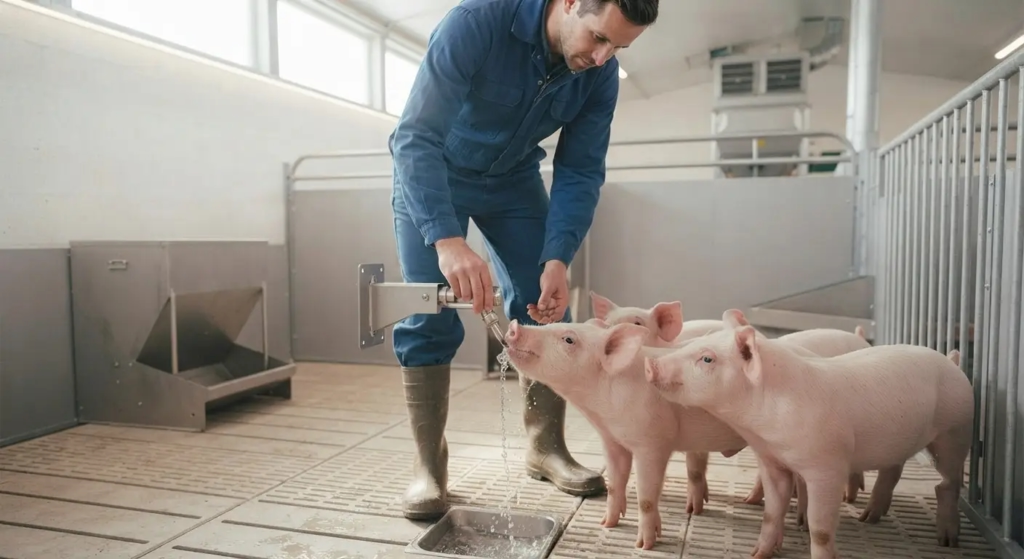
As detailed in water system management guidance elsewhere in this series, drinker height directly affects both water delivery efficiency and water wastage. The target height — nipple tip at approximately eye level of the pig, or slightly above — positions the pig’s head in the optimal posture for receiving water with minimal spillage. Drinkers positioned too low produce the incorrect drinking posture (pig reaching downward, water flowing out of the upturned lip corners rather than being swallowed) that simultaneously increases water spillage onto the floor and reduces the effective water delivery per drinking bout.
Drinker height must be adjusted as pigs grow — a grower pen receiving pigs at 25 kg and retaining them until 60 kg should have drinkers raised at least once during that weight range to maintain the correct height-to-pig relationship. Failure to raise drinker height as pigs grow is one of the most common and most consistently overlooked water system management failures in commercial piggeries.

Part 4: Water Quality — The Often-Neglected Dimension
Why Water Quality Affects Intake
Water palatability directly affects voluntary water intake. Pigs offered water of poor palatability — elevated mineral content, bacterial contamination, algal growth, or chemical odor from source water or pipe materials — drink measurably less than pigs offered clean, fresh, palatable water of equivalent physical availability. This palatability-driven reduction in water intake produces the same feed intake depression as mechanical water restriction, through the same osmotic and thermal regulation mechanisms.
Key Water Quality Parameters
Bacterial contamination: Fecal coliform count (E. coli as the indicator organism) should be below 1 CFU/100 mL for drinking water — the standard for human potable water is appropriate for pig production water given the direct connection between water quality and enteric disease challenge. Bacterial contamination of drinking water is a route for Salmonella, E. coli, Campylobacter, and other enteric pathogens that compound any feed intake depression with gastrointestinal disease.
Total dissolved solids (TDS): Elevated TDS — from high mineral content, particularly sulfates, nitrates, and sodium — reduces palatability and can produce osmotic effects that reduce effective water uptake even when pigs drink adequate volume. General guidance: TDS below 1,000 mg/L is acceptable; 1,000–3,000 mg/L is marginal and may reduce performance; above 3,000 mg/L is generally problematic for pig production.
Iron content: High iron (above 0.3 mg/L) produces characteristic reddish-brown discoloration of water and pipe staining, with a metallic taste that reduces palatability. High-iron borehole water is common in many parts of West and Central Africa and should be treated (typically through aeration and filtration to oxidize and remove dissolved iron) before use as production water.
Nitrates: Elevated nitrate content — from agricultural runoff, septic system contamination, or naturally occurring geological sources — is both a health concern (nitrate is converted to nitrite in the gastrointestinal tract, which can cause methemoglobinemia at very high levels, particularly in neonates) and a palatability reducer at moderate levels. Nitrate above 44 mg/L (10 mg/L as nitrate nitrogen) in drinking water is concerning.
Temperature: Pigs prefer water at temperatures between 10–20°C. Water from borehole sources at ambient groundwater temperature is typically within this range in most West African conditions. Surface water sources in direct sun or water sitting in exposed pipelines and header tanks can reach temperatures of 35–45°C during peak heat periods — temperatures at which water consumption is measurably reduced even when pigs are thirsty, both from thermal aversion and from the reduced thermoregulatory benefit of hot water relative to cooler water.
Water Quality Monitoring
Basic on-farm assessment:
- Visual clarity (turbidity) — water should be visually clear without suspended particles
- Odor — water should have no strong chemical, sulfurous, or biological odor
- pH — test strips provide rapid pH assessment; target 6.5–8.5
- Temperature at the drinker during peak heat hours
Laboratory testing: A basic water quality panel (bacterial count, TDS, iron, nitrate, pH) from a water testing laboratory should be conducted at minimum annually, or whenever production performance issues emerge that might be connected to water quality changes — particularly following:
- Extended dry season periods when borehole water levels drop and mineral concentration potentially increases
- Heavy rainfall events that might introduce surface contamination into borehole water
- Changes in local agricultural practice in the watershed that affect nitrate runoff
- Any unexplained increase in gastrointestinal disease incidence
Part 5: The Daily Monitoring Discipline — Catching Problems Before They Become Performance Events
The Most Expensive Water Problems Are the Ones Not Caught Within the Day
A nipple drinker that blocks at 08:00 and is not discovered until the following morning’s round has left 10 pigs without water for approximately 22 hours. At the intake reduction figures documented earlier (25% of ad libitum water → 25–35% of ad libitum feed intake), 22 hours of complete water deprivation for 10 finisher pigs represents:
- 10 pigs × 2.5 kg feed intake/day × 70% reduction = 17.5 kg less feed consumed
- 10 pigs × 800 g/day ADG × 70% reduction × 0.92 days = 5.1 kg less weight gain
- Recovery tail: 3–5 days of reduced intake after water access is restored
- Total production impact of one missed blocked drinker over 5 days: approximately 25–30 kg of foregone weight gain
At XAF 2,000/kg live weight value, a single undetected blocked drinker for 22 hours costs approximately XAF 50,000–60,000 (USD 83–100) in foregone production — from one drinker, on one day, that a 30-second flow rate check during the morning round would have caught.
The Twice-Daily Check Protocol
What to check:
- Activate every nipple drinker manually by pressing upward on the nipple — flow must begin within 1 second of activation. No flow = blocked; delayed flow = low pressure requiring investigation; continuous flow without activation = stuck open, requires immediate attention
- Observe the flow for 5–10 seconds — verify it appears normal and not reduced
- At each check, observe pigs in the pen for behavioral indicators of water restriction: clustering around drinkers, excessive pushing and competition at drinkers, unusual restlessness, reduced lying proportion, unusual vocalization
When to measure flow rate (monthly minimum, or when behavioral indicators are observed):
- Hold a 1-liter container under the activated nipple for 60 seconds
- Compare measured flow rate to the target for the current pig weight class
- Adjust pressure or identify the cause of inadequate flow if the measured rate is below the minimum specification
The record: Log each inspection with date, time, any drinker issues identified, and the action taken. This record serves two functions: it creates accountability for inspection frequency (a log that shows gaps longer than 12 hours between entries indicates an inspection discipline problem), and it creates a maintenance history that allows identification of chronic problem drinkers that require replacement rather than repeated temporary repair.
Part 6: Water Management Across Production Stages — Stage-Specific Priorities
Weanling Stage — The Highest-Risk Period for Water-Mediated Performance Loss
Post-weaning is simultaneously the period of highest water requirement relative to body size and the period of most disrupted drinking behavior. Piglets that have been nursing (obtaining water through milk) must transition to independent drinking from an unfamiliar drinker mechanism, in an unfamiliar pen, while experiencing the multiple stressors of weaning. During this transition, water intake is frequently inadequate even when drinkers are functioning correctly — because the behavioral learning curve of independent drinker use takes several days to complete.
Management interventions:
- Position drinkers at height within the lower bound of the recommended range for weanling size — even slightly low for the pig’s weight is better than too high during the initial days post-weaning when piglets are still learning drinker mechanics
- Place one drinker with flow markedly higher than minimum specification in a newly weaned pen for the first 3–5 days — pigs learn to use drinkers partly by hearing and seeing other pigs drinking, and a higher-flow drinker that produces more audible water flow helps attract piglets to the water source during initial orientation
- Wet-dry feeders that combine feed and water at the same location reduce the behavioral barrier to simultaneous feeding and drinking, supporting adequate hydration during the highest-stress transition period
Finisher Stage — The Highest Financial Consequence of Flow Rate Error
The financial consequence of inadequate flow rate is highest in the finisher stage because:
- Daily feed intake is highest (2.5–3.0 kg/day per pig) — each percentage reduction in intake is more feed in absolute terms than at lighter weights
- Daily feed cost is therefore highest — each percentage reduction in intake is more money in absolute terms
- Body weight gain value is highest — each gram of foregone daily gain represents the highest monetary value at close-to-market weights
This stage therefore justifies the most rigorous flow rate monitoring and the most immediate response to any identified flow rate shortfall.
Lactating Sow — The Cascade Multiplier
As discussed in Part 1, the lactating sow’s water restriction consequences cascade through the neonatal piglet population, multiplying the direct production cost of sow water inadequacy by the number of affected piglets per litter and the number of farrowings affected per year.
Practical priority: The lactating sow drinker should be the first drinker checked in any monitoring round, and the flow rate specification (minimum 1,500 mL/min, target 2,000 mL/min) should be verified at every drinker position with the direct measurement approach, not assumed from visual inspection of flow.
Part 7: The Financial Summary — Water Management as a Production Investment
Building the Annual Value Case
At a 100-sow farm with 500 finisher pigs annually, the financial value of correct water management (versus a farm with chronic, undetected flow rate inadequacy at 70% of specification):
Feed intake impact (finisher stage, 70% of spec flow rate → 85% of voluntary intake): 500 pigs × 75 kg gain × (1 ÷ 0.85 adjusted FCR – 1 ÷ standard FCR) = additional feed consumption from worsened FCR With FCR worsening from 2.65 to 2.88 (8.7% deterioration from 15% feed intake reduction): 500 × 75 × (2.88 – 2.65) = 8,625 kg additional feed 8,625 × XAF 310/kg = XAF 2,673,750 (USD 4,456) in additional annual feed cost
Days to market extension (from 15% reduced daily gain): Additional days per pig: 75 kg ÷ (0.85 × 800 g/day) – 75 kg ÷ 800 g/day = 117 – 94 = 23 additional days 500 pigs × 23 days × XAF 800 fixed cost/pig-day = XAF 9,200,000 (USD 15,333) in additional annual fixed cost from extended throughput time
Total annual cost of chronic flow rate inadequacy at 70% of specification: XAF 2,673,750 + XAF 9,200,000 = XAF 11,873,750 (USD 19,790) per year
Annual cost of the monitoring program that prevents it: Twice-daily 30-minute inspection rounds × 365 days × labor cost of XAF 1,500/hour = XAF 547,500 (USD 913) per year in inspection labor
Return on the monitoring investment: 21.7:1 — for every XAF 1 invested in consistent drinker monitoring, XAF 21.70 in production loss is prevented at this scale and flow rate scenario.
This is not a theoretical extreme scenario. It describes a realistic consequence of the single most common water system management failure in West African commercial piggeries — nipple drinkers that were correctly calibrated at installation but were never adjusted as the pig population grew heavier, or were never monitored for the gradual scale and sediment accumulation that reduces flow rate over months of use.
Summary
Water is the nutrient that most directly limits feed intake when restricted, and the one that most rapidly and measurably degrades production performance when its delivery infrastructure — flow rate, drinker ratio, height positioning, supply pressure, water quality — operates below specification. Its cheapness per liter creates a management blind spot: the ingredient that costs almost nothing to provide at specification becomes extraordinarily expensive when provided below specification, measured in the feed intake depression, FCR deterioration, and extended days-to-market that inadequate water delivery produces.
The management response is proportionally simple: twice-daily inspection of every drinker, monthly flow rate measurement against weight-class-specific specifications, annual water quality testing, and the height adjustment discipline that maintains drinker positioning as pigs grow. None of these activities require capital investment. All of them require only the consistent, structured management attention that converts a functioning water delivery infrastructure into one that actually delivers the performance benefit its correct design promises.
The feed formulation precision that the nutrition cluster in this series works toward is fully realized only when the water system that enables that feed to be consumed is delivering water at specification, every day, to every pig in every pen. Water management is not the precondition of good nutrition — it is nutrition.