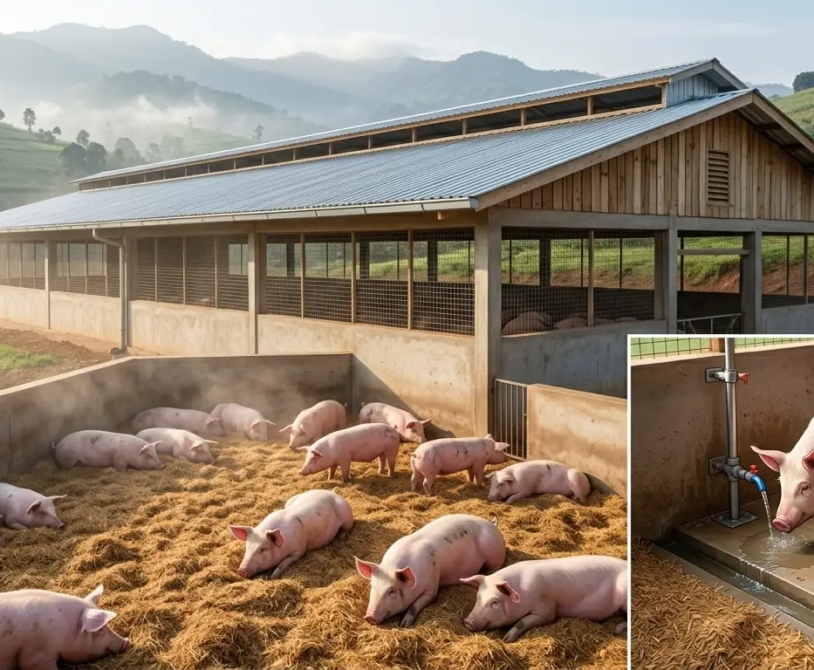
Water is the most important nutrient a pig consumes, and the one most consistently undervalued in farm design. A finishing pig at 80 kg live weight drinks 8–12 liters per day. A lactating sow with a litter of 12 piglets drinks 25–35 liters per day. A 100-sow farm at full production — breeding sows, nursing sows, weanlings, growers, and finishers — requires 1,500–3,000 liters of clean, fresh water delivered to every drinking point, at the correct flow rate, every day without interruption.
That requirement is not optional. Water withdrawal above 12 hours at ambient tropical temperatures begins suppressing feed intake within 24 hours. Voluntary feed intake drops 3–4% for every hour of water access restriction above 12 hours. A pig that drank restricted water for 24 hours at 32°C ambient temperature will eat measurably less feed for 3–5 days after water access is restored — losing weight gain and worsening FCR throughout that period, even though the water restriction itself has ended.
The design of the water delivery system — which type of drinker, what flow rate, how many drinkers per pig, at what height, in what position relative to the pen’s functional areas — determines whether each pig in each pen has consistent, unrestricted access to clean water. It also determines how much water is wasted: water that misses the pig, wets the floor, increases litter moisture beyond the aerobic threshold, and drives the ammonia accumulation that the ventilation system then must remove.
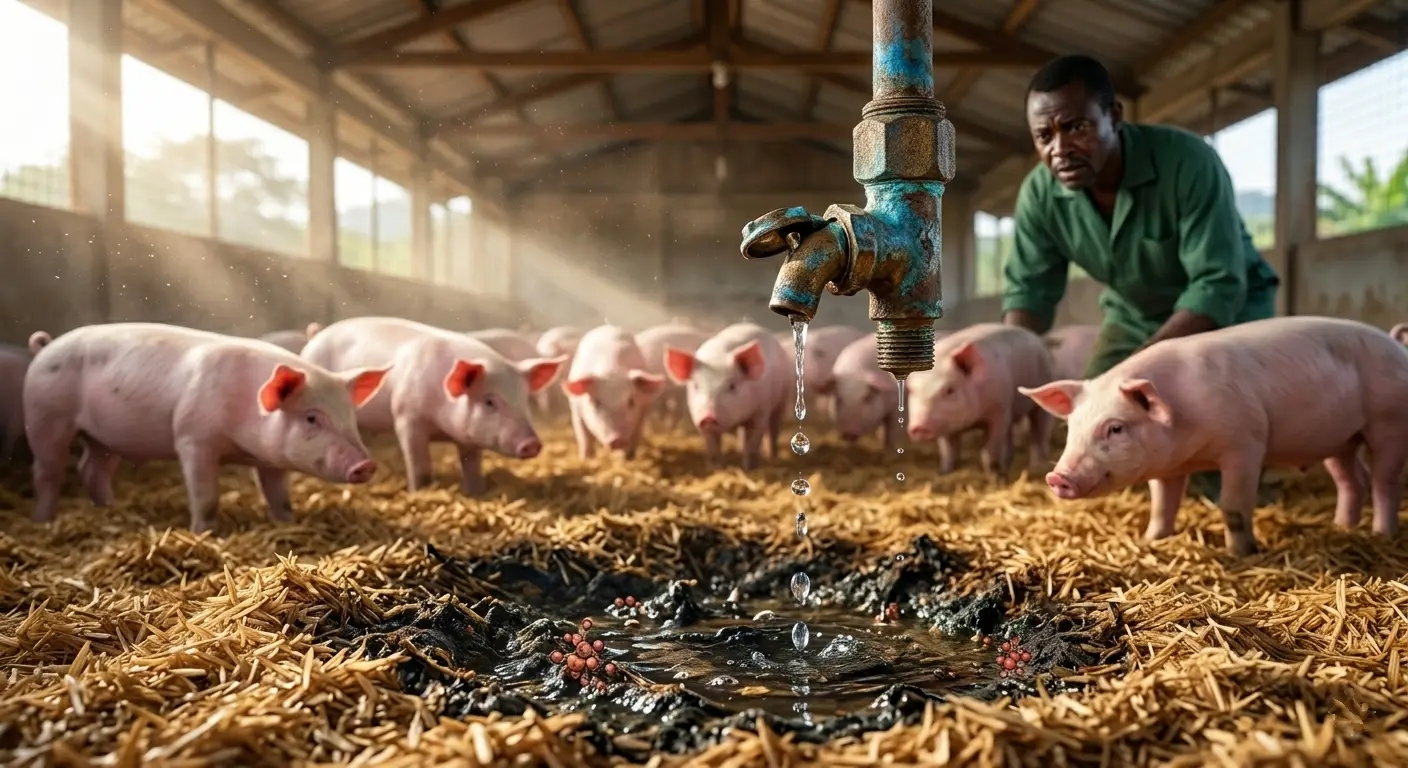
Water waste in commercial piggeries is not a minor inefficiency. A single poorly adjusted nipple drinker flowing at 20 mL/minute — twice the standard rate — deposits 28.8 liters per day onto the floor or litter below it. In a pen of 20 pigs with 4 drinkers, systematic drinker malfunction can waste more than 100 liters per day in that pen alone. Multiplied across a 100-sow farm with multiple pens, water waste from drinker mismanagement can exceed 1,000 liters per day — equal to the drinking water requirement of 80–100 pigs — flowing into manure channels and litter rather than into pig bodies.
This article compares nipple drinkers and water troughs across all the dimensions that determine system performance: water efficiency, hygiene, pig behavior and access, installation and maintenance, and production-stage suitability.
How Pigs Drink: The Behavioral Foundation of Drinker Design
Before comparing delivery systems, understand what pigs require from a water source — because drinker design that works with pig drinking behavior delivers water efficiently, and a design that works against it wastes water and creates behavioral frustration.
Pig Drinking Behavior
Pigs are not casual drinkers who sip continuously throughout the day. They drink in concentrated bouts — typically 5–15 drinking events per pig per day, each lasting 30–90 seconds, consuming 0.5–2.0 liters per bout depending on age, ambient temperature, feed intake, and physiological state.
The drinking sequence at a nipple drinker:
- The pig approaches the drinker, aligns its snout with the nipple at slightly below mouth height
- The pig grasps the nipple with its lips and applies upward pressure to activate the spring-loaded valve mechanism
- Water flows from the nipple at the drinker’s set flow rate
- The pig drinks, receiving some water and spilling some from the corners of the mouth
- The pig releases the nipple, holds water in its mouth for a moment, and swallows
- The pig returns for another activation or moves away
Water spillage is inherent to nipple drinking. A pig cannot drink from a nipple drinker without some spillage — water exits the nipple faster than the pig can swallow it, and the upward angle of the nipple causes some water to run along the pig’s snout rather than directly into its mouth. The question is not whether spillage occurs but how much — and where it falls.
The drinking sequence at a water trough:
- The pig approaches the trough, lowers its snout to the water surface
- The pig submerges its snout 1–3 cm below the water surface and draws water in by suction
- Swallows, raises its head, and returns for more
Trough drinking produces less spillage than nipple drinking — the pig drinks more efficiently because the water-to-mouth geometry is more favorable. However, the trough’s open water surface creates different hygiene challenges (contamination, algae growth, disease transmission between animals) that nipple drinkers avoid.
Nipple Drinkers: Complete Technical Assessment
How Nipple Drinkers Work
A nipple drinker (also called a bite drinker or push drinker) consists of a spring-loaded stainless steel nipple valve mounted in a threaded body that screws into a supply pipe or individual mounting bracket. When the pig pushes the nipple upward with its snout, it compresses the spring and opens the valve — water flows through the nipple until the pig releases it.
The critical engineering variable is flow rate — the volume of water delivered per minute of nipple activation. Flow rate is determined by the water supply pressure and the nipple valve’s internal orifice diameter.
Target flow rates by production stage:
| Stage | Target Flow Rate | Reason |
|---|---|---|
| Neonatal piglets (creep drinker) | 200–300 mL/min | Low — small mouths cannot handle high flow; spillage minimized |
| Weanlings (7–15 kg) | 300–500 mL/min | — |
| Weanlings (15–25 kg) | 500–700 mL/min | — |
| Growers (25–60 kg) | 700–1,000 mL/min | — |
| Finishers (60–110 kg) | 1,000–1,500 mL/min | Highest requirement: lactation drives peak water intake |
| Dry/gestating sows | 1,000–1,500 mL/min | — |
| Lactating sows | 1,500–2,000 mL/min | Low — small mouths cannot handle high flow; spillage is minimized |
| Boars | 1,000–1,500 mL/min | — |
The consequences of incorrect flow rate:
Flow rate too low: The pig must activate the nipple repeatedly to obtain adequate water volume per drinking bout. This increases time at the drinker, increases queuing competition, and frustrates pigs — particularly subordinate animals who are displaced by dominant pen-mates. Research consistently shows that inadequate nipple flow rate reduces total daily water intake, which reduces feed intake, which reduces growth rate, and worsens FCR.
Flow rate too high: Water exits the nipple faster than the pig can swallow it, increasing spillage dramatically. A 2,000 mL/min nipple in a grower pen (target 800 mL/min) delivers more than twice the water the pig can drink per activation — the excess falls on the floor or litter below the drinker.
Nipple Drinker Height: The Most Commonly Incorrect Specification
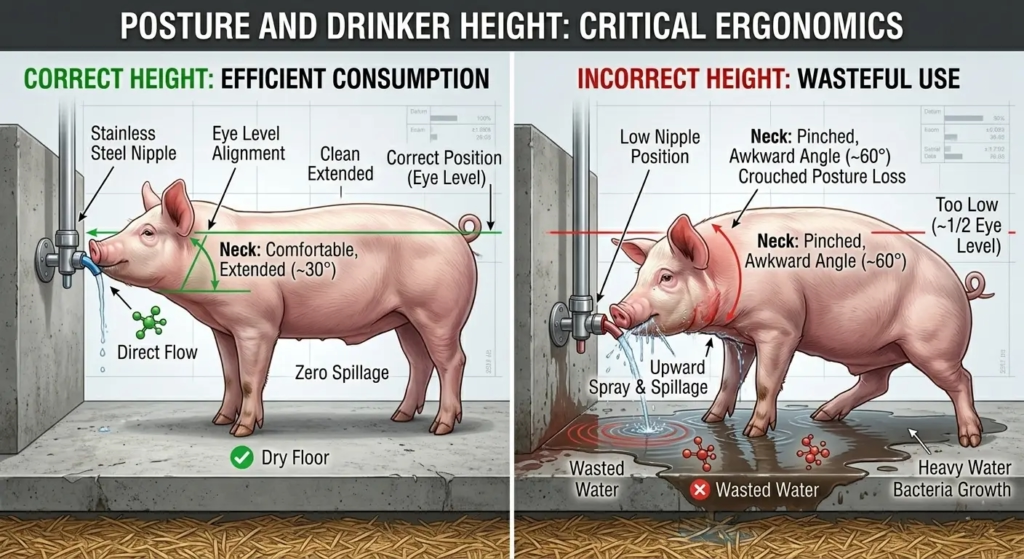
The height of the nipple drinker above the floor is the specification most frequently set incorrectly in West African commercial piggeries — and the one most directly responsible for water waste from nipple drinkers.
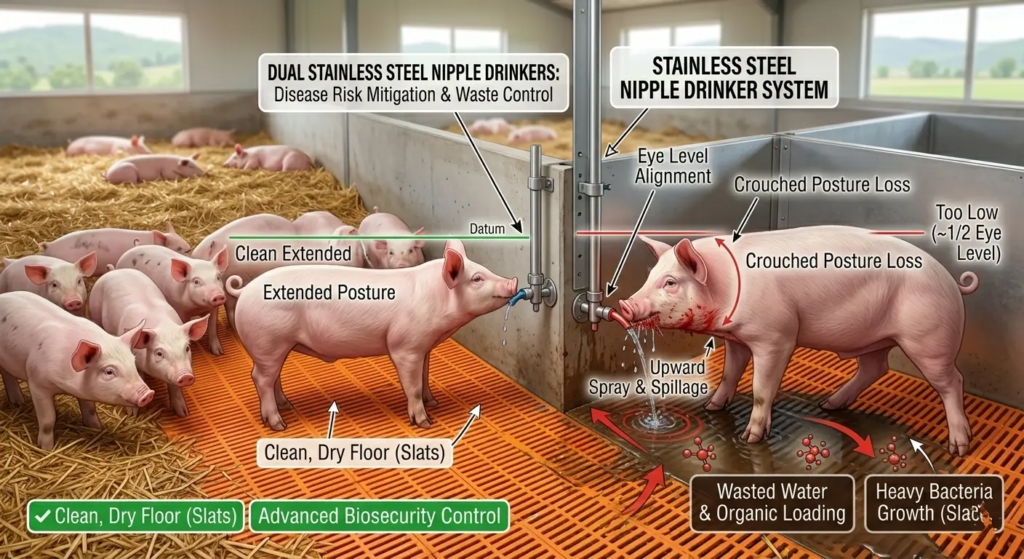
Why height matters: A nipple drinker positioned at the pig’s shoulder height or above requires the pig to extend its neck upward to reach the nipple. In this posture:
- The water flows out of the nipple at a downward angle into the pig’s mouth and down its throat — minimal spillage
- The pig’s body is positioned with its back legs further from the drinker — any spillage falls on floor area rather than directly under the pig
A nipple drinker positioned too low — below the pig’s chest height — requires the pig to lower its head and push the nipple upward from below. In this posture:
- Water flows from the nipple at an upward angle, immediately contacting the upper palate and exiting from the corners of the mouth
- The pig’s body is positioned directly below the drinker — spillage falls on the pig’s own chest and directly onto the floor or litter immediately beneath it
The target nipple height: Nipple tip positioned at a height equal to the pig’s eye level or slightly above — approximately:
| Stage | Nipple Height Above Floor |
|---|---|
| Weanlings (7–15 kg) | 15–20 cm |
| Weanlings (15–25 kg) | 20–25 cm |
| Growers (25–60 kg) | 25–40 cm |
| Finishers (60–110 kg) | 40–55 cm |
| Gestating sows | 55–70 cm |
| Lactating sows (farrowing crate) | 55–65 cm |
Adjustable nipple drinker mounts — brackets that allow vertical position adjustment without replumbing — are the most cost-effective solution for pens that will house pigs across a significant weight range. A grower pen housing pigs from 25 kg to 60 kg needs drinker height adjustment at least once during the growth period.
Nipple-to-Pig Ratio: How Many Drinkers Per Pen
Minimum ratio: 1 nipple drinker per 10–12 pigs in grower and finisher pens.
Below this ratio, competition for drinker access increases significantly during peak drinking periods (immediately after feeding). Subordinate pigs — the animals most likely to be growth-limited — receive the least drinking access in competitive pen situations.
The recommended installation: 2 nipple drinkers per pen, regardless of group size up to 15 pigs, because even with adequate ratio-based access, having only one drinker creates a single-point failure. When the single drinker blocks, jams, or becomes inaccessible, all pigs in the pen are without water.
Placement within the pen: Position nipple drinkers at the rear of the pen — in or adjacent to the natural dunging area. This placement serves two purposes: drinker spillage falls in the area where the pigs already deposit urine (reducing the additional wetting effect in the lying area), and the drinking activity is separated from the lying activity that characterizes the front of the pen.
Nipple Drinker Maintenance
The most common nipple drinker failure modes in West African commercial piggeries:
Blocked nipple (valve stuck closed): Mineral scale, debris, or corrosion prevents the valve from opening. Pig’s nose the drinker repeatedly without obtaining water, eventually abandoning it. Detection: check by manually activating each nipple during the daily walk-through; a nipple that does not flow when pressed should be replaced immediately.
Stuck-open nipple (valve stuck open): The spring or valve seat fails, allowing continuous water flow whether or not a pig is present. The pen litter or floor around the drinker becomes saturated. Detection: Look for wet zones beneath each nipple position during daily observation.
Incorrect pressure delivery: A supply pipe with insufficient diameter, excessive friction loss, or undersized header tank delivers inadequate pressure to the nipple — flow rate falls below the target. Measurement: hold a graduated container under the nipple for 30 seconds; multiply by 2 for mL/minute flow rate. Compare to the target for the pig’s weight class.
Nipple inspection frequency: Weekly inspection of every nipple drinker in every pen is the minimum maintenance standard. In deep litter systems where wet zones around drinkers directly compromise litter quality, daily inspection is appropriate.
Water Troughs: Complete Technical Assessment
How Water Troughs Work
A water trough is an open container — concrete, galvanized steel, or food-grade plastic — from which multiple pigs drink simultaneously. Troughs are refilled either by a float valve (automatic level maintenance from a pressurized supply), by periodic manual filling, or by a timed fill system that delivers a fixed volume on a schedule.
The Water Efficiency Case for Troughs
Lower inherent spillage: As established in the pig drinking behavior section, trough drinking produces less spillage per liter consumed than nipple drinking — the pig’s natural drinking posture at an open water surface is biomechanically more efficient than at a nipple. This means more of the water delivered to the pen goes into pig bodies rather than onto the floor.
No pressure dependency: A trough filled by a float valve to a fixed water level delivers the same water quality and availability to the pig regardless of supply pressure fluctuations. The pig’s drinking experience is consistent — it finds water at the same level in the same place at every visit. Nipple drinkers in a low-pressure supply system deliver inadequate flow regardless of the pig’s willingness to drink.
Social drinking behavior: Pigs are social animals and prefer to perform activities simultaneously. A trough wide enough for multiple pigs to drink side-by-side reduces the social competition that drives subordinate animals away from water access — a particular advantage in larger group housing.
The Hygiene Problem with Troughs
This is the fundamental limitation of water troughs in commercial pig production: an open water surface that multiple pigs drink from, wallow in, defecate near, and occasionally step in or splash manure into is a disease transmission vehicle that nipple drinkers cannot be.
Fecal-oral transmission: Salmonella, E. coli, rotavirus, and porcine circovirus are all transmitted via the fecal-oral route — from infected pigs’ excreta to susceptible pigs’ mouths. A communal water trough that multiple pigs drink from simultaneously creates the perfect fecal-oral transmission bridge: a pig with active infection contaminates the trough with fecal material; subsequent pigs drink from the same trough and ingest the pathogen.
Algal and biofilm growth: Open trough water surfaces exposed to light support algal growth. The inner surfaces of troughs that are not thoroughly cleaned develop biofilms — complex microbial communities embedded in a polysaccharide matrix that is resistant to routine disinfection. Biofilms harbor Salmonella, Legionella, and other pathogens that survive and multiply in drinking water even when water supply quality is acceptable.
Cooling and wallowing behavior: Pigs in hot conditions will step into troughs, wallow, and defecate in the water if the trough is large enough. This is not a behavioral aberration — it is the pig’s natural thermoregulation response. A wallow trough and a drinking trough are the same object to a heat-stressed pig. Troughs sized or positioned in ways that allow wallowing behavior are a hygiene failure regardless of refill frequency.
Through Design Specifications to Minimize Problems
When water troughs are the preferred system — for specific production stages where their advantages outweigh their hygiene limitations — the following design specifications minimize the disease transmission and contamination risk:
Trough depth: Maximum 15–20 cm water depth. Deep enough to allow snout submersion for efficient drinking. Too shallow to allow wallowing or full immersion of the snout below water level without the pig’s chin contacting the bottom. Too deep to allow a trough-height that prevents a pig from stepping over the edge into the trough.
Trough height above floor: The top edge of the trough should be at the pig’s shoulder height — approximately:
| Stage | Trough Top Edge Height |
|---|---|
| Weanlings | 15–20 cm |
| Growers | 25–35 cm |
| Finishers | 35–45 cm |
| Sows | 45–55 cm |
A trough too low allows pigs to step into it. A trough too high requires the pig to reach up, reducing drinking efficiency and increasing water spillage from the mouth.
Trough width: Maximum 25–30 cm interior width. Narrower than the pig’s shoulder width — so the pig cannot turn in the trough or step both front legs into it.
Trough length per pig: 20–30 cm of trough edge per pig in the group — allowing simultaneous access for the whole group. A 10-pig group requires 200–300 cm of trough length (2–3 linear meters).
Materials:
- Concrete (cast-in-place or precast): durable, easy to clean with pressure washer, no rusting. Interior surface should be sealed with food-safe epoxy coating to eliminate the porous surface that harbors biofilm
- Galvanized steel: durable, easy to clean, but susceptible to rust at weld seams and in acidic pH water; replace when rust appears inside the trough
- Food-grade HDPE plastic (blue or black): lightweight, non-porous, no rust, easy to remove and clean. Most appropriate for small commercial operations where flexibility matters more than permanence
Cleaning schedule: Troughs must be emptied, scrubbed with a stiff brush and food-safe disinfectant, rinsed, and refilled at a minimum of every 48 hours. In hot conditions (above 30°C) or when algal growth is visible: daily cleaning. Automatic trough overflow systems — a small continuous overflow that keeps trough water fresh — reduce biofilm accumulation between cleaning events.
Head-to-Head Comparison by Production Stage
Farrowing Crate
Nipple drinker — recommended. The farrowing crate is the highest-hygiene environment on the farm. An open water surface in a farrowing crate is a contamination risk for neonatal piglets — the most immunologically vulnerable animals on the farm. A nipple drinker positioned at sow shoulder height (55–65 cm) delivers clean, uncontaminated water on demand without creating an open water surface that piglets can contact.
Sow nipple flow rate in farrowing: 1,500–2,000 mL/min. Peak lactation water intake of 25–35 liters per day requires a high flow rate to minimize the time the sow spends at the drinker (time that temporarily restricts piglet access to the udder).
Separate creep drinker for piglets: A small nipple drinker at 10–15 cm height, positioned in the creep area, provides piglet water access from day 5–7 onward. This should be separate from the sow’s nipple — a sow-height nipple that a piglet tries to reach creates the incorrect drinking posture that causes excessive spillage and potential piglet injury from slipping.
Weanling Room
Fully slatted floor + nipple drinker — the standard. Weanling rooms are the highest disease-challenge environment outside farrowing. The stress of weaning — removal from the sow, transport, pen change, feed change — combines with the naive immune status of 21–28 day old pigs to create maximum disease susceptibility. An open trough water surface in this environment is a guaranteed fecal-oral disease amplification point.
The slatted floor removes manure continuously. The nipple drinker delivers clean water from above the slatted surface without creating a wet zone. Together, these elements minimize the environmental challenge at the moment of maximum immunological vulnerability.
Nipple flow rate for weanlings: Start at 300–500 mL/min for the smallest pigs (7 kg) and increase to 700 mL/min by the end of the weanling period (25 kg). An incorrect (too low) flow rate at this stage is a common cause of post-weaning water restriction that exacerbates the post-weaning growth check.
Grower Pens
Nipple drinker in a partially slatted or solid concrete system — recommended. The nipple-to-pig ratio (1:10) is straightforward to achieve, maintenance is simple, and the hygiene advantage over troughs is maintained. Position nipples above the slatted area or concrete drainage slope so spillage flows toward the drain rather than into the lying area.
Wet-dry feeders with integrated nipple drinker: An increasingly common installation in grower pens — the feeder incorporates a nipple drinker inside the feeder throat, so the pig triggers water flow while feeding. Reduces water spillage by directing it into the feed mix rather than onto the floor. Reduces competition by combining feeding and drinking at a single station. XAF 80,000–200,000 (USD 133–333) per wet-dry feeder unit.
Finisher Pens
Nipple drinker in most systems — recommended. The finisher pig (60–110 kg) has an established drinking behavior that makes nipple use efficient and reduces spillage compared to younger pigs still learning nipple mechanics. The primary management issue is maintaining correct nipple height as pigs grow — a finisher that entered the pen at 60 kg and drinks correctly from a nipple at 40 cm will find the same nipple uncomfortably low at 100 kg.
Through drinker as a supplement — justified in large group finisher housing. In pens of 20+ pigs housed in large commercial finisher buildings, a supplemental trough at one end of the pen (in addition to nipple drinkers) provides simultaneous access during peak drinking periods and reduces competition for nipple access. The trough must meet the hygiene specification above (sealed concrete, 48-hour cleaning schedule).
Gestating Sow Pens (Group Housing)
Trough — a legitimate option when hygiene is managed. Group gestating sows are relatively disease-stable compared to weanlings and farrowing sows — their immune systems are mature and they have established pathogen exposure from their time in the herd. A correctly specified trough (20–25 cm wide, 15 cm deep, 25 cm of edge per sow) provides the social drinking opportunity that reduces competition and ensures every sow in the group has adequate water access.
Nipple drinker — essential as the primary system in electronic sow feeding (ESF) systems. In ESF systems where individual sow identification controls automated feeding, nipple drinkers positioned at ESF station exits provide water access as part of the feeding routine without the group competition that trough drinkers create in competitive group housing environments.
Water Waste Quantification: The Financial Case for Correct Drinker Management
Calculating Water Waste from a Single Malfunctioning Nipple
A nipple drinker stuck partially open, flowing at 30 mL/minute (below the threshold that triggers visible pooling but above the correct flow rate of 12 mL/minute, standby leakage):
30 mL/min × 60 min/hr × 24 hr/day = 43,200 mL = 43.2 liters per day per drinker
In a 100-pig finisher house with 10 nipple drinkers, if 2 are stuck at 30 mL/min:
- Additional water wasted per day: 2 × 43.2 = 86.4 liters
- This water falls onto the pen floor or litter
- In a deep litter system: creates wet zones that compromise aerobic decomposition
- In a slatted system, flows into the manure pit, increasing liquid manure volume, requiring disposal
Annual cost of unmanaged nipple leakage (2 drinkers at 30 mL/min in a 10-drinker house):
- Water cost: 86.4 L/day × 365 days × XAF 5/L (borehole pumping cost) = XAF 157,680 (USD 263) per year
- Litter replacement (deep litter systems): 2 additional wet-zone cleanouts per year at XAF 30,000 each = XAF 60,000 (USD 100)
- Reduced pig performance from wet litter ammonia: 5% FCR worsening × 100 pigs × 75 kg gain × XAF 300/kg feed × 2.8 FCR = XAF 315,000 (USD 525) per year
- Total annual cost of 2 malfunctioning nipples: approximately XAF 533,000 (USD 888) per year
Weekly nipple inspection takes approximately 30 minutes for a 100-pig house. At XAF 3,000/day labor cost, the inspection costs XAF 375 per week — XAF 19,500 (USD 33) per year. The return on that investment: XAF 533,000 saved per year from the example above, or a 27:1 return on the inspection labor investment.
Drinker System Design: The Specifications That Prevent Problems
Water Supply Line Sizing
The supply line to any drinker system must deliver adequate pressure and volume to meet peak simultaneous demand, which occurs when all pigs in the pen attempt to drink within a short period after feeding.
Minimum supply pipe diameter by system size:
| Number of Nipples on Circuit | Minimum Pipe Diameter |
|---|---|
| 1–4 nipples | 20 mm (3/4 inch) |
| 5–10 nipples | 25 mm (1 inch) |
| 11–20 nipples | 32 mm (1.25 inch) |
| 21–40 nipples | 40 mm (1.5 inch) |
| 40+ nipples | 50 mm (2 inch) |
Undersized supply lines are a common installation error — they create the low-pressure condition that manifests as inadequate nipple flow rate at the end of the supply circuit, forcing the farmer to over-pressure the system to compensate (which then causes excessive flow at nipples near the supply header).
Header Tank Specifications
A pressurized header tank or break-pressure tank positioned above the pen level creates consistent gravity-fed pressure without the pressure variation that occurs from a direct mains supply. For most West African farm installations where mains or borehole pressure is variable:
Recommended header tank height above pen nipples: 2.0–2.5 meters, providing 0.2–0.25 bar pressure at the nipple, within the design operating range of most commercial nipple drinker valves.
Header tank capacity: minimum 30-minute supply at peak demand rate. For a 100-pig finisher section: 100 pigs × 15 liters/day ÷ 48 peak drinking periods per day × 30 min peak = approximately 50 liters minimum header tank capacity.
Summary
The choice between nipple drinkers and water troughs is not a universal decision — it is a production-stage-specific decision that weighs water hygiene against spillage efficiency, social behavior against individual access, and capital cost against maintenance requirement.
Nipple drinkers deliver clean, hygienic water on demand and prevent fecal-oral contamination of the water supply — making them the correct choice for farrowing, weanling, and high-disease-risk environments. Their failure mode is water waste from incorrect flow rate, incorrect height, and inadequate maintenance — all preventable with weekly inspection and correct initial specification.
Water troughs deliver efficient drinking access for groups of pigs, support natural social drinking behavior, and are independent of supply pressure variation — making them acceptable in group gestation, supplemental finisher access, and outdoor/extensive systems where their hygiene limitations are managed by cleaning frequency. Their failure mode is contamination and disease transmission — manageable with correct trough design and 48-hour cleaning schedules.
The farm that gets both right — nipple drinkers at the correct height, flow rate, and ratio in the high-biosecurity stages; trough supplements in large-group finishing; weekly inspection discipline for every nipple on every supply line — is the farm where water is a production input rather than an operational problem.
Water goes in pigs. Not on floors.