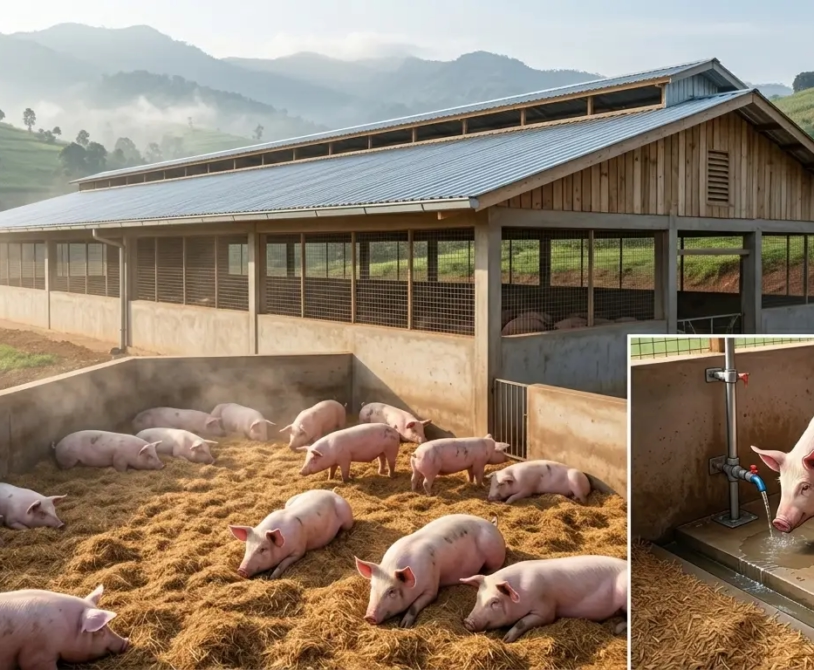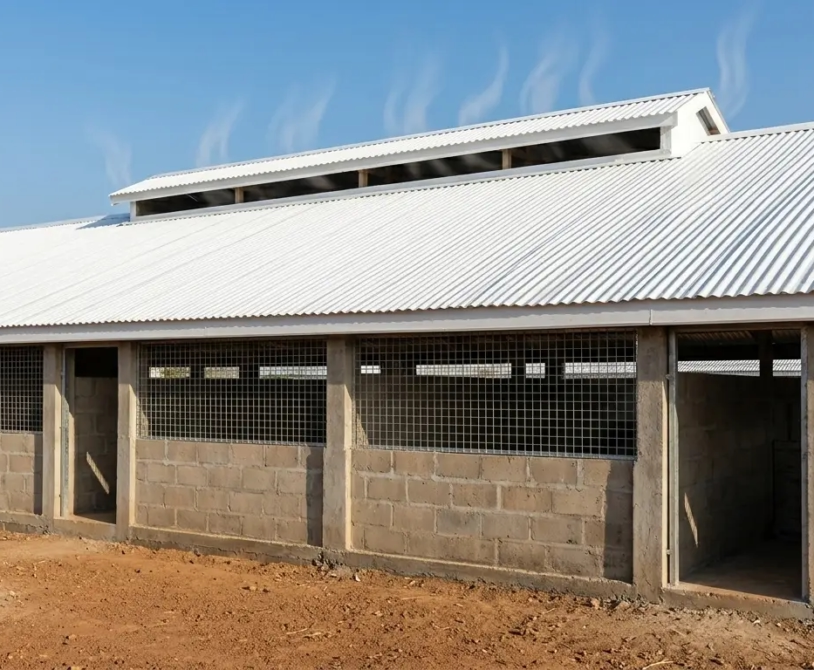
Lameness is the third most economically significant health problem in commercial pig production globally, behind reproductive failure and respiratory disease. It costs the industry billions in treatment, reduced growth performance, premature culling, and sow reproductive losses. And unlike most disease problems, whose primary cause is pathogen challenge, lameness is primarily an infrastructure problem. Its most common cause is the floor.
The floor a pig stands on for its entire productive life — whether it is born on it in the farrowing crate, weaned onto it, grown on it, or bred on it as a sow — determines the wear pattern on its hooves, the angle stress applied to its pasterns and fetlocks, the bacterial challenge its skin and hoof tissue absorbs, and the probability that it will eventually become lame. A correctly designed and maintained floor produces minimal lameness. An incorrectly designed or deteriorated floor produces lameness as predictably as a poorly formulated diet produces nutritional deficiency.
The two dominant commercial flooring systems — solid concrete and slotted (perforated) flooring — each have specific relationships with pig hoof health. Neither is universally superior. Each performs well under specific conditions and poorly under others. Understanding those conditions is the prerequisite to making a flooring decision that protects hoof health for the productive life of the pigs on it.
The Biomechanics of Pig Hoof Wear and Injury
Before comparing flooring types, understand what the hoof requires from the surface it contacts.
Hoof Structure and Function
The pig’s hoof — the claw — is a keratinized structure analogous to the human fingernail, covering the distal phalanges (toe bones) of each digit. The pig walks on two main digits (the third and fourth) with two accessory digits (dewclaws) that contact the ground only when the main claws are worn or when the pig is on soft substrate.
The functional requirements of a healthy claw:
- The sole (bottom surface of the claw) must be thick enough to protect the sensitive corium tissue beneath from pressure injury — approximately 5–7 mm at the toe and 3–4 mm at the heel
- The wall (side surface) must maintain its integrity without cracking or splitting that allows bacterial ingress to the sensitive tissue beneath
- The skin at the coronary band (the junction between skin and hoof) must remain intact — breakdowns here allow Fusobacterium necrophorum, Treponema species, and Dichelobacter nodosus to establish the infections that cause foot rot and digital dermatitis
The two types of floor-related claw damage:
Excessive wear (abrasion): Hard, rough floor surfaces wear the sole and wall faster than keratin can regenerate. Hoof keratin grows at approximately 5 mm per month. A floor rough enough to abrade sole thickness at more than 5 mm per month produces progressive thinning that eventually exposes the corium — the sensitive vascular tissue that, when damaged, causes the acute pain and severe lameness that forces premature culling.
Insufficient wear (overgrowth): Soft floors — deep litter, rubber mats, muddy outdoor areas — provide insufficient abrasion to keep the claw’s natural growth rate in check. Claws grow long and curl, altering the angle of the foot, transferring weight abnormally to the heel rather than the toe, and creating the conditions for foreign body penetration, heel horn erosion, and digit joint infections.
The ideal floor provides moderate, consistent abrasion that matches the hoof’s natural growth rate — maintaining claw length and shape without accelerating wear to the point of thinning.
Solid Concrete Flooring: Performance and Pathology
The Advantages of Solid Concrete
Structural durability: Correctly mixed and cured concrete (minimum 25 MPa compressive strength for pig housing; 30 MPa in high-traffic areas) withstands decades of pig traffic, chemical cleaning, and the mechanical stress of scrapers and pressure washers. A correctly laid concrete floor has a service life of 20–30 years with minimal maintenance.
Flexibility of use: Solid concrete floors are compatible with deep litter systems, partial litter, and fully scraped management. Pen management can change over the building’s life — a deep litter pen can be converted to a scraped concrete system and back — without replacing the infrastructure.
Cost: Solid concrete is the cheapest flooring option in terms of capital investment. A standard concrete floor for a 100 m² pen costs approximately XAF 400,000–700,000 (USD 667–1,167) installed — significantly less than a comparable area of cast iron or plastic slats.
The Hoof Health Problems of Solid Concrete
Abrasion injury from rough texture: Concrete’s abrasive character is appropriate — even necessary — for traction and moderate hoof wear. But concrete is not a uniform material. Its surface texture changes with time, with curing conditions, and with the aggregate mix used in its production.
Freshly laid concrete is often too rough. The exposed aggregate surface of new concrete can abrade pig sole horn at rates that exceed regrowth in the first weeks of occupation. This is particularly damaging in farrowing crates where sows are confined with minimal movement — the same small area of sole contacts the same abrasive surface repeatedly without the movement that distributes wear across the entire sole.
The prescribed remedy: Before introducing pigs, new concrete floors should be treated with 2–3 applications of acid wash (dilute hydrochloric acid at 10%) that dissolves the sharp aggregate peaks at the surface, leaving a smooth but non-slippery texture. Alternatively, the concrete can be left to weather for 4–6 weeks of rain exposure before pig occupancy.
As concrete ages, the opposite problem develops: the cement matrix between aggregate particles erodes through chemical attack from urine, organic acids in manure, and cleaning chemical residues. The aggregate particles become proud of the surface — progressively rougher, more abrasive, and eventually pitted with holes that harbor bacteria and are impossible to disinfect.
Management of aged concrete: Concrete surfaces that have deteriorated to the point of rough, pitted, uneven texture should be resurfaced with a thin bonding screed (2–3 mm of modified concrete or epoxy-based coating) before the surface causes lameness. This resurfacing is significantly cheaper than the lameness losses it prevents.
Slipping on wet concrete: A wet concrete floor without adequate drainage slope and surface texture is one of the most common causes of leg injury in pigs. Sows slipping during mating attempts suffer split claw injuries, fetlock damage, and muscle tears that produce chronic lameness. Growing pigs slipping on wet floors suffer similar injuries at a lower severity.
The non-slip specification for pig housing concrete:
Surface texture must provide a coefficient of friction above 0.5 when wet. This is achieved by:
- Broomed finish: While concrete is still wet, draw a stiff broom across the surface perpendicular to the direction of pig movement, creating parallel grooves 3–5 mm deep and 10–15 mm apart. Provides traction without creating the sharp edges that abrade hooves.
- Grooved finish: Cut parallel grooves 3–5 mm wide and 3–5 mm deep into the cured concrete surface at 50–75 mm spacing. Allows liquid to channel away from the pig’s standing surface while providing slip resistance.
- Diamond pattern: A crosshatched pattern of shallow cuts provides omnidirectional traction — important in turning and mounting areas where pigs move in multiple directions.
Drainage slope: Every solid concrete pig floor must slope a minimum of 2% (2 cm per linear meter) toward the manure drainage channel. Below 2%, urine and wash water pool on the floor surface — creating the wet standing conditions that macerate hoof skin, soften horn, and allow bacterial penetration at the white line (the junction between sole and wall horn).
White Line Disease and Concrete
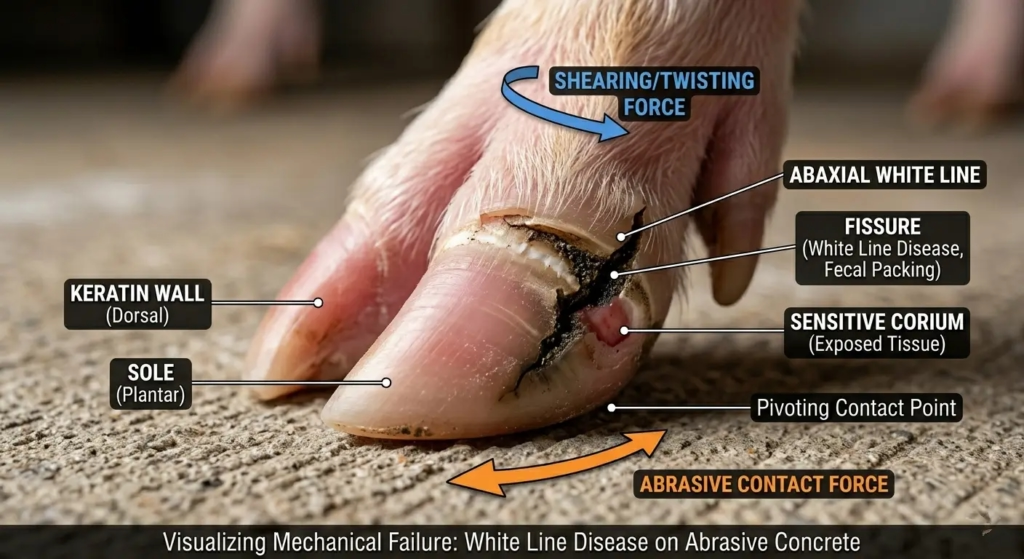
White line disease — separation between the sole horn and the wall horn at the abaxial white line — is the most common specific claw lesion associated with solid concrete flooring. The white line is anatomically the weakest point in the hoof capsule, and it is disproportionately exposed to the mechanical shear forces that occur when pigs turn on hard floors.
Mechanical origin: When a pig turns on concrete, the hoof pivots against the floor. The wall horn, which contacts the floor at its outer edge, rotates relative to the sole horn, which is in contact with the floor across its entire surface. This differential rotation creates shear stress at the white line — the adhesive junction between the two horn types — that progressively loosens the bond between them.
Bacterial sequelae: Once the white line separates, the groove between sole and wall horn fills with manure debris, then with bacteria. Fusobacterium necrophorum — an obligate anaerobe that thrives in manure-contaminated environments — colonizes the separation, producing the necrotic tissue and inflammatory response that causes the severe lameness associated with advanced white line disease.
Prevention: Correct floor texture (not too rough, not smooth), adequate slope for drainage, and early detection during routine hoof inspection can prevent white line infections from advancing to the severe stage. Pigs should be inspected for hoof lesions during each handling event — vaccination rounds, weight assessments, pen movements — and any visible white line separation treated immediately with hoof disinfectant before bacterial invasion occurs.
Slotted and Perforated Flooring: Performance and Pathology
Slotted flooring — floors composed of parallel bars, beams, or plates with gaps between them through which manure falls to a collection pit below — is the dominant flooring system in intensive commercial pig production globally. It eliminates daily manure scraping, reduces ammonia exposure from surface manure accumulation, and provides significantly better hygiene for the pigs’ living surface than solid concrete with poorly drained manure.
Materials Available for Slotted Flooring
Cast iron slats: The traditional material, still considered the performance standard for sow and finisher housing. Cast iron provides a smooth surface that is easy on hooves, high thermal conductivity that keeps the floor cool in hot conditions, and extraordinary durability (30+ year service life with minimal maintenance).
Cost: XAF 45,000–90,000 (USD 75–150) per square meter installed. High capital cost; low lifetime maintenance cost.
Concrete slats (precast): Precast concrete slat panels, typically 100–120 mm wide bars with 20–22 mm slots. Lower cost than cast iron, but significantly heavier and less durable. Concrete slats crack under mechanical impact, develop rough abrasive surfaces as they age, and are difficult to replace individually when damaged.
Cost: XAF 15,000–35,000 (USD 25–58) per square meter installed. More common in West African commercial piggeries than cast iron due to lower capital cost.
Plastic slats (HDPE and polypropylene): Lightweight, non-conductive (important in hot tropical climates where metal floor heat absorption can be significant), and available in a range of surface textures designed to balance traction with low abrasion. HDPE slats can be removed and pressure-washed individually — excellent for farrowing crates and weanling pens where hygiene is the primary concern.
Cost: XAF 25,000–55,000 (USD 42–92) per square meter installed. Increasingly available through agricultural equipment suppliers in Nigeria and Cameroon.
Steel mesh (weld mesh flooring): Heavy-gauge galvanized or stainless steel wire weld mesh, used primarily in farrowing crates and weanling pens. Extremely hygienic — small mesh openings prevent piglet leg fall-through while allowing liquid and fine manure particles to pass. Wire mesh floors are the most demanding surface for sow hooves due to the edge contact of the wires, and must be free of protruding wire ends at all times.
The Hoof Health Advantages of Slotted Flooring
Self-cleaning surface: Manure falling through the slots removes itself from the pig’s living surface continuously. Pigs on well-designed slotted flooring stand on a surface that is mechanically cleaned by their own passage — the action of walking pushes manure through the gaps. This reduces manure-wetness contact time for the hoof wall and skin significantly compared to solid concrete, where manure pools until scraped.
Reduced bacterial challenge at the white line and coronary band: The primary cause of most infectious claw diseases — foot rot, digital dermatitis, heel horn erosion — is prolonged contact between susceptible hoof tissue and manure-contaminated wet flooring. Slotted flooring that removes manure continuously reduces this contact time by 60–80% compared to solid floors with once or twice daily scraping.
More consistent hoof wear: The parallel bar structure of concrete or cast iron slats contacts the sole horn in a regular pattern that distributes abrasion more evenly than aggregate concrete. This consistency reduces the localized wear hotspots that solid concrete creates over irregular aggregate protrusions.
The Hoof Health Problems of Slotted Flooring
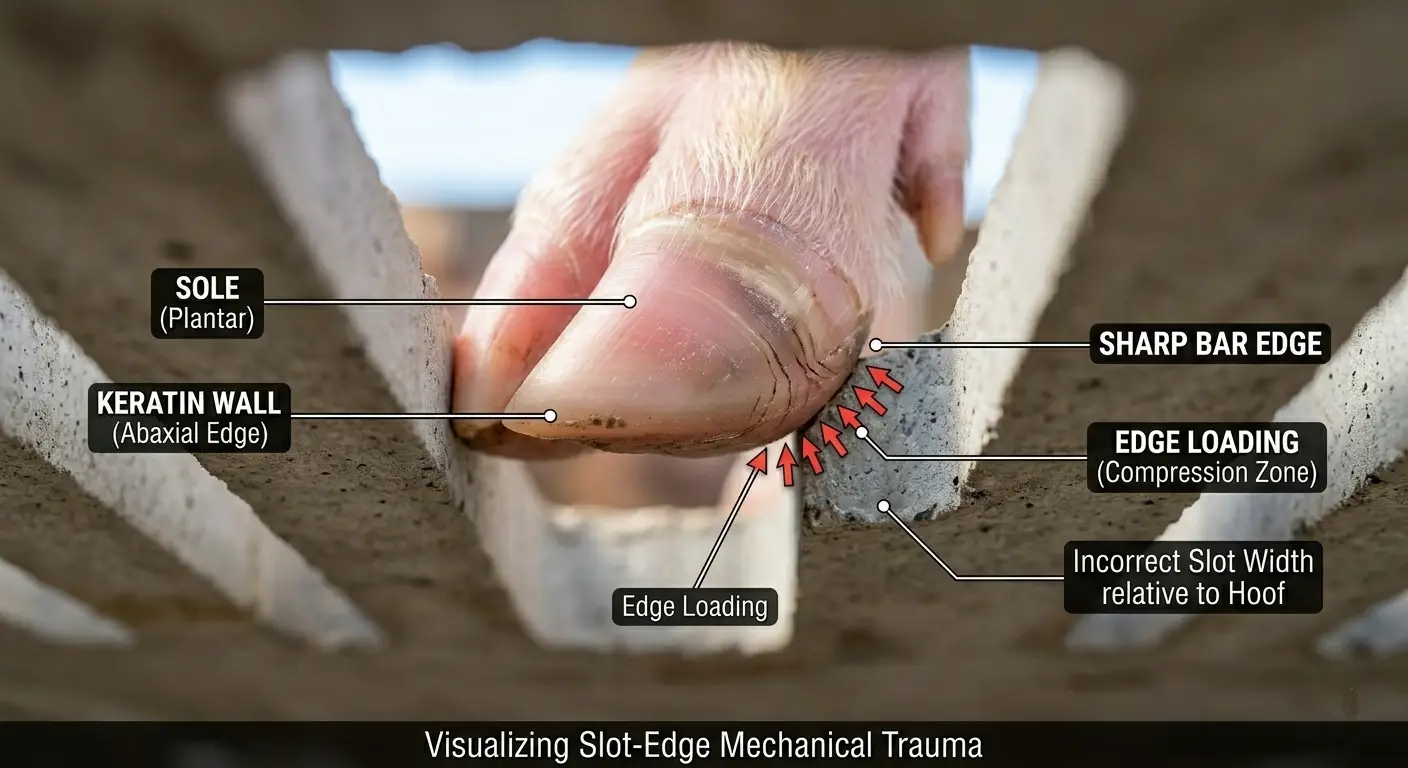
Slot width is the most critical dimension in slotted flooring design. Too narrow, and the manure does not pass freely — the slot fills and the floor behaves like solid concrete with additional edges. Too wide, and the pig’s hoof falls partially through the slot — creating the edge-loading that is the primary hoof injury mechanism of slotted flooring.
Target slot widths by pig size:
| Stage | Pig Weight | Maximum Slot Width | Bar Width |
|---|---|---|---|
| Neonatal piglets | 1.0–1.5 kg | 10 mm | 80–100 mm |
| Weanlings | 7–25 kg | 15 mm | 80–100 mm |
| Growers | 25–60 kg | 20 mm | 90–110 mm |
| Finishers | 60–110 kg | 22 mm | 100–120 mm |
| Sows | 140–300 kg | 20–22 mm | 100–120 mm |
| Boars | 200–350 kg | 20 mm | 110–130 mm |
The edge-loading injury mechanism:
When a pig’s hoof spans a slot and the lateral edge of the claw contacts the bar edge rather than the bar surface, the full weight of the pig is concentrated on a small contact area — the claw edge. This concentrated pressure load creates:
- Bruising of the corium tissue beneath the wall horn at the contact point
- Mechanical separation of the wall horn from the white line (same mechanism as white line disease on solid concrete, but more concentrated)
- Abrasion of the axial (inner) hoof wall surface on the bar edges when pigs move — a form of wear that does not occur on solid floors
Bar edge condition: Slotted bars should have rounded or beveled upper edges — not sharp 90° corners. Sharp edges concentrate loading and abrade hoof tissue. Inspect slotted flooring annually for edge deterioration:
- Cast iron: edges remain consistent; inspect for surface oxidation that creates rough patches
- Concrete slats: edge spalling (chipping) is the most common defect; replace any slat with more than 5 mm of edge spalling
- Plastic slats: edge deformation from repeated loading; replace slats showing visible edge flattening or deformation
Thermal stress from metal slotted floors in tropical conditions:
Cast iron and steel slotted floors absorb solar radiation and ambient heat, reaching surface temperatures of 40–50°C during peak afternoon hours in lowland West African pig houses. A sow or finisher pig forced to stand on a 45°C metal floor for hours experiences significant thermal stress through foot contact — independent of the air temperature that ventilation systems attempt to control.
Mitigation for metal floors in tropical climates:
- Roof design with adequate overhang prevents direct solar radiation from reaching the pen floors
- Evaporative coolers or drip cooling systems that wet metal floor surfaces provide significant temperature reduction through evaporative cooling from the floor surface itself
- Rubber mat overlays on resting areas (not slatted areas) provide thermal insulation between the pig and the metal surface during peak heat periods
- Plastic slat flooring: non-conductive; does not absorb and reradiate heat in the same way; the preferred material for hot-climate commercial operations
Partially Slatted Flooring: The Compromise That Often Performs Best
For most commercial pig housing in West and Central Africa, the optimal floor design is neither fully solid nor fully slatted — it is a partial slat system that assigns different floor types to different functional areas within the pen.
The Pen Functional Zones
Pigs are not uniformly distributed across their pen. They show consistent behavioral preferences for where they perform different activities:
Lying area: Pigs prefer to lie against walls, in groups, on the surface that offers the most thermal comfort — warm solid floors in cool weather, cool slatted or concrete floors in hot weather. This area should be solid concrete or rubber-matted concrete that provides comfortable cushioning for extended lying.
Dunging area: Pigs preferentially defecate and urinate in corners away from their lying area, near pen boundaries, and near drinkers. This is the area where slotted flooring is most valuable — placed where pigs naturally dung, the slats remove manure from the surface at the point where it is deposited.
Activity area: Feeding, drinking, and social interaction occur in the center of the pen and near feeders. This area benefits from a textured, solid concrete surface that provides traction for normal pig movement without the edge-loading risk of slotted flooring.
The Standard Partial Slat Layout
For grower and finisher pens:
- 1/3 to 1/2 of the pen area in slotted flooring at the rear of the pen (the natural dunging area)
- Remainder of pen area in solid textured concrete (the lying and feeding area)
- 2–3% slope on the solid area toward the slatted section — directs liquid flow to the slats rather than pooling in the lying area
For sow gestation pens (group housing):
- Slatted dunging lane (0.8–1.0 m wide) along one or both pen sides
- Solid, textured lying area (1.2–1.5 m wide) between dunging lanes
- Feeder positioned on solid floor with drinker positioned above slatted area (so water spillage from drinking falls through slats rather than onto lying area)
For farrowing crates:
- Sow area: cast iron or plastic partial slat in the rear half (behind the sow’s hindquarters — where she dunges)
- Sow front area: solid rubber mat or textured concrete (where she rests her front legs and chest)
- Creep area: solid, smooth surface — never slatted (neonatal piglet hoof and leg tissue is too fragile for slat edge contact)
Rubber Flooring: The Third Option
Rubber mats and rubber-coated slatted panels are increasingly used in West African commercial pig housing as a welfare and hoof-health intervention — particularly in sow housing where the combination of hard flooring and heavy body weight creates the highest lameness risk.
The biomechanical case for rubber: Rubber provides compressive cushioning that reduces the peak pressure load on the corium during each step. The elasticity of rubber absorbs impact that would otherwise be transmitted directly to the sensitive tissue through rigid horn, analogous to the cushioning function of a shoe on a human foot.
Where rubber adds the most value:
- Farrowing crate sow area (front lying zone)
- Boar pen flooring — boars sustain intense leg loading during mounting
- Gestation stall lying area — sows confined in stalls cannot move away from damaged flooring areas
- Slaughterhouse lairage and loading ramps — the highest-risk acute lameness events occur during handling and transport
Rubber mat specifications:
- Thickness: minimum 15 mm for adequate cushioning; 20–25 mm preferred for sows
- Shore A hardness: 40–60 (too soft compresses completely under pig weight; too hard provides minimal cushioning benefit)
- Surface texture: diamond or stud pattern — provides traction without the edge-abrasion of slotted bar edges
- Cleaning: rubber mats must be lifted, pressure-washed, and treated with approved disinfectants (quaternary ammonium or peroxy compounds) at each cleanout
Cost: XAF 8,000–20,000 (USD 13–33) per square meter for agricultural-grade rubber matting. Justified by the lameness reduction in high-risk areas, not economically necessary throughout the entire pen.
Floor Maintenance: What Determines Whether the Design Performs
Even a correctly designed floor progressively degrades in hoof-health performance if not maintained. Floor maintenance is not optional — it is the management activity that preserves the capital investment in flooring and the productivity that depends on it.
Monthly maintenance protocol:
- Inspect all slotted bars for edge damage, slot bridging (hardened manure spanning the slot), and surface roughness
- Clear any bridged slots with a stiff brush or compressed air
- Inspect solid concrete areas for surface deterioration, cracking, and drainage slope — standing water in any area indicates drainage failure
- Check rubber mats for tears, compression set (permanent compression that eliminates cushioning), and adhesion to the floor below
Annual maintenance protocol:
- Professionally assess concrete surface roughness — if the surface has deteriorated beyond the acceptable range, apply bonding screed
- Replace any slatted panel showing structural cracking, edge spalling above 5 mm, or slot width change from bar breakage
- Pressure wash the entire floor system with 80-bar minimum pressure and approved disinfectant after pen cleanout; allow complete drying before restocking
The Decision Framework: Which Floor for Which Situation
| Situation | Recommended Floor |
|---|---|
| Farrowing crate — sow lying area | Rubber mat on solid concrete or plastic slat with rubber overlay |
| Farrowing crate — sow dunging area | Cast iron or plastic slats (rear half) |
| Farrowing crate — piglet creep | Solid smooth concrete or rubber mat — never slatted |
| Weanling pen | Fully slatted plastic (entire floor) — hygiene priority at this stage |
| Grower pen — lying area | Solid textured concrete |
| Grower pen — dunging area | Concrete or plastic slats (rear 1/3 to 1/2 of pen) |
| Finisher pen — hot climate | Plastic or cast iron slats (better thermal properties than concrete slats) |
| Finisher pen — cool climate | Partially slatted concrete; solid lying area |
| Gestation stall | Rubber mat overlay on concrete; partial slat at rear |
| Gestation group pen | Solid lying area + slatted dunging lane |
| Boar pen | Solid textured concrete with a rubber mat in the service area |
| Loading ramp | Ribbed concrete, 45° rib angle, 3–5 cm ribs at 10 cm spacing |
Summary
The floor is the pig’s environment — more constant and more demanding than any other physical element of its housing. The lameness it causes is not a random disease event; it is a predictable consequence of specific surface characteristics interacting with specific hoof biology under specific management conditions.
Solid concrete excels in capital cost, flexibility, and durability. Its failures — abrasion injury from rough aggregate, slipping on wet surfaces, white line disease from mechanical shear, and manure accumulation in poorly drained areas — are all preventable through correct specification, surface treatment, and drainage design.
Slotted flooring excels in hygiene, manure management efficiency, and bacterial disease challenge reduction. Its failures — edge-loading hoof injury from incorrect slot width, thermal stress from metal heat absorption, and leg trauma from protruding bar edges — are equally preventable through correct slot width specification, material selection for the climate zone, and systematic maintenance.
The partial slat design — solid concrete lying area, slatted dunging area — combines the hoof-health advantages of both systems while minimizing the failure modes of each. For most commercial pig housing in West and Central Africa, this hybrid is the optimal specification.
Design it correctly. Specify it precisely. Maintain it consistently. The pigs that stand on it will tell you whether you got it right — not with words, but with the absence of lameness.