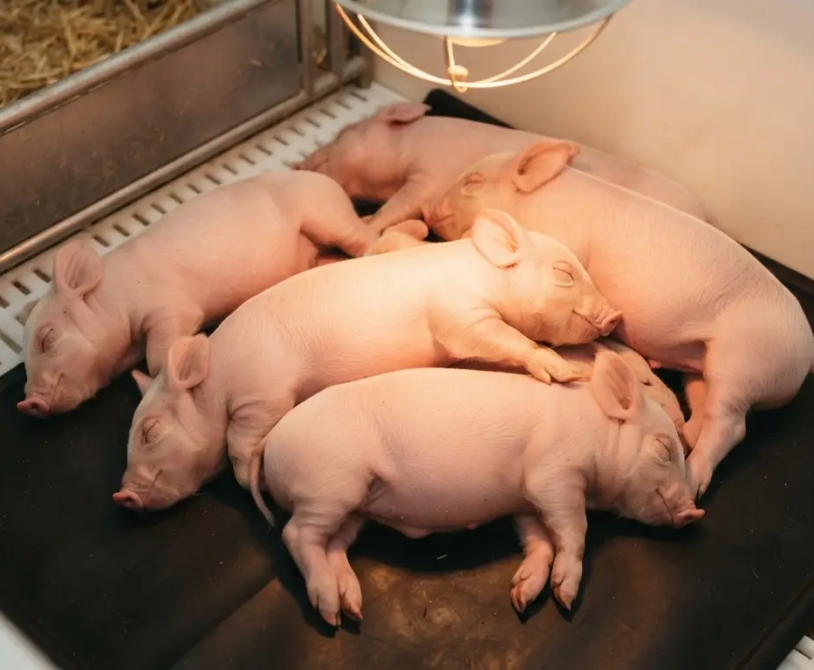
Crushing — the death of a piglet when the sow lies on it, rolls onto it, or shifts her body weight over it — is the leading cause of pre-weaning mortality in commercial pig production globally. Across well-managed commercial herds, crushing accounts for 15–20% of all piglet deaths before weaning. In poorly managed herds with inadequate crate design, insufficient farrowing attendance, and suboptimal creep heating, it can account for 30–40% of pre-weaning losses. At scale, this translates to hundreds of piglets per year from a 50-sow farm — each representing the full reproductive, nutritional, and housing investment of the pregnancy without any market return.
The paradox of crushing is that it is simultaneously the most common cause of pre-weaning mortality and one of the most preventable. Unlike disease-related pre-weaning deaths that require pathogen control, vaccination programs, and biosecurity discipline, crushing prevention is primarily an infrastructure and management question. The correct farrowing crate design, correctly positioned guard rails, adequate creep heating that draws piglets away from the sow’s body, appropriate sow temperament and body condition management, and structured attendance during the highest-risk periods — these interventions, applied together, reduce crushing to the biological minimum that no management system can eliminate.
This guide builds the complete crushing prevention framework: the biomechanics of crushing events (understanding why they happen is prerequisite to preventing them), the crate and guard rail specifications that provide the structural protection, the creep heating management that addresses the behavioral component, the sow-side factors that modify individual crushing risk, and the monitoring and management protocols that target the highest-risk windows in the farrowing and early lactation period.
The Biomechanics of Crushing — Understanding When and Why It Happens
The Three Mechanisms of Crushing Death
Not all crushing deaths occur through the same mechanism. Understanding which mechanism is responsible for crushing events in a specific herd guides the most effective preventive response.
Mechanism 1: Lie-down crushing (the most common)
When a sow transitions from standing to lying, she moves her body weight progressively onto the floor surface — first kneeling on her forelegs, then lowering her hindquarters, then rolling onto her side. During this transition, any piglet in the path of the descending body or between the sow’s body and the crate side rail is exposed to the crushing force of the sow’s body weight — which, at 150–250 kg for a commercial sow, is lethal even if the piglet is in contact with the crushing surface only briefly.
Why lie-down crushing is most common: Sows lie down multiple times per day (approximately 12–20 lying transitions in 24 hours), each transition representing a crushing risk event for any piglet in a vulnerable position. The probability of any individual transition resulting in crushing is low — but the cumulative probability across many transitions over a litter’s nursing period is substantial, particularly in the first 3–5 days when piglets have limited mobility and awareness to avoid the lie-down path.
Mechanism 2: Roll-over crushing
A sow in lateral recumbency that shifts her weight from one side to the other — rolling through a prone position or transitioning between lying sides — can trap a piglet between her body and the floor during the roll, or between her body and the crate side rail.
Mechanism 3: Sudden movement crushing
A sow that reacts suddenly to a stimulus (pain, startling noise, human approach, biting piglet stimulation) may make rapid, uncontrolled movements that trap or contact nearby piglets before they can move clear. This mechanism is more associated with nervous or reactive sow temperaments and is the primary driver of the temperament-related variation in individual sow crushing rates.
The Risk Factors at the Individual Event Level
Piglet position at the time of the sow’s movement: A piglet directly against the sow’s flank or abdomen, or in the narrow zone between the sow’s body and the crate side rail, is at risk during any lying transition. A piglet in the warm creep area, away from the sow’s body, faces no crushing risk during that same transition.
Timing in the production cycle: Crushing risk peaks in the first 72 hours of the litter’s life — when piglets have the least mobility, the least awareness of the sow’s movements, and the least established pattern of retreating to the creep area during the sow’s resting periods. Crushing rate declines substantially after the first week as piglets become faster, more aware of sow movements, and more reliably use the creep area when not nursing.
Time of day: Crushing events are more frequent at night, when reduced ambient light and absent human presence combine with the sow’s normal lying pattern. Studies of time-of-occurrence distributions consistently show a disproportionate number of crushing events between approximately 9 PM and 6 AM — the period when farrowing house attendance is least consistent.
Sow-specific factors: Individual sow crushing rate varies substantially and is partially repeatable across parities — a sow with a high crushing rate in parity 1 is more likely to show a high crushing rate in parity 2 than a sow with a low parity-1 crushing rate. This repeatability indicates that sow-intrinsic factors (temperament, body size and composition, the speed and care with which she transitions to lying) contribute meaningfully to individual crushing risk.
Part 2: Farrowing Crate Design — The Structural Baseline
Why the Farrowing Crate Exists
The farrowing crate’s primary biosecurity and management function — restricting the sow’s movement to allow safe piglet access to the udder and prevent the sow from turning away from or attacking the litter — is well understood. But its primary welfare function, often understated in commercial management literature, is crushing prevention: by physically restricting the sow’s lateral movement and the speed and angle of her lying transitions, the correctly designed farrowing crate reduces the force and unpredictability of lie-down events, giving piglets more time and space to move clear.
The crate does not prevent all crushing — no structural design can entirely prevent a sow from contacting a piglet during a lying transition in the restricted space of a farrowing crate. But correctly designed and maintained crates reduce crushing rates measurably compared to group farrowing systems or inadequately designed crate configurations.
Critical Crate Dimensions
Crate width (the single most important dimension for crushing prevention):
The internal width of the sow confinement zone should be 60–65 cm. This dimension is a balance between two competing requirements:
- Minimum for sow welfare: A crate narrower than 55 cm prevents the sow from moving normally, causes pressure sores and joint problems from prolonged confinement in a too-narrow space, and is inconsistent with acceptable welfare standards
- Maximum for crushing prevention: A crate wider than 70 cm allows the sow more lateral movement during lying transitions, increasing the speed and unpredictability of her lie-down and reducing the effectiveness of the guard rails (detailed below) in providing protective space for piglets
The 60–65 cm range optimizes both welfare and crushing prevention — providing adequate space for the sow while limiting the lateral body movement that is the primary risk factor during lying transitions.
Crate length:
The internal sow zone length should be 200–230 cm. This accommodates a large commercial sow in a comfortable lying position while allowing adequate piglet access to the udder along the sow’s flank.
Crate floor height relative to the creep area:
A slight step-down (50–80 mm) from the sow zone floor level to the creep area floor creates a physical boundary that slightly impedes a piglet from wandering back into the sow zone during resting periods — nudging the piglet toward the protective creep environment during the times when it is not actively nursing. This is a subtle but practically useful architectural detail in farrowing crate design.
Part 3: Guard Rail Specifications — The Most Critical Single Element
What Guard Rails Actually Do
Guard rails — horizontal bars positioned along the sides and sometimes the back of the sow confinement zone within the farrowing crate — are the single most important structural element for crushing prevention. Their function is precise: they create a protected space between the sow’s body and the crate side rail into which a piglet can retreat when the sow begins to lie down, providing a zone where the sow’s body cannot reach due to the physical barrier of the guard rail.
A piglet that has retreated into the gap between the guard rail and the crate side wall — which the guard rail keeps open by preventing the sow’s body from lying flat against the crate wall — is physically protected from the sow’s body weight during a lying transition. The guard rail has performed its function.
The Critical Dimensions — Height and Distance From the Wall
Both the height of the guard rail above the floor and its distance from the crate side wall determine how effectively it creates and maintains this protective space:
Guard rail height above the floor:
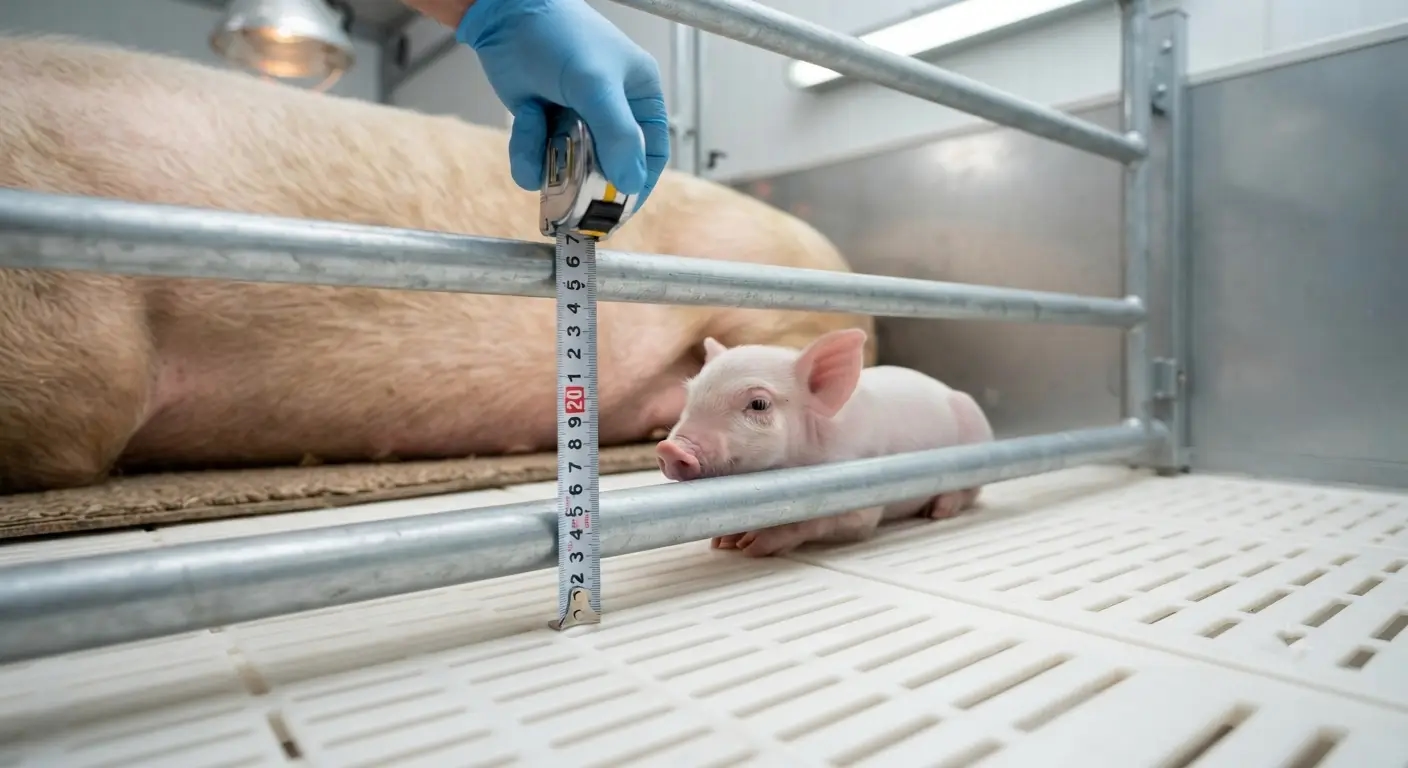
The guard rails should be positioned at 200 mm (20 cm) and 400 mm (40 cm) above the floor surface.
- The 200 mm lower rail: This is the critical protective rail. It must be positioned precisely at 200 mm — if positioned lower (say, at 150 mm), it will contact the sow’s body before creating adequate protective space for piglets, pushing against the sow’s flank at an ineffective height. If positioned higher (say, at 250 mm), small piglets can slide under the rail into the unprotected space between the rail and the floor.
- The 400 mm upper rail: Provides additional support for the structural integrity of the crate and a secondary physical barrier for the sow’s body during transitions.
Guard rail distance from the crate side wall:
The gap between the guard rail (or its mounting structure) and the crate side wall should create a protected zone of 150–200 mm width — sufficient space for a small piglet to retreat into, but narrow enough that the sow’s body cannot follow.
The critical failure mode of incorrectly positioned guard rails:
Guard rails that are positioned too high (above 250 mm) allow small piglets to be trapped in the space between the rail and the floor — the exact opposite of their protective function. A piglet trapped between a too-high guard rail and the floor when the sow lies against the rail has the rail pressing on it from one side and the sow’s body weight transmitted through the rail from the other side. This is a documented mechanism of crushing in crates with incorrectly positioned guard rails and is more dangerous than having no guard rail at all, because the rail creates a trapped space rather than a protective refuge.
Guard Rail Materials and Maintenance
Material options:
Steel pipe (round section, 40–50 mm diameter): The standard commercial material — durable, cleanable, and sufficiently smooth that it does not create pressure points against the sow’s flank during normal resting. Steel pipe rails should be galvanized or appropriately coated to prevent rusting in the humid farrowing house environment.
Steel bar (flat section): Less comfortable than round pipe for prolonged sow contact — the flat edge creates more concentrated pressure against the sow’s body. Not recommended as the primary material where round pipe is available.
Cast iron (solid bar): Used in traditional farrowing crate designs, particularly heavy-duty commercial installations. Higher initial cost than steel pipe; excellent durability; smooth surface appropriate for sow contact.
Maintenance requirements:
Guard rails that are bent, displaced from their correct position, or broken defeat their protective purpose. Monthly inspection of every guard rail in the farrowing house should verify:
- Correct height above the floor (200 mm for the lower rail) — verify with a tape measure, not by eye
- Rail is straight and secure in its mounting (bent rails may be at the correct height at one point but incorrect height at others along their length)
- No sharp edges, protruding mounting hardware, or damaged sections that could injure the sow or piglets
- The gap between the rail and the crate wall is clear of debris accumulation that reduces the protective zone width
The floor reference point matters: The 200 mm height is measured from the floor surface, not from the crate frame. In crates where litter or accumulated organic material has built up on the floor surface, the effective height of the guard rail above the actual floor level decreases — a rail that measured correctly at 200 mm above a clean concrete surface is effectively positioned at 150 mm above a 50 mm build-up of litter, placing it in the dangerous zone where small piglets can be trapped beneath it.
Creep Area Design — The Behavioral Prevention Component
Why Creep Heating Is Crushing Prevention
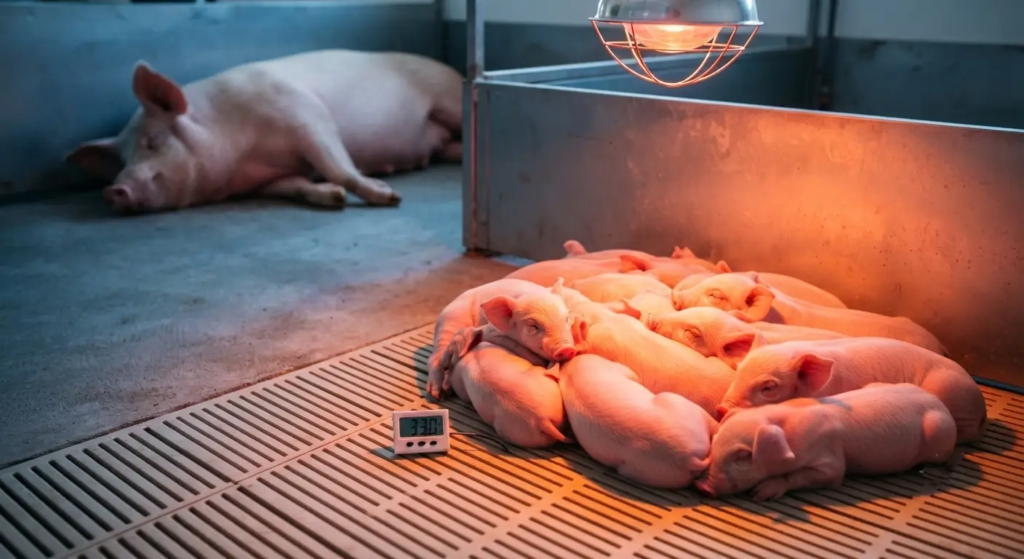
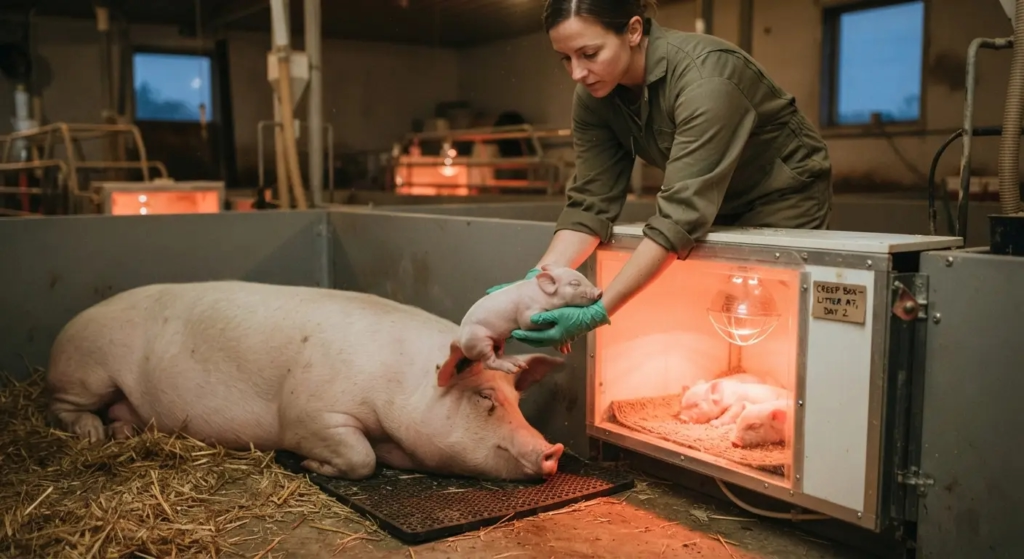
The most effective single intervention for reducing crushing is not guard rail adjustment or crate dimension optimization — it is ensuring that piglets voluntarily spend their non-nursing time in the creep area rather than against the sow’s body. A piglet that is warm, comfortable, and sleeping in the creep area is a piglet that cannot be crushed by a lying transition in the sow zone.
The behavioral principle is simple: piglets seek thermal comfort. When the creep area provides superior thermal comfort compared to the alternative positions in the crate (against the sow’s body, on the crate floor), piglets reliably use it. When the creep area is inadequately heated or poorly positioned, piglets cluster against the sow’s body for warmth — placing themselves directly in the highest-risk crushing zone.
The temperature differential that drives behavior:
For piglets to reliably prefer the creep area over proximity to the sow’s body, the creep temperature must be meaningfully higher than the ambient temperature in the sow zone of the crate. Specifically:
- Creep area: 32–34°C in the first week, declining to 28–30°C in week 2, 26–28°C in week 3
- Sow zone ambient: 20–24°C (the sow’s thermoneutral zone)
- Required differential: minimum 10°C warmer in the creep than in the sow zone
A temperature differential below this threshold fails to create a strong behavioral incentive for piglets to prefer the creep over the sow’s flank. A creep area that is 25°C when the sow zone is 22°C is not 3°C cooler than the sow’s body temperature — it is substantially cooler than the 38–39°C warmth of the sow’s body surface, meaning the sow’s body remains the most attractive thermal option and piglets continue to cluster against her.
Creep Heating Equipment and Verification
Infrared heat lamp (250W):
- Position directly above the creep area at the correct height (50–70 cm above the floor) to produce the target surface temperature of 32–34°C at piglet level
- Verify temperature with an infrared thermometer or contact thermometer at the floor surface within the illuminated area — not estimated from the lamp height
- The lamp’s effective heating area is limited — ensure the entire creep zone is within the heated area, not only the center
- Replace bulbs proactively (before they fail, based on expected service life) rather than reactively when a farrowing house check discovers a burned-out lamp above a litter of piglets that have spent the night against the sow’s body
Electric heating pad (embedded or surface-mounted):
- Provides more uniform surface temperature than a heat lamp, with no fire risk from contact with bedding
- Surface temperature should be verified with a contact thermometer — heating pads that are defective or undersized for the creep area may not achieve target temperature despite appearing functional
- Particularly valuable in farrowing systems where litter material (straw, wood shavings) is used in the creep area, as the fire risk associated with heat lamps over combustible material is eliminated
The operational check protocol:
Before each farrowing house occupancy, verify:
- Every heat source in every crate position is functional
- Temperature at piglet level in every creep area meets the target specification for the current litter age
- Heat source position creates full coverage of the creep area, not only a portion of it
This verification must be physical — turning the heat on and measuring the temperature — not a visual check that the lamp is glowing or the pad is plugged in. A lamp that glows but has a degraded filament producing inadequate heat is visually indistinguishable from a fully functional lamp.
Creep Area Dimensions
The creep area must be large enough to accommodate the entire litter simultaneously in a comfortable resting configuration — if the creep is too small for the litter, some piglets will inevitably be excluded and will position themselves against the sow’s body.
Minimum creep dimensions for a litter of 10–14 piglets:
- Total creep area: minimum 0.8–1.2 m² (both sides combined for a double-sided creep layout)
- Per-side creep dimensions: minimum 0.6 m × 0.8 m per side, providing 0.48 m² per side × 2 sides = 0.96 m² total
For large litters (14+ piglets), increase creep area proportionally — or consider the split-nursing protocol (detailed below) to reduce the number of piglets simultaneously occupying the sow zone.
The First 72 Hours — Targeted High-Risk Period Management
Why the First 72 Hours Require Intensive Attention
As established in the biomechanics section, crushing risk peaks in the first 72 hours of the litter’s life. During this period, the management intensity appropriate for the remainder of the farrowing and nursing period — twice-daily checks — is insufficient. The first 72 hours warrant a specifically designed high-intensity monitoring protocol.
The daytime protocol (attended hours):
- Minimum 4 checks per day during the first 72 hours (every 4–6 hours during daylight and staffed evening hours)
- Each check includes: confirming all piglets are alive and accounted for, verifying which piglets are in the creep area vs. against the sow’s body, actively moving any piglets resting against the sow (particularly those wedged between the sow’s body and the guard rail) into the creep area
- Following the sow through a lying transition if observed during the check — the most valuable observation opportunity for identifying a specific sow’s risk behavior and the specific crate positions that create the highest risk for her individual litter
The nighttime problem and practical solutions:
Crushing events cluster at night, and continuous nighttime attendance in the farrowing house is not realistic for most commercial pig operations. Practical options for reducing nighttime crushing risk without continuous presence:
Evening processing of the litter: At the final staffed evening check (9–10 PM), place all piglets in the warm creep area simultaneously before leaving — the sow settles to her resting position without piglets against her body, and by the time piglets wake to nurse and begin moving around the crate, they have established the pattern of returning to the creep during resting periods
Night lighting adjustment: Reducing light levels in the farrowing house at night (rather than leaving full production lighting on) reduces sow restlessness associated with nighttime activity in the building and may reduce the frequency of lying transitions — each transition being a crushing risk event
Rubber mats in the sow zone: Placing a rubber mat under the sow’s lying area reduces the speed of her lying transitions — sows lower themselves more carefully onto a yielding surface than onto hard concrete, giving piglets slightly more time to move clear. This is a modest but documented risk-reduction measure, particularly for very reactive or heavy sows
Individual Sow Risk Assessment
The first 24 hours with a new sow’s litter provides the opportunity to categorize her individual crushing risk level:
Low-risk sow signs:
- Smooth, slow, predictable lying transitions — the sow settles her weight carefully rather than dropping suddenly
- Responds to piglet vocalizations by pausing or adjusting during lying transitions (some sows show clear responsiveness to piglet distress calls)
- Normal post-farrowing temperament — accepts piglets, does not show excessive restlessness
High-risk sow signs:
- Rapid, unpredictable lying transitions — the sow drops her weight onto the floor suddenly
- Failure to respond to piglet vocalizations during lying
- Excessive restlessness — the sow rises and lies frequently, each transition representing another risk event
- Very large body size relative to crate dimensions — a sow whose body substantially fills the crate width has less room for the guard rail’s protective space to function effectively
Response to high-risk classification:
A sow classified as high-risk in her first 24 hours warrants:
- Increased observation frequency (every 2–3 hours rather than every 4–6 hours)
- Deliberate placement of all piglets in the creep before each time staff are absent from the farrowing area
- Consideration of temporary additional physical barriers (where the farm’s equipment allows) or modification of the normal management approach for this individual
- Documentation in the sow’s production record — a repeat high-risk pattern in parity 2 is evidence for culling consideration regardless of reproductive performance, since a sow that consistently crushes piglets imposes an ongoing production cost
Sow-Side Risk Factor Management
Body Condition at Farrowing
As detailed in farrowing management guidance, sows should arrive at farrowing in BCS 3.0–3.5. Sows at BCS above 4.0 (overweight) present specific crushing risks:
- Excess body fat increases the total body mass lying on or against piglets
- Obese sows often show reduced mobility and reduced sensitivity to the tactile feedback from contact with piglets during lying transitions
- Fatty mammary tissue in overweight sows can reduce piglet access to functional teats, keeping piglets against the sow’s body longer during each nursing attempt
Overweight sow management at farrowing: Where a sow arrives at the farrowing crate at BCS above 4.0, the appropriate response is careful monitoring (not dietary restriction at this late stage, which would stress the sow and potentially impair colostrum production) combined with more intensive crushing risk mitigation — more frequent creep placement of piglets and higher monitoring frequency in the first 72 hours.
Sow Temperament and History
Temperament affects crushing rate through the mechanism of lying transition speed and responsiveness to piglet stimuli. As noted in gilt selection guidance elsewhere in this series, temperament has a heritable component — very reactive, aggressive sows are more likely to produce reactive daughters.
From a crushing prevention perspective, temperament information should inform:
- Individual sow management intensity in the first 72 hours (higher intensity for reactive sows)
- Culling consideration for sows with high crushing rates across multiple parities (particularly if combined with reactive temperament that presents handling risks)
- Selection criteria for replacement gilts — docile temperament is a trait specifically valued in breeding female selection, with crushing rate risk as one of the production consequences of reactive temperament selection
Pharmaceutical Intervention for High-Risk Sows
In specific situations where a sow’s restlessness is creating unacceptable crushing risk, pharmaceutical management of restlessness can be considered under veterinary guidance:
Sedation: Low-dose sedative medication (azaperone — a butyrophenone tranquilizer used in pigs) can reduce restlessness in specific high-anxiety sows in the immediate post-farrowing period. This is not a routine crushing-prevention measure — it is a specific intervention for sows exhibiting clinically abnormal levels of restlessness that pharmaceutical management can moderate.
Pain management: A sow experiencing pain from mastitis, farrowing injury, or another post-farrowing complication will be more restless than a comfortable sow. Appropriate pain management (NSAID treatment as detailed in first-aid kit guidance) that addresses the underlying pain source reduces the secondary restlessness-associated crushing risk.
Non-Crate Farrowing Systems and Crushing Prevention
The Welfare-Biosecurity-Crushing Trade-Off
Farrowing crates have been subject to increasing welfare scrutiny because they physically restrict the sow’s movement and natural behaviors for the duration of the farrowing and nursing period. Alternative farrowing systems — loose-housed farrowing pens, freedom farrowing pens, and outdoor farrowing arcs — allow greater sow movement but present different crushing risk profiles.
Loose-housed farrowing pens: Larger pens (typically 4–6 m²) where the sow can move freely. Well-designed loose farrowing pens with angled nest corners (designed so the sow must lie down gradually along the angled wall, slowing the transition and giving piglets time to move clear), good nest structure that draws piglets away from the sow during resting, and adequate creep heating can achieve crushing rates comparable to or below poorly managed crate systems.
The West African practical context: For most commercial pig operations in West and Central Africa, farrowing crates remain the most practical and most crushing-protective option when correctly designed and managed. The infrastructure investment required for well-designed loose farrowing systems — larger pen dimensions, specific angled pen corner construction, reliable creep heating — is comparable to farrowing crate investment, and the crushing risk with incorrect management is higher than for correctly designed crates.
The minimum non-crate crushing prevention requirements: Any non-crate system must provide:
- A defined creep area at the correct temperature (32–34°C) that is physically separate from the sow’s lying area and accessible only to piglets (not to the sow)
- Pen corner design that forces the sow to lie down gradually along the wall rather than falling suddenly against a flat wall
- Adequate space (minimum 4 m² total farrowing pen area) so the sow’s lying area does not impinge on the creep area
Summary
Crushing is the most common and most preventable cause of pre-weaning mortality in commercial pig production. Its prevention requires a layered approach because no single intervention addresses all three crushing mechanisms (lie-down, roll-over, sudden movement) or all risk periods (the first 72 hours vs. the subsequent nursing period) simultaneously.
The complete prevention framework combines:
Infrastructure: Farrowing crate dimensions (60–65 cm width) that restrict sow movement without welfare compromise; guard rails at precisely 200 mm and 400 mm height that create protected space without creating dangerous trapping zones; creep areas of adequate size (minimum 0.48 m² per side) with verified heating maintaining the 32–34°C first-week target.
Behavioral management: Creep heating that creates a thermal incentive for piglets to voluntarily spend non-nursing time in the protected creep area rather than against the sow’s body — addressing the root cause of most crushing events, which is piglets positioned in the sow zone when they could be safely in the creep.
Temporal targeting: Intensive monitoring (every 4–6 hours minimum) during the first 72 hours when crushing risk is highest, transitioning to standard twice-daily checks after the first week when piglet mobility and awareness have improved; proactive creep placement of piglets before nighttime periods when monitoring is absent.
Individual sow management: Risk classification of each sow based on first-24-hour behavioral observation, with increased management intensity applied to high-risk sows; documentation that supports culling decisions for chronically high-crushing sows across multiple parities.
Crushing cannot be eliminated — some level of incidental contact between a large sow and small mobile piglets during lying transitions will occur regardless of management. But the difference between the 5% crushing mortality rate achievable in well-managed commercial farrowing houses and the 20–30% rate common in poorly managed ones represents hundreds of additional weaned piglets per year from the same sow herd. That difference is made by guard rails at the correct height, creep areas at the correct temperature, and a stockperson who places piglets in the creep before leaving the farrowing house for the night.