The scenarios that require milk replacer feeding in a commercial pig farrowing house arrive without warning and demand an immediate response. A sow that dies during a complicated farrowing, leaving 13 piglets with no viable nursing option. A first-litter gilt developing MMA complex within 18 hours of farrowing, her milk production failing before the litter has received adequate colostrum. A high-performing sow delivering 16 live piglets onto 14 functional teats, where even excellent split-nursing management cannot get adequate milk into every piglet. A litter whose sow was treated with a medication carrying a milk withdrawal period that removes her as a nursing resource during the critical first days.
Each of these scenarios has a common requirement: something must be fed to piglets who have no sow to nurse from, and it must be fed in a way that provides adequate energy, protein, and immune protection to support survival and growth until either a foster sow becomes available or the piglet reaches weaning age. Milk replacer — commercial products formulated to approximate sow’s milk composition, or emergency DIY formulas using accessible farm ingredients — fills this role.
The difference between piglets that survive on milk replacer and thrive versus those that survive briefly and fail lies in four areas: the composition of what is fed (the right nutrient profile for neonatal pigs is non-negotiable), the hygiene of preparation and feeding (warm liquid high in protein and fat is an ideal bacterial culture medium in tropical conditions), the feeding schedule (frequency and volume matched to the piglet’s age, size, and physiological capacity), and the transition management that moves the piglet off milk replacer toward solid feed at the appropriate developmental stage.
This guide covers all four — with specific guidance for West and Central African farm conditions where commercial product availability is variable, and DIY formulation may be necessary, and where ambient temperatures create hygiene challenges that require specific protocols.
Part 1: Sow’s Milk Composition — The Target Formulation
Understanding what milk replacer is trying to replicate requires first understanding what sow’s milk contains at the developmental stages where milk replacer will be used.
Sow’s Milk Composition by Lactation Stage
| Nutrient | Colostrum (0–12h) | Transitional (12–48h) | Mature Milk (Day 3–28) |
|---|---|---|---|
| Crude protein (% DM) | 70–75% | 45–55% | 24–28% |
| Fat (% DM) | 22–28% | 28–35% | 35–40% |
| Lactose (% DM) | 5–8% | 15–20% | 35–40% |
| Total solids (% as fed) | 25–30% | 20–25% | 18–22% |
| IgG (mg/mL) | 50–100 | 10–40 | Less than 1 |
| ME (kcal/kg as fed) | 1,200–1,500 | 1,000–1,300 | 900–1,100 |
The key nutritional facts that drive milk replacer specification:
Sow’s milk is a high-fat, high-protein, moderate-lactose fluid with a total solids content of approximately 18–22% in mature milk. This makes it nutritionally distinct from cow’s milk (higher fat, lower lactose relative to cow’s milk) and very different from human milk replacer formulations. A milk replacer formulated for piglets must match these proportions — using cow’s milk-based products without composition adjustment, or using human infant formula, provides a nutrient profile poorly matched to the neonate pig’s requirements.
Part 2: Commercial Milk Replacer Products
Composition Requirements for Commercial Pig Milk Replacer
A commercial pig milk replacer intended for neonatal use should meet the following minimum composition standards:
| Nutrient | Minimum Specification | Notes |
|---|---|---|
| Crude protein | 22–26% (dry matter basis) | Primary protein source should be whey or spray-dried skim milk — not soy protein isolate at high inclusion rates for very young piglets |
| Crude fat | 20–30% (dry matter basis) | Fat content critical for energy density and fat-soluble vitamin delivery |
| Lactose | 30–40% (dry matter basis) | Neonatal piglets can digest lactose efficiently; provides the primary carbohydrate energy |
| Crude fiber | Below 1.5% (dry matter basis) | Low fiber critical for young gut absorption |
| Moisture | Below 10% (powder form) | Powder stability; mixed product should be used within hours |
| Vitamin A | Minimum 10,000 IU/kg (dry matter) | |
| Vitamin D₃ | Minimum 2,000 IU/kg (dry matter) | |
| Vitamin E | Minimum 60 IU/kg (dry matter) | |
| Iron | Minimum 100 mg/kg (dry matter) | Though injectable iron supplementation remains important alongside milk replacer |
Protein source quality: The protein digestibility and amino acid profile of the protein source determine how well the milk replacer supports lean tissue growth in the neonatal piglet. The best protein sources for pig milk replacer, in order of suitability:
- Whey protein concentrate or isolate: Derived from cheese manufacturing, with an excellent amino acid profile and very high digestibility. The “gold standard” protein source for pig milk replacer.
- Spray-dried skim milk: Complete dairy protein with high digestibility. Slightly lower in branched-chain amino acids relative to whey, but suitable for pig milk replacer.
- Spray-dried whole egg: High digestibility, good amino acid profile. More expensive than dairy-derived sources.
- Soy protein isolate (highly processed, low anti-nutritional factor): Acceptable as a partial protein source in milk replacers for piglets above 5–7 days of age; not recommended as the primary protein source for piglets under 5 days due to residual anti-nutritional factors that the very immature gut is particularly sensitive to.
Evaluating Commercial Products Available in West Africa
Commercial pig milk replacer products marketed in West and Central Africa vary significantly in quality and appropriateness for neonatal pig use. When evaluating any commercial product:
Request and review the product specification sheet — specifically verifying:
- That the guaranteed analysis matches the composition standards above
- That protein sources are dairy-based rather than primarily plant protein
- That the product is specifically formulated and tested for pigs, not a generic “livestock milk replacer”
Be cautious of products labeled generically as “calf milk replacer” or “lamb milk replacer”: These products are formulated for different species with different milk compositions and different gut developmental characteristics. Calf milk replacer in particular is often lower in fat and higher in lactose than appropriate for pigs, and may contain specific additives (coccidiostats, growth promoters) formulated for bovine rather than porcine use.
Ask for evidence of use in pigs: A supplier who cannot cite references to farms successfully using the product for pig orphan feeding is offering a product whose suitability for this application is unverified.
Part 3: DIY Emergency Milk Replacer Formulas
When DIY Formulation Is Necessary
Commercial pig milk replacer may not be immediately available when an emergency orphan feeding situation arises — particularly in rural West African farm locations where veterinary supply chains require several days for delivery. DIY emergency formulas using commonly available ingredients provide a bridge solution for the first 24–72 hours until commercial product can be sourced, or as a medium-term solution for farms where commercial product access is consistently limited.
Important framing: DIY formulas are a practical necessity in resource-constrained environments but are genuinely inferior to well-formulated commercial pig milk replacer. Their use should be time-limited where commercial alternatives are achievable, and their preparation requires the same hygiene discipline as commercial product to avoid the bacteriological contamination that makes any warm, nutrient-dense liquid particularly dangerous when fed to immunologically vulnerable neonates.
Formula 1: Cow’s Milk-Based Emergency Formula
Target: Neonatal to 10-day-old piglets as a bridge formula where no commercial alternative is immediately available.
Ingredients per 1 liter of prepared formula:
| Ingredient | Quantity | Purpose |
|---|---|---|
| Whole cow’s milk (full fat, fresh or UHT) | 800 mL | Primary liquid base, protein, fat, lactose |
| Heavy cream (35% fat) | 100 mL | Increases fat content toward sow milk levels |
| Egg yolk (from clean eggs) | 2 yolks (approx. 30 mL) | Additional fat, protein, fat-soluble vitamins |
| Dextrose (glucose) or sucrose | 20 g | Supplementary carbohydrate energy |
| Multivitamin supplement (poultry or pig-labeled, liquid) | As per label for 1 liter of milk replacer | Vitamin supplementation |
| Water | Sufficient to reach 1 liter total | Volume adjustment |
Approximate composition of Formula 1:
- Crude protein: approximately 22–24% (dry matter)
- Crude fat: approximately 28–32% (dry matter)
- Lactose + glucose: approximately 35–38% (dry matter)
- Total solids: approximately 18–20% (as mixed)
- ME: approximately 950–1,100 kcal/kg as fed
Limitations of Formula 1:
- The fat content, while higher than plain cow’s milk, may still be somewhat below the ideal range for very young piglets
- The amino acid profile is slightly suboptimal compared to whey-protein-based commercial replacers (cow’s milk casein has a different amino acid balance than the whey protein that makes commercial replacers superior)
- No added mineral trace elements beyond what cow’s milk and egg yolk provide naturally — marginal for extended use without commercial product supplementation
Formula 2: Coconut Milk-Supplemented Formula
Target: Situations where full-fat cow’s milk is available but heavy cream is not; or where a higher-fat formula is specifically needed.
Ingredients per 1 liter:
| Ingredient | Quantity | Purpose |
|---|---|---|
| Whole cow’s milk | 750 mL | Primary base |
| Coconut milk (full fat, from fresh coconut or canned without additives) | 100 mL | High saturated fat to increase energy density |
| Egg yolk | 2 yolks | Protein, fat, vitamins |
| Dextrose | 25 g | Additional carbohydrate energy |
| Whey powder (where available from a food supplier or dairy) | 30 g | Protein quality improvement |
| Water | To 1 liter |
Note on coconut milk: Coconut milk’s medium-chain triglycerides (MCTs) are rapidly absorbed and efficiently utilized for energy — actually advantageous for the neonatal piglet’s energy metabolism compared to the long-chain triglycerides that dominate cow’s milk fat. This formula is a reasonable emergency option in areas where coconut is readily available.
Formula 3: Minimal Ingredients Emergency Formula
Target: When only the most basic ingredients are available and any nutrition is better than none.
Ingredients per 1 liter:
| Ingredient | Quantity |
|---|---|
| Whole cow’s milk (UHT or fresh) | 900 mL |
| Dextrose or table sugar | 30 g |
| Salt | 1 g |
| Water | To 1 liter |
This formula is nutritionally inadequate for sustained use — its fat content is too low and its protein profile is not optimized for pigs. It provides energy and hydration and is appropriate only as a 12–24 hour bridge when no better option exists, with urgent sourcing of better alternatives underway simultaneously.
The Colostrum Priority — No Formula Can Replace It
None of the DIY formulas above, and no commercial milk replacer, provides the immunological protection of colostrum. For any orphaned piglet that has not received adequate colostrum from its birth dam:
Colostrum from the farm’s frozen bank (per the colostrum management guide’s banking protocol) should be the first nutrition provided to any orphaned piglet — prioritized before any milk replacer feeding begins.
Colostrum from a concurrent sow with excess production relative to her litter size is the second option — collected and administered within hours of farrowing for maximum IgG concentration.
Only after the colostrum window (24–36 hours) has passed should milk replacer become the primary focus of orphaned piglet nutrition.
Part 4: Preparation Protocol — Hygiene as a Survival Factor
The Contamination Risk in Tropical Farm Conditions
Warm milk replacer at 37–39°C is an ideal medium for rapid bacterial multiplication — particularly for E. coli, Klebsiella, and Enterococcus species present in the farm environment. A preparation that is bacteriologically acceptable at mixing can reach dangerous bacterial loads within 2–4 hours at tropical ambient temperatures (30–35°C) without refrigeration.
Piglets fed bacteriologically contaminated milk replacer receive a direct delivery of enteric pathogens into a gut with minimal immune protection — the consequences are typically rapid-onset diarrhea, dehydration, and death. This pathway kills more orphaned piglets fed on milk replacer than any nutritional formulation issue.
Step-by-Step Preparation Protocol
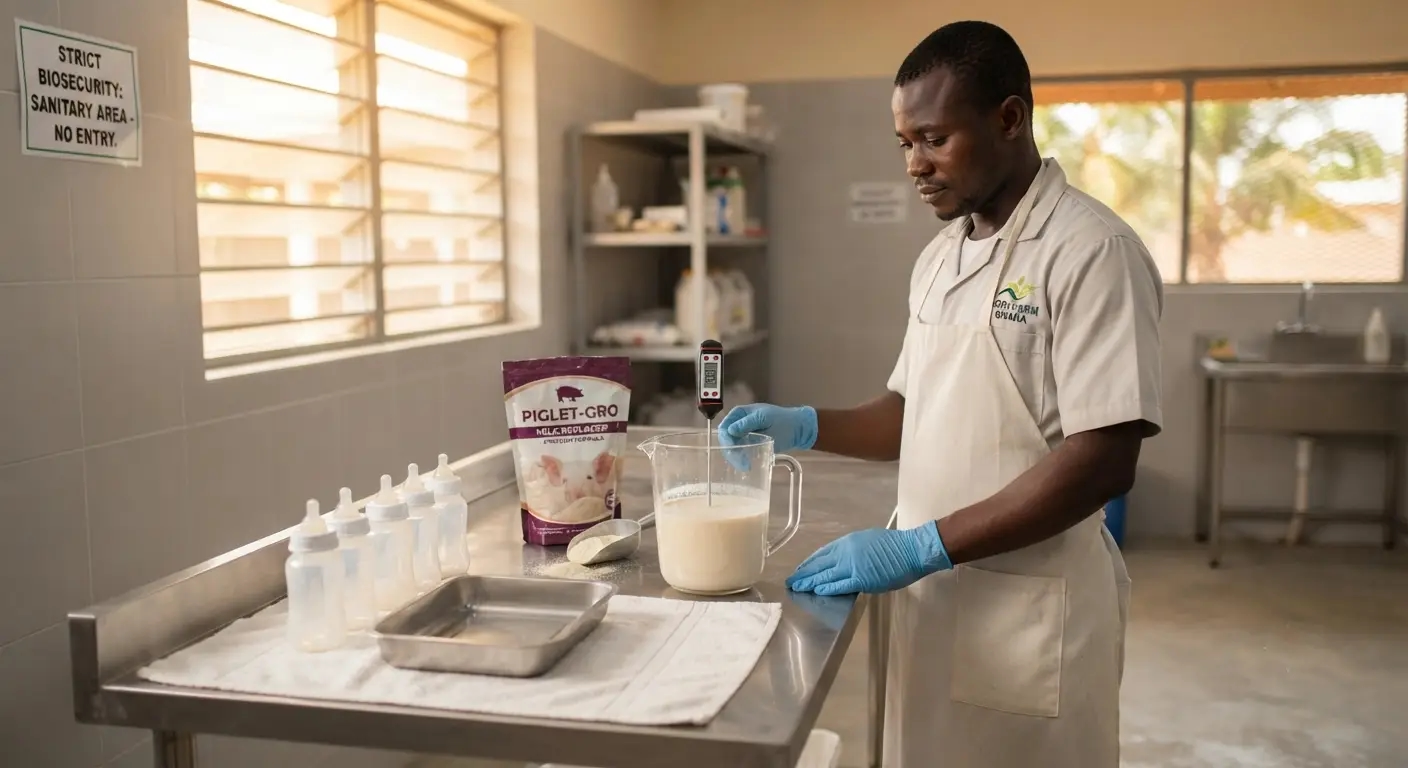
Step 1 — Sanitize all equipment before each batch:
- All containers, bowls, nipple feeders, and mixing equipment should be washed with hot water and a food-safe sanitizer (dilute bleach solution at 200 ppm, or a food-safe quaternary ammonium product) and thoroughly rinsed before each use
- Do not simply rinse equipment between batches — residual milk replacer in equipment from a previous batch provides a concentrated bacterial inoculum for the next batch
Step 2 — Use clean water:
- Mix milk replacer with potable water that has been boiled and cooled to approximately 50°C, or with water from a verified clean source (low bacterial count, within safe drinking water parameters per water quality guidance in this series)
- Do not use water directly from an open storage container that may have been contaminated since filling
Step 3 — Mix at the correct dilution:
- Commercial products: follow manufacturer dilution instructions precisely — typically 150–200 g of powder per liter of water for pig milk replacer
- Under-diluting (too much powder per water) increases osmolarity beyond what the young gut can handle, causing osmotic diarrhea
- Over-diluting (too little powder per water) provides insufficient energy and nutrients per feeding
Step 4 — Warm to the correct feeding temperature:
- Feed at 37–39°C — body temperature equivalent
- Test temperature with a food thermometer or by wrist-testing (the liquid should feel comfortably warm on the inner wrist, not hot)
- Milk replacer fed too cold causes gut upset and reduces palatability; milk replacer fed too hot can scald the piglet’s mouth and esophagus and may denature protein components
Step 5 — Feed immediately or refrigerate:
- Use prepared formula within 30 minutes of mixing at room temperature (tropical conditions)
- Where refrigeration at 4°C is available: prepared formula can be stored refrigerated for up to 12 hours, warmed immediately before feeding
- Discard any unused portion from a previous feeding rather than refrigerating and reusing — the bacterial load from even brief warming and offering represents a hygiene risk for subsequent feedings
Part 5: Feeding Schedules and Volumes
The Age-Appropriate Feeding Schedule
The feeding frequency for orphaned piglets mirrors the natural nursing rhythm — sows allow piglets to nurse approximately every 45–60 minutes in the first days of life, with each nursing bout delivering 10–20 mL of milk per piglet. The artificial feeding schedule must approximate this frequency to meet the piglet’s energy requirement through multiple small feeds rather than a few large ones.
A single large-volume feed does not replicate the natural nursing pattern and causes problems: The piglet’s stomach at birth holds approximately 15–25 mL — feeding more than this in a single session causes regurgitation, aspiration risk, and osmotic overload in the small intestine.
Feeding schedule by age:
| Piglet Age | Feeding Frequency | Volume per Feeding | Daily Total Volume |
|---|---|---|---|
| Day 1 | Every 1–1.5 hours (day) + 2 overnight feedings | 5–10 mL | 100–150 mL |
| Day 2–3 | Every 1.5–2 hours (day) + 2 overnight feedings | 10–15 mL | 130–200 mL |
| Day 4–7 | Every 2 hours (day) + 1 overnight feeding | 15–25 mL | 175–275 mL |
| Week 2 | Every 3 hours (day) + 1 overnight | 25–40 mL | 200–350 mL |
| Week 3 | Every 4 hours | 40–60 mL | 240–360 mL |
| Week 3–weaning | Free access supplemental feeding via bowl or automated station plus ad libitum creep/starter | Transitioning toward voluntary intake from solid feed | — |
The overnight feeding requirement in the first week: Piglets in the first 7 days of life cannot go more than 3–4 hours without feeding without significant energy deficit development — their glycogen reserves are too small and their metabolic rate too high for a 6–8 hour overnight fast. An orphaned piglet receiving 8 feeds during the day but no overnight feeding is receiving only marginally more frequent nutrition than once per 2.5 hours over 24 hours — inadequate for the first week’s energy demand.
Practical overnight feeding in a commercial farrowing house context means either a staggered staff shift system for the first week of orphan feeding, or the use of an automated feeding system (a thermostated warmer connected to a nipple feeding station accessible to the piglets throughout the night).
Feeding Methods
Syringe/dropper feeding (for individual piglets 0–48 hours):
As described in the colostrum management guide, for the smallest, weakest, or youngest piglets who lack the coordination for nipple feeding:
- 1–3 mL administered at a time, slowly, with pauses for swallowing
- Watch carefully for any fluid appearing at the nostrils (indicating aspiration risk — stop and reposition)
- Labor-intensive but appropriate for the first 24–48 hours when piglet coordination is developing
Nipple bottle feeding:
Small pet-feeding bottles with appropriately sized nipples (designed for kittens or young puppies — the nipple size and flow rate are appropriate for piglets of similar scale) allow the piglet to control its own intake rate through suckling, more closely replicating natural nursing.
- Hold the bottle at a slight downward angle, not vertical — reduces milk flow rate and aspiration risk
- Allow the piglet to suckle at its own pace, not squeezing the bottle
Bowl or trough feeding (from day 3–5 onward):
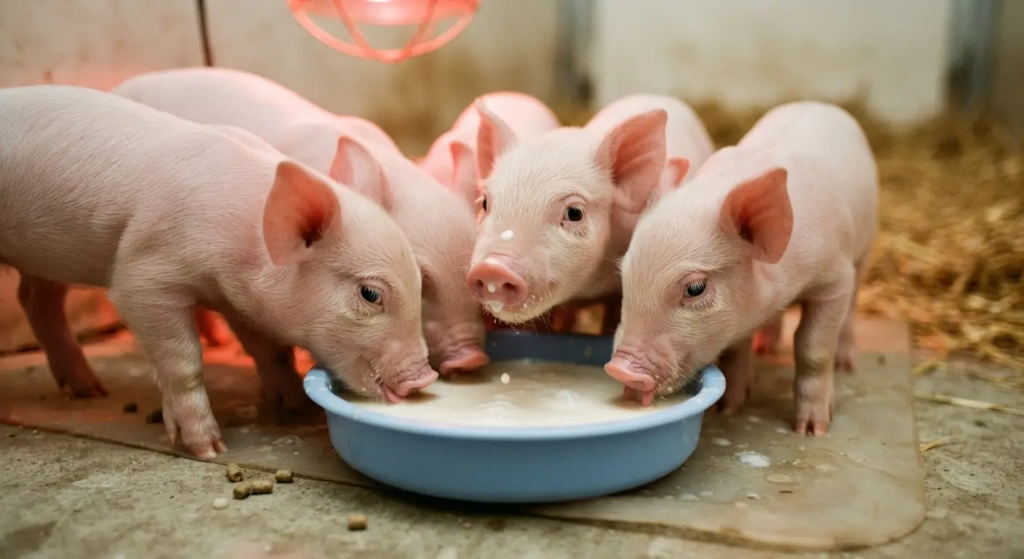
Many piglets will begin to lap from a shallow bowl of milk replacer from 3–5 days of age — observe for lapping behavior when a shallow container of warmed formula is placed within reach. Bowl feeding reduces labor requirement substantially compared to individual bottle or syringe feeding and can support free-access feeding for groups of orphaned piglets.
Automated pig milk replacer dispensers:
Where multiple orphaned or supplementally fed piglets are managed simultaneously, commercial automated dispensers (connected to a refrigerated reservoir, dispensing warmed formula through a bank of nipple positions on a demand basis) reduce labor substantially and allow 24-hour feeding access without overnight staff requirement. Available from pig equipment suppliers; the capital investment is justified for farms with frequent orphan piglet situations.
Part 6: Monitoring Growth and Health on Milk Replacer
Expected Performance Benchmarks
Piglets successfully reared on well-formulated, hygienically prepared milk replacer should approach the following growth benchmarks, which are slightly below naturally suckled contemporaries but indicate viable performance:
| Age | Expected Body Weight | Expected Daily Gain |
|---|---|---|
| Birth | 1.2–1.5 kg (variable) | — |
| Day 7 | 1.8–2.2 kg | 80–100 g/day |
| Day 14 | 2.5–3.2 kg | 100–150 g/day |
| Day 21 | 3.5–4.5 kg | 150–200 g/day |
| Day 28 | 5.0–6.5 kg | 200–280 g/day |
Piglets tracking significantly below these benchmarks warrant investigation: Is the formula concentration correct? Is feeding frequency adequate? Are there disease signs indicating enteric infection from contaminated formula or environmental pathogens?
Daily Health Assessment
Every piglet on milk replacer should be assessed daily for:
Hydration status: Pinch the skin behind the neck — well-hydrated skin returns to position within 1 second; dehydrated skin remains tented for 2+ seconds. Any sign of dehydration indicates inadequate fluid intake or excessive loss from diarrhea, requiring immediate assessment and oral electrolyte supplementation alongside milk replacer.
Fecal character: Normal stools for milk replacer-fed piglets are slightly soft to paste consistency, cream to pale yellow in color. Yellow, watery, profuse diarrhea indicates enterotoxigenic E. coli infection — requires immediate treatment with appropriate antibiotic (based on farm veterinarian guidance and local resistance patterns) and electrolyte supplementation. Bloody diarrhea warrants urgent veterinary assessment.
Umbilical status: As detailed in golden hour guidance, navel infection is a specific risk. Ensure navel dipping was performed and remains dry and healthy. Any swelling, heat, or discharge at the navel requires immediate topical and potentially systemic antibiotic treatment.
Body temperature: A piglet in the correct thermal environment should have a rectal temperature of 38.5–39.5°C. Below 38°C indicates hypothermia requiring warming; above 40°C indicates fever associated with infection.
Part 7: The Transition to Solid Feed — Earlier Than for Suckled Piglets
Why Orphaned Piglets Can and Should Transition to Solid Feed Earlier
Suckled piglets transition to solid feed at weaning — typically 21–28 days of age. Orphaned piglets on milk replacer can and should begin transitioning to solid starter feed as early as 10–14 days of age, for two reasons:
Economic: Milk replacer is expensive per unit of growth produced compared to starter feed — at the volumes required for 21–28 days of primary nutrition for a piglet, the cost differential between milk replacer and starter feed is substantial. Earlier transition reduces the total milk replacer cost per orphaned piglet.
Physiological: The transition from milk replacer to solid feed is metabolically similar to weaning — the same gut adaptation challenge occurs. Starting solid feed earlier, when the gut is still developing and more plastic in its response, generally produces a smoother transition than a sudden switch at 3–4 weeks from a full liquid diet to solid feed.
The Transition Protocol
From day 10–14: Offer creep feed (the same high-specification Phase 1 starter used for suckled litters, as detailed in the four-stage diet guide) in a shallow bowl alongside the milk replacer feeding station. At this age, piglets will begin investigating and nibbling at solid feed out of curiosity.
From day 14–21: Begin reducing milk replacer volume by 10–15% per day while maintaining solid feed access. Monitor that the reduction in milk replacer is being offset by increased solid feed intake rather than simply creating a total energy deficit.
Day 21–28: Target 50% of energy from solid feed and 50% from milk replacer, with the solid feed proportion increasing.
Day 28–35: Full transition to solid starter feed, with milk replacer discontinued or used only as a palatability enhancer mixed into moistened starter (a gruel preparation using starter feed and small amounts of milk replacer liquid as the moistening agent) during the final transition period.
Part 8: The Foster Sow as the Superior Alternative
When to Stop Milk Replacer and Pursue Fostering
Milk replacer is an adequate short-to-medium-term solution for orphaned piglets. A suitable foster sow is always preferable to continued milk replacer feeding where one is available, because:
- Sow’s milk provides superior immune factors, growth factors, and bioactive components beyond what any milk replacer can replicate
- Natural nursing allows the piglet to self-regulate intake in synchrony with the sow’s milk ejection cycles — a more physiologically appropriate feeding pattern than even the best bottle or automated feeding
- The metabolic and immune benefits of actual colostrum and mature milk are substantially better than the closest milk replacer approximation
Criteria for a suitable foster sow:
- Currently lactating and within 3–5 days of farrowing (to provide appropriate-stage milk)
- Litter size sufficiently below her teat count that adding the orphaned piglet(s) does not create competition exceeding her nursing capacity
- Vaccination status at least equivalent to the orphaned piglet’s requirements
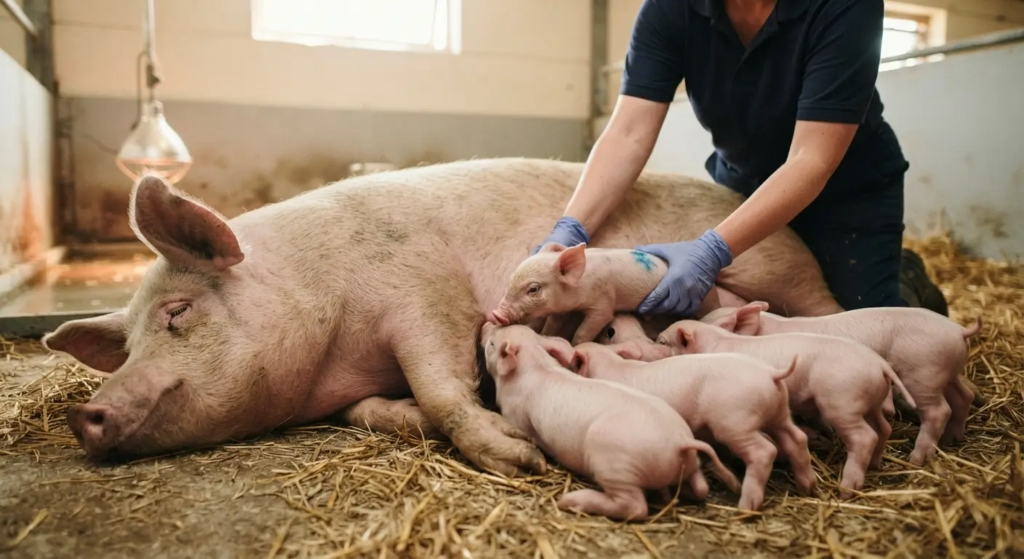
The integration technique: Rub the orphaned piglet(s) with the foster sow’s own litter’s bedding or with milk from the foster sow applied to the piglet’s back and flanks — reducing the olfactory “stranger” signal that can cause the foster sow to reject or attack an introduced piglet. Introduce the orphaned piglet(s) during a period when the foster sow is distracted or immediately after she has eaten.
Summary
Milk replacer feeding is the nutritional bridge that saves piglets the commercial pig operation cannot afford to lose — the orphaned litter, the runt that cannot compete at the udder, the piglet whose sow’s milk has failed. Its effectiveness depends entirely on three equally important factors: formulation quality (dairy-based protein, correct fat and lactose content matching sow’s milk composition), preparation hygiene (bacteriologically safe warm liquid fed in fresh batches with sanitized equipment), and feeding frequency (replicating the nursing pattern with appropriately small, frequent volumes across 24 hours including overnight).
The colostrum gap — the immunological protection that no milk replacer can provide — must be addressed first, before milk replacer feeding begins, through the frozen colostrum bank protocol established in advance of any emergency.
The monitoring discipline — daily weight, fecal character, hydration, and the benchmark growth targets appropriate for milk replacer-reared piglets — converts feeding into managed nutrition, catching problems early enough for correction before they become survival crises.
And the transition strategy — introducing solid starter feed from 10–14 days, reducing milk replacer gradually through 21–35 days — converts a potentially indefinite and expensive milk replacer program into a time-limited bridge with a defined exit point that reduces cost and prepares the piglet for the digestive demands of the growing period.
A piglet that reaches weaning weight on milk replacer is a piglet the farrowing management system rescued from what would otherwise have been a production loss. The protocols in this guide make that rescue reliably achievable rather than a lucky exception.