The farrowing interval — the time between one farrowing and the next — is the production cycle’s clock. Every day the clock runs represents feeding cost, housing overhead, and labor expenditure allocated to a sow who is either producing (lactating) or recovering and reconceiving (the non-productive period between weaning and the next confirmed pregnancy). The days when she is producing justify every cost. The days when she is not — the “empty days” that accumulate from late weaning, extended weaning-to-estrus intervals, failed conceptions, early embryonic losses, and late-detected repeat services — represent pure overhead with no corresponding output.
The financial weight of the farrowing interval is substantial and compounds across the sow herd. At 100 sows, each additional day in the average farrowing interval represents 100 non-productive sow-days per cycle — each of which costs approximately XAF 1,500–2,500 (USD 2.50–4.17) in feed and housing overhead. A farm whose average farrowing interval is 160 days rather than 145 days is carrying 15 extra empty days per sow per cycle — XAF 22,500–37,500 (USD 37.50–62.50) in avoidable overhead per sow per farrowing interval, across 100 sows, recurring every time each sow completes a cycle.
Farrowing interval management is not a single intervention — it is the cumulative result of management decisions at five specific points in the reproductive cycle where days can be lost or saved: lactation length, weaning-to-estrus interval, conception rate, early embryonic survival, and return-to-service detection efficiency. This guide works through each point with the specific biology, the specific management levers, and the specific monitoring discipline that tracks whether the levers are being used effectively.
Part 1: The Anatomy of the Farrowing Interval
Decomposing the Average Farrowing Interval
The farrowing interval is the sum of its component periods:
Farrowing interval = Lactation length + Weaning-to-estrus interval + Gestation length ± Return-to-service days
At the target values for well-managed commercial pig operations:
| Component | Target | Common Underperforming Range |
|---|---|---|
| Lactation length | 21–28 days | 21–28 days (typically controlled) |
| Weaning-to-estrus interval (WEI) | 4–6 days | 7–14 days |
| Gestation length | 114–116 days | 114–116 days (fixed biology) |
| Return-to-service days (failed pregnancies) | Less than 3 days equivalent per cycle | 5–15 days equivalent per cycle |
| Target total farrowing interval | 140–152 days | 150–175 days (underperforming) |
Gestation length is fixed biology — 114–116 days regardless of management. The only variable components are lactation length, weaning-to-estrus interval, and the days “lost” to failed conceptions that require repeat services.
The practical implication of this decomposition: Farrowing interval management is really three separate management problems — each requiring different interventions:
- Lactation length management: Setting and maintaining the correct weaning age policy
- WEI management: Ensuring sows return to fertile estrus as quickly as possible after weaning
- Conception efficiency management: Ensuring that when sows are bred, pregnancy is established, maintained, and correctly confirmed
Part 2: Lactation Length — The Controlled Variable
The Trade-Off Between PSY and Individual Litter Performance
As established in weaning management guidance elsewhere in this series, earlier weaning age improves farrowing interval (more farrowings per sow per year) but worsens individual post-weaning piglet performance (more severe growth check, higher disease susceptibility in younger weanlings).
The farrowing interval arithmetic of weaning age:
At 21-day weaning vs. 28-day weaning:
- Difference in lactation length: 7 days per cycle
- At 2.4 farrowings per sow per year (21-day system): produces 10.5 pigs weaned/litter × 2.4 = 25.2 PSY
- At 2.2 farrowings per sow per year (28-day system): produces 11.0 pigs weaned/litter × 2.2 = 24.2 PSY
The 21-day weaning system produces higher PSY even accounting for slightly higher pigs weaned per litter in the 28-day system, because the farrowing interval compression outweighs the individual litter productivity advantage of a longer nursing period.
Why 28-day weaning is still chosen by some operations: Despite the PSY advantage of earlier weaning, 28-day weaning is preferred where:
- Post-weaning management infrastructure is insufficient to support excellent 21-day weanling care
- Piglet weaning weight at 21 days is consistently below 5.5 kg (indicating inadequate pre-weaning growth that requires additional nursing days to reach viable weaning weight)
- Market or regulatory requirements specify minimum weaning ages
The fixed-age vs. minimum-weight weaning decision: As noted in weaning guidance, setting a minimum weaning weight threshold (5.5–6.0 kg) alongside the minimum age prevents the premature weaning of stunted piglets whose post-weaning performance will be very poor regardless of how well the weanling environment is managed.
Maximizing Lactation Productivity
Every day of lactation should produce pigs that are as heavy and as immunologically prepared as possible at weaning. The specific strategies for maximizing pre-weaning growth (adequate colostrum, optimal creep feeding, split-nursing management, piglet processing) are detailed across the farrowing cluster articles in this series. From a farrowing interval perspective, the key insight is: a day of lactation that produces good pre-weaning growth is a day well spent; a day of lactation that produces poor pre-weaning growth represents the interval cost of lactation without the full output benefit.
Part 3: Weaning-to-Estrus Interval — The Primary Management Target
The Biology of WEI
After weaning, the hypothalamic-pituitary-ovarian axis re-activates — the progesterone and prolactin dominance of pregnancy and lactation that suppressed estrous cycling is removed, and the hormonal cascade that produces follicular development, estrogen rise, and eventual ovulation resumes. The time between weaning and the first post-weaning ovulation — expressed clinically as the WEI — is the primary management-controllable variable in the farrowing interval.
Target WEI for commercial sow herds: 4–6 days. Within this range, the sow is returning to estrus and being bred within a week of weaning — minimizing the non-productive interval while allowing sufficient time for follicular development to produce a fertile ovulation with good embryo viability.
Biology of the WEI range:
- WEI 3 days or less: Very rapid return to estrus, associated in some research with lower embryo survival rates — the follicular development period may be insufficient for full oocyte maturation and optimal uterine preparation for implantation. Sows with WEI below 3 days may show reduced litter size at the subsequent farrowing.
- WEI 4–6 days: Optimal range — follicular development is adequate, ovulation timing allows good embryo survival, and uterine recovery from lactation is sufficient for successful implantation.
- WEI 7–10 days: Extended but acceptable; associated with some nutritional or body condition deficiency or the specific physiological state of the sow at weaning.
- WEI above 10 days (“anestrus” or “delayed return”): Indicates a problem requiring investigation — these sows are not returning to estrus within the expected window and represent disproportionate empty day accumulation.
The Factors That Extend WEI — And Their Interventions
Factor 1: Excessive body condition loss during lactation (the most important)
The hormonal re-activation of the reproductive axis after weaning is directly linked to the sow’s energy status — specifically to the signaling of adequate energy reserves that hormones like leptin (produced by adipose tissue) and insulin provide to the hypothalamus. A sow that has lost excessive body condition during lactation (BCS falling below 2.5 at weaning) has insufficient leptin signaling to robustly activate the reproductive axis — producing a delayed or attenuated follicular development response and an extended WEI.
Target body condition at weaning: BCS 2.5–3.0. Below 2.5, WEI extension begins to occur more frequently. Below 2.0, clinical anestrus (failure to return to estrus within 21 days of weaning) becomes common.
How sows lose excessive condition during lactation:
- Insufficient feed intake during lactation — either from inadequate feed allocation, inadequate feeder access, poor palatability of the lactation ration, or heat stress suppressing voluntary intake
- Very high milk production draining body reserves — common in high-performing sow genetics producing large litters where the nutrient demand of lactation exceeds intake capacity
- Extended lactation length — more days of lactation = more opportunity for body reserve depletion
Interventions to prevent excessive lactation condition loss:
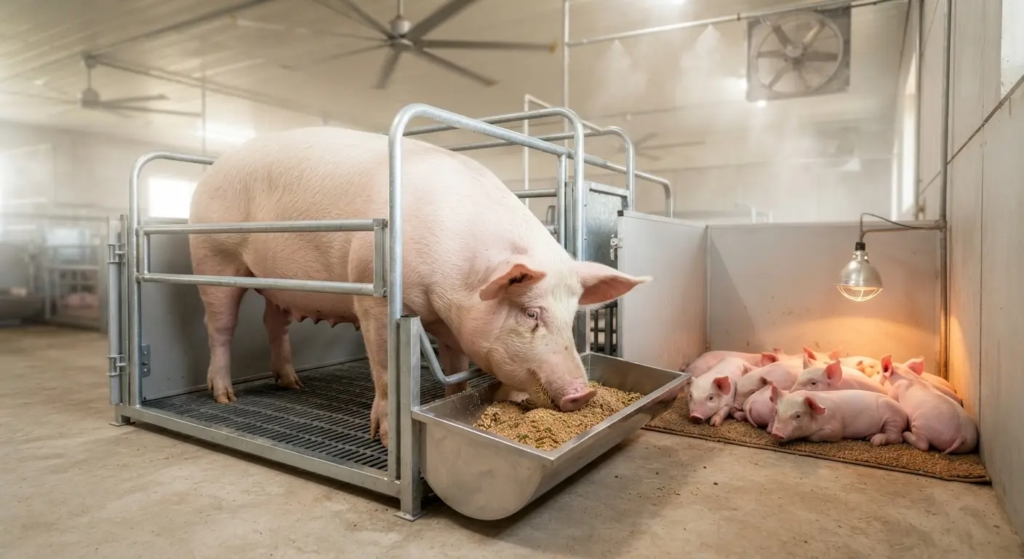
Maximize lactation feed intake: The primary intervention. A lactating sow should receive ad libitum (unrestricted) feed access throughout lactation — there is no benefit to restricting feed intake in lactating sows, and significant WEI extension cost from insufficient intake. Specific strategies to maximize intake:
- Feed 3–4 times per day rather than once or twice (more frequent feeding maintains feed freshness and palatability; sows eat more from frequent fresh feed offerings than from a single large daily allocation that sits and loses palatability)
- Use high-energy, high-palatability lactation rations — as detailed in nutrition guidance, the lactation ration’s ME should be 3,100–3,300 kcal/kg with appropriate amino acid balance
- Cool the sow zone to below 22°C during peak heat periods — heat stress directly suppresses voluntary feed intake; a sow that is not eating enough because she is too hot is losing body condition and accumulating WEI extension risk
Short-term flushing before and after weaning: Some operations provide increased energy nutrition in the 3–5 days immediately before and after weaning — “flushing” that provides extra energy during the period when follicular development is beginning, potentially improving both the speed and quality of ovulation. The evidence for this practice is mixed but it represents a low-cost, low-risk intervention.
Factor 2: Parity and first-litter gilt effects
First-litter gilts consistently show longer WEI than multiparous sows — a well-established biological pattern reflecting that gilts enter lactation with smaller body reserves than experienced sows and exit it more depleted, because they are simultaneously completing their own growth (still gaining skeletal and muscle mass) while supporting lactation demands.
Management implications for first-litter gilts:
- Targeted monitoring of WEI for first-parity sows — these animals represent the highest WEI extension risk and warrant closer post-weaning observation
- Consider slightly earlier weaning for very depleted first-litter gilts (if their BCS is below 2.0 at the planned weaning date, earlier weaning to stop further condition loss may produce better WEI outcomes than continuing lactation to the standard age)
- Prioritize nutritional support during lactation specifically for gilt-parity farrowing pens
Factor 3: Season and heat stress
In West and Central African production environments, the dry season hot period — when ambient temperatures regularly exceed 32–35°C — produces measurable WEI extension across the sow herd. The mechanism is dual:
- Direct heat stress during lactation reduces feed intake and condition at weaning
- Direct heat stress in the first days after weaning may suppress the hypothalamic signaling required for normal follicular development
The seasonal WEI pattern should be anticipated in farm management planning — expecting extended WEI during the hottest months and implementing cooling interventions (drip cooling, ventilation maximization during the post-weaning period) during these periods.
Factor 4: Boar stimulation (“boar effect”) on WEI
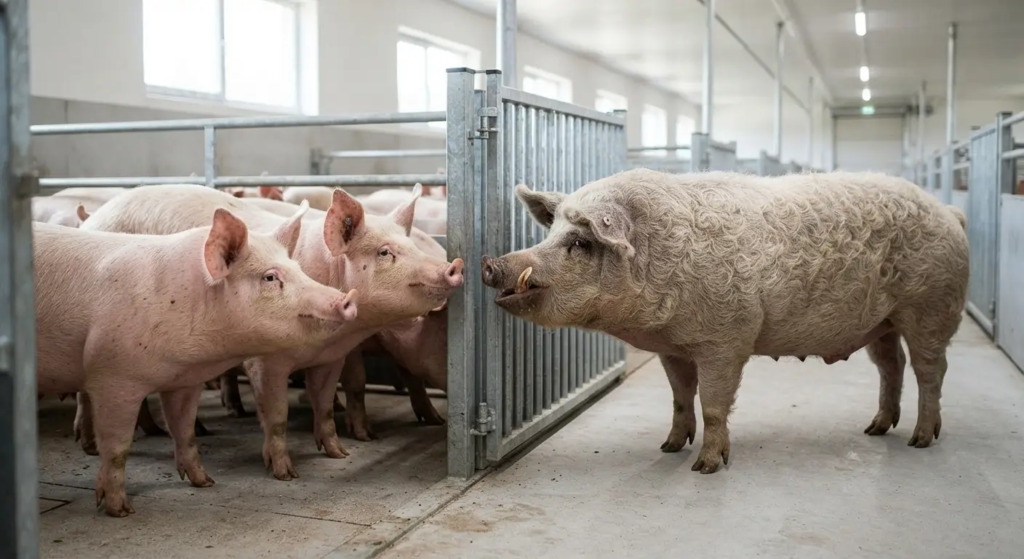
Daily exposure of weaned sows to a mature, active boar — nose-to-nose contact through a fence or in a heat-detection pen — significantly accelerates post-weaning estrus onset. The pheromone (androstenone in boar saliva) and behavioral stimuli from boar contact activate the hypothalamic GnRH pulse generator, shortening WEI by 1–3 days in susceptible sows.
Implementation: Systematic boar exposure beginning within 24 hours of weaning, for 15–20 minutes per day, continuing until standing heat is detected. The boar should be a mature, actively vocalizing animal (not a young, inexperienced boar with limited pheromone production) to maximize the stimulatory effect.
Factor 5: Suckling stimulation removal timing and lighting
The suckling stimulus from nursing piglets suppresses the GnRH pulse generator throughout lactation. Complete removal of suckling stimulation (weaning all piglets simultaneously) produces a more synchronized and faster hormonal rebound than gradual weaning — batch weaning rather than staggered individual piglet removal is associated with faster and more uniform WEI across the sow group.
Photoperiod (day length) also influences WEI — sows exposed to 16 hours of light per day show faster WEI rebound than those in shorter photoperiod environments. In naturally lit farrowing houses, dry season with shorter natural day length may contribute to seasonal WEI extension. Supplemental lighting to maintain 16-hour photoperiod in gestation and transition housing addresses this factor.
The Anestrous Sow — Investigation and Response Protocol
A sow not returning to estrus within 7–10 days of weaning should be flagged for investigation:
Day 7–10 post-weaning: Intensify boar exposure (twice daily rather than once daily)
Day 10–14 post-weaning:
- Verify body condition score — if BCS below 2.0, prioritize nutritional rehabilitation and accept an extended WEI; forced breeding of a very thin sow produces poor embryo survival and low litter size at subsequent farrowing, compounding the interval loss with a performance loss
- Check for any health issues (lameness, respiratory signs, any condition reducing appetite or metabolic function)
- Consider hormonal induction: PG600 (a combination of equine chorionic gonadotropin + human chorionic gonadotropin, commercially available as a veterinary product) administered intramuscularly at the manufacturer’s specified dose stimulates follicular development and ovulation in anovulatory sows; most effective when WEI has already been extended to 10+ days and natural return has not occurred
Day 14–21 post-weaning: Sows still not showing estrus after 14+ days:
- Rectal temperature assessment (ruling out systemic illness)
- Consider if the sow is actually in silent estrus (cycling without overt standing behavior) — rectal palpation by veterinarian or ultrasonography can confirm ovarian activity
- Evaluate for uterine pathology (endometritis, retained placenta from the previous farrowing) that may be suppressing estrous expression
- Make the culling vs. continued waiting decision: a sow not pregnant by day 21 post-weaning will farrow at a minimum 135 days later; if she farrows at 25 PSY per year from that point, the economic value of her remaining production must justify the 21 non-productive days already accumulated plus the ongoing overhead
Part 4: Conception Rate — Converting Breedings Into Confirmed Pregnancies
The Components of Conception Efficiency
Conception rate = proportion of services resulting in confirmed pregnancy at 30 days Farrowing rate = proportion of confirmed pregnancies farrowing (accounting for late losses)
Target values:
- Conception rate at service: 90–95%
- Farrowing rate from confirmed conception: 92–95%
- Effective farrowing rate from all services: 85–90%
Every percentage point below these targets represents services that fail to produce a farrowing — each failure adding a full cycle length (approximately 21 days if detected at repeat service, longer if detected by farrowing date calculation) to the average farrowing interval.
Why Services Fail
Incorrect insemination timing relative to ovulation:
As detailed extensively in estrus detection and AI guidance elsewhere in this series, sow ovulation occurs approximately 24–48 hours after the onset of standing heat, and sperm viability in the reproductive tract is approximately 24 hours. A service that occurs more than 24 hours after ovulation (too late) or that fails to deliver sperm that will survive until ovulation (if standing heat was misidentified and service was too early) fails to achieve fertilization.
The WEI-conception timing interaction: Sows bred during estrus that follows a very short WEI (2–3 days) show lower conception rates than those bred during a WEI of 4–6 days, because very rapid post-weaning follicular development produces ovulations with lower-quality oocytes than the more gradual 4–6 day developmental trajectory.
Semen quality failures:
For AI programs: semen that has been stored incorrectly (temperature excursion above 20°C or below 12°C, stored beyond its viability window), extended doses from a low-quality ejaculate, or semen with pathogen contamination from a poorly hygienic collection environment. As detailed in boar management and AI guidance, cold chain verification for semen is the most common preventable cause of AI failure.
For natural service: a boar with reproductive pathology, heat stress-induced temporary infertility (as detailed in boar management guidance — heat stress reduces semen quality 5–7 weeks after the heat event, creating a delayed semen quality impact that may not be obviously connected to the temperature event without deliberate record-keeping), or overuse leading to sperm reserve depletion.
Early embryonic mortality:
Fertilization succeeds but embryonic development fails before implantation (approximately days 12–18 of gestation). Causes include:
- Sow heat stress in the 2–4 weeks after breeding (elevated body temperature directly impairs embryo development)
- Mycotoxin exposure — zearalenone specifically disrupts early embryo survival (as detailed in mycotoxin guidance)
- Viral disease: PRRS, Aujeszky’s Disease, and various other pathogens can cause embryonic death at this stage
- Nutritional deficiency: folate, vitamin A, and vitamin E deficiencies have documented associations with early embryonic loss
Improving Conception Rate — Specific Interventions
Correct breeding timing: Three-service protocol within the standing heat window (first service at 12 hours after onset, second at 24 hours, third at 36–48 hours if still in standing heat) — as detailed in AI and estrus detection guidance. This protocol ensures sperm are present throughout the ovulation window regardless of exactly when within the standing heat period any individual sow ovulates.
Heat stress protection at breeding and in early gestation:
- The 30-day window from breeding through implantation is the highest embryonic mortality risk window for heat stress
- Cooling interventions (drip cooling of the sow’s neck and shoulders, ventilation maximization, shade access) during this period specifically protect early embryo survival
- Where farrowing rooms are climate-controlled but gestation housing is not, sows bred in the farrowing room (if served at the point of weaning) must be moved to adequately ventilated gestation housing promptly
Post-mating feeding management (the “flushing” controversy): High energy intake immediately after mating (the first 72 hours after service) increases progesterone clearance and reduces progesterone availability for early embryo maintenance — the opposite of what is needed. Standard practice is to reduce gestation feed to near-maintenance levels immediately after service, increasing progressively through gestation as detailed in sow nutrition guidance elsewhere in this series.
Part 5: Return-to-Service Detection — Minimizing the Days Lost From Failed Pregnancies
Why Early Detection of Failed Pregnancies Matters
A sow that was served but did not conceive will return to estrus approximately 21 days after service (if the failure was failure to fertilize or very early embryonic loss) or at variable later points (if the failure was later embryonic loss that resulted in prolonged corpus luteum maintenance before its regression and return to cycling). Every day between the failed service and the next confirmed breeding is a non-productive day added directly to the farrowing interval.
The detection discipline:
Every sow that was served should be observed for return to estrus at:
- Day 18–21 post-service: the expected return window for regular-cycle returns
- Day 38–42 post-service: some sows that show apparent pregnancy for the first 21 days may experience embryonic loss in the second cycle-equivalent period
Pregnancy diagnosis at 25–35 days:
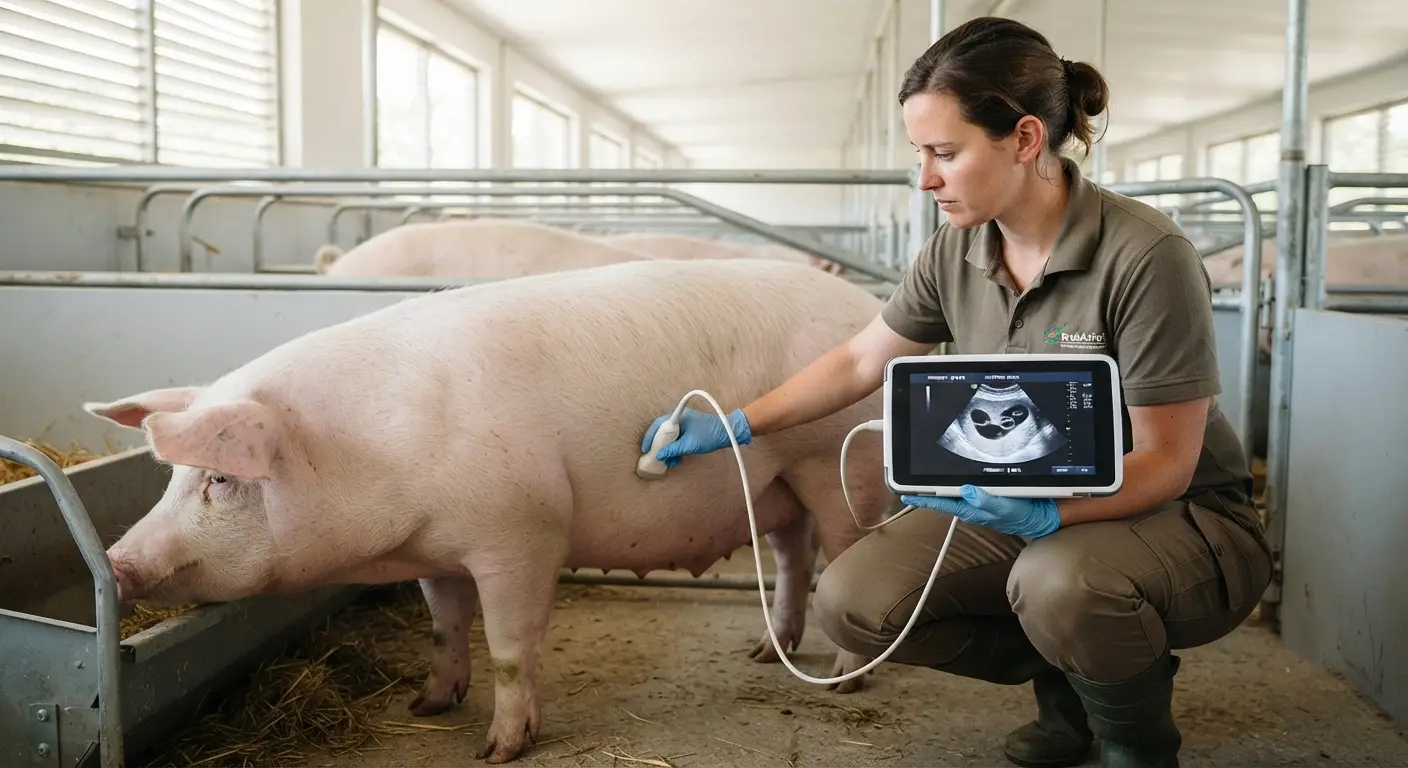
Ultrasound pregnancy diagnosis at 25–35 days post-service is the most important single monitoring tool for farrowing interval management — it identifies sows that are not pregnant while there is still time to rebreed them before the non-productive days accumulate excessively. A farm that diagnoses all service failures by ultrasound at day 28 and rebreeds by day 35 has an 8-day detection-to-rebreed lag. A farm that waits until expected farrowing date to discover an empty sow has a 4-month non-productive period.
Ultrasound equipment for pregnancy diagnosis:
Handheld B-mode ultrasound (real-time imaging) is the standard tool — with practice, pregnancy can be confirmed at 25 days (embryonic fluid visible as dark anechoic zones in the uterine lumen) by a trained operator. Doppler ultrasound probes designed specifically for pregnancy diagnosis in pigs are available at lower cost than real-time B-mode units and provide reliable confirmation from day 21–25 onward.
Where ultrasound equipment is not available or accessible, visual observation for return to estrus at days 18–21 and 38–42 with boar-assisted heat checking (as detailed in estrus detection guidance) provides an approximate alternative — though it captures only sows with visible estrus expression, missing the proportion that are cycling without clear behavioral estrus.
Part 6: Monitoring and Reporting — The Numbers That Drive Management
The Farrowing Interval Dashboard
The metrics that should be tracked routinely to monitor farrowing interval performance:
| Metric | Target | Calculation |
|---|---|---|
| Average farrowing interval | 140–152 days | Mean days between consecutive farrowings, across all sows with two or more consecutive farrowings in the period |
| Average weaning-to-service interval (WSI) | 5–8 days | Mean days from weaning to first service, all weaned sows |
| Proportion of sows served within 7 days of weaning | Above 85% | Number served ≤7 days ÷ total sows weaned × 100 |
| Farrowing rate (services that result in farrowing) | Above 85% | Number of farrowings ÷ number of services × 100 |
| Return rate (services returning to estrus) | Below 10% | Number of confirmed returns ÷ number of services × 100 |
| Repeat service rate | Below 5% | Number of repeat services (same sow, same cycle) ÷ total services × 100 |
| Non-productive sow days per sow per year | Below 35 days | Total non-productive days across herd ÷ average sow inventory |
The Non-Productive Sow Days (NPD) Metric
NPD is the most comprehensive single indicator of farrowing interval management performance — it captures the cumulative effect of extended WEI, failed conceptions, repeat services, and any other source of non-productive time:
NPD per sow per year = 365 − (Farrowings per sow per year × (Lactation length + Gestation length))
At target performance (2.4 farrowings per year, 22-day average lactation, 115-day gestation): NPD = 365 − (2.4 × (22 + 115)) = 365 − 328.8 = 36.2 days
At underperforming performance (2.0 farrowings per year, 24-day average lactation, 115-day gestation): NPD = 365 − (2.0 × (24 + 115)) = 365 − 278 = 87 days
The difference in NPD between target and underperforming herds (36 vs. 87 days) at 100 sows:
51 additional NPD per sow × 100 sows × XAF 2,000/day overhead = XAF 10,200,000 (USD 17,000) per year in avoidable non-productive sow costs, before accounting for the litters not produced from those empty days.
Part 7: The Batch Farrowing System — Structural Farrowing Interval Management
How Batch Farrowing Compresses the Interval Through Synchronization
As an alternative to continuous (all-year-round) farrowing management, batch farrowing systems group sows into defined cohorts that farrow and wean simultaneously — creating the all-in/all-out management conditions at the farrowing house level that are impossible to achieve with continuous farrowing.
The interval management advantage of batch systems: By synchronizing weaning across a defined group, all sows in the batch have their WEI and subsequent breeding managed as a cohort — heat detection can be systematic for the entire batch simultaneously, the boar exposure protocol can be applied to all batch sows simultaneously, and any extended WEI or failure-to-conceive is identified within the batch context rather than obscured in the continuous flow of individual sow events.
Batch size options:
- Weekly batch: All sows in one production week form a batch — farrowing house rooms are filled and emptied weekly; requires good room allocation management but is operationally compatible with most farm sizes
- 3-week batch: All sows farrow in a single 3-week cycle — extremely tight farrowing interval management required; allows maximum production efficiency in the farrowing house but requires very high heat detection and conception rate discipline to maintain batch cohesion over time
The synchronization tools used in batch farrowing:
Altrenogest (synthetic progestogen): Used to synchronize estrus timing by suppressing the reproductive cycle until the desired date; sows receive altrenogest daily for 15–18 days, then all sows in the batch are withdrawn simultaneously, producing synchronized return to estrus 4–7 days after cessation.
PG600: Can be used after altrenogest withdrawal to sharpen the estrus synchronization within a batch, reducing the within-batch variation in estrus timing.
The use of synchronization hormones requires veterinary guidance and should be integrated with an understanding of local regulatory requirements regarding their use in food-producing animals.
Summary
The farrowing interval is the reproductive efficiency metric that most directly determines the sow herd’s productivity — and it is not one number but the sum of five manageable components: lactation length, weaning-to-estrus interval, gestation length (fixed), conception rate, and return-to-service detection speed.
Of these five components, two account for the majority of the variation between high-performing and underperforming herds:
The weaning-to-estrus interval — the most management-responsive component, compressed by maximizing lactation feed intake to prevent excessive body condition loss, providing daily boar stimulation from the day of weaning, and targeting 16-hour photoperiod in post-weaning housing. A herd averaging 4.5-day WEI rather than 9-day WEI has saved 4.5 productive days per sow per cycle — the equivalent of approximately 0.3 additional farrowings per sow per year.
Conception rate management — converting services into confirmed pregnancies through correct breeding timing (the three-service protocol within the standing heat window), verified semen quality (cold chain management for AI programs), heat stress protection in the 30 days following service, and early pregnancy diagnosis by ultrasound at day 28 that allows rapid rebreeding of failures before their non-productive days accumulate beyond detection.
The farm that tracks NPD, WEI, and farrowing rate systematically — watching for trends that indicate a specific management component deteriorating — is the farm that catches farrowing interval extension problems before they accumulate into a season’s production shortfall. The farm that tracks nothing is the farm that discovers at year-end that its PSY was below target without knowing which of the five interval components was responsible.
Measure. Diagnose. Intervene specifically. The non-productive days are identifiable, preventable, and expensive. Every day saved in the farrowing interval is a day of productive capacity recovered from overhead.