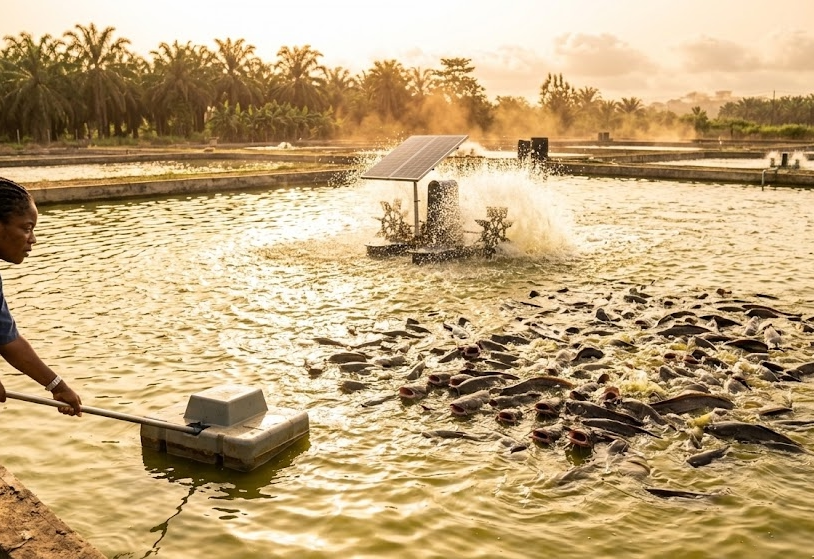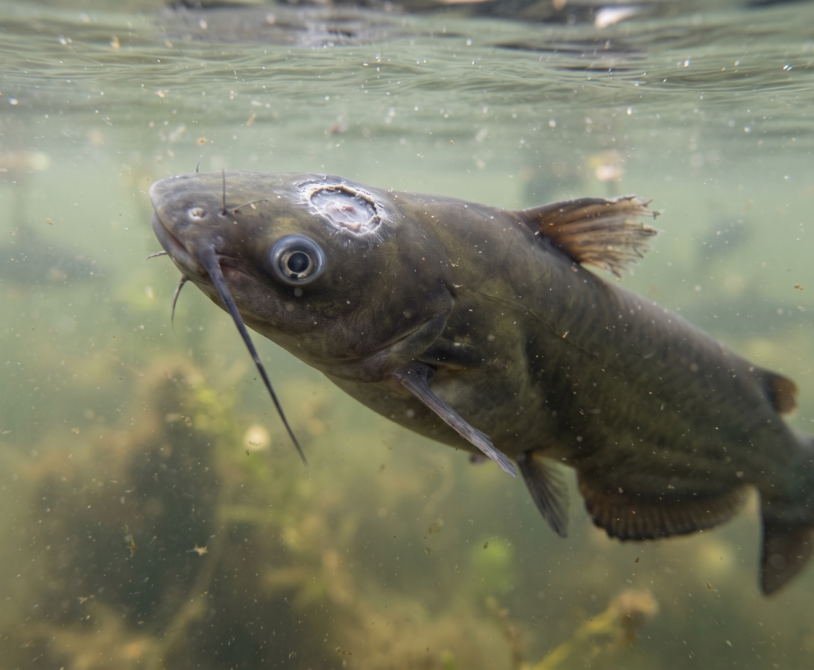
Nitrite poisoning is a water quality problem that occurs when nitrite accumulates in catfish ponds or tanks. It can interfere with the ability of fish to transport oxygen in their blood, leading to respiratory distress, weakness, reduced feeding, and in severe cases, death.
In African catfish farming, nitrite management is important because poor waste processing, inadequate biological filtration, and excessive organic waste can contribute to unstable water quality.
What Causes Nitrite Poisoning in Catfish?
Nitrite is an intermediate compound in the biological conversion of ammonia into nitrate. Beneficial bacteria normally help process nitrogenous waste, but disruptions in this process can cause nitrite to accumulate.
Common causes include:
- Poor biological filtration: The system may not contain enough active bacteria to process nitrogenous waste effectively.
- Immature biofilters: Newly established tank systems may not yet have a stable biological filtration community.
- High stocking density: Large numbers of fish produce more waste, increasing the demand on the filtration system.
- Overfeeding: Uneaten feed and fish waste increase the nitrogen load.
- Accumulated organic matter: Decomposition adds to the waste-processing burden.
- Inadequate water management: Poor circulation, ineffective filtration, or unsuitable water exchange can contribute to deteriorating conditions.
- Sudden changes in the farming system: Disruption of biological filtration can interfere with the normal conversion of nitrogen compounds.
Nitrite problems can develop in earthen ponds, concrete tanks, plastic tanks, and recirculating aquaculture systems.
How Nitrite Affects Catfish
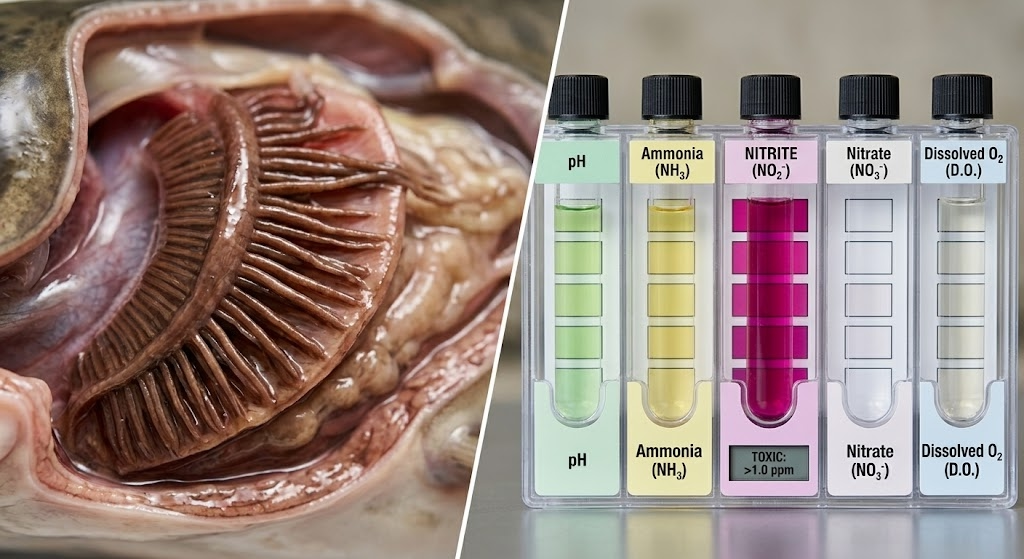
Nitrite can enter the bloodstream through the gills and interfere with haemoglobin, the protein responsible for carrying oxygen.
When this happens, the blood becomes less effective at delivering oxygen to tissues. This condition is commonly associated with methemoglobin formation.
As a result, affected fish may experience oxygen deprivation even when dissolved oxygen in the water appears adequate.
The effects can include:
- Reduced oxygen transport in the blood.
- Respiratory distress and rapid gill movement.
- Weakness and abnormal swimming.
- Reduced appetite and poor growth.
- Increased physiological stress.
- Severe illness or death when exposure is sufficiently high.
The severity depends on nitrite concentration, exposure duration, water chemistry, and the condition of the fish. Chloride concentration can also influence nitrite toxicity.
Symptoms of Nitrite Poisoning in Catfish
Farmers should watch for changes in fish behaviour, especially when several fish become affected within a short period.
Common warning signs include:
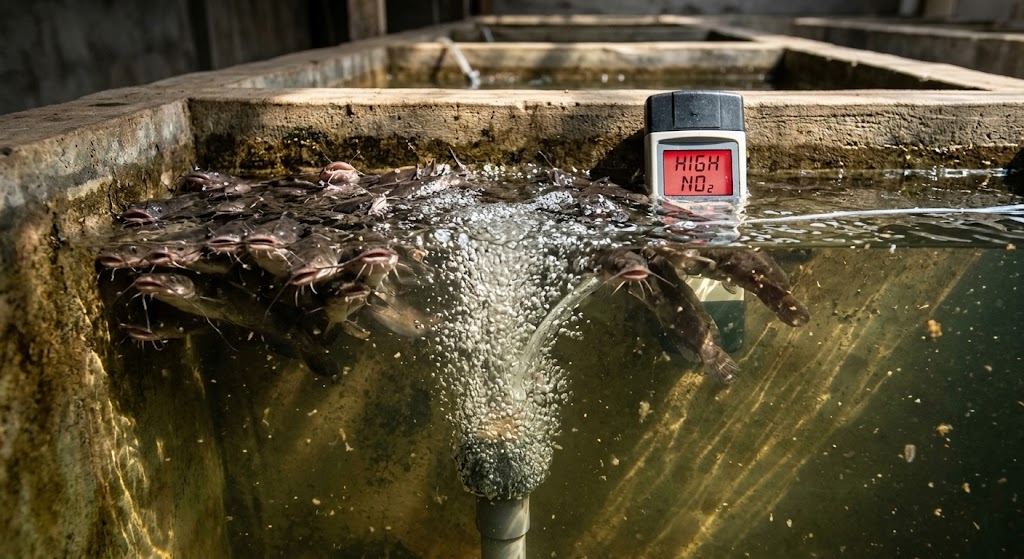
- Catfish gasping at the water surface.
- Rapid gill movement or apparent breathing difficulty.
- Reduced feeding or complete loss of appetite.
- Sluggish movement and weakness.
- Abnormal swimming or loss of coordination.
- Fish gathering near water inflows or areas with stronger circulation.
- Unexplained mortality.
In some fish species, nitrite poisoning can cause brownish blood or gills because of methemoglobin formation. However, external appearance alone is not a reliable diagnostic method, particularly in African catfish.
These signs can also occur with low dissolved oxygen, ammonia poisoning, and gill disease. Water testing is necessary to distinguish between them.
How to Diagnose Nitrite Poisoning in Catfish
1. Test nitrite concentration
Use a suitable aquaculture test kit or water-testing instrument to measure nitrite. Check whether the result is expressed as nitrite (NO₂⁻) or nitrite-nitrogen (NO₂-N), because the units are not interchangeable.
2. Test ammonia
Ammonia and nitrite are connected through the nitrogen cycle. Measuring both can help identify a broader waste-processing problem.
3. Measure dissolved oxygen
Check dissolved oxygen even if nitrite poisoning is suspected. Low oxygen can occur simultaneously and worsen respiratory distress.
4. Check pH, temperature, and chloride
These parameters help provide a more complete picture of water conditions. Chloride is particularly relevant because it can reduce nitrite uptake at the gills in many fish species.
5. Inspect the farming system
Check feeding records, stocking density, water circulation, solids removal, and the performance of biological filtration.
6. Seek further diagnosis if necessary
If mortality continues despite improving water quality, consult an aquatic animal health professional. Other diseases or toxic exposures may be responsible.
How to Respond to Nitrite Poisoning in Catfish
When nitrite poisoning is suspected, act quickly while confirming the diagnosis.
Improve aeration
Increase aeration when fish are showing respiratory distress. Although aeration does not remove nitrite directly, it helps maintain dissolved oxygen and reduces additional oxygen stress.
Reduce or temporarily stop feeding
Reduce the nitrogen load entering the system by withholding or reducing feed during an acute water quality problem. Resume feeding gradually once conditions stabilize and the fish recover.
Correct water quality carefully
Where suitable replacement water is available, a controlled partial water exchange may help reduce nitrite concentration. Test the replacement water and avoid sudden changes in temperature, pH, or other important parameters.
Check biological filtration
In tank systems, inspect the biofilter and confirm that it is functioning correctly. Avoid cleaning or disinfecting the entire biological filter in ways that destroy beneficial bacteria.
Evaluate chloride management
Chloride may help reduce nitrite uptake in fish, but any salt or chloride treatment must be based on measured conditions, the farming system, fish tolerance, and appropriate aquaculture guidance. Do not apply arbitrary quantities of salt without assessing the situation.
Retest the water
Repeat nitrite and dissolved oxygen measurements after corrective actions. Continue monitoring ammonia and other relevant parameters until the system becomes stable.
Important: Do not assume every case of gasping or sudden mortality is nitrite poisoning. Confirm the water quality problem and avoid combining chemicals or applying treatments without a clear diagnosis.
How to Prevent Nitrite Poisoning in Catfish Farming
Prevention requires consistent control of feeding, waste, and biological filtration.
- Avoid overfeeding. Provide feed according to fish size, biomass, and appetite.
- Manage stocking density. Match the number of fish to the system’s filtration, aeration and water-management capacity.
- Maintain biological filtration. Ensure that beneficial bacteria have suitable conditions to process nitrogenous waste.
- Monitor water quality. Test nitrite and ammonia regularly, particularly in intensive tank systems.
- Remove uneaten feed and organic waste. Reduce the amount of material decomposing in the system.
- Avoid disrupting biofilters. Use appropriate cleaning and maintenance practices.
- Monitor newly established systems. Check nitrogen compounds closely while biological filtration is developing.
- Keep daily records. Track feed quantities, water readings, fish behaviour, and mortality.
- Investigate recurring problems. Repeated nitrite spikes may indicate excessive feeding, high stocking density or inadequate filtration capacity.
Nitrite Poisoning vs. Ammonia Poisoning
| Feature | Nitrite poisoning | Ammonia poisoning |
|---|---|---|
| Main mechanism | Interferes with oxygen transport in the blood | Toxic ammonia can damage gills and disrupt normal physiological functions |
| Possible signs | Respiratory distress, weakness and abnormal swimming | Gill irritation, respiratory distress and reduced feeding |
| Main test | Nitrite concentration | Total ammonia, interpreted with pH and temperature |
| Common underlying issue | Disrupted nitrogen processing or inadequate filtration | Excess waste production or inadequate waste processing |
| Prevention | Waste control, filtration and water monitoring | Feeding control, waste management and water monitoring |
Both conditions can occur in the same farming system. Testing for both ammonia and nitrite can help identify the underlying water quality problem.
Frequently Asked Questions
Can nitrite poisoning kill catfish?
Yes. High or prolonged exposure can interfere with oxygen transport and cause severe illness or mortality.
Can catfish suffer from nitrite poisoning when dissolved oxygen is adequate?
Yes. Nitrite affects oxygen transport in the blood, so adequate dissolved oxygen in the water does not eliminate the risk.
Does changing water reduce nitrite?
A partial water exchange can reduce nitrite if the replacement water is suitable and contains less nitrite. Changes should be managed carefully to avoid additional stress.
Does aeration remove nitrite?
No. Aeration supports oxygen availability but does not directly remove nitrite. Corrective measures must also address the source of nitrite accumulation and the performance of biological filtration.
Why does nitrite increase in fish tanks?
Nitrite can accumulate when the biological processes responsible for converting ammonia into nitrate cannot keep up with the nitrogen load. Immature biofilters, excessive waste, and filtration problems are common contributing factors.
Conclusion
Nitrite poisoning in catfish is a potentially serious water quality problem because it interferes with the blood’s ability to transport oxygen. Early recognition, reliable water testing, effective biological filtration, and careful feeding management are essential for reducing losses.
When fish show signs of respiratory distress, measure nitrite, ammonia, and dissolved oxygen rather than relying on symptoms alone. Correct the underlying water quality problem and continue monitoring until conditions stabilize.