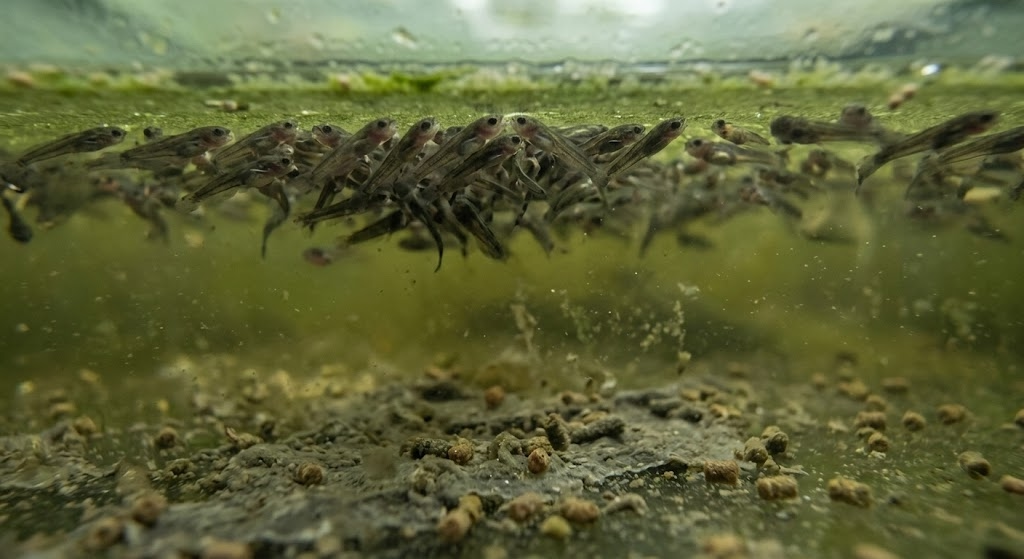
Catfish fry not eating is a common concern in hatchery and nursery management. Reduced feeding can indicate stress, unsuitable feed, poor water quality, disease, or changes in the fish’s environment. If the problem continues, fry may grow slowly, become weak, and experience increased mortality.
In African catfish farming, feeding behaviour is an important indicator of fry health. However, a lack of feeding does not automatically mean the fish are infected. Farmers should investigate water conditions, feed suitability, and recent management changes before deciding on a response.
Why Are Catfish Fry Not Eating?
1. Poor Water Quality
Water-quality problems can reduce appetite and interfere with normal activity. Low dissolved oxygen, ammonia accumulation, elevated nitrite, and unsuitable temperature or pH may all contribute to poor feeding.
Signs to watch for:
- Fry ignore feed or respond weakly.
- Fish swim abnormally or become less active.
- Fry gather near the water surface or water inflow.
- Feeding declines alongside increasing mortality.
What to do: Check dissolved oxygen, ammonia, nitrite, pH, and temperature. Correct identified problems promptly, especially suspected oxygen depletion.
2. Unsuitable Feed Size or Type
Fry need feed appropriate for their developmental stage and ability to consume it. Feed particles that are too large, unsuitable feed types or poor-quality feed may reduce feeding response.
What to do: Review whether the feed is appropriate for the size and developmental stage of the fry. Observe whether they can locate and consume the particles offered.
3. Inappropriate Feeding Practices
Feeding practices that do not match the needs of the fry can affect feed intake. Too little feed may limit access, while excessive feeding can increase waste and deteriorate water quality.
Possible contributing factors include:
- Inconsistent feeding routines.
- Uneven feed distribution.
- Excessive feed quantities.
- Feed that has deteriorated during storage.
What to do: Follow a feeding routine appropriate for the fry’s developmental stage and production system. Distribute feed so that fry have a reasonable opportunity to access it, and remove excess feed where practical.
4. Stress After Handling or Transfer
Fry may temporarily reduce feeding after transport, grading, stocking, or transfer to a new tank or pond.
Stress may be greater when handling causes injury or when the new water differs substantially from the previous environment.
What to do: Minimize unnecessary disturbance, assess the new environment, and allow the fish to recover under suitable conditions. Check water quality rather than assuming that reduced feeding is simply a normal response to handling.
5. Disease or Parasitic Infection
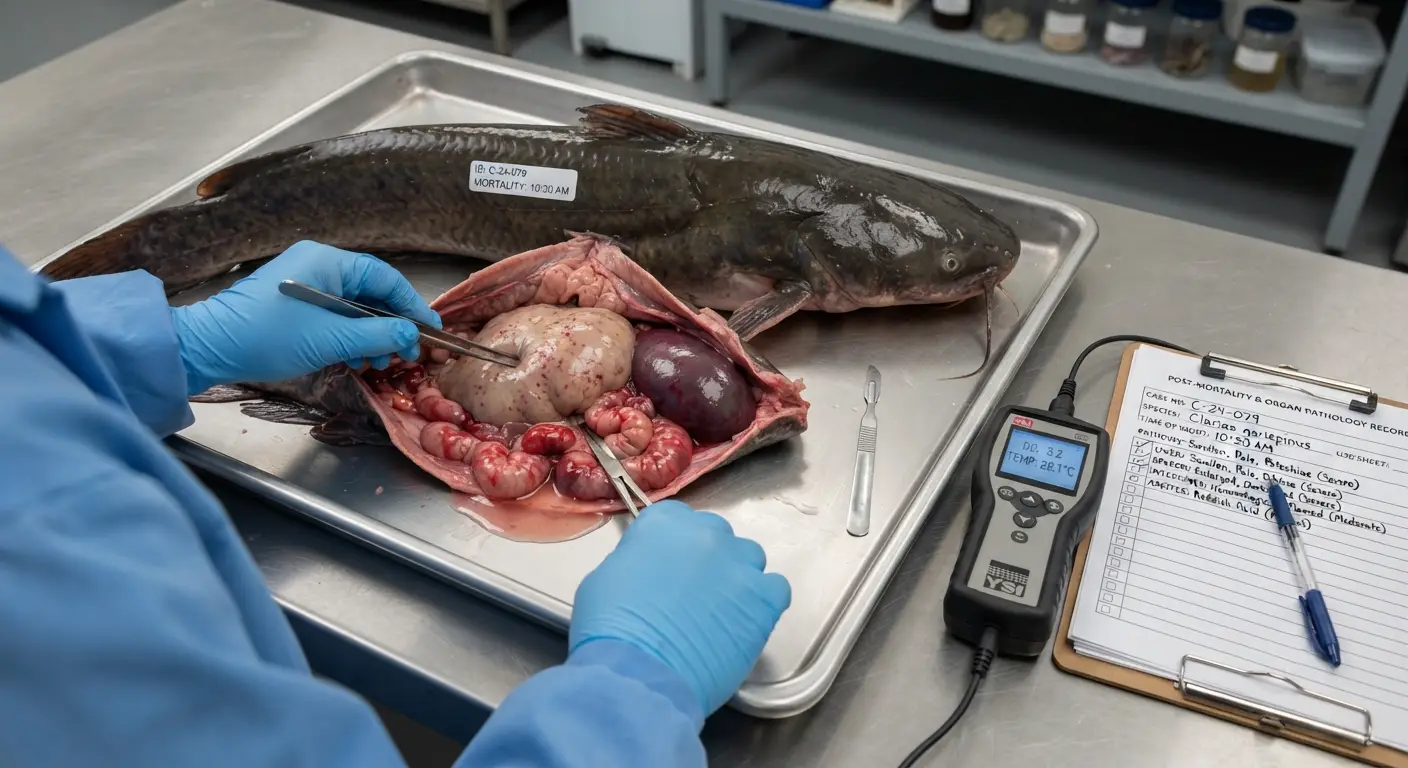
Bacterial, fungal, or parasitic conditions may reduce appetite, particularly when fry are weak or experiencing respiratory distress.
Other signs may include:
- Abnormal swimming.
- Rapid gill movement.
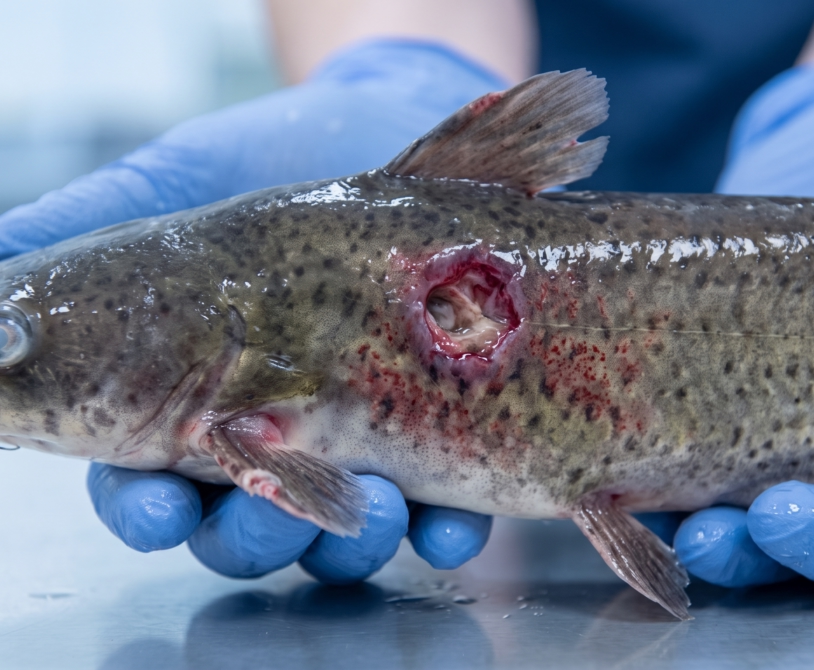
- Skin lesions or unusual growths.
- Excess mucus.
- Increasing mortality.
These symptoms are not specific to any one disease. A fish-health professional may need to examine the fry to identify the cause.
6. Unsuitable Temperature
Temperature affects fish activity, metabolism, and feeding behaviour. Conditions outside the suitable range for the particular developmental stage may reduce feeding and increase stress.
What to do: Measure the water temperature and compare it with guidance appropriate for African catfish fry in the production system. Avoid abrupt temperature changes.
7. Poor Feed Quality or Storage
Feed may lose quality if it is stored improperly, exposed to moisture, or kept beyond its usable period. Fry may respond poorly to feed that has deteriorated.
What to do: Inspect feed condition, check storage practices, and use fresh, appropriately stored feed. Avoid introducing large amounts of unfamiliar feed without observing how the fry respond.
How to Identify the Cause of Poor Feeding
A structured investigation can help narrow down the possible causes.
| Observation | Possible cause to investigate |
|---|---|
| Fry stop feeding suddenly | Oxygen problems, water-quality changes, handling stress or acute illness |
| Fry feed poorly but remain active | Feed suitability, distribution, quality or environmental conditions |
| Feeding declines after transfer | Handling stress or differences in the new water |
| Fry show rapid breathing and refuse feed | Low oxygen, gill problems or other water-quality issues |
| Fry show skin lesions or unusual growths | Possible infectious or other skin condition |
| Uneven growth develops over time | Competition, feed access, unsuitable feed or chronic stress |
| Poor feeding occurs with increasing deaths | Serious environmental or health problem requiring urgent investigation |
These observations provide clues rather than definitive diagnoses.
What to Do When Catfish Fry Stop Eating
Step 1: Check the Water Immediately
Measure dissolved oxygen, ammonia, nitrite, pH, and temperature. Check aeration, water circulation, and the presence of accumulated waste.
If fry are gasping or dying, address suspected oxygen depletion immediately.
Step 2: Inspect the Feed
Check particle size, freshness, storage conditions, and suitability for the fry’s developmental stage.
Observe whether the fry are physically able to consume the feed.
Step 3: Review Feeding Practices
Consider feed quantity, distribution, and consistency. Avoid responding to poor appetite by repeatedly adding more feed, as uneaten feed can worsen water quality.
Step 4: Observe Fish Behaviour
Check whether fry are swimming normally, responding to movement, and breathing normally. Look for skin abnormalities or other signs of illness.
Step 5: Review Recent Changes
Consider recent transport, stocking, grading, water replacement, feeding changes, or chemical applications.
Step 6: Seek Professional Diagnosis if Needed
If feeding does not improve, symptoms worsen, or mortality increases, consult an aquaculture specialist or fish-health laboratory. Avoid using antibiotics or other treatments without identifying the likely cause.
How to Prevent Feeding Problems in Catfish Fry
Maintain Suitable Water Quality
Monitor water conditions regularly and maintain appropriate aeration and circulation. Good water management supports normal feeding and reduces environmental stress.
Provide Suitable Feed
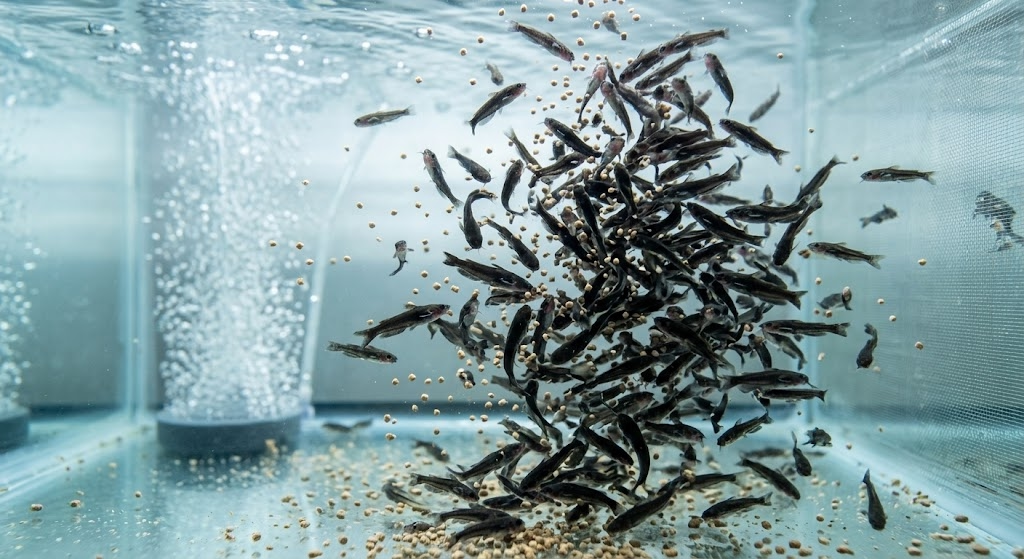
Choose feed appropriate for the developmental stage and feeding ability of the fry. Store it correctly and monitor whether the fish consume it.
Establish a Consistent Routine
Follow a feeding schedule suitable for the production system. Observe feeding response and adjust practices based on fish condition, feed consumption, and water quality.
Avoid Overfeeding
Excess feed can accumulate and decompose, increasing organic waste and potentially contributing to ammonia problems and oxygen demand.
Minimize Handling Stress
Handle fry carefully during transport, grading and transfer. Avoid unnecessary disturbance and monitor feeding behaviour after management changes.
Monitor Fry Daily
Record feeding response, growth, mortality, and water-quality results. Daily observations help farmers detect developing problems before they become severe.
Frequently Asked Questions
How long can catfish fry go without eating?
The answer depends on developmental stage, size, health, temperature, and previous nutritional condition. There is no single safe duration for every batch. Prolonged refusal to feed should be investigated rather than managed by waiting for a fixed period.
Why are my catfish fry not eating but still swimming?
Fry may remain active while experiencing unsuitable feed, environmental stress, early disease, or other problems. Check feed suitability and water quality, and continue monitoring behaviour.
Should I add more feed when fry refuse to eat?
Not automatically. Adding more feed may increase waste without improving consumption. Check feed quality, particle size, distribution, and water conditions first.
Can low oxygen make catfish fry stop eating?
Yes. Low dissolved oxygen can interfere with normal activity and feeding. Check oxygen promptly, especially if fry are gasping, gathering near the surface, or showing sudden weakness.
Can disease cause catfish fry to stop eating?
Yes. Some infections and parasitic conditions can reduce appetite. However, poor feeding alone does not establish a diagnosis, and water-quality problems should also be investigated.
Conclusion
Catfish fry may stop eating because of poor water quality, unsuitable feed, inconsistent feeding practices, handling stress, temperature problems, or disease. Identifying the cause is more effective than simply increasing feed or applying medication.
For African catfish farmers, consistent water monitoring, suitable nutrition, careful handling, and daily observation are essential for maintaining feeding response, improving growth, and reducing avoidable losses.