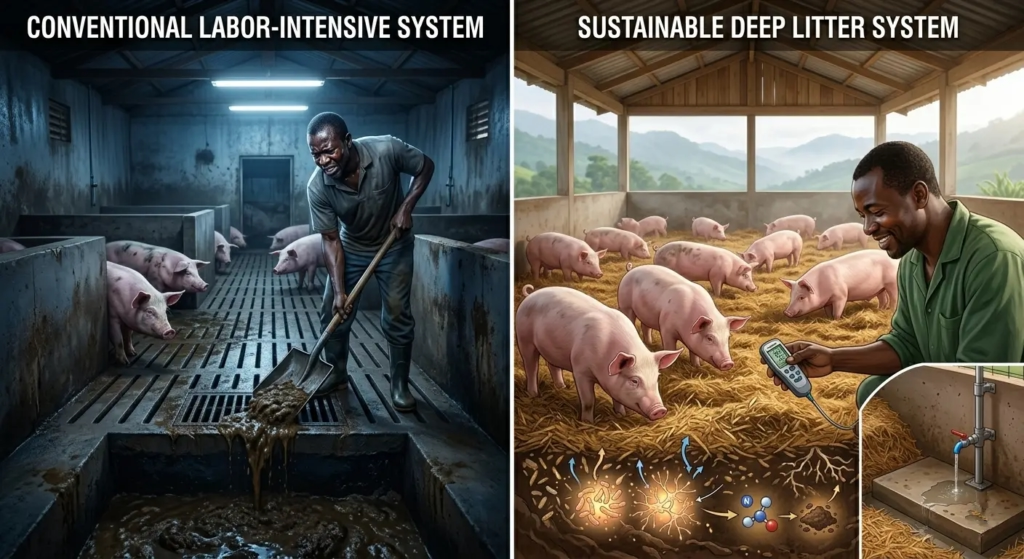
The conventional pig house asks one thing of the farmer every day without exception: move the manure. Scrape the concrete, push it into the channel, flush the drains, repeat — every morning, every house, 365 days a year. For a 50-sow farm, daily manure removal consumes 3–5 person-hours of labor. Over a year, that is 1,095–1,825 hours of skilled labor directed at moving waste rather than managing pigs.
The deep litter system asks something different. Instead of removing manure daily, it asks the farmer to manage a biological process that transforms manure into stable organic matter in place, inside the pen, under the pigs, through the activity of microorganisms that digest the manure, stabilize the nitrogen, and suppress the ammonia and pathogen load that make conventional manure management both labor-intensive and odor-generating.
When the biology works correctly, a deep litter piggery does not smell the way most people expect a pig farm to smell. It smells like composting forest floor — earthy, biological, not offensive. The ammonia that dominates poorly ventilated conventional pig houses is largely absent because the litter’s microbial community converts ammonia-releasing nitrogen compounds into stable organic nitrogen before they volatilize. The manure that would require daily removal instead becomes a 20–30 cm deep biological filter that processes pig waste continuously.
This guide covers the biology that makes deep litter systems work, the physical setup requirements, the litter materials appropriate for West African conditions, the management protocols that keep the system functional, and the economic comparison against conventional concrete-floor systems that determines whether deep litter is the right choice for a specific operation.
The Biology Behind Deep Litter: Why It Works
Understanding deep litter management requires understanding what is happening biologically in the litter bed — because the farmer’s management interventions are not about moving material but about maintaining the conditions that allow the microbial community to function.
The Microbial Community
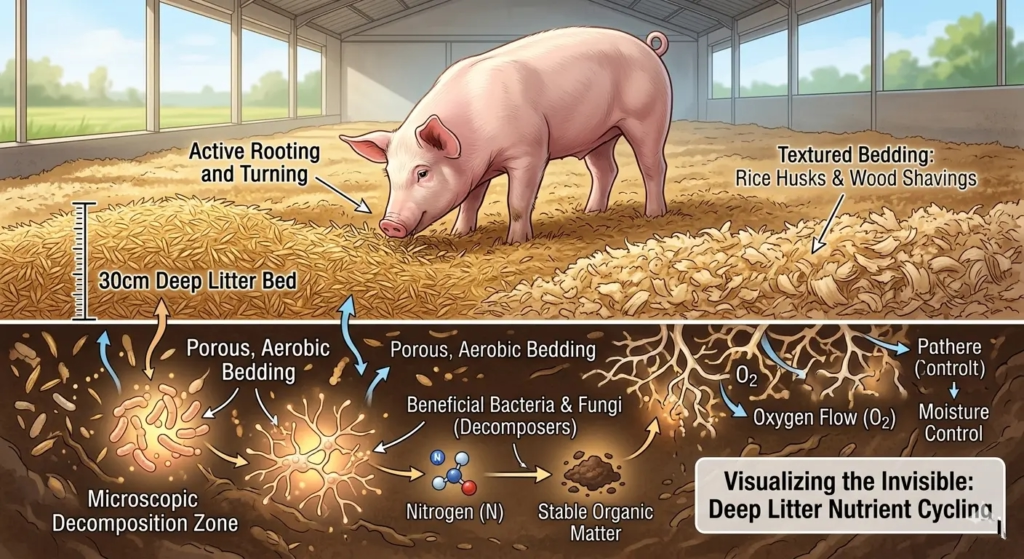
A functioning deep litter bed is home to a diverse community of microorganisms including bacteria (Bacillus, Streptomyces, Pseudomonas, Lactobacillus), actinomycetes, and fungi that collectively perform the decomposition process. These organisms require four inputs to remain active:
Carbon: The bedding material — wood shavings, rice husks, sawdust, dry maize stover — provides the carbon substrate that fuels microbial metabolism. Carbon is the energy source for the decomposition process. Without adequate carbon, the microbial community cannot process the nitrogen in pig manure fast enough to prevent ammonia accumulation.
Nitrogen: Pig manure and urine provide the nitrogen that the microbial community requires for cell synthesis. The ratio of carbon to nitrogen (C:N ratio) in the litter must be maintained at 25–35:1 for optimal microbial activity. Fresh wood shavings alone have a C:N ratio of 400–500:1 — far too carbon-rich for rapid decomposition without the nitrogen contribution of pig manure. Pig manure alone has a C:N ratio of 8–15:1 — far too nitrogen-rich, leading to ammonia volatilization. The combination of carbon-rich bedding and nitrogen-rich manure, at the right stocking density, produces the approximately 25–35:1 ratio that supports efficient decomposition.
Moisture: Microbial activity requires moisture — but not excess moisture. The target litter moisture content is 40–60%. Below 30%, the microbial community becomes dormant; above 70%, anaerobic conditions develop, producing the hydrogen sulfide and volatile fatty acid odors associated with wet manure rather than the neutral-to-earthy smell of aerobic composting.
Oxygen: Aerobic decomposition — the process that eliminates ammonia odor and pathogen load — requires oxygen. Oxygen reaches the microbial community through two pathways: diffusion from the litter surface through the litter profile, and convective movement when pigs root and walk through the litter. This is why pig rooting behavior — which farmers in concrete-floor systems manage against by providing nose rings — is actually beneficial in a deep litter system. Rooting aerates the litter.
The Ammonia Suppression Mechanism
Ammonia in a conventional pig house is produced by urease-producing bacteria that convert uric acid and urea in pig excreta to ammonia gas. In a deep litter system, the competitive advantage shifts:
When the litter C:N ratio and moisture are correct, nitrogen-immobilizing bacteria incorporate the ammonium ion (NH₄⁺) — the intermediate compound between urea breakdown and ammonia gas production — into microbial cell material before it can volatilize as ammonia. The nitrogen is “fixed” in organic form rather than released as a gas.
This immobilization is why a correctly managed deep litter system can house pigs at conventional stocking densities without generating the ammonia concentrations that impair pig respiratory health and create neighbor complaints. The litter is not hiding the smell — it is converting the ammonia precursor to a non-volatile form before it becomes a gas.
The Heat Generation
Active deep litter beds generate heat through microbial metabolic activity — the same thermophilic process that heats a compost pile. Temperatures in the center of an active litter bed can reach 40–55°C. This has two practical consequences:
Positive: Heat generation from the litter surface warms the air immediately above the litter — beneficial for piglets in weanling and grower pens in cooler highland climates where supplemental heating would otherwise be required. This is one of the most frequently cited advantages of deep litter systems in highland West African production areas (Bafoussam, Bamenda, Ngaoundéré — where overnight temperatures in the harmattan season drop to 12–16°C).
Negative: In lowland tropical zones where ambient temperatures already exceed 28–32°C, litter heat generation adds to the thermal load that the house ventilation system must remove. Sows and finisher pigs in hot lowland climates may experience measurable heat stress from litter-generated heat that would not occur in a concrete-floor system. This is the most important reason why deep litter systems are better suited to highland or moderate-temperature zones than to lowland coastal operations in West Africa.
Is Deep Litter Right for Your Farm?
Before committing to a deep litter system, honestly assess the following conditions:
Deep litter works well when:
- The production stage is growers and finishers (25–110 kg) — the most forgiving stage for litter management
- The climate is highland or moderate (ambient temperatures below 28°C for most of the year)
- Labor cost is high relative to bedding material cost — deep litter reduces daily labor substantially
- Local bedding materials (rice husks, wood shavings, sawdust) are inexpensive and reliably available
- Organic fertilizer markets exist for the finished compost product
- The stocking density can be maintained at appropriate levels (see specifications below)
Deep litter is problematic when:
- The production stage is farrowing — newborn piglets in a litter bed face a significantly higher pathogen challenge from the soil microbial environment than in a cleaned farrowing crate; deep litter is not recommended for farrowing
- The climate is hot and humid lowland (Douala, Lagos, Port Harcourt) — heat stress from litter heat generation adds to already-challenging ambient temperatures
- Bedding materials are expensive or unreliable in supply — a deep litter system that runs out of bedding becomes a wet manure system within days
- Water from drinker leakage, rainfall infiltration, or pig urine is wetting the litter faster than ventilation and microbial activity can dry it
Setting Up a Deep Litter Piggery: The Physical Requirements
Building Design for Deep Litter
The deep litter building differs from a slatted-floor conventional building in three specific ways:
1. Elevated floor or sunken pen construction
The litter bed will be 20–40 cm deep at full operation. This depth must be accommodated within the pen without creating a barrier at the pen entrance that is difficult for pigs to cross or that allows litter to spill into aisles.
Two design approaches:
Sunken pen floor: The pen floor is excavated 30–40 cm below the aisle level. Litter is added to fill the sunken area, creating a pen surface flush with or slightly below aisle level. As litter accumulates, the pen effectively becomes shallower. This design is easy to retrofit in existing buildings and simplest to execute.
Raised aisle level: The aisle is elevated on a low concrete wall, with the pen floor at ground level. Litter builds up within the pen walls. This design is more common in purpose-built deep litter facilities and allows easy litter removal by machine at cleanout.
2. Generous ventilation
Deep litter’s biological decomposition generates moisture and CO₂ continuously. Without adequate ventilation, moisture accumulates in the litter faster than it evaporates — driving moisture above the 70% level where anaerobic conditions develop, and odor becomes a problem.
Minimum ventilation for deep litter pig houses:
- Ridge vent: full length of the building, minimum 30 cm wide opening
- Sidewall opening: 60–70% of sidewall area open (wire mesh or adjustable curtain)
- No enclosed walls that trap moisture-laden air
Deep litter systems in poorly ventilated buildings — or buildings with their curtains permanently closed — consistently fail. The ventilation requirement is non-negotiable.
3. Drinker management to prevent wet spots
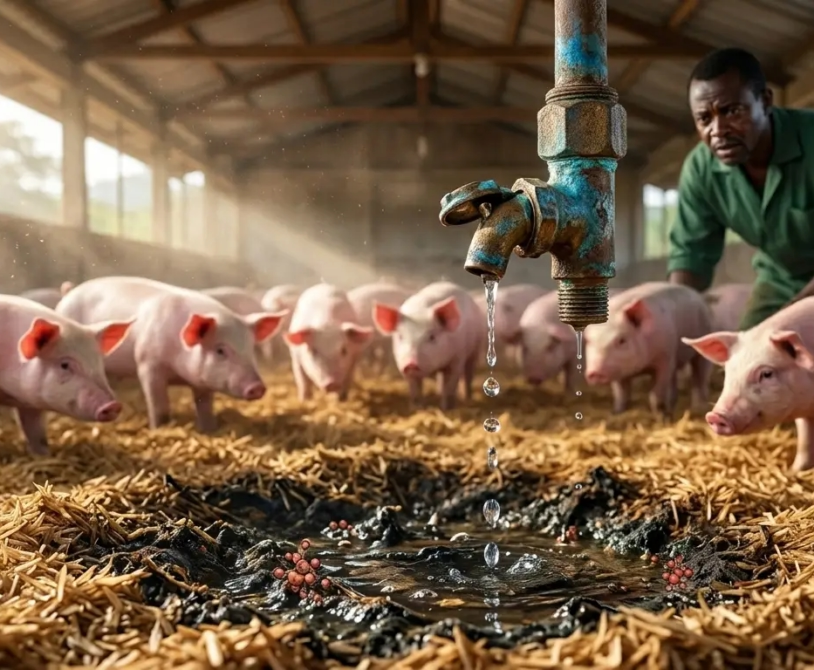
The single most common cause of deep litter system failure in West Africa is drinker leakage, creating wet zones in the litter that become anaerobic odor sources. Every liter of water that misses the pig’s mouth and falls on the litter is a liter that the ventilation system must evaporate, and that risks creating the local wet zone that destroys the aerobic decomposition environment.
Drinker specifications for deep litter systems:
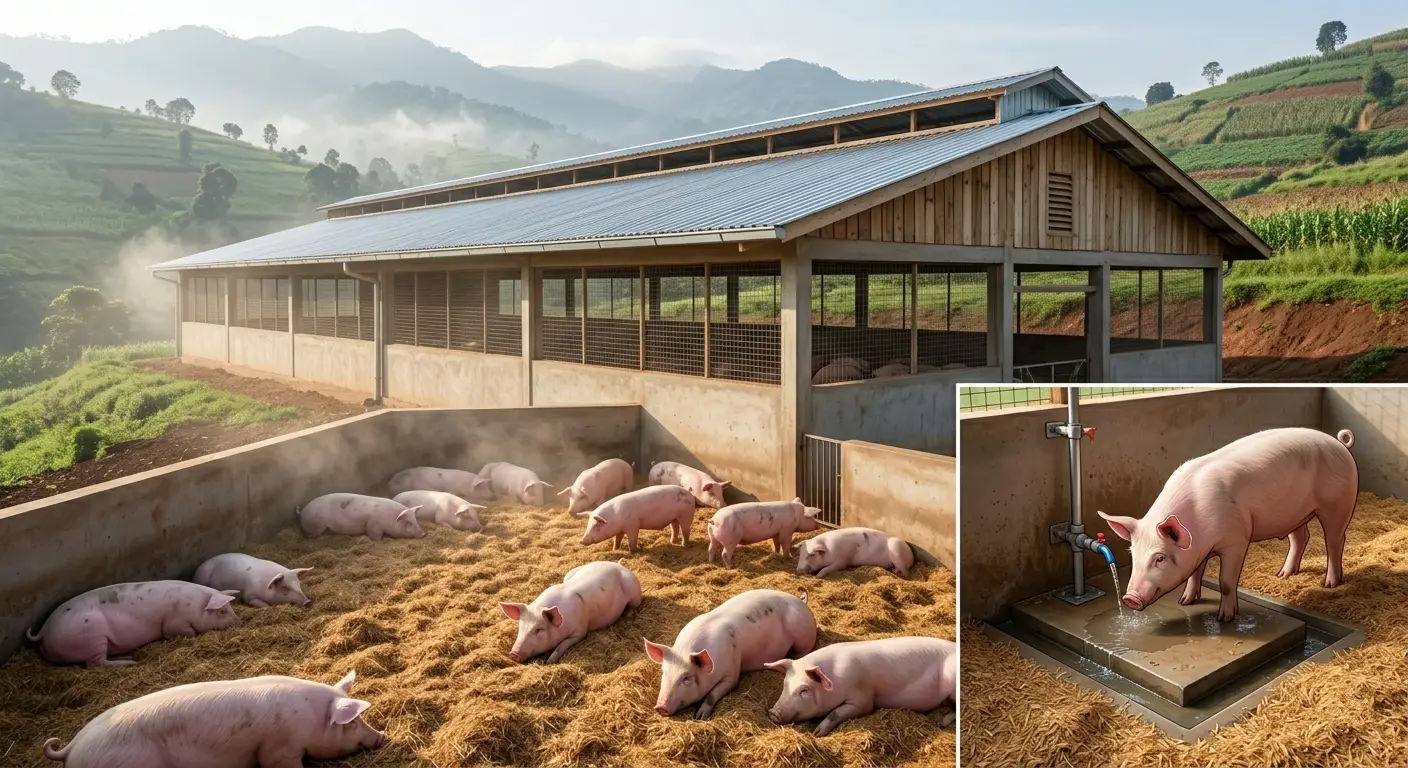
- Nipple drinkers positioned over a concrete collection trough (not over litter) — pig drinks, excess water falls on the concrete and drains away
- Alternatively: a concrete platform 50 × 50 cm beneath each nipple drinker, sloped to drain to a channel, with the surrounding litter maintained at least 30 cm away from the wet concrete zone
- Check every nipple drinker weekly for leakage — a single dripping nipple at 15 mL/minute deposits 21.6 liters per day onto the litter below it
Bedding Materials: What to Use in West Africa
The bedding material is the carbon substrate that feeds the microbial community and determines the physical properties of the litter bed. Not all bedding materials perform equally.
Material Comparison
| Bedding Material | C:N Ratio | Moisture Absorption | Availability (West Africa) | Cost | Odor Suppression |
|---|---|---|---|---|---|
| Rice husks | 70–80:1 | Low–Moderate | High (rice-growing zones) | Very low | Good |
| Sawdust (hardwood) | 200–500:1 | High | Moderate | Low–Moderate | Excellent |
| Wood shavings (pine) | 200–400:1 | High | Moderate | Low–Moderate | Excellent |
| Dry maize stover (chopped) | 60–80:1 | Moderate | High | Very low | Good |
| Rice straw (chopped) | 50–70:1 | Low | High (rice zones) | Very low | Moderate |
| Sugarcane bagasse | 50–80:1 | Moderate | Moderate (sugar-producing areas) | Low | Good |
| Groundnut shells | 30–40:1 | Low | Moderate | Low | Moderate |
The best single bedding material for most West African piggeries is a blend of rice husks (50%) and wood shavings or sawdust (50%):
- Rice husks provide physical structure and do not compact — the litter retains its open, aerated character for longer
- Wood shavings provide high carbon and excellent moisture absorption
- The blend produces a C:N ratio of approximately 100–200:1 at installation, which is corrected to the optimal 25–35:1 range as pig manure accumulates during the first 2–4 weeks of operation
What not to use:
- Fresh grass clippings: C:N ratio of 15–25:1 — too low; creates ammonia-generating wet mat rather than aerobic litter
- Wet or partially composted materials: reduce available carbon and add initial moisture that may push litter above safe moisture levels before the pig population is large enough to generate the heat that maintains aerobic conditions
- Sand: provides no carbon, no moisture absorption, no microbial community support; a sand-floored pen is a dirt pen, not a deep litter system
Initial Litter Depth
At pen startup: 20–25 cm of dry bedding material
This depth provides:
- Adequate insulation from the concrete subfloor
- Sufficient carbon reservoir to absorb the initial pig manure loading without reaching the critical moisture threshold
- Physical depth for the microbial community to establish in a stable thermal environment
Insufficient initial depth (below 15 cm) leads to system failure within 2–3 weeks as moisture from pig excreta overwhelms the thin carbon layer and creates wet, anaerobic conditions from the bottom up.
As the system operates, litter depth increases from manure accumulation and periodic fresh bedding addition. By the time the pen is ready for cleanout (typically 3–6 months after startup), litter depth has increased to 30–50 cm.
Stocking Density: The Most Critical Management Variable
Stocking density determines the rate at which nitrogen (from manure) is added to the litter relative to the carbon capacity and microbial processing rate. Too high a stocking density overwhelms the system’s nitrogen-processing capacity, driving the C:N ratio below 20:1 and producing ammonia even with perfect management. Too low a stocking density produces insufficient nitrogen contribution to maintain active microbial decomposition — the litter cools, dries out, and the system loses its biological activity.
Target stocking densities for deep litter pig systems:
| Production Stage | Recommended Stocking Density | Conventional Slatted Comparison |
|---|---|---|
| Weanlings (7–25 kg) | 0.4–0.5 m² per pig | 0.30–0.35 m² (20–40% more space needed) |
| Growers (25–60 kg) | 0.7–0.9 m² per pig | 0.55–0.70 m² (20–30% more space needed) |
| Finishers (60–110 kg) | 1.0–1.3 m² per pig | 0.85–1.00 m² (15–30% more space needed) |
Deep litter requires more space per pig than slatted systems — typically 20–30% more. This is the primary physical constraint of deep litter systems at a commercial scale: the building footprint requirement is larger for the same number of pigs, which increases construction cost per pig place.
This space premium is offset by:
- Elimination of slatted flooring cost (XAF 80,000–200,000 / USD 133–333 per pen in a conventional system)
- Elimination of the underground manure pit construction cost
- Elimination of the daily scraping labor cost
- Value of finished compost at the end of each litter cycle
Managing the Deep Litter System: The Weekly Protocol
Deep litter management is not passive. The farmer’s role shifts from daily manure removal to weekly litter condition monitoring and intervention. The goal of monitoring is to detect the early signs of system imbalance before they develop into a full failure event.
Weekly Assessment
The five indicators assessed weekly:
1. Odor character: A healthy deep litter system smells earthy and neutral — comparable to forest floor or active compost. Any sharp ammonia smell indicates nitrogen overload: the litter C:N ratio is too low, moisture is too high, or stocking density is too high for the current litter carbon capacity. Any sulfur or rotten-egg smell indicates anaerobic conditions: wet zones have developed where oxygen cannot reach.
2. Litter surface moisture: Grab a handful of litter from a 10 cm depth and squeeze it in a closed fist. At correct moisture (40–60%): 1–2 drops of water emerge; material holds its shape briefly, then crumbles. Too wet (above 70%): water streams from the hand; material is clumped and dark. Too dry (below 30%): no water emerges; material is dusty and pale.
3. Litter temperature: Insert a long metal rod or probe thermometer 15 cm into the litter in the center of the pen. Active litter should read 40–55°C at this depth. Below 35°C indicates reduced microbial activity — the system is losing biological function. Above 60°C indicates an excessive decomposition rate that may be drying the litter too rapidly.
4. Litter structure: The litter should remain loose and friable with visible bedding material structure. A compacted, mat-like surface — particularly around high-traffic areas near feeders and drinkers — reduces oxygen penetration and creates anaerobic zones. Compacted surfaces must be broken up mechanically (rake or rotary tiller) to restore aeration.
5. Pig behavior: Pigs that root actively in the litter are indicating that the litter is at a comfortable temperature and appropriate moisture — they are behaving naturally in a comfortable environment. Pigs that avoid contact with the litter (standing on feeders or drinker supports, crowding to pen edges) are indicating thermal discomfort (litter too hot) or litter quality problems.
Intervention Protocols
If litter is too wet (moisture above 65%):
- Identify and eliminate the moisture source (drinker leak, rainwater infiltration, excessive water spillage)
- Add fresh dry bedding material at a depth of 5–8 cm across the wet area
- Increase ventilation if curtains are closed
- Reduce stocking density if pigs are overcrowded relative to pen size
- If the wet zone is localized, remove the wet litter, dispose of it in the composting facility, and replace it with fresh dry bedding
If ammonia smell is detectable:
- Assess moisture — wet litter is the most common cause
- Check stocking density — overcrowding produces nitrogen loading above microbial processing capacity
- Add high-carbon bedding material (wood shavings, sawdust) at 3–5 cm depth to increase the C:N ratio
- Apply a commercial litter treatment product containing Bacillus subtilis or Bacillus amyloliquefaciens at the label rate — these bacteria are potent nitrogen immobilizers that supplement the native litter microbial community
- Measure ammonia at the pig level with a colorimetric test tube (Dräger tube or equivalent) — if above 20 ppm, treat as an emergency and increase ventilation immediately
If litter temperature is too high (above 60°C):
- Turn the litter with a fork or mechanical turner to release heat and moisture
- Check moisture — high-temperature litter is often also too dry
- Lightly water the litter surface (not to saturation — only enough to restore moisture to the 40–60% range)
- Increase ventilation to carry heat away from the litter surface
If litter is too cold or inactive (below 35°C):
- Add fresh nitrogenous material (a small amount of fresh pig manure from another pen, or liquid from a biogas digester) to restart microbial activity
- Check moisture — cold litter is often too dry; add water if below 40% moisture
- Reduce ventilation temporarily if the house is losing heat faster than it can generate it (more common in highland areas during harmattan)
Adding Fresh Bedding: The Top-Dressing Protocol
Fresh bedding must be added periodically throughout the litter cycle to maintain adequate carbon levels as the existing bedding decomposes.
Top-dressing frequency and rate:
- Weanling and grower pens: Add 3–5 cm of fresh bedding every 3–4 weeks
- Finisher pens: Add 5–8 cm of fresh bedding every 4–6 weeks
- Any time moisture assessment shows above-threshold wetness: Add dry bedding immediately, regardless of schedule
Top-dressing technique:
Scatter fresh bedding material evenly across the entire pen surface — not only on wet patches. Pigs will mix the new material into the existing litter through rooting and walking, distributing the carbon throughout the litter profile within 24–48 hours.
Do not turn the litter deeply during top-dressing. Deep turning at the same time as top-dressing temporarily releases ammonia from lower litter layers. The carbon material should be added to the surface and allowed to mix naturally through pig activity.
Cleanout and Compost Value
When to Clean Out
The deep litter bed reaches the end of its productive life when:
- Litter depth has increased to 40–50 cm, and further material addition would raise the floor level to the point where pen management becomes difficult
- The pen is being emptied at the end of a production batch (all-in/all-out management)
- The litter system has failed — ammonia levels are unmanageable, wet zones are irrecoverable, or disease pressure in the litter is clinically relevant
Most deep litter piggeries operate their litter beds for 4–6 months between full cleanouts — aligned with one or two production batches, depending on the farm’s batch scheduling.
Cleanout Procedure
- Remove all pigs from the pen
- Remove feeders, drinkers, and any portable equipment
- Allow the litter to dry for 3–5 days in the empty pen (open all ventilation to maximum) — this makes the material significantly lighter and easier to handle
- Remove litter by hand (fork and wheelbarrow) or by mechanical loader to the composting facility
- Inspect the concrete subfloor for damage and repair as needed
- Apply a lime wash (2 kg hydrated lime per 10 liters of water, per m² of floor) to the subfloor and lower walls
- Allow a minimum 7-day rest period before restocking with fresh bedding and new pigs
The Compost Revenue Calculation
The removed litter is not waste — it is partially composted organic matter at approximately 20–25:1 C:N ratio, containing:
- Nitrogen: 1.5–2.5% dry weight
- Phosphorus: 1.2–2.0% dry weight
- Potassium: 0.8–1.5% dry weight
- Organic matter: 35–55% dry weight
With 4–6 additional weeks of active composting (correct moisture and turning), this material becomes a fully mature, pathogen-reduced organic fertilizer.
Revenue estimate from one cleanout (20-sow finisher building, 100 m² pen):
- Litter removed: approximately 5,000–8,000 kg (wet weight; 3,000–5,000 kg dry weight equivalent)
- Market price for certified composted pig litter in West Africa (2026): XAF 12,000–20,000 (USD 20–33) per tonne
- Revenue from 5 tonnes dry compost equivalent: XAF 60,000–100,000 (USD 100–167) per cleanout
- Bagged retail compost (25 kg bags): XAF 40,000–60,000/tonne → XAF 200,000–300,000 (USD 333–500) per cleanout
Economic Comparison: Deep Litter vs. Conventional Slatted System
Capital Cost Comparison (50-Pig Grower/Finisher Pen, 50 m²)
| Cost Item | Conventional Slatted | Deep Litter |
|---|---|---|
| Concrete slatted floor | XAF 1,500,000 (USD 2,500) | — |
| Underground manure pit | XAF 800,000 (USD 1,333) | — |
| Wash water drainage system | XAF 300,000 (USD 500) | XAF 100,000 (USD 167) |
| Solid concrete floor (simple) | — | XAF 400,000 (USD 667) |
| Initial bedding (3 tonnes) | — | XAF 90,000 (USD 150) |
| Total capital cost | XAF 2,600,000 (USD 4,333) | XAF 590,000 (USD 983) |
Capital cost saving from deep litter: XAF 2,010,000 (USD 3,350) per 50-pig pen — the most significant financial advantage of deep litter systems.
Operating Cost Comparison (Annual, 50-Pig Pen)
| Cost Item | Conventional Slatted | Deep Litter |
|---|---|---|
| Daily manure removal labor (2 hours/day × 250 days × XAF 3,000/day) | XAF 1,500,000 (USD 2,500) | — |
| Bedding material (3 top-dressings × XAF 60,000) | — | XAF 180,000 (USD 300) |
| Water for flushing (50,000 L/year × XAF 5/L) | XAF 250,000 (USD 417) | XAF 50,000 (USD 83) |
| Composting labor (cleanouts, 2 per year × XAF 50,000) | — | XAF 100,000 (USD 167) |
| Total annual operating cost | XAF 1,750,000 (USD 2,917) | XAF 330,000 (USD 550) |
| Compost revenue (2 cleanouts/year at XAF 80,000 each) | — | −XAF 160,000 (−USD 267) |
| Net annual operating cost | XAF 1,750,000 (USD 2,917) | XAF 170,000 (USD 283) |
Annual operating cost saving from deep litter: XAF 1,580,000 (USD 2,633) per 50-pig pen per year — primarily from eliminated daily labor.
Total 5-Year Cost of Ownership
| Conventional | Deep Litter | Saving | |
|---|---|---|---|
| Capital cost | XAF 2,600,000 | XAF 590,000 | XAF 2,010,000 |
| 5-year operating cost | XAF 8,750,000 | XAF 850,000 | XAF 7,900,000 |
| 5-year total | XAF 11,350,000 | XAF 1,440,000 | XAF 9,910,000 (USD 16,517) |
The 5-year total cost advantage of deep litter per 50-pig pen is XAF 9,910,000 (USD 16,517). This is the financial argument for deep litter systems in operations where labor cost is high, and bedding materials are locally available at low cost, which describes most commercial piggeries in West and Central Africa.
The Limitations: What Deep Litter Cannot Do
Intellectual honesty requires naming what deep litter systems cannot solve:
Disease challenge from litter-borne pathogens: Deep litter beds accumulate Coccidiosis oocysts, helminth eggs (Ascaris, Trichuris), and soil-borne bacteria that are not completely neutralized by the litter’s thermophilic activity. Weanling pigs on deep litter face significantly higher Coccidiosis challenge than weanlings on clean slatted floors — requiring preventive treatment with Diclazuril or Toltrazuril that adds cost and management complexity.
Not suitable for farrowing: The microbial environment of an active deep litter bed — however well managed — is not appropriate for neonatal piglets whose immune systems are in their first days of development. Farrowing in deep litter produces higher neonatal mortality from enteric disease challenge than farrowing in a clean, disinfected farrowing crate. Farrowing houses should always use conventional hard flooring with sanitary management.
Requires reliable bedding supply: A deep litter system with an interrupted bedding supply fails quickly. If rice husks or wood shavings become unavailable due to seasonal supply disruption, the system cannot maintain correct moisture and C:N balance. Every deep litter operation must maintain at minimum a 60-day bedding stockpile.
Not optimal in lowland tropical heat: As discussed, litter-generated heat adds to an already challenging thermal environment in lowland coastal zones. Finisher pigs at 90 kg in a Douala pen at 32°C ambient with a 40–50°C litter surface will experience significant heat stress. Deep litter’s advantages are most fully realized in highland or temperate-climate zones.
Summary
Deep litter piggery systems work — when the biology is understood and managed rather than assumed. The carbon-to-nitrogen ratio, the moisture content, the ventilation design, the stocking density, and the bedding material selection are not independent preferences. They are interdependent parameters of a biological system that either function as designed or fail in predictable, documentable ways.
When they function correctly, deep litter systems eliminate the largest daily labor cost in pig production, reduce ammonia to levels that improve pig respiratory health compared to many conventional systems, produce a valuable organic fertilizer as a secondary revenue stream, and reduce total capital investment by 70–80% compared to fully slatted conventional systems.
The farmer who understands the biology and manages accordingly can run a deep litter piggery that is genuinely low-odor, genuinely low-labor, and financially superior to a conventional slatted system for the production stages and climate conditions where deep litter belongs.
Understand the system. Maintain the conditions. Measure the results. The biology will do the rest.