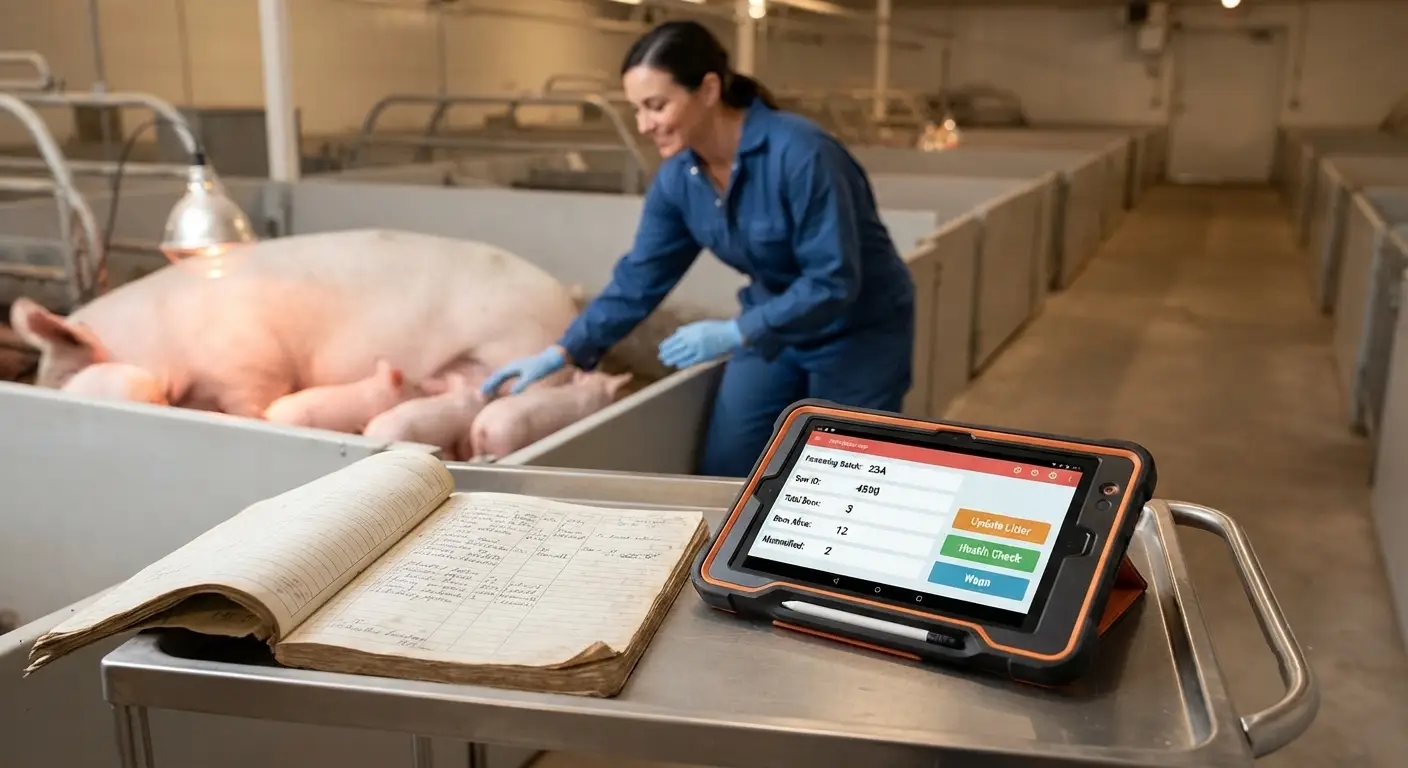
Paper-based and spreadsheet record-keeping breaks down at a predictable point in a swine operation’s growth — usually somewhere between 30 and 75 sows, when the volume of daily events (breedings, farrowings, treatments, weight checks, mortality) exceeds what one person can reliably track from memory or a notebook. The failure typically isn’t organizational at first — vaccinations end up in one notebook, breeding dates in another, and weight records in a spreadsheet nobody opens — but it quickly becomes a herd health and profitability problem. Digital tools solve this by centralizing breeding, health, feed, and financial records into a single searchable system with reminders and reporting built in.
Category Overview — Which Type of Tool Fits Which Operation
| Category | Best Fit | Examples |
|---|---|---|
| Dedicated swine-specific software | Medium-to-large commercial operations (50+ sows) needing deep production analytics | PigCHAMP, Porcitec, PigKnows/SowBridge, CyberAgra Swine Enterprise |
| General livestock management apps | Small-to-medium mixed or single-species operations | Farmleo, AgriWebb, Farmbrite |
| Mobile-first data collection platforms | Multi-farm operations, veterinarian collaboration, distributed teams | EveryPig |
| Farm-wide task/workflow platforms adapted for livestock | Operations that also manage cropland or feed production alongside swine | Agworld |
Leading Swine-Specific Platforms
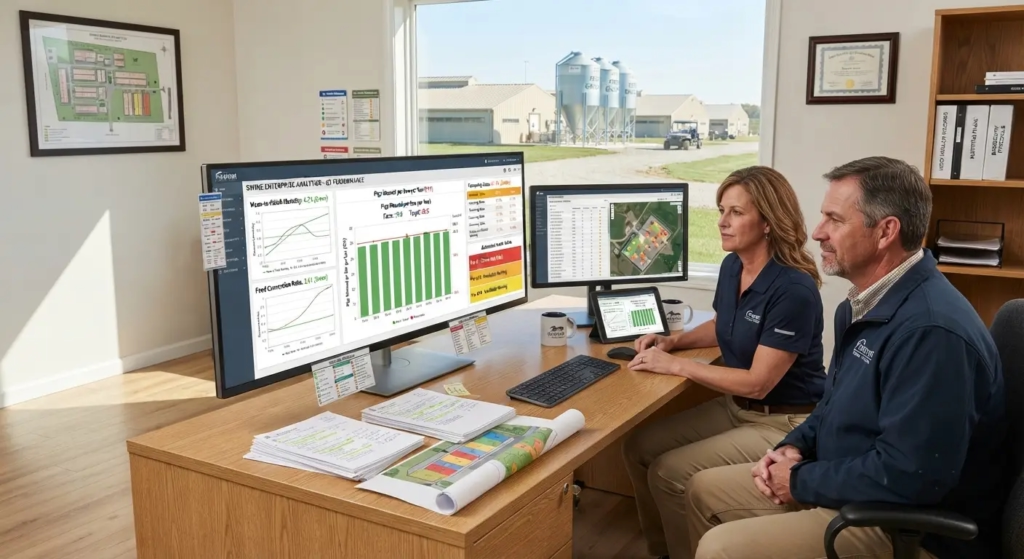
PigCHAMP positions itself as a leading swine-specific software platform for data collection, management, and interpretation, built for producers, veterinarians, and management consultants. It is one of the most established dedicated swine record-keeping systems in the industry, with production-cycle tracking (breeding, farrowing, weaning, mortality) as its core function.
Best fit: Medium-to-large commercial operations that need standardized, benchmarkable production metrics (PSY, farrowing rate, FCR) reportable to lenders, investors, or integrator partners.
Porcitec
Porcitec generates updated reports within seconds of data collection and supports barn-mounted dashboard displays showing real-time progress, with automated alerts when a defined number of sows are farrowing simultaneously or specific issues are logged. It also applies machine learning to farm data to identify patterns, generate market projections, and flag problems automatically, alongside a library of over 130 standard reports and a custom report designer.
Best fit: Large-scale operations wanting real-time barn-level visibility and predictive analytics rather than retrospective reporting alone.
PigKnows / SowBridge (IDR Software)
IDR Software’s swine-specific tools include SowBridge for breeding herd tracking and PigKnows for grow-finish operations, covering sows, litters, genetics, health, and performance metrics. PigKnows is cloud-based, offering modules for reproduction tracking, growth monitoring, health records, feeding optimization, and financial reporting, with real-time web and mobile access, customizable dashboards, and automated alerts. It also includes a benchmarking engine comparing farm performance to industry standards.
Best fit: Operations wanting genetic/pedigree-level breeding records combined with peer benchmarking; note that pricing scales with herd size and can be costly for smaller operations.
CyberAgra Swine Enterprise
CyberAgra Swine Enterprise is a fully integrated recordkeeping system covering production and accounting across breeding sows, growout/finish, and feedmill operations.
Best fit: Vertically integrated operations that want production records and feed-mill/accounting data in one system rather than separate platforms.
Mobile-First and Multi-Farm Platforms
EveryPig
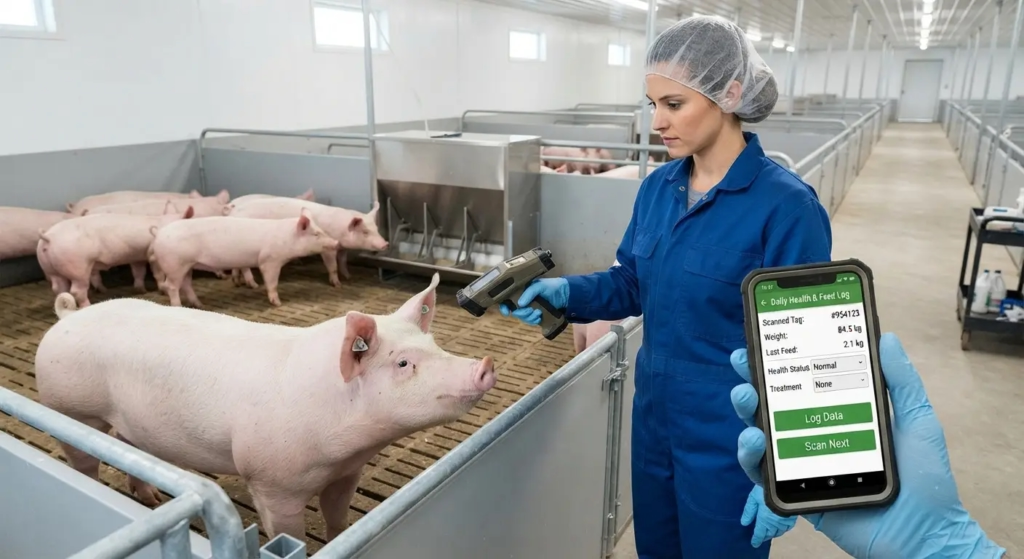
EveryPig is built for pork producers to track inventory, veterinary and health services, work orders, and employee operations, and is designed for management companies overseeing multiple farms as well as veterinarians covering multiple sites remotely. It runs entirely from existing smartphones, tablets, or computers with no additional equipment required, supporting data collection, team collaboration, and treatment/outcome tracking.
Best fit: Multi-site operations or those with an active veterinary consulting relationship requiring shared real-time access across locations.
General Livestock Platforms Suitable for Smaller Swine Operations
For operations below the 50-sow threshold where a dedicated swine platform’s cost or complexity isn’t justified, general livestock management apps offer a lighter entry point.
| Platform | Notable Feature | Free Tier |
|---|---|---|
| Farmleo | Animal profiles, health and treatment logs, breeding records, and searchable history in one workflow. Pigchamp | Free for farms with under 20 animals |
| AgriWebb | Mobile-first record-keeping of animal movements, health treatments, and feed inventories, with financial tracking and analytics. Agritec Software | Paid, tiered by herd size |
| Farmbrite | Configurable task management and event tracking adaptable to swine workflows | Paid, tiered by herd size |
Caution: Most general livestock platforms are not swine-specific. Pig operations specifically need strong breeding, farrowing, weaning, and group performance records — a feature depth that broad multi-species tools do not always match. Confirm farrowing-batch and litter-level tracking exists before committing a growing herd to a general platform. Agritec Software PigChamp
Selection Criteria by Farm Scale
Consistent with the scale tiers used elsewhere in this series:
| Farm Scale | Recommended Tool Category | Rationale |
|---|---|---|
| Backyard/small (under 25 sows) | General livestock app, free or low-cost tier | Herd size doesn’t yet justify dedicated swine software cost; core need is replacing paper logs |
| Medium (26–75 sows) | Entry-tier dedicated swine software or mobile-first platform | Production complexity (multiple concurrent farrowing batches, phase-feeding) exceeds general tools’ depth |
| Large-scale (76+ sows) | Full swine-specific platform with benchmarking/analytics | Justifies cost through labor efficiency, disease detection speed, and lender/investor-ready reporting |
| Multi-site or integrator | Mobile-first, multi-farm platform | Requires cross-location data consistency and veterinary/remote access |
Implementation Considerations
Data entry discipline determines value. Every platform reviewed depends on consistent, timely data entry by farrowing, gestation, and grower-finisher staff — the tool itself does not create the discipline described in the labor management checklists elsewhere in this series; it depends on it. Software adoption should follow, not precede, a functioning manual task-checklist system.
Connectivity and offline capability. In areas with inconsistent internet access, confirm whether the platform supports offline data entry with later synchronization — a common gap in cloud-only systems that can cause missed records during connectivity outages.
Integration with existing hardware. Operations with electronic sow feeders, RFID tags, or scale systems should confirm compatibility before selecting a platform, since manual re-entry of data already captured by farm hardware defeats much of the efficiency gain.
Cost relative to herd size. Dedicated swine platforms often price by herd size or module count. For medium-scale operations, request a quote scaled to current herd size with a clear upgrade path, rather than committing to enterprise pricing tiers built for large-scale producers.
Data Security and Ownership
Before adopting any cloud-based platform, confirm:
- Who owns the historical production data if the operation switches providers later
- Whether data can be exported in a usable format (CSV, standard database export)
- Backup frequency and disaster recovery provisions
- Whether veterinary or consultant access can be granted and revoked without exposing full financial records
Summary
The right digital record-keeping tool depends more on herd scale and operational complexity than on any single platform’s feature list. Dedicated swine-specific systems like PigCHAMP, Porcitec, and PigKnows deliver the deepest production analytics and benchmarking but are best justified at medium-to-large scale; general livestock apps like Farmleo offer a genuine free entry point for smaller herds; and mobile-first platforms like EveryPig solve the specific problem of multi-site or veterinary-collaborative operations. In every case, the software formalizes and accelerates a record-keeping discipline that must already exist operationally — it does not create that discipline on its own.