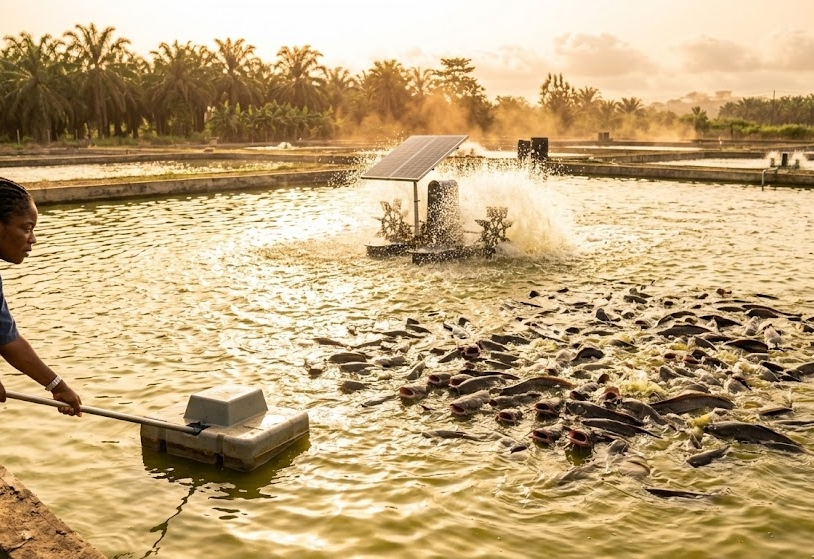
Parasitic infections are among the most persistent and economically destructive challenges faced by commercial and small-scale catfish farmers. While bacterial outbreaks and fungal conditions frequently dominate aquaculture discussions, microscopic protozoan ectoparasites quietly inflict massive damage on fish populations every single year. Among these protozoan threats, Costia (currently taxonomically classified as Ichthyobodo necator) stands out as one of the most dangerous, highly contagious, and rapidly destructive parasites affecting freshwater aquaculture, including African catfish (Clarias gariepinus) and Channel catfish (Ictalurus punctatus).
When environmental conditions deteriorate and fish stress levels rise, Costia populations can multiply exponentially within a matter of days, leading to catastrophic mortality rates if left unmanaged. Understanding the biology, identification, transmission dynamics, and management of this parasite is vital for maintaining a healthy, profitable catfish production system.
1. Understanding Costia: Biology and Appearance
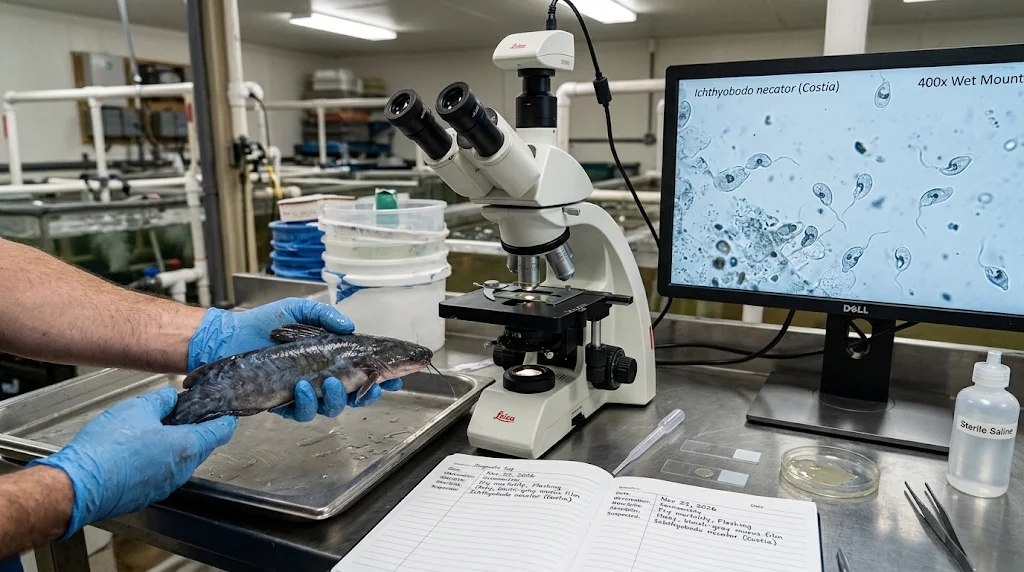
Costia is an extremely small, flagellated protozoan parasite that targets the skin, fins, and gill filaments of freshwater fish. Because of its microscopic size, it is virtually impossible to identify with the naked eye and requires professional microscopic examination of skin scrapings or gill biopsies.
- Microscopic Identification: Under high magnification, Costia typically appears pear-shaped or oval. It utilizes long flagella (whip-like appendages) to propel itself through the water column or anchor itself to host cells.
- Mode of Feeding: Once attached to the host’s epithelial cells, the parasite burrows into or feeds directly upon the cellular contents and mucus. This constant grazing causes severe mechanical irritation, cell destruction, and detachment of the skin layers, paving the way for secondary bacterial and fungal invasions.
2. Clinical Symptoms and Warning Signs
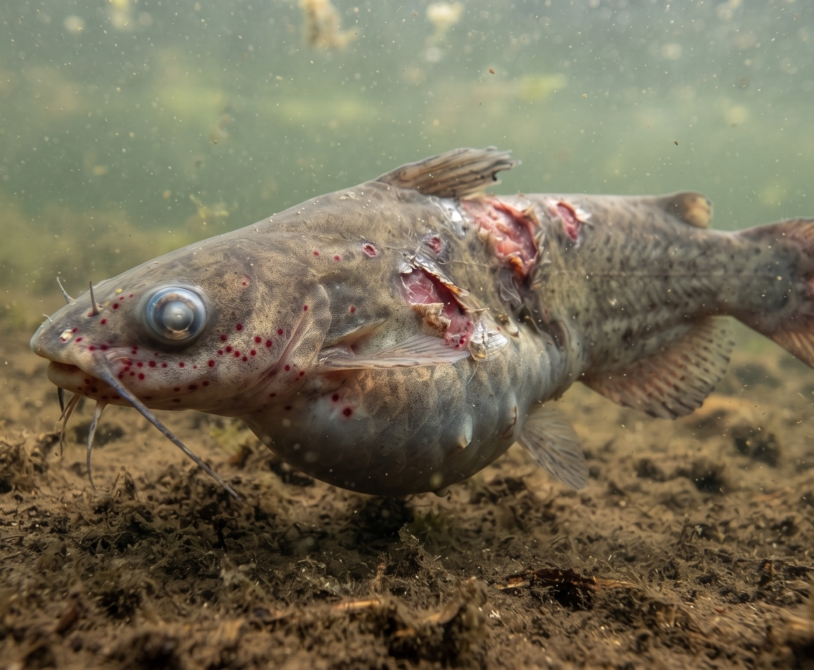
Because Costia heavily attacks both the skin and delicate gill tissues, the clinical signs of an infestation involve a combination of severe skin irritation, heavy slime production, and acute respiratory distress:
- Distinct Bluish-Gray Film (Cloudy Slime Coat): Unlike some parasites that cause patchy mucus secretion, a heavy Costia infestation often gives the catfish a characteristic hazy, dull, bluish-gray or milky film across its skin and fins as the epidermal cells overreact to the irritation.
- Flashing and Scraping: Infected catfish experience intense skin itching, prompting them to repeatedly and frantically dart against pond walls, concrete tank surfaces, or bottom substrates in an effort to scratch off the parasites.
- Severe Respiratory Distress and Gasping: When Costia colonizes the gill filaments, it destroys respiratory surface area and impairs oxygen exchange. Fish will exhibit rapid opercular (gill cover) movement, cluster near water inlets, or gasp frantically for air at the water surface.
- Lethargy and Loss of Appetite: Heavily infested catfish become sluggish, separate from schooling behavior, stop feeding, and drift aimlessly near the stagnant edges of ponds or nursery tanks.
- Rapid Mortality Rates: Especially in fry and fingerling production systems, Costia can cause sudden, massive die-offs within days due to rapid osmotic imbalance and suffocation.
3. Root Causes and Environmental Triggers
Costia is an obligate parasite that thrives under specific environmental conditions. While low numbers may occasionally persist in aquatic systems, clinical outbreaks are heavily driven by environmental stressors and management lapses:
- Poor Water Quality: High concentrations of nitrogenous wastes (ammonia and nitrite) and critically low dissolved oxygen (DO) levels severely compromise the fish’s natural immune defenses and degrade protective mucus barriers.
- High Organic Loads and Overfeeding: Excessive unconsumed commercial feed and heavy fecal waste accumulation create a nutrient-dense environment that accelerates pathogen proliferation in the water column.
- Overcrowding and High Stocking Densities: High fish numbers make it exceptionally easy for the flagellated zoospores to swim and locate a new, adjacent host, accelerating transmission across the entire population.
- Handling and Transport Stress: Rough netting, grading, sorting, or sudden changes in water chemistry induce stress and release cortisol, suppressing the fish’s immune system and making them hyper-susceptible to parasitic settlement.
4. Transmission and Life Cycle Dynamics
The life cycle of Costia is direct and highly specialized for rapid transmission:
- Encystment and Free-Swimming Stages: The parasite exists in an active feeding form and a resilient encysted or free-swimming stage. The free-swimming flagellated form actively searches for a host fish.
- Vulnerability Without a Host: While the free-swimming stage can survive in the water column for a limited time searching for a catfish, it must find a host quickly or perish. However, in crowded aquaculture systems, finding a host takes only moments, allowing the infection cycle to repeat endlessly.
5. Comprehensive Prevention and Management Strategies
Because treating advanced protozoan infestations in commercial production systems can be logistically challenging and costly, proactive prevention remains the ultimate defense for catfish farmers:
- Maintain Pristine Water Quality: Keep dissolved oxygen levels consistently high (>4 mg/L), stabilize pH (6.5–8.5), and keep nitrogenous wastes near zero through regular, controlled water exchange protocols.
- Manage Stocking Densities: Avoid overcrowding in production ponds and nursery tanks to slow down parasite transmission rates and reduce chronic stress.
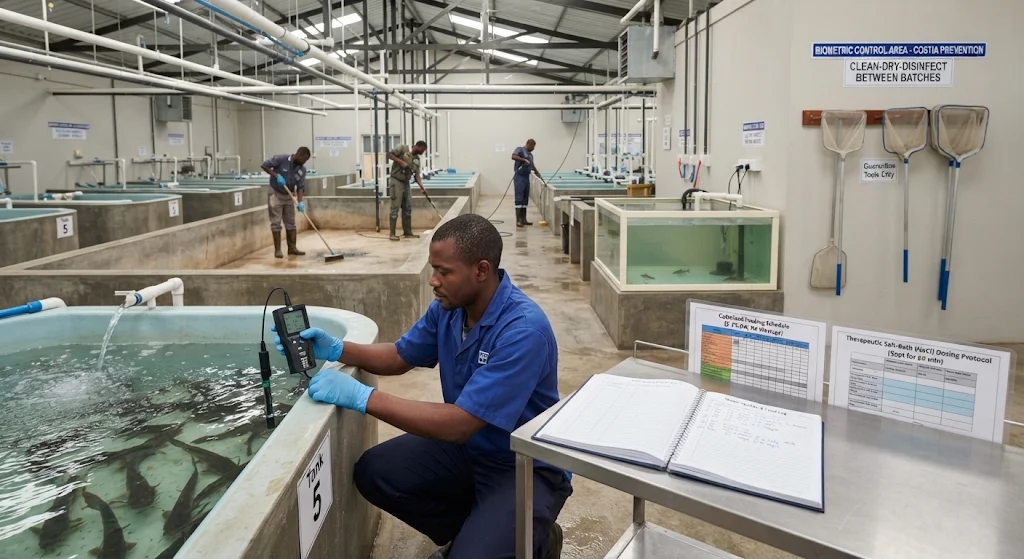
- Strict Biosecurity and Quarantine: Always isolate and inspect incoming fingerlings or broodstock in separate quarantine systems before introducing them to main production units.
- Therapeutic Salt Baths: Utilize approved salt (sodium chloride) treatments under appropriate guidelines to disrupt the parasite’s osmotic balance, soothe damaged skin tissues, and suppress free-swimming protozoan populations.
- Routine Hygiene: Thoroughly clean, dry, and disinfect holding tanks, nets, and production equipment between production cycles to break the parasite’s life cycle.
Need Assistance?
Are you currently dealing with a bluish-gray film, flashing behavior, severe gill distress, or unusual mortality rates in your catfish production system? Please contact us today
for professional guidance, water quality troubleshooting, and tailored parasite management strategies to protect your stock.