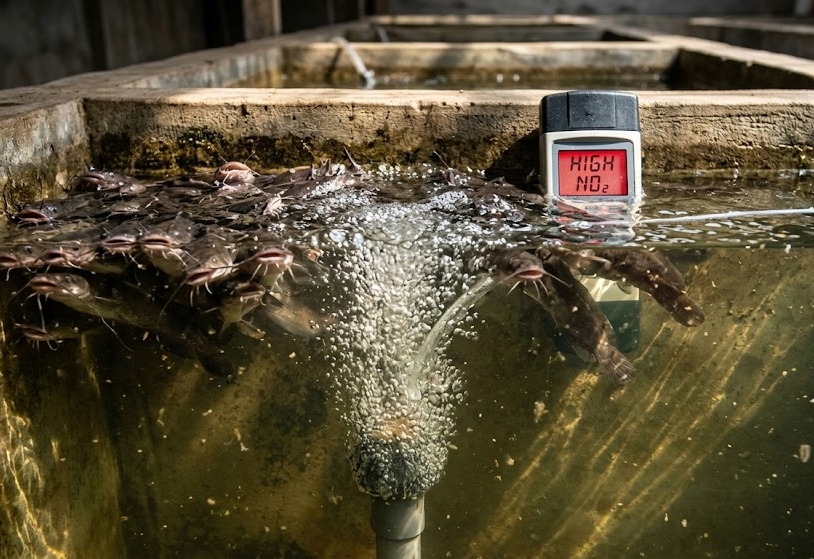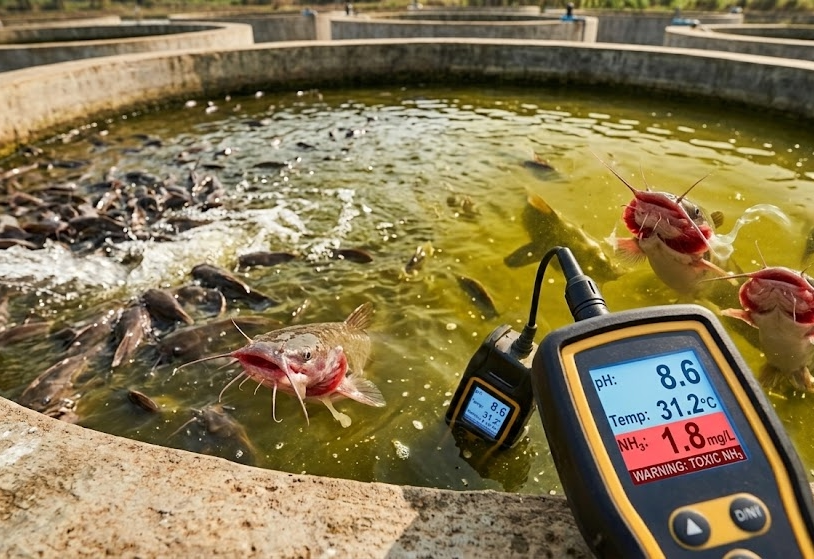
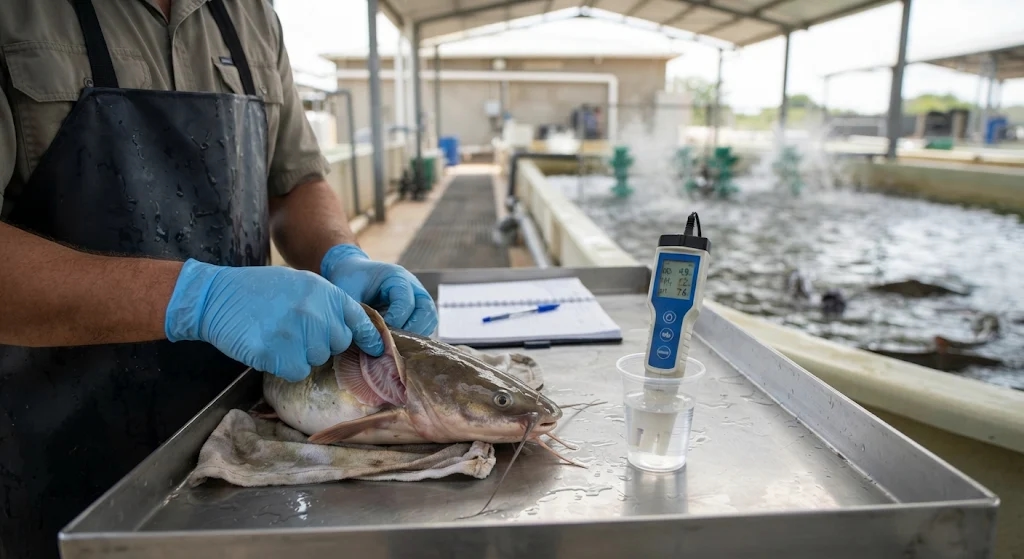
Catfish gill diseases can interfere with breathing, oxygen uptake, feeding, growth, and overall fish health. In African catfish farming, abnormal gill function may be associated with parasites, bacteria, fungi, poor water quality, low dissolved oxygen, ammonia, nitrite, or other environmental stressors.
This guide explains the major causes of gill problems in catfish, the symptoms farmers should watch for, how to investigate the problem, and practical ways to prevent gill disease.
What Are Catfish Gill Diseases?
Catfish gill diseases are health conditions that damage or interfere with the normal function of the gills.
The gills are essential respiratory organs. They allow fish to obtain oxygen from water and help regulate important physiological processes. When the gills are damaged, inflamed, infected, or exposed to poor water conditions, catfish may show respiratory stress.
Gill problems can occur in African catfish (Clarias gariepinus) at different stages of production, including fry, fingerlings, and grow-out fish.
Common categories of gill problems include:
- Gill parasites
- Bacterial gill disease
- Fungal gill infections
- Low dissolved oxygen
- Ammonia-related gill damage
- Nitrite-related stress
- Poor water quality
- Excessive organic matter
- Stress associated with overcrowding
The condition itself is therefore not always caused by an infectious pathogen. Environmental conditions can create or worsen gill problems.
Common Symptoms of Gill Disease in Catfish
Gill disease can be difficult to identify from a single symptom because several different problems can produce similar signs.
Farmers should look for combinations of symptoms rather than relying on one sign.
1. Gasping at the Water Surface
Catfish repeatedly coming to the surface and appearing to gasp can indicate respiratory stress.
Possible contributing factors include:
- Low dissolved oxygen
- Gill damage
- Gill parasites
- Ammonia stress
- Nitrite stress
- Poor water quality
Surface gasping should be treated as a warning sign requiring investigation rather than automatically assuming that the fish have an infection.
2. Rapid Gill Movement
Rapid or unusually forceful gill movement may indicate that fish are struggling to obtain sufficient oxygen.
Possible causes include:
- Low oxygen
- Gill irritation
- Gill parasites
- Water-quality problems
- Other forms of respiratory stress
3. Staying Near the Water Surface
Fish that spend unusual amounts of time near the surface may be responding to inadequate oxygen availability or impaired gill function.
The surrounding water should be assessed before assuming that the cause is a specific disease.
4. Pale or Abnormal Gills
Changes in gill appearance can indicate a health problem.
Pale gills may occur alongside other signs of disease, environmental stress, or physiological problems. Examination of the fish and water conditions is necessary to determine the likely cause.
5. Reduced Feeding
Gill problems can contribute to stress and reduced appetite.
If fish suddenly stop feeding, investigate:
- Water quality
- Oxygen levels
- Recent handling
- Stocking density
- Temperature
- Signs of parasites or infection
- Other disease symptoms
6. Lethargy
Affected fish may become less active and respond differently to normal farm activity.
Lethargy combined with respiratory symptoms can indicate significant stress.
7. Increased Mortality
Severe gill problems can contribute to fish mortality, particularly when respiratory stress is associated with poor water quality, pathogens, or inadequate oxygen.
Sudden mortality should trigger an immediate investigation rather than an assumption about the specific disease.
Major Causes of Catfish Gill Problems
Gill Parasites
Parasites can attach to or invade gill tissue and interfere with normal respiratory function.
Important parasite groups in catfish health include:
- Gill flukes
- Protozoan parasites
- Other external parasites
The topical disease plan specifically identifies catfish gill parasites and gill flukes as important subtopics within this cluster.
Parasites may also become more problematic when fish are stressed or farm conditions are poor.
Bacterial Gill Disease
Bacterial infections can affect gill tissue and may occur alongside other health problems.
Bacterial gill disease should not automatically be diagnosed simply because fish are gasping or showing abnormal gills. Similar symptoms can result from environmental problems.
Proper examination is important before selecting treatment.
Fungal Gill Infections
Fungal organisms can affect damaged or stressed fish.
Fungal problems may be associated with:
- Existing tissue damage
- Poor environmental conditions
- Stress
- Injuries
- Other disease processes
A visible fungal growth should therefore be evaluated in the context of the fish’s overall condition.
How Water Quality Affects Catfish Gills
Water quality is one of the most important factors to investigate when catfish develop respiratory problems.
The major water-quality factors connected to gill health include:
- Dissolved oxygen
- Ammonia
- Nitrite
- pH
- Temperature
- Organic matter
- Stocking density
The topical plan specifically connects gill health with low oxygen, ammonia, nitrite, and water quality.
Low Dissolved Oxygen
Low dissolved oxygen can place severe stress on fish.
Catfish may respond by:
- Gasping at the surface
- Increasing gill movement
- Becoming lethargic
- Reducing feeding activity
- Showing abnormal behavior
- Experiencing mortality in difficult situations
When fish are gasping, checking dissolved oxygen should be one of the first investigations.
Ammonia
Elevated ammonia can negatively affect fish health and can contribute to gill stress.
Ammonia problems may become more likely when there is:
- Excessive organic waste
- Overfeeding
- High stocking density
- Poor water exchange
- Inadequate management of pond or tank conditions
The broader water-quality cluster identifies ammonia poisoning as a dedicated catfish health topic.
Nitrite
Nitrite is another water-quality factor that should be investigated when fish show signs of respiratory stress.
The disease cluster specifically identifies nitrite effects on catfish gills and nitrite poisoning as separate topics.
Temperature and pH
Temperature and pH can influence fish health and the conditions under which disease and environmental stress develop.
They should therefore be considered when investigating abnormal gill behavior rather than looking at pathogens alone.
How to Diagnose Gill Disease in Catfish
A symptom such as gasping does not identify a specific disease.
A proper investigation should consider both the fish and their environment.
Step 1: Observe the Fish
Record:
- Swimming behavior
- Feeding behavior
- Surface activity
- Gill movement
- Mortality
- External lesions
- Skin condition
- Body condition
Look for patterns across the population rather than focusing on one fish.
Step 2: Check Water Quality
Investigate the relevant water-quality parameters, particularly:
- Dissolved oxygen
- Ammonia
- Nitrite
- pH
- Temperature
This helps determine whether the problem may be environmental rather than infectious.
Step 3: Examine the Gills
Gill examination can help identify abnormal tissue, parasites, discoloration, or other changes.
The broader disease-diagnosis cluster includes how to examine catfish gills as a dedicated diagnostic topic.
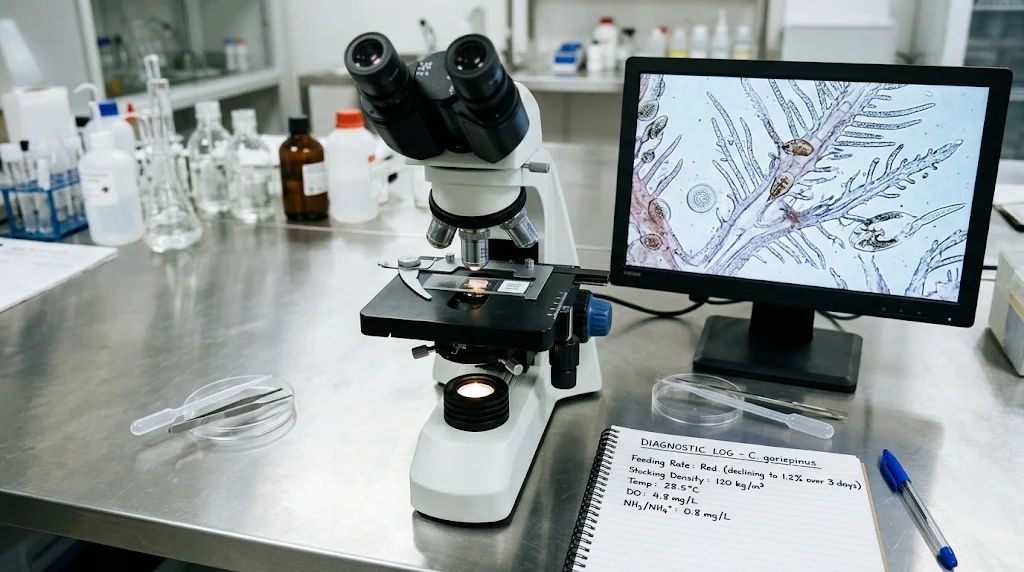
Step 4: Consider Parasites
If environmental conditions do not explain the symptoms, investigate possible gill parasites.
Microscopic examination may be necessary to identify certain organisms accurately.
Step 5: Consider Bacterial or Fungal Disease
If there are signs of infection or tissue damage, further examination may be required to determine whether bacteria or fungi are involved.
Step 6: Use Laboratory Testing When Necessary
Some diseases cannot be reliably identified from appearance alone.
Where the cause remains unclear, laboratory examination or consultation with a qualified fish-health professional can provide a more reliable diagnosis.
Catfish Gill Disease vs. Poor Water Quality
One of the most important distinctions for farmers is determining whether abnormal gill behavior is caused primarily by disease or environmental stress.
For example, gasping at the surface can occur with:
- Low dissolved oxygen
- Gill parasites
- Gill damage
- Ammonia stress
- Nitrite stress
- Other respiratory problems
This is why treating the fish immediately without investigating the water can result in the wrong response.
A useful investigation asks:
- When did the symptoms begin?
- Are many fish affected or only a few?
- Has feeding changed?
- Has the water recently changed?
- Has stocking density increased?
- Has there been heavy feeding?
- Are dead fish being found?
- What are the current water-quality conditions?
- Are there visible gill abnormalities?
- Are parasites or infectious agents present?
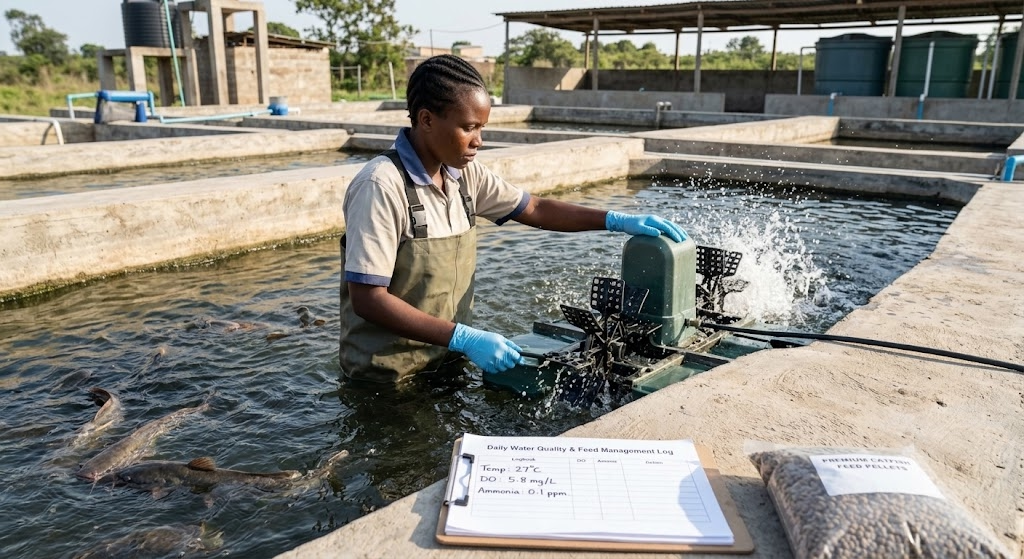
How to Prevent Gill Diseases in Catfish
Prevention begins with maintaining healthy production conditions.
Maintain Good Water Quality
Regularly monitor important parameters and respond to abnormal values before fish become severely stressed.
Pay particular attention to:
- Dissolved oxygen
- Ammonia
- Nitrite
- pH
- Temperature
- Organic waste
Avoid Overstocking
High stocking density can increase stress and contribute to deteriorating water quality.
The topical plan specifically identifies overstocking and stocking density as factors associated with catfish disease.
Avoid Excessive Feeding
Uneaten feed contributes to organic waste and can negatively affect water conditions.
Feed management should therefore be part of disease prevention.
Maintain Farm Hygiene
Equipment, ponds, tanks, and other farm facilities should be managed to reduce opportunities for disease transmission.
Quarantine New Fish
New fingerlings can introduce pathogens or parasites into an established production system.
Quarantine procedures can reduce this risk.
Reduce Stress
Stress can make fish more vulnerable to health problems.
Avoid unnecessary:
- Handling
- Transport stress
- Sudden environmental changes
- Excessive stocking
- Poor feeding practices
What to Do When Catfish Start Gasping
If catfish suddenly begin gasping at the surface:
1. Check dissolved oxygen
Low oxygen should be investigated immediately.
2. Check ammonia and nitrite
Water-quality problems can produce respiratory stress that resembles disease.
3. Observe the gills
Look for abnormal coloration, damage, excessive mucus, parasites, or other visible changes.
4. Check recent farm activities
Consider whether there has been:
- Heavy feeding
- Overstocking
- Water changes
- Fish transport
- Handling
- Heavy rainfall
- Sudden temperature changes
5. Look for additional symptoms
Check for:
- Skin ulcers
- Red spots
- White spots
- Fin damage
- Abnormal swimming
- Loss of appetite
- Sudden mortality
6. Avoid guessing the disease
Gasping alone does not establish a diagnosis.
If mortality continues or the cause is unclear, seek qualified fish-health or laboratory assistance.
Frequently Asked Questions
Why are my catfish gasping at the surface?
Gasping can be associated with low dissolved oxygen, gill parasites, gill damage, ammonia, nitrite, or other water-quality and health problems. Check the water and examine the fish before assuming a specific disease.
What causes gill disease in catfish?
Potential causes include parasites, bacteria, fungi, low dissolved oxygen, ammonia, nitrite, poor water quality, stress, and other environmental conditions.
Can poor water quality damage catfish gills?
Yes. Poor water conditions can place substantial stress on fish and may contribute to gill problems. Dissolved oxygen, ammonia, nitrite, pH, temperature, and organic matter should be considered.
How do I know if catfish have gill parasites?
Behavior such as gasping or rapid gill movement can indicate respiratory stress, but these symptoms alone cannot confirm parasites. Examination of the gills and, where necessary, laboratory or microscopic testing can help establish the cause.
What are the symptoms of catfish gill disease?
Possible symptoms include gasping, rapid gill movement, surface swimming, abnormal gills, lethargy, reduced feeding, poor growth, and mortality.
Can gill disease cause catfish to stop eating?
Yes. Gill problems and respiratory stress can contribute to reduced feeding, although loss of appetite has many possible causes.
How can farmers prevent catfish gill disease?
Maintain good water quality, monitor dissolved oxygen and other key parameters, avoid excessive stocking and feeding, reduce stress, maintain farm hygiene, quarantine new fish, and investigate health problems early.