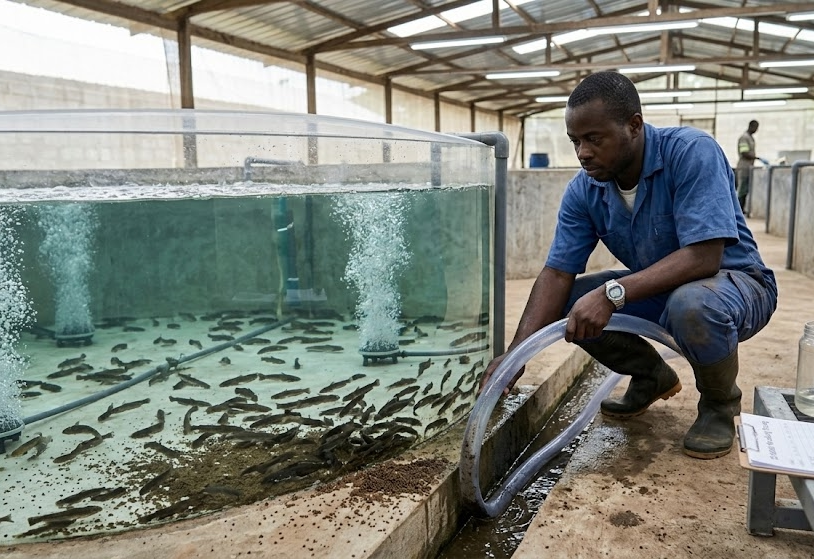
Low dissolved oxygen is a major water-quality problem in fish farming. When the oxygen available in water falls below the level needed by fish, catfish may experience respiratory stress, reduced feeding, abnormal behaviour and, in severe cases, death.
In African catfish (Clarias gariepinus), low oxygen can affect normal gill function and create signs that resemble infectious gill disease. Understanding the difference between oxygen-related stress and an actual infection is important for effective disease management.
What Is Low Dissolved Oxygen in Catfish Farming?
Dissolved oxygen (DO) is the oxygen present in water that aquatic organisms can use. Fish obtain oxygen through their gills, while African catfish can also breathe atmospheric air using a specialised air-breathing organ.
This ability helps African catfish tolerate conditions that many other fish cannot. However, it does not make them immune to poor water quality or eliminate the need to maintain suitable dissolved oxygen levels.
Low dissolved oxygen occurs when oxygen availability cannot meet the demands of the fish and other organisms in the production system.
How Low Oxygen Affects Catfish Gills
1. Increased respiratory effort
When dissolved oxygen is insufficient, fish may increase their respiratory effort to obtain the oxygen available in the water. This can appear as faster gill-cover movement.
2. Increased surface breathing
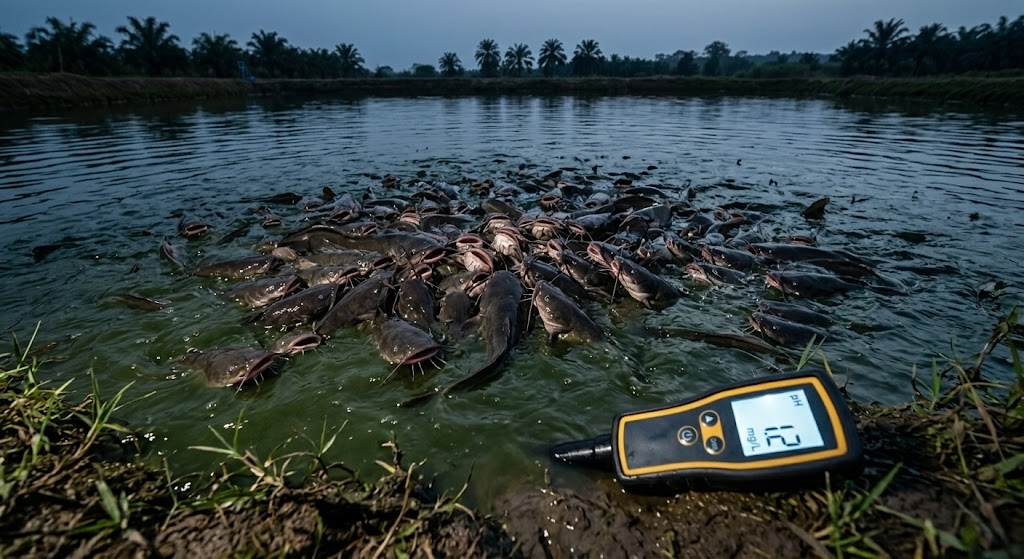
African catfish may visit the surface more frequently to gulp atmospheric air. An increase in this behaviour, particularly when accompanied by unusual distress, can indicate deteriorating water conditions.
3. Reduced feeding activity
Fish under oxygen stress may reduce their feeding activity. Continued feeding during periods of poor oxygen availability can also increase organic waste and worsen water quality.
4. Physiological stress
Insufficient oxygen interferes with normal aerobic energy production. Prolonged or severe oxygen stress can impair normal activity and reduce the fish’s ability to cope with additional challenges.
5. Increased risk of mortality
If oxygen availability becomes critically low, fish may die. The severity depends on the degree and duration of oxygen shortage, water conditions, and the fish’s overall health.
Important distinction: Low oxygen does not automatically mean the gills have a bacterial or fungal infection. Respiratory distress may be caused by the water itself, an infectious disease, or a combination of factors.
Signs of Low Oxygen in Catfish Ponds and Tanks
Watch for these warning signs:
- Catfish gathering near the water surface more than usual
- Increased air-gulping behaviour
- Rapid gill-cover movement
- Reduced feeding or failure to respond to feed
- Unusual lethargy or abnormal swimming
- Fish showing distress at the same time across a pond or tank
- Sudden or increasing mortality
These signs are not exclusive to low oxygen. Ammonia toxicity, nitrite toxicity, gill parasites, and other diseases can cause similar symptoms.
What Causes Low Oxygen in Catfish Farming?
High stocking density
More fish increase the total oxygen demand of a pond or tank. If aeration and water exchange cannot meet that demand, oxygen availability may decline.
Excessive feeding
Uneaten feed and fish waste add organic material to the system. Microorganisms break down this material and consume oxygen in the process.
Organic matter accumulation
Accumulated faeces, decomposing feed and other organic matter can increase biological oxygen demand.
Inadequate aeration
In systems that depend on mechanical aeration, insufficient capacity or equipment failure can cause oxygen levels to fall.
Changes in temperature
Water temperature affects oxygen availability and the oxygen demands of aquatic organisms. Temperature should therefore be monitored alongside dissolved oxygen.
Algal and microbial activity
Algae and other aquatic organisms can influence oxygen levels through photosynthesis and respiration. Oxygen conditions may vary considerably between daytime and night-time, especially in productive ponds.
How to Check Dissolved Oxygen
The most reliable approach is to measure dissolved oxygen rather than relying only on fish behaviour.
Step 1: Use a dissolved oxygen meter
Use a suitable, calibrated meter according to the manufacturer’s instructions. Record the reading and the time of measurement.
Step 2: Check at critical times
Where practical, monitor oxygen during periods when it may be lowest, particularly before sunrise in ponds with substantial biological activity. Also investigate conditions during and after feeding if oxygen demand is a concern.
Step 3: Compare results with operating targets
Use appropriate dissolved oxygen targets for the species, life stage and farming system. Do not assume that one reading represents conditions throughout the entire pond or day.
Step 4: Record trends
Keep a record of oxygen readings, temperature, feeding, weather, stocking density, and fish behaviour. Trends can reveal recurring problems before serious mortality occurs.
What to Do When Catfish Have Low Oxygen
If fish are showing respiratory distress, act promptly.
- Measure dissolved oxygen immediately, if a meter is available.
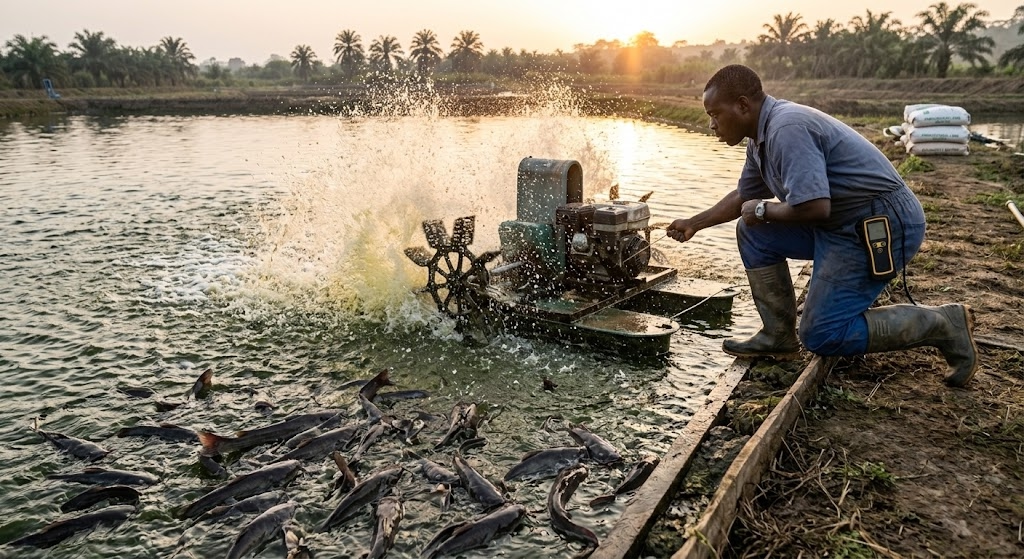
- Start or increase suitable aeration when oxygen shortage is suspected, while ensuring the equipment is safe and appropriate for the system.
- Check the entire system for aeration failure, blocked water flow, or other operational problems.
- Pause or reduce feeding temporarily if fish are distressed and oxygen availability is inadequate. Resume normal feeding gradually when conditions and fish behaviour improve.
- Avoid unnecessary handling while fish are under stress.
- Test ammonia and nitrite because poor water quality may occur alongside low oxygen.
- Monitor fish closely and seek professional assistance if distress or mortality continues.
If many fish are gasping or dying, treat the situation as urgent. Do not delay emergency oxygen support while waiting for a full diagnosis.
How to Prevent Low Oxygen in Catfish Ponds
Maintain suitable stocking levels
Match stocking density to the pond or tank’s oxygen supply, water exchange, waste-removal capacity and management resources.
Use appropriate aeration
Ensure aeration equipment is adequate for the system and maintained according to the manufacturer’s guidance. Have a plan for responding to equipment failure where mechanical aeration is essential.
Manage feeding carefully
Avoid overfeeding and remove accumulated waste using appropriate procedures. Feeding should be adjusted to fish size, biomass, appetite, and water conditions.
Monitor water quality regularly
Measure dissolved oxygen and check ammonia, nitrite, pH, and temperature. Monitoring helps distinguish oxygen problems from other causes of respiratory distress.
Maintain pond and tank hygiene
Prevent excessive accumulation of organic matter and maintain effective waste management.
Establish an emergency response plan
Farm workers should know how to recognise respiratory distress, operate aeration equipment, check oxygen levels, and record unusual mortality.
Relationship Between Low Oxygen and Gill Disease
Low oxygen and infectious gill disease are different problems, although their symptoms may overlap.
| Observation | Possible interpretation |
|---|---|
| Fish suddenly gather at the surface | Low oxygen or another water-quality problem |
| Fish show rapid gill movement | Respiratory distress; the cause needs investigation |
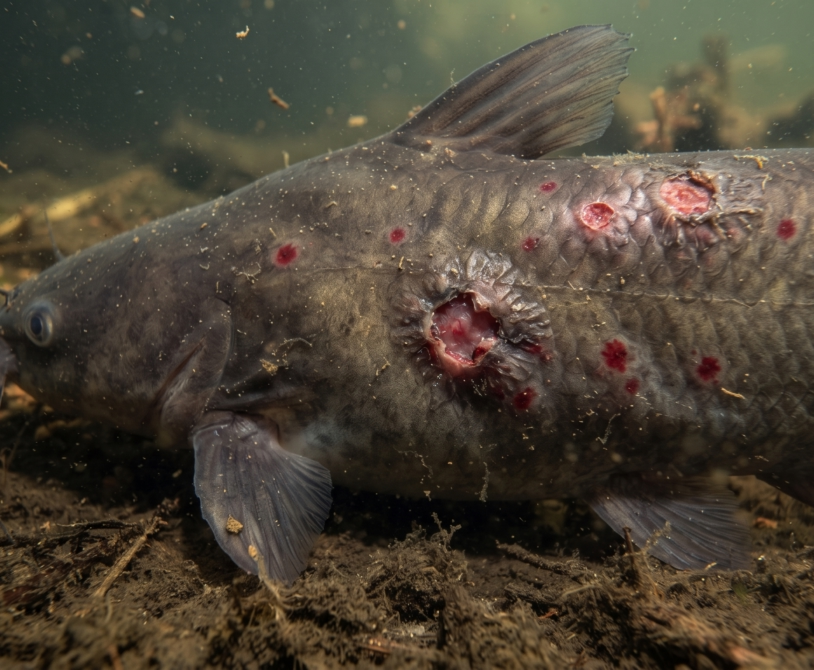
| Abnormal gill colour or visible tissue damage | Possible infection, parasites, chemical irritation or other gill damage |
| Fish in multiple ponds become distressed simultaneously | Investigate shared water, weather or operational factors |
| Symptoms persist despite correcting oxygen levels | Investigate other water-quality problems and possible disease |
This table is a guide for investigation, not a diagnostic test. A qualified fish-health professional may be needed to establish the cause.
Frequently Asked Questions
Can African catfish survive in low-oxygen water?
African catfish can breathe atmospheric air, which helps them tolerate low dissolved oxygen better than many fish species. Nevertheless, prolonged or severe oxygen shortages can still cause stress, impair performance, and contribute to mortality.
Does low oxygen cause permanent gill damage?
Low oxygen can cause serious physiological stress, but whether structural gill damage occurs depends on the circumstances. Visible gill damage should not automatically be attributed to oxygen shortage.
Why do catfish gasp more at night or early in the morning?
In productive ponds, photosynthesis stops at night while fish, algae, and microorganisms continue consuming oxygen. Consequently, dissolved oxygen may fall overnight and reach low levels before sunrise.
Can low oxygen cause catfish to stop eating?
Yes. Oxygen stress can reduce normal activity and feeding. However, loss of appetite can also result from infection, poor feed quality, temperature changes, and toxic water conditions.
Is surface breathing always a sign of low oxygen?
No. African catfish naturally gulp atmospheric air. A noticeable increase in surface breathing, especially with reduced feeding, distress, or mortality, should prompt water-quality checks.