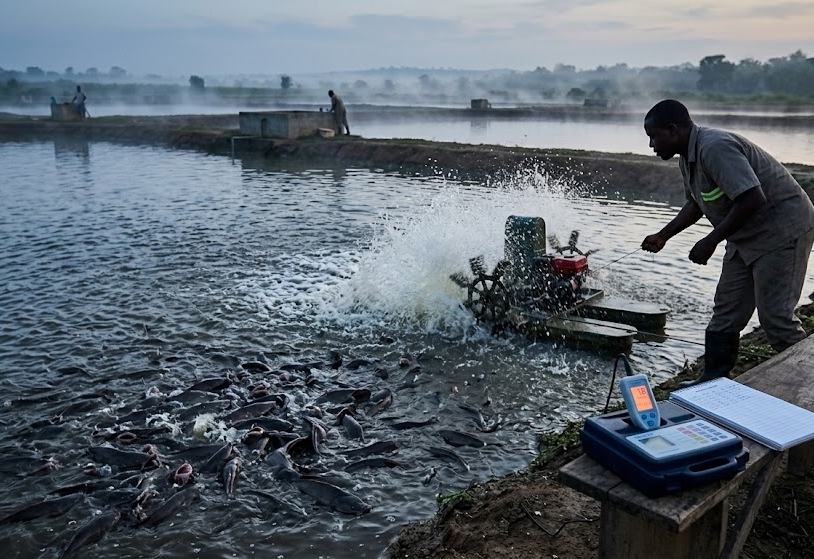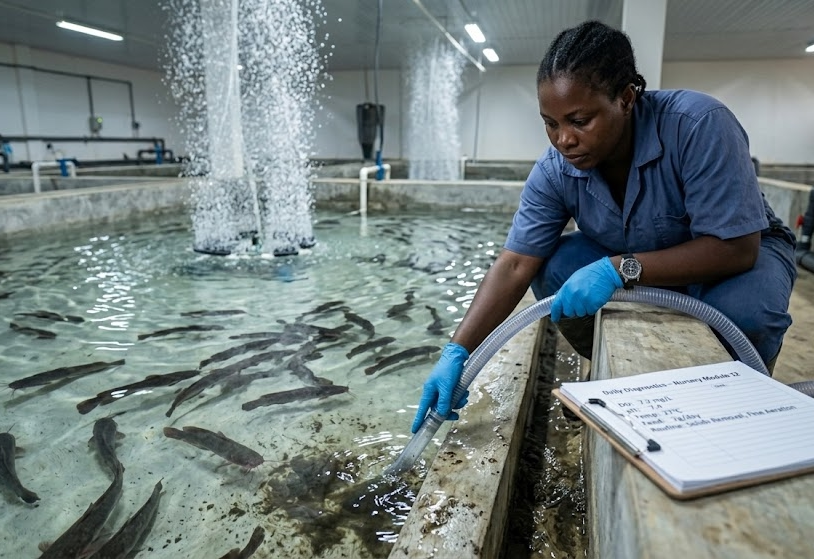
In commercial and homestead catfish production, the fingerling stage is the most critical and high-risk window for parasitic outbreaks. Because young African catfish (Clarias gariepinus) and Channel catfish (Ictalurus punctatus) possess delicate, developing immune systems, thin epidermal barriers, and high metabolic rates, a parasitic infestation that adult fish might easily tolerate can devastate an entire fingerling population within days.
Protecting young stock requires understanding why fingerlings are exceptionally vulnerable, recognizing key parasite threats, and implementing strict nursery management protocols.
1. Why Fingerlings Are Exceptionally Vulnerable
Young catfish face unique biological and environmental risk factors that amplify the impact of both external and internal parasites:
- Underdeveloped Mucus and Scale Defenses: Adult catfish possess a thick protective slime coat and tough skin that act as formidable barriers against pathogens. Fingerlings lack this mature epidermal defense, making it effortless for protozoan swarmers and fluke larvae to attach and burrow into the skin.
- High Surface-to-Mass Ratio: Because fingerlings are tiny, a relatively small number of external parasites (such as Ich or Trichodina) can overwhelm their total body surface area, rapidly causing severe osmoregulatory failure and ion loss.
- High Stocking Densities in Nurseries: Nursery tanks and hapa nets typically feature high fish densities to maximize space. This proximity accelerates the transmission of free-swimming parasites, allowing a minor infection to cascade into a pond-wide epidemic in less than 48 hours.
- Rapid Metabolic Demand and Stress: Fingerlings are fed high-protein diets to drive fast growth, which can quickly degrade water quality if uneaten feed accumulates. Environmental stress suppresses their immature immune systems, leaving them defenseless against opportunistic pathogens.
2. Major Parasitic Threats in Fingerling Production
While fingerlings can suffer from the full spectrum of fish parasites, certain groups pose an immediate, lethal threat during the nursery phase:
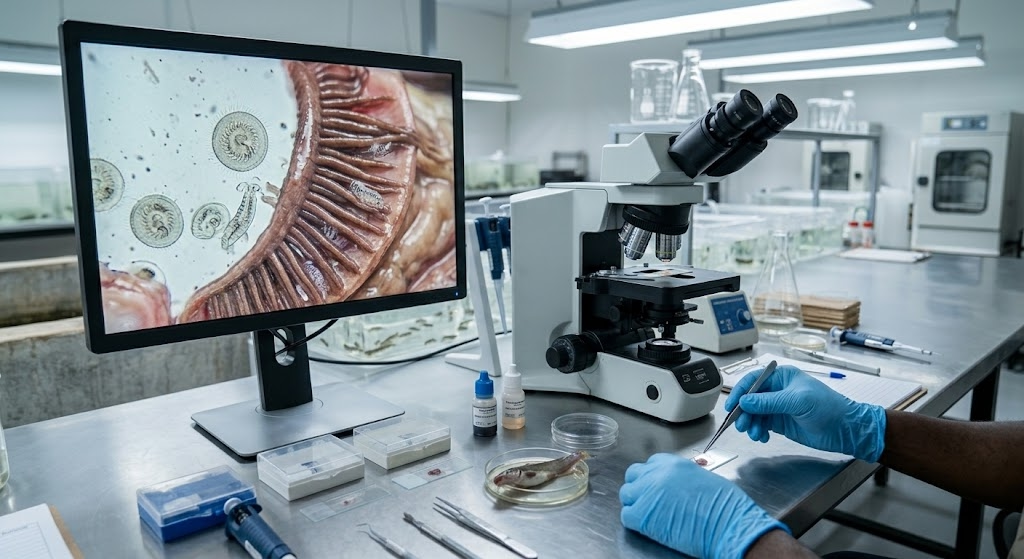
- Protozoan Outbreaks (Ich, Trichodina, Costia): These microscopic parasites target the gills and skin. In fingerlings, gill colonization by Costia or Trichodina quickly cuts off oxygen exchange, causing mass suffocations and erratic gasping at the water surface.
- Monogenean Gill Flukes (Dactylogyrus): These flatworms target fragile fingerling gill filaments, causing severe tissue hyperplasia, clubbed gills, and acute mortality before external symptoms even become obvious.
- Internal Nematodes and Protozoans: When fingerlings ingest contaminated water or intermediate hosts, internal parasites like Procamallanus or intestinal flagellates compromise the gut lining. This halts nutrient absorption, leading to chronic stunting, “pinched” bellies, and uneven grading sizes.
3. Clinical Warning Signs in Nursery Tanks
Early detection in fingerlings relies on observing subtle shifts in behavior and appearance before mass mortalities set in:
- Sudden Drop in Feeding Vigor: Healthy fingerlings should swarm aggressively during feeding times. A sudden reluctance to feed or completely ignored rations is an immediate red flag.
- Flashing and Darting: Fingerlings darting frantically against tank walls or hapa netting indicate skin irritation from protozoans or flukes.
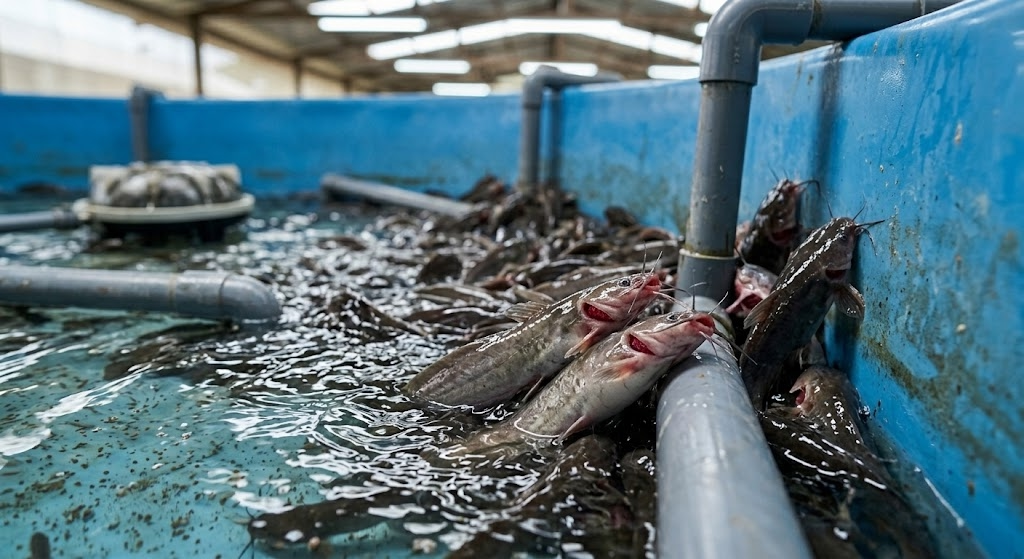
- Surface Crowding and Gasping: Clustering tightly around incoming water pipes or hanging motionless at the surface signals severe gill damage and oxygen deprivation.
- Emaciation and “Knife-Backs”: A high proportion of thin, stunted fish with oversized heads relative to their bodies points toward chronic internal parasitism or nutritional malabsorption.
4. Proactive Nursery Management and Prevention
Controlling parasites in fingerlings depends heavily on prevention, biosecurity, and maintaining pristine water conditions:
- Strict Water Filtration: Use fine-mesh filter bags or micro-screens on all nursery water inlets to prevent wild copepods, snails, and parasitic larvae from entering rearing tanks.
- Pond and Tank Sanitation: Thoroughly clean, disinfect, and dry nursery tanks, concrete raceways, and hapa nets between batches to eliminate residual parasite cysts and eggs.
- Optimized Water Quality Management: Maintain high dissolved oxygen levels (>5 mg/L in nurseries) and execute frequent, controlled water exchanges to keep ammonia and organic waste near zero.
- Prophylactic Quarantine Screening: Inspect incoming batches of newly hatched fry or fingerlings under a microscope when possible before stocking them into main nursery units.
Need Assistance?
Are you experiencing high mortality rates, sluggish feeding, flashing, or surface gasping among your catfish fingerlings? Please contact us today
for professional diagnostic support, water quality evaluation, and tailored nursery management strategies to protect your developing stock.