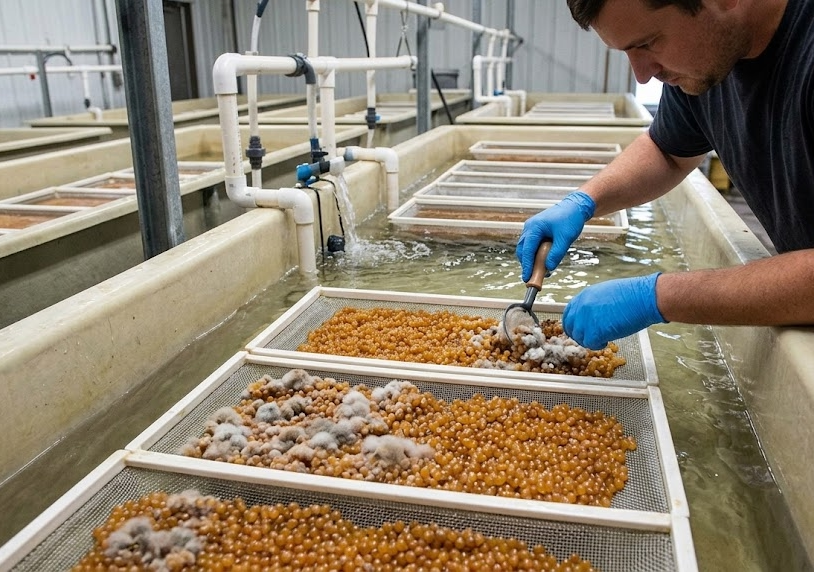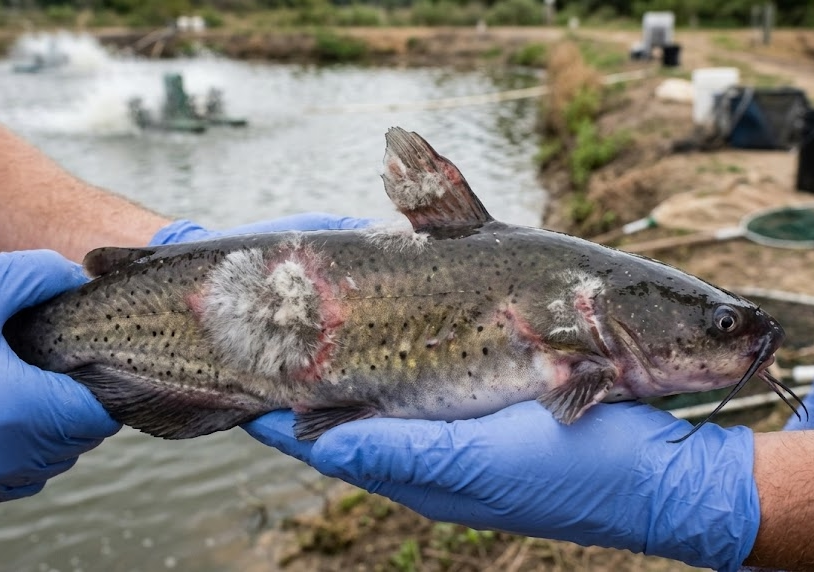
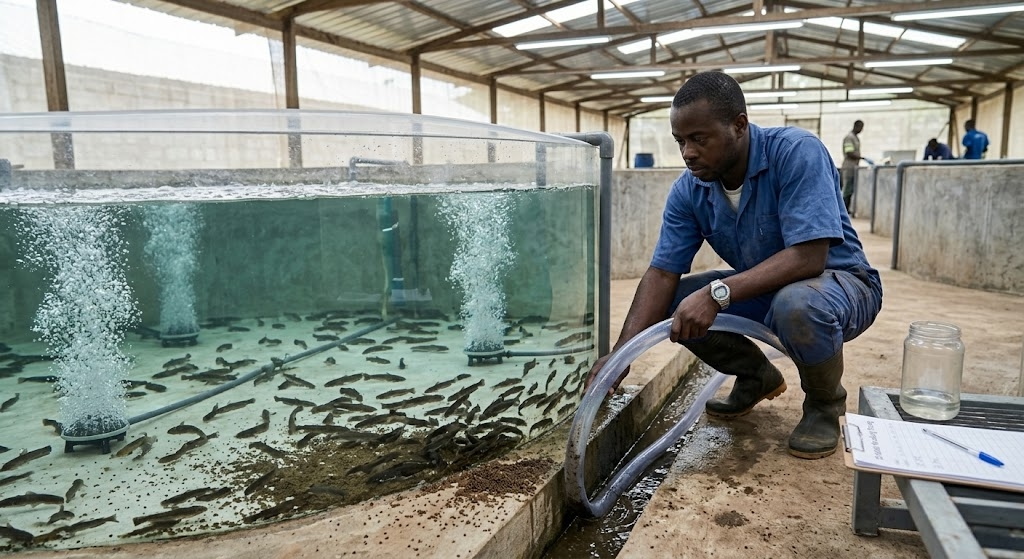
Water quality management is one of the most important parts of successful catfish farming. Poor water conditions can reduce feeding, slow growth, damage gills, increase stress, and create conditions that allow diseases to develop.
For African catfish (Clarias gariepinus), maintaining suitable water quality requires regular monitoring of dissolved oxygen, ammonia, nitrite, pH, temperature, and organic waste.
What Is Water Quality Management in Catfish Farming?
Water quality management is the process of monitoring and controlling the physical, chemical, and biological conditions of pond or tank water to support catfish health and growth.
Good water quality helps farmers maintain:
- Normal feeding behaviour
- Efficient growth and feed conversion
- Healthy gills and skin
- Better resistance to environmental stress
- Lower risk of water-quality-related disease
- More stable production
Water that looks clean is not necessarily safe. Clear water may still contain harmful ammonia or nitrite, while water with visible waste may also have low dissolved oxygen.
Key Water Quality Parameters for Catfish
1. Dissolved Oxygen
Dissolved oxygen is the oxygen available in water for fish to breathe.
Low dissolved oxygen can cause catfish to gather near the water surface, breathe rapidly, reduce feeding, or become unusually inactive. Severe oxygen shortages can lead to fish deaths.
Common causes include:
- Overstocking
- Excessive feeding
- Accumulation of organic waste
- Decomposition of uneaten feed and faeces
- Poor water circulation
- Reduced oxygen production at night in ponds with heavy algal growth
Management: Monitor dissolved oxygen, improve aeration when necessary, remove excess organic waste, and avoid feeding more than the fish can consume.
2. Ammonia
Ammonia enters catfish farming systems through fish waste, uneaten feed, and the decomposition of organic material.
Its toxicity depends partly on water pH and temperature. A higher proportion of ammonia may exist in the more toxic, un-ionised form under warmer and more alkaline conditions.
Possible effects include:
- Gill irritation and damage
- Increased breathing rate
- Reduced appetite
- Poor growth
- Increased susceptibility to environmental stress
Management: Test ammonia regularly, control feeding, remove accumulated waste, maintain effective biological filtration where applicable, and use suitable water exchange when necessary.
Do not assume that water is safe simply because fish are still feeding.
3. Nitrite
Nitrite can accumulate when the biological processes responsible for breaking down waste are not functioning effectively. It may also become a problem in systems experiencing sudden changes in filtration or waste loading.
Nitrite interferes with the blood’s ability to transport oxygen, meaning fish can show signs of oxygen stress even when dissolved oxygen in the water appears adequate.
Warning signs may include:
- Rapid breathing
- Reduced feeding
- Unusual swimming
- Lethargy
- Unexpected mortality
Management: Test nitrite, inspect the filtration system, reduce excess feeding, and correct the underlying water-quality problem. Do not treat suspected nitrite poisoning without checking the system and relevant water parameters.
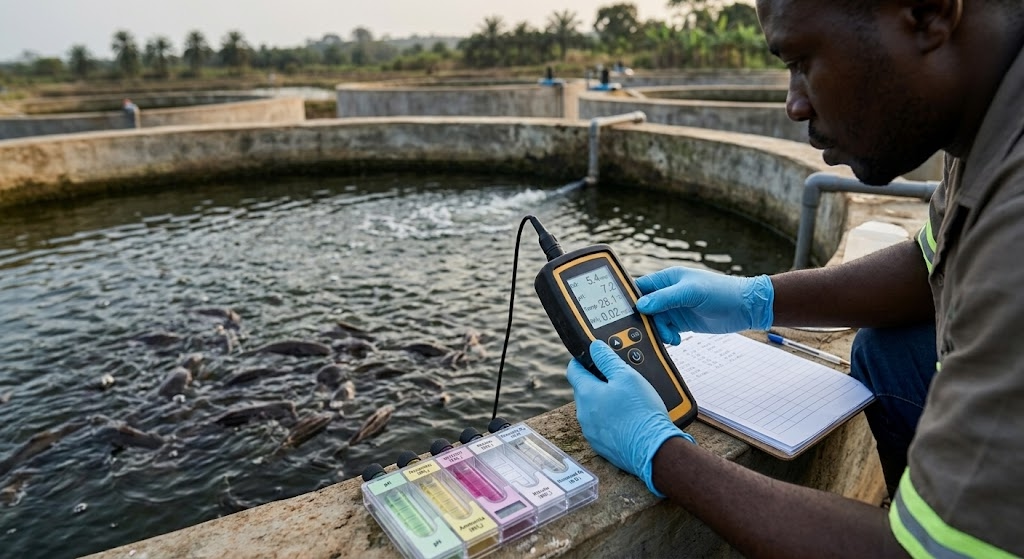
4. pH
pH indicates how acidic or alkaline the water is. Catfish require a suitable and reasonably stable pH for normal physiological function.
Sudden pH changes can stress fish, affect gill function, and alter the toxicity of certain substances, especially ammonia.
Factors that influence pH include:
- Water source
- Alkalinity
- Photosynthesis and respiration
- Organic decomposition
- Chemical additions
- Water exchange
Management: Test pH consistently, investigate sudden changes, and avoid adding lime or other chemicals without understanding the water chemistry. The appropriate correction depends on the system and the cause of the problem.
5. Water Temperature
Temperature affects catfish metabolism, appetite, growth, oxygen demand, and the behaviour of biological filtration systems.
Sudden temperature changes can cause stress. Warmer water also holds less dissolved oxygen, while fish may require more oxygen as their metabolic rate increases.
Management: Monitor temperature, avoid sudden changes during water replacement, and consider temperature when adjusting feeding, stocking density, and aeration.
6. Organic Waste and Water Clarity
Uneaten feed, faeces, dead organisms, and other organic matter can accumulate in ponds and tanks. Their decomposition consumes oxygen and can contribute to ammonia and other water-quality problems.
Signs of excessive waste may include:
- Sludge accumulating at the bottom
- Persistent unpleasant odours
- Cloudy or discoloured water
- Increased fish stress
- Deteriorating water test results
Water colour alone is not a reliable measure of water quality.
Management: Feed according to the fish’s needs, remove uneaten feed where practical, clean tanks appropriately, manage sludge, and maintain suitable filtration or water exchange.
How to Monitor Water Quality on a Catfish Farm
Water quality monitoring should be routine rather than something farmers do only after fish begin dying.
A practical monitoring programme includes:
- Observe fish behaviour. Check whether fish are feeding normally, swimming normally, or gathering at the surface.
- Measure dissolved oxygen. Pay particular attention to periods when oxygen may be low, including early morning in pond systems.
- Test ammonia and nitrite. Increase testing when stocking density, feeding rates, or filtration conditions change.
- Measure pH and temperature. Record readings so that gradual changes and sudden fluctuations can be identified.
- Inspect the system. Check aerators, pumps, filters, water inlets, and drainage.
- Keep records. Record measurements, feeding, mortality, water exchange, and corrective actions.
The frequency of testing should reflect stocking density, feeding intensity, system design, and previous water-quality problems. Intensive tank systems often require more frequent monitoring than lightly stocked ponds.
What to Do When Catfish Water Quality Deteriorates
When fish show signs of distress, act methodically.
Step 1: Check dissolved oxygen immediately
If fish are gasping or gathering at the surface, check oxygen levels and start or increase aeration when indicated. Do not wait for laboratory confirmation before responding to an obvious oxygen emergency.
Step 2: Test the water
Measure dissolved oxygen, ammonia, nitrite, pH, and temperature. Compare results with the requirements of the fish and the specific farming system.
Step 3: Reduce unnecessary feeding
If fish are stressed or water quality has deteriorated, temporarily reduce or suspend feeding as appropriate. Uneaten feed adds to the waste burden.
Step 4: Inspect filtration and water movement
In tank-based systems, check whether pumps, aerators, filters, and water circulation are functioning correctly. In ponds, inspect water inflows and other relevant conditions.
Step 5: Correct the identified problem
Use a corrective action suited to the measured parameter. Water exchange may help in some situations, but replacement water must itself be suitable. Sudden, large changes can create additional stress.
Step 6: Recheck the water and fish
Repeat measurements after corrective action. Continue monitoring until conditions stabilise and fish behaviour improves.
If mortality continues or fish show signs of infection, seek professional aquatic animal health advice. Water-quality problems and infectious diseases can occur together.
How to Prevent Water Quality Problems
Prevention is generally more effective than waiting for fish to become sick.
- Control stocking density: Match fish numbers and biomass to the capacity of the pond or tank.
- Feed responsibly: Avoid overfeeding and remove uneaten feed where practical.
- Maintain aeration: Keep equipment functional and provide adequate oxygen for the system’s demand.
- Manage waste: Remove excessive sludge and organic material using methods suitable for the farming system.
- Maintain filtration: Check that biological and mechanical filters are working properly.
- Use suitable water: Assess new water before introducing it into the production system.
- Avoid abrupt changes: Adjust water conditions gradually when possible.
- Keep records: Use trends in water measurements to identify problems before they become emergencies.
- Investigate recurring problems: Repeated low oxygen or elevated ammonia may indicate excessive stocking, overfeeding, inadequate filtration, or insufficient aeration.
Common Water Quality Management Mistakes
Waiting until fish die before testing
Fish may experience stress and reduced growth before obvious mortality occurs. Routine measurements help identify problems earlier.
Relying only on water colour
Clear water does not guarantee safe ammonia, nitrite, or oxygen levels.
Increasing feeding to improve growth
Excess feed can increase waste production and oxygen demand. Feeding decisions should consider fish behaviour, water quality, and biomass.
Changing too much water too quickly
Water replacement can introduce differences in temperature, pH, or other chemical characteristics. Check replacement water and avoid sudden changes that could stress fish.
Treating every problem as an infection
Gasping, poor appetite, and lethargy can result from water-quality problems, parasites, bacterial disease, or other causes. Test the water before assuming that medication is required.
Frequently Asked Questions
How often should water quality be checked in catfish farming?
The frequency depends on the production system and its intensity. Intensive systems with high stocking density and heavy feeding generally need more frequent checks. Dissolved oxygen should be monitored especially carefully when conditions favour oxygen depletion.
Can catfish survive in poor-quality water?
Catfish may tolerate some challenging conditions better than certain other fish species, but this does not mean poor water quality is safe. Prolonged exposure can damage health, reduce growth, increase disease risk, and cause mortality.
Why are my catfish eating less than usual?
Reduced feeding can result from low dissolved oxygen, unsuitable temperature, ammonia or nitrite exposure, sudden pH changes, disease, or poor feed quality. Check water conditions and inspect fish before deciding on a treatment.
Does changing the water solve every water-quality problem?
No. Water exchange may reduce some dissolved waste products, but it will not necessarily correct the underlying cause. Replacement water may also introduce new problems if its quality differs significantly from the existing water.
What is the most important water quality parameter?
There is no single parameter that explains every problem. Dissolved oxygen is critical during an immediate oxygen emergency, while ammonia, nitrite, pH, temperature, and waste accumulation must also be managed as part of a complete programme.
Conclusion
Effective catfish water quality management requires regular measurement, careful feeding, appropriate stocking density, waste control, and reliable aeration or filtration. Monitoring dissolved oxygen, ammonia, nitrite, pH, and temperature helps farmers identify risks before they cause serious damage.
For African catfish (Clarias gariepinus), the goal is not simply to keep water looking clean. It is to maintain stable conditions that support normal breathing, feeding, growth, and overall fish health.