Catfish fry gasping at the water surface may signal low dissolved oxygen, poor water quality, gill damage, or other forms of physiological stress. Although catfish can tolerate a range of environmental conditions, fry are vulnerable to sudden changes in their rearing environment.
When many fry gather at the surface and appear to struggle for air, farmers should investigate immediately. This behaviour does not automatically mean oxygen is low; several water-quality problems and diseases can cause similar symptoms.
What Does Surface Gasping Look Like in Catfish Fry?
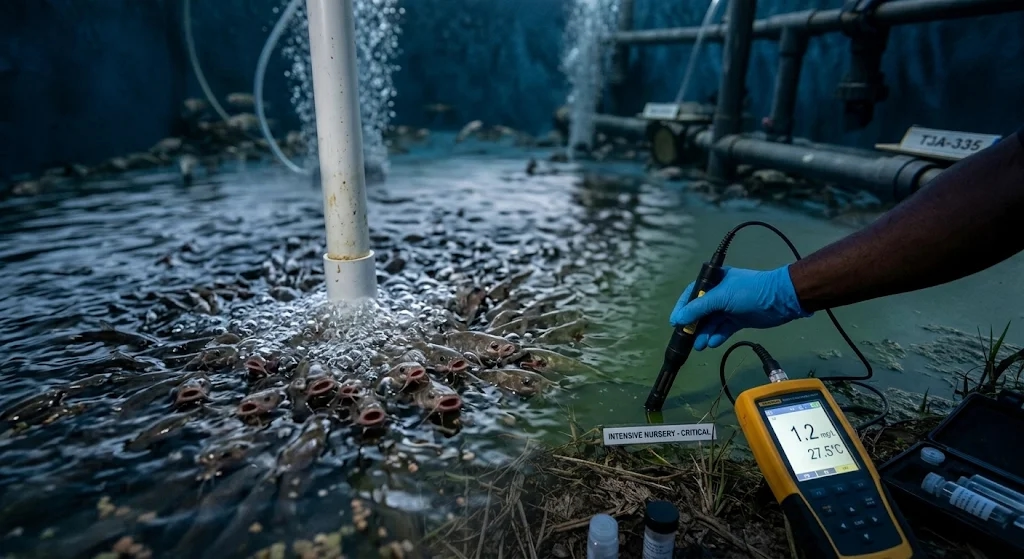
Catfish fry gasping at the surface may show one or more of the following signs:
- Gathering close to the water surface.
- Repeatedly opening and closing their mouths.
- Rapid gill movements.
- Swimming weakly or erratically.
- Reduced feeding activity.
- Remaining near water inlets or areas with stronger water movement.
- Losing balance or becoming inactive in severe cases.
If the behaviour affects many fry simultaneously, investigate the water conditions first. Sudden widespread gasping can indicate an urgent environmental problem.
Causes of Catfish Fry Gasping at the Surface
1. Low Dissolved Oxygen
Low dissolved oxygen is one of the most important causes to investigate when catfish fry gather at the surface and gasp.
Oxygen levels may decline because of inadequate aeration, excessive stocking density, decomposition of organic waste, or increased oxygen consumption by microorganisms. Oxygen can also fluctuate during the day, depending on the production system and biological activity.
What to do: Measure dissolved oxygen promptly. If it is low, increase aeration or oxygen supply using an appropriate system and monitor the fish closely.
2. Ammonia Accumulation
Ammonia can accumulate when waste, uneaten feed, and fish excretion exceed the system’s capacity to process them. Toxic ammonia can damage the gills and interfere with normal physiological function.
Affected fry may gasp, become lethargic, lose their appetite, or show abnormal swimming.
What to do: Test ammonia and review feeding, stocking density, waste removal, and filtration. Do not assume that clear water is free of ammonia.
3. Nitrite Poisoning
Nitrite can interfere with the blood’s ability to transport oxygen effectively. Consequently, fish may show signs resembling oxygen deficiency even when dissolved oxygen in the water is adequate.
Possible signs include surface gasping, weakness, reduced feeding, and increased mortality.
What to do: Test nitrite as well as dissolved oxygen. If nitrite is elevated, seek advice on correcting the problem safely for the specific production system.
4. Gill Disease
Diseases affecting the gills can reduce the fish’s ability to extract oxygen from water. Possible causes include parasitic infestation, bacterial gill disease, and other forms of gill damage.
Affected fry may show rapid gill movements, surface gasping, weakness, or poor growth.
What to do: Examine the fry for additional signs of disease and obtain a professional gill examination if symptoms persist or mortality increases.
5. Unfavourable Water Temperature
Temperature influences fish metabolism and the amount of oxygen water can hold. Higher temperatures generally reduce oxygen solubility while increasing the oxygen demand of fish and other organisms.
Sudden temperature changes can also stress young fish.
What to do: Measure the water temperature and compare it with the requirements of the species and developmental stage. Avoid abrupt changes during water replacement or transfer.
6. Overstocking
Excessive stocking density can increase oxygen demand, waste production, and competition for suitable rearing conditions.
When the system cannot maintain adequate water quality for the number of fry present, surface gasping and other stress behaviours may develop.
What to do: Review stocking density, aeration capacity, water exchange and waste management. Any reduction in stocking density should be carried out carefully to avoid additional handling stress.
7. Organic Waste and Excessive Feeding
Uneaten feed, faeces and decomposing organic material can increase the biological oxygen demand of the water. Their decomposition may contribute to oxygen depletion and deteriorating water quality.
What to do: Adjust feeding to the fry’s requirements, remove excessive waste carefully, and maintain effective water management.
8. Sudden Changes in Water Chemistry
Abrupt changes in pH or other water-quality conditions can stress fry and may worsen the effects of existing environmental problems.
Water replacement using unsuitable water can also introduce sudden changes in temperature or chemistry.
What to do: Test the water and compare current measurements with previous records. Correct problems gradually when appropriate, except where an immediate emergency requires prompt intervention.
How to Diagnose Surface Gasping in Catfish Fry
A structured investigation helps distinguish oxygen deficiency from poisoning, gill disease and other causes.
Step 1: Assess the Urgency
Check how many fry are affected and whether the behaviour began suddenly. If many fry are gasping or dying, respond immediately rather than waiting for every test result.
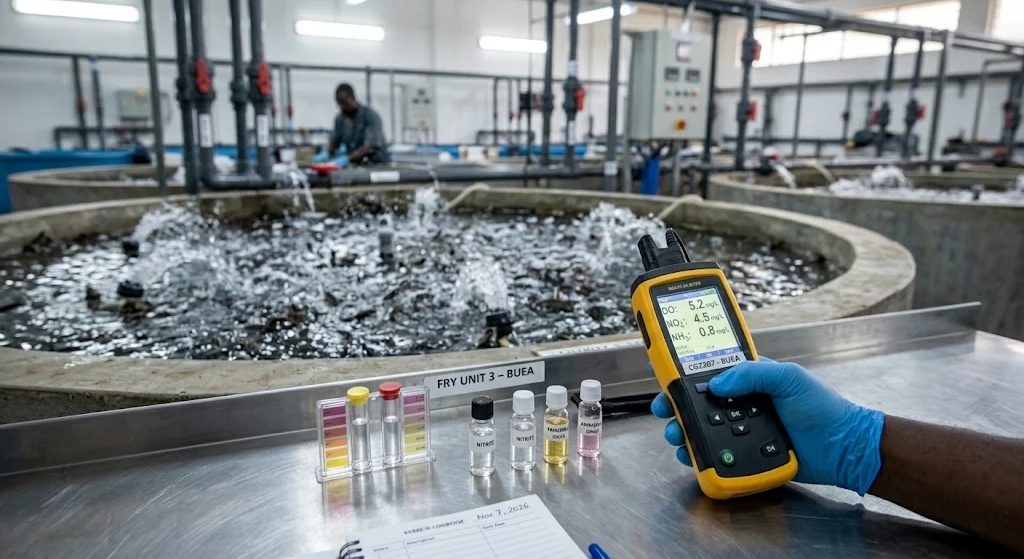
Step 2: Measure Dissolved Oxygen
Use a suitable dissolved-oxygen meter or test method. Check conditions in the area where the fry are being reared and, where possible, at different depths.
A measurement taken after aeration has been increased may not reflect the conditions that caused the original problem.
Step 3: Test Other Water-Quality Parameters
Check:
- Ammonia.
- Nitrite.
- pH.
- Water temperature.
Interpret the results together. Normal dissolved oxygen does not rule out nitrite poisoning or gill damage.
Step 4: Inspect the Fry
Look for rapid gill movements, abnormal gill colour, skin lesions, unusual growths, poor coordination, and reduced feeding.
These signs can help guide further investigation but do not independently confirm a specific disease.
Step 5: Review Recent Management Changes
Determine whether symptoms began after heavy feeding, a water change, transport, stocking, equipment failure, or interruption of aeration.
Reviewing the timing can help identify the likely trigger.
Step 6: Obtain Professional Assistance
If the problem persists after obvious water-quality issues have been addressed, seek assistance from an aquatic animal health professional or fish diagnostic laboratory. Microscopic examination or other tests may be necessary.
What to Do Immediately When Catfish Fry Gasp at the Surface
Take the following steps when surface gasping is observed:
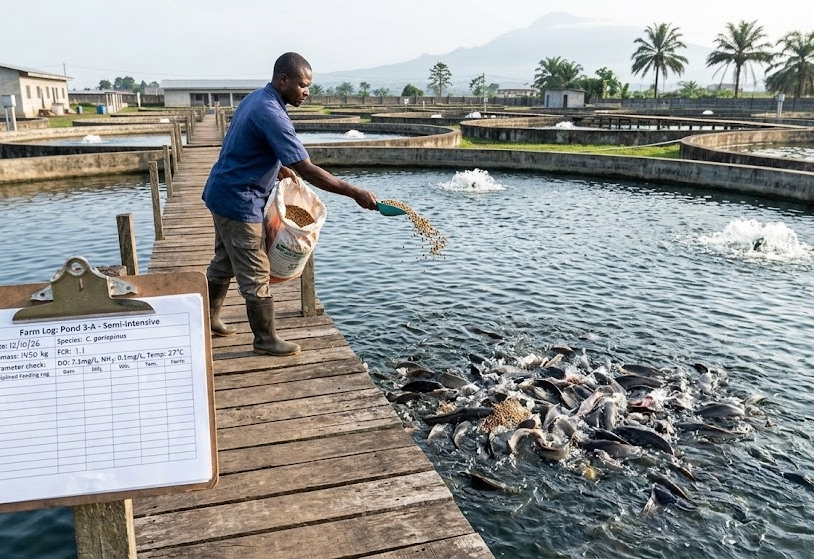
- Check aeration immediately. Confirm that pumps, air stones, water circulation, and other oxygen-supply equipment are operating correctly.
- Increase oxygen supply if necessary. Use an appropriate aeration or oxygenation system when low dissolved oxygen is suspected.
- Measure water quality. Test dissolved oxygen, ammonia, nitrite, pH, and temperature as soon as possible.
- Stop adding unnecessary feed during the emergency. Avoid further organic loading while investigating the problem; resume feeding according to the fish’s condition and the farm’s management plan.
- Remove excessive waste carefully. Avoid disturbing the fry or releasing accumulated waste into the water.
- Check the water source. Ensure incoming water is suitable and does not introduce harmful chemical or temperature changes.
- Monitor the response. Record the number of affected fry, mortality, and water-quality readings.
Do not immediately apply antibiotics, salt, or other chemicals without establishing a reason. An incorrect treatment may worsen the situation or delay correction of the real cause.
How to Prevent Catfish Fry from Gasping at the Surface
Prevention depends on stable water quality and reliable farm management.
- Maintain aeration appropriate for the stocking density and rearing system.
- Monitor dissolved oxygen, particularly during periods when levels may decline.
- Test ammonia and nitrite regularly.
- Avoid excessive feeding and remove accumulated organic waste.
- Keep stocking density within the system’s management capacity.
- Monitor temperature and pH, especially after water changes.
- Maintain water-treatment and circulation equipment.
- Inspect fry daily for changes in swimming, feeding and respiratory behaviour.
- Keep records of water-quality measurements, feeding and mortality.
- Investigate recurring problems rather than repeatedly treating symptoms.
Frequently Asked Questions
Why are my catfish fry gasping when the water looks clean?
Water clarity does not establish water quality. Clear water can still contain insufficient dissolved oxygen, elevated ammonia or harmful nitrite concentrations. Test the water instead of relying on appearance.
Can catfish fry gasp even when oxygen levels are normal?
Yes. Gill disease, nitrite poisoning and other physiological problems can cause signs that resemble oxygen deficiency. If dissolved oxygen is adequate, investigate other water-quality parameters and consider professional examination.
Why do catfish fry gasp mostly in the morning?
In some systems, oxygen levels decline overnight because fish, microorganisms, and other organisms continue consuming oxygen while photosynthesis is absent. Measuring dissolved oxygen during the early morning can help identify this pattern.
Should I feed catfish fry when they are gasping?
During an acute episode, avoid adding unnecessary feed while you investigate the cause. Feeding can increase waste production and oxygen demand. Resume normal feeding based on recovery and appropriate farm-management guidance.
Can surface gasping cause catfish fry to die?
Yes. Severe oxygen deficiency, toxic water conditions, and serious gill damage can lead to mortality. Rapid investigation and correction of the underlying problem are important.
Conclusion
Catfish fry gasping at the surface should be treated as a warning sign, particularly when many fish are affected simultaneously. Low dissolved oxygen is an important possibility, but ammonia, nitrite, gill disease, temperature stress, and other water-quality problems must also be considered.
Check oxygen and water chemistry promptly, correct confirmed environmental problems safely, and seek professional diagnosis when symptoms continue or mortality increases. Consistent monitoring and sound hatchery management are essential for protecting young catfish.