Water temperature is a key factor in African catfish farming because it influences feeding activity, growth, metabolism, dissolved oxygen availability, and susceptibility to environmental stress. Maintaining a suitable and relatively stable temperature helps farmers support healthy fish and consistent production.
African catfish (Clarias gariepinus) are tropical freshwater fish that can tolerate a range of temperatures. However, surviving across a broad range does not mean every temperature supports growth and efficient farming equally.
What Is the Best Water Temperature for African Catfish?
African catfish generally perform well in warm water. A practical temperature range for grow-out management is about 26–30°C, though suitable conditions depend on fish size, health, feeding, water quality, and the production system.
Farmers should monitor actual water temperature rather than relying only on air temperature. Water in shallow ponds, outdoor tanks and indoor systems can respond differently to changing weather conditions.
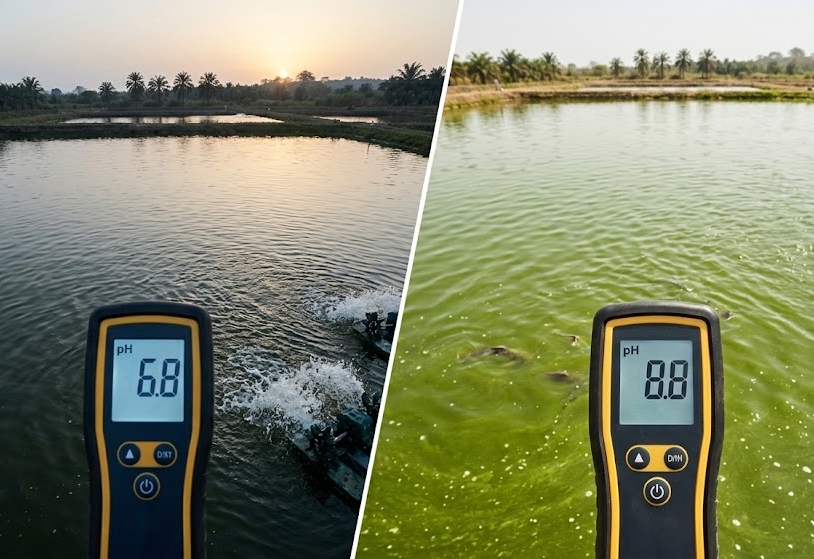
Temperature should also be assessed alongside dissolved oxygen, ammonia, pH, and stocking density.
How Water Temperature Affects Catfish Growth
Water temperature influences the rate at which catfish carry out biological processes.
Feeding and appetite
Within a suitable temperature range, African catfish generally maintain active feeding behaviour. When temperatures move outside favourable conditions, appetite may decline, making feeding management more difficult.
Excess feed can accumulate when farmers continue feeding at the usual rate despite reduced appetite.
Metabolism
Temperature affects metabolic activity. Changes can influence energy use, digestion and the amount of feed required to support growth.
Growth rate
Growth depends on several interacting factors, including temperature, feed quality, fish size, stocking density and water quality. A suitable temperature supports growth, but temperature alone cannot guarantee good production.
Feed conversion
Temperature can affect how efficiently fish use feed. Poor temperature management, especially when combined with other stressors, can reduce production efficiency.
Fish health
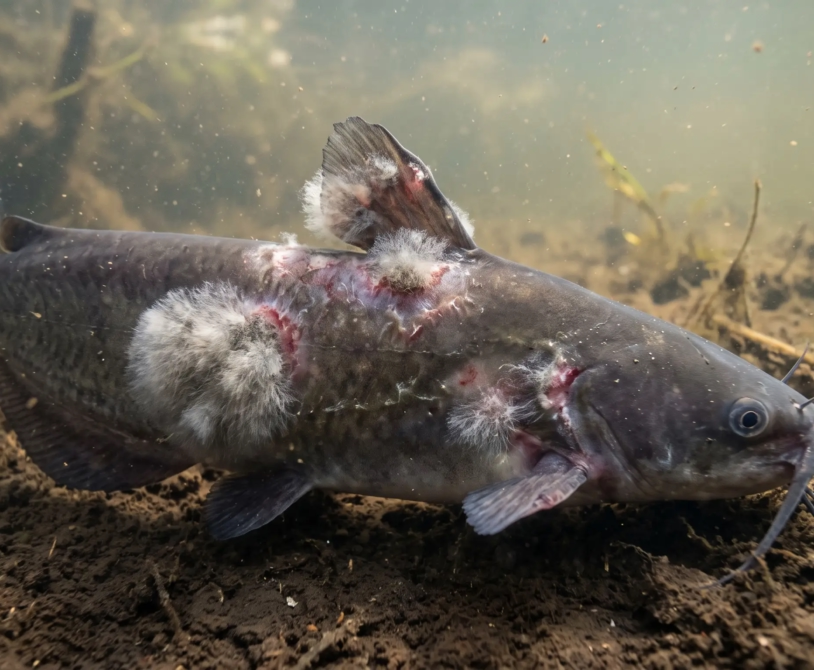
Temperature changes can place additional stress on catfish. When fish are already affected by poor water quality, overcrowding or disease, temperature-related stress may make the situation worse.
Effects of Low Water Temperature on African Catfish
When water becomes colder than the fish’s preferred conditions, biological activity may slow.
Possible effects include:
- Reduced appetite and feeding activity.
- Slower growth.
- Changes in swimming behaviour.
- Reduced feed utilisation.
- Increased stress during abrupt temperature changes.
- Greater difficulty maintaining normal production performance.
Cold conditions may occur during cooler weather, rainfall-related temperature changes, or in systems exposed to low ambient temperatures.
Farmers should not respond to reduced feeding by automatically increasing feed quantities. First, check temperature and other water quality parameters.
Effects of High Water Temperature on African Catfish
Higher temperatures can increase metabolic oxygen demand while warm water holds less dissolved oxygen than cooler water.
This combination can create a water quality problem, particularly in densely stocked ponds and tanks.
Potential effects include:
- Increased oxygen demand.
- Changes in feeding behaviour.
- Greater stress when temperatures exceed suitable conditions.
- Reduced dissolved oxygen availability.
- Increased risk from ammonia when water pH and temperature are both elevated.
- Poor performance when other environmental conditions are unsuitable.
High temperature can therefore affect catfish both directly and indirectly through changes in water chemistry.
How to Measure Water Temperature in Catfish Farming
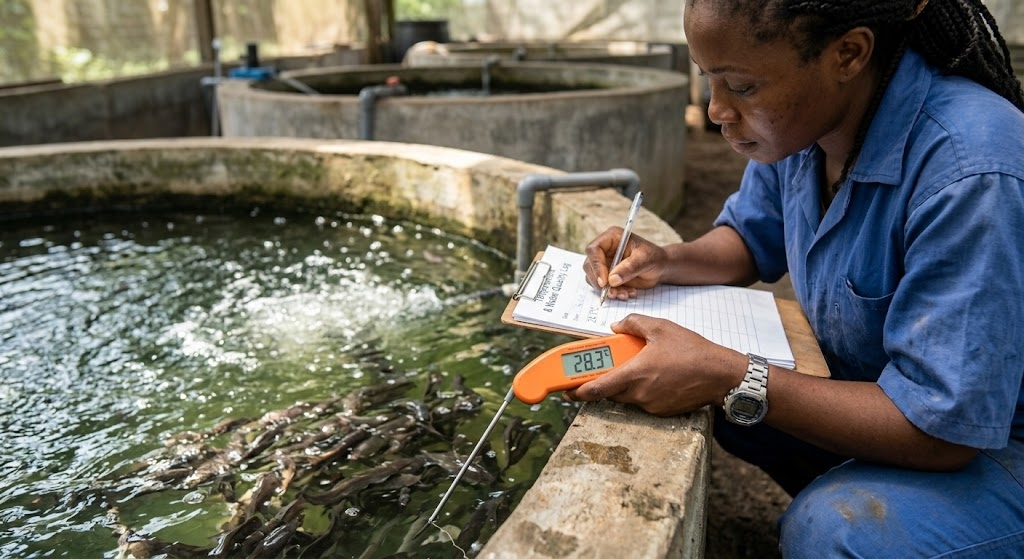
Regular measurements help farmers detect changes before they affect fish performance.
1. Use a suitable thermometer
Use a reliable digital or aquatic thermometer. Check that the instrument is working correctly and follow its instructions.
2. Measure the water directly
Do not estimate water temperature from the weather. Measure the water in the pond or tank where the fish are kept.
3. Check more than one location when necessary
In larger ponds or systems with uneven circulation, temperature can vary by depth and location. Take representative measurements where practical.
4. Record the time
Water temperature can change throughout the day. Recording the time makes it easier to identify daily fluctuations and recurring problems.
5. Keep a temperature log
Record measurements alongside feeding quantities, fish behaviour, mortality, and other water quality readings. This information helps identify links between temperature changes and production problems.
How to Maintain Suitable Water Temperature
The best management method depends on whether the catfish are raised in earthen ponds, concrete tanks, plastic tanks or indoor recirculating systems.
For earthen ponds
- Monitor temperature during seasonal changes.
- Manage pond depth appropriately for the system.
- Maintain adequate water levels.
- Avoid unnecessary disturbance when fish are already stressed.
- Monitor dissolved oxygen during hot weather.
For concrete and plastic tanks
- Monitor water temperature more frequently when conditions fluctuate.
- Provide suitable shade or insulation where appropriate.
- Check water circulation and the temperature of incoming water.
- Avoid sudden replacement-water temperature changes.
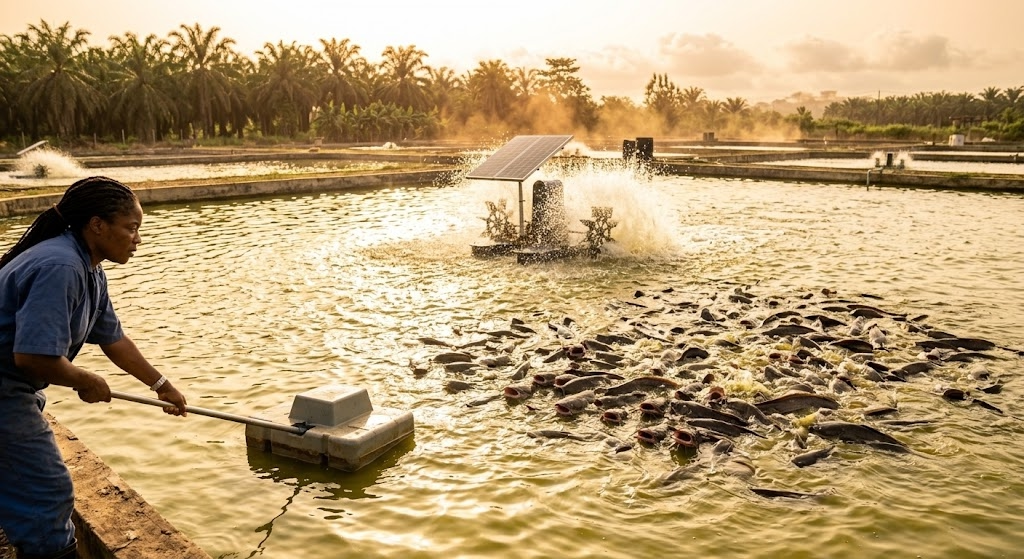
- Maintain reliable aeration, especially during warm conditions.
For indoor or recirculating systems
- Use appropriate temperature monitoring and control equipment.
- Check heaters, cooling equipment, and temperature sensors regularly.
- Maintain water circulation and biological filtration.
- Establish alarms or routine checks for abnormal temperature changes.
- Ensure that temperature adjustments do not disrupt other water quality parameters.
What to Do When Water Temperature Changes Suddenly
Sudden changes may stress fish even when the final temperature falls within a commonly used management range.
If catfish become inactive, stop feeding or show unusual swimming behaviour:
- Measure the water temperature and confirm the reading.
- Check dissolved oxygen, ammonia and pH.
- Observe whether the problem affects a few fish or the entire population.
- Avoid abrupt heating, cooling or large water exchanges that could worsen stress.
- Restore suitable conditions gradually using methods appropriate for the farming system.
- Seek aquatic animal health advice if fish continue deteriorating or mortality increases.
Do not assume that temperature is the only cause. Similar symptoms can occur during oxygen depletion, ammonia poisoning, nitrite poisoning and infectious disease.
Relationship Between Temperature and Other Water Quality Parameters
Temperature should not be managed in isolation.
| Parameter | Relationship with temperature |
|---|---|
| Dissolved oxygen | Warmer water generally holds less dissolved oxygen, while fish oxygen demand may increase |
| Ammonia | Higher temperature can increase the proportion of total ammonia present as toxic un-ionized ammonia, depending also on pH |
| pH | Temperature can affect chemical equilibria and measurement interpretation, but daily pH changes may also be driven by photosynthesis and respiration |
| Feeding | Appetite and feeding requirements can change as water temperature changes |
| Fish growth | Growth depends on temperature together with nutrition, fish size, stocking density and water quality |
These relationships explain why temperature problems can trigger or worsen other challenges in catfish farming.
Common Temperature Management Mistakes
Measuring air temperature instead of water temperature
Air temperature does not reliably indicate the conditions experienced by fish. Measure the water directly.
Feeding the same quantity under all conditions
When temperature changes significantly, appetite and feed utilisation may also change. Adjust feeding according to fish response and farm management guidance.
Ignoring dissolved oxygen during hot weather
Warm water can hold less oxygen. Check dissolved oxygen when temperatures rise, especially in heavily stocked systems.
Making abrupt temperature corrections
Rapid heating or cooling can cause additional stress. Correct conditions carefully and gradually.
Ignoring other water quality problems
Reduced appetite and abnormal swimming are not specific to temperature stress. Check other relevant parameters before deciding on a solution.
Frequently Asked Questions
What is the ideal temperature for African catfish?
A practical warm-water management range for grow-out African catfish is approximately 26–30°C. The most suitable temperature depends on fish size, production objectives, and the wider water quality conditions.
Can African catfish survive in cold water?
African catfish can tolerate some temperature variation, but colder-than-preferred conditions can reduce feeding and growth. Survival does not necessarily indicate good production performance.
Does warm water make catfish grow faster?
Warm conditions can support active metabolism and growth when temperatures remain suitable, and feed and water quality are adequate. Excessive heat can instead increase stress and oxygen-related problems.
Why do catfish eat less when the water becomes cold?
Lower temperatures can slow metabolic activity and reduce appetite. Farmers should check water temperature and other conditions before changing feeding quantities.
Why is high temperature dangerous in heavily stocked tanks?
High stocking density increases oxygen demand and waste production. Warm water holds less dissolved oxygen, so inadequate aeration and filtration can make high-temperature conditions more difficult to manage.
Conclusion
Water temperature is an essential part of African catfish production because it affects feeding, growth, metabolism, and dissolved oxygen availability. Maintaining suitable temperatures and avoiding sudden fluctuations can help reduce stress and support consistent farm performance.
For effective management, measure water temperature directly, keep records, and interpret readings alongside dissolved oxygen, ammonia, pH, and fish behaviour