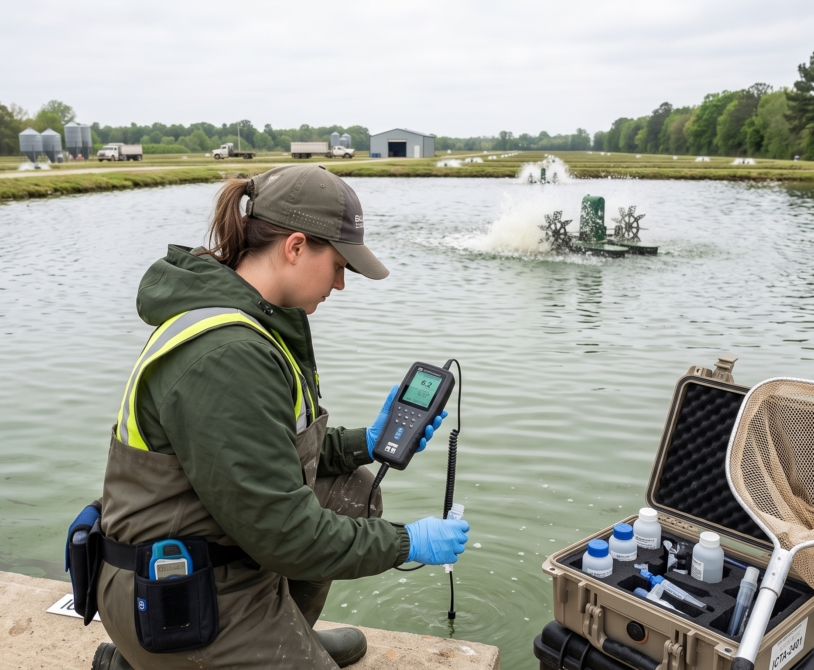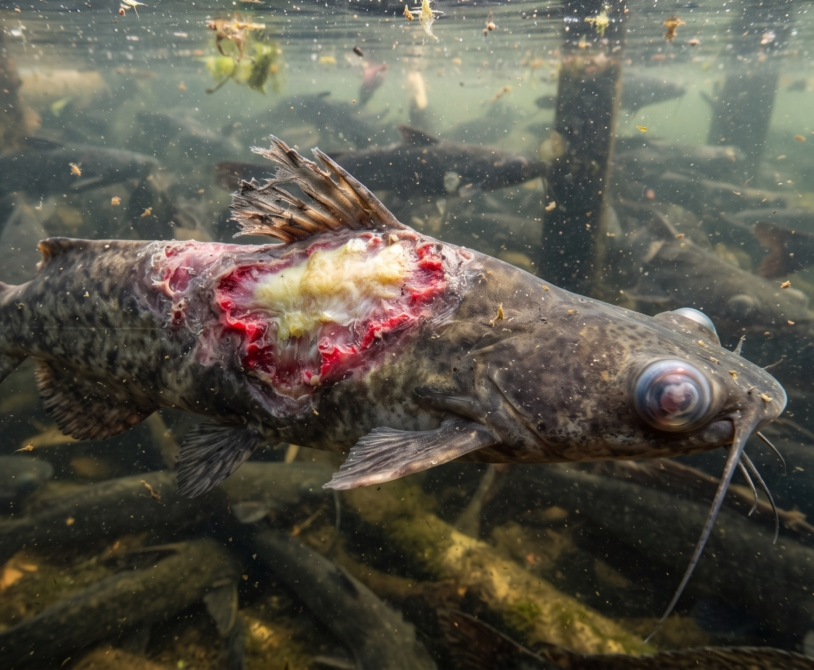
Water pH is an important parameter in catfish farming because it affects fish health, biological filtration, and the toxicity of certain substances in the water. Poor pH management can stress catfish, interfere with normal growth, and make other water quality problems more dangerous.
For farmers raising African catfish (Clarias gariepinus), regular pH monitoring helps identify changing water conditions before they contribute to poor feeding, reduced growth, or increased mortality.
What Is pH in Catfish Farming?
pH measures how acidic or alkaline water is on a scale that typically ranges from 0 to 14.
- pH below 7: Acidic water.
- pH of 7: Neutral water.
- pH above 7: Alkaline water.
The pH scale is logarithmic, meaning a change of one pH unit represents a tenfold change in hydrogen ion concentration.
In catfish farming, pH should be assessed alongside dissolved oxygen, ammonia, nitrite, temperature, and the overall condition of the fish. A pH reading alone does not provide a complete picture of water quality.
What Is the Suitable pH for Catfish Farming?
A commonly used management target for many freshwater aquaculture systems is approximately pH 6.5–8.5. However, suitable conditions depend on the fish species, life stage, water source, and farming system.
African catfish can tolerate a range of water conditions, but tolerance does not mean that every pH level is suitable for long-term production.
Farmers should aim for stable water conditions rather than making frequent, unnecessary adjustments.
How Low pH Affects Catfish
Low pH means that the water is more acidic. If water becomes excessively acidic, catfish may experience physiological stress and damage to sensitive tissues.
Potential problems include:
- Reduced feeding activity.
- Increased stress and abnormal behaviour.
- Irritation or damage to gill tissues.
- Reduced performance and growth.
- Disruption of biological filtration in tank-based systems.
- Increased vulnerability to additional environmental stressors.
Low pH may be associated with acidic source water, soil characteristics, decomposition processes and changes in water chemistry.
When pH remains low, farmers should investigate the underlying cause rather than simply adding a substance to raise it.
How High pH Affects Catfish
High pH means that the water is more alkaline. Excessively high pH can stress fish and influence the toxicity of ammonia.
As pH increases, a greater proportion of total ammonia may exist in the more toxic un-ionized form, NH₃. Consequently, water containing ammonia can become more dangerous when pH rises, particularly at higher temperatures.
Possible warning signs of poor water conditions include:
- Reduced feeding.
- Unusual swimming or agitation.
- Rapid gill movement.
- Fish gathering near areas with better circulation.
- General stress or unexplained mortality.
These signs are not specific to high pH. Test the water and assess other parameters before diagnosing the problem.
What Causes pH Changes in Catfish Ponds and Tanks?
Several factors can cause pH to rise or fall.
1. Water source
The pH and mineral composition of incoming water influence the initial conditions of a pond or tank. Test source water before introducing it into the farming system.
2. Photosynthesis
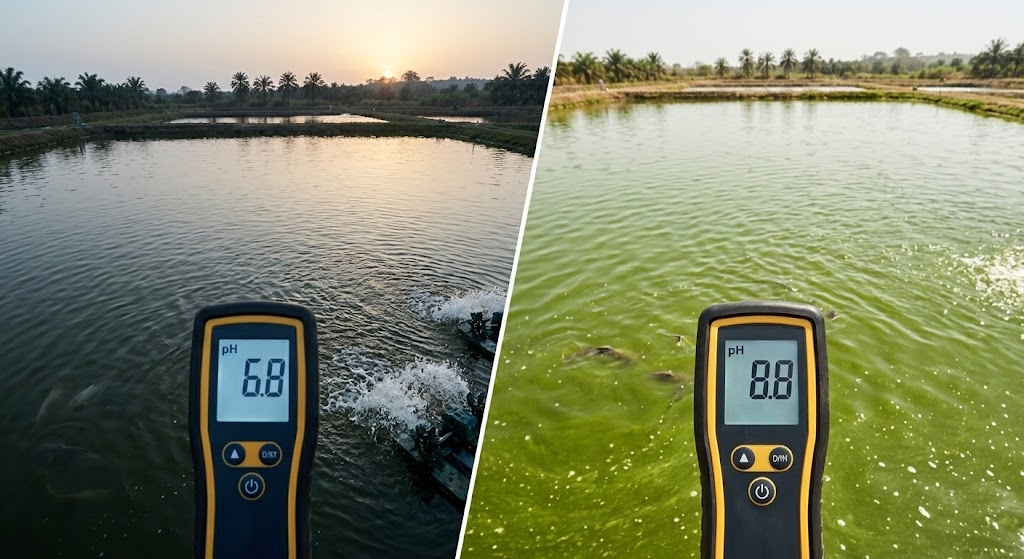
Algae and aquatic plants consume carbon dioxide during photosynthesis. This can raise pH during daylight hours, with changes occurring between day and night.
3. Respiration
Fish, plants, and microorganisms release carbon dioxide through respiration. Increasing carbon dioxide can lower pH, contributing to daily fluctuations.
4. Organic waste accumulation
Uneaten feed, faeces and decomposing organic matter can alter water chemistry and contribute to unstable conditions.
5. Alkalinity
Alkalinity describes the water’s capacity to resist changes in pH. Water with low alkalinity may experience larger pH fluctuations than water with stronger buffering capacity.
6. Water treatment and chemical additions
Some water treatments, fertilisers, and pH-adjusting substances can change pH. Uncontrolled application can cause sudden changes that stress fish.
How to Test pH in Catfish Farming
Regular testing helps farmers identify potentially harmful changes early.
Step 1: Use a suitable pH meter or test kit
A calibrated digital pH meter generally provides more precise readings than basic colour-comparison kits when maintained properly.
Step 2: Collect representative water samples
Follow the testing equipment’s instructions and sample water from appropriate locations. In ponds, conditions may differ between areas, so one reading may not represent the entire pond.
Step 3: Record the time of testing
Because photosynthesis and respiration can affect pH, readings may vary throughout the day. Recording the time helps identify recurring patterns.
Step 4: Test related water quality parameters
Measure ammonia, dissolved oxygen, and temperature when investigating unusual pH readings. Alkalinity testing can also help explain why pH changes rapidly.
Step 5: Keep records
Record pH readings alongside feeding, water exchange, weather conditions, and fish behaviour. Records help identify patterns and evaluate whether management changes are working.
How to Correct Low pH in Catfish Farming
The appropriate response depends on the severity of the pH problem, the water’s alkalinity, and the farming system.
- Confirm the reading: Recheck the pH meter or test kit before making adjustments.
- Test alkalinity: Determine whether low buffering capacity contributes to unstable pH.
- Check the source water: Establish whether incoming water is naturally acidic.
- Investigate organic waste: Review waste accumulation, feeding practices, and water management.
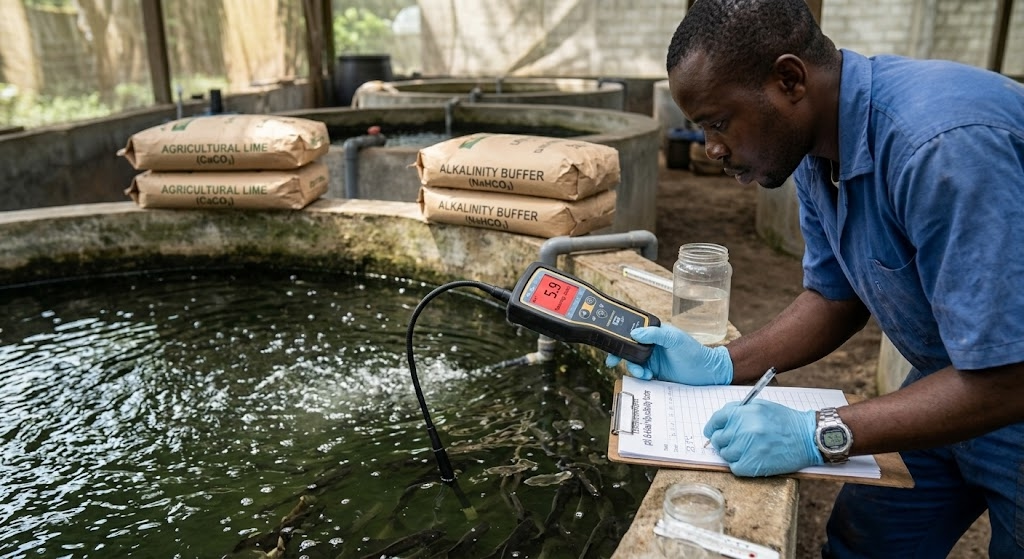
- Use suitable corrective materials only when justified: Agricultural limestone or other approved materials may be appropriate in certain pond systems, but the choice and application rate should depend on water and soil testing.
- Make adjustments gradually: Avoid abrupt changes that may stress fish.
- Retest after treatment: Confirm that pH is moving toward a suitable, stable range.
Do not apply lime products indiscriminately. Different products have different properties, and quicklime or hydrated lime can cause dangerous increases in pH if misused.
How to Correct High pH in Catfish Farming
High pH requires careful investigation because sudden chemical correction can create additional problems.
- Confirm the reading using a reliable, calibrated test method.
- Measure total ammonia, temperature, and alkalinity.
- Observe whether the high pH occurs mainly during daylight hours, which may indicate strong photosynthetic activity.
- Review algae growth, organic matter, and nutrient inputs.
- Avoid adding acids or other chemicals without a clear treatment plan.
- Use appropriate water-management measures where necessary and monitor changes gradually.
If ammonia is elevated, treat the situation as a potential combined water quality problem. A rapid reduction in pH is not a substitute for managing the ammonia source and can itself harm fish.
How to Maintain Stable pH in Catfish Ponds and Tanks
Long-term pH management relies on routine monitoring and good farm management.
- Test pH consistently and record the results.
- Monitor alkalinity where pH fluctuates significantly.
- Avoid overfeeding and remove accumulated waste.
- Maintain appropriate aeration and water circulation.
- Monitor algae growth and nutrient inputs in ponds.
- Check the pH of incoming water before water exchange.
- Maintain biological filtration in tank-based systems.
- Avoid unnecessary chemical additions.
- Investigate sudden pH changes immediately.
Stability is important because rapid fluctuations may stress fish even when a single measurement falls within the usual target range.
Common Mistakes in pH Management
Adjusting pH without testing alkalinity
Alkalinity helps determine how resistant water is to pH changes. Ignoring it can lead to repeated corrections without solving the underlying problem.
Using chemicals based on guesswork
Incorrect products or quantities can cause sudden changes in water chemistry. Measure first and choose a correction method appropriate for the system.
Ignoring ammonia when pH is high
High pH can increase the proportion of toxic un-ionized ammonia. Check ammonia whenever high pH is detected, especially if fish show signs of stress.
Testing only once
A single reading may miss daily fluctuations. Record readings consistently and compare them over time.
Treating symptoms instead of the cause
Poor feeding and respiratory distress can result from multiple water quality problems. Test the water before deciding on corrective action.
Frequently Asked Questions
Can African catfish survive in acidic water?
African catfish can tolerate some variation in water conditions, but excessively acidic water can cause stress and interfere with normal physiological functions. The suitability of a particular pH depends on the degree of acidity, exposure duration, and other water conditions.
Does pH affect ammonia toxicity?
Yes. Higher pH generally increases the proportion of total ammonia present as toxic un-ionized ammonia, with temperature also influencing the balance.
Why does pond pH rise during the day?
Photosynthesis removes carbon dioxide from the water, which can increase pH. The size of this daily fluctuation depends on algae or plant activity and the water’s buffering capacity.
Can aeration control pH?
Aeration can influence carbon dioxide levels and therefore affect pH, but its effect depends on the conditions of the water. It should not be treated as a universal solution for every pH problem.
How often should farmers test pH?
Testing frequency should reflect stocking density, system design, and water stability. Test more frequently when fish behave abnormally, after major water-management changes, or when previous readings show significant fluctuations.
Conclusion
pH management is an essential part of maintaining suitable water conditions in catfish farming. Excessively low or high pH can stress fish, while high pH can increase ammonia toxicity.
Farmers can reduce these risks by testing pH consistently, monitoring alkalinity, controlling organic waste, maintaining filtration and avoiding sudden chemical adjustments. Combining pH measurements with ammonia, dissolved oxygen and temperature readings provides a more reliable basis for water quality management.