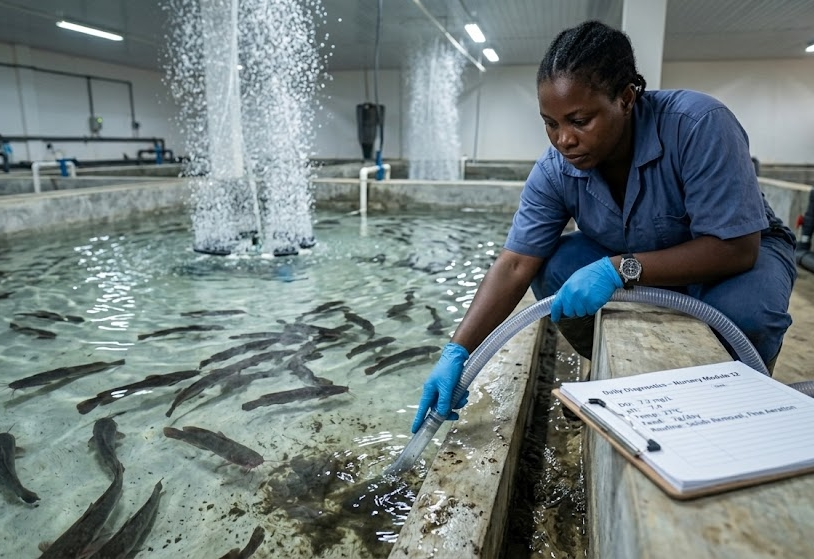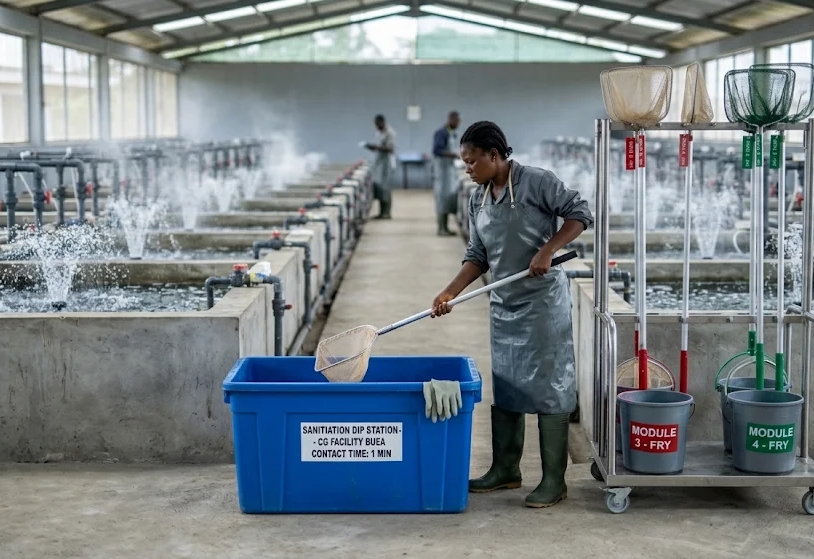
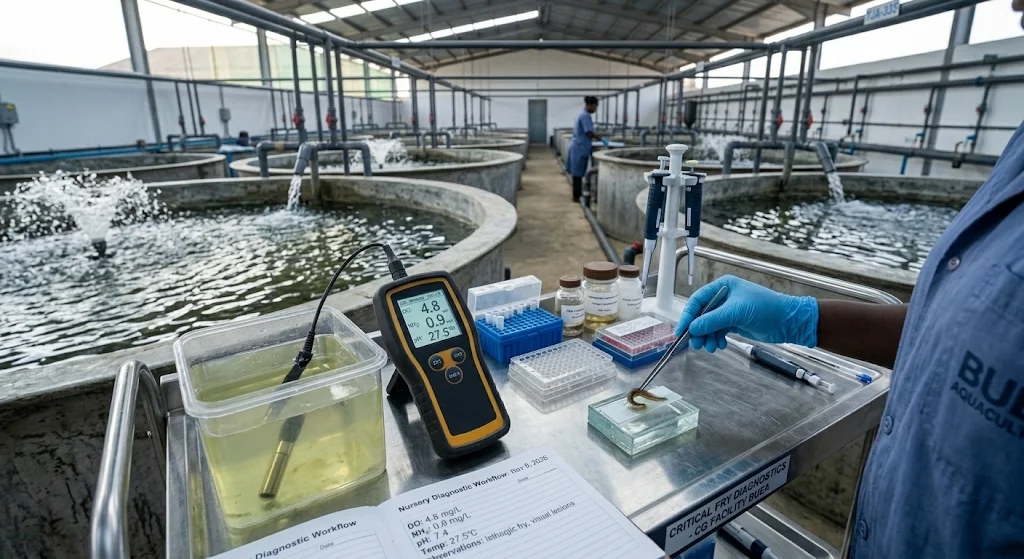
Catfish fry are highly vulnerable to disease because they are small, developing rapidly, and sensitive to changes in water quality, feeding conditions, and handling. Disease outbreaks in a hatchery or nursery can cause poor growth, reduced feeding, abnormal swimming and high mortality if the underlying problem is not identified early.
In African catfish farming, fry mortality is not always caused by an infectious disease. Poor water quality, inadequate nutrition, overcrowding, and handling stress can produce similar symptoms. Identifying the likely cause before treatment is essential for protecting the remaining fry.
What Are the Common Diseases of Catfish Fry?
Diseases affecting catfish fry can be broadly grouped into bacterial, fungal, and parasitic infections. Environmental problems can also weaken fry and make them more susceptible to infection.
1. Bacterial Diseases
Bacterial infections may affect the skin, fins, gills, or internal organs of catfish fry. They can become more serious when fry are stressed by poor water quality, high stocking density, or injuries.
Possible signs include:
- Reduced feeding or complete loss of appetite
- Unusual swimming or loss of balance
- Skin redness, sores, or damaged fins
- Weakness and reduced activity
- Unexpected increases in mortality
These signs are not specific to bacterial disease. Water quality problems and other infections may produce similar symptoms.
2. Fungal Infections
Fungal infections may develop on damaged eggs, skin, or other affected tissues, depending on the organism involved and the production conditions.
Possible signs include:
- White or grey cotton-like growth on affected areas
- Visible growth on damaged tissue
- Weakness and reduced activity
- Increasing mortality among affected fry
Fungal-like growth should be assessed carefully because appearance alone may not establish the exact cause.
3. Parasitic Infections
Parasites may affect the skin and gills of catfish fry. Heavy infestations can interfere with normal breathing, movement and feeding.
Possible signs include:
- Rapid gill movement
- Fry gathering near areas with better water circulation
- Rubbing against tank or pond surfaces
- Reduced feeding
- Irritation, weakness, or abnormal swimming
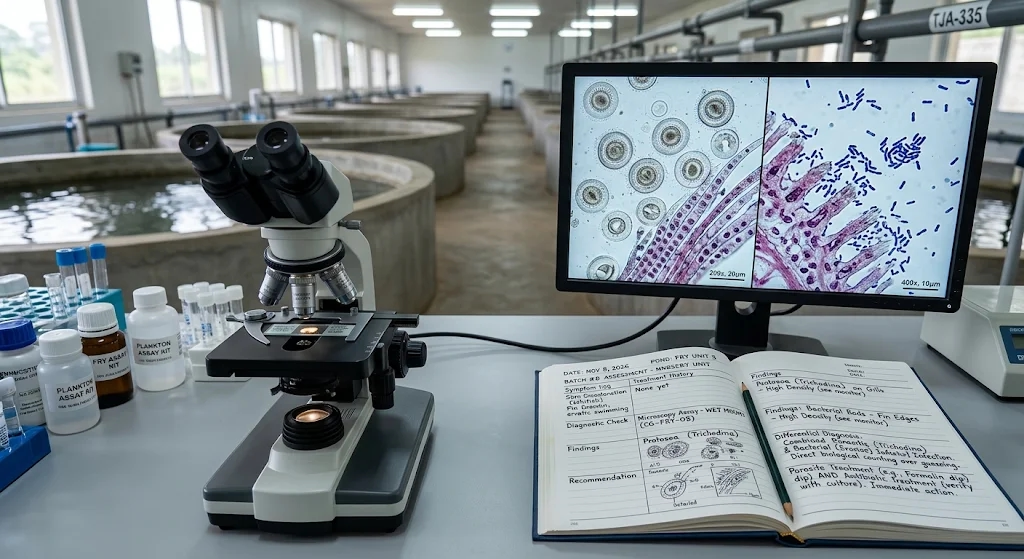
Microscopic examination may be needed to identify the parasite and determine the appropriate response.
4. Environmental and Management-Related Problems
Some of the most serious fry losses are associated with environmental conditions rather than a contagious pathogen.
Potential causes include:
- Low dissolved oxygen
- Ammonia or nitrite accumulation
- Sudden changes in water temperature or pH
- Excess feed and decomposing organic waste
- Excessive stocking density
- Inadequate feeding or unsuitable feed
- Stress during grading, transfer, or handling
Environmental problems can occur alongside infectious disease, making diagnosis more difficult.
Symptoms of Disease in Catfish Fry
Daily observation helps farmers recognize problems before mortality becomes widespread.
Watch for the following warning signs:
| Symptom | Possible explanations |
|---|---|
| Fry stop feeding | Stress, poor water quality, unsuitable feed or infection |
| Fry gasp at the surface | Low dissolved oxygen, gill damage or water-quality problems |
| Abnormal swimming | Environmental stress, injury, infection or neurological impairment |
| White patches or cotton-like growth | Possible fungal or other surface-associated condition |
| Rapid gill movement | Low oxygen, gill irritation, parasites or damaged gill tissue |
| Sudden deaths | Severe water-quality deterioration, toxic exposure or an acute disease outbreak |
| Uneven growth | Competition for feed, inconsistent feeding, crowding or chronic health problems |
No single symptom reliably identifies a disease. Several conditions can look alike, so diagnosis should consider the fish, water, and recent farm-management changes together.
How to Diagnose Diseases in Catfish Fry
Correct diagnosis helps prevent ineffective treatments and unnecessary stress.
Step 1: Observe the affected fry
Check whether the problem affects a few individuals or most of the population. Note changes in swimming, feeding, appearance, and mortality.
Step 2: Test the water
Measure dissolved oxygen, temperature, pH, ammonia, and nitrite where suitable testing equipment is available. Check water flow, aeration and the accumulation of waste.
If fry begin dying suddenly, assess oxygen and other urgent water-quality conditions immediately rather than waiting for a laboratory result.
Step 3: Examine affected fish
A qualified fish-health professional can examine skin, gills, and other tissues for signs of parasites, bacterial disease or fungal involvement. Microscopy or laboratory testing may be necessary to confirm the cause.
Step 4: Review recent management changes
Record recent stocking, feeding, water replacement, grading, transport, and treatment activities. A problem that starts shortly after a management change may provide an important diagnostic clue.
Step 5: Monitor mortality
Record the number of fry affected and the time when deaths occur. Increasing mortality or rapid deterioration requires prompt investigation.
How to Manage Diseases in Catfish Fry
Management should address the diagnosed cause and the immediate risks to the remaining fish.
- Correct water-quality problems: Restore adequate aeration and address harmful ammonia or nitrite levels using an appropriate water-management procedure.
- Remove dead fry promptly: This supports hygiene and helps farmers monitor losses.
- Reduce unnecessary stress: Avoid rough handling and unnecessary transfers during an outbreak.
- Review feeding practices: Provide suitable feed in appropriate amounts and remove excess feed where practical.
- Check stocking conditions: Overcrowding can increase stress, waste accumulation, and disease transmission.
- Seek professional diagnosis: Use a qualified aquaculture specialist or fish-health laboratory when infectious disease is suspected.
Do not apply antibiotics, antifungal products, pesticides, or other chemicals based only on visible symptoms. The correct treatment depends on the cause, product approval, fish size, production system, and local requirements. Incorrect treatment may harm fry, worsen water quality, or delay effective management.
How to Prevent Diseases in Catfish Fry
Prevention is particularly important because an outbreak can affect a large number of small fish in a short period.
Maintain good water quality
Monitor water conditions consistently and respond quickly to deteriorating oxygen levels, waste accumulation or unstable water parameters. Do not assume that clear water is necessarily healthy.
Maintain hatchery hygiene
Clean and maintain tanks, nets, containers, and other equipment. Where possible, avoid sharing equipment between different fry batches without appropriate cleaning and disinfection.
Use healthy broodstock and fry
Obtain eggs, larvae, and fry from reliable sources. Observe newly acquired stock for signs of disease and follow appropriate quarantine procedures before introducing it to established populations.
Provide appropriate nutrition
Use feed suitable for the developmental stage of the fry. Store feed properly and avoid feeding practices that leave excessive waste in the system.
Avoid unnecessary handling
Handle fry carefully during sorting, grading, and transfer. Poor handling can cause injury and stress, increasing their vulnerability to health problems.
Keep accurate records
Record stocking dates, feed intake, water-test results, mortality, and management activities. These records can help reveal recurring problems and support earlier intervention.
Frequently Asked Questions
What is the most common disease in catfish fry?
There is no single disease that is most common in every hatchery. The main problems depend on water quality, hygiene, stocking conditions, feed management, and the pathogens present. Environmental stress can also resemble infectious disease.
Why do catfish fry die in large numbers?
Mass mortality may result from low oxygen, toxic water conditions, sudden environmental changes, severe infection or a combination of factors. Check urgent water-quality conditions immediately and seek professional help if deaths continue.
Can catfish fry diseases spread to other tanks?
Some infectious diseases and parasites can spread through infected fish, contaminated water or shared equipment. Good hygiene, separation of affected batches, and appropriate biosecurity help reduce this risk.
Should I treat catfish fry as soon as I see white patches?
Not automatically. White patches can have different causes. Examine the affected fry and assess water quality before selecting a treatment. Professional confirmation is recommended when losses are increasing.
How often should catfish fry be checked?
Observe fry and feeding behaviour daily, and monitor water quality according to the production system’s risk and management plan. During an outbreak, increase observation frequency and document changes carefully.
Conclusion
Diseases of catfish fry can result from bacterial, fungal or parasitic infections, but environmental stress and poor management can cause similar symptoms or make infections worse. Reliable prevention depends on consistent water-quality monitoring, suitable feeding, good hatchery hygiene, careful handling and early diagnosis.
For catfish farmers, the priority is to identify the cause of unusual behaviour or mortality before choosing treatment. Prompt action based on evidence can reduce avoidable losses and improve fry survival.