Organic waste is a major water-quality concern in catfish farming. It includes uneaten feed, fish faeces, dead algae, decaying aquatic plants, and other biological material that accumulates in ponds, tanks, or production systems.
When organic waste builds up faster than it can be removed or decomposed safely, it can reduce dissolved oxygen, increase microbial activity, contribute to harmful water conditions, and place stress on farmed fish. These conditions can weaken catfish and increase their susceptibility to disease.
In African catfish (Clarias gariepinus) farming, controlling organic waste is an important part of maintaining water quality, protecting fish health, and reducing avoidable losses.
What Causes Organic Waste to Accumulate in Catfish Ponds?
Organic waste accumulation usually results from feeding practices, stocking density, and inadequate waste management.
1. Uneaten fish feed
Feed that remains uneaten begins to break down in the water. This decomposition increases the organic load and provides material for bacteria and other microorganisms.
Common contributing factors include:
- Feeding more than the fish can consume.
- Using feed sizes unsuitable for the fish.
- Poor feed quality or storage.
- Feeding when fish are stressed or not actively feeding.
- Failing to adjust feed quantities as fish biomass changes.
Reducing unnecessary feed input is one of the most effective ways to control organic waste at its source.
2. Fish faeces
Catfish produce faeces as part of normal digestion. As fish biomass increases, the total amount of waste generally increases.
If faeces accumulate in tanks or settle on pond bottoms, they contribute to the organic load. Their decomposition can consume oxygen and release nitrogen-containing compounds into the water.
3. Dead algae and aquatic plants
Algae and aquatic plants can contribute to organic waste when they die and decompose. Large amounts of decaying plant material can increase microbial oxygen consumption and contribute to unstable water quality.
4. Dead fish
Fish that die and remain in a pond or tank decompose, adding organic material and potentially increasing microbial activity. Dead fish should be removed promptly, handled safely, and disposed of appropriately.
Unexpected deaths should also be investigated to determine whether water-quality problems, disease, or another factor is responsible.
5. Overstocking
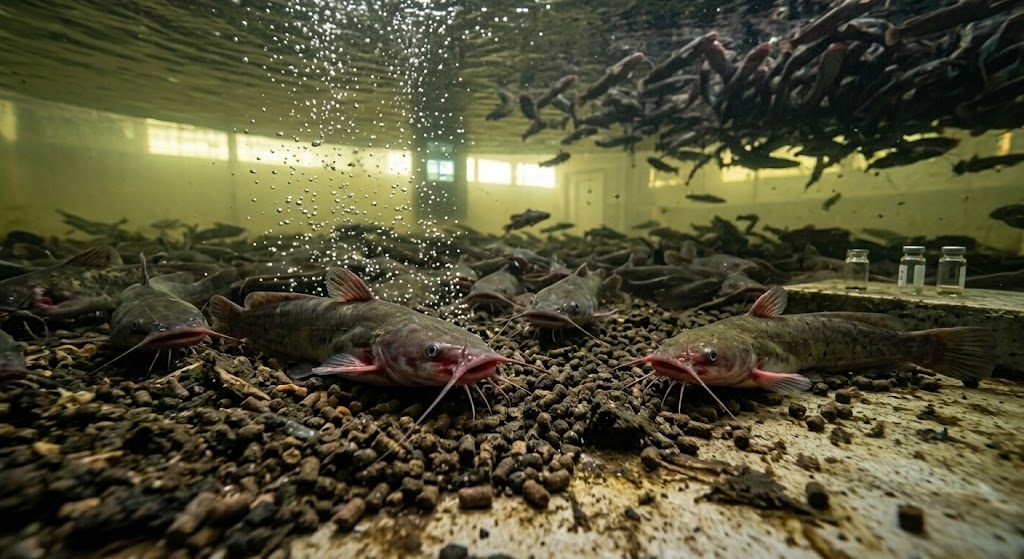
High fish biomass can increase the amount of faeces and uneaten feed entering a production system. If waste removal, filtration, aeration, and water exchange are inadequate, organic material may accumulate.
Overstocking and organic waste can therefore reinforce each other, creating conditions that become increasingly difficult to manage.
How Organic Waste Affects Catfish Water Quality
Organic waste does not cause every fish disease directly. Its effects often occur through changes in the aquatic environment.
1. It reduces dissolved oxygen
Microorganisms use oxygen as they break down organic material. When large amounts of waste decompose, biological oxygen demand increases.
This can lower dissolved oxygen, particularly in heavily loaded systems or ponds where oxygen replenishment is insufficient.
Catfish experiencing oxygen stress may show:
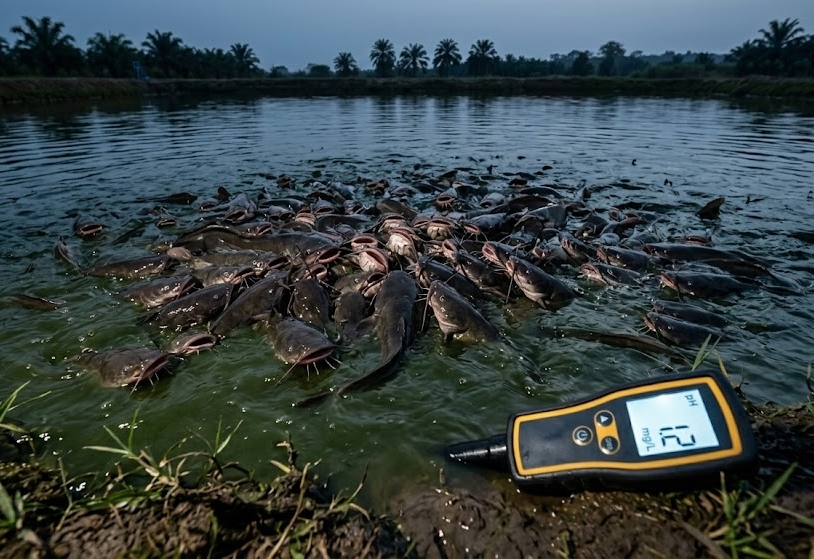
- Gasping or gathering near the water surface.
- Rapid gill movements.
- Reduced feeding.
- Weakness or unusual swimming.
- Increased mortality in severe cases.
Low dissolved oxygen can also reduce the fish’s ability to cope with other environmental stressors.
2. It contributes to ammonia accumulation
As organic nitrogen is broken down, ammonia may be released into the water. Fish also excrete ammonia directly.
If the system cannot process or remove this nitrogen efficiently, ammonia concentrations can rise. Ammonia toxicity depends on factors including pH and temperature, and excessive exposure can damage gills and impair normal physiological functions.
Organic waste management should therefore be combined with ammonia monitoring rather than relying on visual inspection alone.
3. It can contribute to nitrite problems
Nitrite may accumulate when the biological processes responsible for converting ammonia to nitrate are unable to keep pace with nitrogen production.
This can occur in systems with overloaded or immature biological filtration. Elevated nitrite can interfere with oxygen transport in fish and contribute to respiratory stress.
Organic waste is one possible contributor to this process, but nitrite problems must be confirmed through water testing.
4. It creates unstable pond-bottom conditions
When organic material accumulates in bottom sediments, oxygen may become depleted within the waste layer. Under oxygen-poor conditions, decomposition can produce reduced compounds that may be harmful if they enter the water in significant quantities.
Disturbing heavily accumulated bottom waste can also release trapped material into the water column. Pond-bottom management should therefore be planned carefully rather than relying on sudden, uncontrolled disturbance.
5. It encourages excessive microbial activity
Organic matter provides nutrients and energy for microorganisms. Many microorganisms are naturally present in aquatic environments, and their presence does not automatically mean that fish will become diseased.
However, heavy organic loading can alter microbial communities and contribute to poor environmental conditions. When fish are also stressed or injured, the risk of some opportunistic infections may increase.
How Organic Waste Increases the Risk of Catfish Disease
Organic waste can increase disease risk through environmental stress and changes in the conditions in which fish live.
| Effect | Potential consequence for catfish |
|---|---|
| Reduced dissolved oxygen | Respiratory stress and reduced tolerance of other stressors |
| Ammonia accumulation | Gill irritation or damage and impaired health |
| Elevated nitrite | Impaired oxygen transport and respiratory distress |
| Persistent poor water quality | Reduced ability to cope with environmental challenges |
| Increased microbial activity | Greater potential for some opportunistic infections under suitable conditions |
| Organic waste around dead fish | Additional decomposition and deterioration of local water quality |
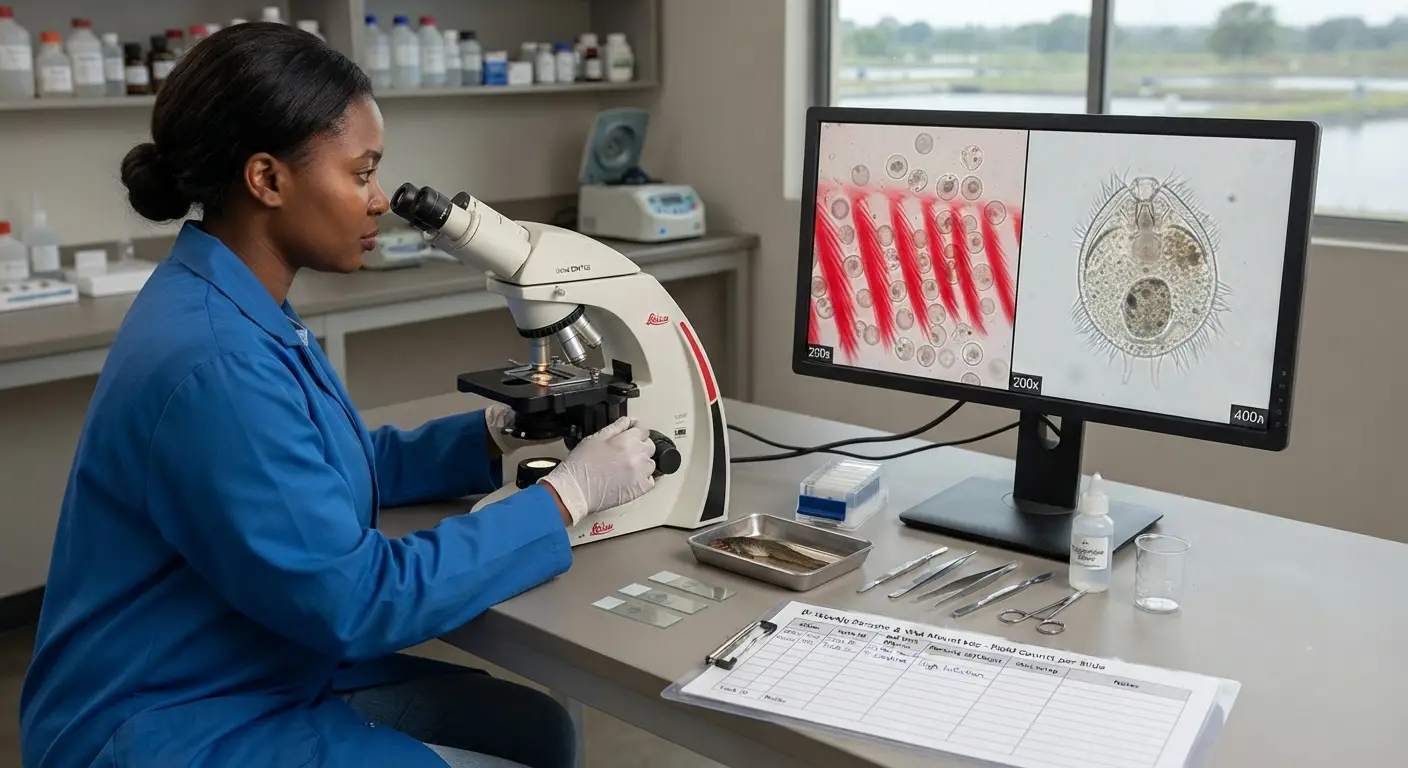
These relationships do not mean that organic waste always causes a specific infection. A diagnosis may require examining fish, reviewing water-quality results, and conducting appropriate laboratory tests.
Signs of Excessive Organic Waste in Catfish Ponds
Farmers should pay attention to changes in water appearance, smell, feeding behaviour, and fish activity.
Possible warning signs include:
- Water with a persistent unpleasant smell.
- Accumulation of visible feed or faeces.
- Thick deposits of sludge on the pond bottom.
- Reduced feeding response.
- Fish gathering at the surface or near water inlets.
- Increasing ammonia or nitrite readings.
- Repeated episodes of low dissolved oxygen.
- Unexplained illness or mortality.
Cloudy or green water alone does not prove that organic waste is excessive. Water colour and clarity can be affected by suspended particles, algae, and other factors. Testing is needed to establish the cause.
How to Prevent Organic Waste Accumulation
1. Improve feeding management
Feed fish according to their biomass, size, health, and feeding response. Adjust quantities as fish grow and avoid automatically giving the same amount regardless of conditions.
Practical steps include:
- Use appropriately sized, good-quality feed.
- Observe feeding activity.
- Avoid feeding fish that are visibly stressed or not responding normally.
- Remove uneaten feed where practical.
- Keep records of feed use and fish growth.
If fish suddenly stop eating, investigate water quality and possible disease rather than assuming they need more feed.
2. Maintain an appropriate stocking density
Match the fish biomass to the capacity of the pond or tank. The system must be able to supply oxygen and process or remove the waste produced at the expected harvest biomass.
If organic waste repeatedly accumulates despite improved feeding and cleaning, reassess whether the system is carrying too many fish.
3. Monitor water quality
Check dissolved oxygen, ammonia, nitrite, pH, and temperature using suitable equipment or test kits.
Monitor more frequently when:
- Fish biomass increases.
- Feeding rates rise.
- Water quality changes unexpectedly.
- Fish show signs of stress.
- The system experiences aeration or filtration problems.
Keep records so that developing problems can be identified before fish health deteriorates.
4. Remove accumulated solids
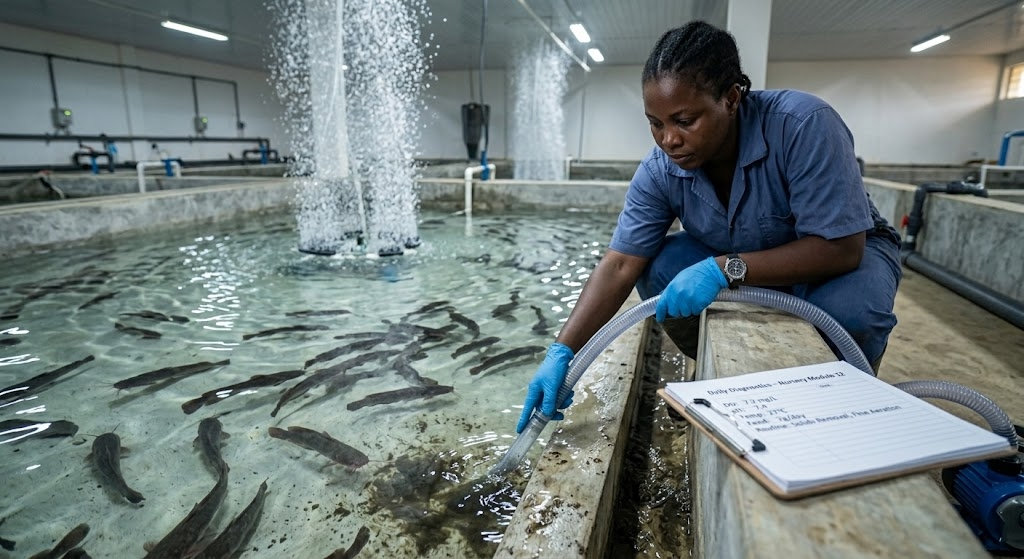
In tanks and intensive production systems, use suitable methods to remove settled faeces and feed residues. Maintain filters, drains, and water circulation equipment.
In ponds, use a waste-management approach appropriate to the pond design and farming system. Avoid actions that abruptly release large quantities of bottom sediment into the water.
5. Maintain effective aeration
Aeration helps replenish dissolved oxygen and supports aerobic biological processes. Ensure the equipment can meet oxygen demand during periods of high biomass and feeding.
However, aeration alone does not remove organic waste. It should be combined with feed control, solids management, and appropriate water exchange or filtration.
6. Remove dead fish promptly
Inspect the production unit regularly and remove dead fish without delay. Dispose of them appropriately and investigate unusual mortality patterns.
Use suitable hygiene practices when handling dead fish, especially if infectious disease is suspected.
7. Maintain water exchange and filtration
Where the system uses water exchange, ensure that replacement water is suitable and that exchange is carried out safely. In recirculating aquaculture systems, maintain biological filters and mechanical solids removal according to the system’s requirements.
Do not assume that replacing water will solve every problem. If excessive feeding or stocking continues, organic waste can accumulate again.
What to Do When Organic Waste Has Already Accumulated
When heavy waste accumulation is suspected, take a measured approach.
- Assess the fish first. Look for gasping, abnormal swimming, reduced feeding, or mortality.
- Check dissolved oxygen immediately. If oxygen is low, take appropriate steps to restore it.
- Test ammonia and nitrite. Do not rely on smell or water colour to determine their concentrations.
- Reduce unnecessary feed input. Adjust feeding according to the fish’s condition and water quality.
- Remove waste safely. Use methods suitable for the pond or tank without causing additional disturbance.
- Inspect equipment. Check aerators, pumps, filters, drains, and water inlets.
- Investigate ongoing disease. If mortality continues after water quality improves, seek qualified fish-health assistance.
Avoid adding chemicals or medications simply because the water smells bad or fish are dying. The cause must be identified before choosing a treatment.
Frequently Asked Questions
Does organic waste directly cause disease in catfish?
Organic waste often increases disease risk indirectly by worsening water quality and stressing fish. Some pathogens may thrive under particular environmental conditions, but waste accumulation alone does not establish which disease, if any, is present.
Why does organic waste reduce oxygen?
Microorganisms consume oxygen while decomposing organic material. When the amount of waste is high, oxygen consumption may exceed the rate at which oxygen enters the water, leading to reduced dissolved oxygen.
Can organic waste cause ammonia poisoning?
It can contribute to ammonia accumulation as nitrogen-containing material decomposes. Fish also produce ammonia through normal metabolism. Whether poisoning occurs depends on the ammonia concentration, pH, temperature, exposure, and other conditions.
How often should catfish ponds be cleaned?
There is no single cleaning schedule suitable for every system. Cleaning needs depend on stocking density, feeding rate, pond design, solids accumulation, water exchange, and measured water quality. Monitor the system and remove waste when necessary using appropriate methods.
Does clear water mean a catfish pond is clean?
No. Water may look clear while containing elevated ammonia, nitrite, or other water-quality problems. Visual inspection should be combined with appropriate water testing.
Conclusion
Organic waste is an important factor in catfish pond management because it can increase oxygen demand, contribute to ammonia and nitrite accumulation, and create conditions that stress fish. Persistent waste buildup can weaken fish health and increase the risk of disease.
For African catfish farmers, prevention starts with appropriate feeding, suitable stocking density, effective aeration, routine water testing, and timely waste removal. When disease or unexplained mortality occurs, investigate both the fish and their environment instead of assuming organic waste is the only cause.