Water quality is one of the most important factors in successful catfish farming. Poor water conditions can reduce feeding, slow growth, damage gills, increase disease risk, and cause mortality.
In African catfish (Clarias gariepinus) farming, maintaining good water quality requires appropriate stocking density, controlled feeding, adequate oxygen, effective waste management, and regular monitoring. These practices help create a stable environment in which fish can grow and remain healthy.
1. Monitor the Main Water Quality Parameters
The first step in improving pond water quality is identifying which parameters need attention. Water that looks clean may still contain harmful concentrations of ammonia or nitrite.
| Parameter | General management guidance | Why it matters |
|---|---|---|
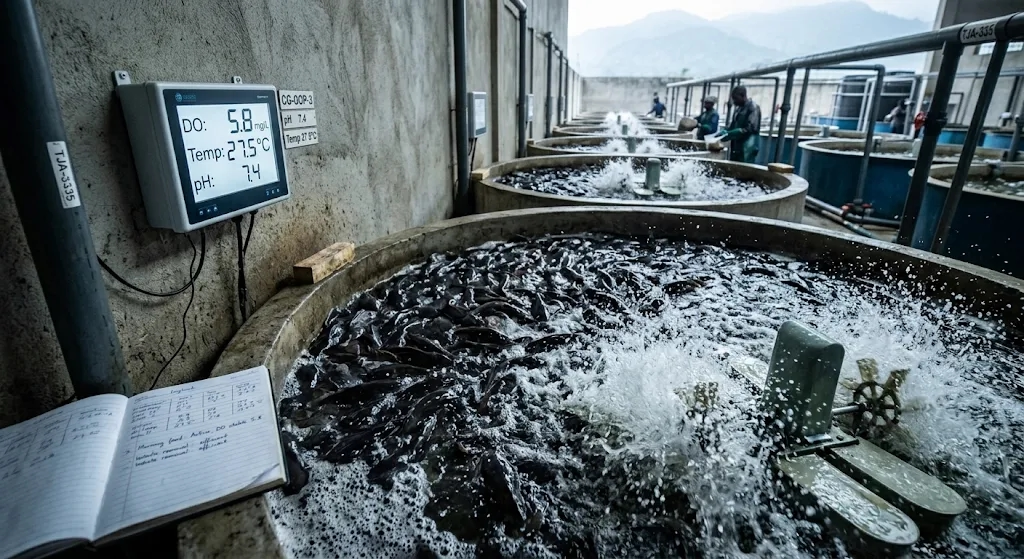
| Dissolved oxygen | Around 5 mg/L or higher is a useful target for many grow-out systems | Supports respiration and reduces oxygen stress |
| pH | Approximately 6.5–8.5 is a commonly used general range | Influences fish health and ammonia toxicity |
| Water temperature | Approximately 26–30°C is suitable for many African catfish grow-out systems | Affects metabolism, feeding, and oxygen demand |
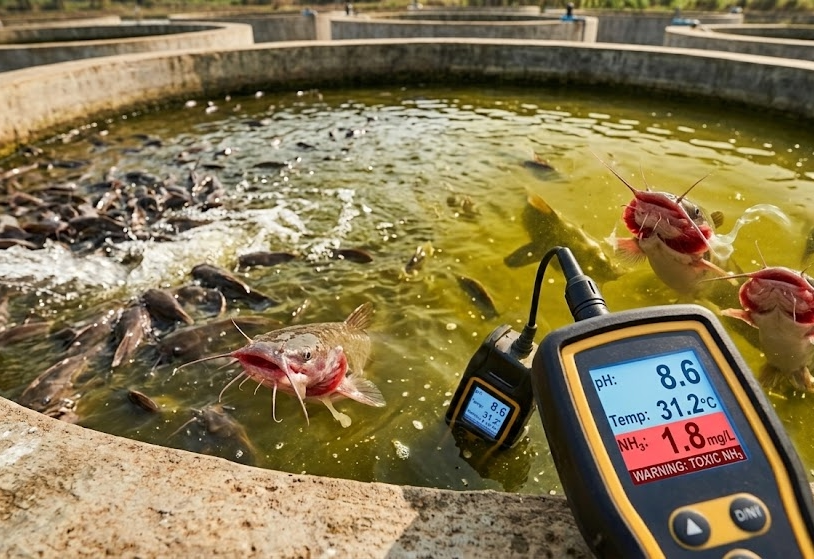
| Ammonia | Keep toxic un-ionized ammonia as low as possible | Elevated levels can damage gills and affect fish health |
| Nitrite | Keep concentrations as low as practicable | Elevated levels interfere with oxygen transport |
| Organic waste | Prevent excessive accumulation | Decomposition increases oxygen demand and can deteriorate water quality |
These are general management references, not universal limits for every farming system. Water-quality targets should be adapted to fish size, production method, local conditions, and reliable aquaculture guidance.
2. Maintain Adequate Dissolved Oxygen
Dissolved oxygen is essential for normal catfish respiration. Although African catfish can use atmospheric air through their specialised respiratory structures, this does not make water oxygen irrelevant or eliminate the risks of poor water quality.
Low dissolved oxygen can cause:
- Gasping at the water surface.
- Rapid gill movements.
- Reduced feeding.
- Weakness and abnormal behaviour.
- Increased mortality during severe oxygen depletion.
How to improve dissolved oxygen
- Install and maintain suitable aeration equipment where required.
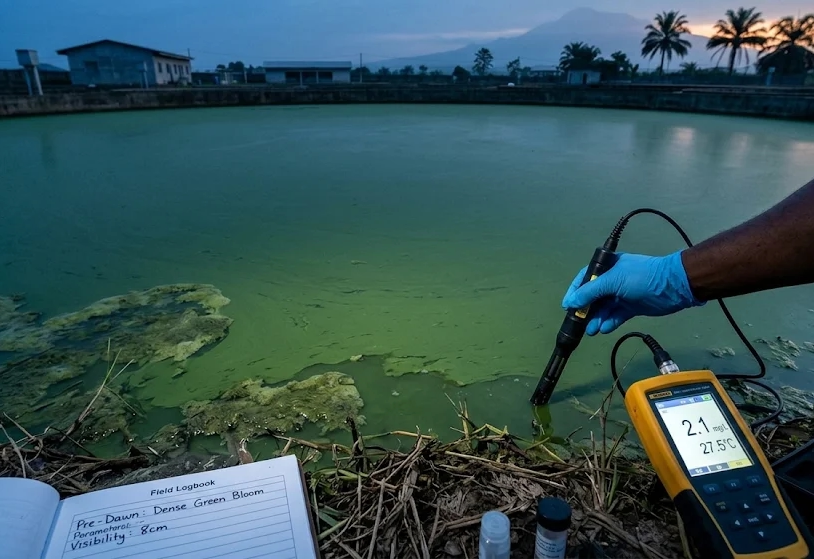
- Check oxygen levels, especially before sunrise.
- Increase monitoring during warm weather and heavy feeding periods.
- Reduce excessive organic waste.
- Ensure aeration capacity matches the expected fish biomass.
- Prepare backup arrangements for aeration failure in intensive systems.
If fish show severe respiratory distress, check dissolved oxygen immediately and take appropriate corrective action.
3. Control Ammonia and Nitrite
Ammonia and nitrite are important indicators of nitrogen-related water-quality problems.
Ammonia enters the water through fish excretion and the breakdown of nitrogen-containing organic material. Nitrite can accumulate when biological processes that transform ammonia cannot keep pace with waste production.
Practical management measures
- Avoid excessive feeding.
- Maintain an appropriate stocking density.
- Remove accumulated solids where practical.
- Maintain biological filtration in systems that use it.
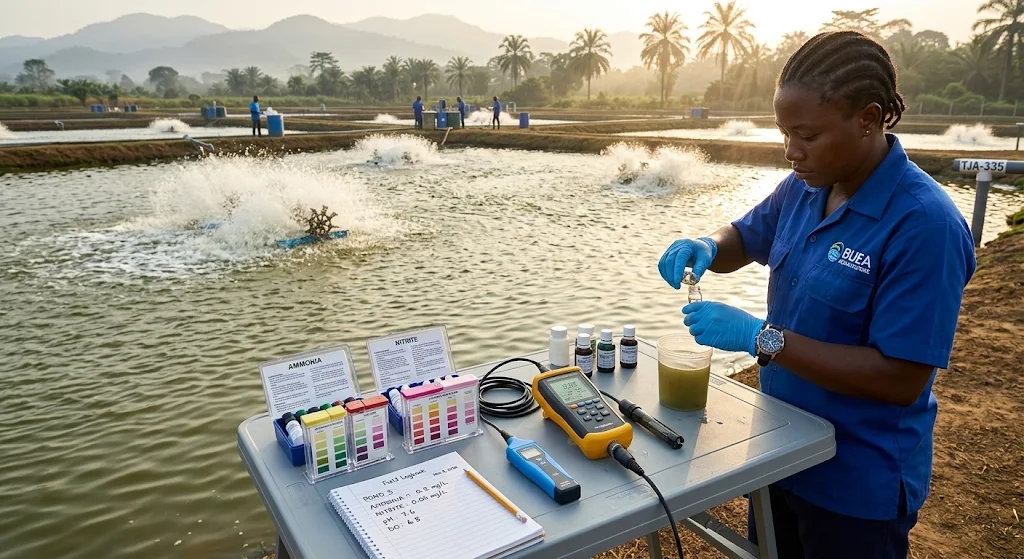
- Test ammonia and nitrite regularly.
- Investigate increasing readings promptly.
Ammonia toxicity depends on pH and temperature, among other factors. A higher pH generally increases the proportion of ammonia present in its more toxic un-ionized form.
Do not use water appearance or smell as a substitute for ammonia and nitrite testing.
4. Improve Feeding Management
Overfeeding is a common source of avoidable organic waste. Uneaten feed decomposes, increases nutrient loading, and can raise oxygen demand.
To improve feeding practices:
- Calculate feed quantities using estimated fish biomass and appropriate feeding guidance.
- Adjust feeding as fish grow.
- Use feed of suitable size and quality.
- Observe the fish’s feeding response.
- Remove uneaten feed where practical.
- Investigate sudden appetite loss instead of automatically increasing feed.
Good feeding management improves water quality while helping reduce wasted feed costs.
5. Prevent Overstocking
A pond or tank can support only the fish biomass that its oxygen supply, water volume, filtration, and waste-management capacity can handle.
As fish grow, they consume more feed and produce more waste. Stocking plans should therefore account for the expected harvest biomass, not simply the number of fish introduced at the beginning.
If water quality repeatedly deteriorates despite appropriate feeding, aeration, and waste removal, reassess the stocking density. Grading, harvesting, or transferring fish to a suitable prepared unit may be necessary.
6. Remove Organic Waste
Organic waste includes uneaten feed, faeces, dead fish, decaying algae, and plant material.
When waste accumulates, its decomposition can consume oxygen and contribute to ammonia production. Oxygen-poor sediments may also produce undesirable decomposition products.
Waste-management practices
- Remove dead fish promptly.
- Avoid excessive feed input.
- Clean tanks and remove settled solids where appropriate.
- Maintain drains, filters, and water circulation equipment.
- Manage pond-bottom sediments according to pond design.
- Prevent organic waste and contaminated runoff from entering the system.
Avoid suddenly disturbing large deposits of pond-bottom sludge because this can release additional material into the water.
7. Manage Cloudy, Foamy, or Green Water
Changes in water appearance can provide useful clues, but they do not independently establish whether a pond is safe.
| Water condition | Possible causes | Recommended response |
|---|---|---|
| Cloudy or muddy water | Suspended soil, disturbed sediment, organic particles, or plankton | Investigate the source and test water quality |
| Foamy water | Aeration, dissolved organic compounds, or possible contamination | Inspect feeding, organic loading, and incoming water |
| Green water | Algae or phytoplankton growth | Monitor dissolved oxygen, pH, and bloom changes |
| Bad-smelling water | Organic waste accumulation, oxygen-poor sediments, or contamination | Investigate waste, oxygen, and the water source |
Avoid adding chemicals simply to make the water appear clearer. First identify the cause and confirm that any proposed treatment is safe for fish.
8. Use Water Exchange Carefully
Water exchange can help remove some dissolved waste and suspended material when suitable replacement water is available.
However, water exchange should be planned carefully.
- Check that incoming water is suitable for catfish.
- Avoid sudden temperature or pH changes.
- Consider the effect on fish before making large changes.
- Investigate the underlying cause of repeated water-quality problems.
- Avoid introducing contaminants or pathogens through untreated incoming water.
Replacing water will not permanently solve excessive feeding, overstocking, or inadequate waste management if those problems continue.
9. Establish a Water Quality Monitoring Routine
Regular monitoring helps identify developing problems before they cause major losses.
A practical routine may include:
Daily
- Observe fish behaviour and feeding response.
- Inspect aeration, pumps, and water flow.
- Look for dead fish, unusual foam, sudden colour changes, or bad smells.
- Check dissolved oxygen when possible, especially before sunrise in high-risk systems.
Several times per week or as risk requires
- Test ammonia and nitrite.
- Check pH and temperature.
- Inspect waste accumulation and filter performance.
- Increase testing frequency when water conditions deteriorate.
Weekly or according to the production system
- Review water-quality records.
- Assess feeding rates and estimated fish biomass.
- Inspect pond banks, drains, inlets, and equipment.
- Review whether the system can support the fish as they grow.
The frequency should be increased when fish biomass is high, the system is intensive, equipment fails, or water quality changes unexpectedly.
10. Keep Water Quality Records
Records help farmers identify patterns and evaluate whether management changes are working.
Useful information includes:
- Date and time of testing.
- Dissolved oxygen.
- Ammonia and nitrite readings.
- pH and temperature.
- Feed quantity.
- Estimated fish biomass.
- Water exchange and cleaning activities.
- Unusual fish behaviour or mortality.
- Corrective actions taken.
For example, records may reveal that oxygen levels repeatedly decline before sunrise or that ammonia rises after feeding rates increase. These patterns can guide more effective management.
What to Do When Water Quality Deteriorates Suddenly
If fish begin gasping, swimming abnormally, or dying unexpectedly:
- Check dissolved oxygen immediately.
- Inspect aerators, pumps, and water circulation.
- Test ammonia and nitrite.
- Review recent feeding, rainfall, water exchange, and other changes.
- Remove dead fish and accessible waste safely.
- Correct confirmed problems without causing additional stress.
- Seek qualified fish-health assistance if mortality continues or disease is suspected.
Do not assume that every water-quality problem is an infectious disease. Environmental problems can produce symptoms that resemble disease, and multiple causes may occur together.
Frequently Asked Questions
How often should catfish pond water be tested?
Testing frequency depends on the production system, fish biomass, feeding rate, and risk of water-quality deterioration. Intensive systems generally require more frequent monitoring than lower-input systems. Increase testing when fish show stress or readings begin to change.
Can African catfish survive in poor-quality water?
African catfish tolerate some environmental conditions better than many other cultured fish, but they are not immune to oxygen depletion, ammonia toxicity, nitrite exposure, or contaminated water. Good water quality remains essential for healthy production.
Does clear water mean good water quality?
No. Clear water can still contain harmful concentrations of ammonia or nitrite. Test the important parameters rather than relying on appearance alone.
What is the fastest way to improve poor water quality?
There is no single solution for every problem. If fish are gasping, assess dissolved oxygen immediately. Other problems require identifying the cause through water testing and inspecting feeding, waste accumulation, filtration, and incoming water.
Can better water quality reduce catfish disease?
Good water quality helps reduce environmental stress and supports fish health. It cannot prevent every infectious disease, so biosecurity, suitable stocking practices, observation, and appropriate diagnosis remain important.
Conclusion
Improving catfish pond water quality requires a consistent management approach. Adequate dissolved oxygen, controlled ammonia and nitrite, appropriate stocking density, good feeding practices, effective waste removal, and regular testing all contribute to a healthier production environment.
For African catfish farmers, the most reliable strategy is to identify problems early, make changes based on measurements, and maintain records. Good water quality management supports fish health, reduces avoidable mortality, and helps maintain consistent production.