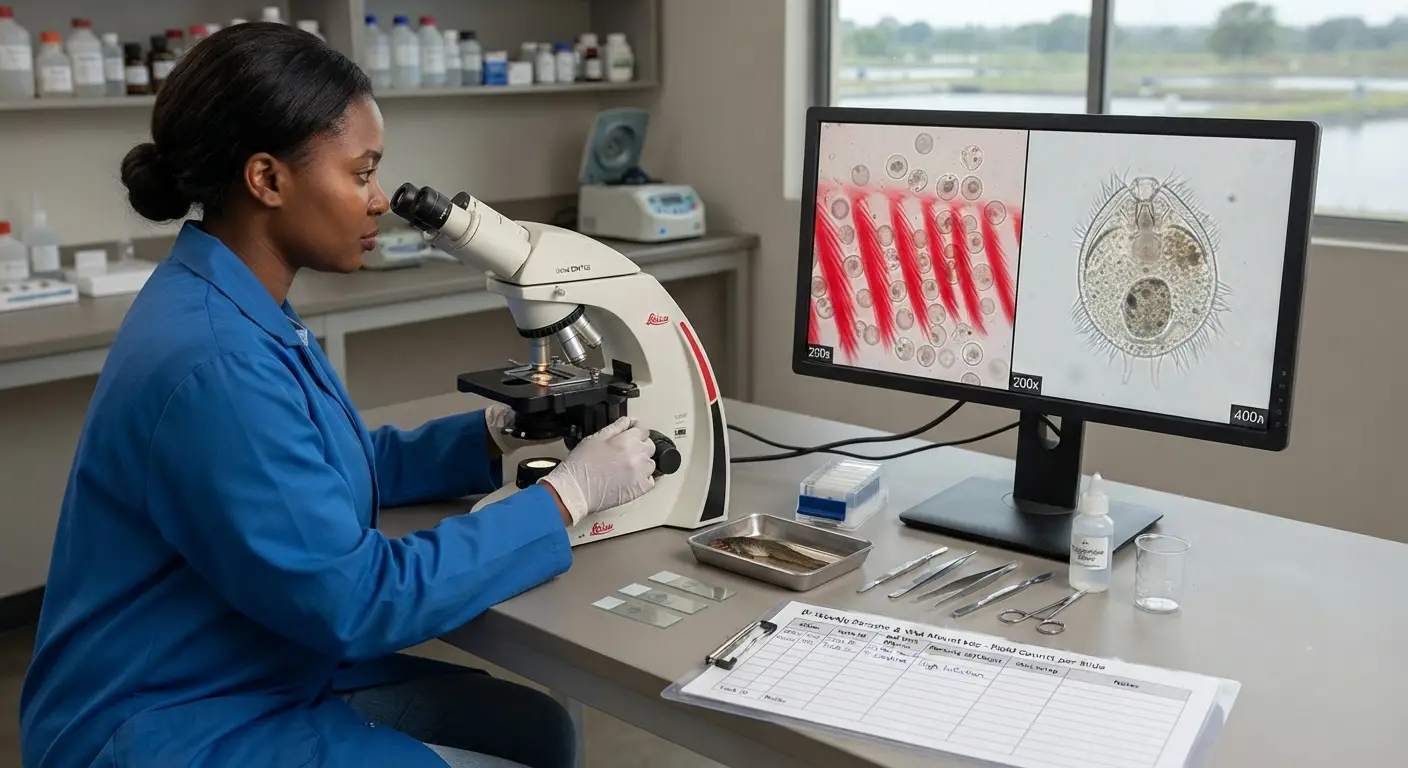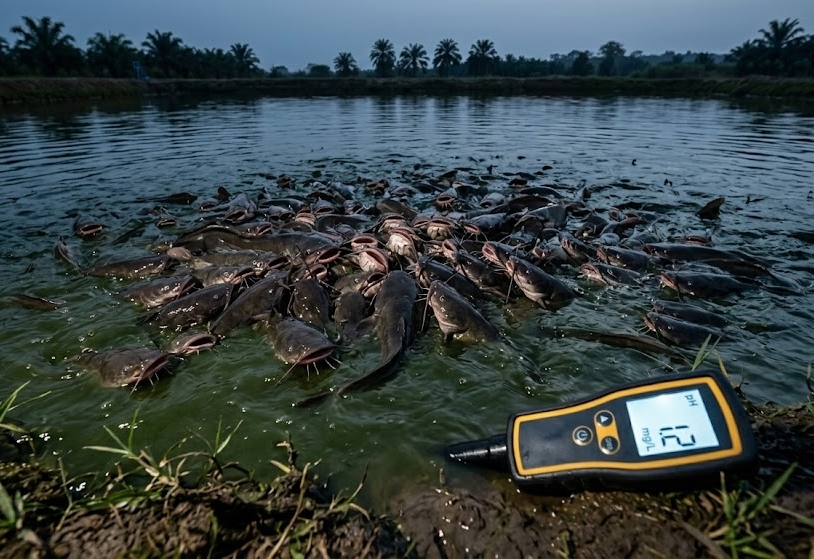
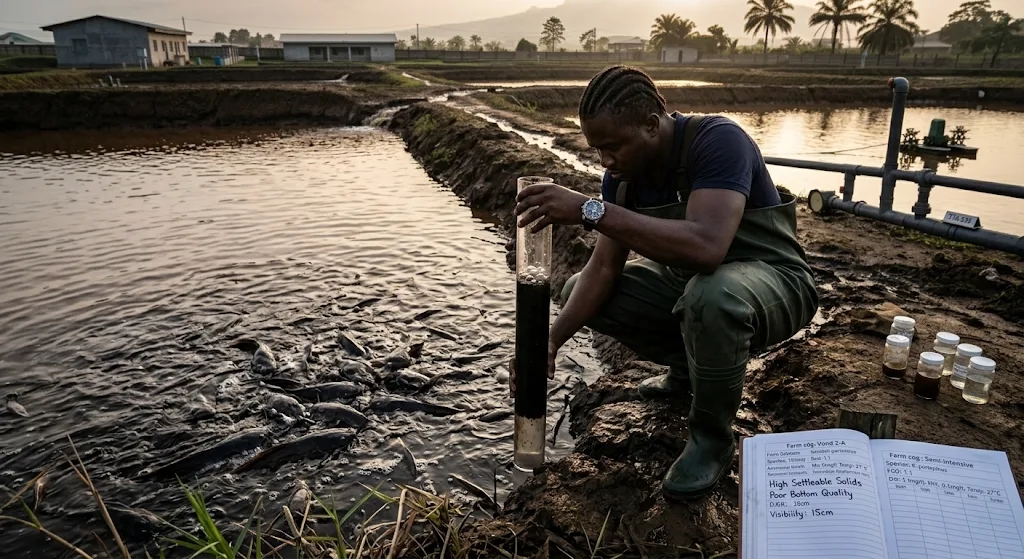
Bad-smelling water is a potential warning sign of poor water quality in catfish farming. An unpleasant smell may develop when uneaten feed, fish faeces, dead organisms, and other organic materials accumulate and decompose. In some cases, the odour may indicate oxygen-poor conditions in pond-bottom sediments or contamination from an external source.
In African catfish (Clarias gariepinus) farming, identifying the cause of a bad smell is important because poor water quality can stress fish, reduce feeding, damage gills, and increase the risk of mortality.
A bad smell does not identify a specific disease or prove that a particular toxic substance is present. Water testing and observation of fish behaviour are needed to determine the underlying problem.
What Causes Bad-Smelling Catfish Pond Water?
1. Accumulation of organic waste
Uneaten feed, fish faeces, dead algae, and decaying plants contribute organic matter to pond water. When these materials accumulate, microorganisms break them down.
Under some conditions, decomposition can produce unpleasant-smelling compounds. Excessive organic waste can also increase oxygen consumption and contribute to deteriorating water quality.
Common contributing factors include:
- Overfeeding.
- High fish stocking density.
- Poor removal of settled solids.
- Accumulation of decaying algae and plants.
- Dead fish left in the pond.
- Inadequate pond maintenance.
2. Low oxygen in pond-bottom sediments
Organic material settling on the pond bottom can decompose in areas where oxygen is limited. These oxygen-poor conditions may favour processes that produce reduced compounds, some of which have strong unpleasant odours.
If such compounds accumulate, they may become a concern for fish health, particularly if bottom sediments are disturbed or water conditions change.
Pond-bottom management should therefore focus on preventing excessive waste accumulation and avoiding sudden, uncontrolled disturbance of heavily loaded sediments.
3. Overfeeding
Excess feed that fish do not consume adds organic material and nutrients to the pond. As this material decomposes, it can contribute to bad smells and increased oxygen demand.
To reduce this risk, adjust feed quantities to fish biomass, fish size, and feeding response. Investigate sudden reductions in appetite rather than continuing to provide the same amount of feed.
4. Overstocking
More fish generally produce more faeces and require more feed. If the pond cannot process or remove the resulting waste efficiently, organic matter may accumulate.
Overstocking may therefore contribute to unpleasant odours, low dissolved oxygen, and other water-quality problems.
5. Dead fish and decaying organisms
Dead fish, algae, and aquatic plants decompose and add organic matter to the pond. A dead fish that remains undiscovered can contribute to localised deterioration in water quality.
Inspect ponds regularly, remove dead fish promptly, and investigate unexpected mortality to identify the underlying cause.
6. External contamination
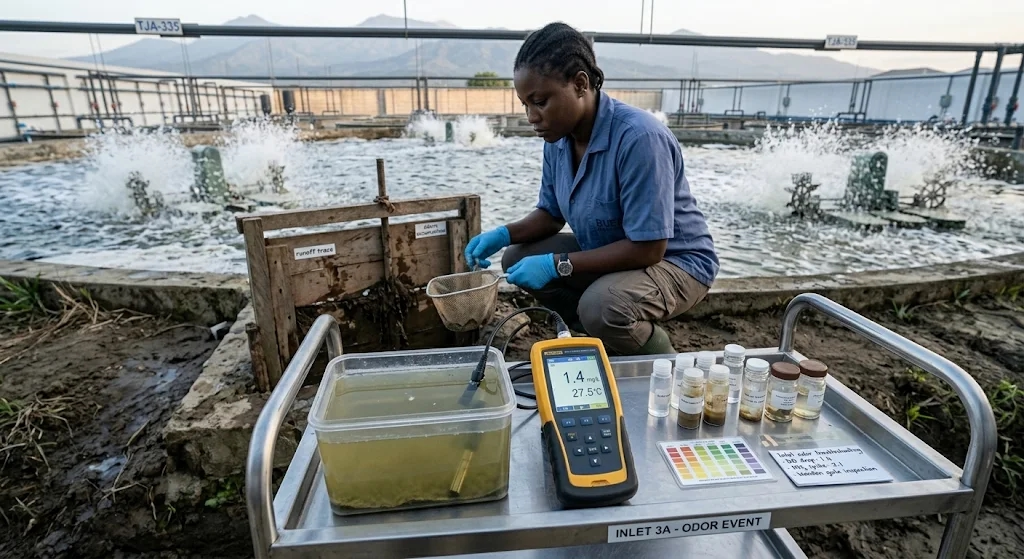
Runoff entering a pond may carry sewage, animal waste, decaying material, or other contaminants. Some contaminants can produce unusual odours and may pose a direct risk to fish.
If a smell develops suddenly after rainfall, drainage changes, or an unusual water inflow, investigate the source rather than assuming that organic waste from the fish is responsible.
What Different Water Smells May Indicate
Odour can provide a clue about possible water-quality problems, but it cannot confirm the presence of a particular substance.
| Observation | Possible explanation | Recommended action |
|---|---|---|
| Rotten or sulphurous smell | Oxygen-poor sediments or decomposition | Investigate accumulated waste and sediment conditions |
| Strong decaying-material smell | Organic waste, dead organisms, or decaying algae | Inspect the pond and remove dead material |
| Sewage-like smell | Organic pollution or possible external contamination | Check incoming water and surrounding drainage |
| Unusual chemical smell | Possible contamination | Investigate the source and seek appropriate testing |
| Bad smell with fish gasping | Poor water quality, potentially including low oxygen | Check dissolved oxygen immediately |
Do not deliberately inhale gases released from pond sediments or lean close to strongly smelling deposits to identify them. Some decomposition gases can be hazardous, especially in enclosed or poorly ventilated areas.
How Bad-Smelling Water Affects Catfish Health
1. Increased oxygen demand
When microorganisms decompose organic matter, they consume oxygen. Heavy organic loading may therefore contribute to low dissolved oxygen, particularly overnight or early in the morning.
Affected fish may gather at the surface, show rapid gill movements, reduce feeding, or become weak.
2. Ammonia accumulation
Decomposition of nitrogen-containing organic material can contribute to ammonia production. Fish also excrete ammonia through normal metabolism.
If ammonia accumulates, it can damage gills and affect fish health. Toxicity depends on factors including pH and temperature, so water testing is necessary.
3. Potential exposure to harmful decomposition products
Oxygen-poor sediments may produce compounds that are harmful to aquatic animals under certain conditions. However, an unpleasant smell alone cannot establish which compound is present or whether a harmful concentration has reached the fish.
4. Increased stress and disease risk
Poor water quality can weaken fish and increase their susceptibility to environmental stress and some infections. Nevertheless, bad-smelling water does not automatically mean that catfish have a bacterial, fungal, or parasitic disease.
How to Fix Bad-Smelling Water in Catfish Ponds
The appropriate response depends on the cause, severity, and condition of the fish.
Step 1: Check the fish immediately
Look for:
- Gasping at the water surface.
- Rapid gill movements.
- Reduced feeding.
- Unusual swimming.
- Weakness or unexpected deaths.
If fish are in distress, assess dissolved oxygen immediately and take appropriate steps to restore it.
Step 2: Test water quality
Measure dissolved oxygen, ammonia, nitrite, pH, and temperature using suitable equipment.
Where contamination or harmful decomposition products are suspected, additional testing may be necessary. Do not rely on smell alone to assess water safety.
Step 3: Remove dead fish and accessible waste
Remove dead fish promptly and dispose of them appropriately. In tanks and intensive systems, remove settled solids and maintain filters and drains.
For ponds, manage accumulated organic material according to the pond design. Avoid abruptly stirring large quantities of bottom sludge, as this may release additional material into the water.
Step 4: Correct feeding practices
Review feed quantities and observe whether the fish are consuming their food. Reduce unnecessary feed input and remove uneaten feed where practical.
If fish have stopped eating, investigate possible oxygen stress, disease, or other water-quality problems.
Step 5: Maintain adequate aeration
Aeration can help maintain dissolved oxygen and support aerobic decomposition processes. Inspect aerators, pumps, and water circulation equipment to ensure they are functioning correctly.
Aeration alone will not remove all accumulated waste, so it must be combined with appropriate waste management.
Step 6: Investigate the water source
If the smell began suddenly, inspect water inlets, runoff pathways, and nearby activities that could introduce contaminants.
Where contamination is suspected, seek qualified aquaculture or environmental advice before deciding whether water exchange or another intervention is appropriate. Replacement water must itself be suitable for catfish.
Step 7: Reassess stocking density
If the problem returns repeatedly, determine whether the pond is carrying more fish biomass than its oxygen supply and waste-management capacity can support.
Reducing biomass may be necessary when appropriate feeding, aeration, and waste removal cannot maintain suitable conditions.
How to Prevent Bad-Smelling Catfish Pond Water
Prevention begins with controlling the amount of waste entering and accumulating in the production system.
- Maintain a suitable stocking density.
- Feed according to fish biomass and feeding response.
- Remove dead fish and decaying material promptly.
- Maintain adequate aeration.
- Remove accumulated solids where appropriate.
- Prevent contaminated runoff from entering ponds.
- Monitor dissolved oxygen, ammonia, and nitrite.
- Inspect pond-bottom conditions and drainage.
- Keep records of odour changes, feeding, water tests, and fish mortality.
Frequently Asked Questions
Is bad-smelling catfish pond water always dangerous?
Not always, but a persistent or unusual smell warrants investigation. The odour may indicate organic waste accumulation, oxygen-poor sediments, or contamination. Test the water and assess fish behaviour to determine the risk.
Why does my catfish pond smell like rotten eggs?
A rotten-egg-like smell may be associated with hydrogen sulphide produced under oxygen-poor conditions in organic sediments. However, smell alone cannot confirm the substance or its concentration. Avoid disturbing the sediment and seek qualified advice if this is suspected.
Can changing the water remove the bad smell?
Water exchange may help in some situations, but it will not necessarily correct accumulated sludge, excessive feeding, or an overloaded production system. Replacement water must also be suitable for the fish.
Can bad-smelling water cause catfish to die?
It can indicate conditions that contribute to mortality, including low oxygen, ammonia problems, or contamination. However, the smell itself does not identify the cause of death. Check water quality promptly and investigate other possible causes.
Should I use chemicals to remove the smell?
Do not add chemicals simply to mask the odour. First identify the likely cause and confirm that any proposed treatment is safe for the fish and the production system.
Conclusion
Bad-smelling catfish pond water can indicate excessive organic waste, decomposition in oxygen-poor sediments, dead organisms, or external contamination. These conditions may contribute to low dissolved oxygen, ammonia accumulation, and stress in farmed catfish.
For African catfish farmers, the priority is to identify the cause, test water quality, remove waste safely, maintain adequate aeration, and prevent further contamination. If fish show respiratory distress or unexplained mortality, investigate immediately rather than treating the odour alone.