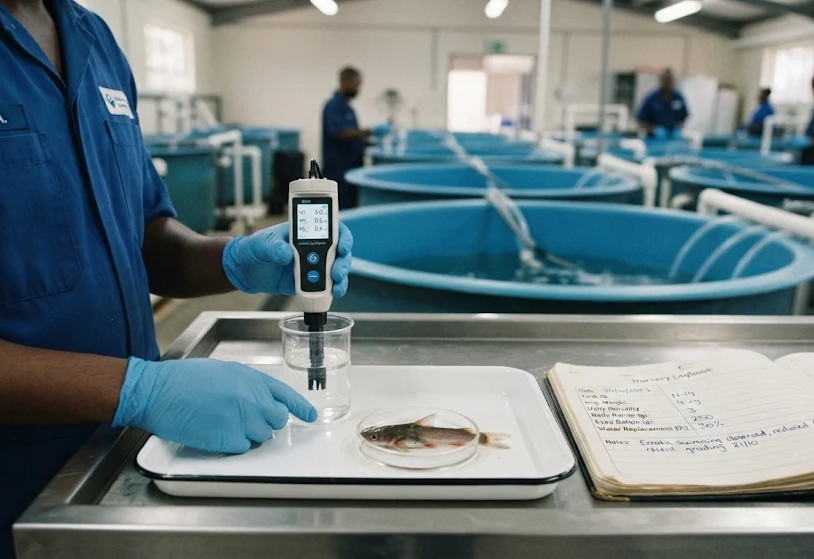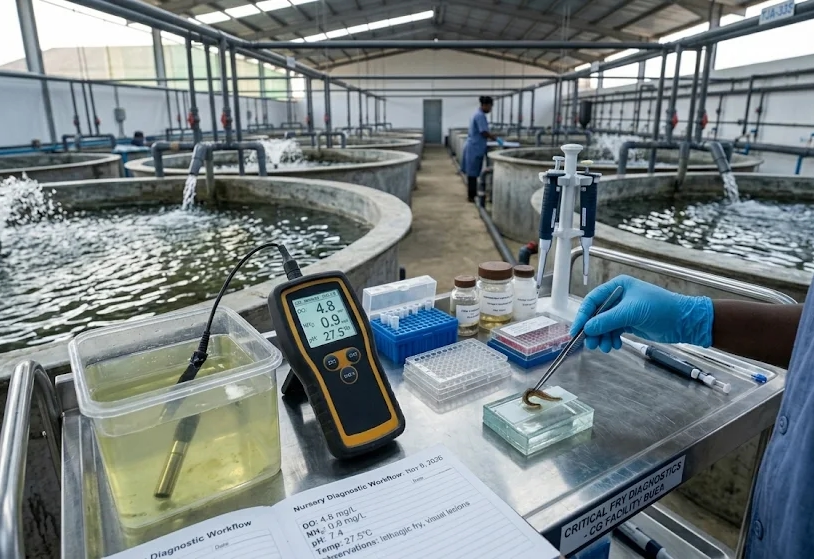
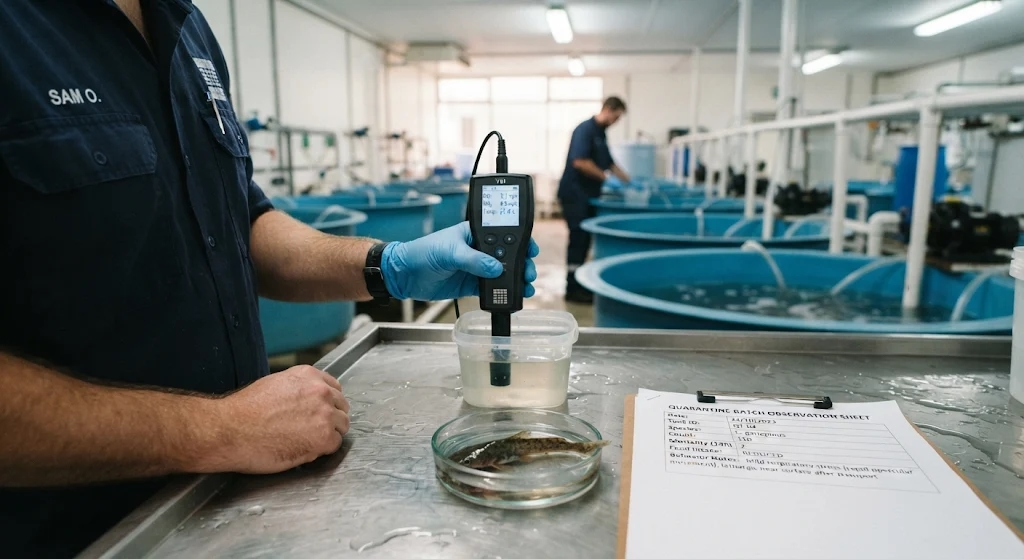
Quarantining new catfish fingerlings is an important biosecurity practice that helps reduce the risk of introducing infectious diseases into an established fish farm. Fingerlings may carry parasites, bacteria, or other disease-causing organisms even when they appear healthy.
A quarantine process provides an opportunity to observe newly acquired fish, assess their condition, monitor water quality, and investigate signs of illness before they are introduced to the main production population.
Quarantine cannot guarantee that every infection will be detected, but it can reduce the risk of disease spreading between batches and production units.
Why Is Quarantine Important for Catfish Fingerlings?
New fingerlings may experience stress during harvesting, transport, and transfer into a new environment. Stress, combined with unsuitable water conditions or an existing infection, can contribute to health problems after arrival.
Quarantine helps farmers:
- Observe fish for signs of disease before mixing them with existing stock.
- Reduce the chance of introducing unfamiliar pathogens.
- Monitor feeding response and general condition.
- Identify water-quality problems following transport.
- Investigate unexpected mortality.
- Keep newly introduced fish separate while health concerns are assessed.
Even fingerlings from a trusted supplier should be assessed according to the farm’s biosecurity procedures.
1. Prepare a Separate Quarantine Unit
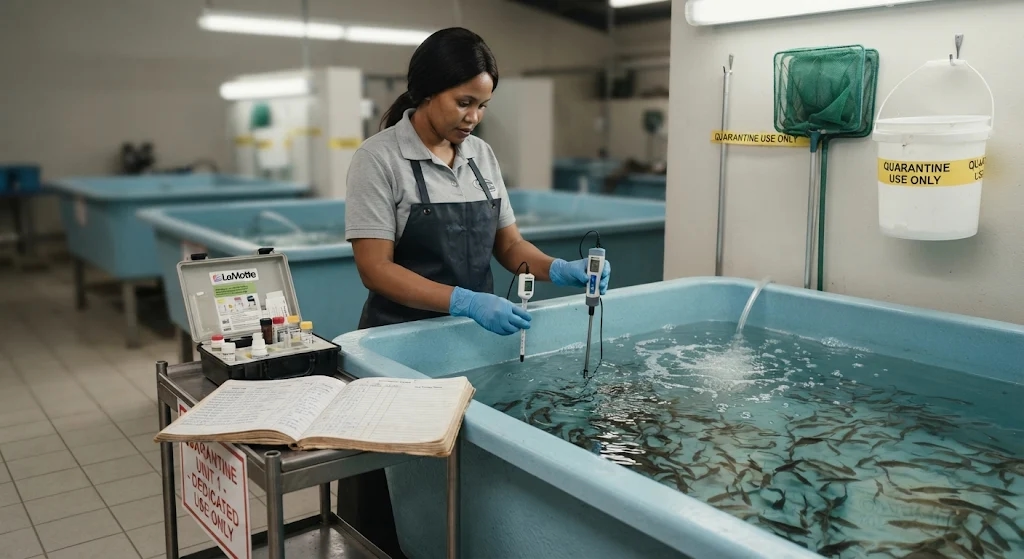
Before the fingerlings arrive, prepare a suitable tank, pond or holding unit that is separated from the established fish population.
The quarantine area should allow the farmer to observe the fish, manage water quality and remove waste without affecting other production units.
Preparation should include:
- Cleaning and preparing the holding unit.
- Checking water supply, circulation and aeration.
- Ensuring the unit can maintain suitable conditions for the fingerlings.
- Preparing dedicated nets, buckets and handling equipment.
- Establishing a way to remove waste and dead fish safely.
- Recording the source and expected arrival details of the batch.
Avoid using a quarantine unit that shares untreated water directly with healthy-stock tanks if this creates a pathway for disease transmission.
2. Check the Fingerlings When They Arrive
Observe the fish carefully before introducing them into the quarantine unit.
Look for:
- Unusual swimming or loss of balance.
- Surface gasping or rapid gill movements.
- Visible skin lesions or damaged fins.
- Abnormal discolouration.
- Unusual inactivity or weakness.
- Dead or severely distressed fish in the transport container.
Record the condition of the batch and any mortality observed during transport.
These signs may indicate stress, poor water quality, or disease, but visual inspection alone cannot establish the cause.
If the fish show severe distress, investigate transport conditions and water quality promptly.
3. Acclimatise Fingerlings Carefully
Fingerlings may arrive in water with different temperatures and chemical characteristics from those of the quarantine unit. Sudden changes can cause additional stress.
Before transfer:
- Assess the condition of the transport water and the receiving water.
- Compare their temperatures and other relevant water-quality parameters.
- Follow an acclimatisation procedure suitable for the transport method and fish condition.
- Avoid exposing fish to sudden changes in temperature or water chemistry.
- Minimise handling and transfer stress.
The correct acclimatisation method depends on the transport system and water conditions. Do not assume that floating a transport bag or gradually mixing water is appropriate in every situation, particularly when transport water may have accumulated harmful waste.
4. Maintain Good Water Quality During Quarantine
Quarantined fingerlings need stable water conditions throughout the observation period.
Monitor the following parameters as appropriate for the species, fish size, and production system.
Dissolved Oxygen
Ensure sufficient oxygen supply and functioning aeration. Observe fish for surface gasping, unusual restlessness or weak swimming.
Ammonia
Ammonia can accumulate through fish excretion and decomposition of uneaten feed. Test the water and manage feeding, waste removal and water treatment appropriately.
Nitrite
Nitrite can interfere with oxygen transport in fish. Monitor it alongside dissolved oxygen and ammonia.
pH and Temperature
Measure pH and temperature regularly. Avoid abrupt changes during water replacement or other management activities.
Organic Waste
Remove excessive feed and waste carefully. Maintain the quarantine unit so that water quality can be controlled without creating unnecessary stress.
A fish-health problem observed during quarantine may be caused by environmental conditions rather than an infectious disease, so water-quality testing is essential.
5. Use Dedicated Equipment
Quarantine equipment should not be moved casually between newly introduced fish and established stock.
Where possible, provide separate:
- Nets.
- Buckets.
- Grading equipment.
- Feeding utensils.
- Transfer containers.
- Cleaning tools.
Clearly identify equipment used in the quarantine area. If equipment must be shared, clean and disinfect it appropriately before reuse.
Handle healthy populations before quarantined or suspected sick populations, and follow hygiene procedures between areas.
6. Observe Feeding and Behaviour Daily
Daily observation is one of the most useful parts of quarantine.
Record whether the fingerlings:
- Accept their feed normally.
- Swim in a coordinated manner.
- Remain active at appropriate times.
- Show normal respiratory behaviour.
- Display visible skin or fin abnormalities.
- Experience unexpected mortality.
Reduced feeding, abnormal swimming and surface gasping are warning signs rather than proof of a specific disease.
If a problem develops, check water quality and review recent activities before deciding what further investigation is needed.
7. Monitor Mortality and Other Signs of Disease
Record the number of dead fish and the appearance of affected fingerlings. Note whether losses occur immediately after arrival or develop over time.
Investigate:
- Increasing mortality.
- Sudden changes in swimming behaviour.
- Persistent loss of appetite.
- Skin lesions or unusual growths.
- Respiratory distress.
- Signs affecting multiple fish.
If disease is suspected, seek assistance from an aquatic animal health professional or diagnostic laboratory. Depending on the situation, examination of skin, gills or other appropriate samples may be needed.
Do not automatically treat the entire batch with antibiotics, salt or other chemicals based on symptoms alone.
8. How Long Should Catfish Fingerlings Be Quarantined?
There is no single quarantine period that guarantees all disease risks have been eliminated.
The appropriate period depends on factors such as:
- The source and health history of the fingerlings.
- Known disease risks in the supplying area.
- Transport conditions and arrival health.
- The fish’s behaviour and feeding response.
- Whether disease has been suspected or confirmed.
- Advice from a qualified fish-health professional.
During quarantine, maintain separation and observe the fish consistently. If illness appears, the quarantine decision should be guided by diagnosis and appropriate professional recommendations rather than simply releasing the fish when a predetermined number of days has passed.
9. When Can Fingerlings Be Introduced to the Main Farm?
Fingerlings may be considered for transfer when the relevant quarantine and health requirements have been met.
Before transfer, confirm that:
- The fish show no unresolved signs of illness.
- Feeding and swimming behaviour are satisfactory.
- Mortality is understood and acceptable for the situation.
- Water-quality conditions are stable.
- Any suspected disease has been investigated appropriately.
- The farm’s biosecurity requirements have been satisfied.
An apparently healthy batch is not necessarily pathogen-free. Where disease risks are significant, testing or professional clearance may be necessary.
During transfer, minimise handling stress and avoid sudden changes in water temperature or chemistry.
10. What to Do If Fingerlings Become Sick During Quarantine
If symptoms or unusual mortality develop, keep the batch separated and investigate promptly.
- Check dissolved oxygen, ammonia, nitrite, pH, and temperature.
- Inspect aeration, circulation, and waste-management systems.
- Record symptoms, mortality, and the time the problem began.
- Avoid moving fish, water, or equipment into healthy production units.
- Obtain professional diagnostic assistance when needed.
- Follow recommendations based on the likely or confirmed cause.
- Review the supplier, transport conditions, and other possible sources of the problem.
Do not release the affected fish into the main farm simply because their symptoms temporarily improve.
Common Quarantine Mistakes
Avoid these common errors:
- Placing new fingerlings directly into established stock.
- Using a quarantine unit with unsuitable water conditions.
- Sharing nets and buckets without proper cleaning.
- Overcrowding the quarantine tank.
- Ignoring reduced feeding or small increases in mortality.
- Changing water conditions abruptly.
- Assuming that healthy-looking fish are disease-free.
- Applying chemicals without a clear indication.
- Ending quarantine solely because a fixed number of days has passed.
- Failing to keep records of fish source, observations and corrective actions.
Frequently Asked Questions
Can I quarantine catfish fingerlings in the same pond as my existing fish?
A separate tank or pond is preferable because it allows better observation and reduces direct contact. If the quarantine unit shares untreated water with established stock, it may not provide effective separation.
Should I feed fingerlings during quarantine?
Yes, provide suitable feed according to their condition and normal requirements. Observe their feeding response and avoid excessive feeding that can deteriorate water quality.
What if the fingerlings look healthy when they arrive?
Continue the quarantine and observation process. Some infections may not produce immediately visible signs, and transport stress can affect fish after arrival.
Can I use antibiotics during quarantine to prevent disease?
Routine antibiotic use without an appropriate indication is not recommended. Use professional diagnosis and guidance to determine whether treatment is necessary.
What is the most important quarantine practice?
Maintaining effective separation while monitoring fish health and water quality is fundamental. Good records, dedicated equipment, and appropriate responses to abnormalities strengthen the process.
Conclusion
Quarantining new catfish fingerlings is a practical way to reduce disease introduction and protect established fish populations. The process should include preparation of a separate unit, careful acclimatisation, water-quality monitoring, dedicated equipment, daily observation, and appropriate health assessment.
The goal is not simply to keep new fish separate for a set period. It is to assess their condition, identify problems early and make an informed decision before introducing them to the main farm.