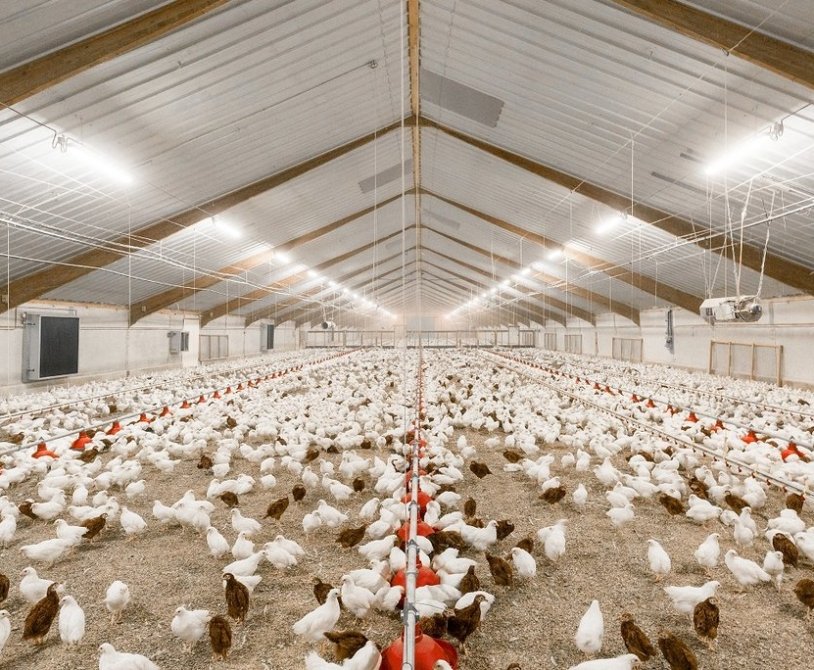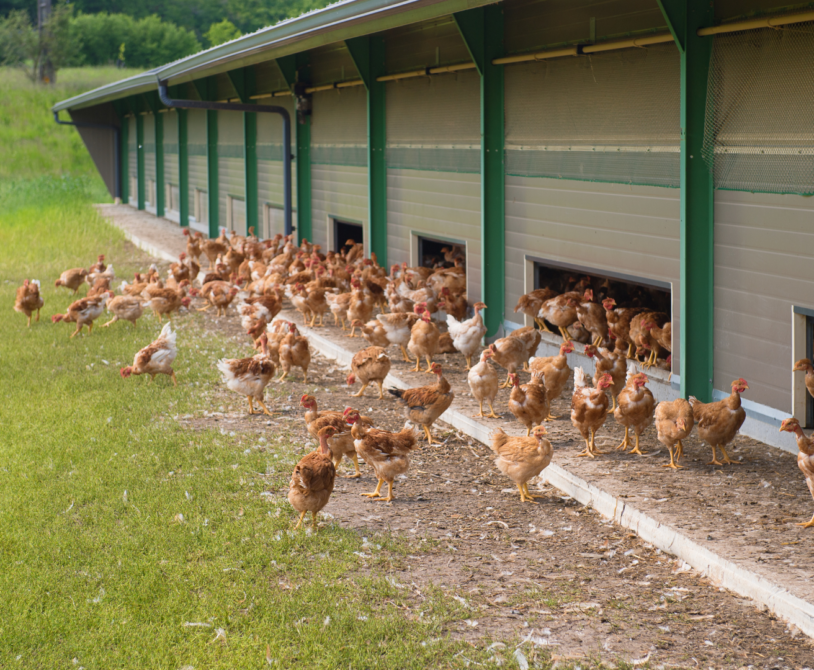
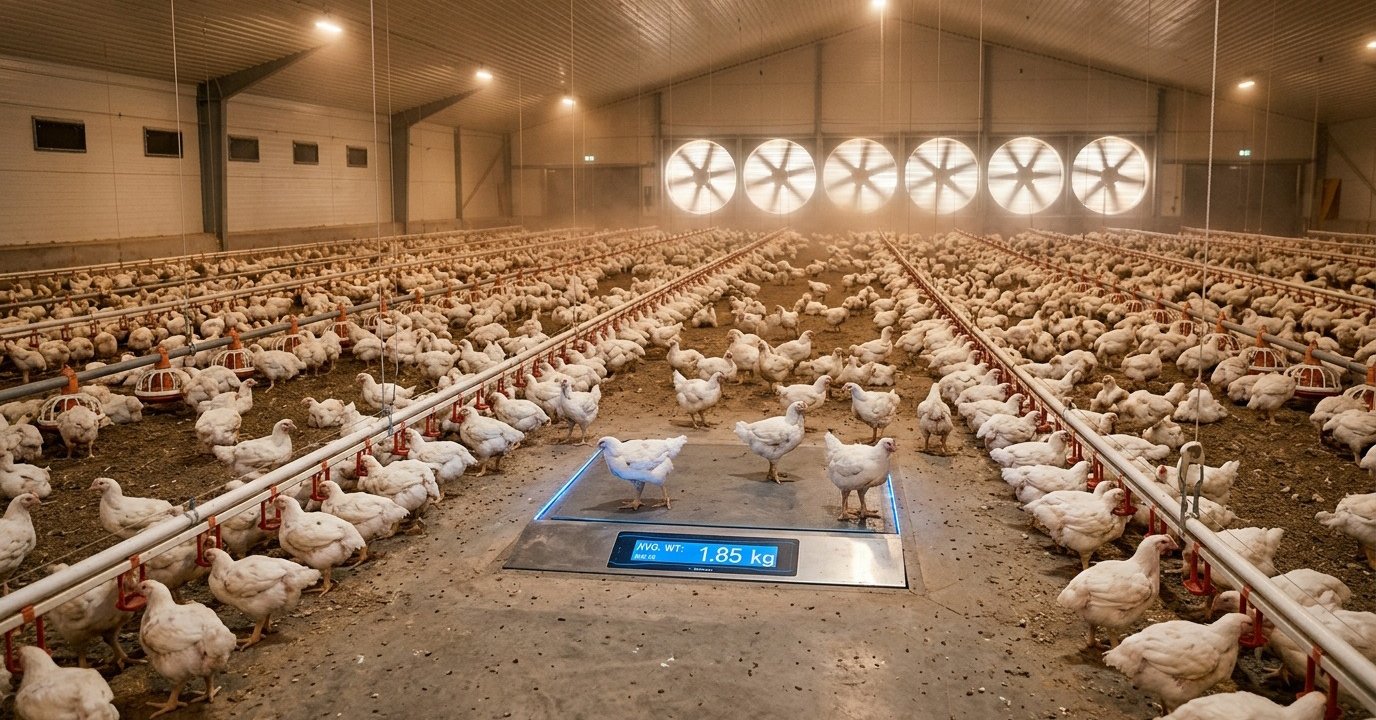
In broiler production, the environment is the most influential variable in a bird’s life. A high-performance climate control system does more than just move air; it acts as an external immune system, protecting flocks from the stressors of fluctuating temperature, humidity, and poor air quality.
The Welfare Impact of Intelligent Systems
Modern climate control has moved beyond simple thermostats. By utilizing a network of high-precision sensors, today’s systems create a “thermal neutral zone” where chickens don’t have to expend energy to stay warm or cool.
-
Stress Mitigation: Automated systems proactively adjust to prevent heat stress, which is one of the leading causes of reduced appetite and poor growth.
-
Respiratory Health: By continuously monitoring carbon dioxide and ammonia levels, these systems ensure a constant supply of fresh oxygen, significantly reducing the risk of respiratory infections.
-
Physical Integrity: Proper humidity control keeps litter dry and friable, which is the most effective way to prevent footpad lesions and improve overall bird mobility.
“Housing conditions and environmental stability have a more profound impact on flock welfare than stocking density alone.”
Next-Generation Automation: The Munters Trio Solution
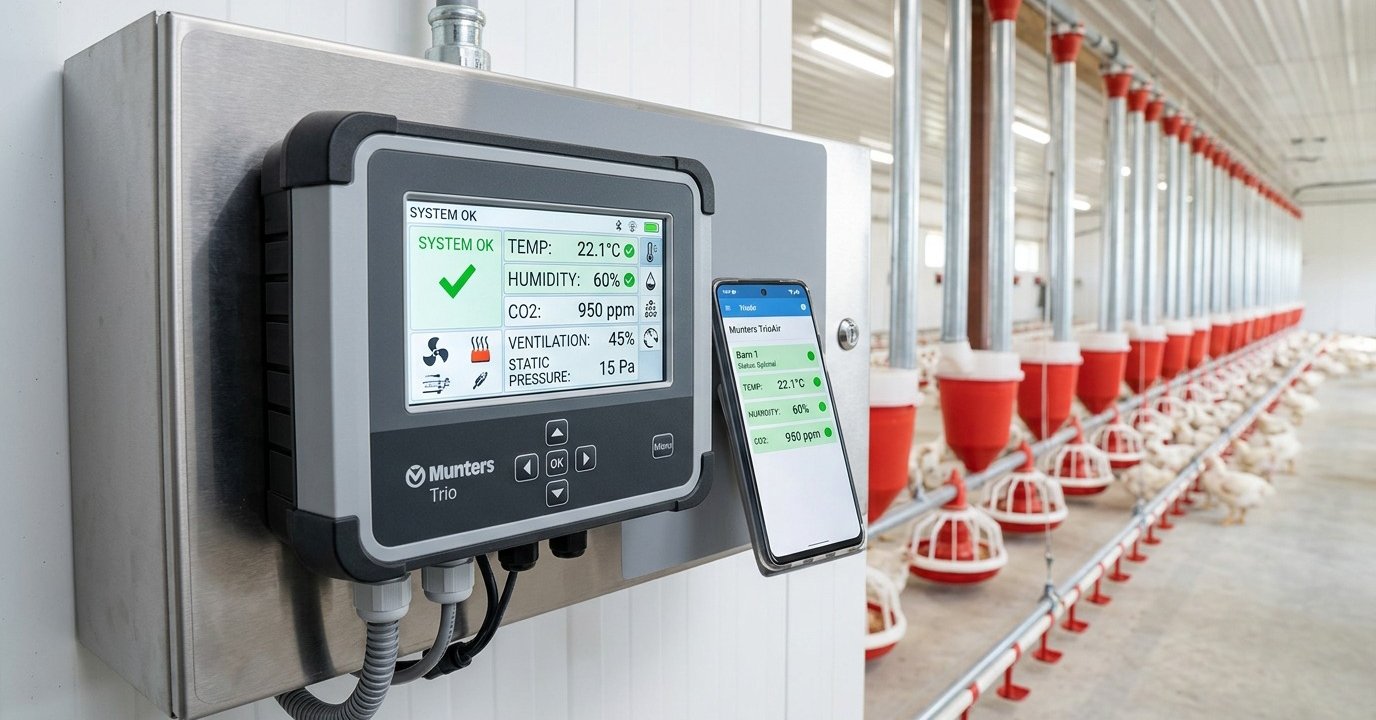
The Munters Trio digital controller represents the shift toward “Smart Farming.” Rather than relying on a farmer to manually adjust fans or heaters, the Trio uses advanced algorithms to make micro-adjustments in real-time.
Key Operational Advantages
-
Cloud-Based Oversight: Through the TrioAir App, you can monitor every barn on your phone. Whether you’re at home or traveling, you have full transparency into the air speed, temperature, and humidity of your flock.
-
Dynamic Response: The system reacts to external weather changes instantly. If a sudden rainstorm drops the outside temperature, the Trio adjusts the inlets and heating elements before the birds ever feel the chill.
-
Sustainability: By pairing these controllers with high-efficiency motors, farms see a significant drop in energy waste, making the operation both greener and more profitable.
Ventilation by Weight: The New Standard for Feed Conversion
One of the most innovative features of 2026 poultry tech is Ventilation by Weight. By integrating digital scales with the climate controller, the system understands exactly how much heat and moisture a bird is producing based on its actual size.
-
Uniform Growth: Identifying weight plateaus early allows the system to adjust air exchange rates, ensuring the environment supports the specific metabolic needs of the birds as they grow.
-
Feed Efficiency: When birds are comfortable, they convert feed into muscle rather than using those calories to regulate their body temperature. This results in a superior Feed Conversion Ratio (FCR) across the entire house.
Data-Driven Decisions with Amino
To truly optimize a farm like Otto’s Farms, data must be centralized. The Amino platform by MTech Systems integrates directly with your climate controllers to turn raw environmental data into actionable insights.
-
Predictive Harvests: By tracking weight gain alongside climate history, Amino can predict exactly when your flock will hit its target weight.
-
Waste Reduction: Integrating environmental data with feed consumption helps identify “hidden” inefficiencies, allowing you to tweak your management strategy for maximum yield and minimum waste.
Conclusion: Future-Proofing Your Facility
Investing in automated climate control is an investment in the longevity of your business. By meeting the high American Humane and global welfare standards of 2026, you aren’t just raising healthier birds—you’re securing your position in a market that increasingly values transparency, sustainability, and animal care.
Frequently Asked Questions (FAQ)
These questions are optimized to capture “People Also Ask” traffic on Google, using natural language and direct answers.
Q: How do automated climate control systems improve broiler chicken welfare? A: Automated systems constantly monitor the barn environment using sensors. They instantly adjust temperature, humidity, and ventilation to prevent heat or cold stress. By keeping birds in their “thermal neutral zone,” the systems reduce respiratory issues, improve footpad health by keeping litter dry, and allow the chickens to expend energy on growth rather than regulating body temperature.
Q: What is the benefit of using “Ventilation by Weight” in poultry farming? A: As chickens grow, their metabolic heat and moisture production change dramatically. By integrating digital scales with the climate controller (like the Munters Trio), the system automatically increases or decreases air exchange based on the actual total biomass in the house. This ensures optimal air quality, reduces energy waste from over-ventilation, and results in a more uniform flock and a superior Feed Conversion Ratio (FCR).
Q: Can climate control systems help a poultry farm meet animal welfare standards? A: Yes. Modern climate control is essential for meeting rigorous standards, such as those set by the American Humane Farm Program. These systems provide the “freedom from discomfort” by ensuring precise environmental conditions. A high-quality climate system is often a key requirement for achieving third-party welfare certification, which can improve market access and profitability.