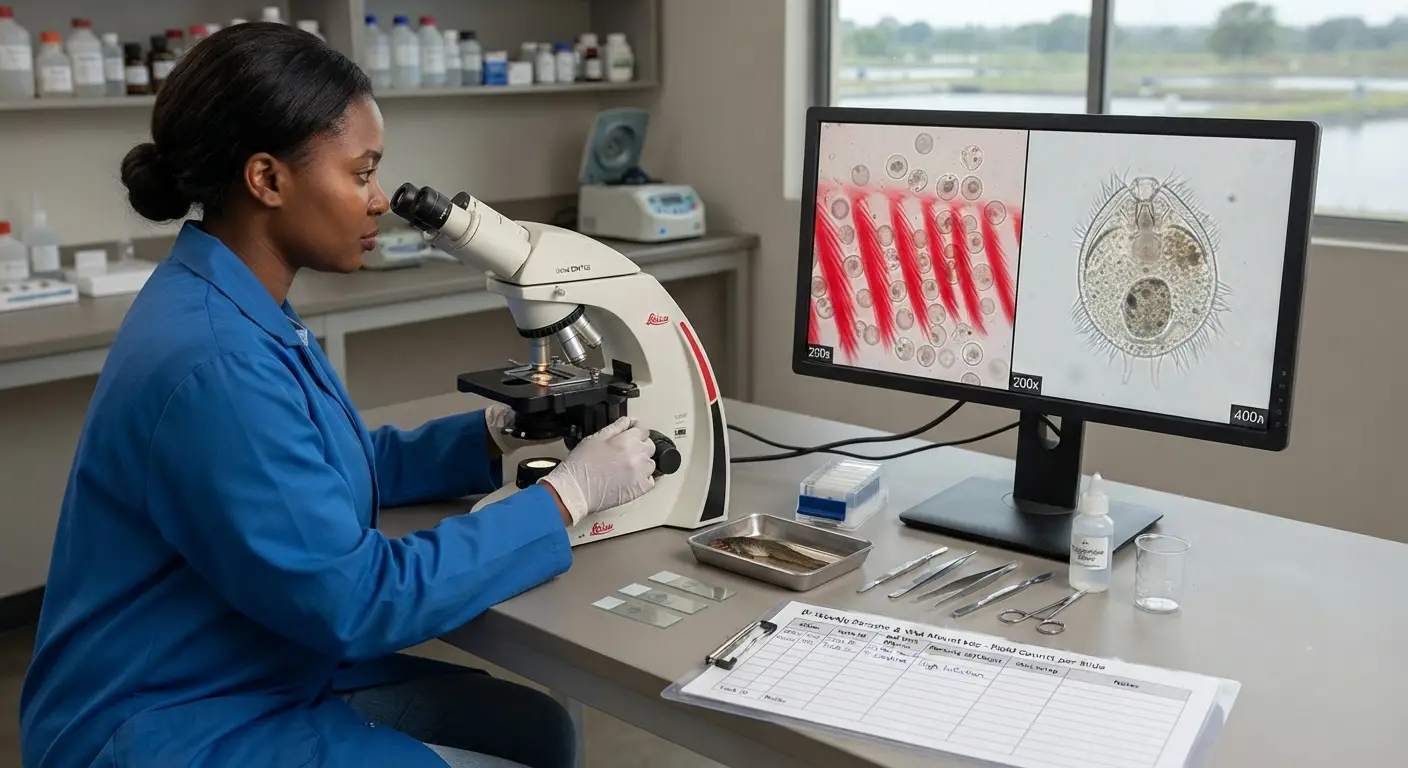
While ectoparasites like skin flukes, fish lice, and anchor worms are easily recognized by external irritation and flashing, nematodes (roundworms) represent one of the most damaging and insidious internal threats to African catfish (Clarias gariepinus) and Channel catfish (Ictalurus punctatus).
Living silently within the digestive tract, stomach walls, and intestinal lumen, parasitic roundworms rob their hosts of essential nutrients, leading to chronic wasting, poor feed conversion efficiency, and reduced stock profitability.
1. Biology and Identification of Catfish Nematodes
Nematodes are unsegmented, cylindrical roundworms with tapered bodies. In African catfish aquaculture, the most commonly encountered intestinal roundworms belong to the family Camallanidae, notably Procamallanus species (such as Procamallanus laevionchus) and Paracamallanus.
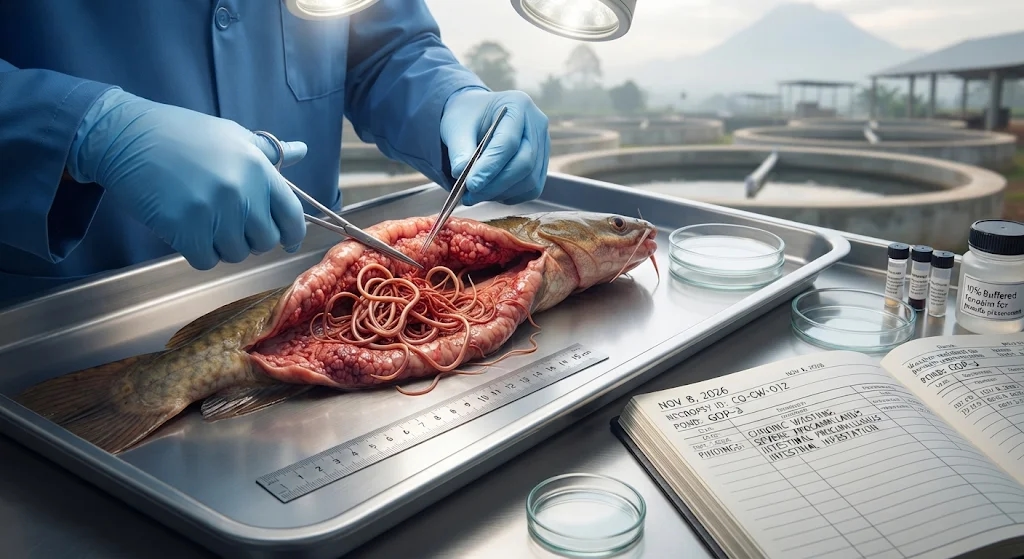
- Physical Appearance: Adult nematodes are typically slender, thread-like worms ranging from a few millimeters to several centimeters in length. Species like Procamallanus often feature a distinct reddish or brownish coloration due to ingested blood and hemoglobin inside their digestive tracts.
- Mode of Attachment: Unlike tapeworms that absorb nutrients across their skin, nematodes possess specialized muscular mouths or buccal capsules equipped with teeth or chitinous rings. They clamp directly onto the mucosal lining of the stomach or intestine, piercing tissue to feed on host blood and cellular fluids.
2. Clinical Symptoms and Warning Signs
Because nematodes reside internally, infected catfish rarely show external skin lesions initially. Instead, clinical indicators manifest as systemic debility, digestive failure, and growth anomalies:
- Chronic Wasting and “Pinched” Bellies: Despite normal or even ravenous feeding habits, infected fish fail to put on weight. They develop sunken bellies, sharp dorsal ridges (“knife-backs”), and severe stunting relative to healthy stock.
- Anemia and Pale Gills: Continuous blood-feeding by large numbers of roundworms leads to systemic iron deficiency, causing pale gill filaments and lethargy.
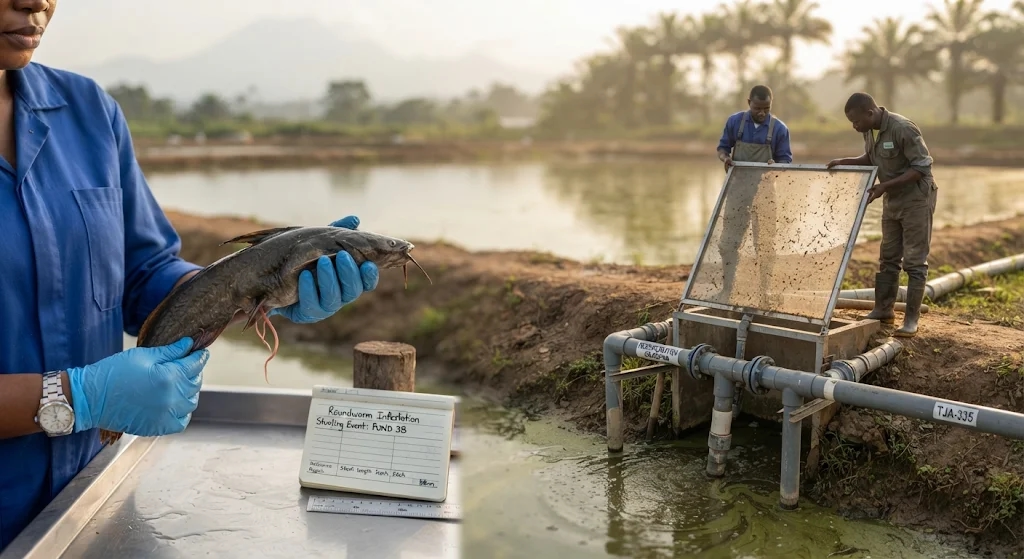
- Protruding Worms from the Vent: In heavy Procamallanus infections, slender red or pinkish worms can occasionally be seen projecting directly from the anus or vent of the fish, especially when the fish are stressed or handled.
- Internal Pathology (Necropsy Findings): During routine sampling or post-mortem examinations, the internal inspection of the gut reveals inflamed, thickened intestinal walls, localized hemorrhaging at attachment sites, and tangled masses of worms wriggling within the digestive lumen.
3. Root Causes and Environmental Triggers
Nematode outbreaks in commercial or homestead catfish facilities are heavily driven by biosecurity gaps and live-vector exposure:
- Ingestion of Intermediate Hosts: Many nematode species rely on micro-crustaceans, copepods, or aquatic insects as intermediate hosts to complete their life cycles. If unfiltered raw water supplies introduce these organisms into production ponds, catfish consume them and ingest infective nematode larvae.
- Feeding Raw Trash Fish or Unsterilized Diets: Utilizing raw, unpasteurized trash fish or local slaughterhouse offal introduces active internal parasites directly into the production system.
- High Stocking Densities and Organic Loads: Overcrowded ponds with heavy organic waste accumulation accelerate the fecal-oral transmission cycle, increasing parasite loads across the population.
4. Prevention and Management Strategies
Controlling internal roundworms requires strict adherence to biosecurity and feed hygiene protocols:
- Strict Quarantine Protocols: Always isolate, screen, and deworm incoming broodstock or fingerlings in separate quarantine units before introducing them to main production systems.
- Filter Raw Water Supplies: Install fine-mesh screen filters or settling basins on water inlet pipes to prevent wild copepods and intermediate vectors from entering ponds and tanks.
- Use Formulated Commercial Feeds: Avoid feeding raw trash fish. High-quality extruded commercial feeds eliminate the risk of introducing live parasite vectors.
- Pond Bottom Drying and Disinfection: Between production cycles, completely draining, liming, and drying earthen ponds destroys residual worm eggs and intermediate hosts residing in bottom sediments.
Need Assistance?
Are you experiencing unexplained stunted growth, poor feed conversion ratios, wasting, or visible worms during fish sampling in your catfish production system? Please contact us today
for professional diagnostic support, necropsy guidance, and tailored internal parasite management programs to protect your stock.