
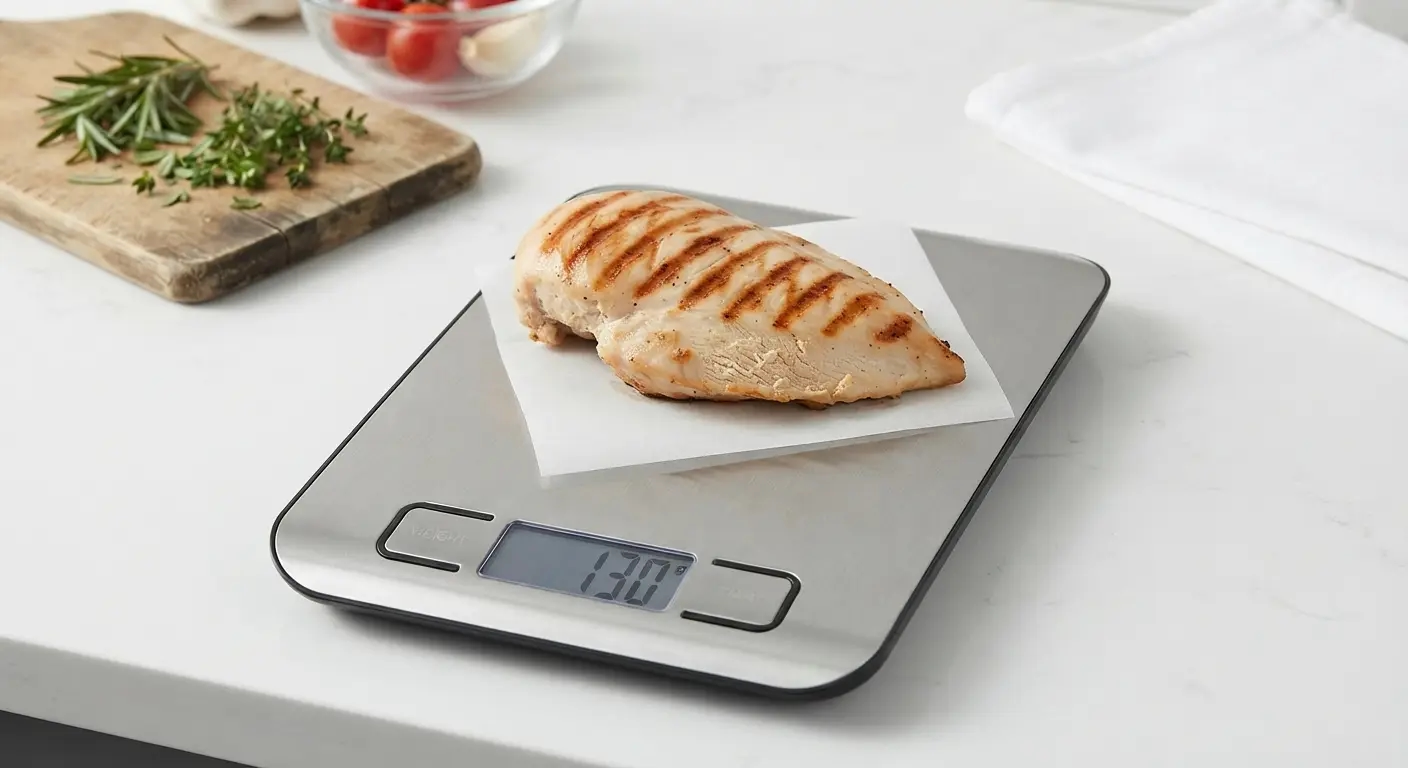
A single boneless, skinless chicken breast contains roughly 165 calories per 100 grams cooked, or about 280–380 calories for one whole breast, depending on its size and how it’s prepared. Because chicken breast size varies widely — from 4 oz to 10 oz per piece — the total calorie count depends more on weight and cooking method than on the cut itself.
Calories in One Chicken Breast by Size
| Chicken Breast Size | Raw Weight | Cooked Weight | Calories (Cooked) |
|---|---|---|---|
| Small breast | 120 g | ~90 g | 148 |
| Average breast | 172 g | ~130 g | 210–284 |
| Large breast | 225 g | ~170 g | 280–370 |
| Extra-large breast | 300 g | ~225 g | 371–495 |
These figures assume a plain, skinless, boneless breast cooked without added oil or breading. Cooking causes chicken to lose water weight, which is why cooked chicken has more calories per 100 g than raw chicken of the same weight — the nutrients simply become more concentrated.
Calories Per 100 Grams: Raw vs. Cooked
| Form | Calories | Protein | Fat |
|---|---|---|---|
| Raw, skinless, boneless | 120 | 22.5 g | 2.6 g |
| Cooked, skinless, boneless (grilled/baked/boiled) | 165 | 31 g | 3.6 g |
| Cooked, with skin | 197 | 29 g | 8 g |
| Batter-fried | 246 | 19 g | 12 g |
About 80% of the calories in chicken breast come from protein, with the remaining 20% from fat. This makes it one of the leanest high-protein foods available, which is why it appears in most muscle-building and weight-loss meal plans.
Calories by Common Serving Size
| Serving | Weight | Calories |
|---|---|---|
| 1 oz | 28 g | 46 |
| 3 oz | 85 g | 140 |
| 4 oz | 113 g | 187 |
| 6 oz | 170 g | 280 |
| 8 oz | 227 g | 374 |
A standard restaurant “6 oz chicken breast” therefore contains around 280 calories when grilled or baked plain, before sauces, oils, or sides are added.

How Cooking Method Changes the Calorie Count
The chicken itself doesn’t change — what you cook it in does.
- Grilled, baked, roasted, or boiled: ~165 calories per 100 g. Little to no added fat, so the calorie count stays close to the base value.
- Pan-seared in oil or butter: adds roughly 40–100 calories per 100 g, depending on how much fat is absorbed.
- Battered and fried: ~246 calories per 100 g, nearly 50% higher than plain cooked chicken.
- Skin-on: adds about 30–55 calories and 5–9 g of fat per 100 g compared with skinless breast.
- Marinades and sauces: sugar-based or creamy sauces can add 50–150+ calories per serving, while acidic marinades (lemon, vinegar, yogurt) add minimal calories.
For the lowest-calorie option, grilling, baking, steaming, or poaching a skinless breast with herbs and spices keeps the count close to the base 165 calories per 100 g.
Chicken Breast vs. Other Cuts (per 100 g, Cooked, Skinless)
| Cut | Calories | Protein | Fat |
|---|---|---|---|
| Breast | 165 | 31 g | 3.6 g |
| Drumstick | 172 | 28 g | 5.7 g |
| Wing | 203 | 30 g | 8.1 g |
| Thigh | 209 | 25 g | 9.3 g |
Chicken breast has the lowest calorie and fat content of any common cut, while offering the highest protein-to-calorie ratio.
Protein Content of a Single Chicken Breast
Because protein content scales with cooked weight, larger breasts deliver more protein per serving:
- Average breast (130 g cooked): ~40 g protein
- Large breast (170 g cooked): ~53 g protein
- One breast half typically exceeds the protein most sedentary adults need in a full meal.
Frequently Asked Questions
How many calories are in one whole chicken breast? A typical single chicken breast, cooked and skinless, contains between 210 and 370 calories, depending on its size. An average-sized breast (around 130 g cooked) has about 210–215 calories.
How many calories in a 4 oz chicken breast? A 4 oz (113 g) cooked, skinless chicken breast has approximately 187 calories.
Does chicken breast have more calories raw or cooked? Cooked chicken breast has more calories per 100 g than raw (165 vs. 120) because cooking removes water, concentrating the nutrients. The total calorie content of the piece of meat doesn’t increase — only the calories per gram do.
How many calories does chicken skin add? Skin adds roughly 30–55 calories and 5–9 g of fat per 100 g of chicken breast.
Is chicken breast good for weight loss? Yes. Its high protein-to-calorie ratio (about 80% of calories from protein) supports satiety and muscle maintenance while keeping total calorie intake low, provided it’s cooked without excess oil or heavy sauces.

Bottom Line
A single chicken breast’s calorie count depends primarily on its size and cooking method, not on the cut itself. As a baseline: 165 calories per 100 g cooked, skinless, and boneless, roughly 30–50 more calories if the skin is left on, and up to 50% more if battered and fried. For accurate tracking, weigh the chicken after cooking and log it against cooked-weight nutrition data rather than raw-weight figures.
Nutritional values are based on USDA FoodData Central data and are approximate; actual values vary by bird size, breed, and preparation method.
